
Review · POMPEII & HERCULANEUM TOURS
Pompeii: Skip-the-Line Tickets and Tour with Archaeologist
Pompeii still knows how to stop you in your tracks. This two-hour tour pairs fast entry with an archaeologist guide, which makes the ruined streets far easier to understand than they are on your own. I like the lively explanations of Roman daily life, and I like that the guide helps you see the site’s major sights without wasting time in the entrance queue. The main drawback is simple: Pompeii is enormous, and two hours only covers a small part of it.
I also like the small-group format. Guides such as Lello, Italo, Leonardo, Anna, and Raffaele have earned especially warm praise for their humor, passion, and ability to involve children and adults alike. You should still plan for a lot of walking on uneven volcanic pavement, strong sun, and the possibility of wishing you had booked a longer visit.
In This Review
- Key points to know before booking
- Meeting at Porta Marina Inferiore
- Walking the original streets of Pompeii
- Bakeries, banquets, and the texture of daily life
- The Forum and Pompeii’s public life
- Villas, bathhouses, and the parts you might miss
- Why an archaeologist guide changes the visit
- Is $105 a fair price for two hours?
- Timing, heat, and what to carry
- Who will enjoy this Pompeii tour most?
- Booking advice and the final call
- FAQ
- How long does the Pompeii tour last?
- What language is the tour conducted in?
- Where do I meet the guide?
- Are Pompeii admission tickets included?
- Does the tour skip the entry line?
- Is hotel pickup included?
- Are food and drinks included?
- What should I bring?
- Can I bring a stroller or large luggage?
Key points to know before booking
- Meet at Coffee Shop Vittoria: The meeting point is near the Porta Marina Inferiore entrance, making the start easy to find.
- Skip the main entry queue: Your ticket uses a separate entrance, a useful advantage during busy periods.
- Roman life takes center stage: The tour connects streets, bakeries, villas, baths, the Forum, and public buildings to ordinary routines.
- Guides bring real personality: Lello, Italo, and other archaeologist guides are praised for humor, stories, and clear explanations.
- Two hours is a focused introduction: You will see important areas, but Pompeii is too large to cover fully in one short tour.
- Pack lightly and dress for the site: Comfortable shoes, water, a sun hat, and sunscreen matter more here than fancy clothes.
Meeting at Porta Marina Inferiore
Your guide waits at the entrance of Coffee Shop Vittoria, close to Porta Marina Inferiore. This is a practical meeting point because it puts you near one of the archaeological area’s main entrances, rather than sending you on a long hunt through Pompeii’s modern streets.
Arrive with your booking details and the names exactly as they appear on your identification documents. The tour operates in English, and admission is included in the price, so you are not left to sort out a separate ticket purchase before entering.
The separate entrance is one of the tour’s strongest practical features. Pompeii can draw long lines, especially when several groups arrive at once. Skipping that wait does not make the site less busy inside, but it gives you more useful time among the ruins.
Several people have also found the local team flexible when transport caused delays. In some cases, late arrivals were moved to a later departure instead of losing the entire booking. That kind of help is valuable when you are coming by train, though you should not treat it as guaranteed. Allow enough time to reach the meeting point.
More Skip-the-Line Tickets in Naples
- Skip the Line Guided Tour of Pompeii led by an Archaeologist
★ 5.0 · 703 reviews - Pompeii Private Tour with an Archaeologist and Skip The Line – 3 hours
★ 5.0 · 564 reviews - Pompeii Skip-the-line Tour with Archaeologist Guide
★ 5.0 · 559 reviews
Walking the original streets of Pompeii
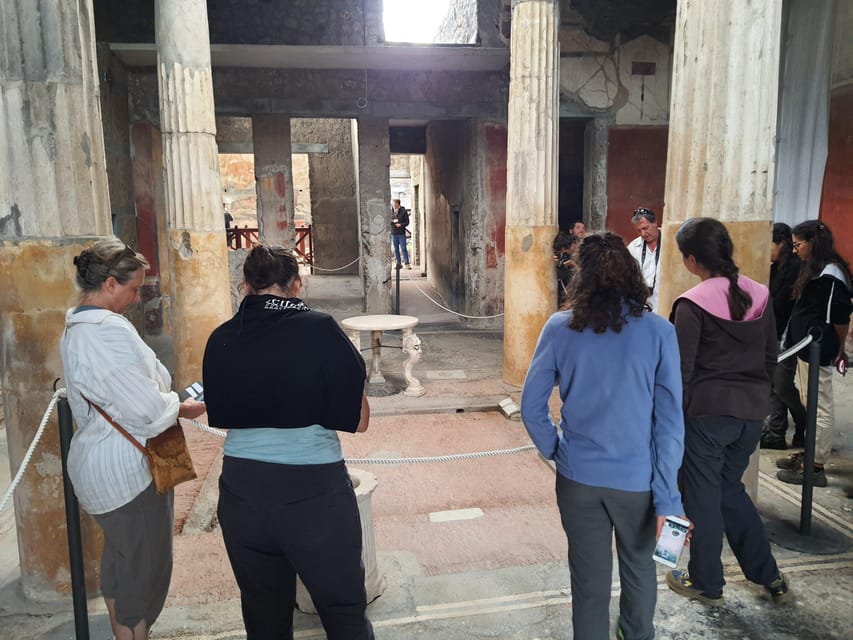
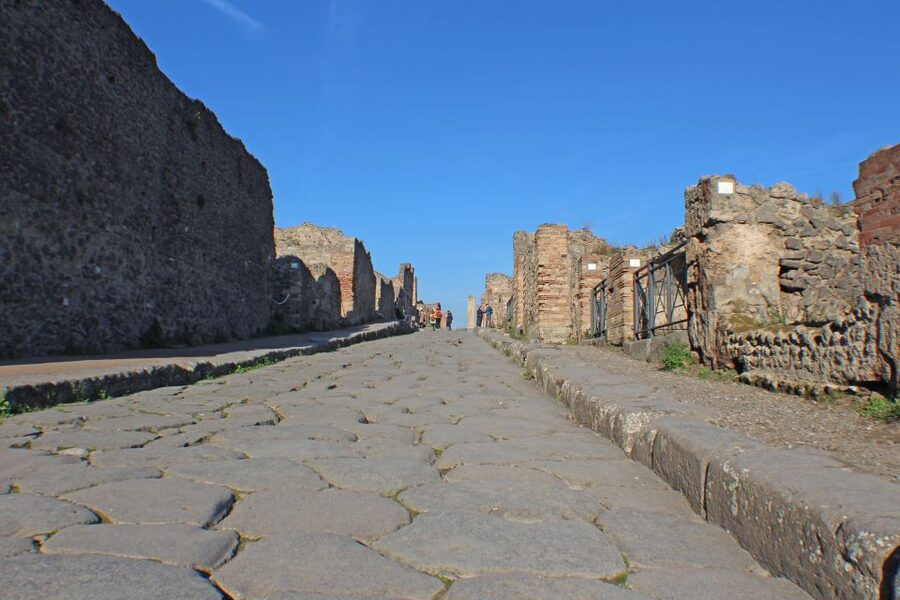
Once inside, you begin on streets that preserve the shape and feel of the Roman city. The original volcanic stone pavement is uneven, so this is not a gentle stroll. Wear sturdy, comfortable shoes and expect the walking surface to slow you down in places.
A guide changes the way you read these streets. Without context, you may see walls, paving stones, and doorways. With an archaeologist explaining how the city worked, those same features begin to show the habits of the people who lived here.
The tour introduces the daily routines of Roman citizens rather than focusing only on emperors and disasters. You may hear how people moved through the city, where they gathered, how food was prepared, and how public and private life overlapped.
That focus is what makes this outing work well for families. Lello has been praised for keeping children involved through humor, questions, and storytelling. Children aged 11, 14, and 16 have all been described as staying engaged, which is no small achievement at a sprawling archaeological site.
The guide may also use the streets to explain details that are easy to miss. Doorways, rooms, paving, shops, and public spaces can reveal social rank, business, entertainment, and the practical side of Roman living. You are not simply looking at old stones. You are learning how to interpret them.
Bakeries, banquets, and the texture of daily life
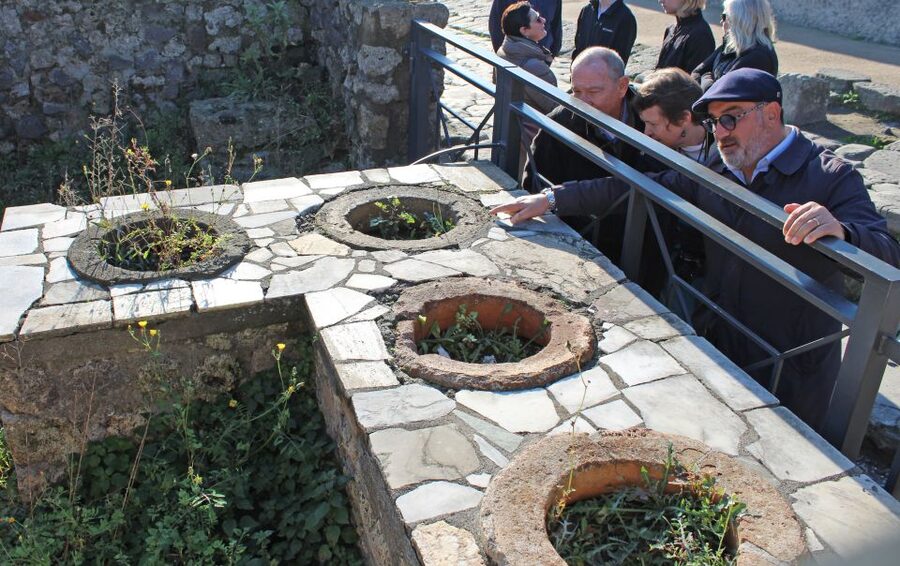
Pompeii becomes more memorable when the guide asks you to picture ordinary activity. The tour uses scenes such as gladiators training in a gymnasium, women reclining at a marble dining couch, and bread baking in ovens to give the ruins a human scale.
These images are useful because Pompeii can otherwise feel like a silent collection of grand buildings. A bakery tells you about food and work. A dining room tells you about social customs. A gymnasium points to exercise, training, and public life.
The descriptions are intended to help you imagine smells, movement, and conversation without turning the tour into a dry lecture. The strongest guides combine facts with anecdotes and a bit of humor. Italo, Lello, and Raffaele have been singled out for explaining the site in an interactive way, often keeping the group moving while still allowing questions and photographs.
I especially like this balance in a place as large as Pompeii. You need enough structure to avoid wandering without direction, but you also need moments to look closely. The tour is built as an introduction, not as a slow study of every room.
The tradeoff is that you will not have time to linger at each location. If you are fascinated by domestic architecture, wall decoration, or excavation methods, you may want to stay after the guided portion and continue alone.
The Forum and Pompeii’s public life
The Forum gives the tour a central point. This was where people gathered, conducted business, encountered public figures, and took part in civic life. It is also one of the places where Pompeii’s scale becomes clear.
A guide can explain why the Forum mattered and how it connected to the rest of the city. Rather than seeing it as an open rectangle surrounded by ruins, you can picture it as a place for meetings, commerce, politics, and public display.
The tour also places the city within its Greek-Roman setting. That context helps explain the layout, customs, and mix of influences visible in Pompeii. You gain a better sense of how a Roman city operated, not just what happened when volcanic ash buried it.
This is where an archaeology background pays off. The guides are praised for explaining how to read what remains, not merely reciting dates. One guide helped visitors understand the site well enough to continue exploring independently for several more hours afterward.
That is an important benefit. Pompeii is so large that a good introduction gives you a mental map. You may leave knowing which kinds of buildings deserve another look and how to make sense of areas you have not yet seen.
More Pompeii and Herculaneum visits:
- Pompeii Small Group Tour with an Archaeologist
★ 5.0 · 6,593 reviews - Discover the Ancient Ruins of Pompeii: Day Trip from Rome
★ 3.5 · 2,247 reviews - Pompeii and Herculaneum Small Group Tour with an Archaeologist
★ 5.0 · 1,350 reviews - Pompeii Ticket + Tour with Optional Tasting Experience at Pompeii
★ 5.0 · 663 reviews
Villas, bathhouses, and the parts you might miss
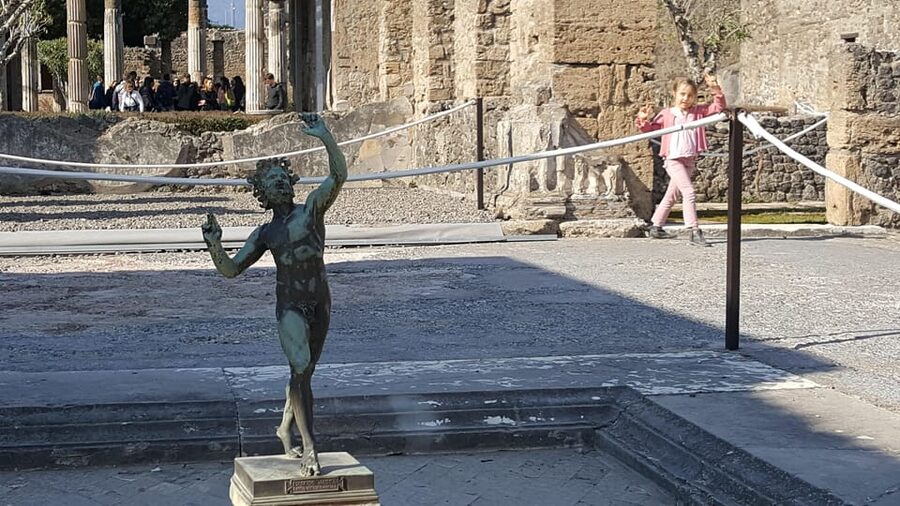
The route includes a selection of major sights within one section of the city. Villas, bathhouses, bakeries, streets, and public areas may all feature in the visit, depending on the day’s access and the guide’s route.
The exact sequence can vary, so you should think of this as a guided selection rather than a fixed checklist. Guides are praised for steering groups away from the heaviest crowds when possible and for including areas that independent visitors might pass without understanding.
That crowd management matters. Pompeii is more enjoyable when you can hear the explanation, stop for a photograph, and look at a detail without being packed into a large group. A small group also lets the guide notice when someone has a question or needs a moment to catch up.
The tour does not promise every famous building or every open section. Pompeii’s excavated area is huge, and access can change. If you have one specific house or fresco at the top of your list, ask at the start whether it is part of the route or open that day.
Several guides end by suggesting additional places to see independently. This is a useful handoff rather than a hard stop. You can continue through the city with a clearer idea of what you are seeing, although the official duration is two hours.
Why an archaeologist guide changes the visit
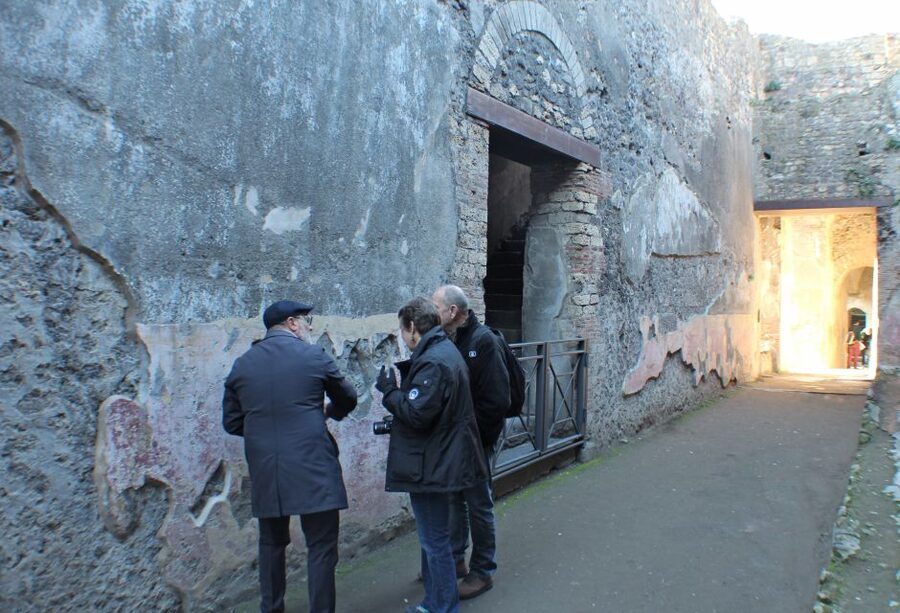
The greatest strength here is the human guide. The archaeologist title matters because Pompeii requires interpretation. The buildings are impressive, but the meaning of a room, street, or public space is not always obvious from its surviving walls.
Guides such as Lello, often also written as Lelo or Lello in tour details, have been praised for combining technical understanding with warmth. Italo is praised for explaining more than surface facts and for helping people interpret the site afterward. Raffaele has been described as exceptionally detailed, while Anna, Leonardo, Maria, Rosanna, and Nello have also received praise for clear, friendly presentations.
You cannot choose a particular guide with certainty unless the operator confirms it. Still, the pattern is clear: this experience depends heavily on the person leading it, and the available guides have built a strong reputation for enthusiasm, humor, and personal attention.
The best commentary does not flatten Pompeii into a disaster story. It also discusses engineering, city planning, food, work, social customs, and the effort involved in excavation and conservation. One particularly thoughtful guide treated a room associated with a slave woman with visible respect, helping the group consider the people behind the remains.
That tone matters. Pompeii is fascinating, but it is also a place of death and loss. A good guide can keep the visit lively without treating the tragedy as a cheap spectacle.
Is $105 a fair price for two hours?
At $105 per person, this is not a bargain admission ticket. You are paying for the entrance, a professional English-speaking guide, the small-group experience, and the time saved by the separate entry line.
The value depends on how you travel. If you enjoy history and want to understand what you are seeing, the guide can prevent two hours of wandering through disconnected ruins. You also receive a useful orientation for exploring more of Pompeii after the tour.
If you already know the site well, prefer reading at your own pace, or plan only a very short visit, the cost may feel high. The ticket and guide are doing the most work for first-time visitors who want interpretation rather than simple access.
I would be more comfortable with the price if you treat the tour as the first part of a longer Pompeii visit. Several people have stayed on afterward to see more of the city. In that case, the tour gives you a focused start, and the included admission becomes more valuable because you can keep exploring.
The strongest reason to pay is not the word skip-the-line. It is the explanation. Long queues are annoying, but a guide who teaches you how to read Pompeii can shape the rest of your day.
Timing, heat, and what to carry
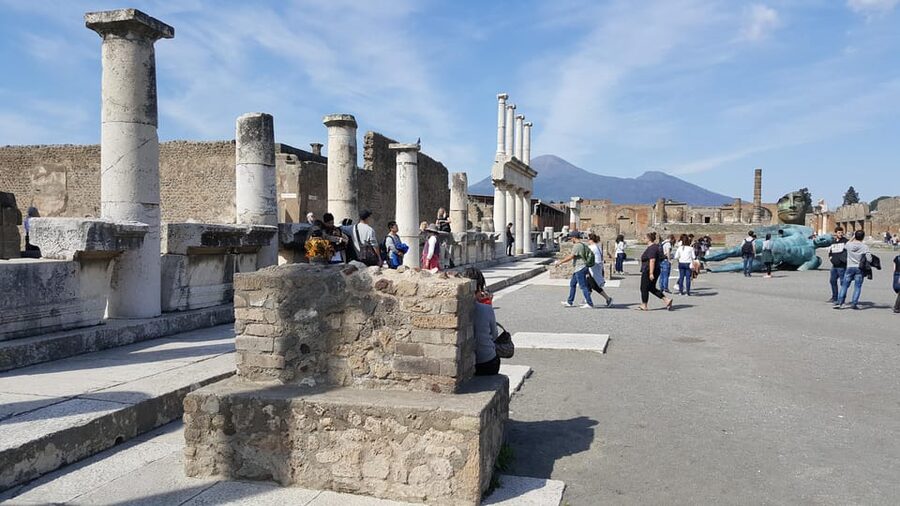
The stated duration is two hours, though some departures have lasted around two and a half hours. Plan on two hours as the firm expectation, and consider any extra time a bonus rather than something to rely on.
Pompeii offers little relief from sun in many open areas. Bring a sun hat, sunscreen, and water. Lunch and drinks are not included, so arrange those separately before or after the visit.
Comfortable shoes are essential. The volcanic pavement is part of the authentic experience, but it is hard on feet and awkward in thin soles. The site also involves substantial walking, even on a short route.
Leave luggage and large bags behind. Baby strollers, umbrellas, and large bags are not allowed, so families should plan carefully. A passport or identification card is specifically required for children, and the booking must include all names and last names as shown on identification.
Rain can also affect your comfort. One guide kept a visit enjoyable on a wet day, but weather will still make the stone surfaces more difficult. Dress for conditions, not for a polished city sightseeing tour.
Who will enjoy this Pompeii tour most?
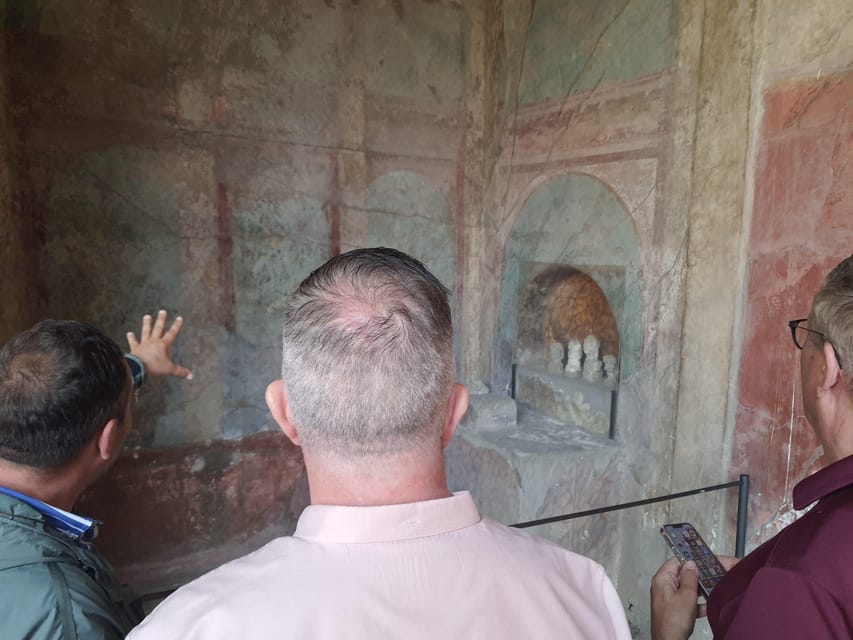
I would recommend it most strongly to first-time visitors, families, history fans, and anyone arriving on a tight schedule from Naples or elsewhere in Campania. The guide keeps the visit moving, explains the important sights, and gives you a way to continue alone afterward.
It is also a good fit if you find ancient ruins hard to decode. Pompeii rewards curiosity, but its open spaces and damaged buildings can be confusing without help. The commentary connects the pieces.
Families seem particularly well served by the storytelling approach. The guides use humor and questions instead of speaking at the group for two hours, which makes the experience more approachable for younger visitors.
Independent visitors who prefer silence and long stops may want the admission without a tour, if that option suits their plans. You will have less structure, but more control. At Pompeii, though, I think many first-time visitors gain more than they lose by joining a small group.
Booking advice and the final call
The flexible booking terms are useful: you can cancel up to 24 hours in advance for a full refund, and reserve now while paying later. Those policies help if your Campania schedule depends on trains or changing weather, but you still need to reach Coffee Shop Vittoria on time.
Book this tour if you want Pompeii to make sense, not merely appear impressive. The skip-the-line entry, small group, English commentary, and archaeologist-led storytelling offer a strong package for a first visit.
Do not book it expecting to see the entire archaeological area. Two hours covers a carefully chosen portion, and the site deserves more time if you have it. The ideal plan is to take the guided tour early, then remain inside and explore independently afterward.
For most first-time visitors, I would choose the guided option. Pompeii is too important, too large, and too easy to misread as a pile of ruins. A good guide turns it into a city.
FAQ
How long does the Pompeii tour last?
The stated duration is two hours. Some experiences have lasted around two and a half hours, but you should plan for the official two-hour schedule.
What language is the tour conducted in?
The live tour guide speaks English.
Where do I meet the guide?
Meet at the entrance of Coffee Shop Vittoria, close to the Porta Marina Inferiore entrance to Pompeii.
Are Pompeii admission tickets included?
Yes. Admission tickets to the archaeological site are included.
Does the tour skip the entry line?
Yes. The tour uses a separate entrance so you can avoid the regular long queue.
Is hotel pickup included?
No. Hotel pickup and drop-off are not included.
Are food and drinks included?
No. Lunch and drinks are not included.
What should I bring?
Bring comfortable shoes, a sun hat, and sunscreen. Water is also a sensible choice for the walking and sun exposure.
Can I bring a stroller or large luggage?
No. Baby strollers, luggage, and large bags are not allowed. Umbrellas are also listed as prohibited items.
More Fast-Track Entries
- Pompeii Private Tour with an Archaeologist and Skip The Line
★ 5.0 · 391 reviews - Complete Pompeii Skip the Line Tour with Archaeologist Guide
★ 4.5 · 379 reviews - Florence: Skip-The-Line Uffizi Gallery Timed Entry Ticket
★ 4.5 · 27,832 reviews - Vatican Museums & Sistine Chapel Skip-the-Line Entry Ticket
★ 4.4 · 13,838 reviews
Just added around Pompeii
- Pompeii Guided Group Tour with Entry Ticket and Archaeologist★ 4.5 · 269 reviews
- Pompeii: Guided Small Group Tour Max 6 People with Private Option★ 5.0 · 269 reviews
- Private Day Tour to Vesuvius, Herculaneum & Pompeii with Pick Up★ 5.0 · 279 reviews
- Pompeii Vineyard Escape: Private Wine Tasting & Lunch★ 5.0 · 329 reviews
- 2 hours Pompeii Tour with Local Historian – Ticket Included★ 5.0 · 335 reviews
- PompeiI Exclusive Tour with your Archaeologist in a Small Group★ 4.5 · 363 reviews
- Complete Pompeii Skip the Line Tour with Archaeologist Guide★ 4.5 · 379 reviews
- Pompeii 2h Small-Group Tour with Expert Archaeologist★ 5.0 · 385 reviews
Pompeii & Herculaneum Tours, compared.

Pompeii: Entry Ticket and Guided Tour with an Archaeologist
Read our review →
Pompeii: Entry Ticket with Optional Audio Guide
Read our review →
Pompeii: Small Group Tour with an Archaeologist
Read our review →


Pompeii Small Group Tour with an Archaeologist
Read our review →
Pompeii, Amalfi Coast and Positano Day Trip from Rome
Read our review →Browse the lists this tour appears in