
Review · POMPEII & HERCULANEUM TOURS
Pompeii Private Tour with an Archaeologist and Skip The Line
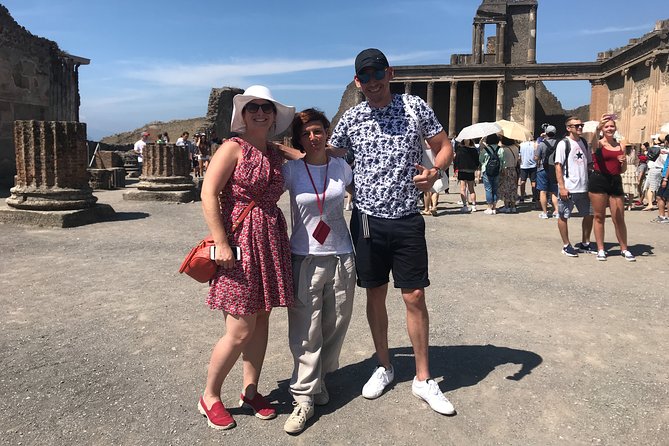
Pompeii rewards a guide. This private visit pairs an archaeologist with a two-hour route through the Roman city, focusing on its theaters, baths, forum, homes, shops, brothel, and plaster casts. I like the personal pace and the chance to shape the visit around your interests. I also like that guides such as Luisa, Eliana, Raffaele, and Luciana are praised for clear explanations and lively storytelling. The main catch is important: the €19 entrance ticket is extra, so the advertised group price is not your final cost.
You meet at Piazza Esedra in modern Pompeii, and only your party takes part. The group can include up to 10 people, making this a good fit for a family or small group that wants one guide rather than a large crowd. Two hours is enough for the major sights, but Pompeii is enormous, so you should expect a highlights tour, not every street and building.
In This Review
- Key points to know before you book
- Meeting your guide at Piazza Esedra
- What skip-the-line really means at Pompeii
- The Small Theater and Great Theater
- Shops, fast food, and daily life on Via dell’Abbondanza
- The Forum, Basilica, and Temples
- The Granaries and the casts of the eruption
- Stabian Baths and the Roman spa
- Gladiator barracks and the Lupanare
- Casa del Fauno, Pompeii’s grand residence
- How the guides shape the experience
- Who gets the best value from two hours
- Booking, cancellation, and practical details
- Should you book this Pompeii tour?
- FAQ
- Is the Pompeii entrance ticket included?
- What does skip the line mean here?
- How can I buy the Pompeii ticket?
- How long does the tour last?
- Where does the tour begin?
- Where does the tour finish?
- Is this a private tour?
- Is the tour offered in English?
- What happens if there is a storm?
Key points to know before you book
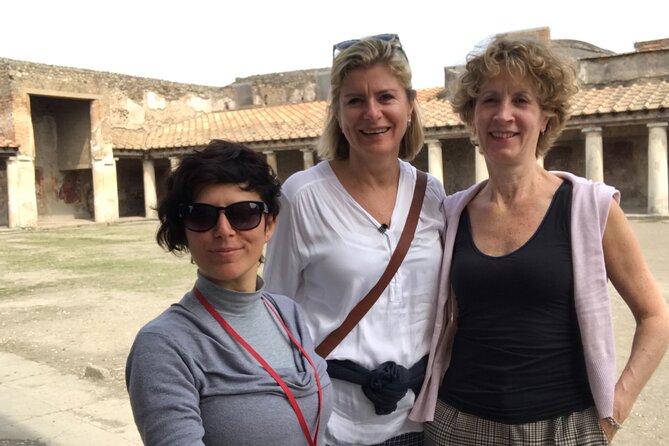
- Archaeologist-led private visit: Your guide can explain daily life, architecture, religion, politics, and the eruption rather than simply point out ruins.
- Tickets cost extra: Admission is €19 per person, with free entry for visitors under 18 who bring identification.
- Skip-the-line help has limits: The tour provides assistance at entry and an online ticket link, but you still need to buy the official site ticket.
- Major highlights in two hours: You visit the theaters, Forum, Basilica, Stabian Baths, gladiator barracks, brothel, casts, and Casa del Fauno.
- Good for families and mixed interests: Guides have adapted explanations for children, older relatives, and people returning to Pompeii.
- Private means flexible: Your guide can adjust the route and topics, though the short duration limits how much ground you can cover.
Meeting your guide at Piazza Esedra
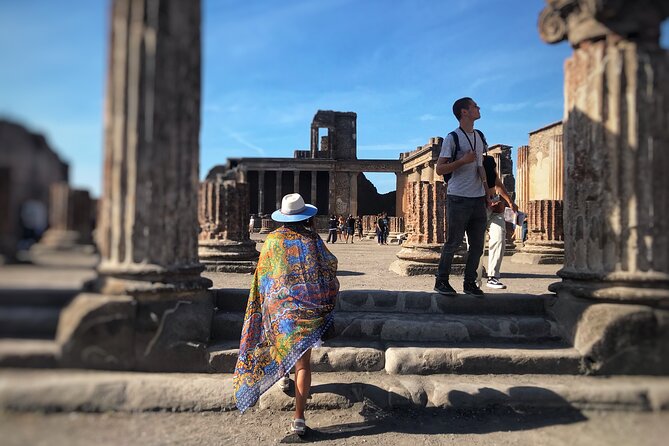
The tour begins at Piazza Esedra, 10, in Pompeii. This is a practical starting point near public transportation and close to the archaeological park entrance. The activity ends back at the meeting point.
Your confirmation arrives at booking, and the operator sends a link and instructions before the visit. One day before the tour, you receive help with buying the official entrance ticket online. That support is useful in busy periods, but read the ticket terms carefully before paying. The tour price of $375.05 covers your private guide and skip-the-line assistance, not admission.
That distinction matters. For a group of 10, the guide fee works out to about $37.50 per person before tickets, which is reasonable if you fill the group. For two people, it is a much more expensive choice. Add €19 per adult, and the total can rise quickly. The value comes from the private format, not from low admission cost.
The meeting process can be especially helpful if you are arriving in a rush. One guide met a group with a sign bearing their name, while another helped visitors wait out heavy rain near the gift shop and used postcards to explain the site before entering. Those touches show why clear contact with the guide matters.
More Skip-the-Line Tickets in Naples
- Skip the Line Guided Tour of Pompeii led by an Archaeologist
★ 5.0 · 703 reviews - Pompeii Private Tour with an Archaeologist and Skip The Line – 3 hours
★ 5.0 · 564 reviews - Pompeii Skip-the-line Tour with Archaeologist Guide
★ 5.0 · 559 reviews
What skip-the-line really means at Pompeii
The phrase needs careful reading. You must buy your own Pompeii entrance ticket, online or at the site. The operator provides a link and assistance so you can purchase ahead of time, which is the sensible choice in high season.
Once you have a valid ticket, the guide provides skip-the-line assistance at the entrance. This can save time when the ticket office or entry queue is crowded. It does not mean you enter without a ticket, and it does not turn the admission fee into an included feature.
I would buy through the official website before arriving, using the link supplied by the operator. Under-18 visitors enter free, but they need a passport or identification showing their date of birth. This is a small detail that can prevent an awkward delay at the gate.
The Small Theater and Great Theater
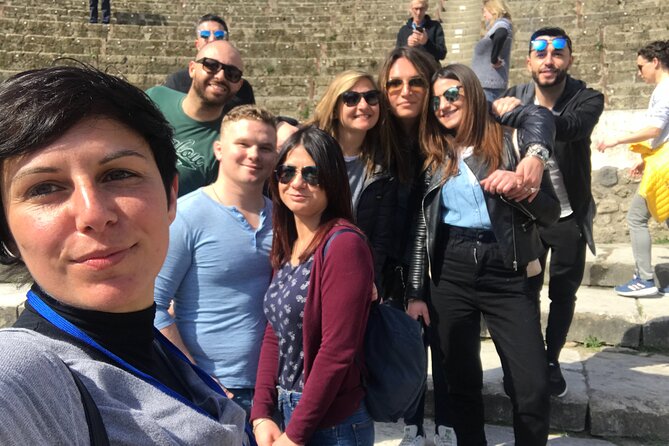
The route begins among Pompeii’s theaters, where the guide can explain how Roman audiences watched performances. The Small Theater, or Odeion, is particularly interesting for its acoustics. Your guide demonstrates how the space was designed to carry sound, turning a pile of old stone into a lesson in Roman engineering.
The Great Theater is the larger and more important performance space. It receives about 15 minutes in the stated route, enough for a clear explanation and photographs, though not enough for an extended discussion of Roman entertainment.
The theater area is a strong opening because it gives you an immediate sense of Pompeii as a working city. You are not only looking at walls. You are seeing places built for public gatherings, music, drama, and shared civic life.
The tour then crosses Via dell’Abbondanza, Pompeii’s main street. This is where the city becomes easier to picture. The road links public buildings, shops, eating places, homes, and religious spaces, allowing your guide to connect separate ruins into one urban story.
Shops, fast food, and daily life on Via dell’Abbondanza
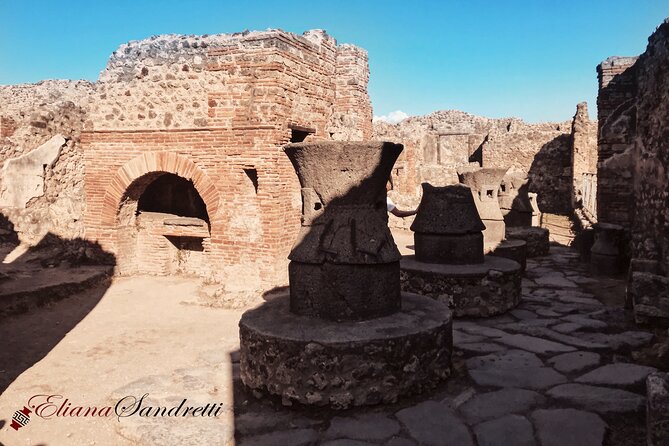
Pompeii is especially good at showing ordinary routines. The planned route includes shops and ancient fast-food counters, giving you a look at how people bought food and goods without a modern kitchen or supermarket.
Your guide’s value here is interpretation. On your own, a counter or doorway can look like another fragment of stone. With context, you can consider how residents moved through the street, where commerce happened, and how public and private life overlapped.
The operator describes the experience as tailor-made, and that flexibility appears in the strongest guide reports. Eliana adjusted a family’s visit around its interests, while Marina pointed out details to watch for later at Herculaneum. If you are fascinated by domestic life, ask for more time around homes and shops. If politics and religion appeal more, tell your guide early.
Two hours passes quickly in this part of Pompeii. The route covers many subjects, but each stop is brief. I would treat the visit as an introduction that teaches you how to look, then use the remaining time after the guided portion to explore independently if the site schedule allows.
More Pompeii and Herculaneum visits:
- Pompeii Small Group Tour with an Archaeologist
★ 5.0 · 6,593 reviews - Discover the Ancient Ruins of Pompeii: Day Trip from Rome
★ 3.5 · 2,247 reviews - Pompeii and Herculaneum Small Group Tour with an Archaeologist
★ 5.0 · 1,350 reviews - Pompeii Ticket + Tour with Optional Tasting Experience at Pompeii
★ 5.0 · 663 reviews
The Forum, Basilica, and Temples
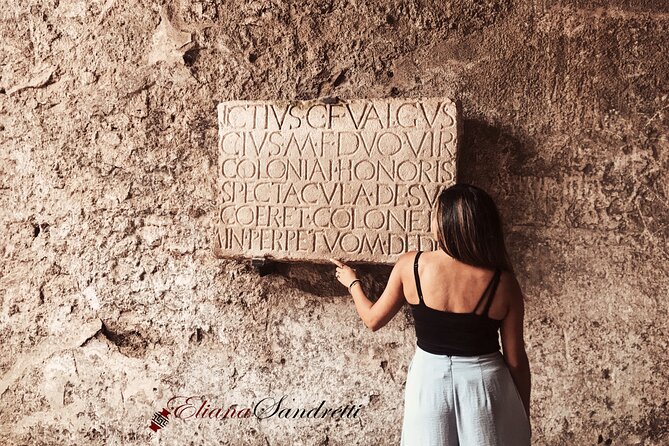
The Forum was Pompeii’s main square, surrounded by markets and temples. It is one of the most important stops because it brings together the city’s public, religious, and commercial life.
The Basilica, used as a court, adds a civic dimension. Here justice was administered, so the building helps explain how law and public business worked. The planned stop lasts about 15 minutes, while the Forum receives about 10 minutes. That is enough for the key points, but anyone interested in Roman government may wish for longer.
The route also includes the Temple of Jupiter and the Temple of Venus. These stops are not listed with separate time blocks, so the guide will likely fit them into the Forum portion of the visit. Venus was the city’s revered deity, and the temple gives you a useful reminder that Pompeii was not just a residential town. Religion shaped its public identity.
This section may be the most rewarding part for visitors who want the big picture. The Forum, Basilica, and temples show how Pompeii functioned as a community. The guide can help you understand how the buildings related to one another instead of leaving you with isolated monuments.
The Granaries and the casts of the eruption
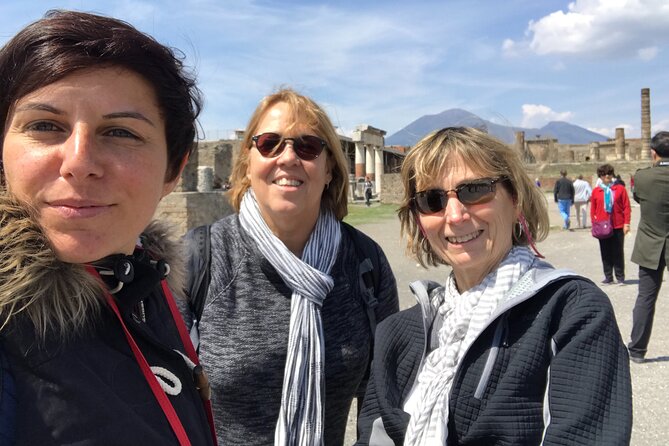
The Granaries of the Forum hold a powerful and difficult part of the visit. The archaeological deposit includes amphorae and work tools, while plaster casts show people who died in the eruption of AD 79.
The casts are emotionally heavy. They are not simply archaeological objects. They represent individual deaths, and the setting can change the mood of the tour in an instant. A good guide can provide context without turning the moment into spectacle.
The granary stop lasts about 15 minutes. That gives you time to see the casts and the stored objects, but you may want to ask questions if the eruption is a major reason for your visit. The description also includes casts among the main attractions, so this is a central part of the route rather than an optional side trip.
The operator’s guides are praised for making ancient life feel personal. That strength is useful here, but guide quality can vary by assignment. Most guide feedback is strongly positive, yet one low-rated experience described a guide as patronizing and too light in tone. If you prefer a serious, academic approach, say so at the beginning.
Stabian Baths and the Roman spa
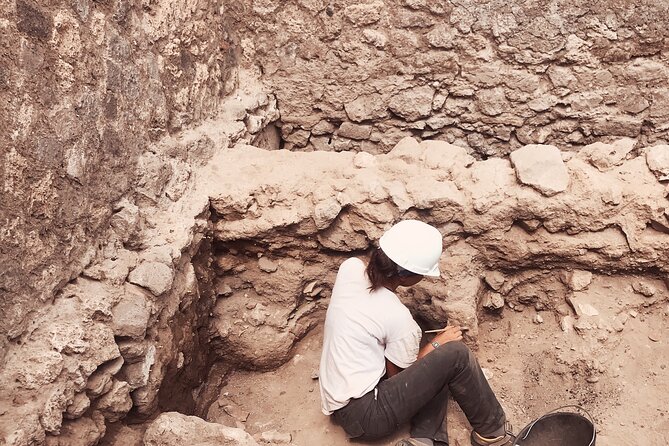
The Stabian Baths are presented as Pompeii’s best-preserved spa complex. The visit lasts around 15 minutes and offers a window into bathing, exercise, socializing, and public comfort in Roman society.
Do not think of the baths as only a place to wash. Roman bathhouses were social centers. Your guide can show how different rooms served different purposes and explain why public bathing was such a major part of city life.
This stop also breaks up the outdoor walking. Pompeii can be hot, and the route includes broad streets and exposed ruins. One guide made a point of finding shady spots for a family on a very hot day. That kind of practical judgment is valuable, especially if you are traveling with children or older relatives.
Comfort still depends on the weather. Wear supportive shoes, carry water, and expect uneven ancient paving. The experience requires good weather, and a storm cancellation offers either another date or a full refund.
Gladiator barracks and the Lupanare
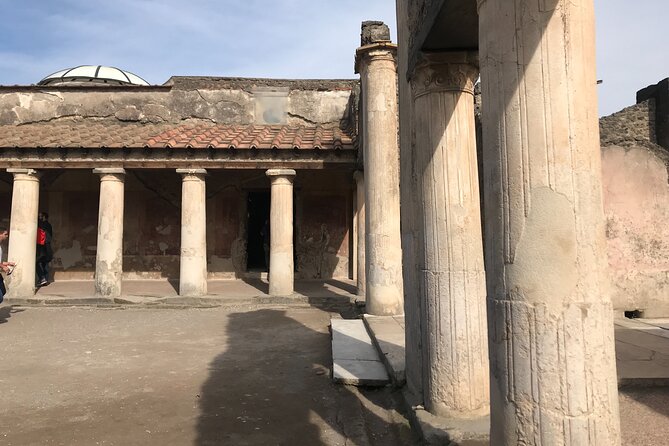
The Quadriporticus of the theaters is used as the gladiator barracks. You see the apartments and the area where gladiators trained. This is a useful correction to the usual movie version of gladiators, since the space connects public entertainment with the people who lived and worked behind it.
The Lupanare, or brothel, is reached through Vicolo del Lupanare. The route calls it Pompeii’s old red-light district and gives it about 15 minutes. It is a famous stop, but it can become crowded, so a private guide may help you understand what you are seeing without lingering in a packed doorway.
These stops show two sides of Pompeii’s social world. The barracks relate to spectacle and organized training. The Lupanare relates to commerce, sex, and the less polished side of city life. Together, they make the visit more human than a parade of temples and grand houses.
Casa del Fauno, Pompeii’s grand residence
Casa del Fauno is one of Pompeii’s most luxurious homes. It is named for the faun statue and gives the tour a strong domestic finale.
The house helps you see the gap between ordinary residents and Pompeii’s wealthiest families. Large residences were designed to impress, receive visitors, and display status. Your guide can point out how rooms, decoration, and household space reflected the owner’s position.
The stop lasts about 15 minutes. That is enough to understand why the house matters, but the scale and decoration can easily tempt you to stay longer. If grand homes are your priority, tell the guide before the tour begins so the route can give Casa del Fauno more attention.
This is also where the private format earns its keep. Several guides are praised for showing colors, decoration, and details that visitors would likely miss alone. You can ask what to notice, then continue looking for similar features after the tour ends.
How the guides shape the experience
Guide quality is the strongest reason to book this private visit. Luisa is repeatedly praised for passion, clear explanations, crowd awareness, and thoughtful photo stops. Eliana is described as flexible, enthusiastic, and able to answer questions in detail. Raffaele kept children engaged through storytelling, while Viktoria adapted the pace and subject matter for eight- and ten-year-olds.
Luciana helped an older family group avoid difficult areas without making them feel they had missed out. Antonio’s late 5 p.m. visit was praised for lighter crowds and cooler conditions in late July. Danilo showed newly opened excavation areas, and Mattia made a period-costume day even more enjoyable.
The named guides suggest a team with different strengths, but you may not be able to choose a particular person unless the operator confirms it. If a specific guide matters to you, contact the provider before booking.
One negative experience found the presentation too patronizing and not detailed enough. That is a useful reminder to explain your interests at the start. Ask for more archaeology, family stories, architecture, or eruption evidence, depending on what you want.
Who gets the best value from two hours
I would recommend this tour most strongly to:
- Families that want explanations adjusted for children
- Small groups with only a short window in Pompeii
- First-time visitors who want the major sights organized
- People who dislike large group tours
- Returning visitors who want a different route
- Anyone who values an archaeologist’s interpretation
The private format also helps groups with mixed mobility or energy levels. One guide adjusted the route for elderly parents, while another found shade for children during hot weather.
The tour is less suitable if you want to explore every quarter of Pompeii. Two hours cannot do that. It is also poor value for one or two people on a tight budget unless private guiding is a top priority.
Booking, cancellation, and practical details
The experience is offered in English. A single-language tour is standard, though multiple languages may be possible on request. Confirmation is provided at booking, and most people can participate. Service animals are allowed, and the meeting point is near public transportation.
Food and drinks are not included, and tipping is not included. Plan your water and snacks separately.
Free cancellation is available up to 24 hours before the local start time. Changes or cancellations made inside that window are not refunded. Bad weather is handled with a new date or a full refund.
Should you book this Pompeii tour?
Book it if you want a private guide who can turn Pompeii’s ruins into a readable city, especially when your time is limited. The best evidence of value is the range of guide strengths: Luisa’s crowd sense, Eliana’s flexibility, Raffaele’s family storytelling, Luciana’s care with older visitors, and Antonio’s smart late-day timing.
Before paying, calculate the full price with €19 admission per adult. Buy tickets ahead through the official site, bring identification for anyone under 18, and tell the guide what matters most to you. If you accept that this is a focused highlights visit rather than a full archaeological expedition, it is a strong choice for a first look at Pompeii.
FAQ
Is the Pompeii entrance ticket included?
No. Admission costs €19 per person, and visitors under 18 enter free with identification showing their date of birth.
What does skip the line mean here?
The guide provides skip-the-line assistance after you have purchased a valid Pompeii entrance ticket. The tour price does not include admission.
How can I buy the Pompeii ticket?
You can buy it online through the official website or directly at the site. The operator sends a link one day before the tour and can provide earlier information if requested.
How long does the tour last?
The guided experience lasts approximately two hours.
Where does the tour begin?
The meeting point is Piazza Esedra, 10, 80045 Pompei, Italy.
Where does the tour finish?
The activity ends back at the meeting point.
Is this a private tour?
Yes. Only your own group participates, with a maximum group size of 10 people.
Is the tour offered in English?
Yes. English is offered. A tour in multiple languages may be arranged on request.
What happens if there is a storm?
If poor weather causes cancellation, you can choose another date or receive a full refund.
More Fast-Track Entries
- Complete Pompeii Skip the Line Tour with Archaeologist Guide
★ 4.5 · 379 reviews - Florence: Skip-The-Line Uffizi Gallery Timed Entry Ticket
★ 4.5 · 27,832 reviews - Vatican Museums & Sistine Chapel Skip-the-Line Entry Ticket
★ 4.4 · 13,838 reviews - Skip-the-Line Group Tour of the Vatican, Sistine Chapel & St. Peter’s Basilica
★ 4.5 · 12,779 reviews
Just added around Pompeii
- Pompeii Guided Group Tour with Entry Ticket and Archaeologist★ 4.5 · 269 reviews
- Pompeii: Guided Small Group Tour Max 6 People with Private Option★ 5.0 · 269 reviews
- Private Day Tour to Vesuvius, Herculaneum & Pompeii with Pick Up★ 5.0 · 279 reviews
- Pompeii Vineyard Escape: Private Wine Tasting & Lunch★ 5.0 · 329 reviews
- 2 hours Pompeii Tour with Local Historian – Ticket Included★ 5.0 · 335 reviews
- PompeiI Exclusive Tour with your Archaeologist in a Small Group★ 4.5 · 363 reviews
- Complete Pompeii Skip the Line Tour with Archaeologist Guide★ 4.5 · 379 reviews
- Pompeii 2h Small-Group Tour with Expert Archaeologist★ 5.0 · 385 reviews
Pompeii & Herculaneum Tours, compared.

Pompeii: Entry Ticket and Guided Tour with an Archaeologist
Read our review →
Pompeii: Entry Ticket with Optional Audio Guide
Read our review →
Pompeii: Small Group Tour with an Archaeologist
Read our review →


Pompeii Small Group Tour with an Archaeologist
Read our review →
Pompeii, Amalfi Coast and Positano Day Trip from Rome
Read our review →Browse the lists this tour appears in