

Review · POMPEII & HERCULANEUM TOURS
Pompeii: Entry Ticket with Optional Audio Guide
Ancient streets, frozen in time. I like the freedom to explore Pompeii at your own pace, and the reserved entry voucher can save you from the longest ticket queues. The optional audio guide is also useful for making sense of a huge site filled with temples, villas, baths, theaters, and streets. The main drawback is practical: finding the correct entrance and ticket or audio desk can be confusing.
I especially like the choice between the Pompeii Express ticket and the broader Pompeii+ option, which adds the Villa of the Mysteries, Villa of Diomedes, and Villa Regina in Boscoreale. I also appreciate the free luggage storage and wheelchair access. You should allow plenty of time, bring water, and wear sturdy shoes because Pompeii is far too large for a quick, casual stroll.
In This Review
- Key things to know before visiting Pompeii
- Why Pompeii rewards a slow visit
- Choosing between Pompeii Express and Pompeii+
- Getting through the entrance without losing time
- Making sense of the audio guide
- The city’s essential stops
- How long should you spend at Pompeii?
- Price and overall value at $26
- Who should choose this Pompeii ticket?
- Should you book this Pompeii experience?
- FAQ
- Is the Pompeii ticket valid for one day?
- What is included with the Pompeii Express ticket?
- What does the Pompeii+ ticket include?
- What are the last entry times for Pompeii+?
- Where do I collect the physical audio guide?
- Do I need identification to rent the audio guide?
- Are headphones included, and do Bluetooth headphones work?
Key things to know before visiting Pompeii

- Pompeii Express covers the ancient city only: The main archaeological site includes the streets, temples, baths, villas, theaters, and amphitheater, but not the suburban villas.
- Pompeii+ adds three important sites: You can visit the Villa of the Mysteries, Villa of Diomedes, and Villa Regina in Boscoreale with its Antiquarium.
- The audio guide can help you find your way: Some versions include a map and location feature, though the device can take time to learn.
- Collecting the audio guide requires ID: A valid ID is held as a deposit, and Bluetooth headphones do not work with the physical device.
- Reserve ahead during busy periods: Online vouchers can help you avoid the longest queues, but signage and entrance procedures may still require patience.
- Plan for a full day if you want depth: Some people cover much of the site in two hours, while others spend the entire day and still see only part of it.
Why Pompeii rewards a slow visit
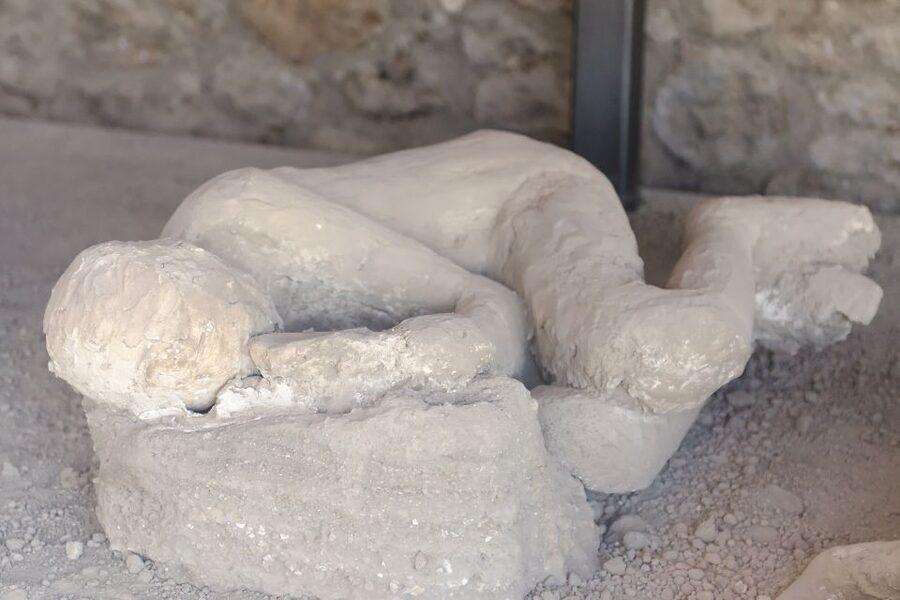
Pompeii is not a single monument. It is an entire Roman city, preserved under volcanic ash after Mount Vesuvius erupted on August 24, AD 79. You walk along original streets and pass through homes, shops, temples, public baths, theaters, and civic buildings.
That citywide scale is what makes the visit special. At the Colosseum, you see one great structure. At Pompeii, you can follow the daily rhythm of a town. You might pause at a market area where people once bought lunch, then turn toward a bath complex with detailed mosaics. A few minutes later, you are looking into an elegant private house or walking past a temple dedicated to Venus, Apollo, or Jupiter.
I find this type of visit more rewarding when you resist the urge to rush from one famous building to the next. Pompeii works best when you notice the ordinary details: doorways, paving stones, painted walls, fountains, and the layout of small rooms. These pieces show how Roman life functioned, not just how wealthy families displayed their money.
The site is large enough to feel like a proper walk. Comfortable shoes matter, and water is a sensible addition. The grounds are well maintained, with maps and toilets available, but you still need to keep track of where you have been. Marking visited areas on a map can prevent a frustrating return across the same rough streets.
More Audio Tours in Naples
- Pompeii: Skip-the-Line Entrance Ticket with Audio Guide
★ 4.0 · 2,509 reviews - Pompeii: Skip-the-Line Entry Ticket with Audio Guide or Tour
★ 4.1 · 1,364 reviews - Herculaneum: Skip-the-Line Entry Ticket with Audio Guide
★ 4.3 · 870 reviews
Choosing between Pompeii Express and Pompeii+
The Pompeii Express ticket is the simpler choice. It gives you access to the ancient city itself, where most visitors spend their time. You will see the amphitheater, temples, theaters, villas, baths, market areas, and the famous House of the Faun.
For a first visit with limited time, Express may be enough. The central archaeological area is extensive, and even a focused visit can fill several hours. It also avoids the need to coordinate additional suburban sites.
The Pompeii+ ticket adds three locations:
- Villa of the Mysteries
- Villa of Diomedes
- Villa Regina in Boscoreale with its Antiquarium
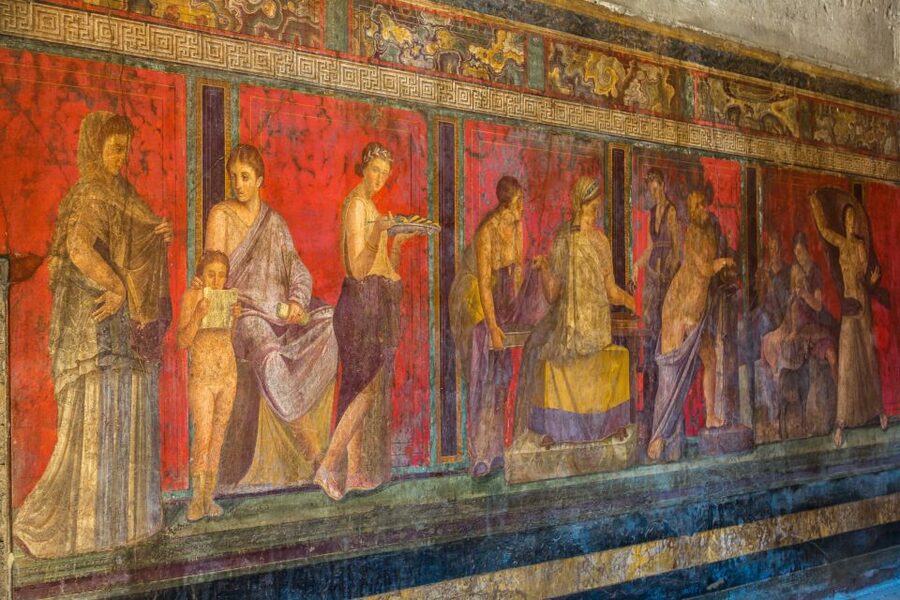
The Villa of the Mysteries is the major reason many people choose the upgrade. Its frescoes are especially memorable, and the building gives you a strong sense of how a prosperous Roman residence might have looked beyond the city center.
Villa Diomedes adds another large suburban residence, while Villa Regina in Boscoreale offers a different setting and includes an Antiquarium. These sites are valuable if you have already seen Pompeii or want a fuller picture of the area around the ancient city.
Pay close attention to the time limits for Pompeii+. From November 1 through March 31, the last entry is 3:30 p.m. From April 1 through October 31, the last entry is 5:30 p.m. Since Pompeii+ includes more than the main city, arriving late can reduce the value of the upgrade.
Getting through the entrance without losing time
Your voucher is available on your phone, and you should bring a valid passport or ID card. The reserved ticket is useful because the regular ticket line can become very long, especially during busy periods.
The catch is that Pompeii has several entrance points and service desks, and the process is not always obvious. Some people have been directed between the lower ticket office, the audio guide desk, and different entrances. Signage can also be less clear than you would expect at one of Italy’s most visited archaeological sites.
Read the instructions attached to your booking carefully before you arrive. If you have selected an audio guide, the official collection point is at the audio guide desk inside the archaeological area near the ticket office, at Porta Marina Superiore. Other instructions may direct you to a voucher or e-ticket kiosk, so do not assume the first queue you see is yours.
A useful rule is simple: do not join a long general ticket line until you have checked where reserved vouchers are handled. The correct desk may let you move faster. Staff can point you in the right direction, though the first few minutes may involve some searching.
Free luggage storage is available, which is helpful if you arrive with bags or are visiting between train connections. Keep your phone charged so you can display the voucher when needed.
Making sense of the audio guide

Pompeii can feel overwhelming without context. A house may look like a collection of rooms until you understand its purpose, and a temple may need explanation before its position in Roman life becomes clear. The audio guide helps put those fragments together.
The available languages include English, Italian, Chinese, Japanese, Portuguese, Russian, German, French, and Spanish. Depending on the option selected, you may receive a physical audio guide or use a digital version.
The physical device must be collected and returned at the official desk near Porta Marina Superiore. You need a valid ID as a deposit, and Bluetooth headphones will not work with the device. Headphones are not included, so bring compatible wired headphones if you plan to use your own.
Some versions of the guide function as a map, with a location feature that helps you orient yourself. That can be a major help because Pompeii has many turns and large open areas. You can use it to find key buildings instead of wandering until the day gets away from you.
Still, the audio guide is not perfect. You may need time to understand how the controls work, and the location feature may not always identify your position correctly. Some explanations can also feel out of step with what you are looking at. In a few buildings, you might listen to a description while the room itself is closed.
The guide also does not replace a human guide. A live guide can point to the exact wall, room, or detail being discussed and help you shape the visit around your available time. If you have only two or three hours and want a clear route, a separate guided tour may be more efficient. If you prefer independence, the audio guide is a good middle ground.
More Self-Guided Tours in Naples
- Pompeii: Skip-the-Line Entry Ticket with Digital Guide App
★ 4.1 · 770 reviews - Naples: National Archaeological Museum Ticket & Audio App
★ 4.4 · 617 reviews - Ercolano: Herculaneum Entry Ticket with Optional Audio Guide
★ 4.1 · 581 reviews - Ercolano: Herculaneum Skip-the-Line Ticket & Audio Guide
★ 4.0 · 275 reviews
The city’s essential stops

Start with the broad structure of Pompeii rather than trying to inspect every building. The amphitheater is an obvious early stop, giving you a sense of the city’s public entertainment and the scale of its population.
The theaters offer another look at public life. Even when you cannot enter every building, the remains help show how Roman entertainment fit into the city. The public baths are worth your time for their mosaics and the clues they provide about bathing as a social activity, not merely a practical chore.
The House of the Faun is one of the major private residences. Its Hellenistic design and decorative details show the wealth and cultural reach of Pompeii’s elite. It is a useful contrast to the smaller homes and shops elsewhere in town.
The market area brings the city down to street level. This is where Pompeii feels less like a collection of ruins and more like a functioning place. You can imagine people stopping for food, meeting friends, or handling daily business before the eruption interrupted everything.
The temples of Venus, Apollo, and Jupiter add a religious layer to the visit. Their remains are not simply architectural decoration. They show how public spaces, political identity, and worship were connected in Roman society.
The Villa of the Mysteries is the highlight for anyone choosing Pompeii+. Its frescoes are unusually striking, and the villa rewards a slower look. Give the painted walls time rather than treating them as a quick photo stop.
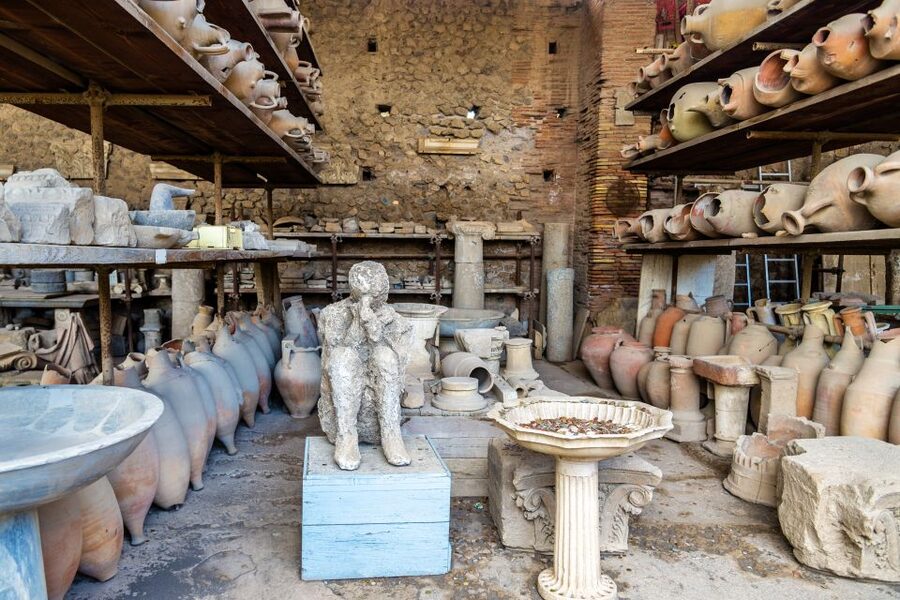
You may also encounter the preserved forms of eruption victims. These are among the most sobering parts of the site. They remind you that Pompeii is not only an open-air museum of houses and art. It is also the record of a sudden disaster that killed the city’s inhabitants.
How long should you spend at Pompeii?

The answer depends on your style and ticket. Two hours can work if you choose a few major highlights and keep moving. One family managed to see a great deal in roughly two hours, particularly because children may not want a full day of walking.
For a more thoughtful visit to the ancient city, I would set aside at least half a day. Pompeii is large, and even a well-planned route can take several hours. A full day makes more sense if you want to study the houses, stop for the audio explanations, and include the Pompeii+ villas.
Arriving early helps with cooler temperatures and lighter crowds. A late afternoon visit can also work, but check the closing and last-entry rules carefully. One late arrival allowed only about two hours inside, which was enough for a strong overview but not enough to see everything.
Do not judge the site by the first hour. The beginning can feel confusing as you learn the map and the route. Once you understand the layout, the visit becomes easier. Use the map often, and choose a few priority buildings before you start.
Price and overall value at $26
At about $26 per person, this is a fair price for reserved access to one of Europe’s major archaeological sites. The value is strongest when the ticket saves you from a long queue and lets you enter with less stress.
The Express option is best for a focused first visit. The Pompeii+ upgrade can be worthwhile if the difference is only a few dollars and you have enough time to visit the suburban villas, especially the Villa of the Mysteries.
The audio guide adds value if you want background without joining a group. It is less useful if you dislike handling devices or prefer to read signs at your own speed. Since headphones are not supplied, remember that the advertised price does not cover every small item you might want during the visit.
EU citizens under 18 enter Pompeii free, as do disabled citizens and their relatives, according to the stated conditions. Check the requirements before buying a paid ticket for an eligible family member.
Free cancellation up to 24 hours before the visit and the reserve-now, pay-later option add flexibility. These features are practical when your Campania plans depend on weather, trains, or changing schedules.
Who should choose this Pompeii ticket?

I recommend it most strongly for independent sightseers who want control over their pace. You can pause at a fresco, skip a building that is closed, or spend an hour tracing streets without waiting for a group.
Families can also do well here, but plan a shorter route and carry water. Children may enjoy the amphitheater, street layout, and sense of discovery more than long audio explanations.
History fans and photographers will want more time, especially for the villas and frescoes. People with limited mobility should note that the site is wheelchair accessible, but the ancient streets and large grounds still require careful pacing.
If you need every landmark explained in order, a live guide may suit you better. The ticket gives access, not a guided tour, and the audio device sometimes lacks precise directions about where to stand inside a house.
Should you book this Pompeii experience?

Book it if you want a flexible, self-guided visit and plan to arrive prepared. The reserved voucher, optional audio guide, luggage storage, and choice of ticket types make it a practical way to see Pompeii without committing to a group schedule.
Choose Pompeii Express if your time is limited or this is your first look at the site. Choose Pompeii+ if you can spare more time and particularly want the Villa of the Mysteries.
I would book online during busy periods, but I would not expect the entrance process to be completely effortless. Check the correct desk before queuing, keep your ID ready for the audio guide, bring compatible headphones, and use the map to avoid retracing your steps. With those small preparations, the $26 ticket can open the door to one of Italy’s most powerful and memorable places.
FAQ
Is the Pompeii ticket valid for one day?
Yes. The ticket is valid for one day, with starting times and availability shown when you book.
What is included with the Pompeii Express ticket?
Pompeii Express includes entry to the ancient city of Pompeii. It does not include Villa of the Mysteries, Villa of Diomedes, or Villa Regina.
What does the Pompeii+ ticket include?
Pompeii+ includes the ancient city of Pompeii, Villa of the Mysteries, Villa of Diomedes, and Villa Regina in Boscoreale with its Antiquarium.
What are the last entry times for Pompeii+?
From November 1 through March 31, the last entry is 3:30 p.m. From April 1 through October 31, the last entry is 5:30 p.m.
Where do I collect the physical audio guide?
Collect and return the physical audio guide at the official audio guide desk near the ticket office inside the archaeological site, at Porta Marina Superiore.
Do I need identification to rent the audio guide?
Yes. A valid ID is required as a deposit for the audio guide device. You should also bring a passport or ID card for the visit.
Are headphones included, and do Bluetooth headphones work?
Headphones are not included. Bluetooth headphones do not work with the physical audio guide device, so bring compatible headphones if needed.
More Self-Led Routes
- Rome: Colosseum & Forum with Audio Guide App -Optional Arena
★ 4.2 · 24,770 reviews - Rome: Pantheon Fast-Track Ticket and Official Audio Guide
★ 4.3 · 21,008 reviews - Venice: Grand Canal Gondola Ride with App Commentary
★ 4.1 · 18,908 reviews - Venice: La Fenice Opera House Entry Ticket with Audio Guide
★ 4.6 · 11,742 reviews
More Pompeii and Herculaneum Visits
- Pompeii Small Group Tour with an Archaeologist
★ 5.0 · 6,593 reviews - Discover the Ancient Ruins of Pompeii: Day Trip from Rome
★ 3.5 · 2,247 reviews - Pompeii and Herculaneum Small Group Tour with an Archaeologist
★ 5.0 · 1,350 reviews - Skip the Line Guided Tour of Pompeii led by an Archaeologist
★ 5.0 · 703 reviews
Just added around Pompeii
- Pompeii: Guided Small Group Tour Max 6 People with Private Option★ 5.0 · 269 reviews
- Pompeii Guided Group Tour with Entry Ticket and Archaeologist★ 4.5 · 269 reviews
- Private Day Tour to Vesuvius, Herculaneum & Pompeii with Pick Up★ 5.0 · 279 reviews
- Pompeii Vineyard Escape: Private Wine Tasting & Lunch★ 5.0 · 329 reviews
- 2 hours Pompeii Tour with Local Historian – Ticket Included★ 5.0 · 335 reviews
- PompeiI Exclusive Tour with your Archaeologist in a Small Group★ 4.5 · 363 reviews
- Complete Pompeii Skip the Line Tour with Archaeologist Guide★ 4.5 · 379 reviews
- Pompeii 2h Small-Group Tour with Expert Archaeologist★ 5.0 · 385 reviews
Pompeii & Herculaneum Tours, compared.

Pompeii: Entry Ticket and Guided Tour with an Archaeologist
Read our review →
Pompeii: Small Group Tour with an Archaeologist
Read our review →


Pompeii Small Group Tour with an Archaeologist
Read our review →
Pompeii, Amalfi Coast and Positano Day Trip from Rome
Read our review →
Pompeii and Mount Vesuvius Day Trip from Rome with Pizza Lunch
Read our review →Browse the lists this tour appears in