
Review · POMPEII & HERCULANEUM TOURS
Pompeii Skip-the-line Tour with Archaeologist Guide
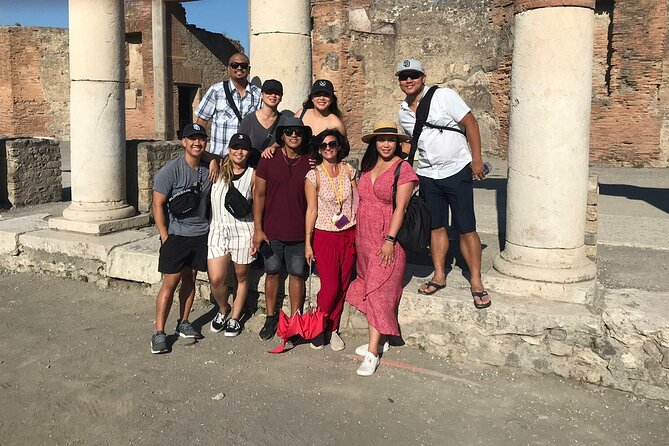
Pompeii rewards a good guide. This two-hour walking tour brings the buried Roman city into focus, with an archaeologist leading you through the forum, theaters, baths, shops, and brothel. I like the small-group limit of 16 people, and I like that the guides, including Lello, Italo, Leonardo, and Cela, are praised for lively explanations rather than dry lectures. The main drawback is time: Pompeii is enormous, so two hours gives you a strong introduction, not the whole story.
You make your own way to the meeting point near the entrance, which keeps the price lower than a full transport package. The $71.35 cost is fair if you want expert context and quick entry, but less appealing if you prefer wandering alone or plan to spend most of the day inside the ruins.
In This Review
- Key points to know before booking
- Why Pompeii works better with an archaeologist
- Meeting near the Pompeii entrance
- Entering the excavations and reading the streets
- The forum, where public Pompeii comes together
- Theaters, baths, and the rhythm of Roman life
- Shops, food counters, and the business of daily life
- Gladiator barracks and the Lupanare
- What makes the guide quality matter
- Is $71.35 a fair price?
- Who should choose this two-hour tour?
- Practical tips for getting more from Pompeii
- Should you book this Pompeii tour?
- FAQ
- How long is the Pompeii tour?
- What language is the tour offered in?
- What is included in the price?
- Is hotel or port pickup included?
- Where does the tour start?
- Where does the tour end?
- How many people can join the group?
- Can I use the confirmation to enter Pompeii without the guide?
- What should I wear?
- Can I cancel for a refund?
Key points to know before booking
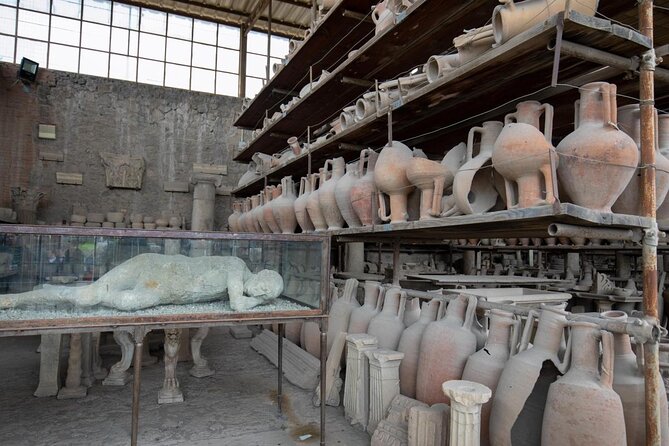
- Archaeologist-led tour: Guides such as Lello and Italo bring field experience and point out details that are easy to miss.
- Two-hour route: You see major landmarks, including the forum, theater, baths, gladiator barracks, and Lupanare.
- Small group, maximum 16: This is more personal than a large coach-style tour and leaves room for questions.
- Easy rail access: The Pompei Scavi station on the Circumvesuviana line is close to the archaeological entrance.
- Original Roman streets: Expect uneven ancient paving and lava rock underfoot, so sturdy shoes matter.
- Not a stand-alone admission ticket: The confirmation is used with the guide, not as an independent ticket to the ruins.
Why Pompeii works better with an archaeologist
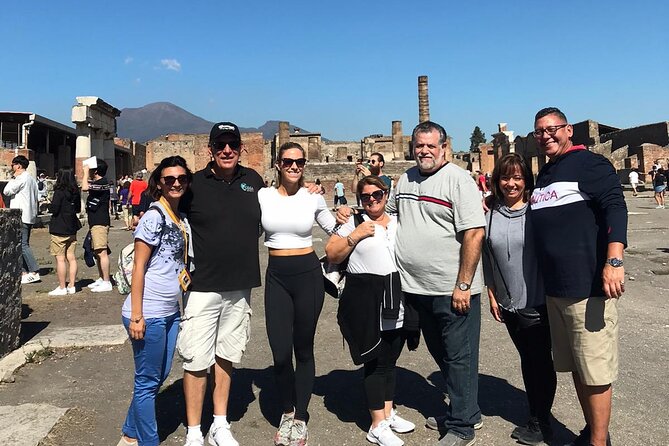
Pompeii can look like a maze of broken walls if you enter without context. A doorway, painted sign, raised sidewalk, or stone counter may seem ordinary until someone explains how it fit into Roman daily life. That is where this tour earns its keep.
The guide connects the ruins to the eruption of Mount Vesuvius in AD 79, but the focus is not only on disaster. You learn how people lived, bathed, worked, worshipped, governed, ate, and entertained themselves before the city was buried.
I especially like the reports of guides making the city feel active rather than frozen. Lello is praised for his humor, energy, and long experience working at Pompeii. Italo is described as careful about avoiding crowds and attentive to questions from younger members of the group. Those qualities matter here, because the site is large and the remains can be hard to read at first glance.
The tour also helps you see Pompeii as a working city. You pass places connected with food, clothing, business, religion, politics, and theater. Instead of looking at ruins as isolated objects, you begin to understand how one street led into the next part of city life.
More Skip-the-Line Tickets in Naples
- Skip the Line Guided Tour of Pompeii led by an Archaeologist
★ 5.0 · 703 reviews - Pompeii Private Tour with an Archaeologist and Skip The Line – 3 hours
★ 5.0 · 564 reviews - Pompeii Private Tour with an Archaeologist and Skip The Line
★ 5.0 · 391 reviews
Meeting near the Pompeii entrance
The tour starts at Hotel Vittoria on Piazza Esedra in Pompei. You do not get hotel or port pickup, so you need to arrange your own route to the meeting point. That is simple if you are already in Pompeii, and the site is also an easy trip from Naples or Sorrento by Circumvesuviana train to Pompei Scavi station.
Build in extra time. The late policy is strict, and there are no refunds if you arrive late or miss the tour. Your booking confirmation includes the meeting details, and you should provide a mobile number with the country code in case the operator needs to contact you.
The tour ends back at the meeting point. That gives you a clear finish, but it also means you should not expect a guide to escort you onward to the train, your hotel, or another attraction.
The experience is offered in English. It is capped at 16 people, though the actual group may be smaller. Several reported groups were intimate enough for personal questions, which is one reason this feels different from a large group trudging behind a flag.
Entering the excavations and reading the streets
Once inside, the tour takes you along original ancient streets. This is one of the most memorable parts, but also one of the least comfortable. The paving is uneven, and you are walking on lava rock and old cobblestones. Wagon-wheel ruts remain visible in the road, giving you a direct clue about carts moving through the city.
Wear comfortable shoes with solid support. A hat is useful in summer, since much of the walk is exposed to the sun. There is no promise of shade, food, or hotel transfer in the tour price, so plan around the two-hour walk rather than treating this as a casual stroll.
The guide’s role becomes clear here. Without explanation, a street is just a street. With the right interpretation, the ruts, paving stones, sidewalks, and entrances begin to show how people moved through Pompeii.
The pace is generally described as well judged. You keep moving through a large site, but there is time for explanation and questions. Still, two hours is short for Pompeii. You will not see every house, street, and painted room, and that is not a flaw in the tour so much as a fact about the size of the archaeological park.
The forum, where public Pompeii comes together
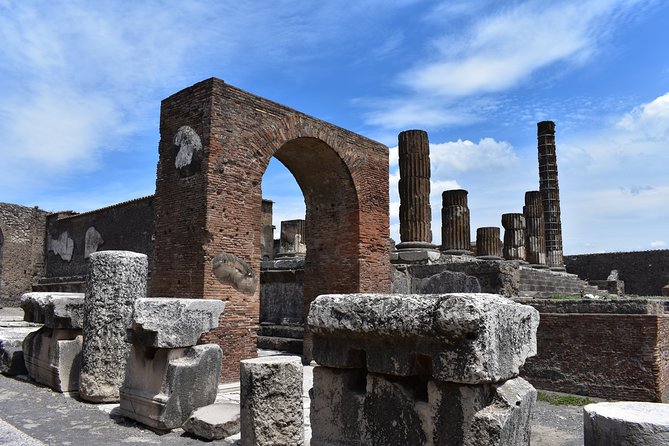
The forum is the city’s central public space and one of the essential stops. Here, religious, political, and commercial life met. Temples and civic buildings frame the area, giving you a chance to understand the Roman city as an organized community rather than a collection of private homes.
This is also where a good guide can make a major difference. The remains do not always explain themselves. You need help distinguishing a religious building from a civic one and understanding why priests, politicians, and ordinary residents used this central space.
The forum is a good place to pause and picture Pompeii before the eruption. It was not an abandoned settlement waiting for Vesuvius. It was a functioning city with public business, ritual, trade, and social gatherings.
If you want time for photographs, you may need to be efficient. The guide has a route to cover, and other groups may be moving through the same area. You can return to the forum later if you stay inside after the tour, but the guide will not be able to give you unlimited time at every stop.
More Pompeii and Herculaneum visits:
- Pompeii Small Group Tour with an Archaeologist
★ 5.0 · 6,593 reviews - Discover the Ancient Ruins of Pompeii: Day Trip from Rome
★ 3.5 · 2,247 reviews - Pompeii and Herculaneum Small Group Tour with an Archaeologist
★ 5.0 · 1,350 reviews - Pompeii Ticket + Tour with Optional Tasting Experience at Pompeii
★ 5.0 · 663 reviews
Theaters, baths, and the rhythm of Roman life
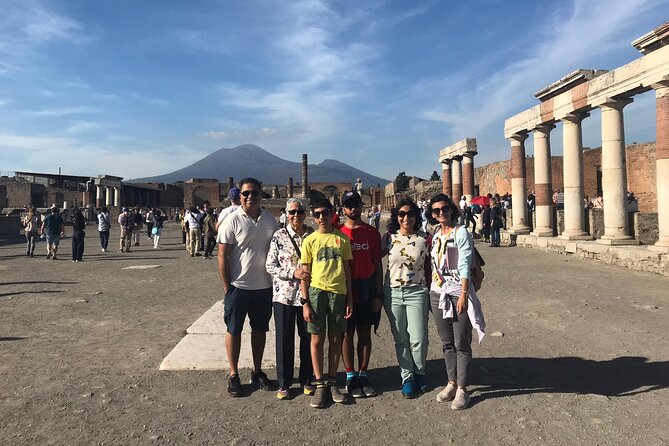
The theaters reveal Pompeii’s entertainment culture. The tour visits the small theaters and explains the role of performances, including tragedy and comedy. These spaces are useful for imagining how people spent leisure time, and they add balance to the usual focus on the eruption.
The thermal baths offer another window into everyday routine. Romans did not visit bathhouses only to wash. Baths were places to exercise, socialize, and gossip. The surviving rooms and systems can be difficult to interpret on your own, but a guide can show how the different parts worked together.
I like this section because it moves beyond famous disaster images. Pompeii becomes a place of ordinary habits: meeting friends, attending performances, shopping, eating, and spending time in public spaces.
The route may also include the Gymnasium and the House of Menander. The exact order can vary, and the guide may adjust the path to manage crowds. That flexibility is useful at a site where conditions change from one area to the next.
Shops, food counters, and the business of daily life
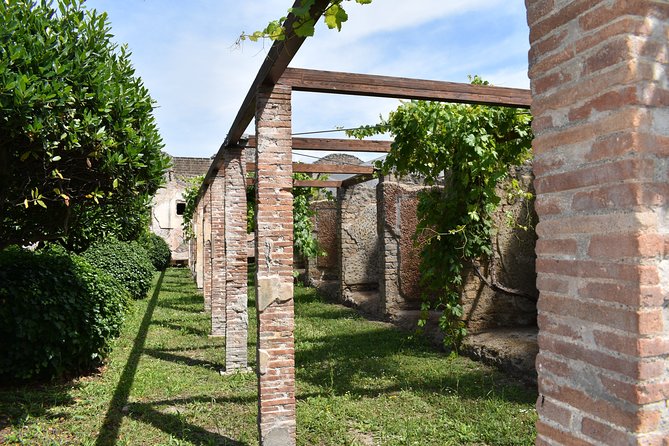
The remains of shops, restaurants, and bars give Pompeii an unusually practical feel. You can look into places where people bought food and clothing or stopped for something to eat and drink.
These businesses are among the best stops for families and younger visitors. A political building may require patience and explanation, while a shop or food counter is instantly understandable. You can picture a customer arriving, a seller working behind the counter, and goods moving through the city.
The guide helps you notice details that an unaccompanied visit might skip. Several people praised the way the archaeologist guides pointed out small features that most visitors would miss. That is an important part of the price: you are paying not just to walk through the gate, but to have someone read the site for you.
Food is not included, and this is a walking tour rather than a tasting experience. Bring anything you need before starting, or plan to eat afterward. The tour information does not promise refreshments during the route.
Gladiator barracks and the Lupanare
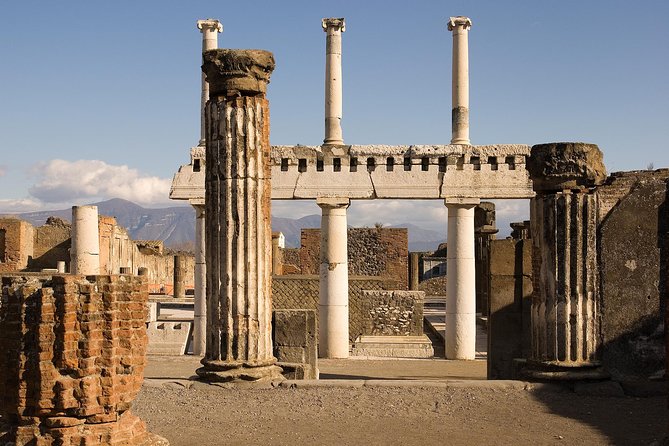
The gladiator barracks add another layer to Pompeii. These buildings connect the city with the world of public combat and training. The guide can help you understand the setting and explain why the barracks matter within the wider city.
The Lupanare, or brothel, is one of Pompeii’s most popular stops. Its rebuilt rooms and surviving features draw attention, but the value is greater than the novelty. The site shows another part of urban life that is often left out of polished accounts of Roman society.
Expect this stop to be popular and potentially crowded. A small group and an experienced guide can help you see it without losing the thread of the tour. It is also worth remembering that the Lupanare is not the whole of Pompeii. If you only chase the famous rooms, you miss the city’s homes, civic buildings, baths, and streets.
What makes the guide quality matter
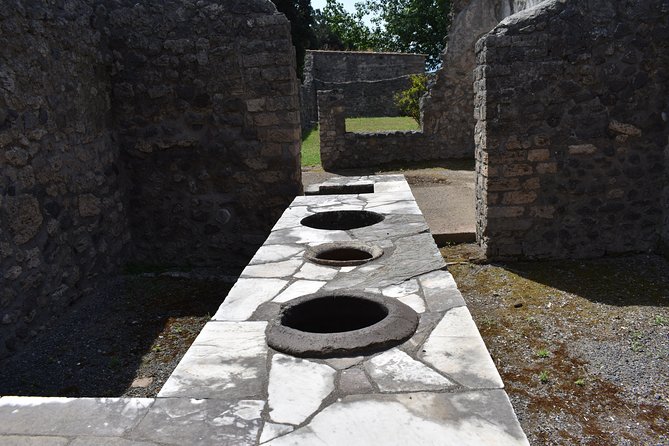
The strongest praise for this experience goes to the guides. Lello is repeatedly described as witty, energetic, and highly experienced, with years of archaeological work at the site. Italo is praised for clear English, thoughtful pacing, and a talent for keeping a group ahead of heavier crowds. Leonardo is described as passionate and considerate, while Cela is praised for making the visit work well for a family with children.
Guide assignments can change, so you should not book solely on the hope of getting one particular person. Still, the pattern is encouraging: the experience depends on archaeologist guides who explain rather than simply point.
A good guide also helps you continue independently. Italo, for example, is praised for suggesting additional places to see after the guided route. That is useful because the archaeological park is so large. You get a framework during the two hours, then can explore more on your own if your schedule allows.
The guides also appear willing to answer questions from children and adults. For a family, that can make the difference between a tiring walk and a memorable lesson. The subject is serious, but the best guides use humor and stories to keep attention alive.
Is $71.35 a fair price?
At $71.35 per person, this is not the cheapest way to enter Pompeii. Admission tickets and a self-guided visit may cost less, depending on current ticket pricing and availability. But this package includes the admission ticket and a two-hour local guide, and the group is limited to 16 people.
The value is strongest if you have never visited Pompeii, have limited time, or want the site explained in English. The tour can help you avoid spending your first hour wondering what you are looking at. It also offers the practical benefit of skip-the-line access with the guide.
Be careful with one important detail: this is not a free-standing ticket to the ruins. The confirmation is a guided-tour confirmation and can be used only with the guide. If you want to stay longer, ask the guide what you can continue seeing after the tour and confirm the current site rules.
The price is less convincing for someone who already knows Pompeii well or prefers slow, solitary exploration. Two hours may leave you eager for more, and you still have to arrange your own transport and food.
Who should choose this two-hour tour?
I would recommend it to first-time visitors, families, couples with a tight schedule, and anyone who wants the major sights explained without committing to a full-day program. The small group makes it a better fit for people who dislike large guided parties.
It also suits visitors arriving from Naples or Sorrento by train. Since you make your own way to the site, the tour is easy to add to a day trip, provided you allow enough time to find the meeting point.
Families should appreciate the mix of theaters, baths, shops, streets, and the Lupanare. The guides have been praised for engaging children from about age nine upward, though the uneven ground and summer heat still require sensible preparation.
I would hesitate to recommend it to anyone with only a few minutes to spare or anyone unwilling to walk over rough surfaces. The experience is not suitable for a quick photo stop. It asks you to walk, listen, and keep pace for two hours.
Most people can participate, and service animals are allowed. The tour requires good weather, and if poor weather or an insufficient number of bookings causes cancellation, you are offered another date or a full refund.
Practical tips for getting more from Pompeii
- Arrive early: Late arrivals are not refunded, so do not aim to reach the meeting point at the last minute.
- Wear real walking shoes: Ancient paving is uneven, and the tour specifically warns that you will walk on lava rock.
- Carry a hat in summer: Sun exposure can make two hours feel longer.
- Save questions for the guide: The group limit gives you a better chance to ask about details you would otherwise miss.
- Plan extra time if possible: The tour covers highlights, but Pompeii is huge. Continue exploring afterward if your admission and site access allow it.
- Use the train: The Circumvesuviana line connects Naples and Sorrento with Pompei Scavi, making the site practical without a private transfer.
- Share your full mobile number: Include the country code when booking in case of an emergency or meeting-point message.
Free cancellation is available if you cancel at least 24 hours before the local start time. Changes or cancellations inside that window are not refunded, so keep an eye on your plans and the forecast.
Should you book this Pompeii tour?
Book it if you want Pompeii to make sense, not just look impressive. The archaeologist guides are the main reason to choose this experience, and the small group, skip-the-line entry, and focus on major sights add solid value.
Skip it if you already have strong knowledge of the site, want to wander alone for several hours, or need hotel transportation included. For most first-time visitors, though, two focused hours with a lively expert is a smart introduction. You will leave with a map in your head, a better sense of Roman life, and a clear idea of where to spend extra time.
FAQ
How long is the Pompeii tour?
The guided experience lasts approximately two hours. The 5 pm departure also lasts two hours.
What language is the tour offered in?
The tour is offered in English.
What is included in the price?
The price includes admission tickets and a local guide.
Is hotel or port pickup included?
No. You must make your own way to the meeting point, and hotel or port pickup and drop-off are not included.
Where does the tour start?
The meeting point is Hotel Vittoria at Piazza Esedra, 80045 Pompei, Italy.
Where does the tour end?
The activity ends back at the meeting point.
How many people can join the group?
The tour has a maximum of 16 travelers.
Can I use the confirmation to enter Pompeii without the guide?
No. The confirmation is for the guided tour and is not a stand-alone ticket to the ruins. It can be used only with the guide.
What should I wear?
Wear comfortable shoes because the route uses original ancient streets and uneven lava rock. A hat is recommended for summer conditions.
Can I cancel for a refund?
Yes, you can cancel at least 24 hours before the experience starts for a full refund. Cancellations or changes made less than 24 hours before the start time are not refunded.
More Fast-Track Entries
- Complete Pompeii Skip the Line Tour with Archaeologist Guide
★ 4.5 · 379 reviews - Florence: Skip-The-Line Uffizi Gallery Timed Entry Ticket
★ 4.5 · 27,832 reviews - Vatican Museums & Sistine Chapel Skip-the-Line Entry Ticket
★ 4.4 · 13,838 reviews - Skip-the-Line Group Tour of the Vatican, Sistine Chapel & St. Peter’s Basilica
★ 4.5 · 12,779 reviews
Just added around Pompeii
- Pompeii Guided Group Tour with Entry Ticket and Archaeologist★ 4.5 · 269 reviews
- Pompeii: Guided Small Group Tour Max 6 People with Private Option★ 5.0 · 269 reviews
- Private Day Tour to Vesuvius, Herculaneum & Pompeii with Pick Up★ 5.0 · 279 reviews
- Pompeii Vineyard Escape: Private Wine Tasting & Lunch★ 5.0 · 329 reviews
- 2 hours Pompeii Tour with Local Historian – Ticket Included★ 5.0 · 335 reviews
- PompeiI Exclusive Tour with your Archaeologist in a Small Group★ 4.5 · 363 reviews
- Complete Pompeii Skip the Line Tour with Archaeologist Guide★ 4.5 · 379 reviews
- Pompeii 2h Small-Group Tour with Expert Archaeologist★ 5.0 · 385 reviews
Pompeii & Herculaneum Tours, compared.

Pompeii: Entry Ticket and Guided Tour with an Archaeologist
Read our review →
Pompeii: Entry Ticket with Optional Audio Guide
Read our review →
Pompeii: Small Group Tour with an Archaeologist
Read our review →


Pompeii Small Group Tour with an Archaeologist
Read our review →
Pompeii, Amalfi Coast and Positano Day Trip from Rome
Read our review →Browse the lists this tour appears in