

Review · POMPEII & HERCULANEUM TOURS
Ercolano: Herculaneum Entry Ticket with Optional Audio Guide
Some ruins feel strangely close to home. Herculaneum brings ancient Roman life within arm’s reach, with roofs, beds, doors, food, and frescoes surviving the eruption of Mount Vesuvius in 79 AD. I like its compact size and the way you can enter real homes, shops, baths, and public buildings without feeling lost in a huge archaeological park.
I also like that the $21 ticket lets you explore at your own pace, with an optional audio guide for added context. The main drawback is the booking process: some people have had to wait at the on-site desk, and the app can be confusing or useless if you have not downloaded its content before arriving.
In This Review
- Key points to know before you go
- Why Herculaneum can beat Pompeii for a first visit
- Arriving at the archaeological site
- A one-day ticket with a flexible pace
- Walking the streets of an ancient town
- The houses, frescoes, and objects that survive
- Public baths, shops, and the gymnasium
- The boat houses and the human cost of the eruption
- Choosing between the app and a physical audio guide
- How long to stay and when to visit
- Price, value, and the booking question
- Small practical details that affect the day
- Should you book the Herculaneum ticket?
- FAQ
- Where is the Herculaneum archaeological site?
- How long is the ticket valid?
- How much does the experience cost?
- Is a guided tour included?
- What languages are available for the audio guide?
- Where do I redeem the mobile voucher?
- What are the seasonal opening hours?
Key points to know before you go
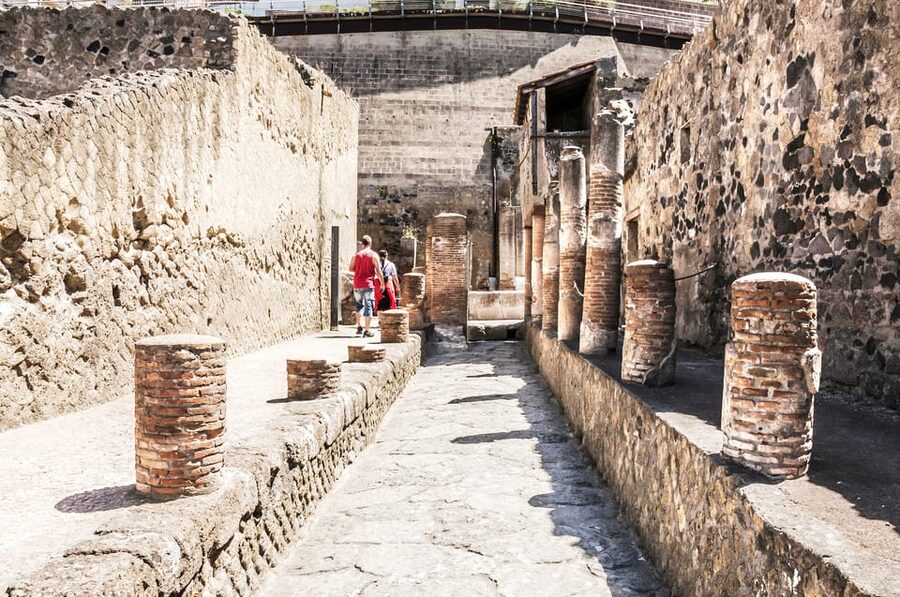
- Herculaneum is smaller than Pompeii: You can see the main site in about three hours without the same sense of exhaustion.
- Preservation is the star: Roofs, wooden doors, furniture, food, mosaics, and wall paintings make the town feel unusually immediate.
- The audio guide is useful but uneven: It adds social detail, though the app can be hard to match with the building in front of you.
- Bring comfortable shoes and shade: The site involves cobbled streets, open areas, and strong summer sun.
- Download the audio content early: Mobile coverage can be poor inside the archaeological area.
- Allow extra time at the entrance: A mobile voucher does not always mean a quick scan and instant entry.
Why Herculaneum can beat Pompeii for a first visit
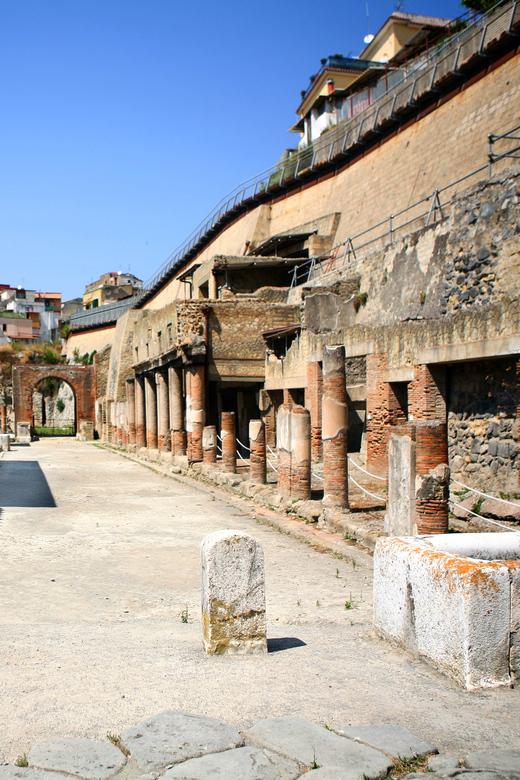
Pompeii gets the fame, and it deserves it. It is much larger, with a huge network of streets and buildings. But Herculaneum often makes the stronger first impression because it is more compact and unusually well preserved.
The eruption did not simply leave Herculaneum under a thin layer of ash. Hot volcanic material buried the town, sealing many buildings and household objects in place. That helps explain why you can see features that usually vanish at ancient sites: upper floors, roofs, wooden elements, beds, doors, food, and household fittings.
The result is a town that feels less like a collection of foundations and more like a place where people had just stepped away. You can look into rooms, study wall decoration, and picture daily routines in a way that is harder to do at larger, more heavily worn sites.
I would choose Herculaneum if you have limited time in Campania, dislike enormous archaeological parks, or want to focus on domestic life. If you are an archaeology enthusiast who wants a full day of streets, public buildings, and urban scale, Pompeii may offer more ground to cover.
More Audio Tours in Naples
- Pompeii: Entry Ticket with Optional Audio Guide
★ 4.2 · 12,360 reviews - Pompeii: Skip-the-Line Entrance Ticket with Audio Guide
★ 4.0 · 2,509 reviews - Pompeii: Skip-the-Line Entry Ticket with Audio Guide or Tour
★ 4.1 · 1,364 reviews
Arriving at the archaeological site
Your mobile voucher is redeemed at the online ticket desk on site. This wording matters. You are not simply walking straight through a turnstile with a QR code in every case. You may need to locate the correct desk and allow time for staff to process the booking.
The entrance can be a little unclear, especially if you expect a separate prebooked-ticket lane. One useful map has helped some people find the correct place, but the ticket desk is at the archaeological site where the regular entrance activity is taking place. Look for the online ticket desk rather than assuming the first queue is the right one.
The process has generally been easy to book, but it has not always been fast. Some ticket holders have reported joining much the same line as people buying or collecting tickets on site. That reduces the practical advantage of prebooking, particularly if you paid more than the official price for convenience.
The sensible approach is to arrive with your voucher open, your phone charged, and a few extra minutes available. Do not schedule a train or lunch reservation immediately after the advertised closing time.
A one-day ticket with a flexible pace

The ticket is valid for one day, and you can explore independently rather than follow a fixed group itinerary. That freedom suits Herculaneum well because the best moments often come when you slow down in a room and inspect its details.
You can finish the main visit in around three hours. That is enough for a solid first look, especially if you use the audio guide and move at a steady pace. You can also stay longer if you like reading, studying architecture, or revisiting the houses that made the strongest impression.
The site has a manageable scale, but it is not a quick photo stop. If you want to understand how the houses connect to streets, shops, baths, and public spaces, give yourself at least half a day around the entrance, admission process, and visit itself.
I would avoid racing through in an hour. Herculaneum rewards observation. A painted wall may look plain at first, then reveal a small figure, border, or architectural detail when you stand still.
Walking the streets of an ancient town
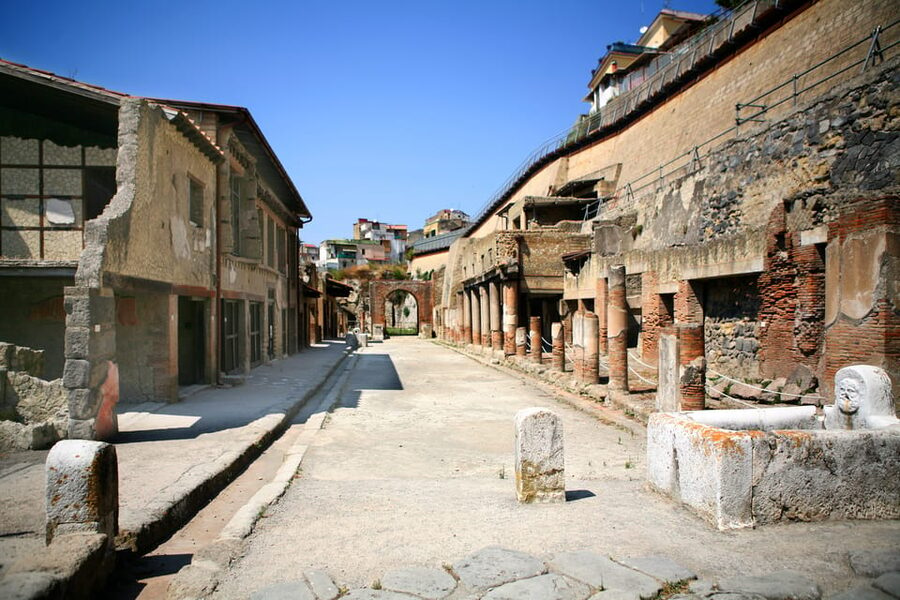
The cobbled streets are one of the clearest ways to understand the settlement. You are not viewing isolated museum pieces. You are moving through a town laid out for ordinary life, with homes, shops, public facilities, and routes between them.
The streets can be uneven, so comfortable shoes are important. You do not need expedition gear, but thin fashion shoes will make the visit less pleasant. Take care on the old paving and allow yourself time to look into doorways rather than keeping your eyes fixed only on the ground.
The compact layout is a real advantage. You can get your bearings faster than at Pompeii, and you are less likely to spend the whole visit wondering which major area you have missed. Still, a map is useful because the audio app does not always make it clear where you are standing or which building you should enter next.
I would take a screenshot of the site map before going inside. Even if you use the digital guide, a simple visual plan helps you create your own route and return to places you want to see again.
More Self-Guided Tours in Naples
- Herculaneum: Skip-the-Line Entry Ticket with Audio Guide
★ 4.3 · 870 reviews - Pompeii: Skip-the-Line Entry Ticket with Digital Guide App
★ 4.1 · 770 reviews - Naples: National Archaeological Museum Ticket & Audio App
★ 4.4 · 617 reviews - Ercolano: Herculaneum Skip-the-Line Ticket & Audio Guide
★ 4.0 · 275 reviews
The houses, frescoes, and objects that survive

Herculaneum’s strongest feature is the condition of its buildings. You may see preserved roofs and upper-level elements, along with doors and other wooden features that rarely survive at ancient sites.
The houses are valuable because they show more than decoration. Their rooms and fittings offer clues about how people moved through the home, received visitors, stored belongings, and arranged daily tasks. The wall paintings and mosaics are not just pretty backgrounds. They help you read the taste, wealth, and habits of the people who lived there.
Food preserved by the eruption adds another human detail. It is easy to think of Roman history as emperors, armies, and marble statues. A shop, a bed, a door, or a piece of stored food shifts the focus back to ordinary people.
Some rooms may have limited signage, so you will get more from the visit if you bring an audio guide, a printed guidebook, or a little background reading. The site itself does not always explain each room as fully as you might want.
Public baths, shops, and the gymnasium
The public facilities help balance the private houses. Look for the shops and public bathing areas, then consider how these places fitted into the rhythm of the town.
The baths are especially helpful for understanding Roman social life. They were not simply places to wash. They were shared public spaces tied to routine, leisure, and social contact. The surviving layout gives you a clearer sense of how a Roman town served its residents.
The public gymnasium adds another layer. You can imagine the town as a functioning community rather than a silent set of wealthy residences. The audio content is at its best when it explains these social structures and the people who used them, not just the masonry in front of you.
The small scale means you can compare public and private spaces in one visit. That is one reason I find Herculaneum easier to absorb than Pompeii. You see a broad range of Roman life without spending hours crossing a giant site.
The boat houses and the human cost of the eruption
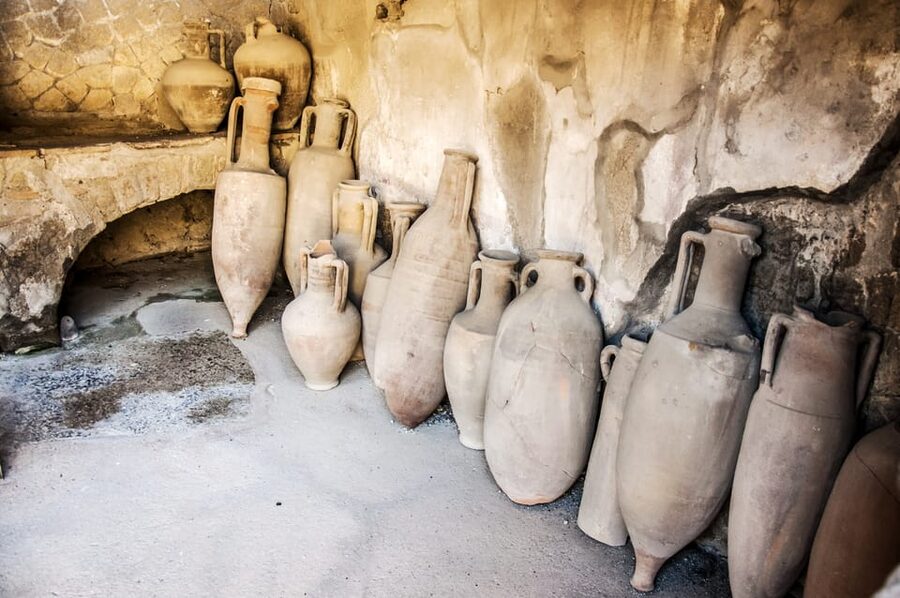
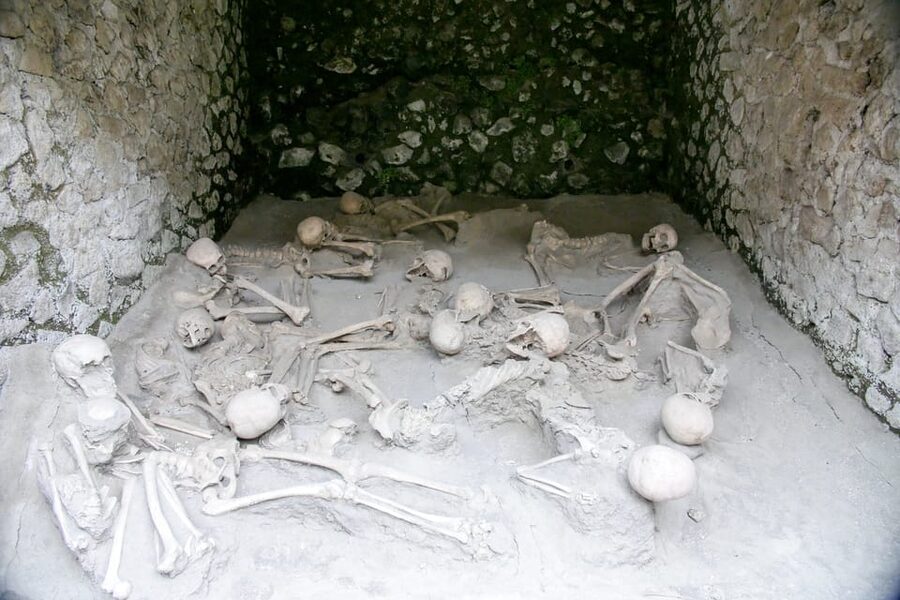
The most moving part of the visit is the area connected with the port and the people who did not escape. Around 300 skeletons were found there, a stark reminder that this was not merely a disaster that damaged buildings.
This part of Herculaneum can be difficult to process. The preserved town invites curiosity, but the remains of those who died bring the eruption back to the level of individual lives. I recommend slowing down here and treating the area with quiet respect.
The contrast is powerful. A painted room or elegant mosaic shows how people lived, while the skeletons show how suddenly that life ended. Together, they make the site more than an architectural walk.
If you are visiting with children, teenagers, or anyone sensitive to human remains, prepare them in advance. The information provided here is central to understanding the eruption, but the scene can be emotionally heavy.
Choosing between the app and a physical audio guide
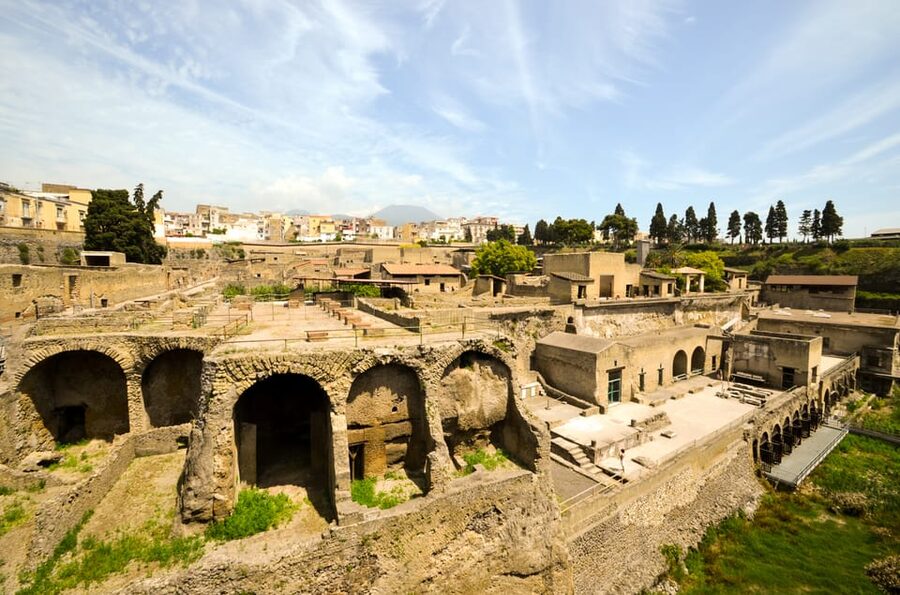
There are two audio options. One is a digital guide app downloaded to your smartphone. The supplied information lists English, French, Italian, and Spanish for the app, while the wider audio-guide details also list German. Check the language shown for your selected option before paying.
The app can add useful material about Roman society, household habits, and individual buildings. That human detail is a strong reason to choose an audio guide instead of walking with no explanation at all.
The weak point is navigation. The audio is not always arranged in an obvious order, and it can be hard to identify the correct track for the building where you are standing. At times, the map and location tracking do not help much. Some people have stopped using the app after a few minutes for exactly this reason.
Download the app and its audio files before you arrive. The site may have limited mobile coverage, and the audio content can use a lot of data. Bring headphones, since the guide is designed for your phone and is easier to use privately than on speaker.
The physical device may suit you better if you do not want to use your own phone. It is an optional extra, not part of the basic entry ticket. A live guide would be the better choice for a visitor who wants a clear route, immediate explanations, and the chance to ask questions, but this ticket does not include a guided tour.
How long to stay and when to visit
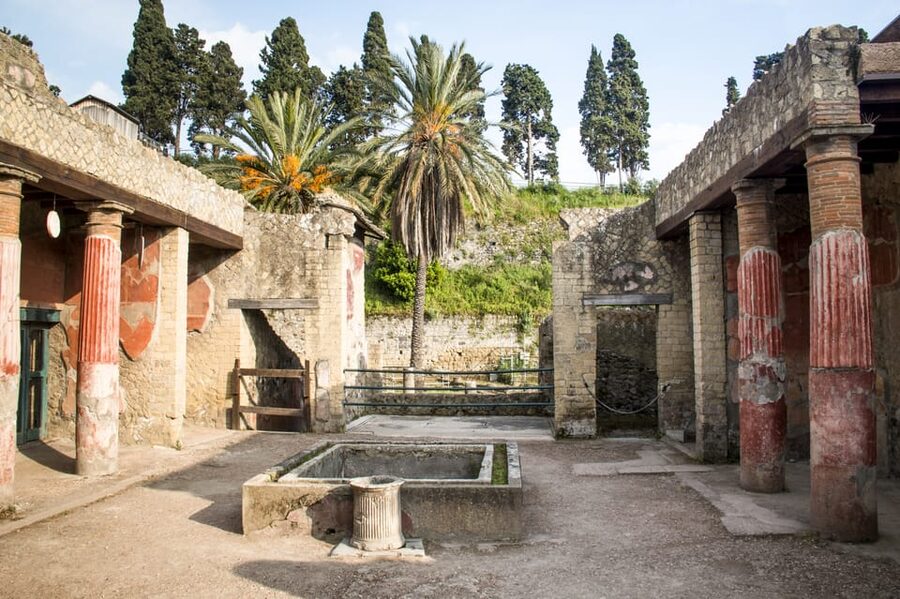
The main site can be covered in about three hours, but you may reasonably spend longer if you read every room description and pause for photographs. The compact layout makes a half-day visit comfortable, while a full day is possible for serious history fans.
Summer brings heat, especially in open sections of the site. Take an umbrella for shade, use the covered areas when available, and carry water. Some streets and houses offer shade, but you should not count on every important room being cool.
Opening hours change with the season:
- From March 16 to October 14, the site is open from 9:30 a.m. to 7:30 p.m. Last admission is at 6 p.m., and you must leave the archaeological area by 7 p.m.
- From October 15 to March 15, it is open from 8:30 a.m. to 5 p.m. Last admission is at 3:30 p.m., and the area must be cleared by 4:40 p.m.
An early start is a good idea during busy periods. A winter visit can be especially pleasant for unhurried sightseeing, though you must keep the earlier closing time in mind.
Price, value, and the booking question
At $21 per person, the ticket is reasonable if you value a simple way to secure admission and want the option of audio commentary. Herculaneum offers a lot for the price, especially when you compare the preserved architecture, public buildings, frescoes, household objects, and human remains with the cost of a private guided tour.
The value becomes less clear if the booking price is substantially higher than buying directly at the archaeological site. One booking party paid 56 euros for tickets that cost 32 euros and then failed to receive the paid audio guide. That is a serious warning: check the official site price before accepting a large markup for convenience.
The audio guide itself is not always the official site guide. The app may use Pop Guide content, and you should not expect the same experience as a personal archaeologist leading you from building to building.
The strongest value comes when you want independent exploration, need a particular language, and prefer to set your own pace. If you want expert interpretation or a guaranteed smooth entry, compare the total cost with a reputable guided tour before booking.
The activity offers free cancellation up to 24 hours before the visit and a reserve-now, pay-later option. Those terms are useful if your Campania schedule may change, but they do not remove the need to check the ticket conditions and audio option carefully.
Small practical details that affect the day
Wear comfortable shoes and dress for the season. The streets are ancient, uneven, and often exposed to the sun.
Bring headphones, a charged phone, and the downloaded audio content. Take a screenshot of the map, since the app may not guide you reliably once you are inside.
Food facilities are basic, and there is no strong café stop to build your day around. Eat beforehand or carry what is allowed for your visit, and do not expect a full refreshment break among the ruins.
Herculaneum is a good choice for people who prefer a self-guided cultural visit with room to pause. It is less suitable if you need constant explanatory signs, a fully structured route, or a guide who can answer questions on the spot.
Should you book the Herculaneum ticket?
I would book this experience if you want to explore independently and Herculaneum fits your Naples or Campania plans. The site itself is the reason to go: it is compact, remarkably preserved, visually varied, and deeply affecting.
Choose the audio option only if you are willing to prepare your phone before arrival and accept some navigation flaws. If you want a polished explanation of every building, pay for a live guide instead.
Before booking, compare the $21 price with the official admission cost and check exactly which audio format and language you are receiving. If the markup is small, the convenience may be worthwhile. If it is large, buy directly on site or choose a guide with clear added value.
For many people, Herculaneum is the more manageable and intimate alternative to Pompeii. I would not treat it as a backup plan. It deserves its own place in your itinerary.
FAQ
Where is the Herculaneum archaeological site?
The site is in Ercolano, in Italy’s Campania region.
How long is the ticket valid?
The ticket is valid for one day.
How much does the experience cost?
The listed price is $21 per person.
Is a guided tour included?
No. The ticket includes entry, with an optional digital or physical audio guide, but not a live guided tour.
What languages are available for the audio guide?
The digital audio guide is listed in English, French, Italian, and Spanish. The wider activity information also lists German among the optional audio-guide languages, so confirm the language for your selected option.
Where do I redeem the mobile voucher?
Show your mobile voucher at the online ticket desk on site.
What are the seasonal opening hours?
From March 16 to October 14, opening hours are 9:30 a.m. to 7:30 p.m., with last admission at 6 p.m. From October 15 to March 15, hours are 8:30 a.m. to 5 p.m., with last admission at 3:30 p.m. The archaeological area closes before the main gate, so allow time to leave.
More Self-Led Routes
- Rome: Colosseum & Forum with Audio Guide App -Optional Arena
★ 4.2 · 24,770 reviews - Rome: Pantheon Fast-Track Ticket and Official Audio Guide
★ 4.3 · 21,008 reviews - Venice: Grand Canal Gondola Ride with App Commentary
★ 4.1 · 18,908 reviews - Venice: La Fenice Opera House Entry Ticket with Audio Guide
★ 4.6 · 11,742 reviews
More Pompeii and Herculaneum Visits
- Pompeii: Entry Ticket and Guided Tour with an Archaeologist
★ 4.8 · 19,459 reviews - Pompeii: Small Group Tour with an Archaeologist
★ 4.8 · 12,264 reviews - From Naples: Pompeii Ruins & Mount Vesuvius Day Tour
★ 4.3 · 11,459 reviews - Pompeii Small Group Tour with an Archaeologist
★ 5.0 · 6,593 reviews
Just added around Naples
- From Naples/Salerno: Pompeii, Sorrento, and Positano Tour★ 4.5 · 250 reviews
- Pompeii: Day Tour of Pompeii and Vesuvius with Bus Transfer★ 4.2 · 250 reviews
- Ischia: Island Boat Tour with Neapolitan Lunch & Snorkeling★ 4.9 · 253 reviews
- Explore Naples & Pompeii in One Day – Guided Half-Day Tour★ 4.5 · 253 reviews
- Discover Pompeii: French Walking Tour of the Buried City★ 4.8 · 253 reviews
- Private Transfer from Naples to Sorrento or from Sorrento to Naples★ 5.0 · 254 reviews
- From Pompeii: Mount Vesuvius Guided Tour with Transfer★ 4.8 · 255 reviews
- Small Group from Naples: Sorrento, Positano, Amalfi & Ravello★ 4.5 · 265 reviews
Pompeii & Herculaneum Tours, compared.

Pompeii: Entry Ticket and Guided Tour with an Archaeologist
Read our review →
Pompeii: Entry Ticket with Optional Audio Guide
Read our review →
Pompeii: Small Group Tour with an Archaeologist
Read our review →


Pompeii Small Group Tour with an Archaeologist
Read our review →
Pompeii, Amalfi Coast and Positano Day Trip from Rome
Read our review →Browse the lists this tour appears in