
Review · MUSEUMS
Naples: National Archaeological Museum Ticket & Audio App
Naples rewards curious museumgoers. This ticket gives you Pompeii and Herculaneum treasures alongside the Farnese collection’s grand sculptures, and I especially like how it adds context to a visit to the ancient sites. I also like the museum’s broad mix, from Egyptian artifacts to Roman coins and the Secret Cabinet. The main drawback is the digital audio app, which can be slow to download and may feel less useful than the museum’s own paid audio guide.
Plan on at least three hours, and four or five if ancient art is your thing. The museum is large, the collections are spread across a handsome historic building, and the single-entry ticket means you should not rush out for lunch unless you are ready to give up reentry.
In This Review
- Key points at a glance
- Why this museum matters before or after Pompeii
- Your arrival and the first practical step
- The Farnese collection and the museum’s grand scale
- Pompeii and Herculaneum in glass, plaster, and mosaic
- Roman daily life beyond the famous statues
- A digital audio guide with mixed usefulness
- How much time should you allow?
- Who will get the most from this ticket?
- Is $29 a fair price?
- My verdict: book it or buy direct?
- FAQ
- Where is the museum located?
- How long is the ticket valid?
- Can I enter the museum more than once?
- What do I receive with this experience?
- Is this a guided tour?
- How do I use my smartphone voucher?
- Do I need identification?
- Is the museum wheelchair accessible?
- Can I cancel the booking?
Key points at a glance
- Pompeii and Herculaneum objects: See frescoes, mosaics, cookware, glass vessels, and other everyday pieces removed from the buried Roman towns.
- Farnese masterpieces: The museum’s core collection includes engraved gems, the Farnese Marbles, and major Greco-Roman sculptures.
- A useful companion to Pompeii: Seeing household objects and artwork here can make the ruined streets and villas feel far more understandable.
- The Secret Cabinet: This section presents artifacts connected with the erotic side of ancient Roman life.
- One-day, single-entry admission: You can take your time, but you cannot leave and come back in on the same ticket.
- Mixed audio-app results: The digital guide is included, though some people find it slow or less complete than expected.
Why this museum matters before or after Pompeii
The National Archaeological Museum of Naples is not simply a collection of old statues. It is the place where many of the finest portable objects from the Bay of Naples sites ended up. Pompeii and Herculaneum show you streets, walls, gardens, and buildings in place. Naples shows you what once filled those rooms.
That difference matters. At Pompeii, you may pass a villa with faded walls and only a vague idea of how richly it was decorated. Here, you can see the frescoes, mosaics, furniture, vessels, and sculptures that made those homes work. The result is a stronger picture of Roman daily life, not just a walk among ruins.
I would visit the museum before Pompeii if you want background first. You will recognize more at the archaeological site and understand why a small mosaic or cooking pot deserves attention. If Pompeii is already on your schedule, visiting Naples afterward works just as well, since the museum gives meaning to objects you may have seen in damaged or empty rooms.
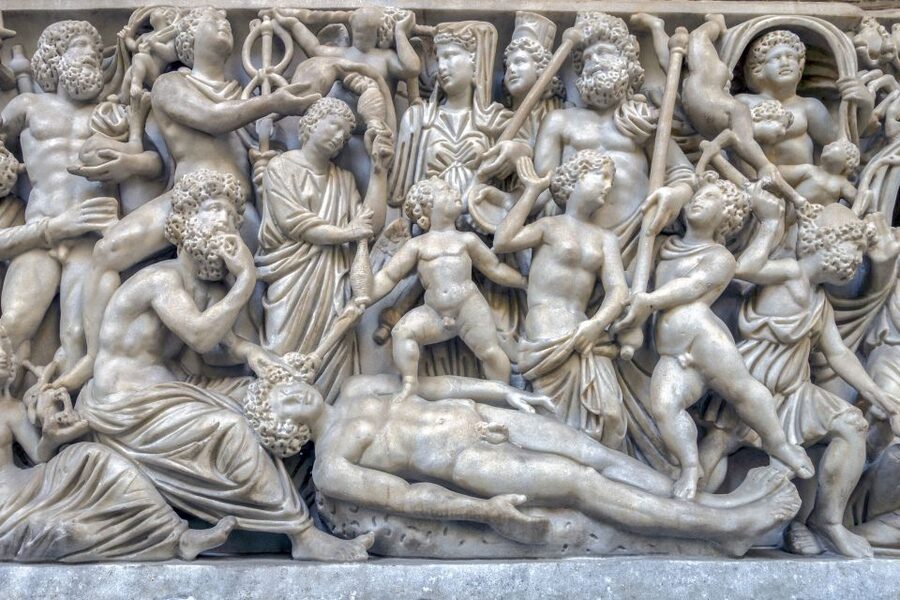
The museum also helps you place Roman art in a wider setting. Its Greek and Roman sculpture collections include works inherited by the Bourbon rulers from the Farnese family. That family collection became the foundation of the museum, along with pieces gathered from important archaeological discoveries.
More Audio Tours in Naples
- Pompeii: Entry Ticket with Optional Audio Guide
★ 4.2 · 12,360 reviews - Pompeii: Skip-the-Line Entrance Ticket with Audio Guide
★ 4.0 · 2,509 reviews - Pompeii: Skip-the-Line Entry Ticket with Audio Guide or Tour
★ 4.1 · 1,364 reviews
Your arrival and the first practical step
Your smartphone voucher is not the final entrance ticket. At the Museo Archeologico di Napoli ticket office, you exchange the digital voucher for the official museum ticket. Bring your passport or identity card, since identification is listed as necessary.
You must pass through a security check before entering. Allow a little extra time for that process, especially if you arrive during a busy period. Some people find that reserved admission helps them avoid a long ticket line, while others visiting in the quieter season find no line at all and feel they could have bought admission directly.
That makes the $29 price a question of convenience rather than a guaranteed queue-saving bargain. If your visit falls at a busy time, having admission arranged in advance can be worthwhile. In a quiet period, the extra cost may feel less necessary.
The ticket is valid for one day, but only for one entry. There is no reentry, so use the cafe or a nearby lunch stop only after you have seen the rooms you most want to visit. The museum is wheelchair accessible overall, but the Vittorio Emanuele apartments are not accessible to people with impaired mobility.
The Farnese collection and the museum’s grand scale
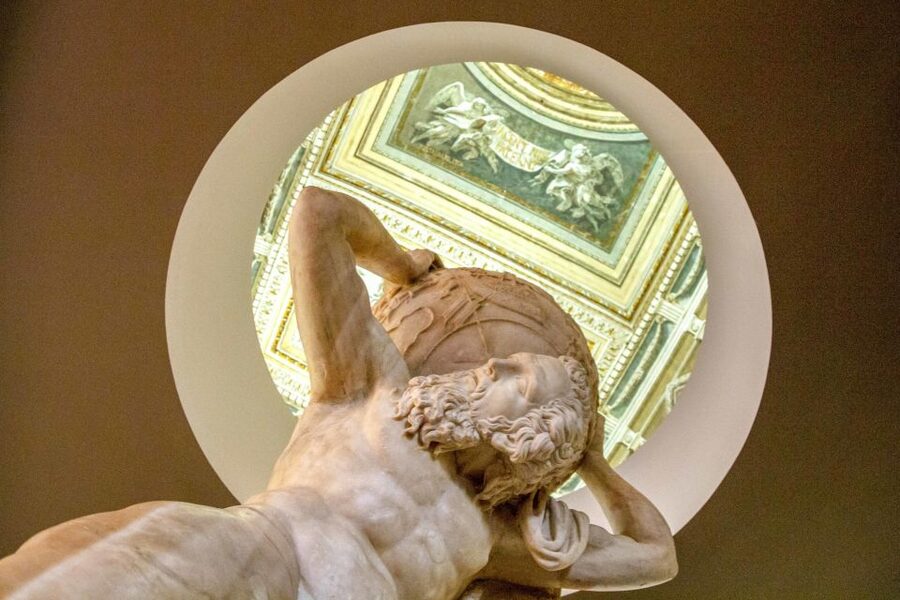
Begin with the Farnese collection if monumental sculpture is high on your list. This group includes the Farnese Marbles and engraved gems, along with major works of Greek and Roman art. The scale can be startling, especially if you have spent the morning among the relatively modest remains of Pompeii.
The sculpture galleries are one of the museum’s strongest reasons to visit on their own. Pieces connected with the Baths of Caracalla are part of the collection, and the large statues give you a sense of how Roman public buildings were decorated. They are not small, delicate objects tucked into glass cases. Many occupy the rooms with the confidence of architectural features.
Give yourself time to look beyond the size. Notice how the sculptures were designed to be seen, how bodies twist, and how much Roman art depended on Greek models. Clear explanations in Italian and English help, though the number of rooms can make the experience mentally tiring.
This is a museum where you need to choose your pace. If you try to read every label, you could spend much of the day indoors. I suggest picking several collection areas that matter most to you, then allowing time for unplanned discoveries.
Pompeii and Herculaneum in glass, plaster, and mosaic
For many people, the archaeological material from Pompeii and Herculaneum is the museum’s main attraction. Here, you can encounter the objects that make those places feel inhabited rather than merely excavated.
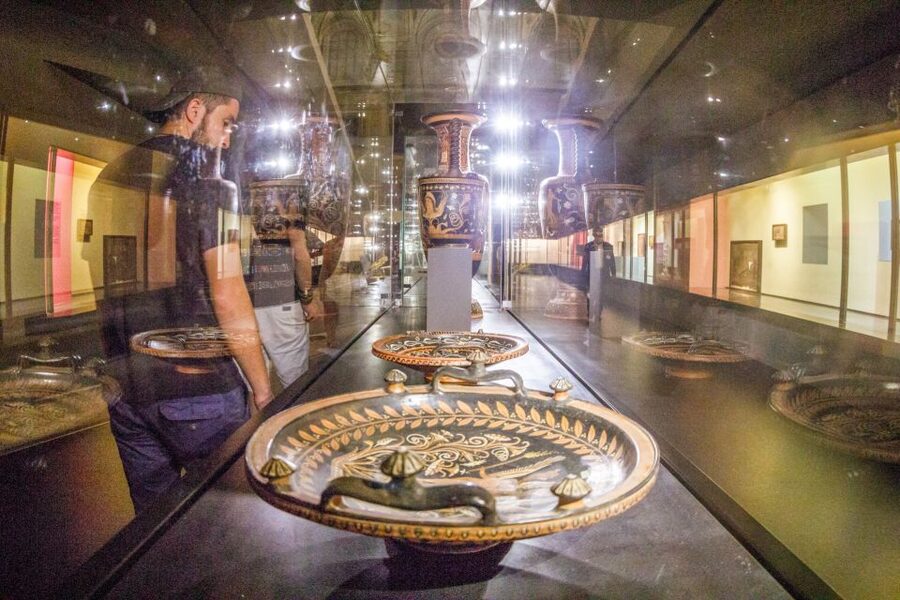
Look for the household pieces: cooking pots, glass vessels, and items connected with food and social life. Their power comes from their ordinariness. A grand statue tells you about public display and wealth. A kitchen vessel suggests the hands, meals, and routines of people who lived almost two thousand years ago.
The museum also holds famous frescoes and mosaics removed from ancient sites. These works are especially valuable after you have walked through Pompeii or Herculaneum, where many wall paintings are incomplete or difficult to see. In Naples, the colors and patterns are easier to study at close range.
A miniature model and a video presentation about Pompeii add another layer. They help you understand the town as a whole and visualize the disaster that caught residents by surprise. The material does not replace a visit to Pompeii, but the two experiences complement each other well.
If you have already visited Pompeii, do not assume you have seen everything important. The archaeological museum contains many of the site’s most impressive portable works. Several hours here can turn a visit to the ruins from a walk through broken walls into a more complete picture of Roman homes and public life.
More Self-Guided Tours in Naples
- Herculaneum: Skip-the-Line Entry Ticket with Audio Guide
★ 4.3 · 870 reviews - Pompeii: Skip-the-Line Entry Ticket with Digital Guide App
★ 4.1 · 770 reviews - Ercolano: Herculaneum Entry Ticket with Optional Audio Guide
★ 4.1 · 581 reviews - Ercolano: Herculaneum Skip-the-Line Ticket & Audio Guide
★ 4.0 · 275 reviews
Roman daily life beyond the famous statues
The museum’s value is not limited to masterpieces. Its objects show how varied ancient life could be, from elite villas to practical household work. The collection includes art, domestic equipment, decorative objects, and artifacts tied to religion and public culture.
The coin displays offer a different kind of history. Coins can seem less dramatic than a colossal statue, but they help you follow rulers, symbols, and economic life across time. If you enjoy small details, this section rewards patience.
The Egyptian collection broadens the museum beyond the Greek and Roman world. The information provided for this experience notes that the Egyptian section was closed until March 31, 2023, so check the current status before you plan your visit around it. Do not assume every listed room will be open on your day.
The Secret Cabinet is another area that deserves a deliberate visit. It presents artifacts linked to erotic themes in ancient Roman life. The display is useful because it places sexuality within the wider Roman world of art, household decoration, religion, and social behavior rather than treating it as a modern curiosity.
Parents should decide in advance how this section fits their family’s plans. The subject is part of the museum’s historical material, but it may not suit every child or every visitor.
A digital audio guide with mixed usefulness
A digital audioguide is included with the ticket. You access it through a link using the supplied username and password. In theory, this gives you an easy way to add commentary without joining a group or following a guide through crowded rooms.
In practice, allow time for the app to download before you begin. Some users find that it takes too long to load or does not function smoothly, and several stop using it after a few minutes. Others find that the museum’s English and Italian labels are enough for an independent visit.
There is also an important distinction between this digital guide and the museum’s own audio guide. The included app is not necessarily the same as a full museum audio tour. If detailed spoken commentary is central to your plan, ask at the museum whether an official audio guide is available and what it costs.
I would treat the app as a bonus, not the main reason to buy this ticket. Download it before entering if possible, bring your phone charged, and keep your expectations modest. The museum remains worthwhile even if the app proves awkward.
How much time should you allow?
Three hours is a sensible minimum for a focused visit. That gives you time for the Farnese sculptures, Pompeii and Herculaneum objects, and a short break at the cafe.
Four hours is better if you want to read labels and include the Secret Cabinet, coin displays, Egyptian material if open, and the Pompeii model or video. Five hours can easily disappear if you are studying mosaics, frescoes, and sculpture rather than simply walking through.
The cafe is useful for a pause, and prices have been described as reasonable. There is also a bookstore, which makes the museum a practical stop for finding a guide to Pompeii or ancient art. Since you cannot reenter, plan your break without assuming you can return to missed rooms.
The building itself provides some relief from Naples’ busy streets. The galleries can feel calm, especially outside peak periods, though popular rooms may become crowded later in the day. Arriving when the museum opens is a good tactic if you want quieter rooms and cleaner photographs.
Who will get the most from this ticket?
This admission suits you best if you plan to visit Pompeii or Herculaneum, enjoy ancient sculpture, or want a serious museum stop in Naples without committing to a guided group. It is also a good choice for cruise passengers, since the museum can be reached on foot from the cruise port according to one detailed visit, and it is easy to access by Metro.
Families may appreciate the range of objects, especially the models, video, and household artifacts. Younger children may tire before the museum’s most important rooms, so do not promise to see everything.
Art lovers should allow extra time for the Farnese galleries and sculpture collection. History-minded visitors will get the most from pairing the museum with Pompeii, either before or after. If you mainly want a quick look at one famous statue, this ticket may offer more museum than you need.
The ticket is not a guided tour. You move at your own pace, and the quality of the experience depends partly on how much context you bring or how much label reading you enjoy.
Is $29 a fair price?

At $29 per person, the ticket is fairly priced when it saves you time at a busy entrance and when you make full use of the museum’s large collection. Three to five hours inside gives the admission solid value, particularly if you are pairing it with Pompeii or Herculaneum.
The value is less clear in the off-season, when the ticket desk may have no queue. Some people could simply buy admission directly and skip the digital extras. The included audio app does not always justify paying more, especially if it fails to load or provides less information than expected.
I would pay for the convenience if your schedule is tight or if you are visiting during a busy period. If your dates are quiet and you are comfortable buying tickets on arrival, compare the direct museum price before booking.
Cancellation is flexible up to 24 hours in advance for a full refund, and you can reserve now while paying later. Those policies help if your Naples plans are still shifting, but they do not change the single-entry rule.
My verdict: book it or buy direct?
Book this experience if you want the practical ease of arranged admission and plan to spend several hours with Pompeii, Herculaneum, and Farnese art. The museum is one of Naples’ essential cultural stops, and its objects make the nearby archaeological sites far more meaningful.
Buy direct if you are visiting in the off-season, see no ticket line, and do not need the digital app. The museum itself is the prize. The audio package is secondary, and the ticket does not include a live guide.
For the best visit, arrive early, bring identification, exchange the smartphone voucher at the ticket office, and choose your priority rooms before you enter. Give the Pompeii and Herculaneum displays serious time, then let the sculpture galleries and Secret Cabinet fill out the day.
FAQ
Where is the museum located?
The experience takes place at the Museo Archeologico di Napoli in Campania, Italy.
How long is the ticket valid?
The ticket is valid for one day. Check availability for the available starting times.
Can I enter the museum more than once?
No. The ticket allows a single entry and does not include reentry.
What do I receive with this experience?
You receive a museum entry ticket and access to a digital audioguide.
Is this a guided tour?
No. A guided tour is not included. The experience provides admission and a digital audio app.
How do I use my smartphone voucher?
You exchange your smartphone voucher at the museum ticket office for the official entrance ticket.
Do I need identification?
Yes. You should bring your passport or identity card.
Is the museum wheelchair accessible?
The activity is listed as wheelchair accessible. However, the Vittorio Emanuele apartments are not accessible to people with impaired mobility.
Can I cancel the booking?
Yes. You can cancel up to 24 hours in advance for a full refund. You can also reserve now and pay later.
More Self-Led Routes
- Rome: Colosseum & Forum with Audio Guide App -Optional Arena
★ 4.2 · 24,770 reviews - Rome: Pantheon Fast-Track Ticket and Official Audio Guide
★ 4.3 · 21,008 reviews - Venice: Grand Canal Gondola Ride with App Commentary
★ 4.1 · 18,908 reviews - Venice: La Fenice Opera House Entry Ticket with Audio Guide
★ 4.6 · 11,742 reviews
More Galleries and Collections
- Naples: National Archaeological Museum of Naples Guided Tour
★ 4.8 · 498 reviews - Vatican: Museums & Sistine Chapel Entrance Ticket
★ 4.5 · 144,003 reviews - Vatican Museums & Sistine Chapel Tour with Optional Basilica
★ 4.3 · 67,413 reviews - Vatican Museums, Sistine Chapel & St Peter’s Basilica Guided Tour
★ 4.5 · 39,149 reviews
Just added around Naples
- From Naples/Salerno: Pompeii, Sorrento, and Positano Tour★ 4.5 · 250 reviews
- Pompeii: Day Tour of Pompeii and Vesuvius with Bus Transfer★ 4.2 · 250 reviews
- Ischia: Island Boat Tour with Neapolitan Lunch & Snorkeling★ 4.9 · 253 reviews
- Explore Naples & Pompeii in One Day – Guided Half-Day Tour★ 4.5 · 253 reviews
- Discover Pompeii: French Walking Tour of the Buried City★ 4.8 · 253 reviews
- Private Transfer from Naples to Sorrento or from Sorrento to Naples★ 5.0 · 254 reviews
- From Pompeii: Mount Vesuvius Guided Tour with Transfer★ 4.8 · 255 reviews
- Small Group from Naples: Sorrento, Positano, Amalfi & Ravello★ 4.5 · 265 reviews
Museums, compared.

Vatican: Museums & Sistine Chapel Entrance Ticket
Read our review →
Vatican Museums & Sistine Chapel Tour with Optional Basilica
Read our review →
Vatican Museums, Sistine Chapel & St Peter’s Basilica Guided Tour
Read our review →
Skip-The-Line Uffizi Gallery Timed Entry Ticket
Read our review →
Vatican Museums, Sistine Chapel & Basilica Tour
Read our review →
Vatican Museums & Sistine Chapel Skip-the-Line Entry Ticket
Read our review →Vatican Museums, Sistine Chapel & Basilica Tour
Read our review →
Vatican Museums & Sistine Chapel Guided Tour
Read our review →Browse the lists this tour appears in