
Review · POMPEII & HERCULANEUM TOURS
Herculaneum: Skip-the-Line Entry Ticket with Audio Guide
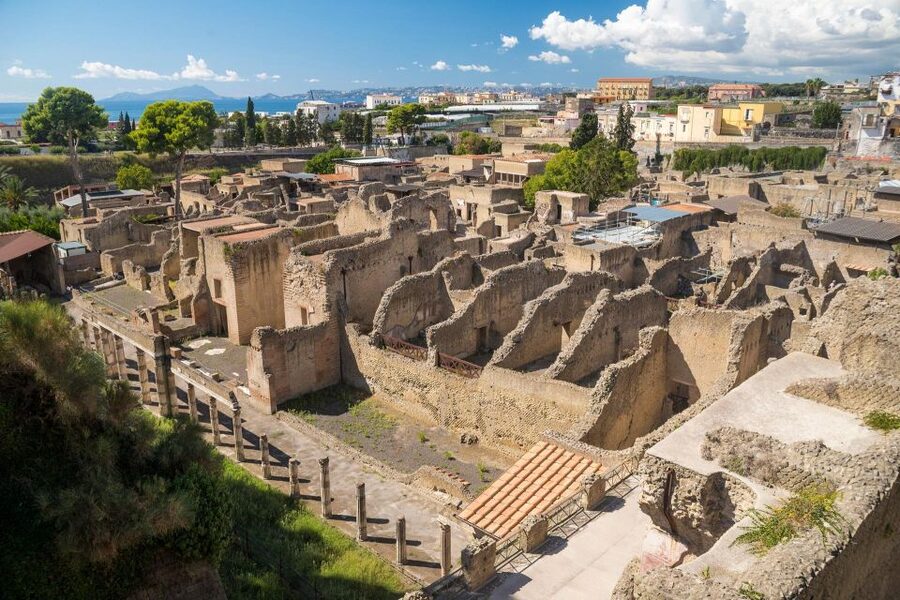
Ancient streets, still bearing the marks of daily life. Herculaneum gives you a smaller, calmer Roman ruin to explore, with wooden doors, painted walls, mosaics, and statues surviving in remarkable condition. I like the freedom to wander at my own pace, and I like that the audio guide adds useful stories without tying me to a group. The main catch is that the ticket and audio guide may be separate options, so you need to check exactly what you are buying.
The site is easier to handle than Pompeii, but it is not a quick museum stop. I would allow two to three hours, and closer to four if you want to pause often, visit the museum, and take in the more somber areas near the ancient shoreline. The audio guide is detailed and available in five languages, though its numbering system can take a little patience.
The $15 price can be good value when entry is included and the site is busy. Still, the skip-the-line promise is not always clear at the entrance, and some people have been sent between desks for tickets and audio devices. If you want a smooth first visit, arrive early, ask where to collect each item, and request the map before you start.
In This Review
- Key points to know before you go
- Why Herculaneum feels different from Pompeii
- Getting through the entrance without confusion
- The audio guide and its numbered stops
- The grand homes and everyday Roman life
- Shops, fountains, temples, and the working town
- The shoreline shelters and the museum near the exit
- How long to stay and when to arrive
- The real value of a $15 self-guided visit
- Who should book this experience?
- Should you book the Herculaneum audio guide ticket?
- FAQ
- Is the Herculaneum entry ticket included?
- What languages are available for the audio guide?
- How long should I allow for the visit?
- Where do I collect the ticket and audio guide?
- Do I need identification?
- What should I wear?
- Can I cancel the booking?
Key points to know before you go
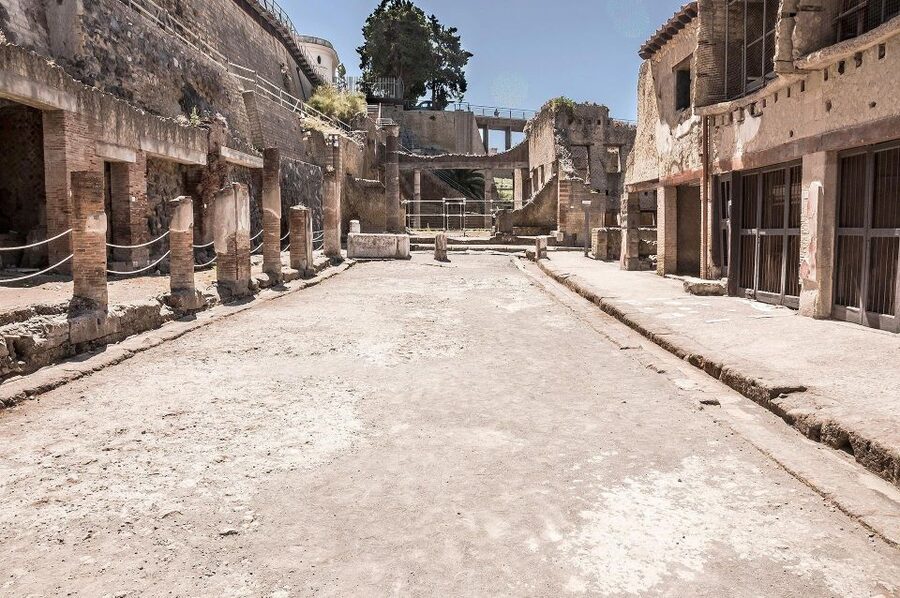
- Herculaneum is compact but packed with detail: You can see grand homes, shops, fountains, temples, public spaces, frescoes, mosaics, and original wooden features without covering Pompeii-sized distances.
- The audio guide works best after you get oriented: Its descriptions are detailed, but site numbers do not always match the physical route or nearby signs.
- Preservation is the main attraction: Ash and volcanic material protected doors, beams, furniture, wall paintings, and household details that are often lost at other Roman sites.
- Allow at least two to three hours: A faster visit is possible, but you will rush the houses, museum displays, and shoreline area.
- The entrance process may involve more than one desk: Confirm whether your booking includes the archaeological park ticket, then ask staff where to collect the audio device and map.
- Early arrival pays off: The site can feel peaceful at opening time, while crowds build later, especially during popular visiting periods.
Why Herculaneum feels different from Pompeii
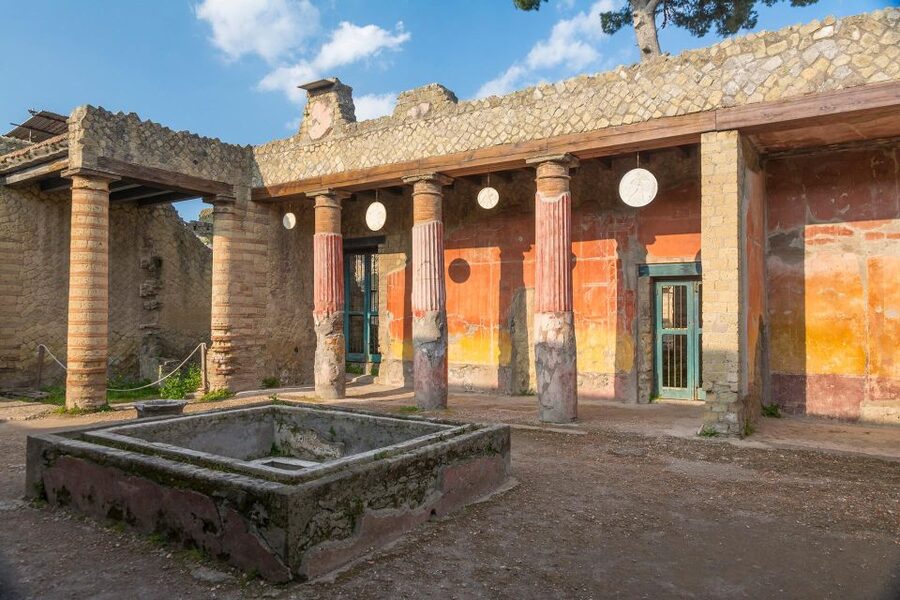
Herculaneum was a Roman seaside town destroyed by the eruption of Mount Vesuvius in AD 79. Like Pompeii, it was buried during the disaster, but the two sites offer different experiences.
Pompeii is huge. Its scale is part of the thrill, but it can also leave you tired and unsure what to prioritize. Herculaneum is more compact, so you can spend more time looking closely at individual homes and rooms. I find that useful because the site tells its story through small details: a door still hanging in place, a painted border around a room, a counter from a shop, or a household object displayed near the exit.
The compact layout also makes this a good choice if you have only part of a day. You can see a great deal in two hours, but the site rewards a slower pace. Set aside three hours if you want to follow the audio explanations, stop for photographs, and visit the museum displays.
The setting is also sobering. Near the lower part of the site, you can see the area where around 300 people sought shelter while waiting for rescue from the sea. The remains there bring the eruption down from an abstract historical event to a human tragedy. I would not rush this section. It is one of the most affecting parts of the visit.
More Audio Tours in Naples
- Pompeii: Entry Ticket with Optional Audio Guide
★ 4.2 · 12,360 reviews - Pompeii: Skip-the-Line Entrance Ticket with Audio Guide
★ 4.0 · 2,509 reviews - Pompeii: Skip-the-Line Entry Ticket with Audio Guide or Tour
★ 4.1 · 1,364 reviews
Getting through the entrance without confusion
The meeting point is the Herculaneum Archaeological Park ticket office. You show your ticket there, but the exact procedure can feel less direct than the phrase skip-the-line suggests.
Some visitors have entered quickly with no queue. Others were directed to an audio guide desk, then back to the ticket line, or told to visit a nearby bookshop before being redirected. The problem is not always the length of the line. It is knowing which line or counter applies to your booking.
Here is the practical approach I would use:
- Have your booking confirmation ready on your phone.
- Check if you purchased the entry ticket or only the audio guide option.
- Ask staff where to collect the park ticket, audio device, and map.
- If you are given an audio guide, ask how the numbered stops correspond to the ruins.
- Keep your passport or another accepted form of identification available, since a form of ID may be requested as security for the device.
The entry ticket is listed as an extra in one option called Herculaneum: Audio Guide no ticket. That wording matters. At around $15 per person, the experience can be excellent value if admission is included, but you should not assume every booking option covers both parts.
The skip-the-line benefit also depends on conditions at the park. During quieter periods, there may be little or no queue, so the ticket saves less time. During a busy morning, it can be more useful, provided staff direct you to the right place.
The audio guide and its numbered stops
The audio guide is the core feature of this experience. It provides commentary in English, French, German, Italian, and Spanish, letting you choose your own route and stop when something catches your eye.
The content is generally detailed and helpful. It explains how Roman homes worked, points out architectural features, and adds context to what you are seeing. One especially useful feature is the ability to select descriptions as you reach different houses or objects instead of being forced into one fixed route.
The weak point is orientation. The numbers on the device or app do not always line up neatly with the numbers on site. In some places, the physical layout has changed, certain areas are closed, or a building is marked but not clearly represented in the guide. The commentary can also jump to another house if you select the wrong number.
I would spend a few minutes at the start getting your bearings. Look at the map, identify the main route, and test one or two audio stops before walking too far. If the map is not offered, ask for it. It makes a major difference.
The device has been described as a handheld unit, and in some cases as a smartphone that can work with headphones or earbuds. Bluetooth support is not always available, so do not count on using your own wireless earbuds. Audio volume can also be low in places. If you have hearing concerns, ask about the device before entering.
A guided tour may suit you better if you dislike sorting out numbered stops. Some visitors were offered an upgrade to a live guide, with Tony and Fabio receiving especially warm praise for clear explanations and a steady pace. That is a different experience from the self-guided ticket, but it is worth asking about an upgrade if one is offered and you prefer direct help.
The grand homes and everyday Roman life
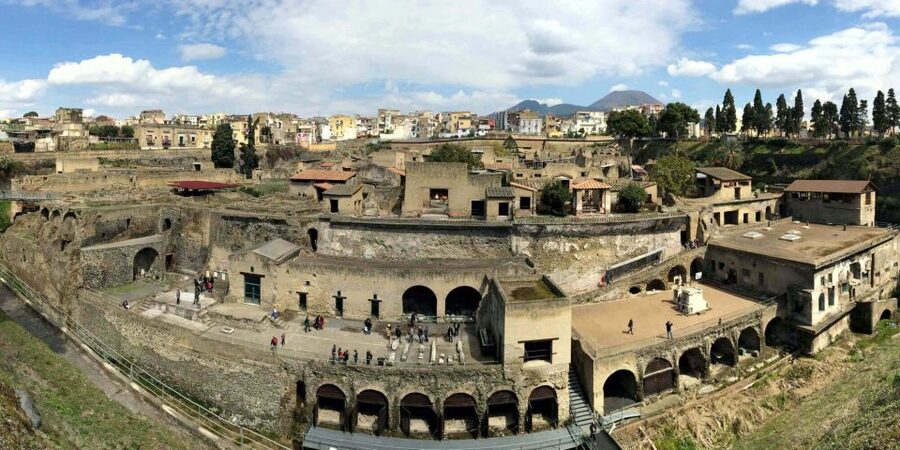
The houses are where Herculaneum earns its entrance fee. You do not just see walls and foundations. You see rooms that still retain color, texture, and signs of how people used them.
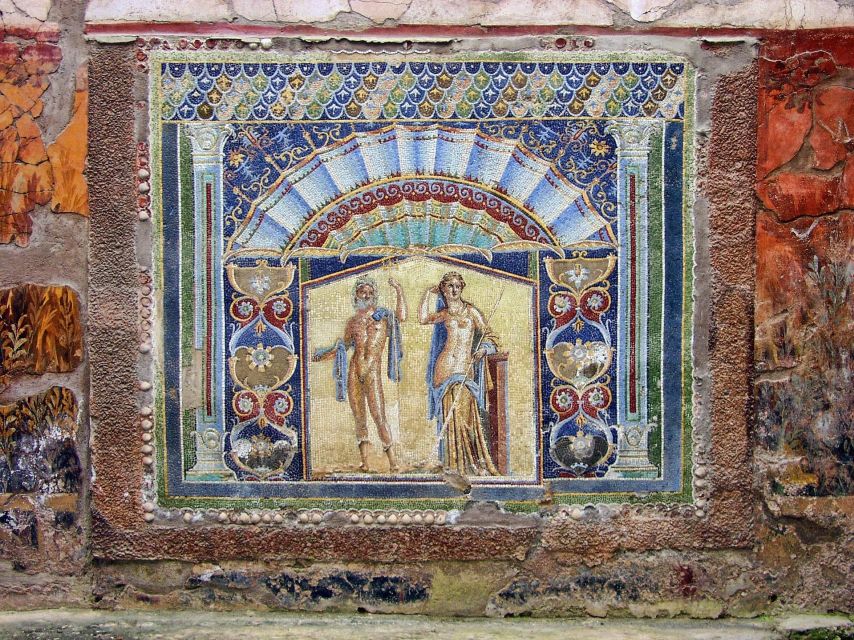
Look closely at the frescoes. Their reds, yellows, and other painted details help you picture the interiors as living spaces rather than bare ruins. Mosaics underfoot give you a sense of decoration and status, while preserved doors and wooden elements show how much material survived beneath the volcanic covering.
The contrast between wealthy homes and slave quarters is also important. The site lets you compare spacious rooms and decorated interiors with much simpler areas where enslaved people lived. That comparison adds substance to the visit. You are not only admiring Roman decoration. You are seeing the sharp divisions inside Roman society.
The audio guide is particularly useful here because it explains what a room may have been used for and how Roman households functioned. Without commentary, it is easy to look at a painted wall and move on. With context, you start noticing thresholds, courtyards, storage spaces, and the relationship between public and private rooms.
I would avoid trying to photograph every fresco. Pick a few rooms and spend time looking. The compact size means you can slow down without worrying that you have missed dozens of distant buildings.
More Self-Guided Tours in Naples
- Pompeii: Skip-the-Line Entry Ticket with Digital Guide App
★ 4.1 · 770 reviews - Naples: National Archaeological Museum Ticket & Audio App
★ 4.4 · 617 reviews - Ercolano: Herculaneum Entry Ticket with Optional Audio Guide
★ 4.1 · 581 reviews - Ercolano: Herculaneum Skip-the-Line Ticket & Audio Guide
★ 4.0 · 275 reviews
Shops, fountains, temples, and the working town
Herculaneum was not only a collection of wealthy villas. The route takes you through the practical parts of the town, including a market, public fountains, and commercial areas.
The market helps you picture ordinary shopping and trade in Roman life. The fountains show how residents accessed water, while the street layout gives you a sense of movement through the town. The audio commentary turns these pieces into a more complete picture of daily life.
The temples offer a different mood. You can see religious spaces and depictions of ancient gods, giving the visit a look at Roman beliefs as well as domestic life. I like this mix because it keeps the experience from becoming a parade of private houses.
The town is laid out well enough to explore independently, but it is not always obvious where one building ends and another begins. Internal signs can be limited, and some marked buildings may be closed. Keep the map open and accept that your route may not follow the numerical order of the audio guide.
That flexibility is a benefit, not a flaw, once you understand it. If a busy group fills one house, move on and return later. If the audio description points you toward a building at the far end, you do not need to follow every stop in order.
The shoreline shelters and the museum near the exit
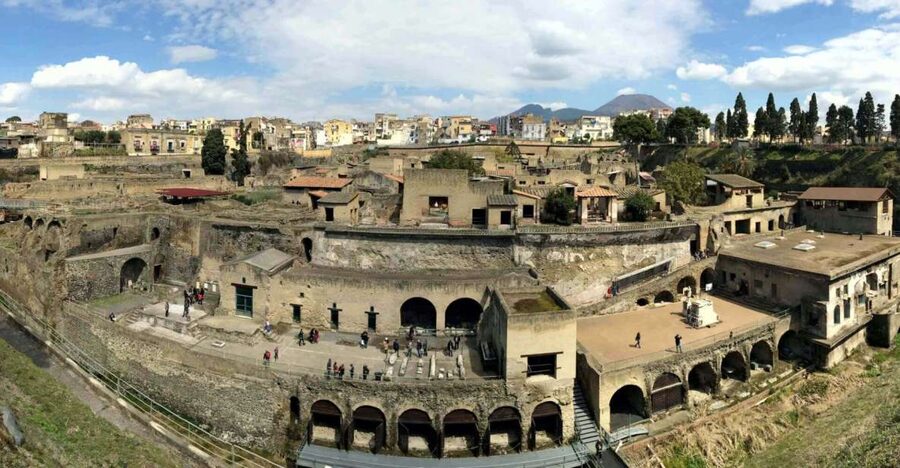
The lower areas near the ancient waterfront contain some of the most moving evidence of the eruption. Around 300 people died while waiting for help from the sea, and the remains displayed in this area make the human cost impossible to overlook.
This section may be difficult for children or anyone sensitive to displays of human remains. It is also one of the places where a guide can add useful context, since the emotion of the scene can otherwise overwhelm the historical explanation.
Near the entrance and exit, the Antiquarium museum displays artifacts and furniture found at the site. It is easy to miss if you are focused only on the streets, but I would make time for it. Household objects and interior furnishings help explain the rooms you have just walked through.
The museum also helps you understand preservation. At Herculaneum, volcanic material protected some wooden objects and furnishings in ways that are unusual for Roman ruins. Seeing those pieces indoors gives you a better sense of what the town looked like before the eruption.
How long to stay and when to arrive
The official duration is listed as one day, meaning you have the day to visit rather than being limited to a short timed tour. In practical terms, most people should plan for two to four hours.
Use these rough plans:
- Two hours: Main streets, several important houses, a few audio stops, and the shoreline area.
- Three hours: A fuller route through homes, shops, religious buildings, the market, and the museum.
- Four hours: A relaxed visit with photographs, longer audio stops, quiet pauses, and time to revisit favorite buildings.
I would arrive early if you can. At opening time, the site may feel almost still, making it easier to hear the audio and examine rooms without groups around you. It tends to get busier later, though Herculaneum is usually less overwhelming than Pompeii.
Wear comfortable shoes. The ground includes cobblestones, and there are steep steps in parts of the site. Benches and places to sit are available, which helps on a long visit or during hot weather.
There is a café and a place to buy snacks and drinks, but facilities are not universally praised. Bring water, especially in warm weather, and do not assume the toilets will be a highlight. A packed lunch can work, since there are places to sit and eat.
The real value of a $15 self-guided visit
At $15 per person, this is a strong deal when the archaeological park entry ticket and audio guide are both included. You get access to a major ancient site, a map, and commentary in five languages without paying for a private guide.
The value is strongest for independent visitors. You can arrive early, choose your own direction, linger in a house, skip a less interesting stop, and finish when you have had enough. Families and couples who dislike fixed tour schedules may appreciate that control.
The value is less clear if you expect a live guide to explain the route. The audio system can be confusing, and staff instructions at the entrance are not always consistent. If the ticket is not included in your chosen option, you also need to pay admission separately, which changes the final price.
A live guide upgrade may be worth considering if the cost is reasonable for you. Fabio was praised for explaining the history at a steady pace, while Tony adapted his conversations to a very hot day by stopping for longer talks in the shade. That kind of human direction solves the numbering problem and gives you a chance to ask questions.
Still, I would not dismiss the audio option. Once you understand the map and stop numbers, it gives you something a group tour cannot: time alone in the rooms.
Who should book this experience?
I would recommend it to anyone interested in Roman homes, daily life, architecture, or the eruption of Vesuvius. It is especially suitable if Pompeii feels too large, or if you want to visit both sites and compare their scale and preservation.
It also works well for a flexible half-day. The train from Naples makes the site manageable, and one visitor reported an easy walk of about 12 minutes from the station. If you are staying nearby, the entrance is simple to reach, with places to eat across from the site.
You may want a live tour instead if you are short on time, dislike technology, or want a clear story from start to finish. You should also think carefully about the cobbled ground and steep steps if walking is difficult for you.
Check the booking option closely before paying. The ticket may be sold separately from the audio guide, and the skip-the-line process may not save much time on a quiet day. Free admission on the first Sunday of each month was also noted, so check whether that affects your plans before buying.
Should you book the Herculaneum audio guide ticket?
Yes, if you want freedom, strong preservation, and a visit you can complete in a few hours. Herculaneum offers an unusually close look at Roman homes, from colorful wall paintings and mosaics to wooden doors, furniture, markets, fountains, temples, and the darker evidence near the shore.
I would book it for the site itself, not solely for the promise of skipping a queue. Confirm that your selected option includes entry, ask for the map, and expect to spend a few minutes learning the audio system. Arrive early, wear solid shoes, and allow at least three hours if you want the visit to feel unhurried.
If you want every stop explained in the correct order, choose a live guide or ask about an upgrade. Otherwise, the self-guided format gives you excellent value and the rare chance to linger in an ancient Roman town at your own pace.
FAQ
Is the Herculaneum entry ticket included?
It depends on the option selected. The entry ticket is listed as an extra for the Herculaneum: Audio Guide no ticket option, so check your booking carefully before arrival.
What languages are available for the audio guide?
The audio guide is available in English, French, German, Italian, and Spanish.
How long should I allow for the visit?
Allow at least two to three hours. You may want up to four hours if you plan to explore slowly, visit the museum, listen to many audio stops, and pause in the site.
Where do I collect the ticket and audio guide?
Show your ticket at the Herculaneum Archaeological Park ticket office. Depending on your booking, you may need to visit a separate desk to collect the audio guide and then return for entry.
Do I need identification?
Bring a passport or ID card. A form of identification may be held as security when you receive the audio guide.
What should I wear?
Wear comfortable shoes. The site has cobblestones and some steep steps.
Can I cancel the booking?
You can cancel up to 24 hours in advance for a full refund. The reserve now and pay later option is also available for this activity.
More Pompeii and Herculaneum Visits
- Pompeii: Entry Ticket and Guided Tour with an Archaeologist
★ 4.8 · 19,459 reviews - Pompeii: Small Group Tour with an Archaeologist
★ 4.8 · 12,264 reviews - From Naples: Pompeii Ruins & Mount Vesuvius Day Tour
★ 4.3 · 11,459 reviews - Pompeii Small Group Tour with an Archaeologist
★ 5.0 · 6,593 reviews
More Skip-the-Line Tickets in Naples
- Herculaneum: Skip-the-Line Guided Tour with Archaeologist
★ 4.8 · 3,439 reviews - Mount Vesuvius: Skip-the-Line Ticket and Smart Digital Guide
★ 4.2 · 2,780 reviews - From Naples: Pompeii Skip-the-Line Entry Ticket and Tour
★ 4.4 · 2,753 reviews - From Naples: Pompeii Guided Tour with Skip-the-Line Tickets
★ 4.8 · 1,171 reviews
Just added around Naples
- From Naples/Salerno: Pompeii, Sorrento, and Positano Tour★ 4.5 · 250 reviews
- Pompeii: Day Tour of Pompeii and Vesuvius with Bus Transfer★ 4.2 · 250 reviews
- Ischia: Island Boat Tour with Neapolitan Lunch & Snorkeling★ 4.9 · 253 reviews
- Explore Naples & Pompeii in One Day – Guided Half-Day Tour★ 4.5 · 253 reviews
- Discover Pompeii: French Walking Tour of the Buried City★ 4.8 · 253 reviews
- Private Transfer from Naples to Sorrento or from Sorrento to Naples★ 5.0 · 254 reviews
- From Pompeii: Mount Vesuvius Guided Tour with Transfer★ 4.8 · 255 reviews
- Small Group from Naples: Sorrento, Positano, Amalfi & Ravello★ 4.5 · 265 reviews
Pompeii & Herculaneum Tours, compared.

Pompeii: Entry Ticket and Guided Tour with an Archaeologist
Read our review →
Pompeii: Entry Ticket with Optional Audio Guide
Read our review →
Pompeii: Small Group Tour with an Archaeologist
Read our review →


Pompeii Small Group Tour with an Archaeologist
Read our review →