
Review · POMPEII & HERCULANEUM TOURS
Pompeii: Small-Group Tour of Pompeii and Herculaneum
Two buried cities, one unforgettable day. This 5.5-hour tour links Pompeii and Herculaneum with an archaeologist guide, giving you far more context than you would get from wandering among the ruins alone. I like the small-group format, capped at 20 people, and I like that entry tickets for both sites are arranged for you. The main drawback is the short 30-minute lunch break, which can feel rushed after two hours of walking.
You begin at Pompeii, take a guided walk through the enormous ruins, then travel by local Circumvesuviana train to Herculaneum. The two sites make an excellent pair: Pompeii shows the scale and public life of a Roman city, while Herculaneum offers remarkably preserved houses, mosaics, paintings, wooden objects, and even second floors.
In This Review
- Key points at a glance
- Why a guide matters at Pompeii
- Pompeii in two hours: scale, streets, and human tragedy
- The short Pompeii break is the main weakness
- The Circumvesuviana train to Ercolano
- Herculaneum reveals a more intimate Roman city
- The archaeologist guides are the real value
- Tickets, cost, and overall value
- Meeting point and practical preparation
- Who should book this combined tour?
- Should you book the Pompeii and Herculaneum tour?
- FAQ
- How long does the tour last?
- Which sites are included?
- Where does the tour start?
- How do I find the guide?
- Is the tour available in English?
- Are entry tickets included?
- How long is the guided visit at Pompeii?
- Is there a lunch break?
- How do you travel from Pompeii to Herculaneum?
- Where does the tour end?
- What should I bring?
- Is the tour suitable for wheelchair users?
Key points at a glance
- Two major Roman sites in 5.5 hours: See Pompeii and Herculaneum in one tightly planned day.
- An archaeologist leads the walks: Guides such as Diego, Paolo, Vincenzo, Alfredo, Sergio, and Amedeo have been praised for turning broken walls into understandable stories.
- Pompeii comes first: Spend about two hours among streets, homes, public buildings, and preserved remains.
- Herculaneum is smaller but more intact: Thick volcanic mud protected upper floors, mosaics, paintings, and carbonized wood.
- The train transfer is part of the plan: The Circumvesuviana trip to Ercolano takes about 20 minutes, though delays can stretch the day.
- The tour ends at Herculaneum: You arrange your own return from Parco Archeologico di Ercolano.
Why a guide matters at Pompeii
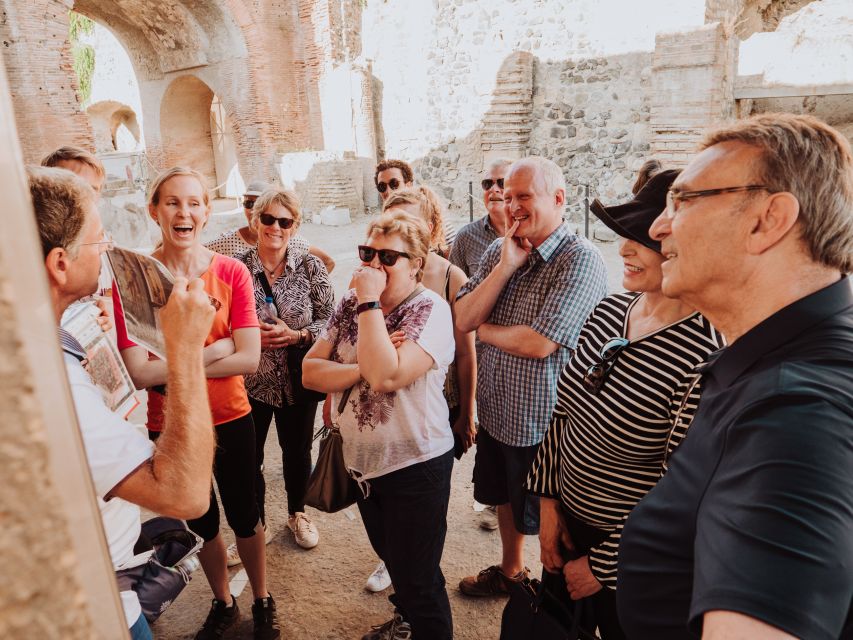
Pompeii can overwhelm you before you have even reached its main streets. The site is large, the ruins are spread out, and many walls look like piles of old stone until someone explains what you are seeing.
That is where this tour earns its keep. An archaeologist guide supplies the missing links: how rooms were used, what daily life may have looked like, how the eruption affected the city, and how excavation and preservation continue to shape the site.
I especially like the social angle. The best guides do not treat Pompeii as a collection of famous walls. They help you picture a city with homes, workspaces, public areas, traffic, noise, food, and ordinary routines. Paulo, Diego, Vincenzo, Alfredo, and Amedeo are among the guides praised for making difficult subjects clear while keeping the mood light.
The tone matters here. Pompeii includes scenes of death and destruction, including plaster casts that make the final hours of the city painfully personal. A good guide gives those remains proper weight without turning the visit into a grim march.
You can expect a steady walking tour lasting about two hours. The surface is uneven, and shade may be limited, especially in summer. Comfortable shoes, water, a hat, and sunglasses are not optional extras. They are the difference between paying attention and thinking only about your feet and the sun.
More Pompeii and Herculaneum visits:
- Pompeii Small Group Tour with an Archaeologist
★ 5.0 · 6,593 reviews - Discover the Ancient Ruins of Pompeii: Day Trip from Rome
★ 3.5 · 2,247 reviews - Pompeii and Herculaneum Small Group Tour with an Archaeologist
★ 5.0 · 1,350 reviews
Pompeii in two hours: scale, streets, and human tragedy
Pompeii was buried under roughly four meters of pumice and volcanic ash during the eruption of Vesuvius in 79 A.D. That covering preserved an extraordinary amount of material, but it also left the city sprawling and sometimes difficult to read without help.
The guided route focuses on the most meaningful areas available on the day. Routes can change depending on site conditions, crowds, and which areas are open, but the purpose is consistent: show you enough of Pompeii to understand how the city worked rather than simply race past one famous object after another.
I value the guide’s ability to connect physical remains with human choices. A wall painting is more useful when you understand its setting. A street becomes more interesting when you know how it related to nearby homes or public buildings. A preserved object carries more weight when its everyday use is explained.
The group size can reach 20 people. That is not a private tour, but it is far easier to manage than a large coach group. For groups of more than 10, headsets are provided, which helps you hear the guide while standing a few steps away or examining a nearby room.
The earphones are particularly useful when the site is crowded. Amedeo, also called Amadeus, was praised for shifting the route when busy areas became difficult, then returning to interesting places when space opened up. That kind of judgment can make the difference between a clear explanation and a view of the back of someone’s head.
The short Pompeii break is the main weakness
After the Pompeii walk, you get about 30 minutes before continuing to Herculaneum. This gives you time to use the toilet, buy a quick sandwich, or look around the souvenir shops outside the entrance.
It does not give you much time for a proper lunch. Several participants found the break just long enough to grab food, but too short for a relaxed meal and a real rest. If you need a substantial lunch, plan ahead and carry something suitable if allowed, or accept that this is mainly a snack stop.
This is worth stressing because the tour is physically demanding. Two hours at Pompeii, a station transfer, and another two hours at Herculaneum add up. In hot weather, a shaded restaurant break would be welcome, but the schedule does not promise one.
The short pause does help the tour fit both sites into one day. If you have limited time in Campania, that tradeoff may be worthwhile. If you prefer long meals and an easy pace, a private tour or separate visits would suit you better.
The Circumvesuviana train to Ercolano
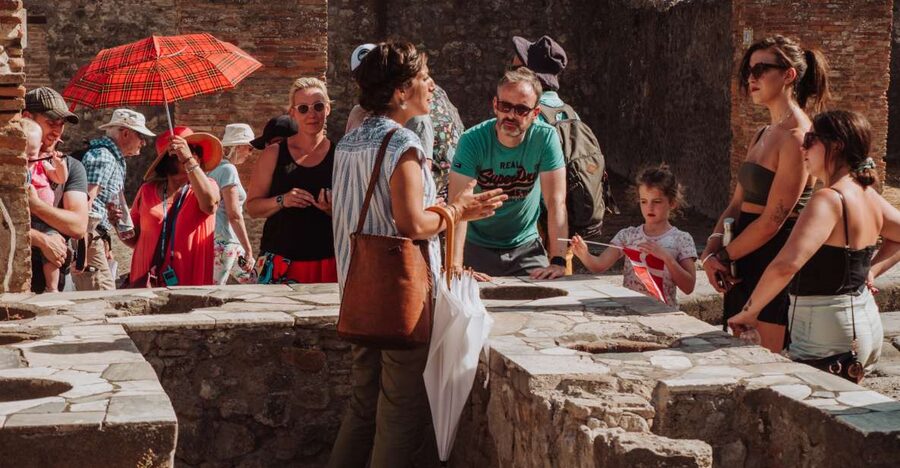
The move from Pompeii to Herculaneum uses the Circumvesuviana train. The stated journey takes about 20 minutes, though the full transfer is listed as approximately 30 minutes, and train delays can make the day longer.
This is not luxury transport. It is a practical local connection that lets you visit both archaeological parks without hiring a private vehicle. The guide continues to manage the group, and one guide used the train journey to share personal stories about growing up in the countryside.
On one occasion, a medical emergency caused a delay, and the company used a private minibus instead. That is not something you should count on, but it shows that transport problems can sometimes be handled flexibly.
The tour does not return you to Pompeii. It finishes at Parco Archeologico di Ercolano, so keep your onward plans in mind. From there, you will need to arrange your own return. One participant noted that the local commuter train station involves an uphill walk of roughly 25 minutes, so do not book a tight connection without allowing extra time.
A few more reviews worth comparing before you book
- Skip the Line Guided Tour of Pompeii led by an Archaeologist
★ 5.0 · 703 reviews - Pompeii Ticket + Tour with Optional Tasting Experience at Pompeii
★ 5.0 · 663 reviews - Pompeii private tour with an Official Guide
★ 5.0 · 631 reviews - Pompeii Private Tour with an Archaeologist and Skip The Line – 3 hours
★ 5.0 · 564 reviews
Herculaneum reveals a more intimate Roman city
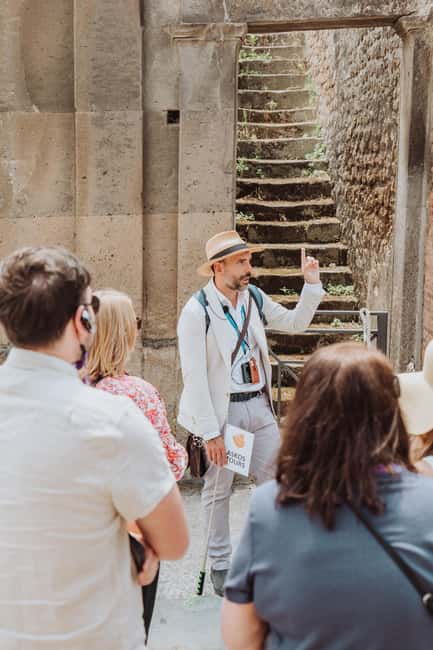
Herculaneum is much smaller than Pompeii, and that is part of its appeal. You cover less ground, but the buildings often give a stronger sense of domestic life because the volcanic material preserved them in greater detail.
Pompeii was covered mainly by ash and pumice. Herculaneum was buried beneath an avalanche of mud around 20 meters thick. That mud hardened around buildings and objects, helping protect second floors, wooden features, wall paintings, and mosaics.
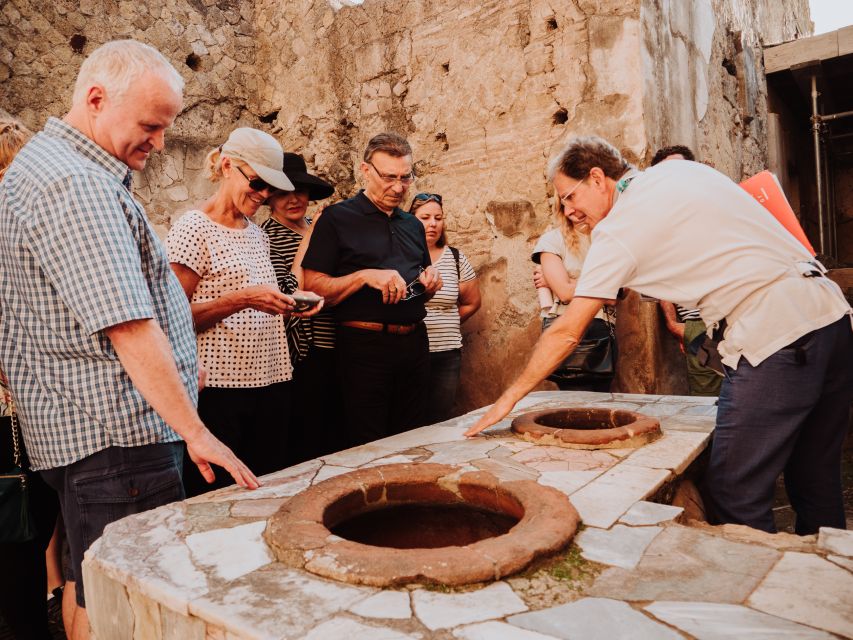
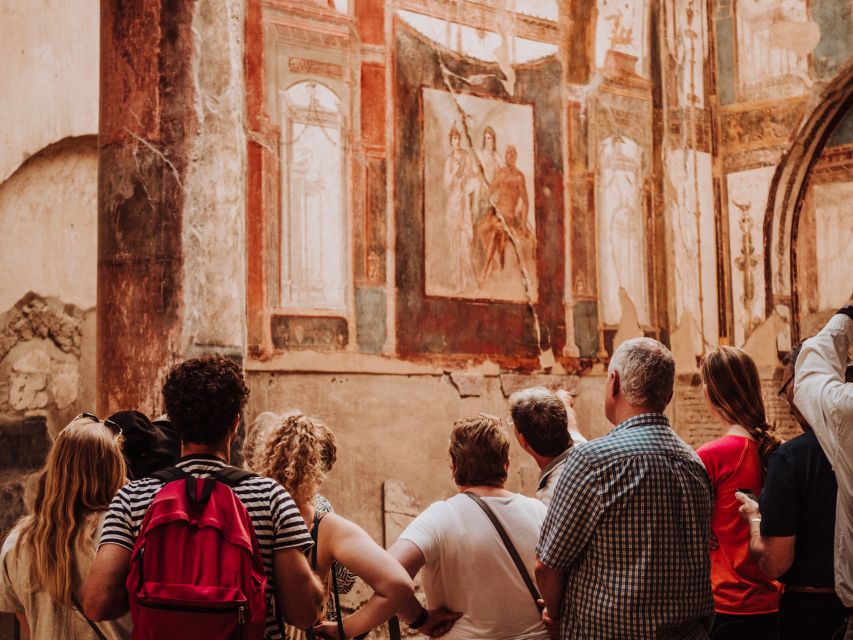
The result is striking. At Herculaneum, you might find yourself looking at details that rarely survive in ancient cities: carbonized wooden objects, intact decoration, and rooms that still suggest the wealth of their owners. The site offers a vivid look at the comfortable side of Roman life.
This second guided walk lasts about two hours. It complements Pompeii rather than repeating it. Pompeii gives you breadth and the feeling of a large working city. Herculaneum gives you a closer look at houses, decoration, and private comfort.
That contrast is the strongest reason to book the combined tour. Seeing only Pompeii can leave you with an impression of vast ruins and tragedy. Adding Herculaneum helps you understand how Roman homes were designed and decorated, and how much detail volcanic burial can preserve.
The archaeologist guides are the real value
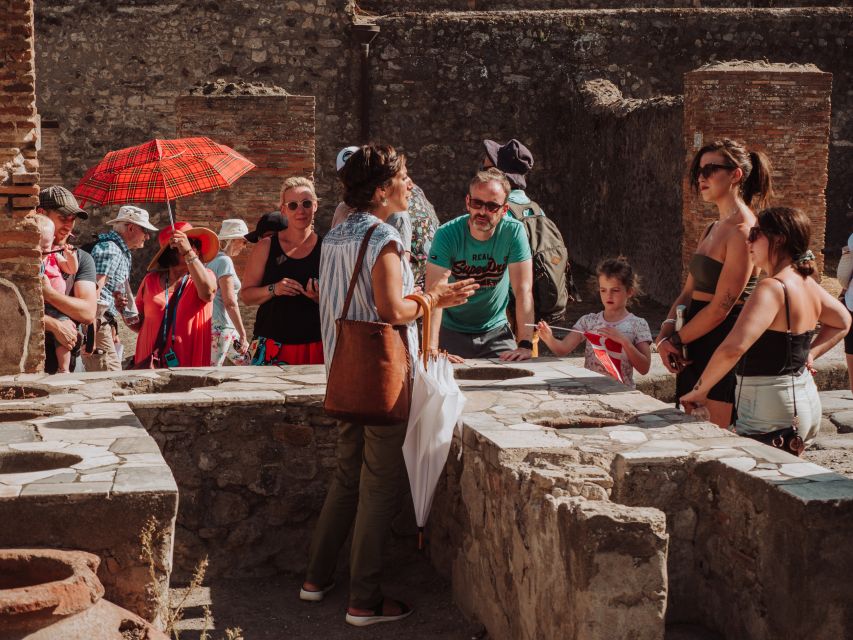
The strongest feature of this experience is not simply getting through the ticket entrance. It is having someone explain why the ruins matter.
Amedeo was praised for his clear explanations and relaxed humor. Diego received repeated praise for his depth of knowledge, easy answers, and ability to make the subject enjoyable. Paolo was noted for connecting buildings to daily life and encouraging the group to think about how people lived in the Roman period.
Other guides, including Sergio, Julia, Alfredo, Antonio, Rafael, Ricardo, and Vincenzo, were praised for their energy, warmth, and command of both sites. The individual guide is assigned rather than guaranteed, so you should not book solely in hopes of getting one particular person. Still, the pattern is encouraging: the company regularly uses guides who can explain archaeology in plain English.
A guide also keeps the day moving. Pompeii has enough material for several visits, and it is easy to spend too long in one corner. A well-run route helps you see the major highlights while leaving you with a coherent picture instead of a jumble of names and dates.
The tour is conducted in English or Italian. If your group is larger than 10, headsets help keep the guide audible.
Tickets, cost, and overall value
The tour includes entry tickets for both archaeological sites and skips the ticket line. The published information gives the Herculaneum admission price as €16 for adults and €2 for EU citizens aged 18 to 25. A Pompeii ticket price is not provided here, so you should check the current total when booking rather than assume a fixed figure.
The value depends on how you normally visit museums and ruins. If you are happy reading signs, studying a map, and doing your own research, independent entry may cost less. But Pompeii and Herculaneum are not simple open-air strolls. Their size, damaged buildings, and unfamiliar Roman customs make a guide unusually useful.
I would consider the guided format good value for anyone visiting these sites for the first time, especially if you want to see both in one day. You are paying for the guide’s interpretation, the coordination between sites, and the convenience of having tickets handled.
The tour also offers free cancellation up to 24 hours before the start time and a reserve-now, pay-later option. Those terms are useful when your Campania schedule depends on trains, weather, or a day trip from Rome, but always check the final booking conditions for your date.
Meeting point and practical preparation
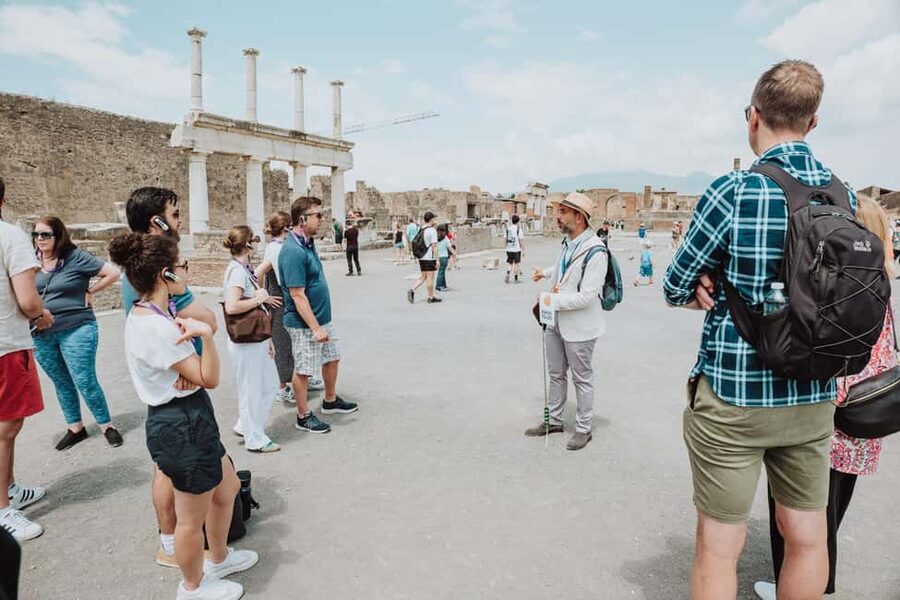
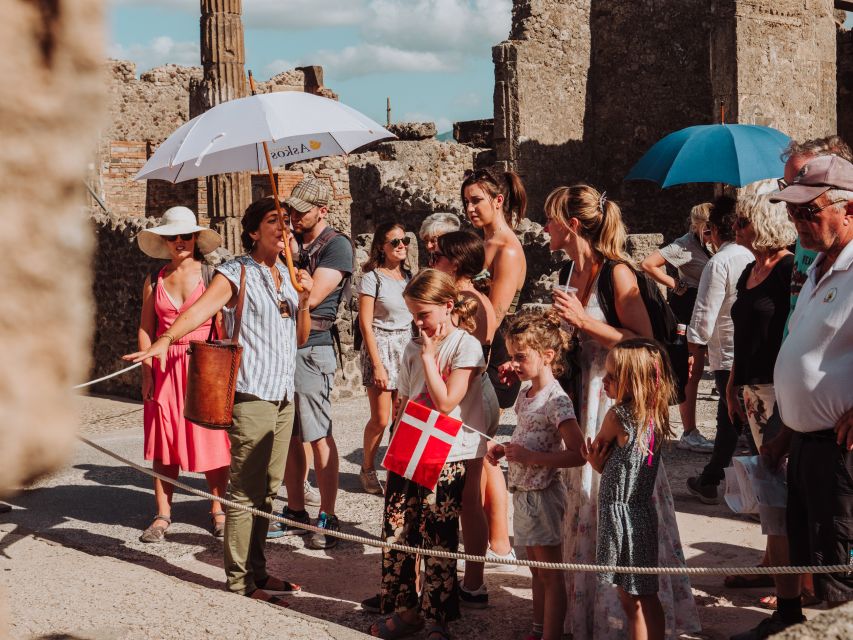
Meet the guide on the left side of the Pompeii entrance called Porta Marina Inferiore, near the Arte bus stop. The guide carries an Askos Tours sign. The meeting point is a few minutes from the Pompei-Villa dei Misteri Circumvesuviana station.
This area can be confusing because several tour operators gather around the entrance. One participant found the meeting point less obvious than expected, so arrive early and look carefully for the Askos Tours sign rather than relying on a large umbrella or obvious booth.
Bring a passport or identity card. You should also wear comfortable clothes and sturdy walking shoes. In summer, carry water, sunglasses, and a hat. A raincoat or poncho is sensible at any time because sudden showers can affect the open-air ruins.
The tour is not suitable for wheelchair users or people with mobility impairments. Uneven surfaces, long walks, and the transfer between archaeological sites make this an important limitation.
If you are traveling with luggage, free storage is available at both locations according to the information provided. Confirm the current arrangements with staff when you arrive, particularly if you are carrying large bags.
Who should book this combined tour?
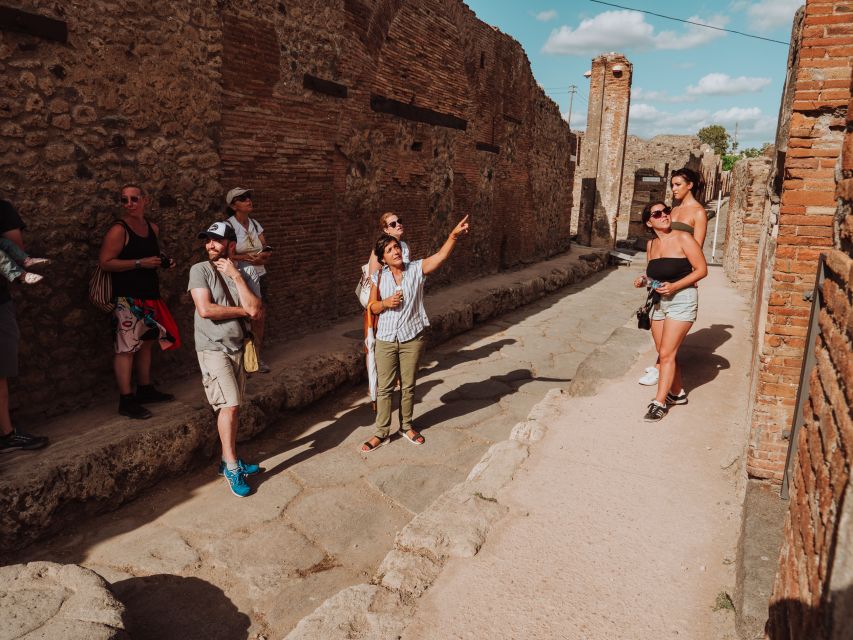
I would recommend it to first-time visitors who want the major lessons of both sites without spending two separate days on planning. It works especially well for history lovers, families with older children, and anyone who feels that ruins make more sense with a guide.
It can also suit a day trip from Rome, though you need to allow generous time for getting to Pompeii and returning from Herculaneum. The tour itself ends in Ercolano, not Pompeii, so your return route needs separate planning.
I would hesitate to recommend it to anyone who dislikes group schedules, needs a long lunch, or wants to explore at a very slow pace. The group may include up to 20 people, the lunch break is brief, and the four hours of guided walking require stamina.
Should you book the Pompeii and Herculaneum tour?
Book it if you want context, efficient planning, and both archaeological parks in one day. The guide’s explanations are the central benefit, and the combination of Pompeii’s scale with Herculaneum’s fine preservation gives you a fuller picture of Roman life than either site alone.
Skip it if you already know both sites well, need wheelchair access, or prefer an unhurried visit with a sit-down lunch. For most first-time visitors who can manage the walking, I think the archaeologist-led format is worth the added cost, especially with entry tickets included and the train transfer organized.
FAQ
How long does the tour last?
The tour lasts approximately 5.5 hours.
Which sites are included?
The tour includes the Pompeii Archaeological Site and the Archaeological Site of Herculaneum.
Where does the tour start?
It starts at Piazza Porta Marina Inferiore, 1, on the left side of the Pompeii entrance called Porta Marina Inferiore.
How do I find the guide?
Look for the guide near the Arte bus stop. The guide will carry an Askos Tours sign.
Is the tour available in English?
Yes. The tour is offered in English and Italian.
Are entry tickets included?
Yes. Entry tickets for Pompeii and Herculaneum are provided as part of the experience.
How long is the guided visit at Pompeii?
The guided walk at Pompeii lasts about two hours.
Is there a lunch break?
Yes. There is a break of about 30 minutes after the Pompeii visit. It is intended for lunch, snacks, or time around the souvenir shops, but it may feel short for a full meal.
How do you travel from Pompeii to Herculaneum?
The group normally travels by Circumvesuviana train to Ercolano. The train journey takes about 20 minutes, while the listed transfer time is about 30 minutes.
Where does the tour end?
The tour ends at Parco Archeologico di Ercolano. Return transportation to Pompeii is not included.
What should I bring?
Bring a passport or identity card. Comfortable clothing, water, sunglasses, and a hat are advised in summer. A raincoat or poncho is useful if rain is possible.
Is the tour suitable for wheelchair users?
No. The experience is not suitable for wheelchair users or people with mobility impairments.
Just added around Pompeii
- Pompeii Guided Group Tour with Entry Ticket and Archaeologist★ 4.5 · 269 reviews
- Pompeii: Guided Small Group Tour Max 6 People with Private Option★ 5.0 · 269 reviews
- Private Day Tour to Vesuvius, Herculaneum & Pompeii with Pick Up★ 5.0 · 279 reviews
- Pompeii Vineyard Escape: Private Wine Tasting & Lunch★ 5.0 · 329 reviews
- 2 hours Pompeii Tour with Local Historian – Ticket Included★ 5.0 · 335 reviews
- PompeiI Exclusive Tour with your Archaeologist in a Small Group★ 4.5 · 363 reviews
- Complete Pompeii Skip the Line Tour with Archaeologist Guide★ 4.5 · 379 reviews
- Pompeii 2h Small-Group Tour with Expert Archaeologist★ 5.0 · 385 reviews
Pompeii & Herculaneum Tours, compared.

Pompeii: Entry Ticket and Guided Tour with an Archaeologist
Read our review →
Pompeii: Entry Ticket with Optional Audio Guide
Read our review →
Pompeii: Small Group Tour with an Archaeologist
Read our review →


Pompeii Small Group Tour with an Archaeologist
Read our review →
Pompeii, Amalfi Coast and Positano Day Trip from Rome
Read our review →Browse the lists this tour appears in