

Review · POMPEII & HERCULANEUM TOURS
Pompeii 3hours Villa of Mysteries tour with an Archaeologist
Pompeii rewards a trained eye. This small-group tour pairs the city’s major ruins with the Villa of the Mysteries, where an archaeologist explains the famous frescoes and the Roman lives behind them. I especially like the expert storytelling and the guide’s ability to work around busy spots. The $88 price is fair if you want context, though three hours cannot cover all of Pompeii.
I also like that your ticket includes both the main Archaeological Park and the Villa of the Mysteries, and that the group stays small enough for questions. Guides such as Teresa, Julia, Anna Sorrento, Antonella, and Alexandra have earned praise for bringing daily life into focus, not just reciting dates and names.
The main catch is physical. Pompeii is enormous, the ancient paving can be uneven, and summer heat builds quickly. You will walk for three hours, often in open sun, and the tour is not suitable for wheelchair users or people with mobility impairments.
In This Review
- Key points at a glance
- Meeting your archaeologist at Porta Marina Superiore
- Reading a Pompeian house at the House of the Vettii
- Grand performances at the Large Theatre
- The House of the Faun and Pompeii’s scale
- The Lupanare and the less polished side of Roman life
- Baths, courtyards, and the House of Menander
- The Basilica, Forum, and Temple of Apollo
- The House of the Tragic Poet and Pompeii’s painted walls
- Finishing at the Villa of the Mysteries
- Why an archaeologist changes the visit
- Is $88 a fair price?
- Practical advice for a comfortable visit
- Who should book this Pompeii tour?
- Should you book it?
- FAQ
- Where does the Pompeii tour meet?
- How long does the guided tour last?
- Is the Villa of the Mysteries included?
- What languages are available?
- Is transportation included?
- What should I bring?
- Is the tour suitable for wheelchair users?
Key points at a glance

- The Villa of the Mysteries is the star: The tour finishes at Pompeii’s famous fresco-filled villa, in a quieter part of the archaeological park.
- Archaeologists add useful context: Guides explain architecture, painting, religion, politics, commerce, and ordinary household life.
- The route covers the essential sights: You visit major houses, theaters, baths, public buildings, temples, the forum, and the lupanare.
- Small groups make a real difference: A group of about ten has been reported, with headsets provided so you can hear the guide clearly.
- Three hours is an introduction, not a complete visit: Plan extra time afterward if you want to explore Pompeii’s many remaining streets and buildings.
- Come prepared for the site: Wear closed-toe walking shoes, bring water, and carry a hat in summer.
Meeting your archaeologist at Porta Marina Superiore

The tour begins at Via Villa dei Misteri, 2, by the entrance called Porta Marina Superiore. Look for a guide holding an ASKOS TOURS sign. This is a useful detail because Pompeii has more than one entrance, and arriving at the wrong gate can waste precious time.
The tour includes skip-the-ticket-line entry with the Pompeii Plus ticket. That ticket covers the Archaeological Park and the Villa of the Mysteries, so you are not paying separately for the main site and the final villa visit. Transportation is not included, so you need to make your own way to the meeting point.
Once inside, your guide sets the pace and decides when to visit the most crowded buildings. This matters at Pompeii. A popular house can become clogged with large groups, making it hard to see wall paintings or hear an explanation. Guides such as Antonella and Anna Sorrento have been praised for adjusting the order of stops and finding quieter moments without skipping the major sights.
The group size is described as small, and one group was about ten people. That is not the same as a private tour, but it gives you a much better chance to ask a question or stand close enough to see a detail. Headsets have also been used, which is helpful when you are spread along a Roman street or standing near several other groups.
More Pompeii and Herculaneum visits:
- Pompeii Small Group Tour with an Archaeologist
★ 5.0 · 6,593 reviews - Discover the Ancient Ruins of Pompeii: Day Trip from Rome
★ 3.5 · 2,247 reviews - Pompeii and Herculaneum Small Group Tour with an Archaeologist
★ 5.0 · 1,350 reviews
Reading a Pompeian house at the House of the Vettii
The House of the Vettii is one of the most useful stops for understanding how Pompeii’s wealthy residents lived. Here, your guide can connect the layout of the house to Roman domestic habits, decoration, status, and family life.
Pompeii becomes easier to understand when you stop treating each building as a pile of old stones. A house can show how people moved from public areas to more private rooms, how walls were decorated, and how art helped display wealth. The archaeologist’s role is to point out details you might otherwise walk past.
The tour does not promise entry into every room of every house. That is an important limit. One visitor wished there had been more time inside the houses, and you should expect the guide to select the most useful rooms rather than open every part of every building.
The same applies to the entire route. Pompeii is too large for a three-hour walk, so the value comes from seeing a carefully chosen set of places with explanations that connect them.
Grand performances at the Large Theatre
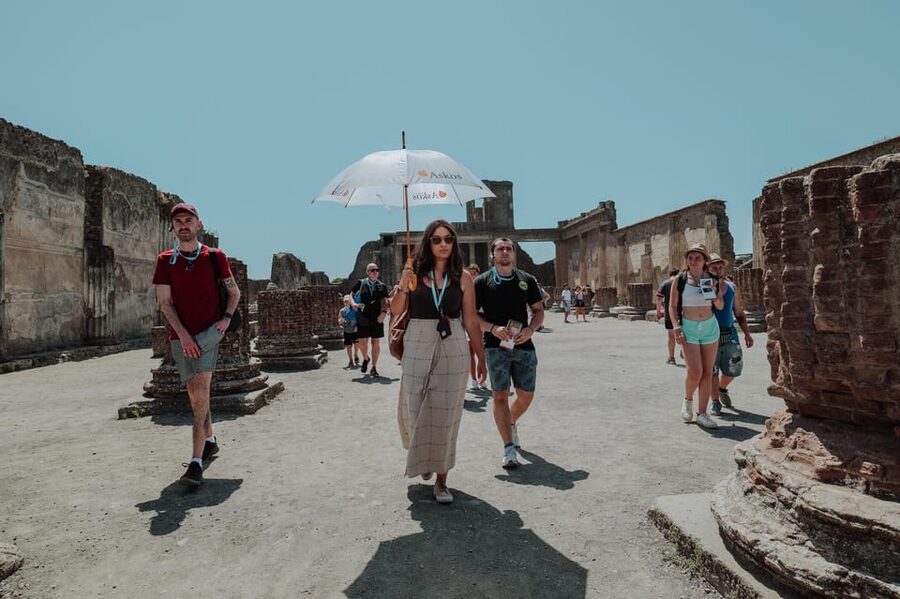
The Large Theatre gives you a break from domestic architecture and shows Pompeii as a city of public entertainment. Your guide can explain how theater fit into Roman civic life and why this was more than a simple place to watch a performance.
The setting also helps you grasp the size of Pompeii’s population and the importance of shared public events. You may find the theater less visually intimate than the houses, but it gives the tour a broader civic frame.
Because the route includes both private homes and public structures, you get a better sense of how the city worked. Roman life was not confined to courtyards. It spilled into theaters, commercial areas, religious spaces, and the forum.
The House of the Faun and Pompeii’s scale
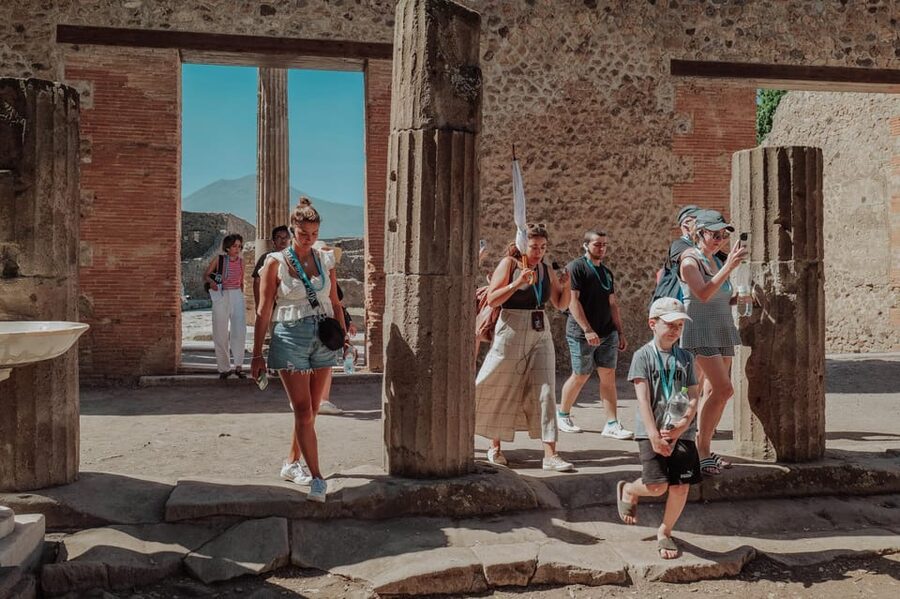
The House of the Faun is one of the major residential sites on the route. Its size and decoration help show the difference between an ordinary home and an imposing elite residence.
This is also where the sheer scale of Pompeii begins to register. You are not touring one isolated ruin. You are moving through a city of streets, homes, public buildings, shops, religious sites, and gathering places.
A guide is especially useful here because large ruins can become visually confusing. You might see a courtyard, doorway, or mosaic without knowing why it matters. The archaeologist gives those pieces a place in the larger picture, helping you read the site as an organized city.
A few more reviews worth comparing before you book
- Skip the Line Guided Tour of Pompeii led by an Archaeologist
★ 5.0 · 703 reviews - Pompeii Ticket + Tour with Optional Tasting Experience at Pompeii
★ 5.0 · 663 reviews - Pompeii private tour with an Official Guide
★ 5.0 · 631 reviews - Pompeii Private Tour with an Archaeologist and Skip The Line – 3 hours
★ 5.0 · 564 reviews
The Lupanare and the less polished side of Roman life
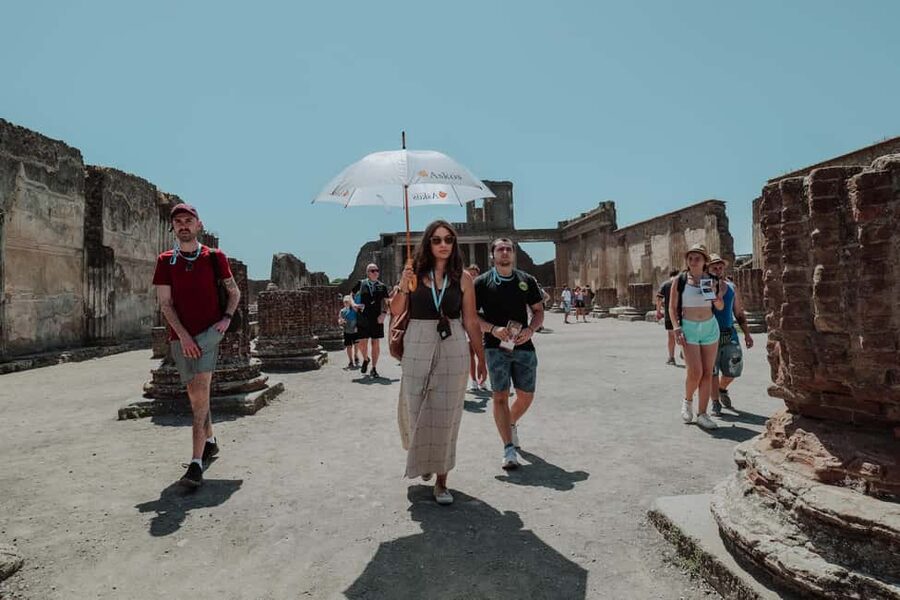
The Lupanare is one of Pompeii’s most talked-about buildings. Its presence adds a blunt, everyday dimension to the tour. Pompeii was not preserved as a perfect monument to emperors and temples. It was a working city, with ordinary needs, private behavior, commerce, and social tensions.
This stop may be crowded, and access can sometimes feel less relaxed than at the larger open spaces. Still, it is valuable because it prevents the visit from becoming too formal or idealized. Your guide can place the building within Pompeian society rather than treating it as a novelty.
The route works best when you allow the archaeologist to explain what is certain, what is strongly supported, and what remains open to interpretation. The Villa of the Mysteries later brings that difference between evidence and theory into sharp focus.
Baths, courtyards, and the House of Menander
The Forum Baths show how public facilities fit into city life. The stop helps you understand that Pompeii’s residents had access to shared spaces designed for washing, social contact, and routine activity.
The House of Menander returns you to domestic life. Taken together, these stops show how much of Roman history is found in ordinary patterns: where people bathed, how homes were arranged, what they displayed, and how they spent time with others.
I like this mix because it keeps the tour from becoming a parade of famous names. You get a more human picture of Pompeii. The guide’s stories can make a difference here, especially when explaining how a building’s rooms were used rather than simply identifying them.
Keep an eye on your energy. The route includes a lot of walking between buildings, and the ancient paving is not smooth modern pavement. One useful detail from the experience is that water-refill stations are available, but they may not appear early in the tour. Bring water from the start, especially in warm weather.
The Basilica, Forum, and Temple of Apollo
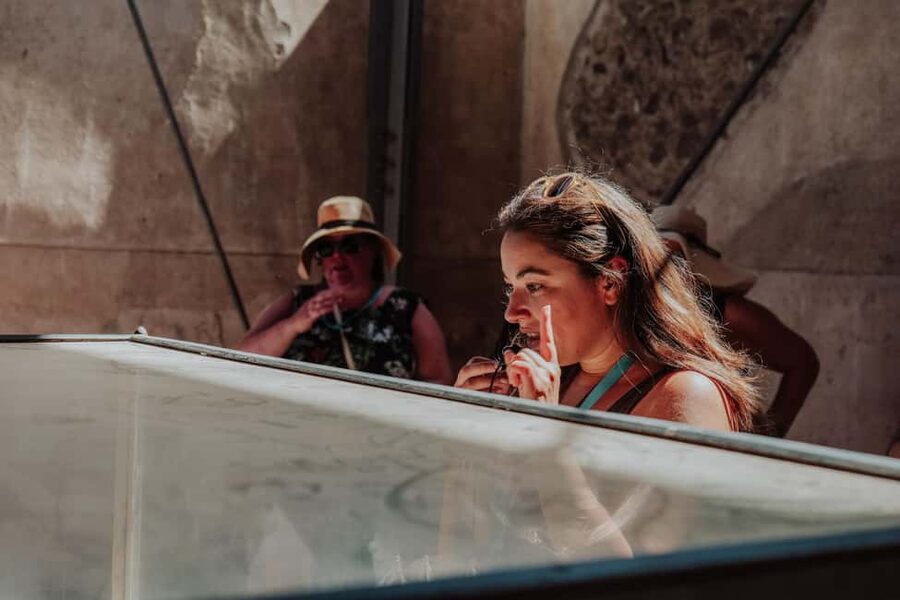
The Basilica was a major civic building, tied to public business and legal matters. It helps you see the Forum as the center of Pompeii’s public life rather than simply an open square.
At the Foro Civile di Pompei, your guide can tie together politics, trade, ceremonies, and the daily movement of people through the city. This is one of the places where an archaeologist’s training is particularly helpful. The remains may look fragmented, but their position and scale reveal how the city was organized.
The Temple of Apollo adds the religious side of Pompeii. Set beside the Forum, it shows how sacred buildings were woven into the same civic core as government and commerce.
These stops can be difficult to absorb if you are visiting alone without preparation. You may recognize the names, but the relationships between the structures are harder to grasp. A good guide gives you a mental map and keeps the ruins connected.
The House of the Tragic Poet and Pompeii’s painted walls
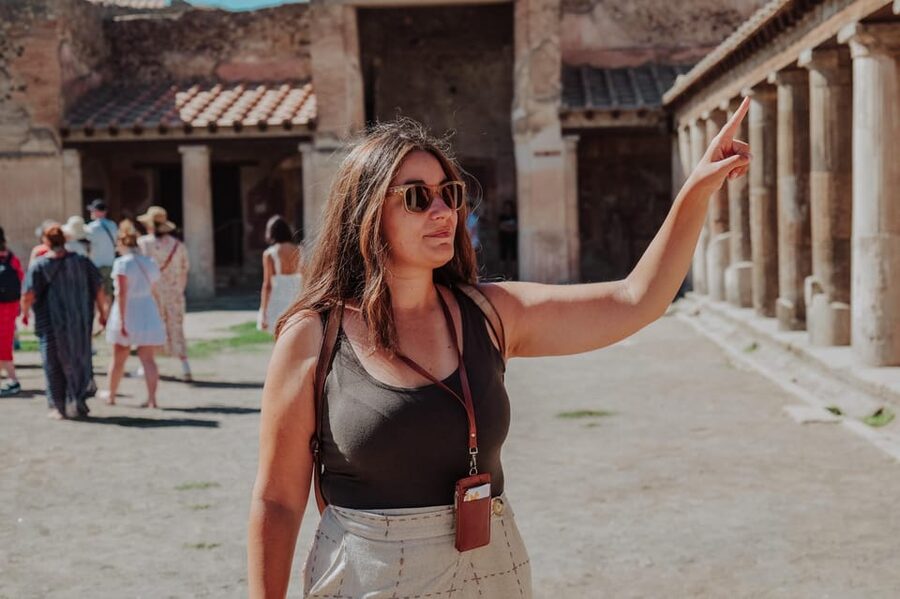
The House of the Tragic Poet is another chance to look closely at Pompeii’s domestic art. Frescoes were not random decoration. They communicated taste, money, stories, and cultural references.
The guide can point out paintings and symbols that you might miss while trying to keep up with the group or read a map. Several guides have been praised for explaining small visual details and connecting them to daily life.
You should not expect every building to be open in exactly the same way on every visit. Archaeological sites change access as preservation work continues. The route gives you a strong selection, but the exact experience inside individual houses can depend on current conditions.
Finishing at the Villa of the Mysteries
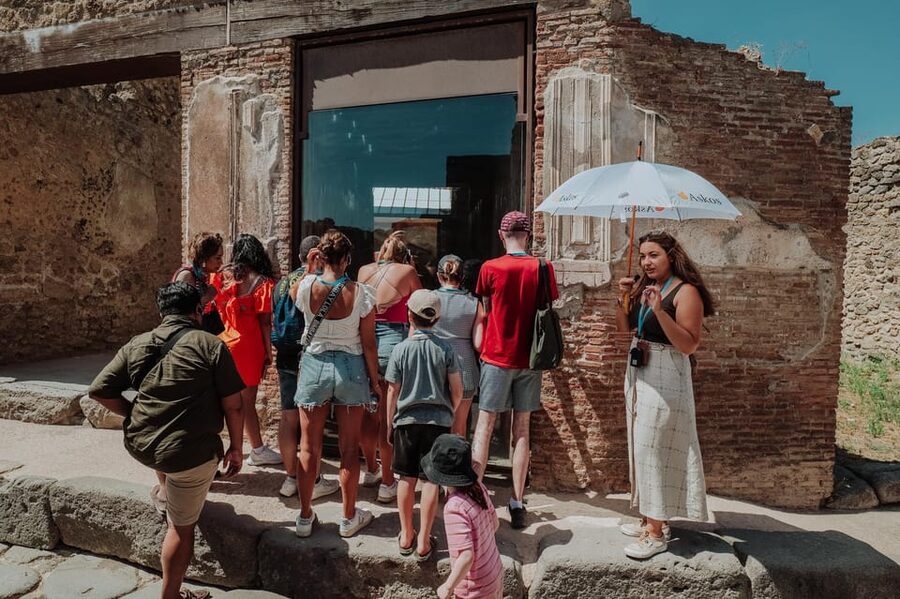
The Villa of the Mysteries is the reason to choose this version of the Pompeii tour. It lies beyond the busiest central cluster, and reaching it gives you a change of pace as well as a major artistic payoff.
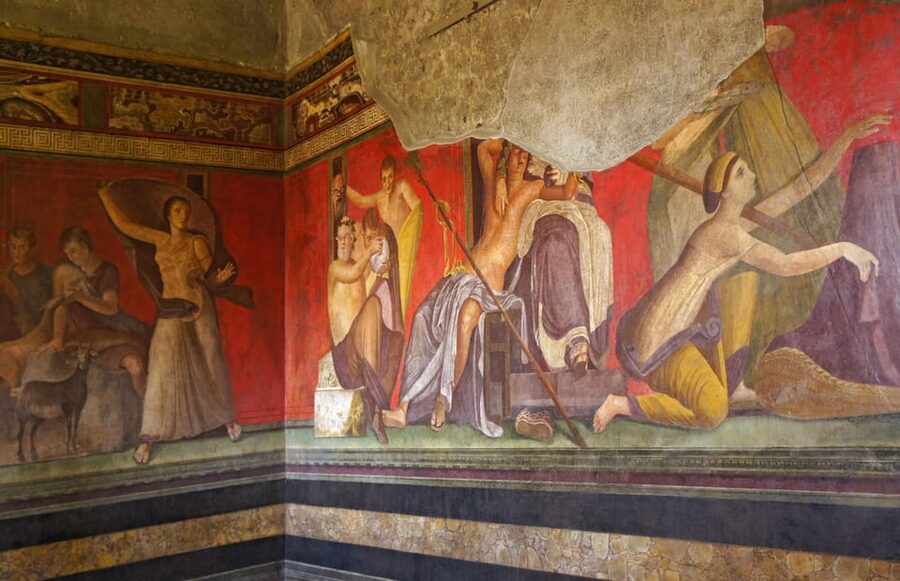
The villa is famous for its large wall paintings, often called the Mysteries frescoes. Their meaning has been debated, and your archaeologist guide can explain the leading interpretations without pretending that every question has a final answer. That makes the visit more interesting. You are not just looking at bright ancient paint. You are considering what the scene may have meant to the people who commissioned and viewed it.
The villa also gives you access to a quieter area with another villa and a cemetery nearby. If your schedule allows, this can be a pleasant place to pause after the guided portion. Bring your own snack because food and drinks are not included.
The location at the edge of the route has a practical effect. You finish away from the starting gate, so you should listen carefully to your guide’s directions for leaving or continuing through the park. The benefit is that the villa feels like a proper final chapter rather than just another quick stop in the center.
Why an archaeologist changes the visit
Pompeii is famous enough that many visitors arrive with a basic list of sights. The harder task is making those sights meaningful. An archaeologist can explain how a house was read, why a public building mattered, and which details are evidence rather than modern guesswork.
The strongest guides on this tour seem to combine subject knowledge with personality. Teresa has been praised for her work on Pompeii projects and for sharing insight into ongoing discoveries. Julia has drawn attention for archaeological experience at the site and lively storytelling. Anna Sorrento has been appreciated for understanding everyday life and moving the group around delays.
Other highly praised guides include Rafael, Yolanda, Alexandra, Roberta, Rafaella, Michele, Sophia, and Antonella. The names matter less than the pattern: the guide makes or breaks a Pompeii visit, and this tour has a strong record of guides who explain clearly, answer questions, and keep people engaged for the full three hours.
A three-hour guided visit can feel surprisingly quick. That is good news if you worry about getting lost or losing focus, but it also means you need to choose your priorities. You will see many of the key sites, not every street and house.
Is $88 a fair price?
At $88 per person, this is not the cheapest way into Pompeii. You are paying for the entrance ticket, a three-hour small-group format, and an archaeologist rather than simply hiring an audio guide or walking in alone.
I think the price makes sense for first-time visitors who want the site explained well. Pompeii is vast, and a self-guided visit can leave you spending too much time finding buildings and too little time understanding them. The guide also helps you manage crowds, which is a real benefit in the most popular houses.
The value is weaker if you already know Pompeii well or want a slow, independent day. In that case, you may prefer to enter on your own and spend hours choosing your own route.
Remember that food, drinks, and transportation are extra. The tour may also run slightly beyond the advertised finish time, so do not schedule a tight connection immediately afterward. One person had to hurry because the visit ended later than expected.
Practical advice for a comfortable visit
Wear comfortable closed-toe shoes. Flip-flops are not suitable for Pompeii’s uneven surfaces, and you will be on your feet for a long stretch.
Bring water, a hat in summer, and your passport or ID card. The tour operates rain or shine, so a wet-weather plan matters. Pompeii has little shelter across some stretches, and even a strong guide cannot change the weather.
Use the bathroom before entering. There may not be a convenient place once the tour is underway, and the route is long.
Small pets under 10 kilograms are allowed in the Archaeological Park, but they must remain on a leash. Wheelchair users and people with mobility impairments should choose another format because this tour is not suitable for them.
The available guiding languages are English, Italian, French, German, Spanish, and Portuguese. Since transportation is not included, check your route to Porta Marina Superiore before your start time.
Free cancellation is available up to 24 hours before the tour for a full refund, and you can reserve now and pay later. Families should check how admission is handled for children. One booking experience involved paying twice for a teenager after a date change, despite under-18 admission rules, so confirm the child price and ticket terms before finalizing plans.
Who should book this Pompeii tour?
You should book it if this is your first Pompeii visit, you want the Villa of the Mysteries, or you learn best through stories and explanations. It is also a good match if you want to see the major highlights without spending half the day studying a map.
Families with older children and teenagers can do well here if they are comfortable walking. The guide’s humor and questions help keep the experience from becoming a three-hour lecture.
You may want a different plan if you have limited mobility, need a highly flexible pace, or want to explore every corner. Pompeii is bigger than this tour, and many people choose to remain inside for several extra hours afterward.
Should you book it?
For most first-time visitors, yes. The archaeologist-led commentary, small group, and Villa of the Mysteries access give you more than a quick walk past famous ruins. The $88 cost is reasonable when you value clear context and efficient crowd management.
Book it with realistic expectations. You will not see all of Pompeii in three hours, and you need sturdy shoes, water, and some tolerance for heat and uneven ground. If you can spare the time, stay after the tour and explore on your own. That combination gives you both a strong introduction and room for personal discovery.
FAQ
Where does the Pompeii tour meet?
The guide meets you at Porta Marina Superiore, the entrance to the Pompeii ruins at Via Villa dei Misteri, 2. Look for the guide holding an ASKOS TOURS sign.
How long does the guided tour last?
The guided visit lasts three hours. Starting times vary, so check availability when booking.
Is the Villa of the Mysteries included?
Yes. The Pompeii Plus entrance ticket includes the Archaeological Park and the Villa of the Mysteries, and the villa is visited with the archaeologist guide.
What languages are available?
Guiding is available in German, Italian, French, English, Spanish, and Portuguese.
Is transportation included?
No. You must arrange your own transportation to and from the meeting point.
What should I bring?
Bring a passport or ID card, comfortable closed-toe shoes, and water. A hat is recommended in summer. Flip-flops are not suitable.
Is the tour suitable for wheelchair users?
No. The tour is not suitable for wheelchair users or people with mobility impairments. Small pets under 10 kilograms are allowed in the archaeological park if kept on a leash.
Just added around Pompeii
- Pompeii Guided Group Tour with Entry Ticket and Archaeologist★ 4.5 · 269 reviews
- Pompeii: Guided Small Group Tour Max 6 People with Private Option★ 5.0 · 269 reviews
- Private Day Tour to Vesuvius, Herculaneum & Pompeii with Pick Up★ 5.0 · 279 reviews
- Pompeii Vineyard Escape: Private Wine Tasting & Lunch★ 5.0 · 329 reviews
- 2 hours Pompeii Tour with Local Historian – Ticket Included★ 5.0 · 335 reviews
- PompeiI Exclusive Tour with your Archaeologist in a Small Group★ 4.5 · 363 reviews
- Complete Pompeii Skip the Line Tour with Archaeologist Guide★ 4.5 · 379 reviews
- Pompeii 2h Small-Group Tour with Expert Archaeologist★ 5.0 · 385 reviews
Pompeii & Herculaneum Tours, compared.

Pompeii: Entry Ticket and Guided Tour with an Archaeologist
Read our review →
Pompeii: Entry Ticket with Optional Audio Guide
Read our review →
Pompeii: Small Group Tour with an Archaeologist
Read our review →


Pompeii Small Group Tour with an Archaeologist
Read our review →
Pompeii, Amalfi Coast and Positano Day Trip from Rome
Read our review →Browse the lists this tour appears in