
Review · CITY TOURS
Rome: City Highlights Moonlight Walking Tour
Rome looks different after sunset. The stones glow, fountains sound louder, and the day’s heat finally gives way. This $28 evening walk links Piazza Navona, the Pantheon, Trevi Fountain, Piazza Venezia, and the Colosseum in about two to two and a half hours. I like the cooler timing and the way a guide connects famous sights into one story. The main consideration is simple: you will cover a lot of ground without entering any monuments.
I also like the guide-led storytelling. Guides such as Sila, Csenge, Alina, Domenica, Vladimir, and Pauline or Paulina have been praised for making history clear, funny, and easy to follow. The possible drawback is that Rome at night is quieter, not empty, so Trevi Fountain and the main squares can still be crowded.
In This Review
- Key points at a glance
- Why Rome at night changes the experience
- Starting in Piazza Navona
- The Pantheon and Sant’Ignazio’s painted illusion
- Galleria Sciarra and Rome’s decorated side streets
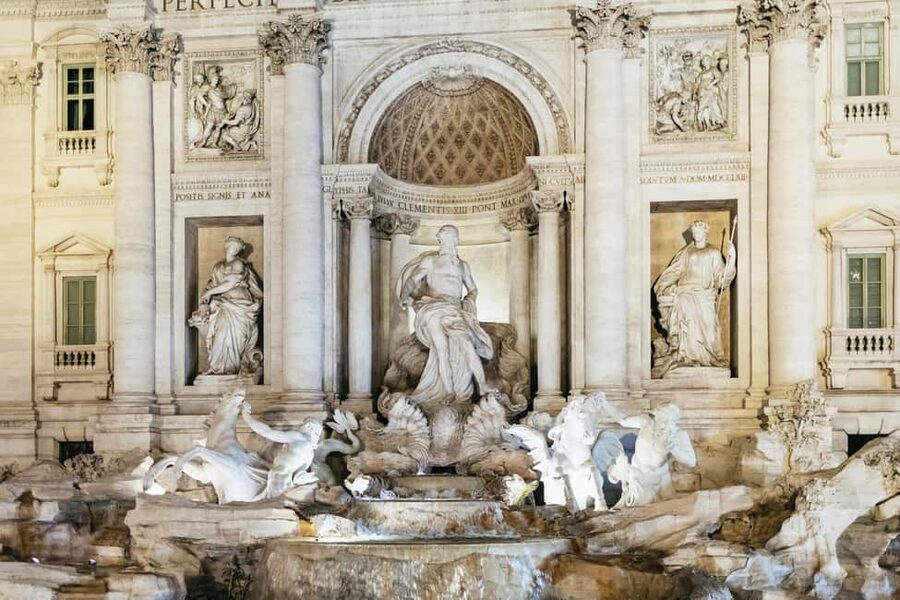
- Trevi Fountain under the evening lights
- Piazza Venezia and the road through imperial Rome
- Via dei Fori Imperiali and the illuminated Colosseum
- What the $28 price really buys you
- Pace, clothing, and practical comfort
- Who will enjoy this Rome night walk most
- Should you book it?
- FAQ
- How long does the Rome moonlight walking tour last?
- What language is the tour offered in?
- Does the tour include entry to the Colosseum or Pantheon?
- Where does the tour start?
- Where does the tour finish?
- What should I bring?
Key points at a glance
- Rome after dark: See major monuments under floodlights, with a cooler and calmer feel than a daytime walk.
- A strong first-night route: The tour links central Rome’s best-known sights and helps you get your bearings quickly.
- Trevi Fountain at its best: Visit at night, hear the meaning behind its figures, and toss in the traditional coin.
- Story-led guiding: The strongest praise goes to guides who add amusing facts, artwork details, and stories beyond basic dates.
- No admission tickets included: This is an outdoor sightseeing walk, not an inside visit to the Pantheon, Colosseum, or other monuments.
- Flexible booking: You can cancel up to 24 hours before departure for a full refund, and reserve now while paying later.
Why Rome at night changes the experience
The timing is the chief reason to book this walk. Rome’s historic center can feel hot and packed during the day, especially around Trevi Fountain and Piazza Navona. After sunset, the buildings take on a softer look, and you can spend more time listening instead of simply searching for a clear photo.
This is still a city walk, not a quiet countryside stroll. Rome’s center remains active in the evening, and busy squares may have plenty of people. But the atmosphere is generally more relaxed than during the hottest part of the day.
I especially like the route for a first evening in Rome. It gives you a useful mental map of the center, from the baroque piazzas to ancient imperial roads. You will not master Rome in two hours, but you will understand where several major sights sit in relation to one another.
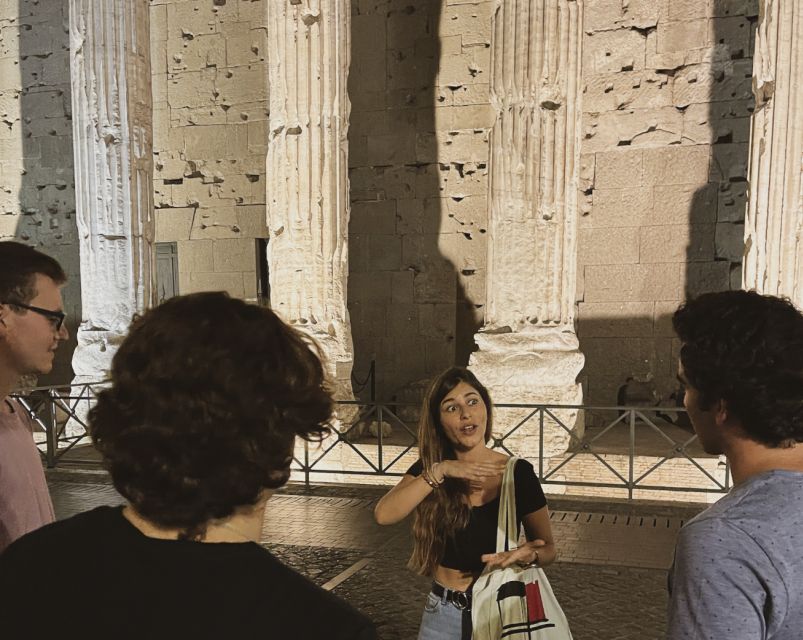
The guides are an important part of the value. The best ones on this experience do more than recite dates. Sila has been praised for linking small architectural details to larger stories, while Csenge is known for a friendly, lively approach. Alina, Domenica, Vladimir, Sarah, Anna, and Pauline or Paulina have also received strong praise for energy, humor, clear explanations, and a good pace.
Guide assignments can change, of course. Still, the repeated pattern is useful: this tour works best when you enjoy personal stories, odd facts, and explanations of art as much as the monuments themselves.
More Walking Tours in Rome
- Rome: Trastevere & Campo de Fiori Street Food Walking Tour
★ 4.9 · 2,768 reviews - Rome: Paranormal Night Walking Tour & Secret Backstreets
★ 4.9 · 1,921 reviews - Rome by Night Walking Tour – Legends & Criminal Stories
★ 4.5 · 1,003 reviews
Starting in Piazza Navona
The route begins at one of two possible meeting points, Piazza d’Aracoeli or Piazza di Pasquino, depending on the option you reserve. Check your confirmation carefully, since starting details can vary.
The first listed sightseeing stop is Piazza Navona, one of Rome’s grandest public spaces. The piazza follows the shape of an ancient Roman stadium where athletic contests took place. That unusual layout makes more sense once your guide explains what lies beneath the present-day square.
At the center, Bernini’s Fountain of the Four Rivers provides the main visual drama. Its sculpted figures and rocky forms are especially effective after dark, when the water and stone catch the surrounding light.
The guide usually spends about 20 minutes here. That is enough time to understand the square’s ancient use, its later baroque design, and the role of the fountain without getting bogged down in every detail.
Piazza Navona is also a good place to settle into the group. The pace is leisurely, with regular stops rather than a rushed march. If your guide is as lively as Sila, Csenge, or Domenica have been described, this opening section should make the rest of the walk feel easy.
The Pantheon and Sant’Ignazio’s painted illusion
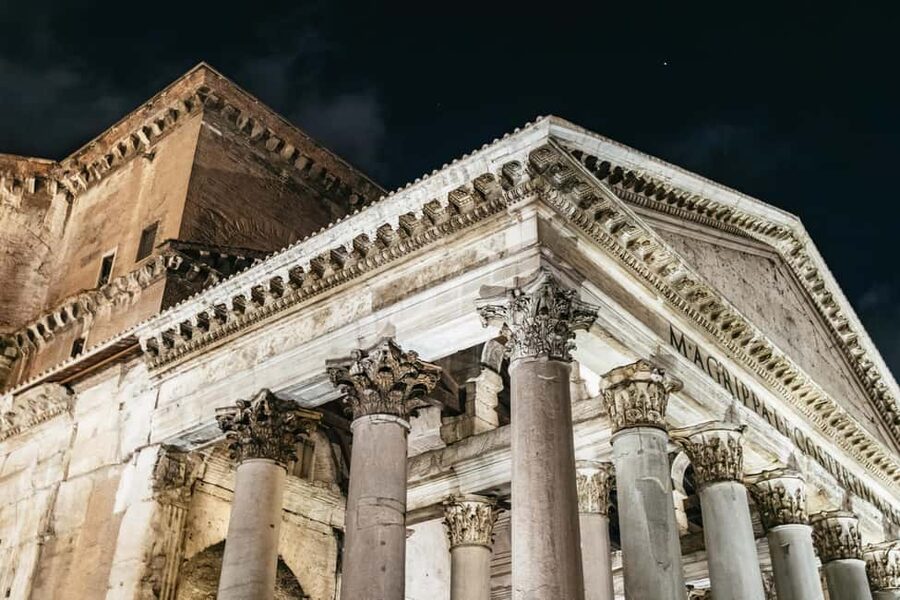
From Piazza Navona, the Pantheon is only about a five-minute walk away. You pass by rather than enter, so set your expectations correctly. The value here comes from hearing how the building survived, why its dome matters, and how Roman engineering still raises questions.
The Pantheon is among the best-preserved monuments from the Roman Empire. Its unreinforced concrete dome remains the star feature, and the central opening overhead is a reminder that this was never an ordinary enclosed room.
Because there is no interior visit included, you may want to return during opening hours on your own if you want to see the inside. This tour gives you context and an exterior view, but it does not replace an admission-based visit.
The next stop is the Church of Sant’Ignazio di Loyola, with around 30 minutes of guided attention. The church is known for its painted architectural effects, where artwork creates the impression of a much larger or more elaborate structure than the actual space allows.
This section adds variety to the route. You move from ancient engineering to baroque art and the clever visual tricks used by church designers. Guides have been praised for discussing facades, artwork, and small details, so this is one place where a strong guide can make a major difference.
The church stop also offers a useful lesson in Rome’s character. Ancient ruins, Christian buildings, baroque decoration, and modern city life are often only a few steps apart. You do not need a museum ticket to notice that mixture here.
Galleria Sciarra and Rome’s decorated side streets
Galleria Sciarra provides another change of pace. Rather than another huge monument, you see an ornate urban passage with decorative artwork and architectural detail. The tour allows about 20 minutes for a guided look.
This kind of stop is easy to miss if you explore Rome only by checklist. A self-guided walk might take you past without much thought, while a guide can explain why the decoration matters and point out details above eye level.
You should keep your eyes open during the connecting streets as well. The route uses winding backstreets between the major piazzas, so the experience is not just a parade of famous postcard locations. At night, these streets help you see how Rome’s center changes from open public squares to narrow lanes.
Do not expect a formal gallery visit here. The attraction is the passage itself and the explanation provided along the way.
More guided walks:
- Rome: Guided City Center Evening Sightseeing Walking Tour
★ 4.4 · 953 reviews - Best of Rome Walking Tour including Trevi Fountain
★ 4.5 · 923 reviews - Rome: Under the Moonlight Evening Walking Tour
★ 4.8 · 852 reviews - Rome: Forbidden History Walking Tour & Pub Crawl with Drinks
★ 4.9 · 688 reviews
Trevi Fountain under the evening lights
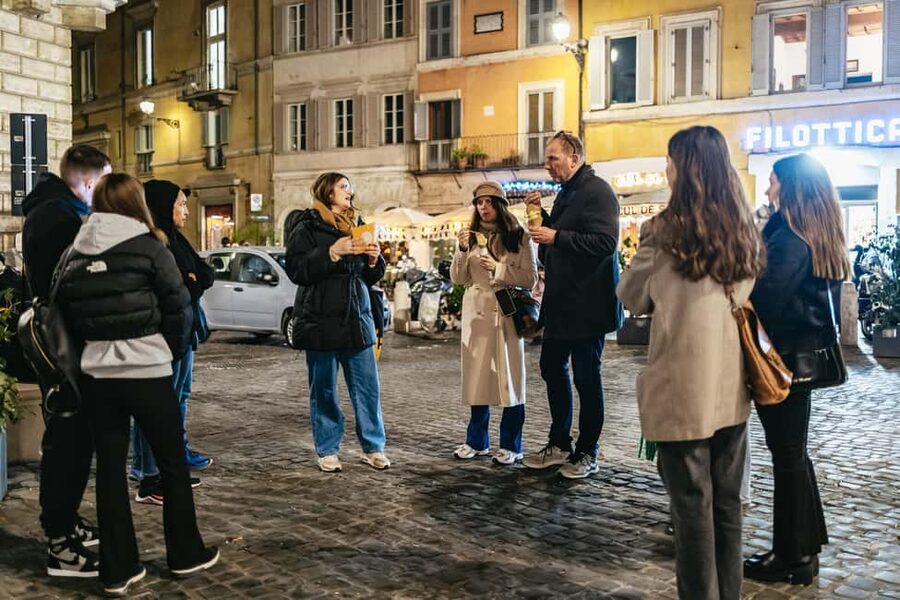
Trevi Fountain is the emotional center of this tour. The visit lasts about 30 minutes, giving you time to look, take photos, and hear the meaning behind the fountain’s imagery.
The fountain is much easier to appreciate when you are not standing in the full heat of the day. Evening lighting brings out the pale stone and moving water, and the monument feels more theatrical after sunset.
The tour is advertised as visiting Trevi at the quietest time of day, but do not read that as private access. Trevi is one of Rome’s most popular sights, and other people will still be there. The advantage is a more comfortable time of day and a guide who can help you focus on the design instead of simply fighting for a viewpoint.
Your guide explains the symbols and stories connected to the fountain. You also get the classic chance to toss a coin over your shoulder to guarantee your return to Rome. It is a small ritual, but it suits the playful side of the city.
This is a good photo stop, though you should listen first and photograph second. A guide such as Alina or Sila may point out details in the figures, facade, or surrounding architecture that you would otherwise miss.
Piazza Venezia and the road through imperial Rome
From Trevi Fountain, the walk continues through central streets to Piazza Venezia. The square is dominated by the Altar of the Fatherland, the large white monument associated with modern unified Italy.
The guide discusses the historic importance of the area, including the foot of Capitoline Hill. This helps connect the modern city with the older political center nearby. Piazza Venezia can feel visually overwhelming, so a short explanation gives the monument and its setting more meaning.
You spend roughly 20 minutes here. There is no interior admission, and the purpose is orientation and interpretation. If you prefer small lanes and fountains to monumental government architecture, this may be a less charming part of the walk, but it is important for understanding Rome’s layers.
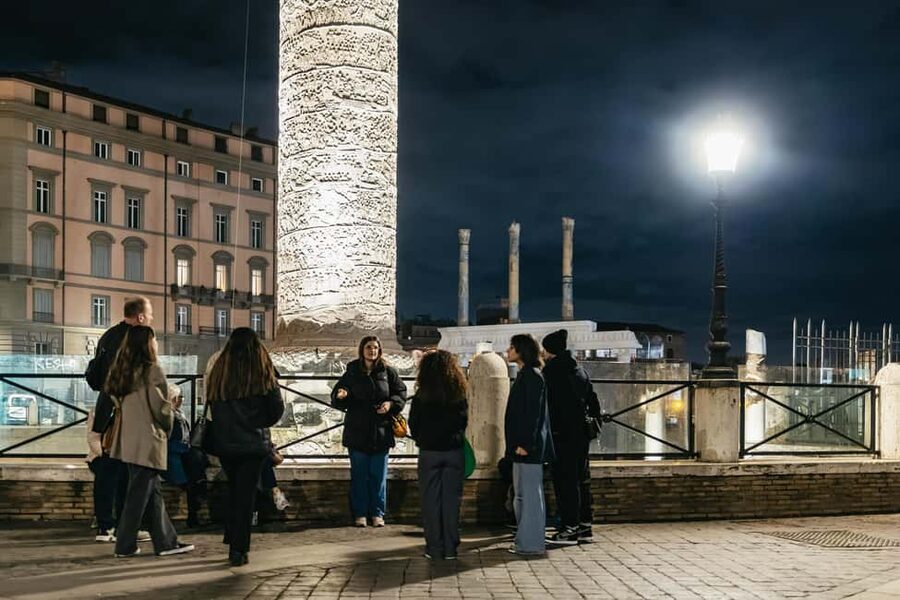
Next comes Trajan’s Column, which you pass by for about 20 minutes of explanation. The column’s carved scenes tell a military story in stone, and its location points toward the Roman forums that once filled this part of the city.
Again, the guide is what turns a quick glance into a useful stop. Rome’s ruins can look like scattered blocks when you first arrive. A clear account of what the column commemorates and how the surrounding area was used helps you read the remains.
Via dei Fori Imperiali and the illuminated Colosseum
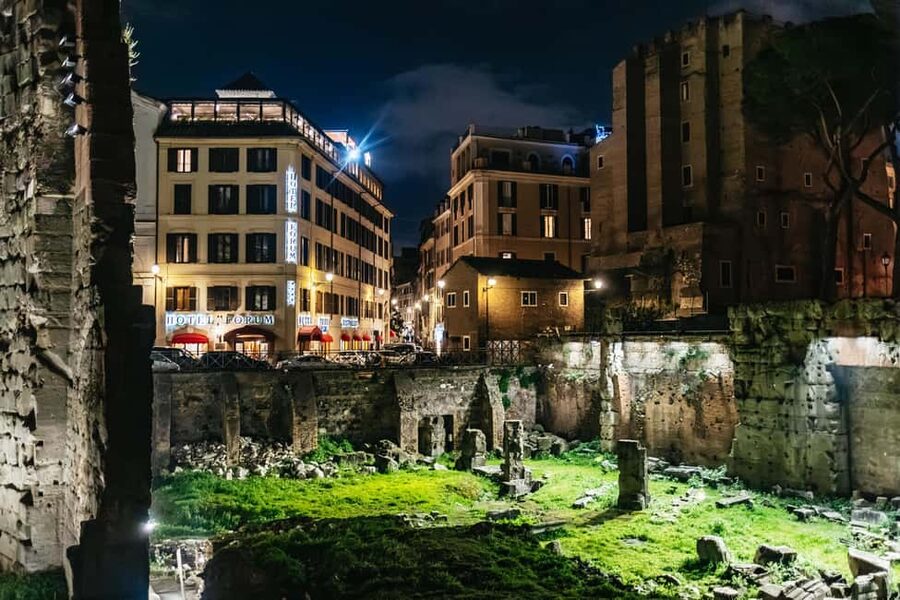
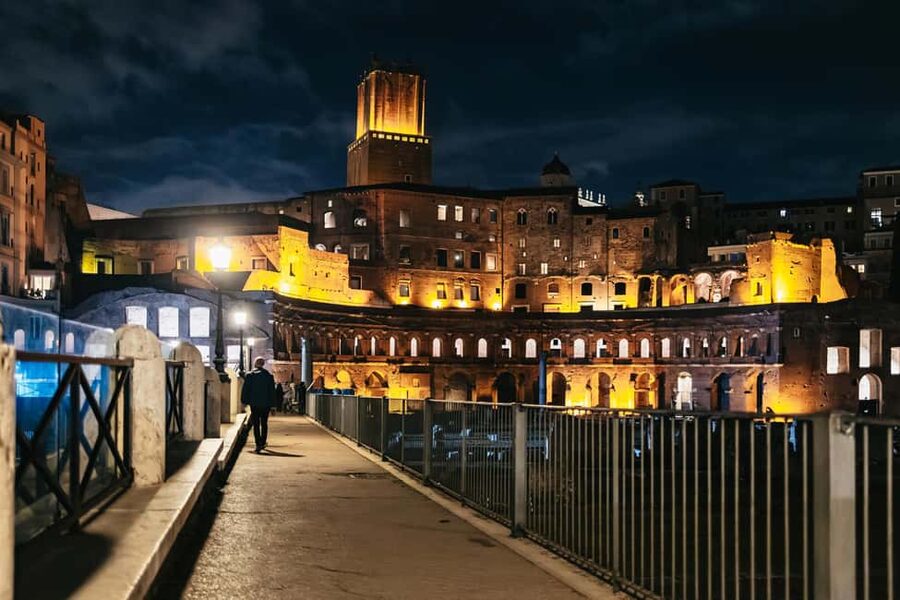
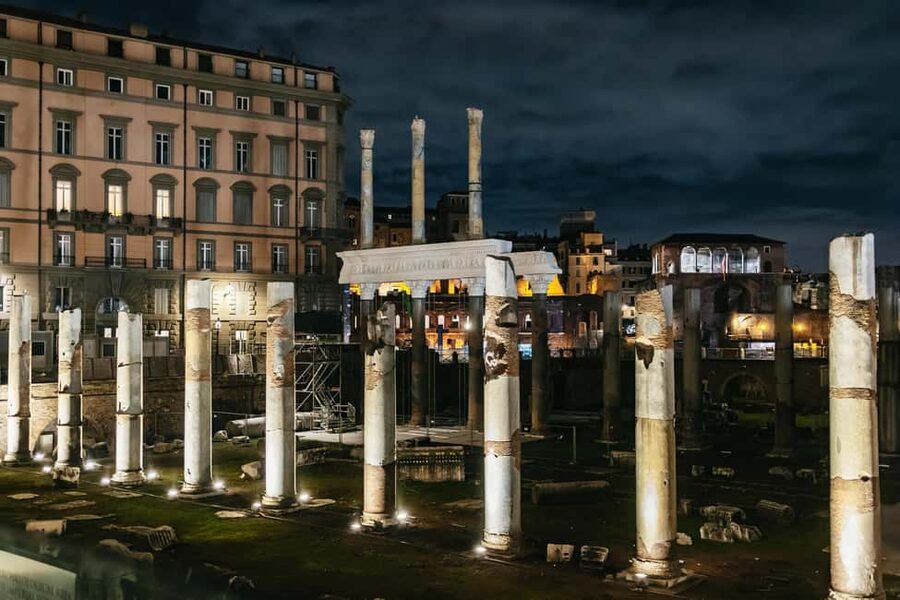
The final major stretch follows Via dei Fori Imperiali, the broad road cutting through the ancient Roman center. Along the way, you pass the forums of Trajan, Augustus, and Nerva.
At night, the ruins take on a different mood. Floodlighting picks out columns, broken walls, and surviving arches while the dark spaces between them suggest how much of ancient Rome has vanished. You are not entering the archaeological areas, but the roadside views are still strong.
The guide spends around 20 minutes here discussing ancient Rome and its empire. This is where the earlier stops begin to connect. The Pantheon showed engineering, Piazza Navona showed the shape of an ancient stadium, and the imperial forums show how Rome used architecture to project power.
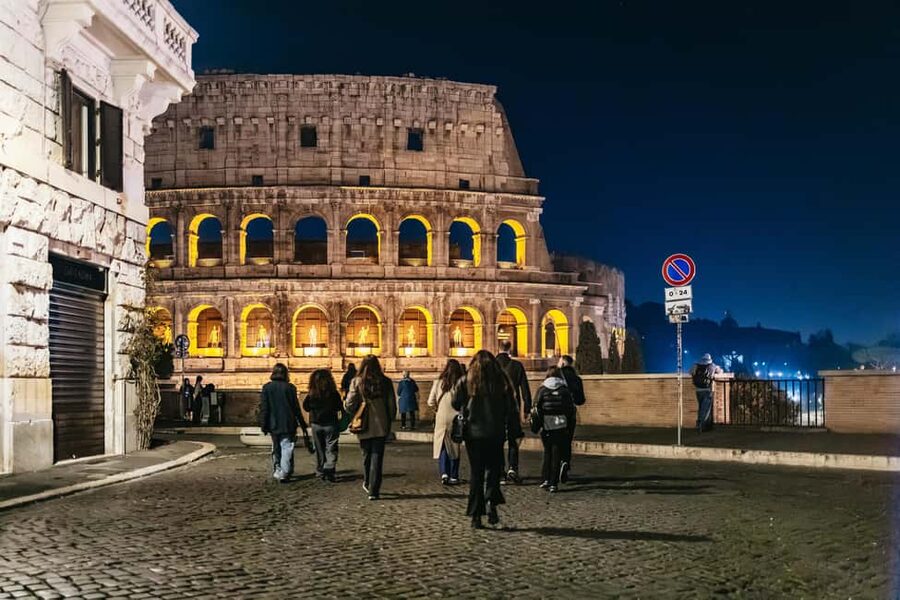
The tour concludes outside the Colosseum, usually in the Piazza del Colosseo area or at the Colosseum itself. The sight of the amphitheater illuminated at night is a fitting finish, and one of the tour’s best photo opportunities.
Drop-off details list several nearby end points, including Piazza Navona, Piazza del Colosseo, and the Colosseum. Since the activity ends back at the meeting point area, check the precise arrangement for your selected departure before you set up a later reservation.
The Colosseum is seen from outside only. If entering the amphitheater is a priority, arrange a separate ticket and visit.
What the $28 price really buys you
At $28 per person, this is good value if you want orientation, company, and interpretation rather than admission to the monuments. You cover a broad section of central Rome, and a two-hour walk would cost little more than a casual meal or a few short taxi rides.
The price does not include food, drinks, or entry tickets. That keeps the cost low, but you should budget separately for the Pantheon, Colosseum, or any other interior visits you plan to make.
The strongest value comes from the route and the guide’s ability to tell a coherent story. You could visit every exterior on your own, but it would be harder to understand why the sites fit together. A good guide also helps you notice details that are easy to miss, from fountain symbols to painted architecture and ancient road planning.
A private group option is available if you want a more personal format. The standard experience is better suited to people who enjoy shared walking tours and do not need a custom route.
Pace, clothing, and practical comfort
Wear comfortable shoes. The tour lasts two to two and a half hours, and Rome’s central streets can be tiring even when the pace is relaxed.
Comfortable clothing is also recommended. Evening temperatures can be pleasant, but conditions vary, and you will be outside for the full route. Bring only what you want to carry comfortably because there is no sightseeing vehicle to provide a break.
The tour is offered in English and Spanish. It is a live guided walk, so you can ask questions rather than simply listen to a recording. That matters when you want clarification about a monument, a symbol, or the best place to return later.
Starting times vary by date. Check availability before booking, especially if you are trying to fit the walk around dinner or another timed activity.
Free cancellation is available up to 24 hours before departure for a full refund. You can also reserve now and pay later, which is useful when your Rome plans are still shifting.
Who will enjoy this Rome night walk most
I would recommend this tour to first-time visitors who want a fast, useful introduction to central Rome. It also suits people with limited time, since the route reaches nearly all the city highlights named in the experience within one evening.
It is a good choice if you dislike sightseeing in the midday heat. Families with older children may also enjoy it because the walk includes fountains, dramatic squares, ancient ruins, and the Colosseum rather than one long indoor lecture.
The tour works well early in your stay. A guide can offer ideas for the rest of your visit, and one guide, Sila, has been praised for giving practical suggestions that helped shape later plans.
I would be more cautious if you have mobility concerns, dislike walking, or want to enter the monuments. The information provided does not give accessibility details, and the route covers several central areas on foot. You should confirm suitability before booking if that is important for you.
History fans may also want a longer, more focused tour of the Colosseum or Roman Forum. This experience provides a broad overview, not a detailed archaeological study.
Should you book it?
Book this tour if you want Rome’s famous center explained in plain language, with cooler temperatures and beautiful night lighting. The biggest strengths are the route, the relaxed pace, and guides who bring humor, personal energy, and useful details to the walk.
Skip it if your main goal is to go inside the Pantheon or Colosseum, or if you would rather explore slowly on your own. For most first visits, though, $28 is a fair price for a well-planned evening introduction to Rome, especially when you schedule it near the start of your trip.
FAQ
How long does the Rome moonlight walking tour last?
The tour lasts approximately two to two and a half hours. Starting times depend on availability.
What language is the tour offered in?
The live tour is available in English and Spanish.
Does the tour include entry to the Colosseum or Pantheon?
No. Entry to attractions is not included. The Pantheon, Colosseum, Trevi Fountain, and other sites are viewed from the route, with guided explanations provided at selected stops.
Where does the tour start?
The meeting point may be Piazza d’Aracoeli or Piazza di Pasquino, depending on the option booked. Check your booking details for the exact location.
Where does the tour finish?
The activity ends in the central Rome area, with listed end points including Piazza Navona, Piazza del Colosseo, and the Colosseum. Exact arrangements can vary.
What should I bring?
Bring comfortable shoes and comfortable clothes. Food and drinks are not included, so plan separately if you want refreshments before or after the walk.
Just added around Rome
- Rome City, Pantheon, and Trevi Fountain Walking Tour★ 5.0 · 249 reviews
- Rome: Tivoli Day Trip with Villa d’Este and Villa Adriana★ 4.5 · 251 reviews
- Rome: Skip the line Vatican Museums & Sistine Chapel Tour★ 4.2 · 251 reviews
- Transfer Rome center – Ciampino Airport★ 4.5 · 251 reviews
- Rome: Cannondale E-Bike Evening Tour with Optional Dinner★ 4.9 · 251 reviews
- VIP Colosseum, Roman Forum & Palatine Hill & Special Access Sites★ 4.5 · 252 reviews
- Private Vatican Museums Hidden Gems Tour with Optional Pick-Up★ 5.0 · 253 reviews
- Vatican Museums & Sistine Chapel Skip-the-Line Guided Tour★ 4.6 · 254 reviews
City Tours, compared.

City Sightseeing Hop-on Hop-off Bus with Audioguide
Read our review →
City Sightseeing Hop-On Hop-Off Bus with Audio Guide
Read our review →
City Sightseeing Rome Hop-On Hop-Off Bus Tour
Read our review →

Fettuccine Pasta Cooking Class in Rome’s City Center
Read our review →
Vatican City: Vatican Museums & Sistine Chapel Entry Ticket
Read our review →

City Sightseeing Florence Hop-On Hop-Off Bus Tour
Read our review →Browse the lists this tour appears in