
Review · CITY TOURS
Rome City, Pantheon, and Trevi Fountain Walking Tour
Rome rewards a good first walk. This two-hour route links Piazza Venezia, Trevi Fountain, the Pantheon, and Piazza Navona, while also slipping into places many people miss. I like the small maximum of 15 people, and I like the choice of morning or afternoon departures. The main catch is that the Pantheon entry fee is not included, and Rome’s uneven streets require steady walking.
I would use this tour early in a Rome visit, especially if you have already seen the Colosseum or Vatican City and want the city’s historic center to make better sense. Guides such as Dan, Sharon, Domenica, Anna, and Vlad have been praised for clear explanations, humor, patience, and useful food tips. Just allow extra time to find the start at Piazza d’Aracoeli, since the meeting point can be easy to miss.
In This Review
- Key points to know before you book
- Why this two-hour Rome walk works well early in your trip
- Piazza Venezia and the layers of Rome
- Galleria Sciarra, an easy-to-miss Art Nouveau surprise
- Trevi Fountain, Rome’s grandest pause
- Sant’Ignazio and Rome’s painted architecture
- The Pantheon, with admission handled separately
- Piazza Navona gives the walk a pleasant finish
- What the guide adds to the experience
- Group size, timing, and walking pace
- Is $24.20 a fair price?
- Who should book this Rome walking tour?
- Should you book it?
- FAQ
- How long does the Rome walking tour last?
- How many people can join the tour?
- Does the tour include Pantheon admission?
- Where does the tour begin?
- Where does the tour end?
- Can I cancel for a full refund?
Key points to know before you book
- A compact route through central Rome: Six stops fit into about two hours, ending at Piazza Navona.
- Small-group format: The group is capped at 15, with some departures operating with only four people.
- More than the famous sights: Galleria Sciarra, Sant’Ignazio, and a small chapel add character between the major monuments.
- Best as an orientation walk: You get a useful map of the historic center and ideas for places to revisit.
- Pantheon admission costs extra: The exterior and history are part of the walk, but entry is not included.
- Good guide reports: Dan, Sharon, Domenica, Anna, Vlad, Sila, and others are praised for warmth, humor, and strong storytelling.
Why this two-hour Rome walk works well early in your trip
Rome can feel like a grand museum without walls. One street brings you to an imperial ruin, the next to a Baroque church, then suddenly you are in a busy square packed with fountains and cafés. This route helps you connect those pieces instead of seeing each monument as an isolated photo stop.
The tour begins at Piazza d’Aracoeli, near Via di S. Venanzio, and finishes at Piazza Navona. That direction makes practical sense. You start near the ancient and political center of Rome, move through lanes and churches, then end in a square with restaurants and bars.
I especially like this as a first or second activity. Several people used it on their first evening or soon after arriving, and that is a smart plan. The walk gives you a sense of distances, points out places worth returning to, and helps you decide where to eat or explore later.
At roughly two hours, it is long enough to provide useful context without taking over your day. You will still need to pay attention to the pace. One person found the walking considerable, while others felt the length was manageable and not too tiring. If you have a foot injury, this is not the right choice.
More Walking Tours in Rome
- Rome: Trastevere & Campo de Fiori Street Food Walking Tour
★ 4.9 · 2,768 reviews - Rome: Paranormal Night Walking Tour & Secret Backstreets
★ 4.9 · 1,921 reviews - Rome by Night Walking Tour – Legends & Criminal Stories
★ 4.5 · 1,003 reviews
Piazza Venezia and the layers of Rome
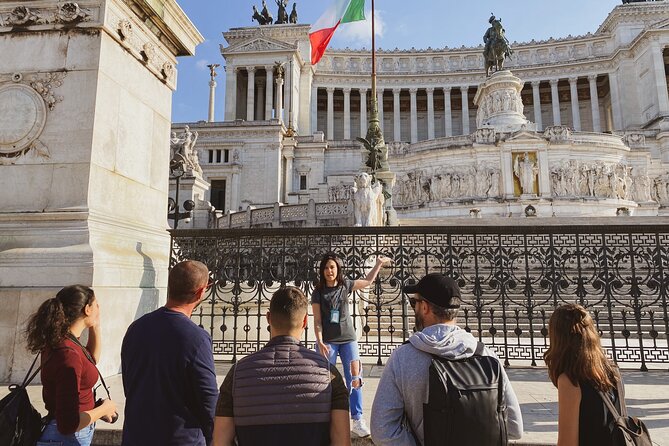
The opening stop at Piazza Venezia lasts about 20 minutes and sets up the whole city. Here, the guide explains Rome across several periods: the age of emperors, Renaissance Rome, and the era shaped by Napoleon.
That broad time frame is useful because Rome is not just an ancient city. Its streets and buildings were repeatedly altered by rulers, church leaders, artists, and political powers. A good guide can help you see why the city often feels like several centuries sharing the same block.
The stop is free, but that does not mean it is basic. This is where the route gives you a sense of the ancient forums and the grand civic scale of the piazza. You are not entering a major archaeological site here, so think of this section as an introduction and orientation rather than a full site visit.
The guide’s storytelling matters most at this point. Dan has been praised for answering questions beyond the standard script, while Sharon has been appreciated for pointing out areas worth exploring later. That kind of advice is valuable in Rome, where a small turn can lead to another church, courtyard, fountain, or archaeological fragment.
Galleria Sciarra, an easy-to-miss Art Nouveau surprise
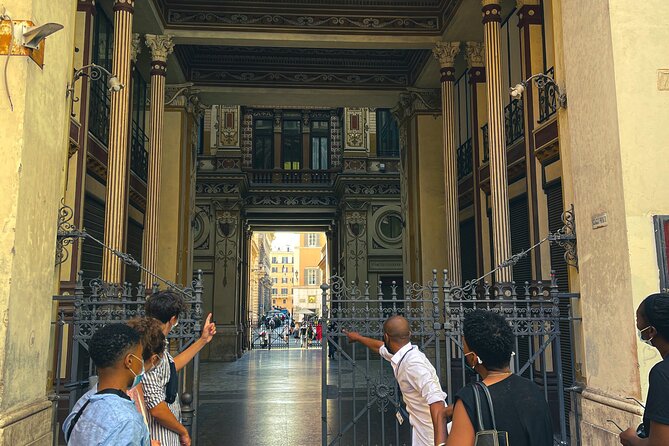
The 10-minute stop at Galleria Sciarra is one of the route’s nicest changes of pace. This 19th-century building is decorated with Art Nouveau frescoes and paintings, offering a visual break from ancient stone and grand Baroque decoration.
It is the sort of place you could walk past without knowing to look up or step inside. The short visit does not allow for a long study of every painting, but it gives you a quick reminder that Rome’s beauty is not limited to famous monuments.
This stop also shows the value of a walking guide. A map can take you to the Trevi Fountain, but it may not tell you about an elegant building tucked beside the main route. Pollina was praised for showing unexpected places that would otherwise be missed, and this is exactly the kind of stop that makes a short city walk feel more personal.
Trevi Fountain, Rome’s grandest pause
The Trevi Fountain receives about 20 minutes, enough time to take in the sculpture, hear its story, and get photographs. It is one of Rome’s most famous sights, so it will not feel like a quiet discovery. Still, a guide can make the stop more than a quick look and a coin toss.
The tour description places special emphasis on bringing the fountain’s sculpture to life, including its appearance when illuminated. That makes an afternoon or dusk departure appealing if the timing allows you to see the fountain in a different mood.
Do not expect to have the fountain to yourself. The point of the guide here is interpretation and orientation, not private access. You get context about what you are seeing, then time to appreciate the scene before moving on.
The route’s balance is good. You receive a major landmark, but the fountain is not the entire experience. After the crowds and spectacle, the walk turns toward quieter details and a church that many first-time visitors might skip.
More Trevi and Pantheon walks:
- Rome: Pantheon Fast-Track Ticket and Official Audio Guide
★ 4.3 · 21,008 reviews - Pantheon Reserved Entry Ticket with Audio Guide
★ 4.0 · 4,486 reviews - Rome: Pantheon Timeless Marvel Guided Tour with Entry Ticket
★ 4.9 · 4,002 reviews - Rome: Pantheon Priority Entry Ticket & Audio Guide App
★ 4.1 · 3,234 reviews
Sant’Ignazio and Rome’s painted architecture
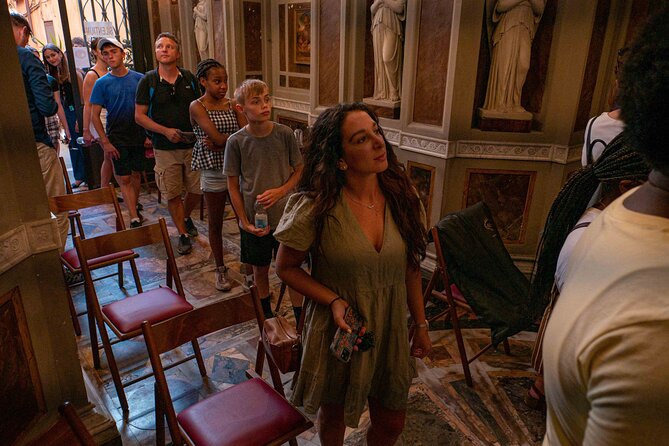
The 15-minute visit to Chiesa di Sant’Ignazio di Loyola brings you into one of Rome’s major Baroque churches. Its most famous feature is an artificial dome, a painted illusion that uses perspective to create the effect of a grand architectural space.
This is a strong stop for anyone who enjoys art, clever design, or the theatrical side of Rome’s churches. The building shows how artists and church patrons used painting, sculpture, and architecture together to create awe.
Fifteen minutes is enough to understand the main idea and look around, though it is not enough for a detailed art lecture. That is a recurring feature of the tour. You are getting a well-chosen introduction to several sites, not a specialist visit to one church.
I like that the route includes this kind of stop. The famous Rome checklist can become tiring, especially when every stop is another enormous monument. Sant’Ignazio offers a smaller, more focused experience between the Trevi Fountain and Pantheon.
The Pantheon, with admission handled separately
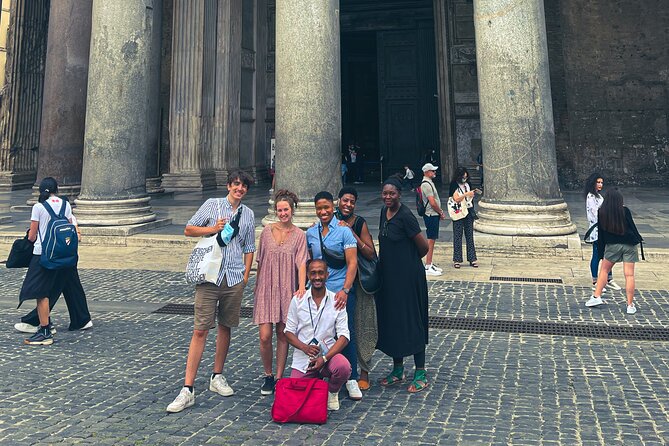
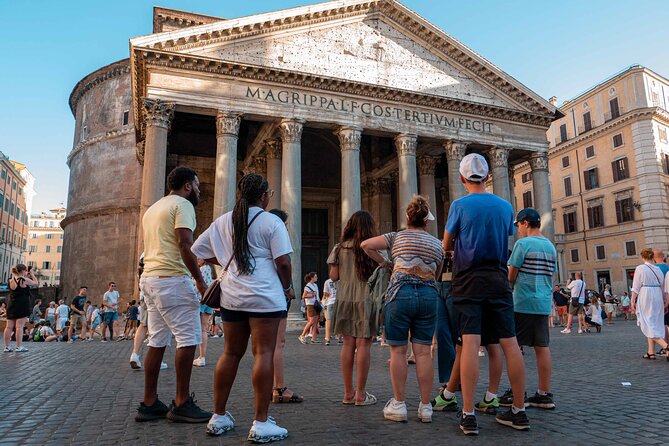
The Pantheon gets about 20 minutes. This is one of the most important stops on the walk, since it is among the best-preserved buildings from ancient Rome and now functions as a church.
The guide explains the building’s architecture and the features that make it so striking. The Pantheon is the place where a short explanation can change how you see the structure. Its design is not simply a large old temple. It is a carefully planned space with a powerful sense of scale and engineering.
Entry is not included in the tour price. That detail matters when you compare the total cost with other Rome walks. The guided experience gives you the setting and explanation, but you should budget separately if you want to go inside.
Since the tour spends about 20 minutes here, check what your booking includes and what you want from the stop. If the group remains outside, you still gain useful context. If admission is available during your visit and you choose to enter, you may need to allow extra time beyond the scheduled walk.
The Pantheon is also a good place to note the route’s limits. Two hours moves quickly. You will see several major sights, but you will not receive the unhurried treatment of a dedicated Pantheon tour.
Piazza Navona gives the walk a pleasant finish
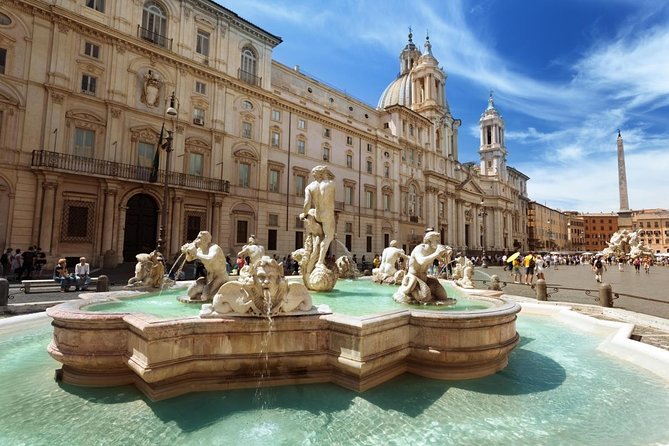
The final stop is Piazza Navona, with about 15 minutes devoted to the square. This is one of Rome’s most attractive public spaces, known for its three fountains and the Baroque church of Sant’Agnese in Agone.
Ending here is practical as well as scenic. Piazza Navona has restaurants and bars, so you can continue your evening without crossing the city. The tour provider can recommend nearby places to eat, drink, or find a rooftop terrace.
Treat those suggestions as a useful bonus, not the main reason to book. The real benefit is finishing in a central area where you can pause, look around, and decide what to do next. If the walk is your first Rome activity, Piazza Navona gives you an easy launch point for dinner or an evening stroll.
The 15-minute stop is enough to explain the square’s layout and major features. You will likely want to linger longer, especially if you are interested in the fountains, church, or surrounding streets.
What the guide adds to the experience
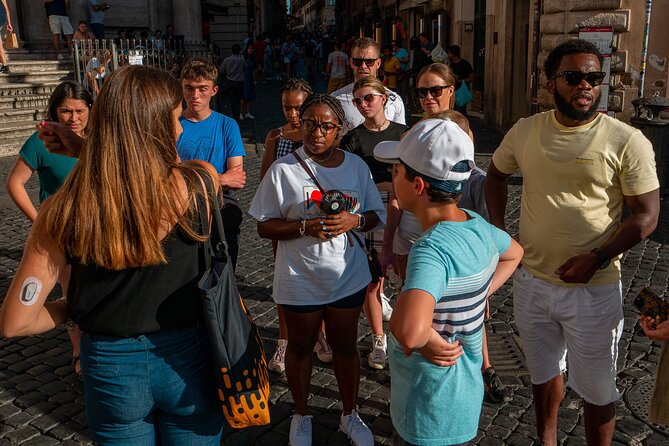
The guide is the most important variable in a short walking tour. The route itself is strong, but the difference between a dry list of dates and a memorable city introduction comes from how the guide connects each stop.
The strongest guide feedback centers on four traits:
- Clear explanations of Roman history and culture
- Friendly, relaxed conversation
- Humor that keeps the pace lively
- Willingness to answer questions and offer local suggestions
Dan has been praised for uncommon facts, humor, and the ability to keep a group interested. Sharon has received praise for orientation advice and a casual manner. Domenica has been described as warm and engaging, while Anna has been appreciated for patience and humor.
Vlad is also singled out for speaking clearly, chatting with each person in a group of 13, and explaining facts in a way that held attention. Sila, Pollina, Cayie, Paulina, Sarah, Eleonora, and Den are also associated with positive comments about friendliness, energy, and storytelling.
Of course, a guide-led experience can vary by departure. These names give you a sense of the style you may encounter, but you cannot assume which guide will lead your particular walk unless the provider confirms it.
Group size, timing, and walking pace
The maximum group size is 15 people. That is a useful limit in Rome’s narrow streets, where a large crowd can block doorways, lose sight of the guide, or make questions awkward.
A few departures have operated with only four people, creating an especially personal feel. Even with a full group of 15, the size should make it easier to hear explanations and stay connected than on a large coach-style walk.
You can choose a morning or afternoon departure. Morning is a good fit if you want the rest of the day free for the Colosseum, Vatican City, museums, or a slower lunch. Afternoon or dusk can work well if you want to see Trevi Fountain and central Rome in changing light.
The exact walking pace is not fully spelled out, so plan for continuous movement over Rome’s streets. One person described the walk as considerable, while another found it manageable and well paced. Wear comfortable shoes, carry water, and avoid booking this if foot pain will limit you.
The starting point deserves extra care. The meeting location is Piazza d’Aracoeli, Via di S. Venanzio 8. One person had trouble finding it, so check the map before leaving and arrive with enough time to orient yourself. The tour ends at Piazza Navona.
Is $24.20 a fair price?
At $24.20 per person, this is a reasonable price for a two-hour guided introduction to central Rome, particularly with a group limit of 15. You are paying for a local guide, a planned route, history at six stops, and the convenience of joining several major sights in one outing.
The value is strongest if you are new to Rome. A good orientation walk can save time later by showing you where the main sights sit in relation to one another. It can also help you avoid walking past smaller places that deserve attention.
The value is less clear if you have already spent several days exploring the same central streets or prefer to move at your own pace. The tour does not include Pantheon admission, and the two-hour schedule limits time inside each place.
Group discounts may be available, and the ticket is mobile, which makes booking simpler. Free cancellation is allowed up to 24 hours before the start time for a full refund. Changes or cancellations inside that 24-hour window are not accepted, and a minimum number of participants is required for the tour to operate.
Who should book this Rome walking tour?
I would recommend it to first-time visitors who want a sensible introduction without committing half a day. It also suits people who have already visited the Colosseum or Vatican City and want a guided look at the historic center.
It is a good match for you if you enjoy history but do not want a formal lecture. The route mixes famous sights with art, churches, architecture, and small details. The guide can also point you toward places to revisit, restaurants, bars, and gelato stops.
Families and older visitors may appreciate the relatively short duration, but the walking still matters. Most people can participate, service animals are allowed, and the route is near public transportation. The experience is not recommended for anyone with foot injuries.
I would skip it if your priority is extensive interior time at the Pantheon or a slow, specialist tour of one monument. This is a city sampler. Its strength is range, connection, and practical orientation.
Should you book it?
Book this walk if you want to get your bearings fast and see central Rome through both headline sights and easily missed corners. The small group, short duration, strong guide feedback, and useful finish at Piazza Navona make it a good-value first-day choice.
Keep your expectations realistic. You will walk steadily, the meeting point needs careful checking, and Pantheon admission costs extra. For a first visit, though, this route gives you a clear starting map of Rome and plenty of ideas for the days that follow.
FAQ
How long does the Rome walking tour last?
The tour lasts approximately two hours.
How many people can join the tour?
The group has a maximum of 15 participants.
Does the tour include Pantheon admission?
No. Access to the Pantheon is not included in the tour price.
Where does the tour begin?
The meeting point is Piazza d’Aracoeli, Via di S. Venanzio 8, 00186 Rome.
Where does the tour end?
The tour ends at Piazza Navona, a central square surrounded by restaurants and bars.
Can I cancel for a full refund?
Yes. You can cancel at least 24 hours before the start time for a full refund. Cancellations or changes made less than 24 hours before the start time are not accepted.
More Guided Walks
- Rome: Guided City Center Evening Sightseeing Walking Tour
★ 4.4 · 953 reviews - Best of Rome Walking Tour including Trevi Fountain
★ 4.5 · 923 reviews - Rome: Under the Moonlight Evening Walking Tour
★ 4.8 · 852 reviews - Rome: Forbidden History Walking Tour & Pub Crawl with Drinks
★ 4.9 · 688 reviews
Just added around Rome
- Rome: Skip the line Vatican Museums & Sistine Chapel Tour★ 4.2 · 251 reviews
- Rome: Tivoli Day Trip with Villa d’Este and Villa Adriana★ 4.5 · 251 reviews
- Transfer Rome center – Ciampino Airport★ 4.5 · 251 reviews
- Rome: Cannondale E-Bike Evening Tour with Optional Dinner★ 4.9 · 251 reviews
- VIP Colosseum, Roman Forum & Palatine Hill & Special Access Sites★ 4.5 · 252 reviews
- Private Vatican Museums Hidden Gems Tour with Optional Pick-Up★ 5.0 · 253 reviews
- Vatican Museums & Sistine Chapel Skip-the-Line Guided Tour★ 4.6 · 254 reviews
- Fettuccine Ravioli and Tiramisu Cooking Class in Rome★ 5.0 · 254 reviews
City Tours, compared.

City Sightseeing Hop-on Hop-off Bus with Audioguide
Read our review →
City Sightseeing Hop-On Hop-Off Bus with Audio Guide
Read our review →
City Sightseeing Rome Hop-On Hop-Off Bus Tour
Read our review →

Fettuccine Pasta Cooking Class in Rome’s City Center
Read our review →
Vatican City: Vatican Museums & Sistine Chapel Entry Ticket
Read our review →

City Sightseeing Florence Hop-On Hop-Off Bus Tour
Read our review →Browse the lists this tour appears in