

Review · HOP-ON HOP-OFF BUS TOURS
Rome: City Sightseeing Hop-on Hop-off Bus with Audioguide
Rome rewards slow wandering, but its hills, wide avenues, and scattered sights can wear you out. This open-top bus gives you a useful first look at the city, with a 100-minute loop passing the Colosseum, Vatican, Spanish Steps, Piazza Navona, and more.
I like the freedom to stay aboard for the full circuit or hop off when a neighborhood catches your eye. I also like the included Jubilee Line, operated by Vatican & Rome Open, since it adds another way to see Rome with the same ticket.
The main drawback is that traffic, special events, and changing road rules can affect the route. One important detail: the 1 Loop ticket is sightseeing only, not a hop-on hop-off pass.
In This Review
- Key points to know before you board
- A useful first look at Rome’s great sights
- Starting near Termini on Via Marsala
- Santa Maria Maggiore and San Giovanni in Laterano
- The Colosseum and Circus Maximus
- Piazza Venezia and Largo di Torre Argentina
- Piazza Navona and the road to the Vatican
- Villa Borghese, Piazza di Spagna, and Piazza Barberini
- What the audio guide adds
- The Jubilee Line and different colored buses
- Is $15 good value for Rome?
- Who will get the most from this bus?
- Practical advice for using the route well
- Should you book the Rome City Sightseeing bus?
- FAQ
- Where does the Rome City Sightseeing bus start?
- How long does the full bus loop take?
- Is the 1 Loop ticket hop-on hop-off?
- Which ticket durations are available?
- Does the ticket include attraction admission?
- Is the Vatican included in the route?
- Is the Jubilee Line included?
- Which languages are available for the audio guide?
- Are headphones and Wi-Fi included?
- Can the route change?
Key points to know before you board
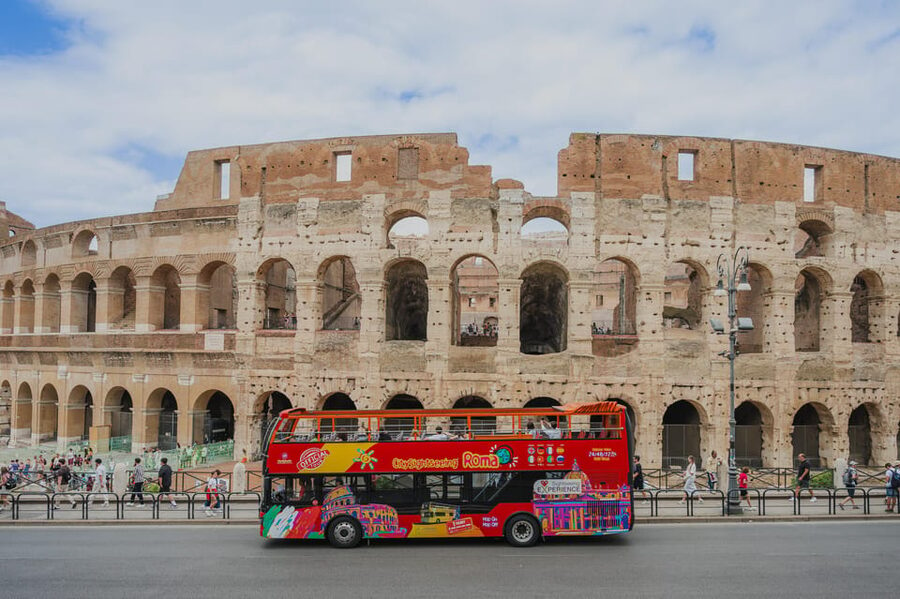
- The full loop takes about 100 minutes, making it a useful overview on your first day.
- The route passes Rome’s biggest names, including the Colosseum, Circus Maximus, Piazza Venezia, Vatican City, Piazza Navona, and Piazza di Spagna.
- A 1 Loop ticket is different from a 1-day, 24-hour, 48-hour, or 72-hour pass, so choose carefully.
- The Jubilee Line is included, giving you access to an additional service operated by Vatican & Rome Open.
- Audio commentary is available in eight languages, with headphones supplied on the open bus.
- The route can change, and some stops may not operate during special events.
A useful first look at Rome’s great sights
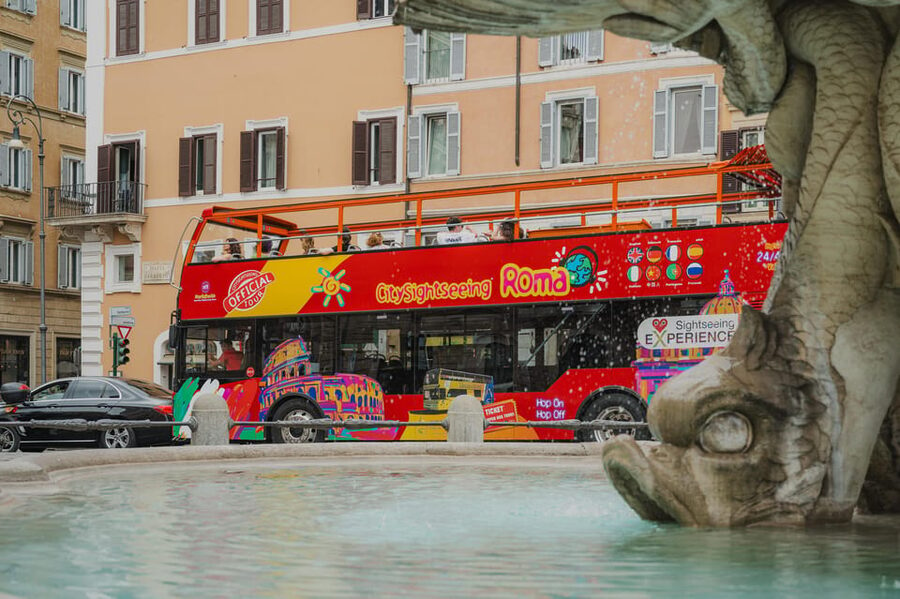
I see this bus as a city orientation tool first and a transport pass second. Rome’s major monuments are spread across several parts of the city, and the upper deck lets you connect them without spending your first hours studying a map.
The open-top design is especially useful for getting your bearings. You can see the streets, piazzas, churches, and monumental buildings as you move between areas, rather than viewing Rome through a window at street level.
You can ride the entire loop without getting off. This works well if you have only a short time in Rome, or if you want to identify the places you would like to revisit on foot.
For a fuller visit, choose a 1-day, 24-hour, 48-hour, or 72-hour ticket. That gives you time to break the loop into smaller sections. You might ride from Termini to the Colosseum, walk around the ancient center, then board again near another listed stop.
More hop-on hop-off passes:
- Rome:Hop-On Hop-Off Panoramic Open Bus Ticket 3 Circuits x 1
★ 4.0 · 15,405 reviews - City Sightseeing Rome Hop-On Hop-Off Bus Tour
★ 3.5 · 5,446 reviews - Rome: Hop-on Hop-off Sightseeing Bus Tour with Audioguide
★ 4.0 · 4,329 reviews
Starting near Termini on Via Marsala
The stated starting point is Via Marsala, 7, near Roma Termini. You can also begin at any City Sightseeing Rome Line A stop, which is helpful if you are already near one of the sights.
Starting at Termini makes practical sense. Roma Termini is one of Rome’s main transport hubs, and the area connects naturally with the rest of the city. It is also a convenient place to begin if you are arriving by train or staying near the station.
The route returns to Via Marsala, 7 after completing the loop. Keep in mind that the published route includes several major points, while the service describes eight hop-on and hop-off stops. Some locations in the sightseeing sequence may be pass-by points rather than places where you can leave the bus.
That distinction matters most at the Colosseum and other famous sights. Check the current stop arrangement when you board, especially if you have planned your day around getting off at one particular monument.
Santa Maria Maggiore and San Giovanni in Laterano

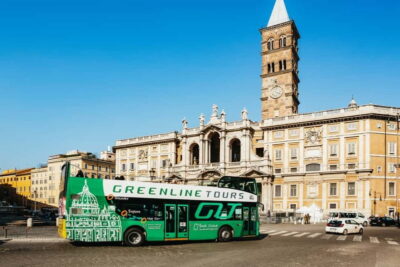
The bus passes Basilica Papale di Santa Maria Maggiore early in the circuit. This is one of Rome’s major basilicas and gives you an early glimpse of the city’s layers of religious and artistic history.
You do not need to leave the bus to appreciate the building from the route. If you do get off here, allow time for a proper visit, since a quick photograph cannot show you much of the interior.
Next comes Basilica di San Giovanni in Laterano. It is another important church on the route and helps show that Rome’s story extends well beyond the Colosseum and Vatican.
These first stops are useful for a calmer introduction to the city. They are less instantly familiar than the Colosseum, but they give the route a broader scope than a simple list of postcard sights.
The Colosseum and Circus Maximus
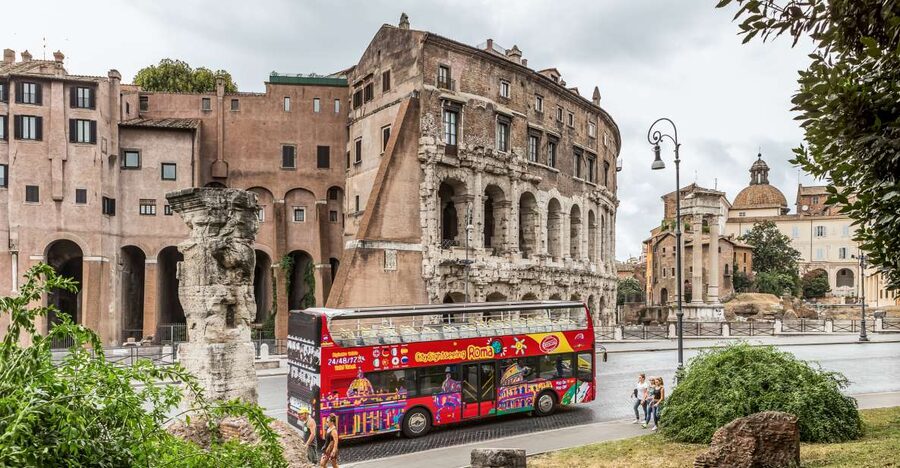
The Colosseum is the dramatic centerpiece of the ancient portion of the route. From the bus, you can take photographs and see how the amphitheater fits into the surrounding archaeological area.
The bus does not include admission to any attraction. If you want to enter the Colosseum, you need a separate ticket, and you should treat the bus ride as transport and sightseeing rather than as an entrance reservation.
One practical warning is worth repeating: the exact ability to get off near the Colosseum may change. A recent ride was enjoyable even when getting off there was not possible, but the passenger still had a clear view and could take photographs. That is a good example of the difference between seeing a monument from the bus and visiting it properly.
The route continues to Circus Maximus, the broad ancient chariot-racing site. It is a particularly good place to understand Rome’s scale. The open space contrasts sharply with the tight lanes and dense buildings found elsewhere in the center.
A few more reviews worth comparing before you book
- Vatican: Museums & Sistine Chapel Entrance Ticket
★ 4.5 · 144,003 reviews - Vatican Museums & Sistine Chapel Tour with Optional Basilica
★ 4.3 · 67,413 reviews - Colosseum, Roman Forum & Palatine Guided Tour
★ 4.7 · 63,148 reviews - Vatican Museums, Sistine Chapel & St Peter’s Basilica Guided Tour
★ 4.5 · 39,149 reviews
Piazza Venezia and Largo di Torre Argentina
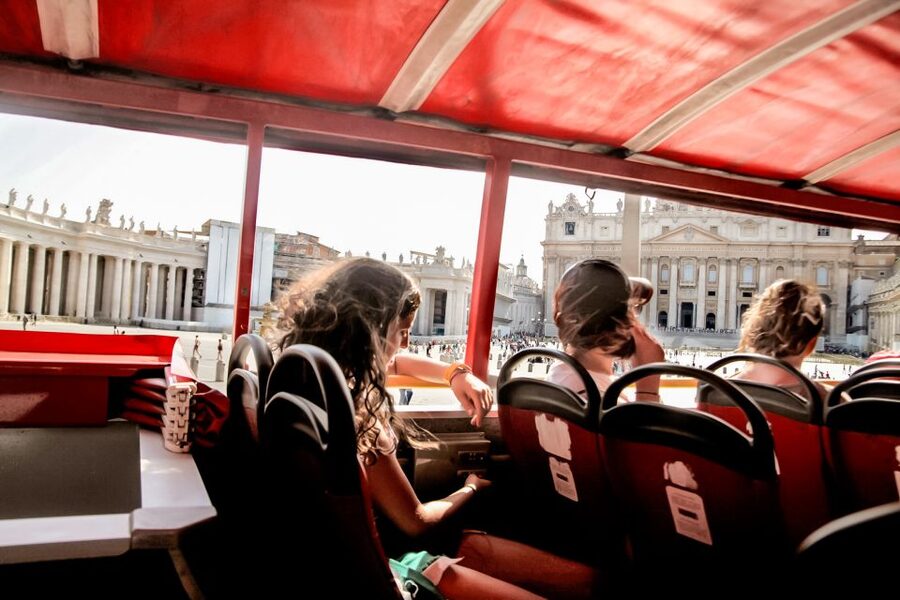
Piazza Venezia brings you into one of Rome’s grandest traffic centers. The square is closely associated with the enormous white monument to Victor Emmanuel II, and the bus gives you a quick sense of its size and position in the city.
This part of the ride can be visually busy. The surrounding roads carry substantial traffic, and the experience is more about seeing the monument in context than enjoying a quiet piazza.
The route then passes Largo di Torre Argentina. The sunken archaeological area is known for its ancient Roman ruins and its connection with the assassination of Julius Caesar. From the bus, you get an overview, but the site rewards a closer look if you have enough time to get off nearby.
These two points show the strength of the route: you move quickly between major Roman landmarks that would otherwise require careful planning. The weakness is just as clear: the bus cannot give every stop the time and attention it deserves.
Piazza Navona and the road to the Vatican
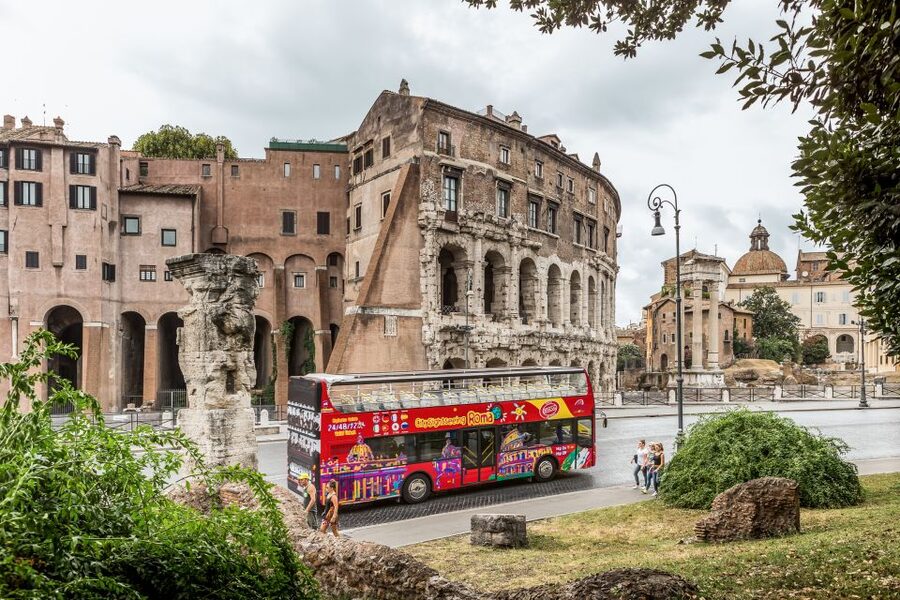
Piazza Navona is one of Rome’s most memorable public spaces, with its long oval shape, fountains, and café-lined edges. It is a good stop for a walk because the square feels different from the grand archaeological areas around the Colosseum.
The bus passes through a central part of Rome where you can combine sightseeing with food, coffee, and wandering. Food and drinks are not included, so you will need to arrange those yourself.
The route continues toward Vatican City and Castel Sant’Angelo. This section connects the historic center with the area around St. Peter’s Basilica, one of the world’s largest churches.
The bus does not include entry to the Vatican Museums, St. Peter’s Basilica, or Castel Sant’Angelo. Still, seeing the Vatican area from an open-top bus is useful, particularly if you are trying to understand how the river, fortress, piazza, and basilica relate to one another.
Villa Borghese, Piazza di Spagna, and Piazza Barberini
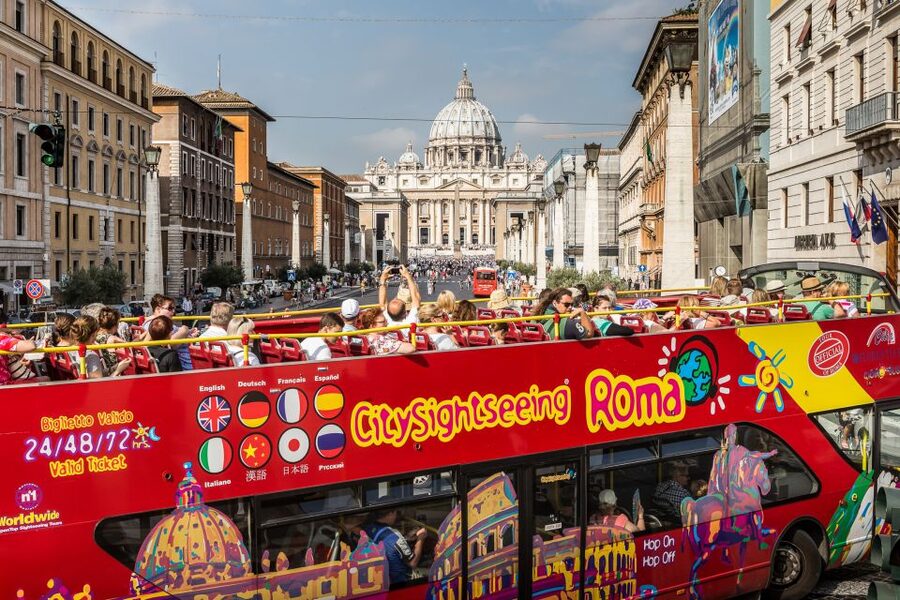
The route passes Villa Borghese, Rome’s large park area. From the bus, you get a change of pace from stone facades and heavy traffic. If the route allows you to leave nearby, the park can provide a more spacious walk.
Piazza di Spagna is one of the city’s most popular stops. The Spanish Steps and nearby Fontana di Trevi are close enough to combine on foot, although both areas can be crowded and slow-moving.
The bus information identifies this point as Piazza di Spagna, with the Trevi Fountain nearby. Do not assume the bus stops directly beside every named attraction. You may need to walk from the official stop, and the exact arrangement can change.
Piazza Barberini follows, adding another central Roman square to the circuit. It is a useful point for reaching the Spanish Steps and Trevi Fountain area, depending on the current route and stop pattern.
What the audio guide adds
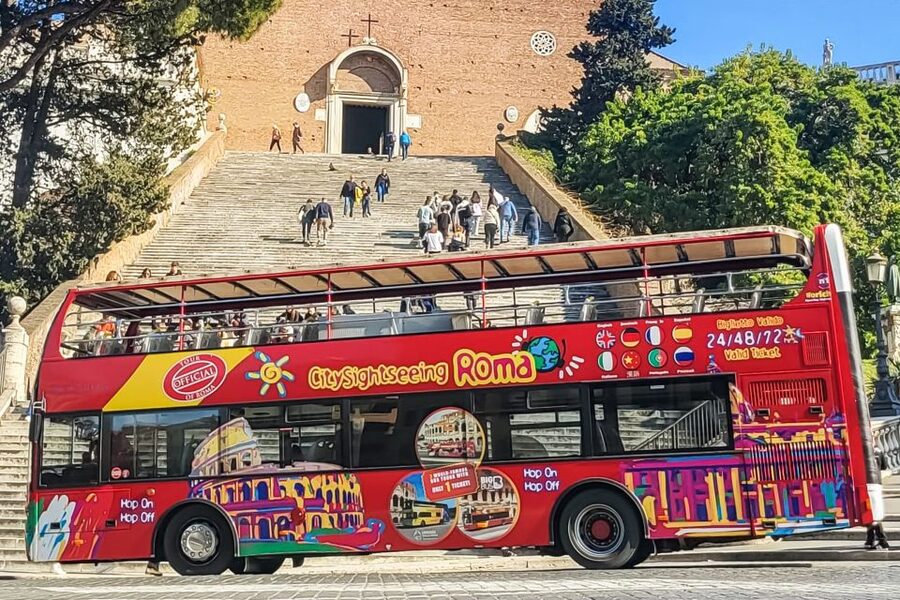
The bus includes headphones and recorded commentary in Spanish, Chinese, English, French, German, Italian, Russian, and Portuguese. Wi-Fi is also available on the open bus, along with a sightseeing app.
The commentary gives the ride more purpose than a simple transfer. You can listen as Rome’s monuments appear, then decide which places deserve a closer visit. The system is particularly useful during the full loop, when you might otherwise lose track of what you are seeing.
The audio is not perfect. It can be interrupted, and some sections may not finish before the bus moves on or the next recording begins. If the commentary is important to you, keep the sightseeing app available and treat the narration as helpful background rather than a complete guided tour.
The clearest reports describe the commentary as informative and easy to follow. That makes it a good addition, but it does not replace an in-person guide or a detailed museum visit.
The Jubilee Line and different colored buses
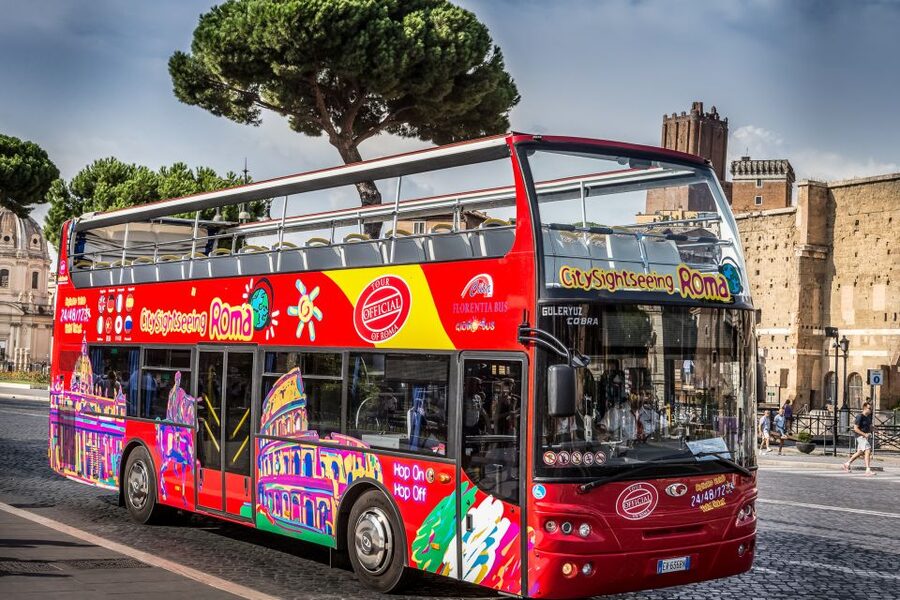
The Jubilee Line is a major reason to look beyond the basic circuit. It is included with the City Sightseeing ticket and is operated by Vatican & Rome Open.
You can also find different colored buses in service. The ability to use them can make the system feel more flexible, but you should confirm which line you are boarding and where it goes. The main City Sightseeing ticket is valid for the City Sightseeing Rome Line A service, with the Jubilee Line included as an extra feature.
This arrangement is useful if you have several days. A 24-hour ticket can help you link major sights, while a 48-hour or 72-hour ticket gives you more time to use the service as a practical sightseeing connection.
The routes are still subject to traffic and special events. Rome regularly changes traffic patterns around major ceremonies, public gatherings, and road closures, so no open-top bus route should be treated as fixed.
Is $15 good value for Rome?
At $15 per person, the starting price is attractive for a short overview. It can be good value if you complete the full 100-minute circuit, use the audio guide, and treat the bus as a way to see several distant areas in one sitting.
The value becomes stronger with a longer ticket if you actually hop off and back on. A 48-hour pass, for example, gives you breathing room to find your bearings, explore several points, and use the bus again instead of arranging each connection separately.
The price does not cover attraction tickets, food, drinks, or hotel pickup and drop-off. Add those costs when comparing the bus with other ways of seeing Rome.
The 1 Loop option is the cheapest way to view the route, but it comes with a key limitation: it is not a hop-on hop-off ticket. If you want freedom to explore, choose a time-based pass rather than the single-loop option.
Who will get the most from this bus?
I would recommend it most strongly if you are visiting Rome for the first time, have limited time, or want a simple overview before walking the city. It can also help if your group has different energy levels, since some people can remain on the bus while others get off to explore.
The bus suits you if you enjoy seeing a city from above and do not mind that traffic affects the pace. It is less suitable if your main goal is a detailed visit inside the Colosseum, Vatican Museums, or other attractions, since none of those admissions are included.
It also works well for visitors who prefer flexibility. You can stay seated for the whole circuit, choose only a few stops, or use a longer ticket to spread sightseeing across several days.
If you want every monument explained in depth, this is not the right stand-alone activity. The recordings are useful, but the occasional interruptions mean you should not rely on them for a complete guided tour.
Practical advice for using the route well
Start with the full circuit if Rome is new to you. The 100-minute ride helps you understand where the main areas sit before you spend time walking between them.
Use a longer pass when you want to explore. A 24-hour, 48-hour, or 72-hour ticket gives you more flexibility than the 1 Loop option, but its value depends on how often you leave the bus and board again.
Keep your expectations realistic around the busiest monuments. The bus may pass the Colosseum, Vatican, or another landmark without offering the exact stop you expected, especially when special events alter the route.
Bring the supplied headphones and use the audio commentary selectively. If a recording cuts off, continue enjoying the view rather than letting the technology spoil the ride.
Free cancellation is available up to 24 hours before the scheduled experience, and you can reserve now while paying later. Check the available starting times and current route details before booking.
Should you book the Rome City Sightseeing bus?
Book it if you want an affordable overview of Rome, the option to explore at your own pace, and a simple way to connect famous sights spread across the city. The open-top view, eight-language audio, 100-minute loop, and included Jubilee Line make the $15 starting price appealing for a short visit.
Choose a 24-hour, 48-hour, or 72-hour pass if you want to hop off and explore. Choose the 1 Loop ticket only if you plan to remain aboard for the sightseeing circuit.
I would not book it as your only way to visit Rome’s monuments. Use it to get your bearings, save energy between distant areas, and spot places for later walks. That is where this bus gives you the most value.
FAQ
Where does the Rome City Sightseeing bus start?
The stated starting point is Via Marsala, 7. You can also begin at any stop on City Sightseeing Rome Line A.
How long does the full bus loop take?
The full loop takes about 100 minutes.
Is the 1 Loop ticket hop-on hop-off?
No. The 1 Loop Tour is not a hop-on hop-off tour.
Which ticket durations are available?
Options include 1 Loop, 1 day, 24 hours, 48 hours, and 72 hours. Availability and starting times should be checked when booking.
Does the ticket include attraction admission?
No. Tickets for attractions are not included.
Is the Vatican included in the route?
The bus passes Vatican City and Castel Sant’Angelo. Admission to Vatican attractions is not included.
Is the Jubilee Line included?
Yes. The Jubilee Line is included with the City Sightseeing ticket and is operated by Vatican & Rome Open.
Which languages are available for the audio guide?
Audio commentary is available in Spanish, Chinese, English, French, German, Italian, Russian, and Portuguese.
Are headphones and Wi-Fi included?
Yes. Headphones and Wi-Fi are included on the open bus.
Can the route change?
Yes. The route may change, and some stops may not be guaranteed during special events.
Just added around Rome
- Rome City, Pantheon, and Trevi Fountain Walking Tour★ 5.0 · 249 reviews
- Rome: Tivoli Day Trip with Villa d’Este and Villa Adriana★ 4.5 · 251 reviews
- Rome: Skip the line Vatican Museums & Sistine Chapel Tour★ 4.2 · 251 reviews
- Transfer Rome center – Ciampino Airport★ 4.5 · 251 reviews
- Rome: Cannondale E-Bike Evening Tour with Optional Dinner★ 4.9 · 251 reviews
- VIP Colosseum, Roman Forum & Palatine Hill & Special Access Sites★ 4.5 · 252 reviews
- Private Vatican Museums Hidden Gems Tour with Optional Pick-Up★ 5.0 · 253 reviews
- Vatican Museums & Sistine Chapel Skip-the-Line Guided Tour★ 4.6 · 254 reviews
Hop-On Hop-Off Bus Tours, compared.
Hop-On Hop-Off Panoramic Open Bus Ticket 3 Circuits x 1
Read our review →
Hop-on Hop-off Bus Tour: 24, 48 or 72-Hour Ticket
Read our review →
City Sightseeing Hop-On Hop-Off Bus with Audio Guide
Read our review →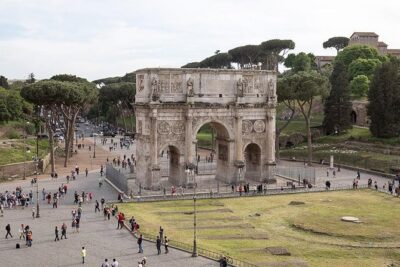
City Sightseeing Rome Hop-On Hop-Off Bus Tour
Read our review →

Hop-on Hop-off Sightseeing Bus Tour with Audioguide
Read our review →
Stresa: 3 Borromean Islands Hop-On Hop-Off Boat Tour
Read our review →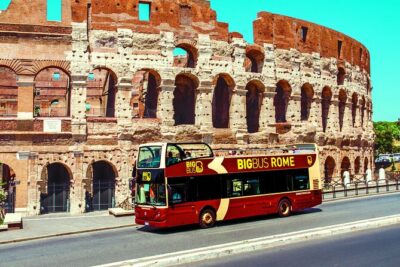
Big Bus Hop-on, Hop-off Open-Top Sightseeing Tour
Read our review →Browse the lists this tour appears in