
Review · WALKING TOURS
Rome: Under the Moonlight Evening Walking Tour
Rome changes after dark. This 2 to 2.5-hour walking tour links the Pantheon, Trevi Fountain, Imperial fora, and Colosseum when the heat and daytime rush have eased. I like the atmospheric lighting and the route through lesser-noticed streets, especially the Art Deco Galleria Sciarra. The main drawback is simple: this is a long walk, and the finale can feel athletic after a full day of sightseeing.
I also like the price. At $28 per person, you get a live English or Spanish guide, local stories, route advice, and a useful first look at central Rome. Guides such as Vlad, Sila, Csenge, Dan, Sharon, Domenica, and Alina have been praised for mixing clear explanations with humor and warmth. Still, the tour does not include food, drinks, or interior admission to the major ancient sites.
In This Review
- Key things to know before you book
- Why Rome works so well after sunset
- Meeting at Piazza Navona or Piazza d’Aracoeli
- The Pantheon and the church of Sant’Ignazio
- Galleria Sciarra, an easy-to-miss Art Nouveau courtyard
- Trevi Fountain, wishes, and practical crowd advice
- Piazza Venezia and Trajan’s Column
- Walking beside the Imperial fora and Roman Forum
- The Colosseum under the moonlight
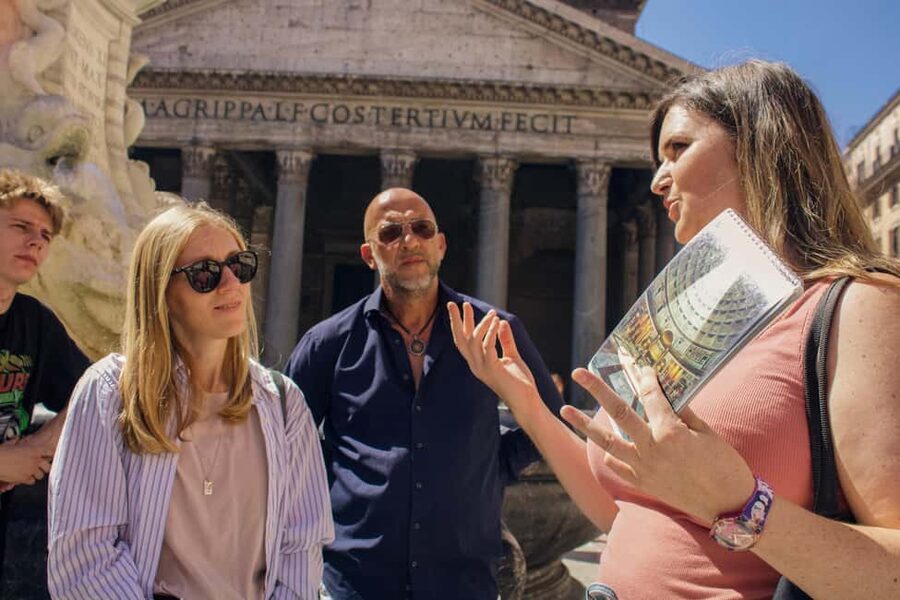
- What the guides add to the walk
- Price, pace, and who gets the best value
- How to make the most of your evening
- Should you book Rome Under the Moonlight?
- FAQ
- How long does the Rome Under the Moonlight tour last?
- What languages are available?
- Where does the tour start?
- Where does the tour end?
- Does the tour enter the Colosseum?
- Is entry to the Pantheon included?
- Is food or drink included?
- What should I bring?
Key things to know before you book
- The Colosseum is the dramatic finale: You see its exterior glowing after sunset, but this is not an inside visit.
- The route covers a lot of Rome: Expect Piazza Navona, the Pantheon, Trevi Fountain, Piazza Venezia, Trajan’s Column, the Roman Forum, and more.
- Galleria Sciarra adds an unusual stop: This ornate Art Nouveau courtyard is easy to miss when exploring on your own.
- Night brings a calmer mood: The city can still be busy, especially around Trevi Fountain, but the streets generally feel less pressured than during the day.
- The guides shape the experience: Strong guides turn a list of monuments into a connected story, with names such as Vlad, Sila, Csenge, Dan, and Sharon receiving especially warm praise.
- Comfortable shoes matter: The walk lasts more than two hours and ends near the Colosseum or Piazza Navona, depending on the arrangement.
Why Rome works so well after sunset
Rome is easier to appreciate at night. The light softens the stone, fountains sound louder, and the grand monuments feel less like items on a checklist. This tour uses that mood well, moving from lively piazzas to narrow streets and finally to the illuminated Colosseum.
The route also gives you a useful outline of central Rome. You pass major landmarks, hear basic Roman history, and pick up practical suggestions for the rest of your stay. I would especially consider it for your first evening in the city, since it helps you understand how the historic center fits together before you return to individual sites during the day.
Do not expect a quiet Rome with empty squares. Trevi Fountain can still be crowded, and some stops may have plenty of people. The difference is that the atmosphere is often less hurried than it is in full daylight. You get time to look up, listen, and take photographs without feeling pushed along every minute.
More Evening Tours in Rome
- Rome: City Highlights Open-Top Bus Night Tour
★ 4.1 · 2,038 reviews - Rome: Paranormal Night Walking Tour & Secret Backstreets
★ 4.9 · 1,921 reviews - Vespa Sidecar Tour By Night with Pickup
★ 5.0 · 1,803 reviews
Meeting at Piazza Navona or Piazza d’Aracoeli
The exact starting point depends on the option you book. The listed possibilities include Piazza d’Aracoeli and Piazza di Pasquino, while the route itself begins with a meeting near Piazza Navona.
Check your confirmation carefully before setting out. This matters in Rome, where two meeting points that look close on a map can feel farther apart once you are navigating busy lanes and large squares. Give yourself extra time to find the guide and group, particularly if this is your first evening in the city.
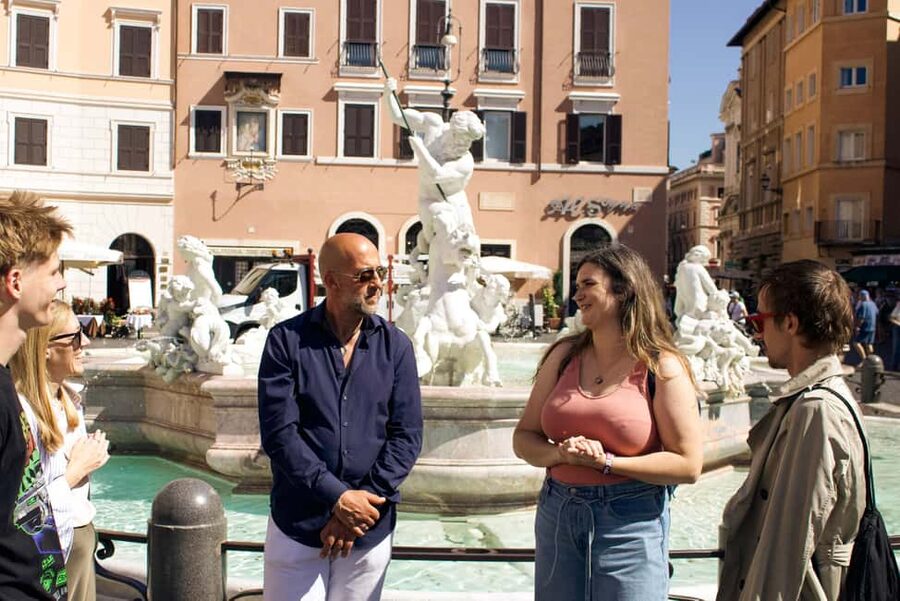
Piazza Navona is a fine place to begin. The square follows the shape of an ancient Roman stadium and is framed by grand buildings, fountains, and cafés. The central Fontana dei Quattro Fiumi gives the opening talk a natural focus, with its water and sculpture providing a pleasant backdrop.
The guide usually spends about 20 minutes here. That is enough time to explain the square’s character without using up too much energy at the beginning. You should listen for the link between ancient Rome, later papal Rome, and the city you see today. One strength of this tour is that it connects those layers rather than presenting each monument as an isolated photo stop.
The Pantheon and the church of Sant’Ignazio
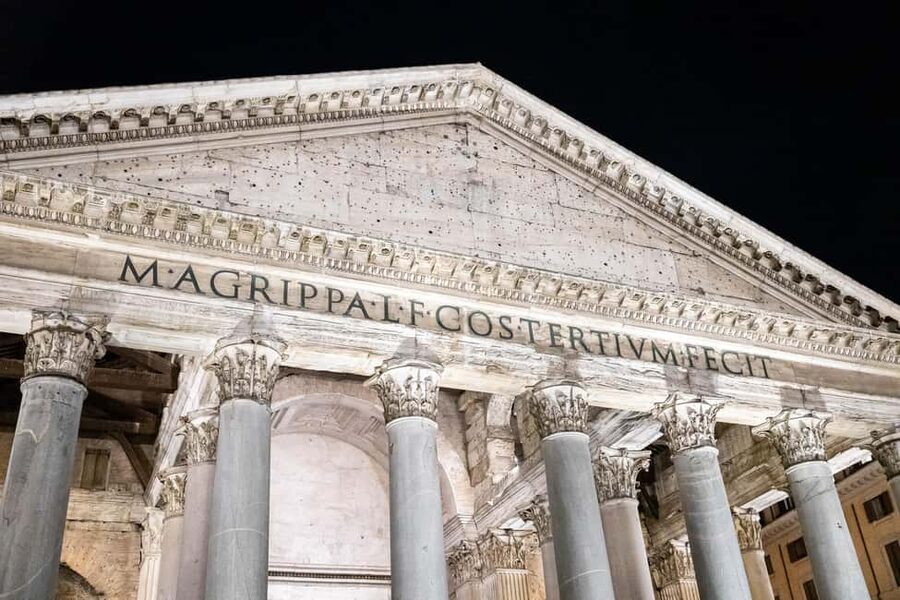
The Pantheon is one of the essential sights on any first visit to Rome. Built by Emperor Hadrian as a temple to the gods, it remains remarkably well preserved, and its plain exterior can seem almost modest compared with the buildings around it.
This tour passes by the Pantheon for about 20 minutes rather than offering a full interior visit. That distinction is important. You will hear about the building and see its exterior, but you should plan a separate daytime visit if entering the Pantheon is a priority.
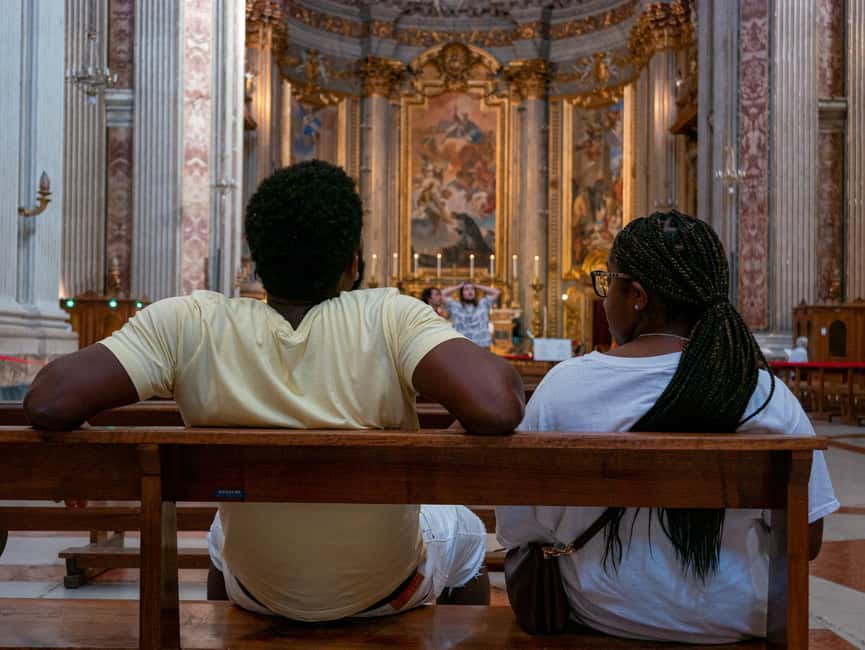
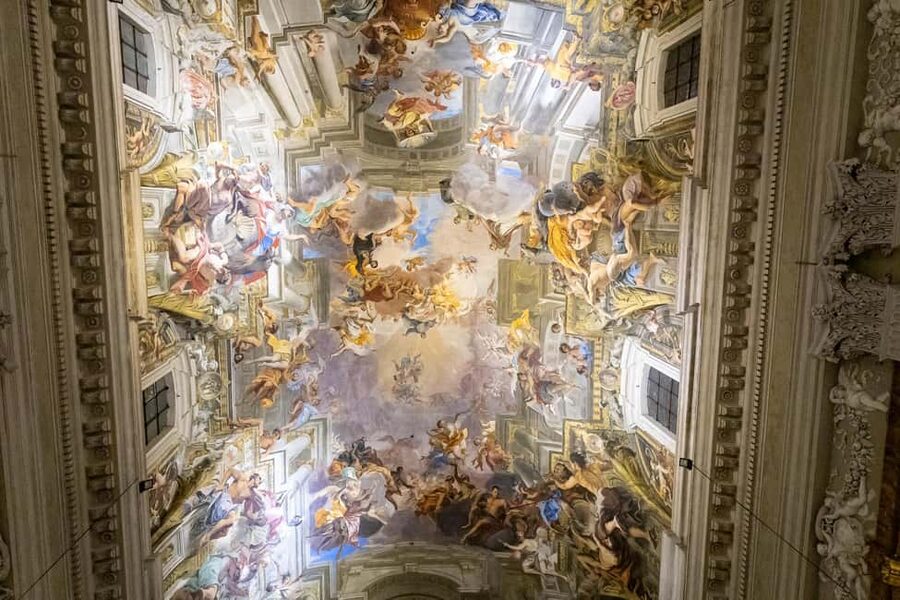
From here, the walk continues to the Church of Sant’Ignazio di Loyola. The stop lasts about 30 minutes and adds a different kind of spectacle. Rome is full of churches that look restrained from the street and reveal far more once you step inside. The guide helps you notice the visual tricks, decoration, and religious imagery that a quick solo visit might miss.
This is one of the more useful parts of the route for anyone who wants more than the standard postcard views. The tour does not only chase famous monuments. It also points out places that reward a slower look, including details on side streets and in lesser-known buildings.
Galleria Sciarra, an easy-to-miss Art Nouveau courtyard
Galleria Sciarra is a particularly good inclusion. It is not as famous as the Pantheon or Trevi Fountain, but its ornate courtyard gives you a glimpse of Rome’s late 19th-century style. The painted decorations and covered architecture create a sharp change from the ancient stone you have just been seeing.
The guide spends about 20 minutes here. That is enough time to explain why this small passage matters and to let you appreciate its details. Sila received special praise for pointing out this courtyard, along with other features that are easy to pass without noticing.
This stop also shows why a guided walk can offer better value than simply following a list of major sights. You can find the famous monuments on your own. A good guide helps you see the quiet corners between them and explains why they deserve a few minutes of your attention.
More Walking Tours in Rome
- Rome: Trastevere & Campo de Fiori Street Food Walking Tour
★ 4.9 · 2,768 reviews - Rome by Night Walking Tour – Legends & Criminal Stories
★ 4.5 · 1,003 reviews - Rome: Guided City Center Evening Sightseeing Walking Tour
★ 4.4 · 953 reviews - Best of Rome Walking Tour including Trevi Fountain
★ 4.5 · 923 reviews
Trevi Fountain, wishes, and practical crowd advice
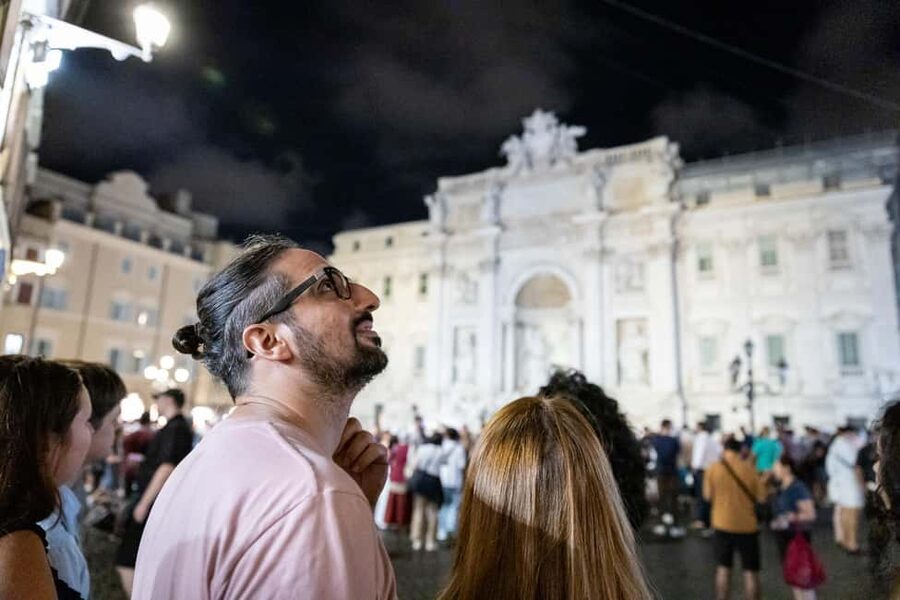
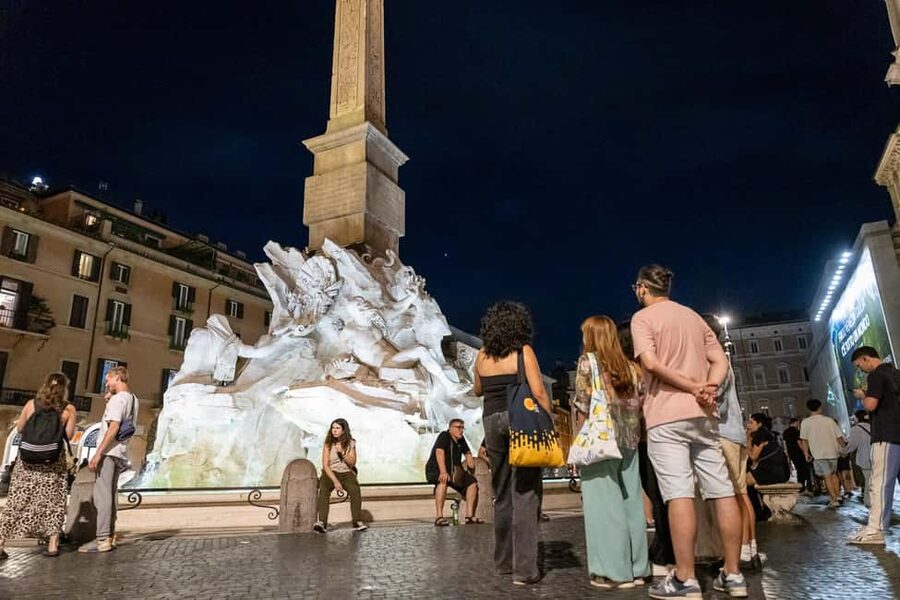
Trevi Fountain is the most theatrical stop on the route. Water pours beneath towering sculptures, and the lighting gives the whole scene a silvery evening appearance. You have time to take photographs and toss in a coin, following the familiar Rome tradition of making a wish.
The scheduled stop lasts about 30 minutes. That is generous for a fountain, but the extra time is useful because the area can be crowded. Your guide can help position the group and explain what you are seeing while you wait for a clear view.
Keep your expectations realistic. Night does not make Trevi Fountain empty. It does make the visit feel different, with the illuminated stone and moving water taking on more drama. If you want photographs without other people in every frame, patience will be necessary.
I like that the tour allows time here instead of treating the fountain as a quick passing point. Still, you may prefer to return early in the morning if you want a calmer look. The evening stop is about atmosphere and shared enjoyment, not solitude.
Piazza Venezia and Trajan’s Column
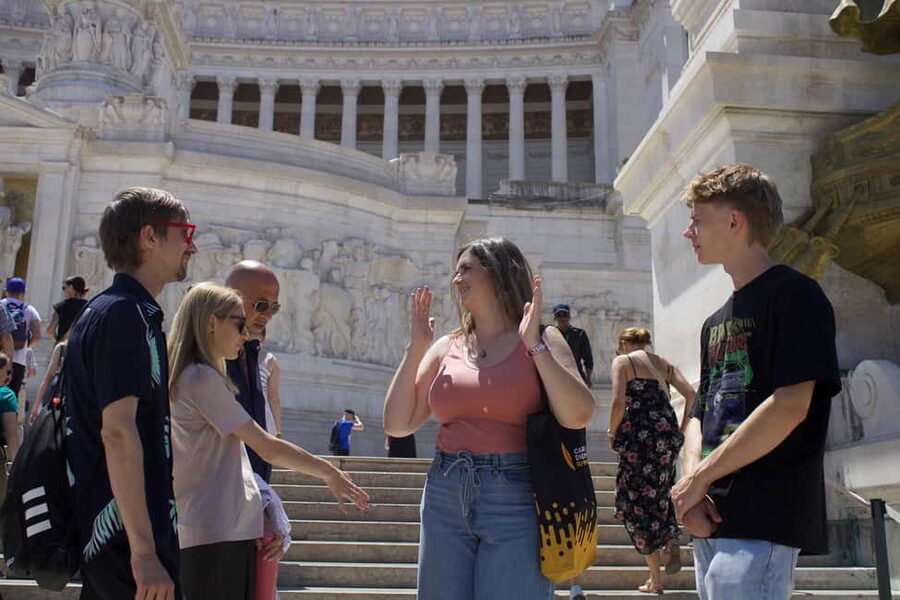
The route then opens into Piazza Venezia, one of Rome’s most imposing urban spaces. The enormous white monument to Victor Emmanuel II dominates the area, while the square connects several major roads and historical zones.
The guide spends about 20 minutes here, placing the square in the context of modern Italian history and Rome’s changing urban design. This is also a useful transition point, since the route shifts from fountains and churches toward the ancient Roman center.
Trajan’s Column receives another 20-minute guided stop. Its carved spiral tells stories of Emperor Trajan’s military campaigns, though the details are difficult to read from street level. A guide gives you a way into the monument, explaining what to look for and why the column was built.
This part of the walk can feel less immediately charming than Piazza Navona or Trevi Fountain. That is not a fault. It provides the political and military setting needed to understand the Roman Forum and Colosseum ahead.
Walking beside the Imperial fora and Roman Forum
The Imperial fora are best viewed from outside at night. The columns, temples, and fragments are lit against the dark sky, and the shadows make the ruins feel more dramatic than they sometimes do under the harsh midday sun.
The tour includes about 20 minutes around the Roman Forum. You will not be making an interior archaeological visit, and the route does not replace a daytime Forum ticket. Instead, it gives you an overview of the area and helps you identify the remains lining the avenues.
This is where a good guide matters most. Ancient ruins can look like a jumble of broken walls when you first see them. With a clear explanation, the fragments become part of a former center of government, worship, law, and public life.
The walking route through this section also gives you a stronger sense of Rome’s scale. You are not simply moving between isolated attractions. You are following the old heart of the city, with modern streets laid over and around ancient structures.
The Colosseum under the moonlight
The Colosseum is the emotional high point. Its exterior lighting brings out the arches and weathered stone, while the surrounding darkness reduces some of the visual clutter found during the day.
You walk around the site and hear about its ancient role and architecture. The tour does not include entry, so do not book it as a substitute for an inside visit. If you want the underground levels, arena floor, or upper sections, arrange a separate Colosseum experience.
Even from outside, the evening stop earns its place. The building has a different presence after sunset, and you can take in its size without spending the entire visit managing a daytime crowd. Several guides, including Dan and Vlad, have been praised for keeping this part lively with jokes, enthusiasm, and clear explanations.
The end point may be near Piazza del Colosseo or Piazza Navona, with several listed drop-off possibilities. Confirm the exact ending arrangement so you know where you will be after the group separates.
What the guides add to the walk
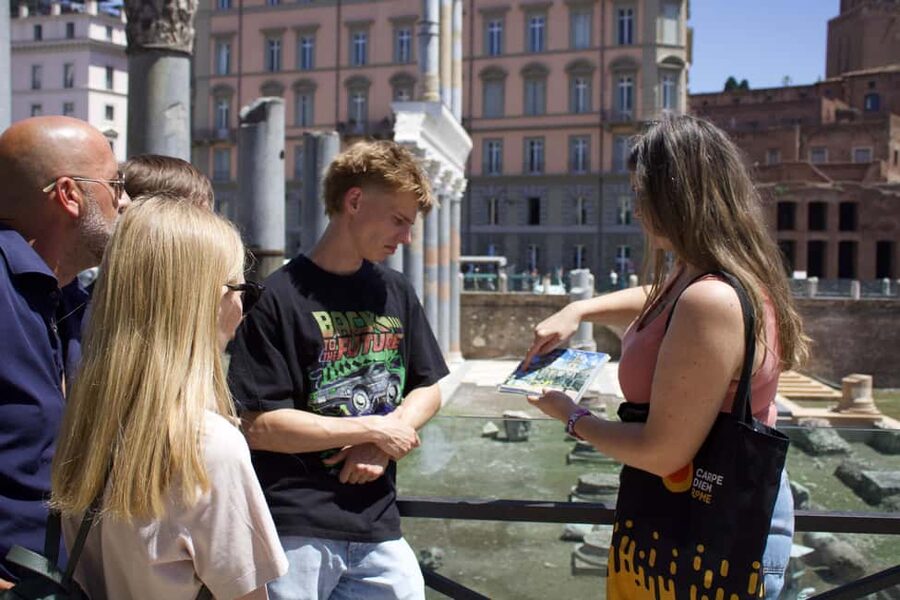
The strongest praise for this experience centers on the guides. That is worth taking seriously because a two-hour city walk can either become a memorable story or a tiring list of dates and names.
Vlad is repeatedly described as funny, energetic, welcoming, and highly informed. That combination is useful on a long route. He keeps the pace upbeat and helps the walk feel social rather than formal.
Sila is praised for explaining small details with larger meaning. She points out features such as the Madonnelle, the difference between authentic and later obelisks, Rome’s drinking-water fountains, and the questionable history behind some grand boulevards. Those details give you something to watch for after the tour ends.
Csenge is noted for her organization, warmth, and clear explanations. Her style seems especially suited to first-time visitors who want a broad introduction without a dry lecture. Dan, Sharon, Domenica, Alina, Sarah, Amanda, Max, Rheb, and others are also praised for friendliness, humor, useful advice, and careful answers to questions.
Guide quality can vary because different people lead the walks. The overall rating is 4.8 from 852 reviews, which suggests a strong track record, but your experience will still depend partly on who leads your group and how well the group responds.
Price, pace, and who gets the best value
At $28 per person, the tour is fairly priced for a live guided walk covering this much central Rome. You are paying for interpretation, route planning, and the chance to see several major sites in one evening. You are not paying for museum entry, transport, dinner, or drinks.
I think the value is strongest for a first visit. You can use the walk to decide which places deserve a return visit, then schedule daytime entry for the Pantheon, Colosseum, or Forum as needed. It also suits solo visitors, couples, and families with older children who like stories and can manage several hours on foot.
The pace may be demanding. One guide described the final section as athletic, and that is fair. Bring comfortable shoes and comfortable clothing. The route crosses paved streets and historic areas, and you should not expect frequent long rests.
A private group is available if you want a more personal format. The standard walk is likely the better bargain for most people, while a private option makes more sense if your group values flexibility or wants to ask many questions.
You can cancel up to 24 hours ahead for a full refund, and the reserve-now, pay-later option keeps your plans flexible. Those terms are useful if your Rome schedule is still shifting.
How to make the most of your evening
Wear shoes you would trust for a full evening of walking. Do not arrive hungry and assume the tour includes refreshments, since food and drinks are not included.
Bring a phone or camera for the lit monuments, but keep your attention on the guide too. The best details are often small: a carved figure, a fountain feature, a strange architectural trick, or a clue about how Rome’s streets developed.
I would schedule this on your first or second night if possible. You will get a city overview, learn which landmarks deserve more time, and collect restaurant or sightseeing suggestions from the guide. The walk can also work late in a trip, when you want one last sweep through the city without committing to another indoor attraction.
Should you book Rome Under the Moonlight?
Book it if you want a friendly, story-led introduction to central Rome and like seeing famous monuments under evening lights. The route is broad, the price is reasonable, and the guides appear to be the main strength, especially people such as Vlad, Sila, Csenge, Dan, and Sharon.
Skip it if you want interior access to the Pantheon, Colosseum, or Roman Forum, or if two-plus hours of walking sounds tiring. For everyone else, this is a smart way to meet Rome after dark, with enough major sights to feel rewarding and enough side-street detail to keep the evening from becoming a simple monument checklist.
FAQ
How long does the Rome Under the Moonlight tour last?
The tour lasts approximately 2 to 2.5 hours. Starting times vary, so check availability when booking.
What languages are available?
The live tour guide is available in English or Spanish.
Where does the tour start?
The starting point can vary according to the option booked. Listed starting locations include Piazza d’Aracoeli and Piazza di Pasquino.
Where does the tour end?
The activity ends back at the meeting point or at one of the listed drop-off areas. These include Piazza Navona and locations near the Colosseum.
Does the tour enter the Colosseum?
No. The tour walks around the Colosseum and views it under the evening lights, but entry is not included.
Is entry to the Pantheon included?
The itinerary lists the Pantheon as a pass-by stop. You see the monument and hear about it, but an interior visit is not specified as included.
Is food or drink included?
No. Food and drinks are not included in the tour price.
What should I bring?
Bring comfortable shoes and comfortable clothing. The route involves several hours of walking through central Rome.
More After-Dark Outings
- Rome by Night – Ebike Small Group Tour – Food and Wine (Option)
★ 5.0 · 1,275 reviews - Colosseum Sunset Tour with Entry
★ 4.5 · 1,230 reviews - Rome: E-Bike Night Tour with Food and Wine Tasting
★ 4.9 · 1,131 reviews - Colosseum by Evening Guided Tour with Optional Arena Floor Access
★ 4.0 · 867 reviews
More Guided Walks
- Rome: Forbidden History Walking Tour & Pub Crawl with Drinks
★ 4.9 · 688 reviews - Rome: Guided Small Group Walking Tour of City Highlights
★ 5.0 · 682 reviews - Rome Walking Tour with Piazza Navona, Trevi Fountain and Pantheon
★ 4.5 · 676 reviews - Rome: City Highlights Moonlight Walking Tour
★ 4.9 · 580 reviews
Just added around Rome
- Rome City, Pantheon, and Trevi Fountain Walking Tour★ 5.0 · 249 reviews
- Rome: Skip the line Vatican Museums & Sistine Chapel Tour★ 4.2 · 251 reviews
- Rome: Tivoli Day Trip with Villa d’Este and Villa Adriana★ 4.5 · 251 reviews
- Transfer Rome center – Ciampino Airport★ 4.5 · 251 reviews
- Rome: Cannondale E-Bike Evening Tour with Optional Dinner★ 4.9 · 251 reviews
- VIP Colosseum, Roman Forum & Palatine Hill & Special Access Sites★ 4.5 · 252 reviews
- Private Vatican Museums Hidden Gems Tour with Optional Pick-Up★ 5.0 · 253 reviews
- Vatican Museums & Sistine Chapel Skip-the-Line Guided Tour★ 4.6 · 254 reviews
Walking Tours, compared.

Guided Walking Tour & Last Supper Visit with Ticket
Read our review →

Rialto Bridge & Offbeat Unusual Venice Walking Tour
Read our review →

Private 3 hrs Venice Tour: St Mark’s, Walking tour & Boat tour
Read our review →

Skip the line: Uffizi and Accademia Small Group Walking Tour
Read our review →Browse the lists this tour appears in