Review · TICKETS
Siena: Palazzo Pubblico Entry Ticket
Siena’s best art sits in its town hall. Inside the Palazzo Pubblico, you’ll find the Civic Museum’s wall-to-wall frescoes, carved coffers, historic artifacts, and Simone Martini’s celebrated Maestà. I especially like the chance to see major Sienese art in the very building where the city’s government once met, and I like that the ticket includes the Loggia dei Nove with its broad view over the Sienese countryside.
The main drawback is important: Ambrogio Lorenzetti’s Allegory and Effects of Good and Bad Government may be closed for restoration, so check the current display before you book if that fresco cycle is your main reason for visiting. The ticket also does not include Torre del Mangia, Siena’s famous tower.
In This Review
- Key points to know before you go
- Why the Palazzo Pubblico matters in Siena
- Starting in the Sala del Risorgimento
- The Sala di Balìa and its 15th-century frescoes
- Carved coffers and relics in the Sala dei Cardinali
- Beccafumi’s vault and Taddeo di Bartolo’s chapel
- Simone Martini’s Maestà in the Sala del Mappamondo
- The Lorenzetti question: check before booking
- The Loggia dei Nove and the view beyond the palace
- Is the $7 ticket good value?
- Getting there and handling the practical details
- Who should book this experience?
- Should you book the Palazzo Pubblico ticket?
- FAQ
- How long does the Palazzo Pubblico visit take?
- What is included in the entry ticket?
- Is Torre del Mangia included?
- Do I need to exchange my voucher?
- Is the Civic Museum wheelchair accessible?
- Can I bring luggage or a large bag?
- Can I cancel the booking?
Key points to know before you go
- Simone Martini’s Maestà is the artistic centerpiece: This Gothic masterpiece fills the Sala del Mappamondo with color, ceremony, and fine detail.
- The museum occupies Siena’s 13th-century city hall: You are walking through rooms built for civic power, not a modern gallery.
- Lorenzetti’s famous frescoes may be unavailable: Restoration can change what is open, so set your expectations carefully.
- The Loggia dei Nove adds real value: The 14th-century gallery opens to a gorgeous view behind the Palazzo Pubblico.
- The ticket costs about $7 per person: That is a modest price for Siena’s major civic building and its decorated rooms.
- You must exchange your voucher at the inner courtyard ticket office: Enter the Cortile del Podestà, rather than waiting outside on Via di Salicotto.
Why the Palazzo Pubblico matters in Siena
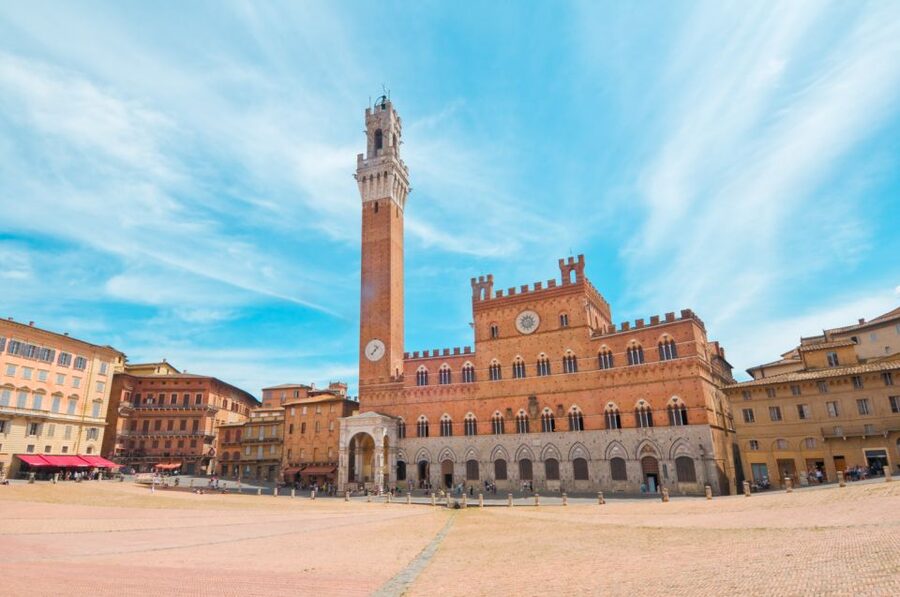
Siena’s Palazzo Pubblico is not simply a container for old paintings. It was built as the city’s civic center, and the museum still makes that connection clear. The rooms were used by councils, officials, and religious or political figures, so the decoration carries a public message: Siena wanted its leaders to govern wisely and protect the city.
That idea matters most in a place like Siena, where art and government were closely linked. The frescoes are beautiful, but they were also meant to teach, persuade, and remind officials of their duties.
Your visit lasts about one hour, which is enough time for a focused look at the main rooms. I would not treat this as a quick stop between photographs in Piazza del Campo. The building rewards a slower pace, especially if you want to study the small faces, patterns, symbols, and architectural details painted across the walls.
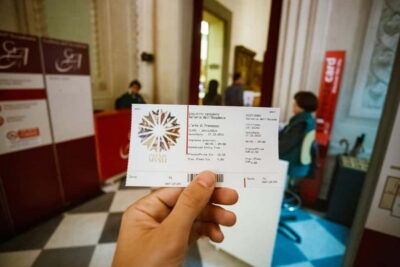
The museum is inside the Palazzo Pubblico on Siena’s main square. To begin, enter the Cortile del Podestà and find the ticket office there. This point is easy to miss because map directions can send you to the outside of the building along Via di Salicotto. Your voucher must be exchanged for an entry ticket, so arrive about 10 minutes before your reserved time.
A few more reviews worth comparing before you book
- Florence: Skip-The-Line Uffizi Gallery Timed Entry Ticket
★ 4.5 · 27,832 reviews - Tuscany Day Trip from Florence: Siena, San Gimignano, Pisa and Lunch at a Winery
★ 5.0 · 21,634 reviews - Florence: Timed Entrance Ticket to Michelangelo’s David
★ 4.6 · 16,983 reviews
Starting in the Sala del Risorgimento
The route begins in the Sala del Risorgimento, where frescoes depict the life of Vittorio Emanuele II, the first king of Italy. This room shifts the focus from medieval Siena to the 19th-century creation of modern Italy.
It is a useful opening because the Palazzo Pubblico is not frozen in one period. You move from national history in the Risorgimento room into medieval and Renaissance art in the rooms that follow. The change also reminds you that this building continued to matter long after Siena’s medieval government had passed.
The subject may feel less immediately familiar than the famous medieval frescoes, but it gives the museum a wider time range. If you are interested in Italian unification, this room deserves more than a quick glance.
The Sala di Balìa and its 15th-century frescoes
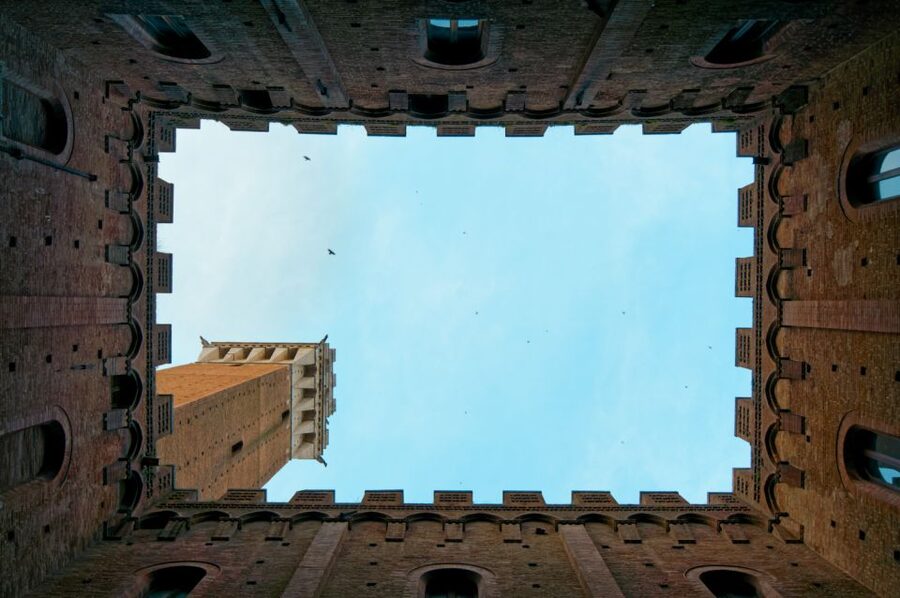
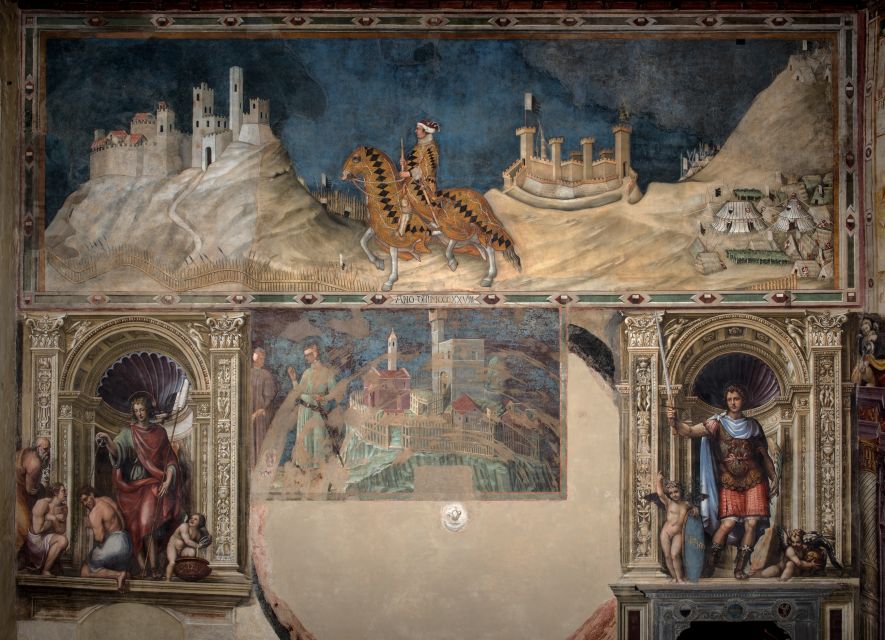
Next comes the Sala di Balìa, decorated with 15th-century wall paintings by Spinello Aretino and Martino di Bartolomeo. The decoration is not confined to a single framed panel. It spreads across the walls, making the room feel like a complete visual program.
I like this kind of setting because you can compare the artists’ handling of figures, clothing, gestures, and architectural backgrounds without crossing an entire museum. Look closely at the painted details rather than only taking in the room from the doorway.
The number of rooms open to the public is not huge for such a large building. That can feel limiting if you expect to explore every corner of the Palazzo Pubblico. Still, the rooms available are packed with art, and the compact route works well when you have only an hour in Siena.
Carved coffers and relics in the Sala dei Cardinali
The Sala dei Cardinali offers a different experience. Here, precious carved coffers hold reliquaries, giving the room a more tactile and object-focused character than the broad wall frescoes.
This is a good reminder that the Civic Museum is not only about paintings. The building brings together painted decoration, carved wood, religious objects, and civic history. The variety keeps the visit from becoming a long sequence of similar walls.
Take time to notice how the storage pieces themselves are part of the display. A reliquary is never just a container, and a carved coffer can communicate status, devotion, and craftsmanship. The room is especially worthwhile if you enjoy the smaller objects that can be overlooked beside famous frescoes.
A different sort of day out around Florence:
- Florence: Michelangelo’s David Skip-the-Line Entry Ticket
★ 4.5 · 12,764 reviews - The Best tour in Florence: Renaissance & Medici Tales – guided by a STORYTELLER
★ 5.0 · 12,316 reviews - Florence: Leonardo Interactive Museum Entry Ticket
★ 4.5 · 11,763 reviews - The Best Tour in Florence: Renaissance and Medici Tales
★ 5.0 · 10,810 reviews
Beccafumi’s vault and Taddeo di Bartolo’s chapel
The Sala del Concistoro is known for its Beccafumi vault. Look upward here. The ceiling is not an afterthought, and it shows how thoroughly the artists treated these rooms as total works of art.
The scale can be hard to grasp in photographs. In person, the painted ceiling joins the walls and architecture into one decorated space, so you should pause before moving on. If you have a small pair of binoculars or a phone camera with a useful zoom, they may help with details, though flash photography is not allowed.
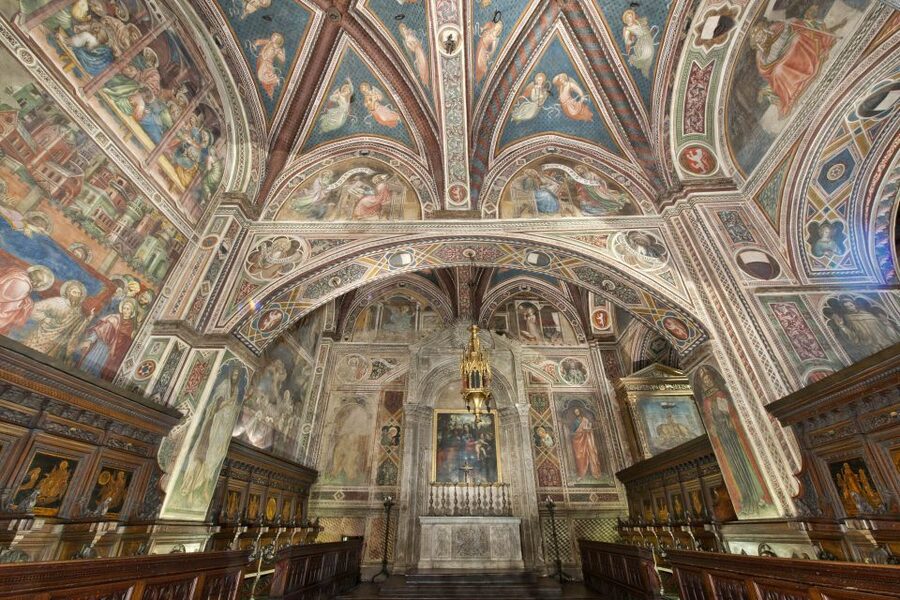
The route also includes Taddeo di Bartolo’s 15th-century chapel. Its religious setting changes the mood again, moving from civic rooms toward a more devotional space. The chapel is one of the places where Siena’s political and spiritual worlds feel closely connected.
Simone Martini’s Maestà in the Sala del Mappamondo
The Sala del Mappamondo is the widest room in the Palazzo Pubblico and was used as the meeting place of the General Council. This is where the building’s civic purpose and artistic ambition come together most clearly.
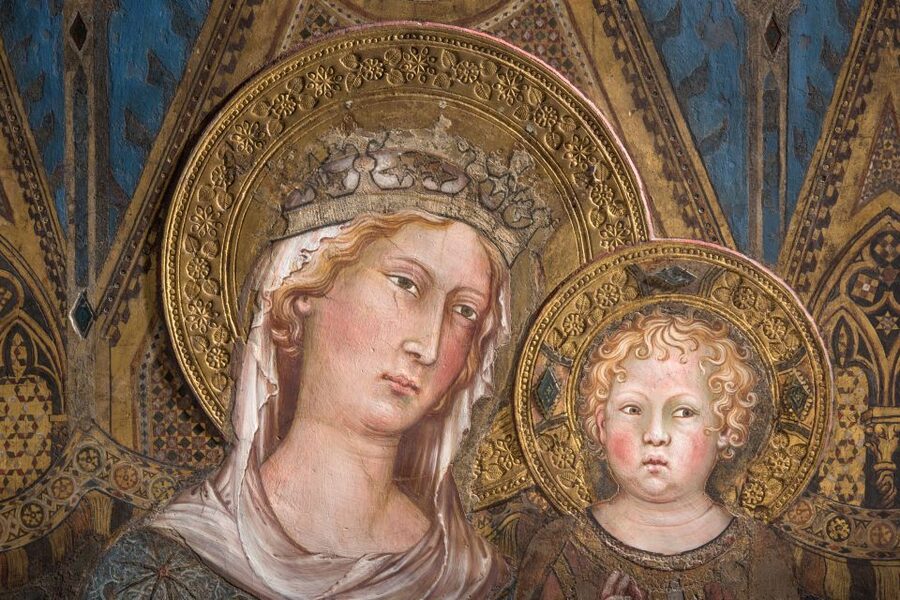
The room contains Simone Martini’s Maestà, a Gothic masterpiece and one of the museum’s major highlights. The painting’s title refers to the Virgin Mary in majesty, and its formal arrangement, rich color, and careful decoration reward close attention.
You are not looking at an isolated altarpiece in a quiet chapel. You are seeing a major image in a room connected to public decision-making. That setting adds weight to the work. Mary’s presence was tied to Siena’s identity, and the painting helped place the city under her protection.
I would give the Maestà several minutes, even if you are not an art specialist. Notice the crowded arrangement of saints and angels, the patterns in the clothing, and the way the figures create a formal court around Mary and the child. The fine details are easy to miss if you simply walk through with the group.
The Lorenzetti question: check before booking
The biggest practical warning concerns Ambrogio Lorenzetti’s Allegory and Effects of Good and Bad Government. This is among Siena’s most famous works, and it is a major reason many people want to see the Palazzo Pubblico.
The fresco cycle has at times been closed for restoration. If it is unavailable during your visit, the museum still offers Simone Martini’s work, the decorated rooms, historic objects, and the Loggia dei Nove. But if Lorenzetti is your top priority, you should confirm its current status before paying.
This is more than a minor missing room. The frescoes explain how medieval Siena imagined responsible government, justice, prosperity, and disorder. Their subject makes perfect sense inside a working city hall, and their absence can change the shape of the visit.
You may also find that access to parts of the museum is suspended during an extraordinary event. Opening hours can change, too, so leave a little flexibility in a tightly planned Siena day.
The Loggia dei Nove and the view beyond the palace
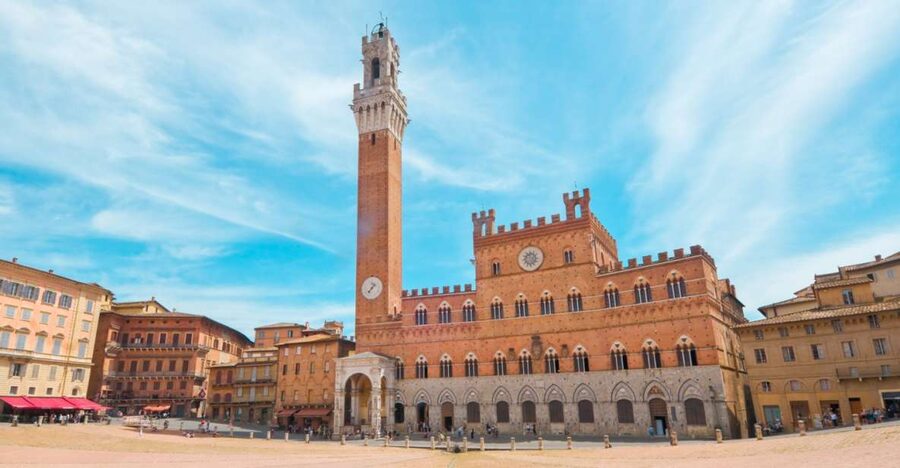
The museum ticket includes the 14th-century Loggia dei Nove. This gallery is one of the strongest reasons to choose the Civic Museum over a quick look at the palace exterior.
From the loggia, you get a beautiful view over the countryside behind the Palazzo Pubblico. After the close work of the frescoed rooms, the open outlook gives your eyes a welcome rest. It also helps you understand Siena’s setting beyond the dense lanes and stone buildings of the historic center.
The view is not a substitute for Torre del Mangia, and that distinction matters. Access to the tower is not part of this ticket, though you can ask at the ticket office about buying a separate ticket. If you specifically want a climb, check that option rather than assuming the museum admission covers it.
The loggia itself is a fine architectural stop, not merely a place to take a photograph. Its position connects the government building with the countryside that supported and surrounded medieval Siena.
Is the $7 ticket good value?
At about $7 per person, the Civic Museum offers good value for an art and architecture stop in Siena. You get entrance to the Palazzo Pubblico’s principal museum rooms, access to major frescoes, historic objects, and the Loggia dei Nove.
The value is strongest if you care about medieval and Renaissance painting, civic history, or interiors covered in original decoration. It is also a sensible choice for anyone who wants a substantial cultural visit without committing to a half-day guided tour.
The ticket does not include a guide or audio guide. That keeps the price low, but it means you should bring some context of your own or use the room information available on site. I find the lack of a guide acceptable at this price, especially because the route is compact and the main works are easy to identify.
The $7 price is less satisfying if you are booking only to see Lorenzetti and the frescoes are closed. In that case, check first. A short delay or a revised plan may save you disappointment.
Getting there and handling the practical details
Plan to arrive at the ticket office 10 minutes before your booking time. Do not go straight to an exterior doorway and assume you are in the right place. Enter the Cortile del Podestà, find the office, and exchange your voucher for the actual entry ticket.
Large bags and luggage are not allowed. Pets are not permitted, though assistance dogs are allowed, and flash photography is forbidden. Bring a passport or ID card, as identification is listed among the required items.
The museum is wheelchair accessible. The elevator door is 69 centimeters wide, and the elevator is 83 centimeters deep. Those measurements are useful if you need to check equipment dimensions before booking.
If you are coming from Siena’s train station, an escalator route from the shopping mall across from the station leads up toward the city. It may be worth knowing this before choosing to walk the full way uphill. The museum itself is in the center, so you can pair it with time in Piazza del Campo.
The booking allows free cancellation up to 24 hours in advance, and you can reserve now and pay later. Those options help if your Siena day depends on train times or changing plans.
Who should book this experience?
I would recommend the Palazzo Pubblico to you if you want Siena’s art in its original civic setting. It suits first-time visitors, art lovers, architecture enthusiasts, and anyone curious about how a medieval city pictured good leadership.
It is also a strong rainy-day choice because the experience takes place indoors, with the Loggia providing the outdoor portion when conditions allow. Families with older children may appreciate the short one-hour length, though younger children may not have much patience for a series of frescoed rooms.
You may want something else if you need a full guided explanation, an audio guide, or a tower climb included in one admission. This is a self-guided museum entry, not a complete Siena sightseeing package.
The small-group limit of 10 can make the experience feel more manageable than a crowded group visit, but the ticket itself does not promise a personal guide. Think of it as controlled entry to a compact museum rather than a hosted tour.
Should you book the Palazzo Pubblico ticket?
Yes, if you want a low-cost look at Siena’s finest civic art and a beautiful countryside view. Simone Martini’s Maestà, the decorated halls, the carved reliquaries, and the Loggia dei Nove make this a worthwhile one-hour stop.
Book with one condition: confirm the status of Lorenzetti’s Allegory and Effects of Good and Bad Government. If those frescoes are open, the visit becomes an especially strong choice. If they are closed, you can still enjoy an impressive building and important art, but you should know exactly what you are paying to see.
FAQ
How long does the Palazzo Pubblico visit take?
The stated duration is one hour. Check availability for the starting times offered on your chosen date.
What is included in the entry ticket?
The ticket includes entrance to Siena’s Civic Museum inside the Palazzo Pubblico and access to the Loggia dei Nove.
Is Torre del Mangia included?
No. Torre del Mangia is not included, but tickets for the tower can be purchased directly at the ticket office.
Do I need to exchange my voucher?
Yes. Enter the Cortile del Podestà and exchange your voucher at the ticket office before entering the museum.
Is the Civic Museum wheelchair accessible?
Yes. The museum is wheelchair accessible. The elevator door is 69 centimeters wide, and the elevator is 83 centimeters deep.
Can I bring luggage or a large bag?
No. Luggage and large bags are not allowed inside. Pets are also prohibited, except for assistance dogs.
Can I cancel the booking?
Yes. You can cancel up to 24 hours in advance for a full refund. The reserve-now, pay-later option is also available.
Just added around Florence
- Palazzo Vecchio guided experience with entrance ticket★ 4.5 · 249 reviews
- Lucca Bikes and Bites with food tastings for Small Groups or Private★ 5.0 · 249 reviews
- Perfume Masterclass in Florence: Make your Own Personal Fragrance★ 4.5 · 253 reviews
- Florence Oltrarno Neighborhood Food & Wine Dine Around★ 5.0 · 253 reviews
- Florence: Cathedral, Dome and Terraces Guided Tour★ 4.5 · 253 reviews
- Florence: 1.5-hour Santa Croce Guided Experience★ 4.8 · 254 reviews
- Florence: Pitti Palace and Palatina Gallery Ticket and Tour★ 4.9 · 255 reviews
- Private Florence Tour by Golf Cart ETukTuk with Audio Guide★ 4.0 · 256 reviews
Tickets, compared.

Vatican: Museums & Sistine Chapel Entrance Ticket
Read our review →
Cathedral and Duomo’s Terraces Entrance Ticket
Read our review →

Skip-The-Line Uffizi Gallery Timed Entry Ticket
Read our review →
Naples Underground Entry Ticket and Guided Tour
Read our review →
Pantheon Fast-Track Ticket and Official Audio Guide
Read our review →
Pompeii: Entry Ticket and Guided Tour with an Archaeologist
Read our review →