
Review · FLORENCE TOURS
The Best Tour in Florence: Renaissance and Medici Tales
Florence tells its biggest stories outdoors. This donation-based walk links the Medici family to the Duomo, Dante, Palazzo Vecchio, and the Uffizi area in about two hours. I like the strong historical thread and the chance to see major sights without paying for entry tickets. I also like that the route mixes famous monuments with smaller streets and less obvious details. The main drawback is pace: ten stops in two hours means you get an excellent introduction, not a full visit inside each place.
The tour begins beside San Lorenzo Church and ends near Piazza della Signoria, a useful place to continue toward the Uffizi Gallery. Guides such as Aurora, Alberto, Camilla, Deborah, Manuel, Simona, and Elisabetta have earned praise for clear storytelling, humor, food tips, and an ability to make the Medici story easy to follow. Just remember that the low booking price is not the guide’s full payment. You decide the donation at the end.
In This Review
- Key points to know before you go
- Why the Medici make a good introduction to Florence
- Starting at San Lorenzo and the Medici burial church
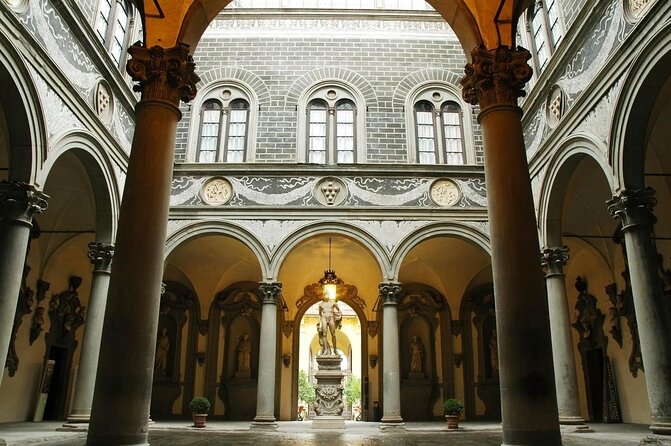
- Palazzo Medici Riccardi and the family’s first great home
- The Baptistery, Duomo, and Florence’s famous skyline
- Giotto’s Campanile and Brunelleschi’s daring dome
- Dante’s Florence in five quick minutes
- Piazza della Signoria and the public face of power
- Palazzo Vecchio and the copy of Michelangelo’s David
- Finishing near the Uffizi Gallery
- What the two-hour schedule really means
- How the donation price affects the value
- The guides and the style of the experience
- Who should book this Florence walk
- FAQ
- How long does the tour last?
- Where does the tour start?
- Where does the tour end?
- Is the tour offered in English?
- Are admission tickets included?
- How does the donation system work?
- Can I cancel the booking?
- Should you book it?
Key points to know before you go
- Medici-centered storytelling: Learn how one banking family helped shape Florence, its politics, art, churches, and Renaissance identity.
- Ten central Florence stops: The route covers San Lorenzo, Palazzo Medici Riccardi, the Baptistery, Duomo, Giotto’s Campanile, Brunelleschi’s dome, Dante’s house, Piazza della Signoria, Palazzo Vecchio, and the Uffizi area.
- A useful first-day walk: The tour helps you understand what you are seeing before you return to museums and churches on your own.
- Donation-based pricing: The listed price is very low, but your donation is the only compensation the guide receives.
- Outdoor city experience: You walk through Florence’s streets and squares rather than moving from one indoor attraction to another.
- Large-group possibility: The tour can include up to 30 people, so arrive early and stay close to the guide.
Why the Medici make a good introduction to Florence
The Medici family gives this walk a clear storyline. Instead of hearing ten unrelated facts about ten buildings, you follow the rise of a banking family that influenced Florence’s government, art, architecture, and religious life.
That approach works well because Florence can feel like a stone encyclopedia at first. Every corner has a name, a statue, or a famous doorway. A good guide helps you connect those pieces. The tour’s strongest guides use stories rather than a dry list of dates. Camilla has been praised for vivid explanations, while Deborah is known for mixing humor with art and political detail. Aurora’s background in art history adds another useful layer.
You should expect an outdoor orientation, not a museum lecture. The guide explains what to look for, points out details you could easily miss, and gives you a framework for later visits. I especially like this format for a first morning or first afternoon in Florence.
A few more reviews worth comparing before you book
- Florence: Skip-The-Line Uffizi Gallery Timed Entry Ticket
★ 4.5 · 27,832 reviews - Tuscany Day Trip from Florence: Siena, San Gimignano, Pisa and Lunch at a Winery
★ 5.0 · 21,634 reviews - Florence: Timed Entrance Ticket to Michelangelo’s David
★ 4.6 · 16,983 reviews
Starting at San Lorenzo and the Medici burial church
Meet at Piazza di San Lorenzo, beside the statue of Giovanni de’ Medici seated on a throne. The starting point is in central Florence, close to the city’s main market district and easy to connect with on foot or by public transportation.
The first major stop is the Basilica di San Lorenzo. It is one of Florence’s largest churches and the burial place of principal Medici family members from Cosimo il Vecchio to Cosimo III. That makes it the right place to begin a Medici tour. The building is not just another church on a sightseeing list. It introduces the family’s long reach and their connection to the city’s religious and public life.
The planned stop lasts about ten minutes, and admission is not included. The group may discuss the basilica from outside rather than tour the interior. If you want to see the church in detail, plan a separate visit and check its admission arrangements for your date.
Palazzo Medici Riccardi and the family’s first great home
From San Lorenzo, the route continues to Palazzo Medici Riccardi. Cosimo de’ Medici commissioned this palace, built between 1444 and 1484. Its place in the story matters: this is where the family’s wealth began to take a visible architectural form.
A palace can tell you a lot about power without a single speech. The size, location, and design show how a banking family presented itself in Florence. Your guide connects the building to the Medici rise, helping you see the palace as a political statement as well as a beautiful old residence.
The stop is scheduled for about ten minutes, with admission not included. That keeps the tour moving, but it also means you should not expect a full interior visit. If the Medici story catches your attention, this is one of the places you may want to revisit after the walk.
The Baptistery, Duomo, and Florence’s famous skyline
The next section brings you into the Piazza del Duomo, where Florence’s major religious buildings gather close together. The Baptistery of St. John is one of the oldest buildings in the city, constructed between 1059 and 1128 in the Florentine Romanesque style.
The Baptistery sits across from the cathedral and Giotto’s Campanile. Its age and compact shape help you understand that Florence’s monumental center developed over many centuries. The scheduled stop is about ten minutes, and admission is not included.
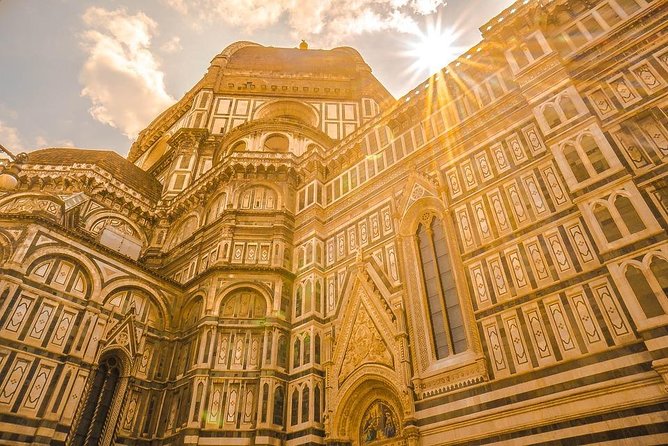
Then comes the Duomo, formally the Cattedrale di Santa Maria del Fiore. Construction began in 1296 in the Gothic style, based on a design by Arnolfo di Cambio. The cathedral, Baptistery, and Campanile form part of Florence’s UNESCO-listed historic center.
The cathedral is one of those places where an outside explanation adds real value. You are surrounded by marble, towers, and crowds, yet it is easy to miss how the buildings relate to one another. The guide helps you read the square as a single project rather than three separate sights.
Admission to the cathedral is listed as free, but this walking tour does not function as a cathedral visit. You should allow extra time if you want to go inside. The stop itself lasts about ten minutes, so photography and a quick explanation are the likely focus.
A different sort of day out around Florence:
- Florence: Michelangelo’s David Skip-the-Line Entry Ticket
★ 4.5 · 12,764 reviews - The Best tour in Florence: Renaissance & Medici Tales – guided by a STORYTELLER
★ 5.0 · 12,316 reviews - Florence: Leonardo Interactive Museum Entry Ticket
★ 4.5 · 11,763 reviews - Reserved Entrance to Leaning Tower of Pisa & Cathedral
★ 4.5 · 10,391 reviews
Giotto’s Campanile and Brunelleschi’s daring dome
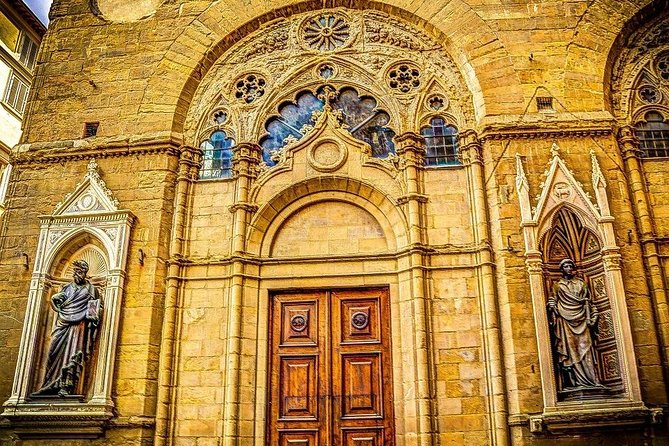
Giotto’s Campanile is next to the cathedral and Baptistery. Its polychrome marble, sculpture, and Florentine Gothic design make it one of the city’s most striking towers. The name points to Giotto, though the tower’s design and construction involve more than one stage of work.
The tour gives you about ten minutes here. Admission is not included, and the schedule does not allow time to climb the tower. Still, the guide can help you notice the tower’s color pattern and sculptural decoration, details that tend to blur together when you are simply crossing the square.
The Cupola del Brunelleschi gets its own stop, and rightly so. Brunelleschi’s dome was once the largest in the world and remains the largest brick dome ever built. Even from street level, it is a powerful lesson in engineering and ambition.
This is also one of the tour’s best moments for explaining how Renaissance ideas took shape. The dome is not only a beautiful roof. It represents a practical building problem, a bold solution, and the public prestige that came with solving it.
Admission to the dome is not included. The tour does not provide a climb or timed entry, so treat this as an introduction. If you want the famous ascent, arrange that separately and check the current ticket rules before your visit.
Dante’s Florence in five quick minutes
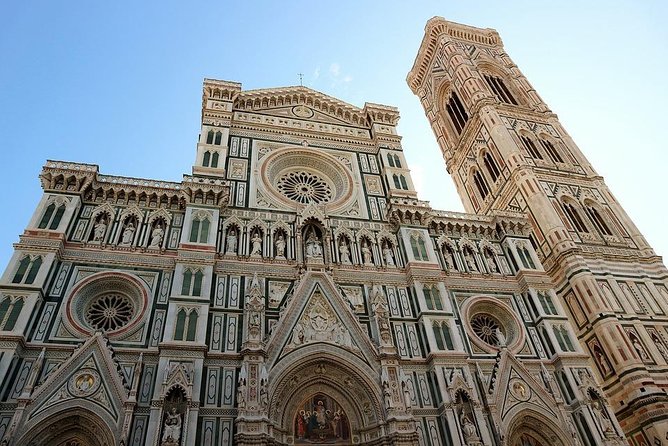
The route then turns toward the Museo Casa di Dante, associated with Dante Alighieri, author of the Divine Comedy. The listed stop is brief, about five minutes, and admission is free.
That short visit reflects the shape of the tour. You are not spending an hour on one subject. Instead, you are building a mental map of Florence through its key figures: the Medici in politics and patronage, Brunelleschi in architecture, and Dante in literature.
The House of Dante is a useful reminder that Florence’s importance is not limited to paintings and churches. The city also shaped the Italian language and medieval literature. If Dante interests you, make a note to return with more time, since five minutes is enough for context but not a museum visit.
Piazza della Signoria and the public face of power
Piazza della Signoria is the walk’s grand civic stage. This L-shaped square sits in front of Palazzo Vecchio and near the route to the Uffizi Gallery. Florentines have long used it as a meeting place, and today it is also one of the city’s main gathering points.
Here, the guide can bring together several strands of the tour: government, sculpture, Medici power, and public life. The square is especially useful for understanding that Florence’s art was not kept only in private rooms. Statues and buildings faced the public and helped communicate political ideas.
The stop lasts about ten minutes, and admission is free. Because the square is open and central, it can be crowded. Keep the guide in sight, listen for the meeting instructions, and do not wander off for a photograph during the explanation.
Palazzo Vecchio and the copy of Michelangelo’s David
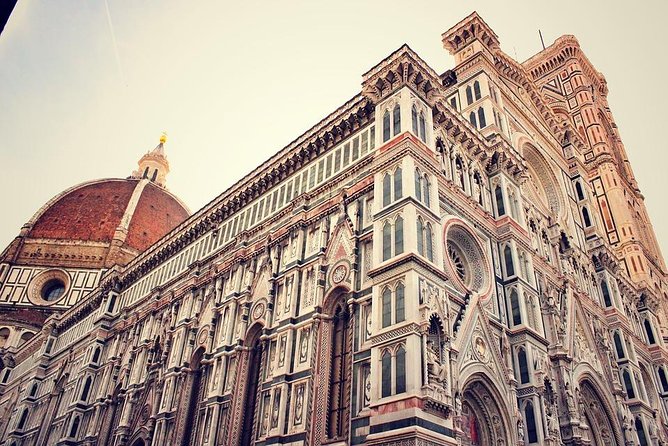
Palazzo Vecchio is Florence’s town hall, a fortress-palace with a serious civic presence. It overlooks the square and the copy of Michelangelo’s David, along with the statues in the adjacent Loggia dei Lanzi.
The David copy is an important detail to understand before you arrive. This is not the original statue now associated with the Accademia Gallery. The replica marks the public location where Michelangelo’s sculpture once carried political meaning.
The guide’s explanation of the fake Daniel statue, as one memorable tour account describes it, is another example of how a good story can sharpen your eye. The point is not merely to identify a statue. It is to understand why a particular figure was placed in a particular public setting.
The stop is around ten minutes, and admission to Palazzo Vecchio is not included. You can return later for the interior rooms and museum if you want a fuller look at Florence’s government and court life.
Finishing near the Uffizi Gallery
The route finishes around Piazza della Signoria, with the Uffizi Gallery close by. The endpoint is indicative and may vary slightly within the square, but you finish in one of the most useful parts of central Florence.
The Uffizi began in 1560, when Giorgio Vasari designed the complex for Cosimo I de’ Medici to house the offices of Florentine magistrates. The word uffizi means offices. That practical beginning eventually became one of the world’s best-known collections of Italian Renaissance art.
The tour does not include Uffizi admission, and the gallery is listed as a stop for about ten minutes. Think of this as a handoff to your next activity. You can ask your guide for advice about what to see, then enter with a better sense of how the Medici story connects to the paintings inside.
Several guides have also offered practical advice about food, restaurants, and areas to visit beyond the standard sights. That kind of local direction can be especially useful after the walk, when you are ready to turn background knowledge into a personal plan.
What the two-hour schedule really means
The tour lasts about two hours and covers ten stops. The listed explanations add up to roughly 95 minutes, leaving the rest for walking between sites, gathering the group, and crossing busy central streets.
That is a sensible design for a first look at Florence. You cover a lot without committing half a day. But you need realistic expectations. You will not have time for full visits to San Lorenzo, Palazzo Medici Riccardi, the dome, Palazzo Vecchio, or the Uffizi.
The possible group size is 30 people. That is not enormous, but it is large enough for the guide to be harder to hear in a noisy square. Arriving early helps. Stay near the guide, especially around the Duomo and Piazza della Signoria.
The walk requires good weather. Wear comfortable shoes and be ready to spend the whole tour outdoors. Most people can participate, and service animals are allowed. The experience is offered in English and uses a mobile ticket.
How the donation price affects the value
The listed price of $3.62 per person makes this one of the least expensive ways to get a guided introduction to central Florence. That price is attractive for students, families, and anyone trying to keep museum and meal costs under control.
But the number needs context. This is a donation-based tour, and the guide’s only compensation is what you choose to give at the end. The low booking price should not be treated as the true value of two hours of professional guiding.
If the guide gives you useful context, answers questions, keeps a large group moving, and helps you plan the rest of your stay, budget a fair donation. One especially positive account suggested at least €20 per person for a strong experience. You are free to decide, but going in with cash or a planned donation avoids the awkward problem of having no way to thank the guide.
The value is best measured by what the walk saves you later. A good introduction can help you choose which churches, museums, and squares deserve more of your time. You also avoid paying admission simply to receive an outside explanation.
The guides and the style of the experience
The guide makes a major difference on a route with so many stops. Alberto is praised for covering Florence, the Medici, architecture, art, food, and restaurant ideas in a short time. Manuel is described as a strong storyteller, even on a rainy day. Camilla is noted for answering questions easily and making the history approachable.
Deborah receives particular praise for holding the attention of a large group and mixing humor with information. Aurora is described as an art historian who brings the city’s past to life. Simona is noted for clear speech, energy, and making the subject accessible even if you are not a history fan.
You cannot choose the guide from the information provided, so book this for the route and format rather than one specific person. The repeated pattern is encouraging: the walk works best when the guide turns Florence’s monuments into stories about people, power, art, and daily life.
Who should book this Florence walk
I would choose this tour if you are visiting Florence for the first time, want a useful orientation, or enjoy understanding the story behind buildings before entering them. It also suits repeat visitors who have seen the major sights but want a fresh explanation of the Medici and Renaissance connection.
It is a good match for people who like walking, short stops, and lively commentary. Families and mixed-age groups may appreciate the variety, since the route moves from churches to palaces, literature, sculpture, and city government.
I would look elsewhere if you want lengthy time inside museums, a small private group, a focused architecture lecture, or a climb of Brunelleschi’s dome. This is a broad city introduction. Its strength is range and storytelling, not extended access.
FAQ
How long does the tour last?
The walking tour lasts approximately two hours.
Where does the tour start?
It starts at Piazza di San Lorenzo, 35R, Florence, in front of San Lorenzo Church. Meet beside the statue of Giovanni de’ Medici seated on a throne.
Where does the tour end?
It ends around Piazza della Signoria, near the Uffizi Gallery. The exact endpoint may vary slightly within the indicated area.
Is the tour offered in English?
Yes. English is the listed language.
Are admission tickets included?
No. Admission is not included for San Lorenzo, Palazzo Medici Riccardi, the Baptistery, Giotto’s Campanile, Brunelleschi’s dome, Palazzo Vecchio, or the Uffizi Gallery. The cathedral stop lists free admission, and the Dante museum stop also lists free admission.
How does the donation system work?
The tour is made possible by donations. The guide receives no other form of compensation, so you decide the amount to give at the end based on the service provided.
Can I cancel the booking?
You can cancel at least 24 hours before the local start time for a full refund. Cancellations or changes within 24 hours are not refunded or accepted. If poor weather or an insufficient number of participants causes cancellation, you are offered another date, another experience, or a full refund.
Should you book it?
Book it as your Florence orientation, especially if you can take it near the start of your stay. The route covers the city’s essential central sights, and the Medici theme gives the walk a clear purpose instead of a random string of monuments.
Go in expecting outdoor explanations, brisk movement, and no included museum entries. Arrive early, wear good shoes, keep close to the guide, and plan a fair donation. For a short introduction that can shape the rest of your time in Florence, this is a very strong value.
Just added around Florence
- Palazzo Vecchio guided experience with entrance ticket★ 4.5 · 249 reviews
- Lucca Bikes and Bites with food tastings for Small Groups or Private★ 5.0 · 249 reviews
- Perfume Masterclass in Florence: Make your Own Personal Fragrance★ 4.5 · 253 reviews
- Florence Oltrarno Neighborhood Food & Wine Dine Around★ 5.0 · 253 reviews
- Florence: Cathedral, Dome and Terraces Guided Tour★ 4.5 · 253 reviews
- Florence: 1.5-hour Santa Croce Guided Experience★ 4.8 · 254 reviews
- Florence: Pitti Palace and Palatina Gallery Ticket and Tour★ 4.9 · 255 reviews
- Private Florence Tour by Golf Cart ETukTuk with Audio Guide★ 4.0 · 256 reviews
Florence Tours, compared.

Skip-The-Line Uffizi Gallery Timed Entry Ticket
Read our review →
Tuscany Day Trip from Florence: Siena, San Gimignano, Pisa and Lunch at a Winery
Read our review →
Timed Entrance Ticket to Michelangelo’s David
Read our review →
Michelangelo’s David Skip-the-Line Entry Ticket
Read our review →
The Best tour in Florence: Renaissance & Medici Tales – guided by a STORYTELLER
Read our review →
Reserved Entrance to Leaning Tower of Pisa & Cathedral
Read our review →