
Review · 2-HOUR EXPERIENCES
Rome: 2-Hour Gladiator School
Rome’s most playful history lesson starts with a sword. This two-hour Gladiator School on the Via Appia Antica combines Roman history with safe, hands-on sword training, making the ancient world easier to understand than any glass case alone. I love the strong mix of education and action, and I like that children, adults, and even spectators can enjoy the session together. The main drawback is the price, $135.94 per person, which may feel steep for a two-hour activity.
The course is especially good after visiting the Colosseum, when you already have gladiators in mind but want to understand how they trained and lived. Expect an energetic instructor, a tunic, foam weapons, a small museum visit, and a final arena battle. Mosquitoes and summer heat can be a nuisance, so bring insect repellent and prepare to drink plenty of water.
In This Review
- Key points to know before booking
- Why the Appian Way setting matters
- The museum visit puts the sword lesson in context
- Tunics, weapons, and the first sword drills
- The arena battle is the payoff
- What makes this work for children
- Why adults should not sit this one out
- Heat, shade, water, and mosquitoes
- Is $135.94 per person fair?
- Timing and transport advice
- Booking, cancellation, and language details
- Who should book the Gladiator School?
- Should you book it?
- FAQ
- How long does the Rome Gladiator School experience last?
- Where does the Gladiator School meet?
- Which bus stops near the school?
- What is included in the price?
- Are children allowed to participate?
- Are the weapons safe?
- Can parents watch without taking the course?
- Is the activity wheelchair accessible?
- What languages does the instructor speak?
Key points to know before booking
- Training takes place on the Appian Way: You leave central Rome for the historic Via Appia Antica, where the gladiator school offers a different setting from the usual city-center sights.
- The two-hour session stays active: The lesson includes Roman history, weapons, sword techniques, practice drills, and a final battle rather than a long lecture.
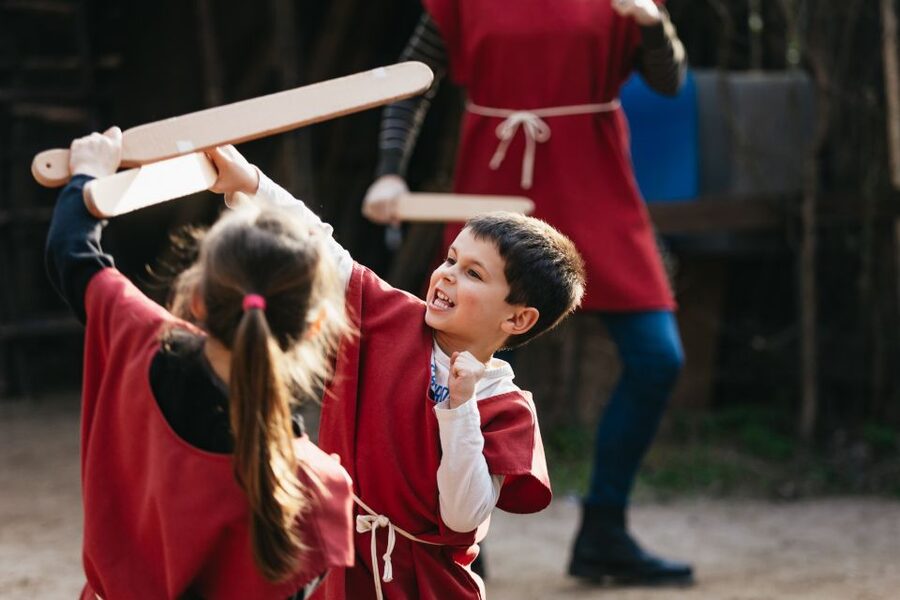
- The weapons are safe for children: Foam swords are used for the final combat, with the instructor guiding the group through controlled movements.
- The small museum adds useful context: You see unusual Roman objects and learn about gladiators and soldiers before picking up a weapon.
- Families are the main audience, but adults can join too: Children from about age five appear to enjoy it, and adults can train and fight alongside them.
- The price includes more than training: A museum visit, drinks, gladiator instruction, and a certificate are included.
Why the Appian Way setting matters
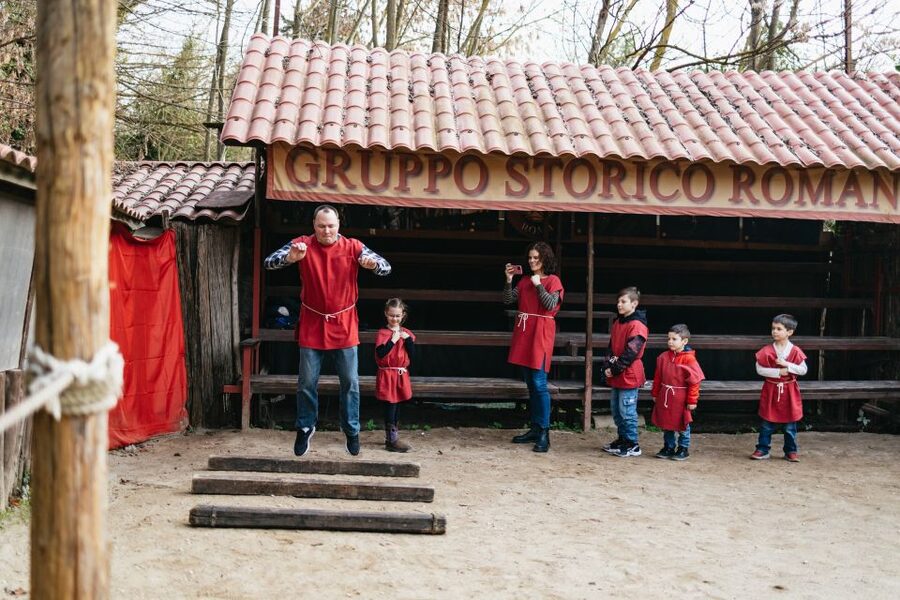
The Gladiator School is located on Rome’s ancient Appian Way, or Via Appia Antica. That location gives the outing a different feel from a standard attraction in the historic center. You are not simply watching a reenactment beside the Colosseum. You are heading out to a dedicated school where the lesson has room for movement, costumes, demonstrations, and an arena-style finale.
The nearest bus stop is Appia Antica-Travicella, served by buses 118 and 218. You meet your instructor at the school, and the activity ends at the same place. Plan the transport carefully, since this is not a tour that begins and ends near the Trevi Fountain or Piazza Navona.
I like the location because it makes the experience feel like a separate half-day outing, even though the actual class lasts two hours. You can pair it with a visit to the Colosseum on the same day, but leave enough time between activities for the bus ride and a break. One family combined the school with an underground Colosseum visit later in the day, which made the connection between training and the arena especially clear.
A few more reviews worth comparing before you book
- Vatican Museums & Sistine Chapel Express 2-Hour Guided Tour
★ 4.5 · 1,037 reviews - Cooking Class 2 Hour Spanish Steps – Fettucine and Tiramisù
★ 5.0 · 298 reviews - Lucca: 2-Hour City Center Walking Tour
★ 4.7 · 1,314 reviews
The museum visit puts the sword lesson in context
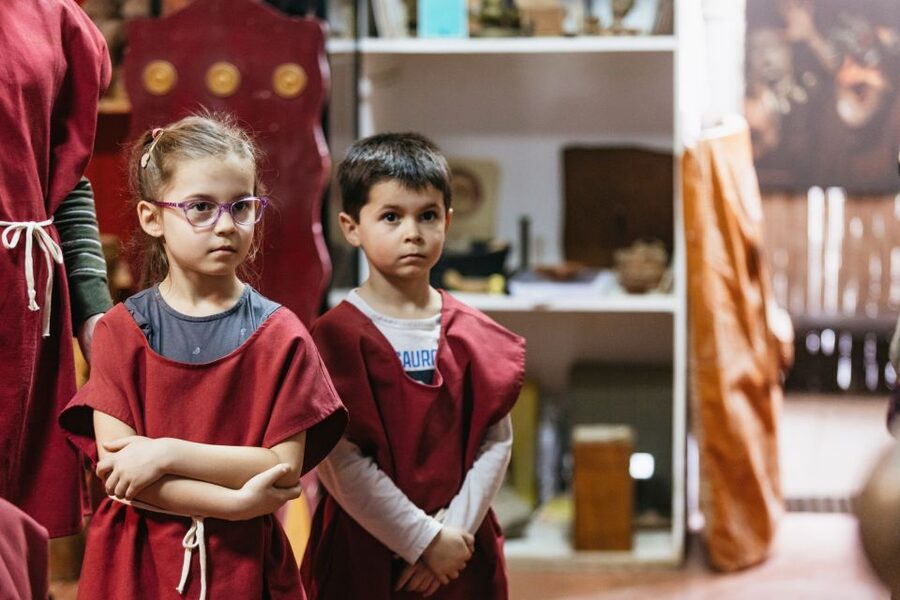
The session begins with an introduction to Roman history and a visit to the school’s museum. The museum is small, but it contains objects connected with gladiators and Roman military life that you may not encounter in a regular museum visit.
This first section matters because the class is not only about pretending to fight. You learn about the life of a gladiator, the weapons used in Roman combat, and the difference between popular film images and the historical reality. The instructor also explains aspects of Roman soldiers and military discipline.
For children, the museum works best because the history leads directly into an activity. They can see weapons and armor, then try related movements themselves. The instructor keeps the presentation active, and families have described the balance as just right: enough information to teach something, but not so much that young children lose interest.
Adults should pay attention here, too. The school’s approach is not built only around the Hollywood version of gladiators. The aim is to show how the fighters trained, how weapons worked, and what life in imperial Rome could be like. You will not get a full academic seminar in two hours, but you should leave with more than a few photo opportunities.
Tunics, weapons, and the first sword drills

After the introduction, you put on a gladiator tunic and begin the practical part of the class. The instructor demonstrates basic sword-fighting techniques and explains how to handle Roman weapons safely.
The exact pace can vary with the age and excitement level of the group. Children may need extra help with stance, focus, and controlled movement, while adults often enjoy learning the same basic techniques alongside them. The instructors are used to handling a mixed group, and the strongest praise goes to their patience, energy, and ability to keep everyone involved.
Names that have received especially warm mention include Mirko, Cena, Patriccio, Olympus, Marko, and Sina. Their teaching style is described as friendly, humorous, encouraging, and well informed. That matters here because the instructor is not simply giving directions. He has to manage a group of children and adults, explain unfamiliar movements, maintain safety, and keep the historical material interesting.
The lesson is active for much of the two hours. One family expecting a mostly instructional session found far more actual fighting practice than anticipated. That is useful to know if you are deciding between this and a conventional museum tour. You will spend time learning, but you will also spend a good deal of time moving, practicing, and preparing for the final contest.
The arena battle is the payoff

The class finishes with a gladiator battle in an arena-style setting. Foam swords are used, making the combat suitable for children and safe when everyone follows the instructor’s rules.
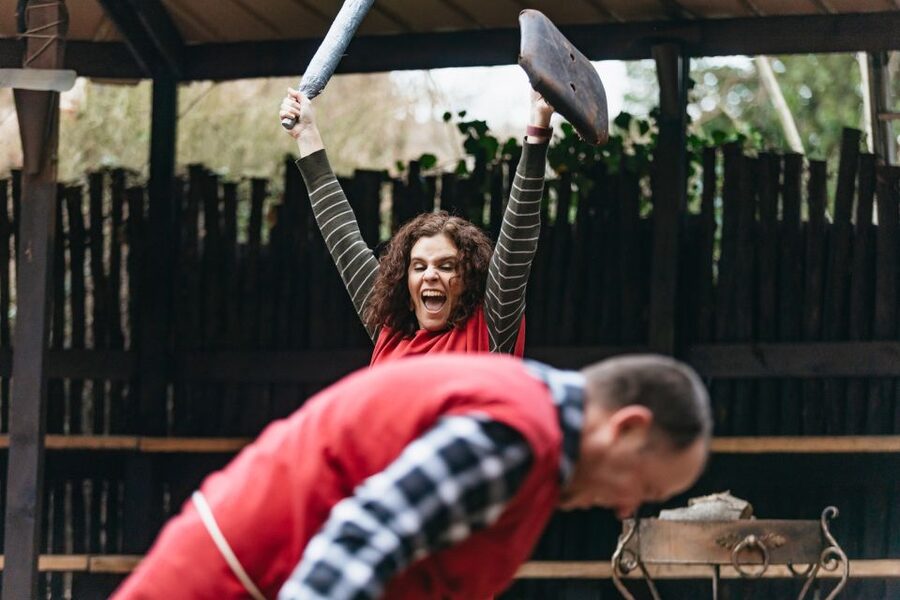
This is where the experience becomes memorable. You may be paired with another participant or take part in group combat, depending on the session. Families have enjoyed adults fighting with their children, and one father took particular pleasure in letting his son defeat him in front of the group. The final battle also gives children a clear goal during the earlier training.
The arena setting adds a little ceremony to the event. In one session, children fought in front of an Emperor figure, which helped turn a simple practice drill into a story they could retell later. You are not receiving professional combat training, of course. The point is controlled play, basic technique, and a vivid way to connect with Roman history.
The battle is also a good reason for adults to participate rather than simply watch. Parents and companions do not need to buy a ticket if they do not attend the course, but spectators may miss the most entertaining part. If your children are old enough and eager to join, I would encourage at least one adult in the family to take part.
A different sort of day out around Rome:
- Vatican: Museums & Sistine Chapel Entrance Ticket
★ 4.5 · 144,003 reviews - Vatican Museums & Sistine Chapel Tour with Optional Basilica
★ 4.3 · 67,413 reviews - Colosseum, Roman Forum & Palatine Guided Tour
★ 4.7 · 63,148 reviews - Vatican Museums, Sistine Chapel & St Peter’s Basilica Guided Tour
★ 4.5 · 39,149 reviews
What makes this work for children

The activity has been particularly successful with children aged roughly five to fourteen. Young participants have enjoyed the costumes, weapons, and final battle, while older children have stayed engaged because the training feels like a real lesson rather than a simple dress-up activity.
The instructors appear to make a point of helping children feel capable. One child was singled out for doing well and left feeling accomplished. That kind of encouragement can matter more than perfect sword technique. A hesitant child may need a little time to join in, but the format gives everyone a chance to watch, practice, and try again.
The school also suits families with several children of different ages. Groups have included children as young as five, teenagers, parents, and older adults. One family spanning three generations, from children to a seventy-six-year-old grandparent, enjoyed the activity together.
I would be more cautious about booking it for a child who dislikes costumes, physical games, or group participation. The course is not a quiet educational visit. It includes noise, movement, pretend combat, and an instructor who actively draws people into the action.
Why adults should not sit this one out

It is easy to assume this is only a children’s attraction. That would be a mistake. Adults can take part in the sword training and final battle, and many families have enjoyed the activity more because parents joined their children.
The adult appeal comes from the combination of humor, movement, and historical detail. You learn enough about Roman weapons and gladiator life to give the activity substance, then get the chance to use a safe version of what you have seen.
Adults who enjoy Roman history may appreciate the contrast with the Colosseum. At the amphitheater, you look at the architecture and imagine the people who fought there. At the school, you handle the equipment and practice the movements, which makes the ancient spectacle easier to picture.
That said, the school is not a serious martial arts course or an archaeological field program. If you want detailed technical instruction, this may feel light. If you want a lively family activity with credible historical content, it hits the mark.
Heat, shade, water, and mosquitoes
Rome can be very hot, and the school is outdoors for much of the training. Participants have found shady areas and received cold water, which is important on summer afternoons. Drinks are included, but you should still dress for heat and wear comfortable shoes.
Bring insect repellent. Mosquitoes have been a clear annoyance for at least some groups, especially around the Appian Way. This is one of those small preparations that can make the difference between enjoying the battle and spending it swatting at your legs.
The activity is wheelchair accessible, though the supplied information does not describe the exact surfaces or route between each part of the school. If you use a wheelchair, confirm the current arrangements with the provider before booking, particularly for the arena and museum areas.
Is $135.94 per person fair?
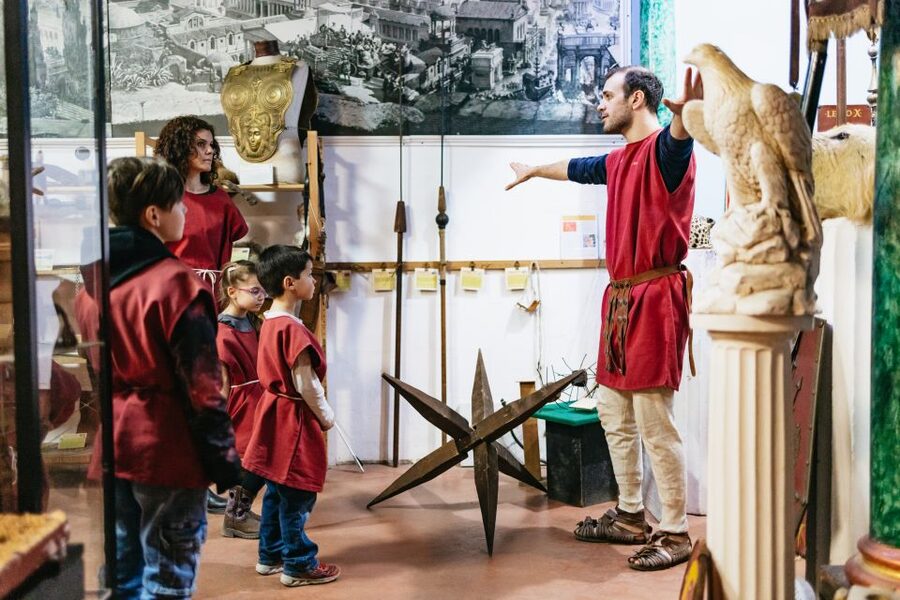
At $135.94 per person, this is not a low-cost add-on. A family of four will spend more than $500, so the price deserves a clear look.
The fee includes the museum visit, the two-hour gladiator lesson, drinks, and a certificate. You are also paying for a specialized setting, a dedicated instructor, costumes, weapons, group organization, and the final arena activity. For a child who loves Roman history or dramatic play, the value can be strong because the experience may become one of the most memorable parts of the trip.
The value is weaker if you are mainly looking for a short photo stop or if only one family member is interested. Spectating parents do not need a ticket if they do not participate, which helps reduce the total cost. Still, the activity works best when the people who are excited about it actually join the class.
I would compare it with the cost of another major attraction rather than with a free walking tour. This is a special-interest activity, not a general sightseeing tour. For families who want something active after several churches, ruins, and museums, two hours of participation can be worth the premium.
Timing and transport advice
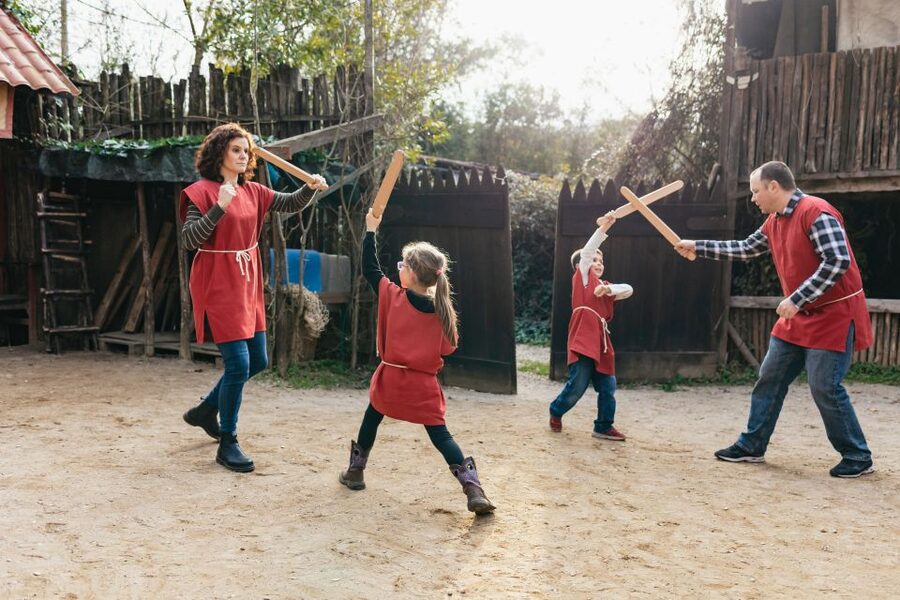
The activity lasts two hours, but you should allow extra time for reaching the Appian Way and returning to the center. Starting times vary, so check availability before planning the rest of your day.
Buses 118 and 218 stop at Appia Antica-Travicella, the nearest stated stop. Since the experience begins and ends at the school, you do not need to arrange a complicated one-way transfer. Still, check the bus timing and leave a cushion, especially if you are traveling with young children.
The Appian Way is a good change of pace from central Rome, but it is not the easiest location to fold into a tightly packed sightseeing schedule. I would avoid booking the class immediately before a timed Colosseum entry unless you have allowed plenty of room for delays.
Booking, cancellation, and language details
The instructor teaches in English or Italian. That makes the activity suitable for international families, and the physical demonstrations help children follow along even if their Italian is limited.
You can cancel up to 24 hours before the activity for a full refund. A reserve-now, pay-later option is also available, which is useful when your Rome schedule is still changing. Check the available start times and current booking terms before paying.
The school welcomes companions who only want to watch without buying a course ticket. If the whole family wants to train, book a place for each person taking part.
Who should book the Gladiator School?
I would recommend it most strongly to families with children from about five through the early teenage years, especially children who enjoy stories, costumes, history, and physical play. It is also a good choice for adults who want to join in rather than spend another afternoon looking at ruins from behind a barrier.
The activity suits a mixed-age family unusually well. Small children can enjoy the costume and simple movements, older children can focus on technique, and adults can take part in the final battle. The instructor’s role is central, so an energetic teacher can make the session excellent.
I would skip it if you want a quiet, scholarly Roman history tour, a large archaeological museum, or a serious weapons class. The museum is small, the combat is staged, and the tone is playful. That is precisely why it works for many families, but it will not suit every visitor.
Should you book it?
Book this if you want Rome to feel active and personal. The strongest part is the balance: you learn about gladiators and Roman soldiers, handle safe weapons, practice sword movements, and finish with a battle you can share with your family.
The price is high, and the Appian Way requires some planning. Yet for children who have already seen the Colosseum, this school can turn distant Roman history into something they can understand through movement and play. Bring water-friendly clothing for the heat, insect repellent for the mosquitoes, and a willingness to look slightly ridiculous with a foam sword.
FAQ
How long does the Rome Gladiator School experience last?
The activity lasts two hours. Starting times vary, so check availability when booking.
Where does the Gladiator School meet?
You meet the instructor at the Gladiator School of Rome on the Appian Way, or Via Appia Antica.
Which bus stops near the school?
The nearest stated bus stop is Appia Antica-Travicella. Buses 118 and 218 serve the stop.
What is included in the price?
The price includes a museum visit, gladiator training, drinks, and a certificate.
Are children allowed to participate?
Yes. The activity is suitable for both children and adults. The supplied information and participant experiences indicate that children as young as five have taken part.
Are the weapons safe?
The training is presented as safe, and the final battle uses foam swords.
Can parents watch without taking the course?
Yes. Parents and companions do not need to pay for a ticket if they do not attend the course.
Is the activity wheelchair accessible?
Yes, the activity is listed as wheelchair accessible. For detailed information about surfaces and access between areas, contact the provider before booking.
What languages does the instructor speak?
Instruction is available in English and Italian.
Just added around Rome
- Rome City, Pantheon, and Trevi Fountain Walking Tour★ 5.0 · 249 reviews
- Rome: Skip the line Vatican Museums & Sistine Chapel Tour★ 4.2 · 251 reviews
- Rome: Tivoli Day Trip with Villa d’Este and Villa Adriana★ 4.5 · 251 reviews
- Transfer Rome center – Ciampino Airport★ 4.5 · 251 reviews
- Rome: Cannondale E-Bike Evening Tour with Optional Dinner★ 4.9 · 251 reviews
- VIP Colosseum, Roman Forum & Palatine Hill & Special Access Sites★ 4.5 · 252 reviews
- Private Vatican Museums Hidden Gems Tour with Optional Pick-Up★ 5.0 · 253 reviews
- Vatican Museums & Sistine Chapel Skip-the-Line Guided Tour★ 4.6 · 254 reviews
2-Hour Experiences, compared.


Vatican Museums & Sistine Chapel Express 2-Hour Guided Tour
Read our review →


2-Hour Guided Walking Tour of the Historical Center
Read our review →
Pompeii 2h Small-Group Tour with Expert Archaeologist
Read our review →Browse the lists this tour appears in