
Review · WALKING TOURS
Genoa: 2-Hour Guided Walking Tour of the Historical Center
Genoa rewards curious walkers. I like this tour for its small-scale look at the Caruggi, where narrow lanes, hidden squares, and grand palaces sit side by side. I also like the included same-day museum admission, a strong bonus at $16. The main catch is the bilingual format: English and Italian explanations take longer, so the pace can feel measured.
You meet at the Tourist Information Center on Via Garibaldi 12red, then walk through Genoa’s historic center with a live guide in English and Italian. Guides such as Irene, Roberta, Daniel, Barbara, Marina, and Paola have been praised for clear explanations and local tips. Just remember that the museum visits are independent after the guided walk, not escorted tours.
In This Review
- Key points at a glance
- Starting on Via Garibaldi, Genoa’s grandest street
- Finding meaning in the Caruggi
- San Matteo Square and the Doria family
- San Lorenzo Cathedral and Genoa’s sacred treasures
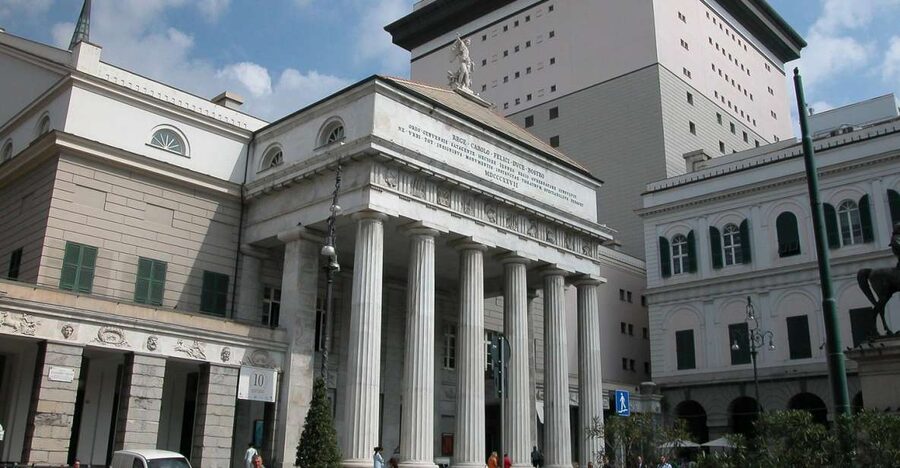
- The Doge Palace and Opera House along the route
- The Strada Nuova Museums: your best post-tour bonus
- Sant’Agostino Museum and medieval Genoa
- How the bilingual format affects the experience
- Pace, group size, and physical demands
- Why $16 is a strong value
- Who should book this Genoa walk?
- Should you book the Genoa historical center tour?
- FAQ
- How long does the Genoa walking tour last?
- Where does the tour begin?
- What languages does the guide speak?
- Are museum admissions included?
- Do I visit the museums with the guide?
- When must I visit the museums?
- How much does the tour cost?
Key points at a glance
- The Caruggi reveal Genoa’s medieval character: Narrow lanes make the historic center difficult to understand from a map, but a guide gives the maze shape and meaning.
- Via Garibaldi delivers the grand architecture: The Strada Nuova and its Palazzi dei Rolli show how Genoese aristocrats entertained important visitors in the 16th and 17th centuries.
- San Matteo Square tells a Doria family story: This compact square links architecture with the power of Genoa’s leading family.
- San Lorenzo Cathedral adds art and faith: The Gothic church contains important religious objects, including relics connected with St. John the Baptist.
- Your $16 includes two museum entries: You can visit the Strada Nuova Museums and Sant’Agostino Museum on your own after the walk.
- The tour works best as an orientation: It gives you the city’s framework, then leaves you time to return to places that deserve a closer look.
Starting on Via Garibaldi, Genoa’s grandest street
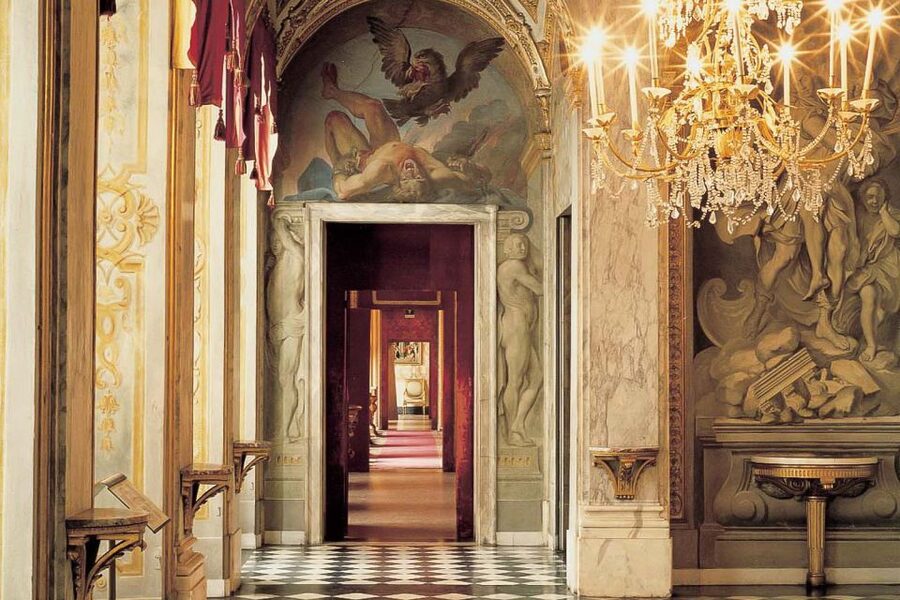
The tour begins at the Tourist Information Center on Via Garibaldi, a convenient place to start because the street itself is one of Genoa’s major sights. Known historically as Strada Nuova, it was built for the city’s powerful families and lined with elegant residences.
These are the Palazzi dei Rolli, a UNESCO World Heritage Site. The name refers to official lists, or rolls, of aristocratic palaces selected to host visiting dignitaries. Genoa had no single royal palace for every important arrival, so the city relied on these private homes.
That arrangement tells you something important about Genoa. This was a maritime power shaped by trade, finance, shipping, and international connections. The palaces were not simply private homes. They also served as public stages where wealthy families displayed their status.
Your guide points out the architectural details and explains how the residences fit into the city’s political life. You should not expect a full interior tour of every palace during the walk. The value here is learning how to read Via Garibaldi before you explore its museums independently.
The Strada Nuova Museums occupy several of these historic buildings. Their collections include Italian and foreign art from the 15th through 19th centuries, with particular strength in Genoese and Flemish works. At the end of the walk, the guide introduces the museums, then you continue alone.
More ancient sites and ruins:
- Venice: St. Mark Basilica Ticket, Audioguide+History Gallery
★ 3.9 · 4,780 reviews - Venice’s Best: Basilica, Doge’s Palace, Gondola & History Gallery
★ 4.5 · 2,478 reviews - Historic Milan Tour with Skip-the-Line Last Supper Ticket
★ 4.5 · 1,976 reviews
Finding meaning in the Caruggi
From the broad elegance of Via Garibaldi, the experience moves into the Caruggi, Genoa’s famous narrow alleys. The contrast is the point. One minute you are looking at aristocratic façades, and the next you are threading through lanes where the city feels compressed, vertical, and older than its grand avenues suggest.
Genoa’s historic center is described as the widest in Europe, but it does not feel wide when you are inside it. The alleys twist and narrow. Small squares appear unexpectedly. Churches, portals, old walls, and streets with unusual angles reward attention.
This is where a guided walk earns its keep. On your own, you can certainly wander, but you may pass a significant building without knowing why it matters. A local guide can connect the physical setting with stories about Genoa as a Roman port, a medieval trading center, and a major Mediterranean power.
Past guides have added personal touches, including suggestions for good chocolate, ice cream, coffee, and places to eat. Those details matter because the Caruggi are best enjoyed slowly. The tour gives you a route and a basic understanding, then you can return later for your own unhurried wandering.
The walk is not designed to cover every corner of the old town. It focuses on the main sights and the connections between them. That means you will see a good deal without turning the morning into a forced march.
San Matteo Square and the Doria family
San Matteo Square is one of the tour’s most revealing stops. It is compact, handsome, and closely tied to the Doria family, one of Genoa’s most important ruling families.
The square helps explain how power worked in the old republic. Genoa was not shaped only by public institutions. Wealthy families left their mark through churches, residences, and urban spaces. San Matteo gives you a concentrated example of that relationship.
Your guide uses the square to place the Doria family within Genoa’s wider story. This is more useful than simply hearing a list of names and dates. You begin to see the old center as a collection of family territories, religious foundations, commercial routes, and civic buildings.
Because the square is small, it is also a practical place to listen. Several people have praised the guides for speaking clearly and including everyone in the group. That is especially helpful when the tour includes both English and Italian speakers.
San Lorenzo Cathedral and Genoa’s sacred treasures
San Lorenzo Cathedral brings the tour into the religious heart of the city. Its Gothic design gives you a strong change of mood after the secular palaces and tight lanes.
The cathedral houses important religious objects. One of the stories associated with Genoa concerns relics of St. John the Baptist, brought back after the Crusades in the 12th century. A guide can give that story a local setting and explain why the cathedral mattered so much to Genoese identity.
The visit is part of the walking route, so you should think of it as an informed introduction rather than a long, quiet study of every chapel and artwork. If the cathedral catches your interest, use the orientation to plan a return visit at your own pace.
I find this kind of stop especially useful early in a Genoa visit. The cathedral connects the city’s religious life with its maritime past, international contacts, and medieval wealth. It also gives you a landmark around which to organize further sightseeing.
More guided walks:
- Taste Genoa: A Full Meal Walking Food Tour by Do Eat Better
★ 5.0 · 509 reviews - Milan: Guided Walking Tour & Last Supper Visit with Ticket
★ 4.7 · 5,409 reviews - Naples: Street Food Walking Tour with Local Guide
★ 4.8 · 4,256 reviews - Venice Walking Tour and Gondola Ride
★ 3.5 · 3,630 reviews
The Doge Palace and Opera House along the route
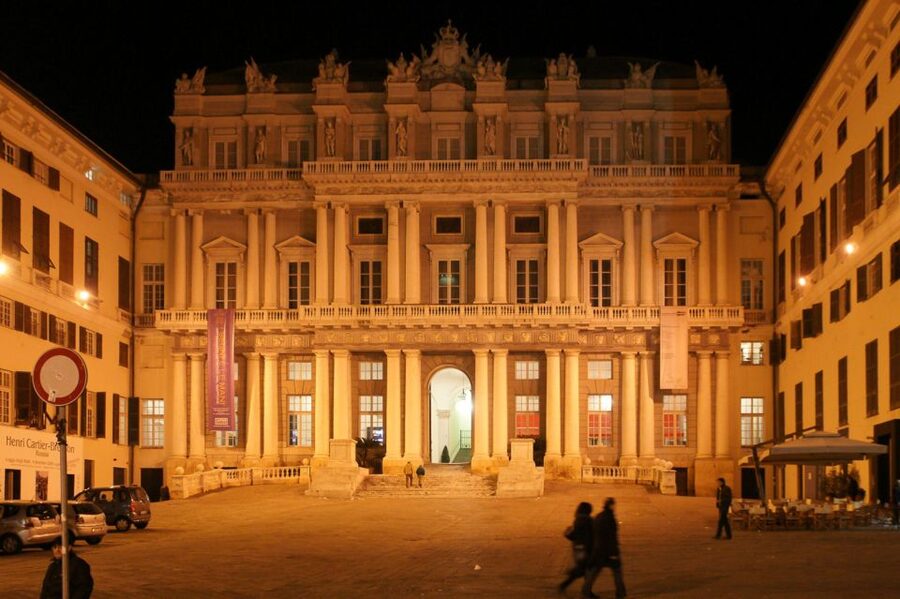
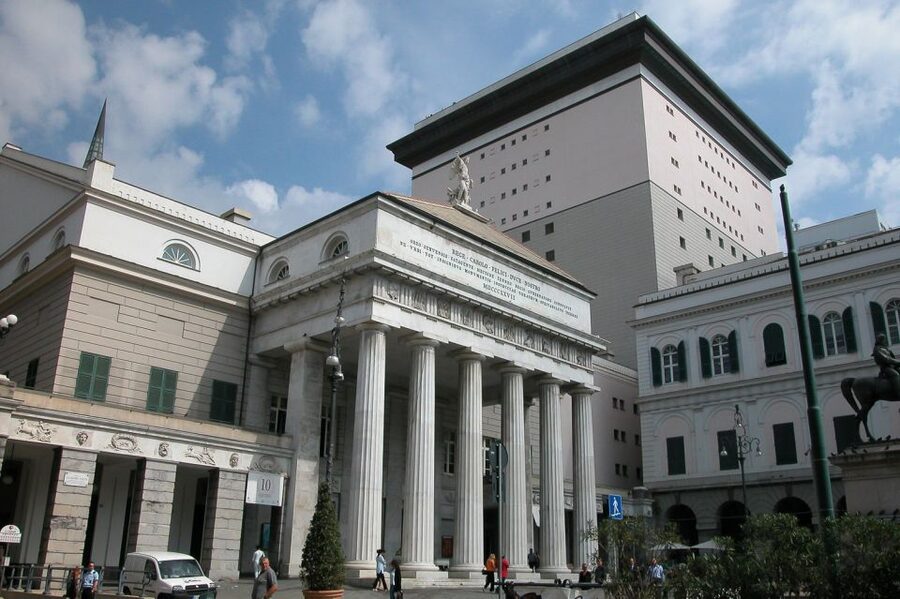
The itinerary also takes in the Doge Palace and the Opera House. These stops help bridge Genoa’s political and cultural stories.
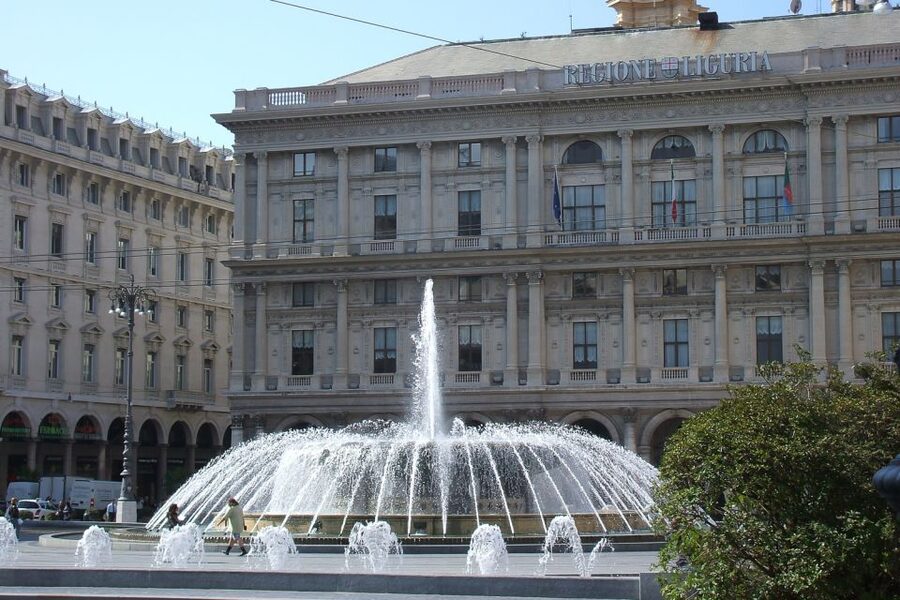
The Doge Palace represents the civic side of the old republic. Genoa’s government, powerful families, and commercial interests were closely linked, and the palace gives the guide a natural place to explain that system.
The Opera House adds another layer. It reminds you that Genoa was not only a port and trading center. It also developed a public cultural life shaped by music, performance, and the city’s wealthy patrons.
The guide does not promise an interior visit to each of these sites. Instead, you see them as part of the historical center and learn how they fit into the city. That distinction is important when planning your day. This is a walking introduction with museum access afterward, not a series of extended indoor admissions.
The Strada Nuova Museums: your best post-tour bonus
The included admission to the Strada Nuova Museums is one of the strongest reasons to book this walk. After the guided portion, you can explore the museums independently on the same day.
The museums are housed in Genoa’s grand palace district and contain paintings by Italian and foreign artists from the 15th to 19th centuries. The Genoese and Flemish schools receive notable representation, so the collection offers more than a quick collection of local curiosities.
The timing works well. The guide first explains the street and its palaces, then you can enter with a better sense of place. You are no longer looking at an old façade as an isolated monument. You understand that the building belonged to a system of aristocratic residences and public hospitality.
Plan enough time after the walk if art is a priority. The tour itself lasts two hours, but the museum visit is not folded into that guided time. You need to enter independently, and the visit to both the Strada Nuova Museums and Sant’Agostino Museum should take place on the same day.
This arrangement gives you freedom, but it also requires a little self-management. The guide will introduce the museums, yet you should not expect someone to lead you from room to room or explain each painting.
Sant’Agostino Museum and medieval Genoa
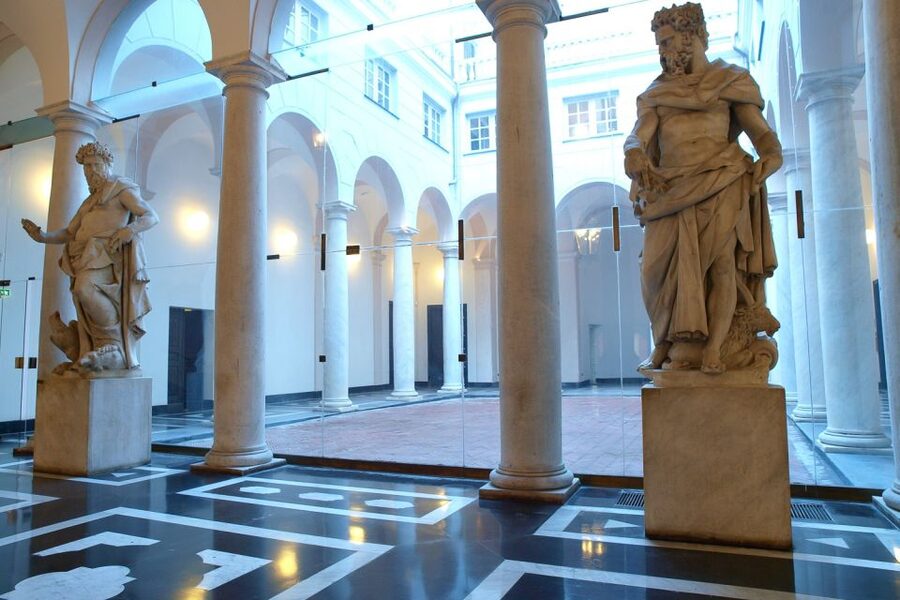
Sant’Agostino Museum offers a different experience from the palace museums. It occupies the spaces of a triangular cloister and the largest preserved Gothic church in the complex.
Its collection focuses on significant medieval works from Genoa. If the Strada Nuova Museums show aristocratic taste across several centuries, Sant’Agostino brings you closer to the religious and artistic world of medieval Genoa.
The building itself is part of the appeal. You are not looking at medieval objects in a neutral modern room. The cloister and Gothic church create a setting that helps you picture the period.
Again, this is an independent visit after the walk. You can spend more time with the pieces that interest you and move quickly through the rest. For some people, that freedom is ideal. If you prefer detailed commentary at every stop, you may find the museum portion less satisfying than the guided streets.
How the bilingual format affects the experience
The guide speaks English and Italian, and the tour takes place in both languages. This makes the experience accessible to mixed-language groups, but it naturally adds pauses.
Past participants have described guides who gave equal attention to both languages. Barbara, Anna, Paula, and others were praised for switching between English and Italian without treating one group as an afterthought. That is a real strength.
Still, you should expect the tour to move more slowly than a single-language walk. One person noted that waiting through the second explanation created time to take photographs. Another felt that a single language would have been more efficient.
I see the bilingual format as a tradeoff rather than a flaw. If you want a fast survey with constant movement, it may test your patience. If you want time to look up at façades, take photographs, and absorb the setting, the pauses can work in your favor.
One practical point: stay close enough to hear. Some past comments praised the guides’ clear voices, while another suggested that guides avoid turning away from the group while pointing out buildings. A microphone or audio equipment is not specified, so a crowded group or noisy street could make listening harder.
Pace, group size, and physical demands
The walk covers narrow streets and historic urban spaces, not a long-distance route across Genoa. Several guides have been praised for setting a comfortable pace and including people with different physical limits.
The route does not cover a huge amount of ground, but that is part of its purpose. You stop often to discuss buildings, squares, and stories. The goal is to understand the old center, not simply count how many streets you crossed.
Group size can vary. Some past groups were very small, including a pair or a group of six, while another had about 15 or 16 people. A smaller group makes it easier to ask questions and hear the guide. A larger group may require you to stay alert at street corners and gather closely during explanations.
You should wear comfortable shoes. The supplied details do not specify stairs, pavement conditions, or a precise accessibility standard, so I would not assume the route suits every mobility need. If you have physical limitations, contact the provider before booking and ask about the exact route for your date.
The tour may also run longer than two hours. Some people appreciated the extra time, while others should plan carefully if they have a cruise departure, train, or timed museum entry afterward.
Why $16 is a strong value
At $16 per person, this tour offers a good return for a first look at Genoa. You receive two hours with a live guide plus access to the Strada Nuova Museums and Sant’Agostino Museum on the same day.
The museum admission changes the value calculation. Even if you treat the walk as a basic orientation, the included entries give you a substantial follow-up activity without another booking.
You also avoid spending your first hours in Genoa guessing where the old center begins and ends. The Caruggi can be confusing, and the important sights are easy to miss when you wander without context.
The limitation is that $16 does not buy a private tour or extended museum commentary. The guide introduces the museums, but you explore them alone. The bilingual format also means some of your two hours is spent hearing the same information in another language.
For most first-time visitors, that is a fair exchange. You get the essential framework, local context, and the freedom to return to the parts that interest you.
Who should book this Genoa walk?
I would recommend it to first-time visitors who want to understand the historic center before exploring independently. It is especially useful if you are arriving by cruise, since the meeting point on Via Garibaldi is within walking distance of the port area according to past visitor directions.
It also suits anyone who enjoys architecture, city history, and local stories more than a checklist of interiors. The combination of Rolli palaces, family power, cathedral treasures, medieval lanes, and museums gives you a clear introduction to Genoa’s many sides.
Families may appreciate the two-hour length, though the narrow streets and walking pace still require comfortable footwear and attention. The experience can also work well for visitors with limited time, provided you leave room afterward for the independent museum visits.
Art lovers should book with a plan for the rest of the day. The included museums are not an afterthought, but you need to visit them on the same day and allow time to explore without the guide.
You may want a different format if you dislike bilingual tours, need a fully accessible route, or want detailed guided commentary inside every museum. In those cases, check the route and language arrangement before paying.
Free cancellation up to 24 hours before the start and the option to reserve now and pay later make the booking less rigid. Starting times vary, so check the available departure when planning around trains, ships, or other timed visits.
Should you book the Genoa historical center tour?
Book it if you want a well-priced introduction to Genoa that combines guided streets with useful museum access. The best parts are the Caruggi, the Rolli palaces, San Matteo Square, and the way local guides connect architecture with the city’s political and religious past.
Go in expecting a bilingual walk, a steady pace, and independent museum visits afterward. If that suits your style, $16 is hard to argue with. I would schedule it near the start of your stay, then use the rest of the day to revisit Via Garibaldi, study the museum collections, or follow the food tips offered along the way.
FAQ
How long does the Genoa walking tour last?
The guided walking tour lasts two hours. Some past tours ran a little longer, so avoid scheduling an immediate departure afterward.
Where does the tour begin?
The meeting point is the Tourist Information Center at Via Garibaldi 12red in Genoa.
What languages does the guide speak?
The live guide speaks English and Italian. The tour is bilingual, so explanations are given in both languages.
Are museum admissions included?
Yes. The experience includes access to the Strada Nuova Museums and Sant’Agostino Museum.
Do I visit the museums with the guide?
No. At the end of the walking route, the guide introduces the Strada Nuova Museums, and you continue to the museums independently.
When must I visit the museums?
You should visit both the Strada Nuova Museums and Sant’Agostino Museum on the same day as the walking tour.
How much does the tour cost?
The listed price is $16 per person. You can cancel up to 24 hours in advance for a full refund, and a reserve now, pay later option is available.
More 2-Hour Experiences
- Lucca: 2-Hour City Center Walking Tour
★ 4.7 · 1,314 reviews - Milan Duomo and Rooftop 2-Hour Guided Tour
★ 4.6 · 1,076 reviews - Vatican Museums & Sistine Chapel Express 2-Hour Guided Tour
★ 4.5 · 1,037 reviews - Florence: 2-Hour Guided Sightseeing Bike Tour
★ 4.5 · 1,004 reviews
Just added around Genoa
- Genoa: Aquarium of Genoa & City of Children and Youth Ticket★ 4.5 · 258 reviews
- Genoa: Aquarium & Christopher Columbus’ House Entry Tickets★ 4.4 · 258 reviews
- City Sightseeing Genoa Hop-On Hop-Off Bus Tour★ 3.0 · 259 reviews
- Genova: Segway Tour★ 4.9 · 275 reviews
- Genoa: The City of Children and Young Museum Entry Ticket★ 4.1 · 303 reviews
- Homemade Pasta and Pesto Class with a Local Chef in Genoa★ 5.0 · 305 reviews
- Genoa: Aquarium and FantaCinema Combined Ticket★ 4.6 · 314 reviews
- Taste Genoa: A Full Meal Walking Food Tour by Do Eat Better★ 5.0 · 509 reviews
Walking Tours, compared.

Guided Walking Tour & Last Supper Visit with Ticket
Read our review →
Rialto Bridge & Offbeat Unusual Venice Walking Tour
Read our review →

Private 3 hrs Venice Tour: St Mark’s, Walking tour & Boat tour
Read our review →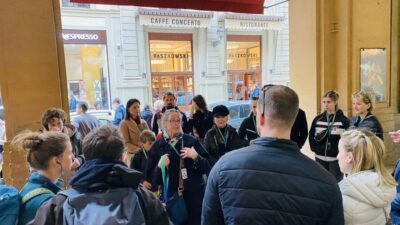

Skip the line: Uffizi and Accademia Small Group Walking Tour
Read our review →Browse the lists this tour appears in