
Review · MUSEUMS
Naples: National Archaeological Museum of Naples Guided Tour
Ancient art makes more sense with a guide. This two-hour visit to Naples’ National Archaeological Museum brings order to a huge collection of Greek and Roman sculpture, Pompeii frescoes, and Herculaneum mosaics. I especially like the archaeologist guide and the chance to connect museum pieces with what you may have seen at Pompeii. I also like the skip-the-line entry, since it removes one bit of Naples guesswork.
The main drawback is time. Two hours gives you a strong introduction, but the museum is too large to cover every floor or collection. You should also know that large bags, luggage, strollers, and wheelchairs are not permitted, and some past visitors found it hard to hear when audio equipment was not working well.
In This Review
- Key points at a glance
- Why this museum deserves a guided visit
- Meeting the guide outside the ticket office
- Skip-the-line entry and the value of $52
- The Farnese Collection: marble with muscle and drama
- Pompeii and Herculaneum: art preserved by disaster
- Mosaics, frescoes, and the details you might miss
- What the two-hour route can and cannot cover
- Guide quality and listening conditions
- Who should book this museum tour?
- Best timing and planning tips
- Should you book the $52 tour?
- FAQ
- How long does the guided museum visit last?
- Is museum admission included?
- Where does the tour meet?
- What languages are available?
- Is transportation included?
- Can I bring luggage or use a wheelchair?
Key points at a glance
- Farnese masterpieces: See the Farnese Hercules, Toro Farnese, and other major classical sculptures.
- Pompeii and Herculaneum treasures: View frescoes, mosaics, coins, and wall paintings preserved by the eruption of Mount Vesuvius in 79 AD.
- A useful two-hour route: The guide focuses on major rooms instead of leaving you lost in a museum with a very large collection.
- Best after Pompeii: The museum makes much more sense when you have already seen the ancient streets and houses near Vesuvius.
- Archaeological expertise: Guides such as Silvia, Nicoletta, Salvatore, and Carmine have been praised for clear explanations, lively delivery, and helpful answers.
- Simple meeting point: Meet outside the museum ticket office and look for the guide holding an ASKOS TOURS sign.
Why this museum deserves a guided visit
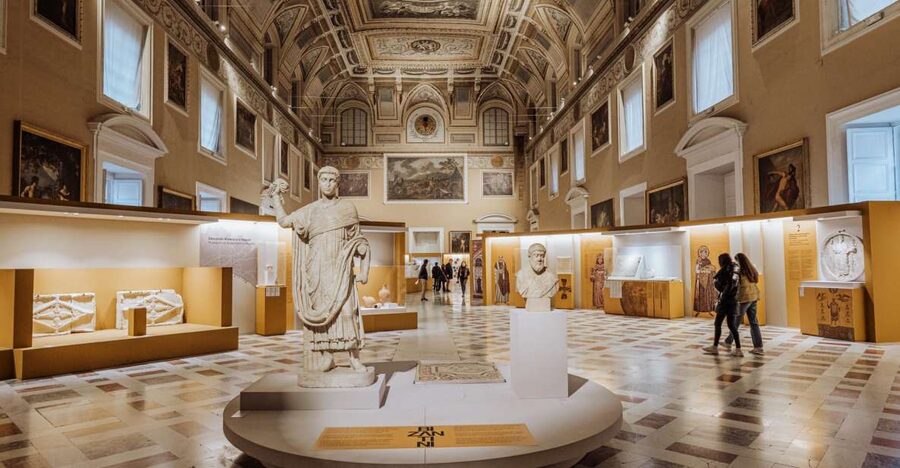
Naples’ National Archaeological Museum is not a small collection that you can casually wander through in half an hour. It holds major Greek and Roman works, objects from Pompeii and Herculaneum, the Farnese Collection, coins, paintings, mosaics, and countless sculptures.
That scale is both the museum’s strength and its chief problem. You can find something extraordinary in nearly every corridor, but it is easy to lose track of what matters most. A guide gives you a route and a story. Instead of seeing a room full of marble figures, you learn which pieces were prized by Roman collectors, how Greek art shaped Roman taste, and why a particular mosaic matters.
I would not treat this as a substitute for exploring the museum on your own. Think of it as a two-hour orientation led by someone who can explain the major works, answer questions, and point out details you might walk past. Afterward, you can decide which rooms deserve a second look.
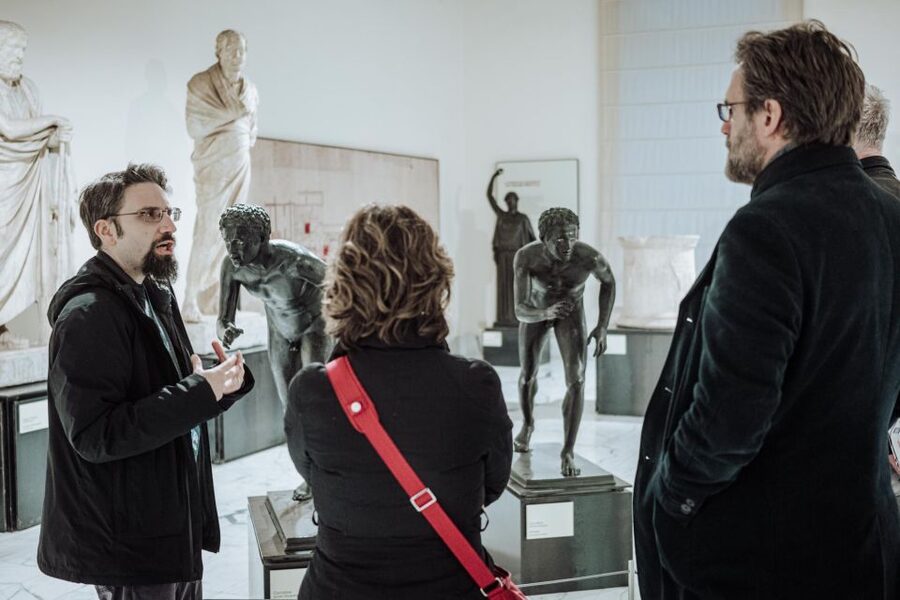
The experience is especially useful if ancient art is not your usual museum subject. A good guide makes statues, wall paintings, and fragments easier to understand without turning the visit into a lecture. Past guides have included working archaeologists and university teachers, which helps explain why the strongest sessions feel more like a conversation than a memorized speech.
More galleries and collections:
- Naples: National Archaeological Museum Ticket & Audio App
★ 4.4 · 617 reviews - Vatican: Museums & Sistine Chapel Entrance Ticket
★ 4.5 · 144,003 reviews - Vatican Museums & Sistine Chapel Tour with Optional Basilica
★ 4.3 · 67,413 reviews
Meeting the guide outside the ticket office
The meeting point is outside the ticket office at the Museo Archeologico Nazionale di Napoli. Look for the guide holding an ASKOS TOURS sign. This is an important detail in a busy city, so arrive with enough time to locate the entrance and identify the group.
The tour includes museum admission and skip-the-line access. Transportation is not included, so you need to make your own way to the museum. Food and drinks are also not included, though a two-hour museum visit does not require much planning on that front.
The tour is offered in English or Italian. The guide leads a walking route through the galleries, so you should expect to be on your feet for much of the visit. Seating is limited, and one past visitor specifically wished there were more chances to rest.
Some sessions have been very small, with groups of five, six, or eight people. That can make it easier to ask questions and stay close to the guide, but group size is not guaranteed. If your departure is larger, the quality of the visit may depend more heavily on the guide’s use of an audio system.
Skip-the-line entry and the value of $52
The price is $52 per person. Adult museum admission is listed as 20 euros, while reduced admission for EU citizens aged 18 to 25 is listed as 2 euros. The rest of your payment covers the guided service and the convenience of skip-the-line entry.
For an adult who wants context, I think the price can be fair. The museum is large, the collections are varied, and the most famous objects are not always easy to interpret on your own. Paying extra for a guide is most worthwhile if you want to understand how the Farnese sculptures relate to Greek originals, or how objects from Pompeii and Herculaneum fit together.
The calculation is less favorable for an eligible reduced-price visitor, since the admission portion is very low. You are paying mainly for the guide, organization, and line access. If you enjoy reading labels at your own pace, you may prefer visiting independently.
There is also a practical benefit. A guided route helps prevent you from spending your first hour trying to find the main galleries. That matters in Naples, where you may have only one museum window between Pompeii, Herculaneum, the historic center, or another day trip.
The booking terms add flexibility. You can reserve now and pay later, and cancellation is free up to 24 hours in advance for a full refund. Check the available starting times before booking because the exact schedule is not fixed in the information provided.
The Farnese Collection: marble with muscle and drama
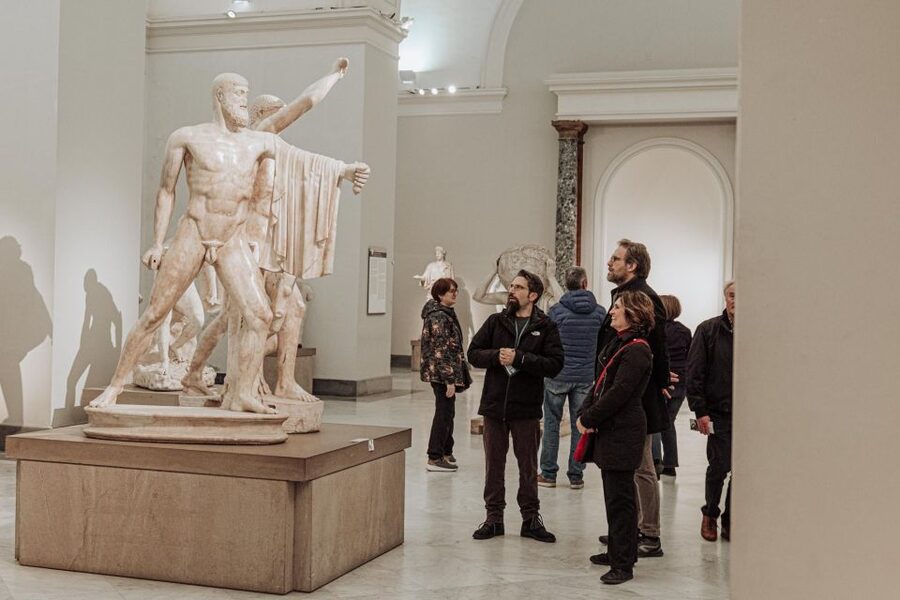
The Farnese Collection is the tour’s grandest opening act. It is famous for classical sculpture, and the route highlights works including the Farnese Hercules and the Toro Farnese.
The Hercules is a powerful example of how ancient sculpture can feel theatrical even when the subject is familiar. A guide can help you look beyond the figure’s size and muscular pose, explaining the visual clues, the story being shown, and the way later generations valued the work.
The Toro Farnese, or Farnese Bull, gives you a different experience. Rather than a single calm figure, it is a complicated composition filled with movement and emotional tension. Its scale and crowded arrangement are much easier to appreciate when someone tells you what to look for.
You will also pass busts of Greek and Roman gods, emperors, and other figures. These corridors can feel repetitive at first, especially if you are not used to classical portraiture. The guide’s job is to help you notice expressions, hairstyles, clothing, and symbols that separate one figure from the next.
This part of the tour suits visitors who want famous sculpture but do not want to spend an entire day studying marble. It also gives you a useful base for understanding how Roman society borrowed, adapted, and displayed Greek artistic ideas.
A few more reviews worth comparing before you book
- Naples: Naples Underground Entry Ticket and Guided Tour
★ 4.4 · 21,781 reviews - Pompeii: Entry Ticket and Guided Tour with an Archaeologist
★ 4.8 · 19,459 reviews - Pompeii: Entry Ticket with Optional Audio Guide
★ 4.2 · 12,360 reviews - Pompeii: Small Group Tour with an Archaeologist
★ 4.8 · 12,264 reviews
Pompeii and Herculaneum: art preserved by disaster
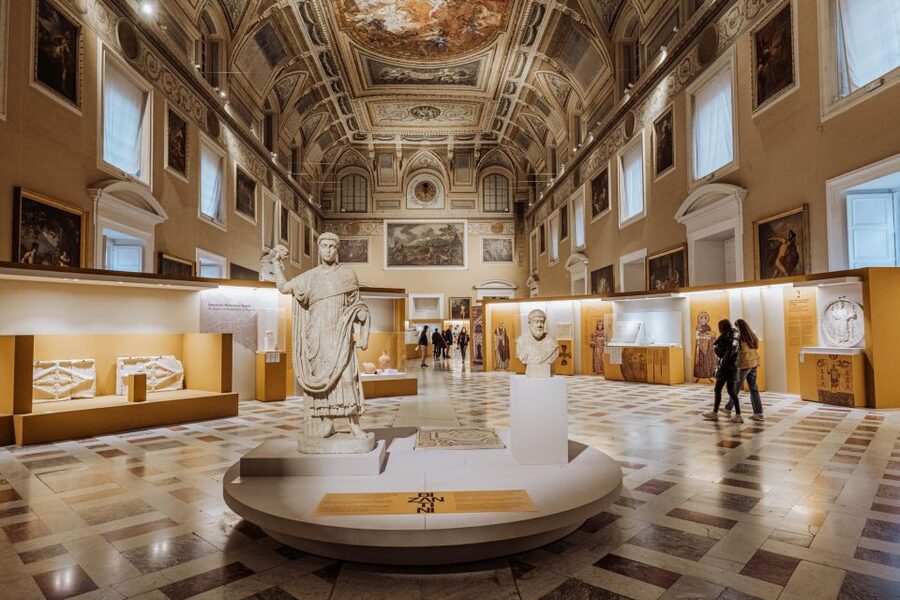
The museum’s connection to Pompeii and Herculaneum is a major reason to book this experience. Frescoes, mosaics, and household objects from the buried cities help you picture ancient life in a way that isolated statues cannot.
The eruption of Mount Vesuvius in 79 AD destroyed homes and public buildings, but it also preserved many painted walls, floors, and objects under volcanic material. At the museum, you see these works away from the open-air ruins, often with better time to study their patterns, colors, and small details.
The Pompeii and Herculaneum material is particularly effective after visiting the archaeological sites. At Pompeii, you may have seen rooms, streets, fountains, and walls in their original setting. The museum then gives you a closer look at the art and objects removed from those places.
Several guides have made this connection a central part of the tour. Silvia, who has worked at Pompeii and taught archaeology at university level, has been praised for explaining how beginners can read archaeological discoveries. Nicoletta has also been singled out for linking museum pieces with visits around the Bay of Naples.
If you have not yet visited Pompeii, the museum still works well. You will simply need to imagine the original setting. If you can choose the order, I would visit Pompeii first, then the museum, and save Herculaneum for another day if your schedule allows.
Mosaics, frescoes, and the details you might miss
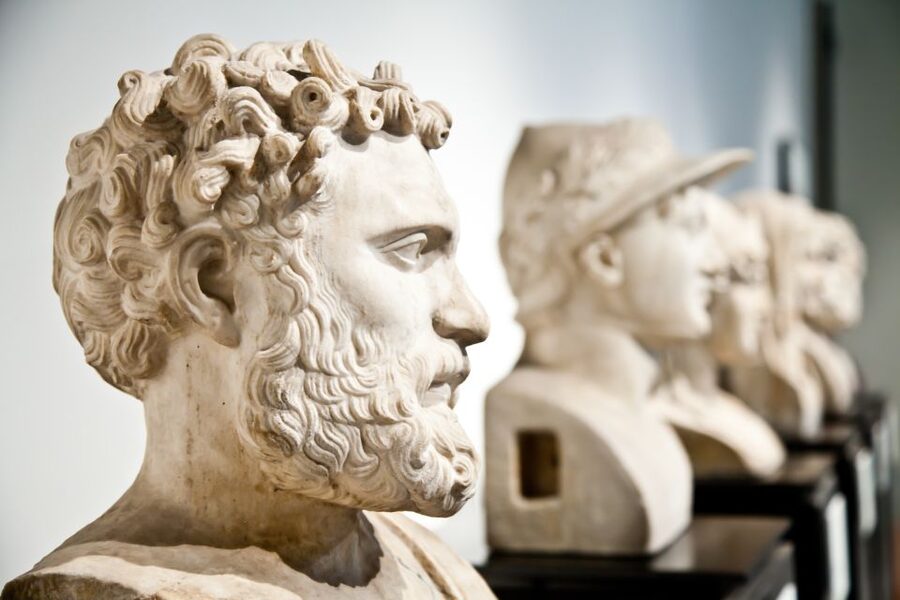
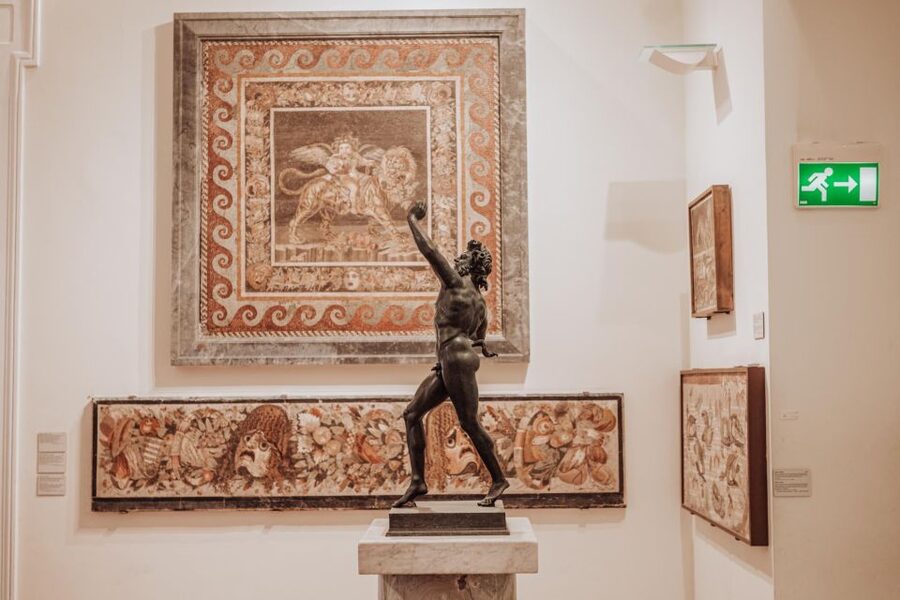
The mosaics are not just colorful floor decorations. They show how wealthy Roman homes used art to mark rooms, entertain guests, and display education or status. Some scenes draw from Greek mythology, while others show animals, theater, food, or everyday subjects.
The famous Alexander mosaic, depicting Alexander the Great and Darius, is one of the museum’s major attractions. It has at times been under restoration, so you should check the current display rather than assume every section will be fully visible. Even when a major work is partly covered, the surrounding collection still offers plenty to see.
Frescoes require a different kind of attention. Their colors and figures survived because of the unusual conditions created by the eruption, but the paintings can be easier to understand when you know the room or house they came from. A guide can explain how wall painting styles changed and why a scene may have been chosen for a particular space.
I like this section for the way it adds human scale to the museum. A giant marble god can impress you, but a painted household room tells you how people lived with art around them. You may find yourself spending more time looking at borders, small animals, faces, and architectural details than at the central scene.
What the two-hour route can and cannot cover
The stated duration is two hours. That is enough for a focused visit to the principal highlights, but not enough for every gallery.
A strong guide will move at a steady pace and choose the stops carefully. Guides such as Adele, Salvatore, Barbara, Laura, and Gennaro have been praised for making the route clear, answering questions, and keeping the presentation lively. The best guides do not simply list dates. They explain why an object matters and connect it to the wider Roman world.
The tradeoff is that you may pass rooms that interest you. If you are especially drawn to coins, wall paintings, or a certain period of Greek art, you may want to return after the guided portion. The museum experience can be much more rewarding when you accept that the tour is an introduction, not the final word.
One useful feature is the option to remain in the museum after the tour and continue independently. You can revisit the Hercules, spend longer with the mosaics, or explore rooms not included in the main route. Confirm current museum rules on the day, but this follow-up time is one of the tour’s strongest practical advantages.
Guide quality and listening conditions
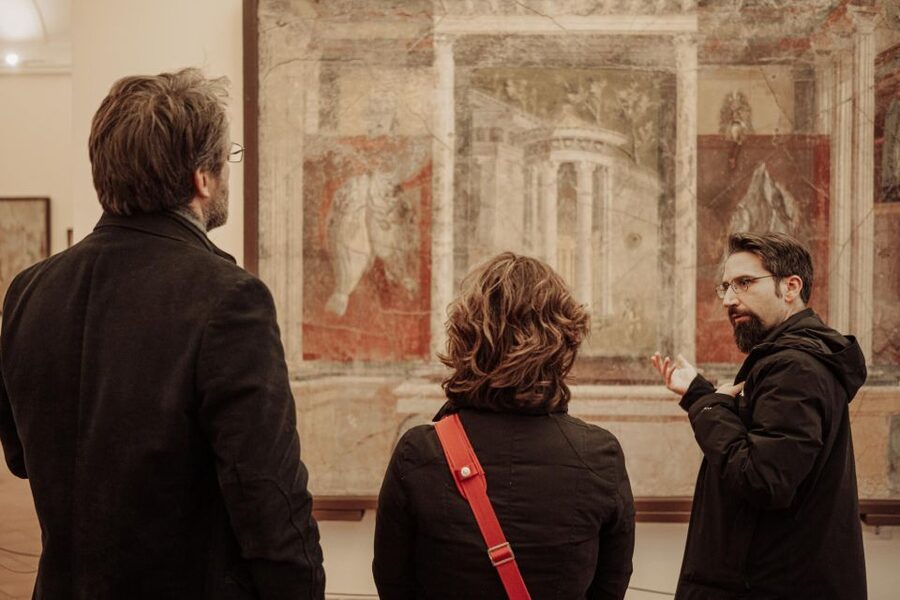
The guide is the heart of this experience. The strongest praise has gone to guides who combine archaeological training with warmth and humor. Carmine has been described as kind and helpful, while Nicoletta, Silvia, Salvatore, Gennaro, and others have been praised for passion and clear explanations.
That variety also means your experience may differ depending on the person leading your departure. Most feedback is highly positive, but a few practical concerns have appeared. One visitor found it difficult to follow a guide with a sore throat, and others said the sound system was weak or that a microphone and headset would have helped.
Some guides provide earpieces, which can be valuable if you have hearing difficulty. Do not assume every tour will use the same equipment, though. If hearing clearly is important for you, stay near the guide and mention the issue at the start.
The tour is available in English and Italian. English clarity has generally been praised, but accents and gallery noise can still affect your experience. This is another reason a smaller group can help, though group size is not promised.
Who should book this museum tour?
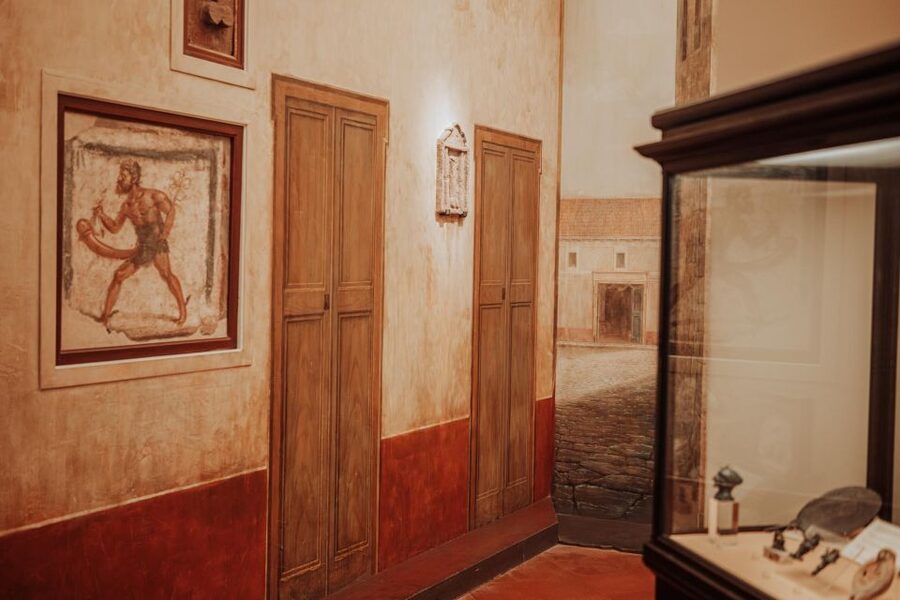
I would recommend it to you if:
- You are visiting Pompeii or Herculaneum and want help making sense of the art removed from the sites.
- You prefer a clear route instead of wandering through a large museum alone.
- You enjoy asking questions about sculpture, mythology, archaeology, and Roman life.
- You have limited time in Naples and want to see the major works efficiently.
- You are new to Greek and Roman art and want an expert to explain the basics.
- You appreciate a lively guide more than a written audio commentary.
Independent visitors may prefer buying museum admission alone. The guided tour does not cover every gallery, and the $52 price is a significant increase over standard adult entry. You may also want to skip it if you need a wheelchair, use a non-folding wheelchair, or plan to carry luggage.
Large bags, oversize luggage, and baby strollers are not allowed. People with mobility impairments may find the walking route unsuitable. Check your personal needs before paying, since the activity is specifically not suitable for wheelchair users.
Best timing and planning tips
If you have already visited Pompeii, schedule the museum afterward if possible. The guide can point out objects that relate directly to houses, mosaics, and paintings you have just seen in place.
Allow time to find the ticket office and ASKOS TOURS meeting sign. The activity begins at the museum itself, and no transport is included.
Wear comfortable shoes and keep your belongings small. You cannot bring luggage or large bags, and the tour involves walking through extensive galleries.
If you have hearing concerns, ask about the audio equipment when you meet the guide. Past sessions have used earpieces successfully, but the equipment may vary by departure.
Finally, do not plan another rushed sight immediately afterward. The tour lasts two hours, but you may want to stay and see more of the collection independently.
Should you book the $52 tour?
I would book this tour if the museum is important to your Naples plans, especially after Pompeii. The Farnese sculptures are impressive on their own, but the guide gives you the background needed to understand why they matter. The Pompeii and Herculaneum rooms become far more useful when someone connects the art to the ancient homes and cities where it was found.
I would skip it if you are comfortable navigating museums alone, qualify for very cheap reduced admission, or want to study every gallery at your own speed. For most first-time visitors, though, the combination of skip-the-line entry, a two-hour route, and strong archaeological guidance makes this a sensible way to get started. Look for a guide such as Silvia or Nicoletta if available, but book for the structure and expertise of the tour, not a guaranteed individual guide.
FAQ
How long does the guided museum visit last?
The guided tour lasts two hours. The museum is large, so the tour focuses on important highlights rather than every collection and floor.
Is museum admission included?
Yes. Entry to the Archaeological Museum of Naples is included. The listed admission is 20 euros for adults and 2 euros for reduced EU citizens aged 18 to 25.
Where does the tour meet?
Meet outside the ticket office of the National Archaeological Museum of Naples. The guide will hold an ASKOS TOURS sign.
What languages are available?
The live guide is available in English or Italian.
Is transportation included?
No. Transportation, food, and drinks are not included. You must make your own way to the museum.
Can I bring luggage or use a wheelchair?
No. Oversize luggage, large bags, baby strollers, non-folding wheelchairs, and electric wheelchairs are not allowed. The activity is not suitable for people with mobility impairments or wheelchair users.
Just added around Naples
- From Naples/Salerno: Pompeii, Sorrento, and Positano Tour★ 4.5 · 250 reviews
- Pompeii: Day Tour of Pompeii and Vesuvius with Bus Transfer★ 4.2 · 250 reviews
- Ischia: Island Boat Tour with Neapolitan Lunch & Snorkeling★ 4.9 · 253 reviews
- Explore Naples & Pompeii in One Day – Guided Half-Day Tour★ 4.5 · 253 reviews
- Discover Pompeii: French Walking Tour of the Buried City★ 4.8 · 253 reviews
- Private Transfer from Naples to Sorrento or from Sorrento to Naples★ 5.0 · 254 reviews
- From Pompeii: Mount Vesuvius Guided Tour with Transfer★ 4.8 · 255 reviews
- Private Transfer from Naples to Positano or Amalfi or vice versa★ 5.0 · 265 reviews
Museums, compared.

Vatican: Museums & Sistine Chapel Entrance Ticket
Read our review →
Vatican Museums & Sistine Chapel Tour with Optional Basilica
Read our review →
Vatican Museums, Sistine Chapel & St Peter’s Basilica Guided Tour
Read our review →
Skip-The-Line Uffizi Gallery Timed Entry Ticket
Read our review →
Vatican Museums, Sistine Chapel & Basilica Tour
Read our review →
Vatican Museums & Sistine Chapel Skip-the-Line Entry Ticket
Read our review →Vatican Museums, Sistine Chapel & Basilica Tour
Read our review →
Vatican Museums & Sistine Chapel Guided Tour
Read our review →Browse the lists this tour appears in