
Review · HOP-ON HOP-OFF BUS TOURS
Milan Hop-On Hop-Off Bus Tour with Four Routes
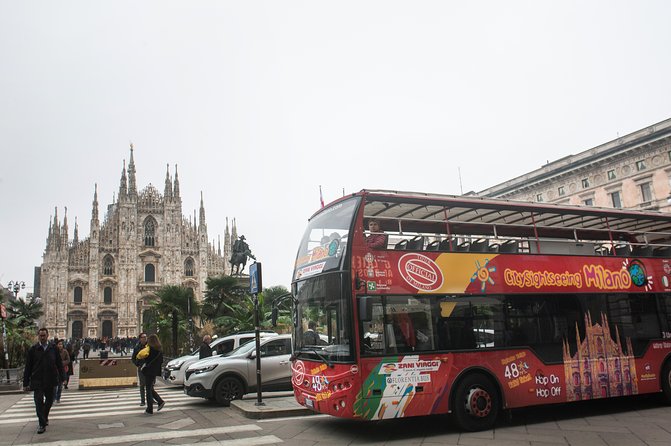
Milan is easier from the top deck. I like the four connected routes, which reach the Duomo, Last Supper, Navigli, San Siro, Brera, and more without making you change trains. I also like the freedom of a 24-, 48-, or 72-hour ticket. The catch is that buses can be hard to find, and the audio system does not always earn its keep.
This is a useful city orientation ride, not a polished guided tour. The open-air bus gives you a fine first look at Milan, especially if your feet need a rest, but service can be uneven. Some buses arrive only about every 30 minutes, and a few audio sockets do not work.
In This Review
- Milan in four useful strokes
- What this Milan bus tour is really good for
- Starting near Castello Sforzesco
- Line A: Castello, the Duomo, and La Scala
- Line B: Porta Venezia and Milan’s modern north
- Line C: San Siro, City Life, and the western districts
- Line D: Navigli, Brera, and an evening-ready route
- The audio guide is useful, but keep expectations modest
- Finding stops and managing the schedule
- Seats, views, and rainy-day realities
- Who should buy the 24-, 48-, or 72-hour ticket?
- My verdict: useful transport with tour-level limits
- FAQ
- How long does the Milan hop-on hop-off tour take?
- How many bus routes are included?
- Which route goes to the Duomo?
- Does the tour visit The Last Supper?
- Is the Milan Night Tour included?
- What is included with the ticket?
Milan in four useful strokes
- Red Line A links the big first-visit sights: Castello Sforzesco, the Duomo, La Scala, Brera-area streets, and central Milan.
- Blue Line B reaches the north side: Porta Venezia, Corso Buenos Aires, Milan’s Central Station, and Palazzo Lombardia.
- Green Line C covers San Siro and City Life: This is the route for football fans, modern architecture, and the Monumental Cemetery area.
- Yellow Line D adds Navigli and Brera: It gives you a practical way to connect the canals with the Duomo and shopping district.
- The 72-hour weekend ticket has a seasonal bonus: From June through September, a Saturday or Sunday ticket includes the Milan Night Tour.
- The app can help with the confusing parts: The free Sightseeing Experience app shows bus locations in real time, though it has sometimes closed unexpectedly.
What this Milan bus tour is really good for
Milan is not a city you need to see only from a bus. The Duomo demands time on foot. Brera rewards slow wandering. Navigli is best enjoyed beside the water, not through a bus window.
Still, Milan is spread out enough that the bus has a clear job. It links central monuments with districts that take more effort to reach, including San Siro, City Life, Porta Venezia, and the canals. I would use it as a city sampler and transport tool, not as my only sightseeing plan.
The advertised price is $27.01 per person. That is reasonable for a 24-hour pass if you use it for several rides and let it replace some public transport trips. It becomes better value over 48 or 72 hours if you plan to get off often. It is poor value if you stay on for one loop, since the entire Red Line takes about 90 minutes and you can see much of central Milan in that time without a pass.
The tour takes about 1 hour and 20 minutes as an overall experience, while the full Red Line loop is listed at 90 minutes. The difference likely reflects the route and operating schedule, so do not plan your day around a perfectly exact running time. Milan traffic, boarding, and line changes can all add minutes.
More hop-on hop-off passes:
- Milan: City Sightseeing Hop-On Hop-Off Bus with Audio Guide
★ 4.0 · 6,256 reviews - Stresa: 3 Borromean Islands Hop-On Hop-Off Boat Tour
★ 4.4 · 4,122 reviews - Milan: Gray Line Milan Open Tour Hop-On Hop-Off Bus Tour
★ 4.0 · 1,549 reviews
Starting near Castello Sforzesco
The main starting point is Foro Buonaparte, beside Castello Sforzesco. This is one of the most useful places to begin because the castle is both a major sight and a good reference point for central Milan.
The red and green routes begin here, and the yellow route also uses the stop. If you start early, you can use Castello as your first stop, then walk through the surrounding park toward the center.
Castello Sforzesco is a large medieval and Renaissance fortress complex. Even if you do not enter its museums, its courtyards and broad walls give you an immediate sense of Milan’s past. The bus is helpful here because it drops you close to a sight that is slightly removed from the Duomo crowd.
The nearby Cadorna stop, at Via Boccaccio, connects with Milan’s M1 and M2 metro lines. That makes it one of the more practical stops if you are arriving by public transport or staying outside the historic center.
Line A: Castello, the Duomo, and La Scala
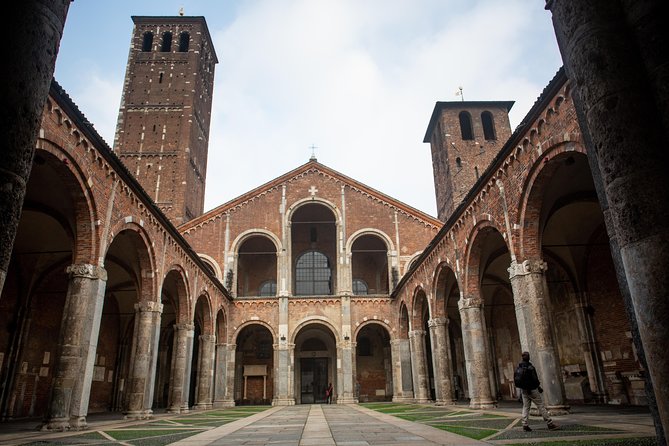
Line A is the best first ride for most people. Its central route covers Castello Sforzesco, Cadorna, the Cenacolo stop for The Last Supper, the Duomo, Monte Napoleone, Manin, and Moscova.
At Cadorna, you are near a major transport hub and within reach of Castello. The next stop, Cenacolo, is for Santa Maria delle Grazie, where Leonardo da Vinci’s The Last Supper can be seen. The bus gets you close, but the painting requires its own admission arrangements. This ticket does not include entry.
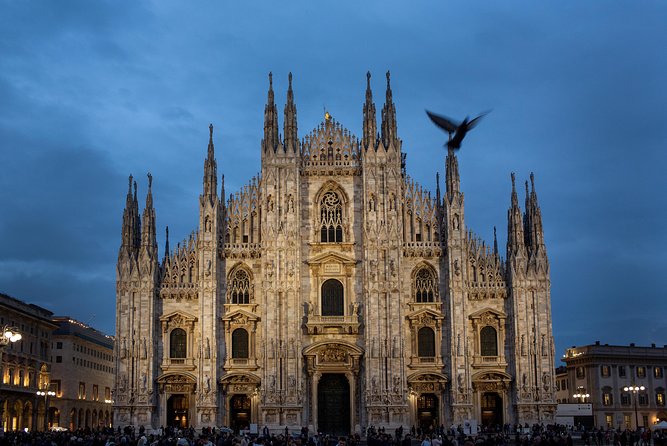
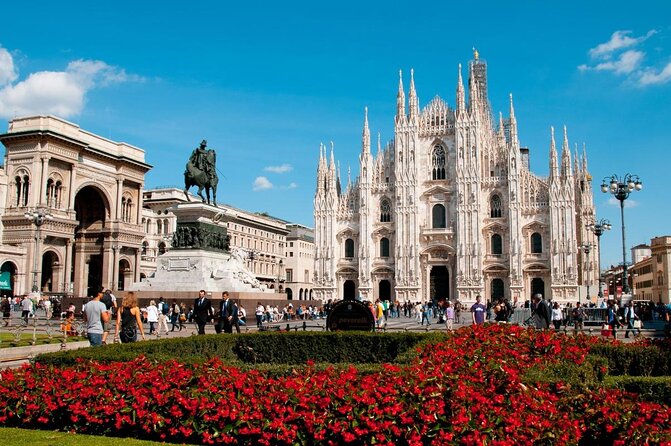
The Duomo stop at Piazza del Duomo is the heart of the tour. Here you can visit Milan Cathedral, look toward the Galleria Vittorio Emanuele II, and walk to La Scala. The stop is convenient, but expect the area to be crowded and keep track of the exact boarding point before wandering off.
Monte Napoleone serves Milan’s famous luxury shopping quarter. You do not need to shop to enjoy the streets, polished storefronts, and elegant architecture. It is also a handy stop for seeing a different side of Milan after the monumental scale of the Duomo.
Manin and Moscova offer access to the northeastern central area. The route is useful for seeing how quickly Milan shifts from grand monuments to ordinary city streets, though some sights pass quickly from the upper deck.
Line A takes about 90 minutes for the full loop. I would not ride it only once and call the city seen. Use it to mark places for a later stop, then get off at the Duomo, Castello, or Cenacolo.
Line B: Porta Venezia and Milan’s modern north
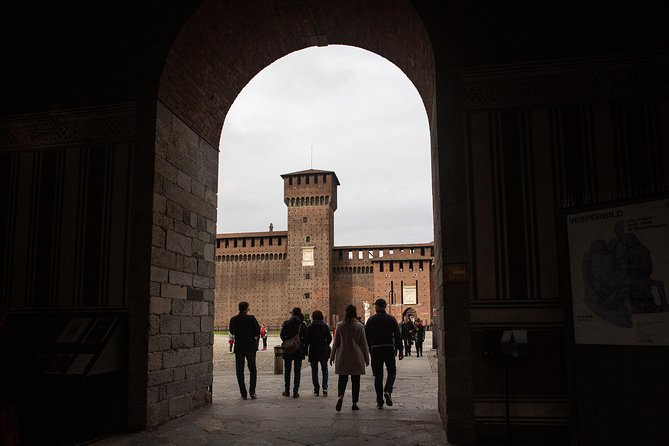
The blue route begins at the Duomo and moves north through Monte Napoleone, Manin, Piazza della Repubblica, Palazzo Lombardia, Central Station, Corso Buenos Aires, Porta Venezia, and San Babila.
This line is useful if you want more than the postcard center. Palazzo Lombardia brings you into Milan’s modern business district, while the Central Station stop gives you a practical connection to one of the city’s main arrival points.
The Stazione Centrale stop can be difficult to locate. Give yourself extra time and use the app rather than assuming the bus will be waiting exactly where you expect. Poor directions around the station have caused real frustration, so this is not the place to arrive at the last minute.
Corso Buenos Aires is a long shopping street, and Porta Venezia offers a change of mood from the formal center. San Babila brings you back toward the Duomo and the central shopping area. This route is a good choice if your hotel is near the station or Porta Venezia, since it can serve as both sightseeing and a ride across town.
The blue line is less essential than the red route for a first look at Milan’s monuments. I would choose it on a second pass, or when you want to connect the Duomo area with the station and northern neighborhoods.
A few more reviews worth comparing before you book
- Milan: Cathedral and Duomo’s Terraces Entrance Ticket
★ 4.6 · 61,054 reviews - Milan: Da Vinci’s Last Supper Guided Tour
★ 4.7 · 10,143 reviews - Milan: Science and Technology Leonardo da Vinci Museum Entry
★ 4.5 · 7,169 reviews - Milan Cathedral: Duomo Terraces Ticket (No Church Access)
★ 4.6 · 6,111 reviews
Line C: San Siro, City Life, and the western districts
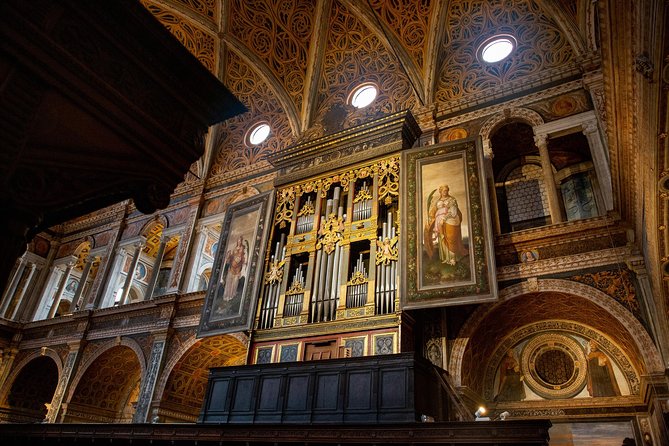
The green route also starts at Castello and heads west through Arco della Pace, City Life, Casa Milan, Mico and Fieramilanocity, Lotto, Lido, Ippodromo, San Siro Stadium, Buonarroti, Pagano, Conciliazione, and Sempione.
Arco della Pace is one of the more attractive stops on this route. It sits at the edge of Parco Sempione and provides access to a broad public space behind Castello. Sempione offers another approach to the park and can work well if you want a quieter walk after the bus ride.
City Life shows Milan’s newer side, with modern towers and redevelopment. Casa Milan is the obvious stop for football fans, while San Siro Stadium is the route’s main reason for existing. The stop is at Gate 8, so check the exact destination if you have a stadium visit planned.
The route also reaches Mico and Fieramilanocity, major exhibition areas, as well as Lido and Ippodromo. These stops are more useful for a specific appointment or interest than for a short central sightseeing day.
Line C takes you well beyond the compact center. That is its strength, but it also means longer gaps can feel costly. If San Siro or City Life is not on your list, I would spend your limited time on Lines A and D first.
Line D: Navigli, Brera, and an evening-ready route
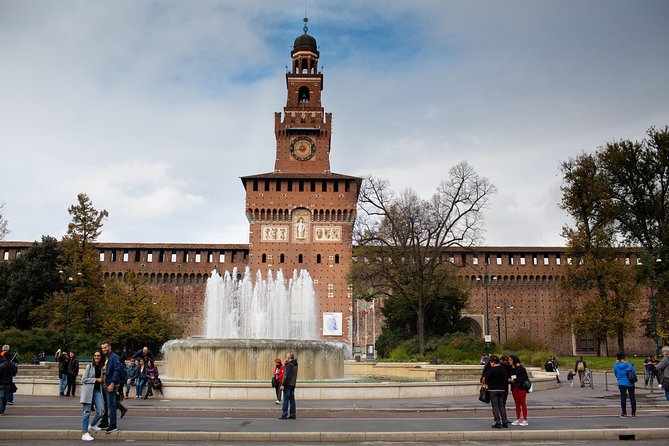
The yellow line is the most appealing route for visitors who want Milan’s canals and creative neighborhoods. From Castello and Cadorna, it reaches the Cenacolo stop, Via Vigevano in Navigli, Piazza XXIV Maggio, the Duomo, Monte Napoleone, and Brera.
Navigli is the key stop. The canals, especially around Via Vigevano and Piazza XXIV Maggio, give you a very different view of Milan. Get off here and walk. The bus can show you the district, but the canals are meant for a slow stroll and a pause at a café or restaurant.
Piazza XXIV Maggio is another useful point for exploring the Navigli area. It helps you reach the canals without riding the whole route back toward the center.
The final Brera stop is a strong choice for an afternoon or evening walk. Brera is known for its art, narrow streets, shops, and restaurants. From here, the Duomo and Monte Napoleone are still close enough to connect several parts of central Milan on foot.
Line D is a good route for breaking up the museum-and-cathedral routine. It also makes the ticket feel more worthwhile because it reaches a district that is not directly beside the Duomo.
The audio guide is useful, but keep expectations modest
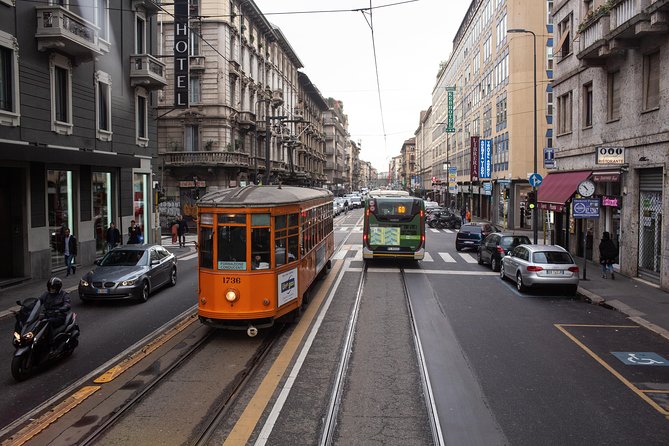
Audio commentary is available in 10 languages, and free Wi-Fi is provided onboard. The booking information lists English as the offered language, so check the available language setup when you board.
The commentary gives basic information about major sights and districts. I find that helpful when I want context while riding, but it is not a substitute for a specialist guide. The recorded narration can feel dull, and several technical problems have been reported: English switching to Italian, audio running out of sync with the sights, and headphone sockets that do not work.
Bring your own earbuds only if the bus system accepts them, since the equipment setup is not specified. The safest practical move is to test the audio as soon as you sit down. If it fails, change seats early rather than waiting for the whole route.
You also need to watch the street yourself. The narration may describe a building just before or after you pass it, and verbal stop announcements can be hard to hear. Keep the route map open and listen for the stop name.
Finding stops and managing the schedule
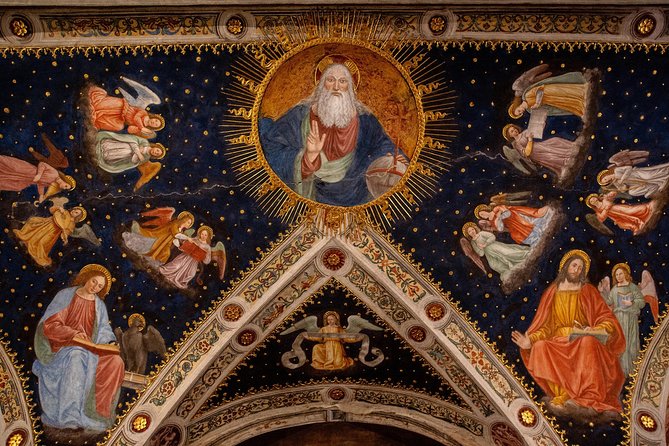
The biggest practical weakness is stop finding. Some stops are easy, especially at the Duomo and Castello. Others, including the railway station area, are not obvious and may require a short search.
The app shows bus positions in real time, which can make the four-route system easier to understand. It has not always worked perfectly, and it may close while you are checking the map, so keep a printed route map or screenshot as a backup.
Service can be about every 30 minutes, and the gaps feel longer when you have just missed a bus. Some reports also describe confusing route changes or a red-line service that did not make all expected stops. I would avoid building a tight schedule around one specific departure.
Buses generally stop shortly after 6 p.m., apart from the separately arranged night tour. That matters if you picture yourself sightseeing late into the evening. The special Milan Night Tour is included only with a 72-hour weekend ticket used on Saturday or Sunday from June through September.
If you want to cover all four routes in one day, start around 9 or 10 a.m. One workable plan is Blue Line B first, Yellow Line D next, Red Line A around lunch, then Green Line C. That is an ambitious day, and it leaves little room for long visits inside museums or at the Duomo.
Seats, views, and rainy-day realities
The open-air upper deck gives you the best view, but the experience depends on finding a seat. On busy buses, people may stand in the aisle, blocking views from lower seats and making the ride less comfortable.
The buses can be bumpy. Hard braking at stops is another small issue, so hold on when standing and be careful with phones and cameras. The upper deck is also exposed to weather. On rainy days, wet seats may not be wiped quickly, and there are no washrooms on the buses or at the Milan Visitor Center.
The staff experience appears mixed but often helpful at the main stops. Some drivers and stop attendants are friendly and informative, while other rides feel purely functional. I would ask staff directly if you cannot find a stop, but still verify the route on the app or map.
Who should buy the 24-, 48-, or 72-hour ticket?
I would choose the 24-hour ticket if you want a simple orientation ride, need a break from walking, and plan to use at least two or three routes. At $27.01, it can make sense for a first day in Milan.
The 48-hour option suits you if you want to split central sightseeing from San Siro, Navigli, or Porta Venezia. You can ride one day for orientation and use the bus more selectively the next day.
The 72-hour ticket is worth a closer look only if you will use it often. From June through September, a weekend ticket covering Saturday and Sunday includes the Milan Night Tour, which adds real value for someone planning evening sightseeing.
I would skip the pass if you already understand Milan’s metro and tram system, or if your plans center on only the Duomo, La Scala, and Brera. Those sights are close enough to combine on foot. I would also avoid it if your schedule is so tight that a 30-minute wait would disrupt the day.
Free cancellation is available up to 24 hours before the local start time. Changes or cancellations inside that window are not accepted.
My verdict: useful transport with tour-level limits
I like this tour most as a first-day framework for Milan. The four routes reach a wide spread of districts, the major stops are easy to recognize once you learn the system, and the bus lets you rest while getting a broad look at the city.
I would book it for a first visit lasting at least two days, especially if you want San Siro, Navigli, City Life, or Porta Venezia. Start with a 24-hour ticket unless the weekend night-tour offer or repeated use makes a longer pass clearly worthwhile.
I would not buy it expecting vivid storytelling, perfect timing, or a polished guide at every stop. Use the audio as background help, confirm stops with the app, allow generous time between rides, and treat the bus as one part of your Milan plan. Used that way, it offers fair value and a comfortable introduction to a large, spread-out city.
FAQ
How long does the Milan hop-on hop-off tour take?
The experience is listed at approximately 1 hour and 20 minutes. The full Red Line A loop takes about 90 minutes, while waiting, boarding, and changing routes can add time.
How many bus routes are included?
Your ticket includes four routes: Red Line A, Blue Line B, Green Line C, and Yellow Line D. Together, they serve more than 30 stops.
Which route goes to the Duomo?
The Duomo is served by all four routes at different points. Red Line A, Blue Line B, and Yellow Line D list the Duomo as a central stop, and Green Line C also connects back to it through the route network.
Does the tour visit The Last Supper?
The Red and Yellow routes stop near Santa Maria delle Grazie at the Cenacolo stop. Admission to see Leonardo da Vinci’s The Last Supper is not included.
Is the Milan Night Tour included?
The Milan Night Tour is included with a 72-hour ticket valid for the weekend, meaning Saturday and Sunday, from June through September.
What is included with the ticket?
The ticket includes the four bus routes, free onboard Wi-Fi, the Sightseeing Experience mobile app with real-time bus locations, and an onboard audio guide in 10 languages. Food, drinks, and hotel pickup and drop-off are not included.
Just added around Milan
- Milan Sights by Segway Small Group Tour★ 5.0 · 249 reviews
- Unveil the Masterpiece: Guided Tour of Da Vinci’s Last Supper★ 4.5 · 251 reviews
- Milan: Pasta & Tiramisu Cooking Class with Premium Products★ 5.0 · 255 reviews
- Milan Semi-Private Max 6 People Tour with Last Supper and Duomo★ 5.0 · 258 reviews
- Skip The Line: Best Of Milan Tour With Last Supper & Milan Duomo★ 4.5 · 260 reviews
- Milan: Duomo & Rooftop Tour with Optional Hop-On Hop-Off Bus★ 4.5 · 262 reviews
- Stresa: 1-Day 3 Borromean Islands Hop-On Hop-Off Boat Tour★ 4.0 · 262 reviews
- Milan Centre Food Tour of 7+ Italian Tastings with Risotto & Wine★ 5.0 · 264 reviews
Hop-On Hop-Off Bus Tours, compared.

City Sightseeing Hop-on Hop-off Bus with Audioguide
Read our review →
Hop-On Hop-Off Panoramic Open Bus Ticket 3 Circuits x 1
Read our review →
Hop-on Hop-off Bus Tour: 24, 48 or 72-Hour Ticket
Read our review →
City Sightseeing Hop-On Hop-Off Bus with Audio Guide
Read our review →
City Sightseeing Rome Hop-On Hop-Off Bus Tour
Read our review →
Hop-on Hop-off Sightseeing Bus Tour with Audioguide
Read our review →
Stresa: 3 Borromean Islands Hop-On Hop-Off Boat Tour
Read our review →Browse the lists this tour appears in