
Review · HOP-ON HOP-OFF BUS TOURS
Milan: Gray Line Milan Open Tour Hop-On Hop-Off Bus Tour
Milan reveals itself in layers. This hop-on hop-off bus connects the grand Duomo, Brera, Navigli, Sant’Ambrogio, and newer districts without asking you to master Milan’s traffic or tram map first. I like the wide reach of the two routes and the freedom to get off whenever a neighborhood catches your eye. I also like the multilingual audio guide, which adds useful context as you ride. The main drawback is waiting time: buses may be less frequent than another sightseeing operator, and the narration can cut out or arrive after you have passed a sight.
For $29 per person, you can use the ticket for one, two, or three days, depending on the option you choose. That makes it most useful when you want a city overview, need a break from walking, or have only one day in Milan and want to cover ground quickly. On a rainy day, it is an especially practical choice, though condensation can cloud the upper-deck windows.
In This Review
- Key Points Before You Board
- What This Milan Bus Tour Actually Covers
- Starting at the Duomo and La Scala
- Brera, Castello, and the Historic Center
- Cenacolo and Cadorna: Plan This Stop Carefully
- The Fashion, Design & Leisure Route
- Sant’Ambrogio, Science, and Navigli
- Riding Comfortably in Sun and Rain
- Audio Guide, Staff, and Onboard Extras
- How Much Time Should You Allow?
- Is $29 Good Value?
- Who Will Like This Tour Most?
- Should You Book the Milan Open Tour?
- FAQ
- How much does the Milan Gray Line Open Tour cost?
- How long is the ticket valid?
- Can I board at any bus stop?
- What are the main stops on the tour?
- How many routes are included?
- Is an audio guide included?
- Are there commentaries for children?
- Does the bus operate in bad weather?
- Is the tour wheelchair accessible and pet friendly?
Key Points Before You Board

- Two routes cover very different Milans: One route links fashion, design, shopping, modern architecture, and Navigli, while the Milan Highlights route concentrates on the historic center, Brera, the castle, and major museums.
- Start at any listed stop: You can board at the Duomo, Central Station, Castello, Cadorna, Cenacolo, Navigli, and other stops rather than traveling to one fixed meeting point.
- Use it for orientation first: A full circuit can take more than two hours from the Duomo, so a complete ride is a useful first look but leaves less time for museums and churches.
- The audio guide is broad but imperfect: It is offered in 11 languages, including English, Italian, Spanish, French, German, Chinese, Japanese, Arabic, Dutch, Portuguese, and Russian, but some audio points may not work or may trigger late.
- Rain protection matters: Buses operate in poor weather, but upstairs windows can fog and the open upper deck can become hot in sunshine.
- The practical extras are good: You get WiFi, USB sockets, a paper map, disposable earphones, and a dedicated hostess during the tour.
What This Milan Bus Tour Actually Covers
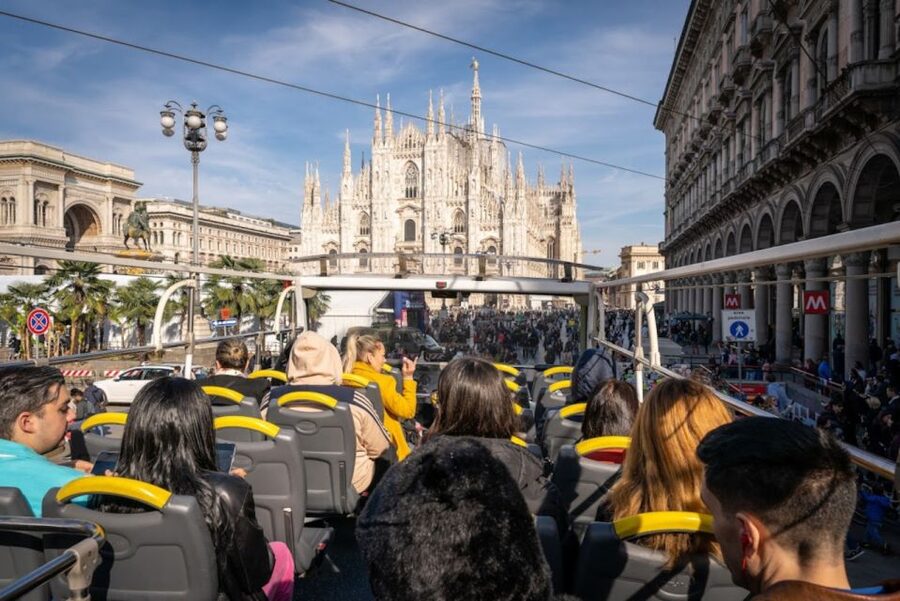
The tour gives you a moving introduction to central Milan and several districts beyond the immediate Duomo area. You can ride the Fashion, Design & Leisure route, the Milan Highlights route, or both, depending on your time and the ticket period you select.
The route names tell you how to plan. The first is the longer, wider circuit. It reaches the Duomo, La Scala, Central Station, Porta Nuova, the Monumentale area, Sforza Castle, Leonardo’s Last Supper, CityLife, Sant’Ambrogio, the Science and Technology Museum, Navigli, and the Basilica district. The second route is shorter and more tightly focused on the historic core, with stops around Brera, Castello, Cadorna, Cenacolo, and Corso Magenta.
You do not need to ride from the first stop. The ticket allows you to board and leave at any stop on the route. That flexibility is the heart of the experience. I would use one circuit as a sightseeing ride, then use the bus as a connection between two or three places I actually want to visit.
Keep a paper map handy. It is included and useful because the exact meeting point may vary by booking option, and not every stop has a clear timetable showing when the next bus will arrive.
More hop-on hop-off passes:
- Milan: City Sightseeing Hop-On Hop-Off Bus with Audio Guide
★ 4.0 · 6,256 reviews - Stresa: 3 Borromean Islands Hop-On Hop-Off Boat Tour
★ 4.4 · 4,122 reviews - Milan Hop-On Hop-Off Bus Tour with Four Routes
★ 3.5 · 1,214 reviews
Starting at the Duomo and La Scala
The Duomo stop is the easiest starting point for most visitors. It places you beside Milan’s immense cathedral and the main city square, where the city’s historic center is at its most dramatic.
This is a good place to begin with the bus because you can first see the Duomo from street level, then board for a wider view of Milan. If you plan to visit the cathedral or its roof, allow enough time before returning to the bus. The ticket is flexible, but the whole circuit can take more than two hours, particularly in heavy traffic.
The next important stop is La Scala on Via Manzoni. Milan’s famous opera house is close to the Galleria and the Duomo, so this section works well on foot as well as by bus. The audio commentary gives you a useful introduction, though you should not expect a full guided visit inside either the cathedral or opera house.
The Milan Highlights route then reaches San Marco, Brera, Lanza, Castello, Cairoli, Cadorna, Cenacolo, and Litta. This is the route I would choose if your priority is old Milan rather than the city’s newer districts.
Brera, Castello, and the Historic Center
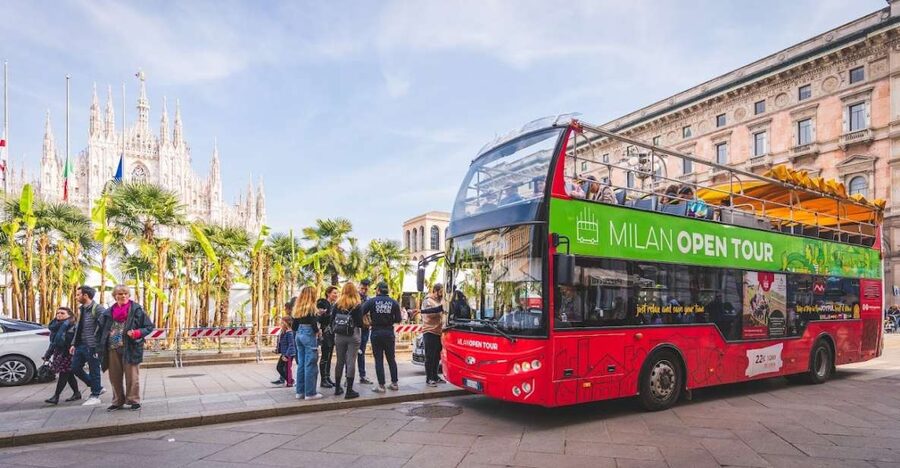
Brera is one of the best stops for a slow wander. The route brings you close to narrow streets, galleries, cafés, and the Pinacoteca di Brera. You can leave the bus here, walk around, and rejoin the route later.
Lanza and Castello serve the area around Sforza Castle. The castle is one of Milan’s major landmarks, and its grounds offer a welcome change from traffic and stone streets. From here, you can continue toward Cairoli or walk into the center.
The audio guide is generally informative, with facts about sights and suggestions for places to visit nearby. I like that practical touch because it helps you decide where to get off. Still, the commentary is automated, not a live walking guide. A few audio points may fail, and some descriptions begin after the bus has already passed the building. Keep your eyes open and treat the narration as an extra layer, not your only source of information.
Cenacolo and Cadorna: Plan This Stop Carefully
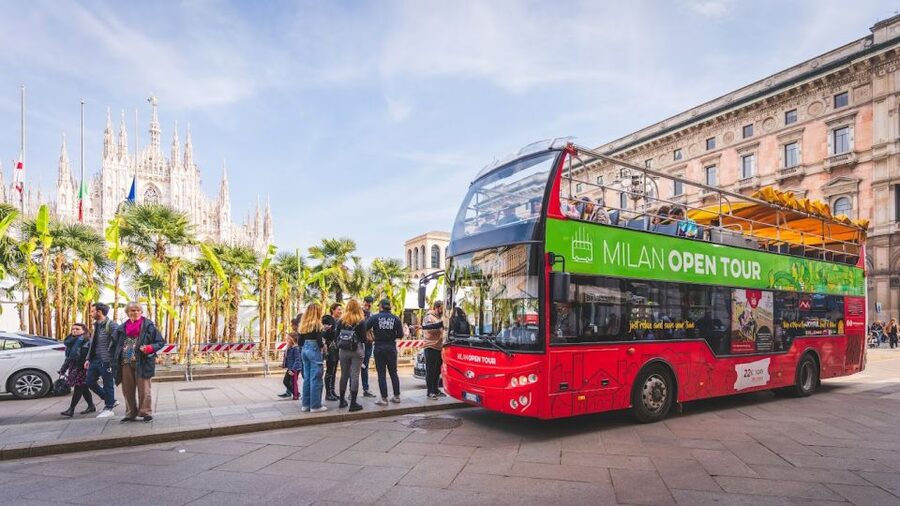
Cenacolo is the stop for Leonardo da Vinci’s Last Supper at Santa Maria delle Grazie. The bus makes this famous sight easier to reach from the Duomo, Castello, or other parts of the city.
The bus ticket does not include admission to the Last Supper. If you have a timed entry, leave plenty of room in your schedule for traffic and for finding the entrance. This is one stop where a little planning matters more than the hop-on flexibility.
Cadorna is nearby and useful for connecting with the wider city. The route also passes Paleocapa, Triennale, and Arco della Pace. Triennale is a natural pause for anyone interested in design, while Arco della Pace opens toward a broad urban park area and the Monumentale district.
The route gives you a helpful sense of how close these sights are to one another, even if you do not have time to visit them all. That is one of the bus’s best uses: you can mark places for a later walk instead of spending your first hours guessing where everything is.
A few more reviews worth comparing before you book
- Milan: Cathedral and Duomo’s Terraces Entrance Ticket
★ 4.6 · 61,054 reviews - Milan: Da Vinci’s Last Supper Guided Tour
★ 4.7 · 10,143 reviews - Milan: Science and Technology Leonardo da Vinci Museum Entry
★ 4.5 · 7,169 reviews - Milan Cathedral: Duomo Terraces Ticket (No Church Access)
★ 4.6 · 6,111 reviews
The Fashion, Design & Leisure Route
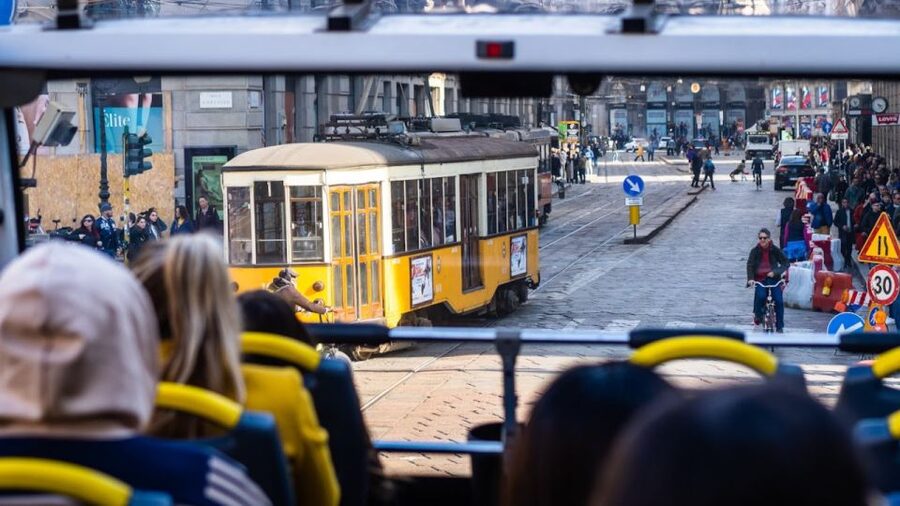
The longer route earns its name by reaching places that are easy to miss if you stay around the Duomo. After La Scala, it continues through Dugnani, Repubblica, Central Station, Regione, and Gae Aulenti.
Gae Aulenti is the clearest sign of modern Milan. Its towers, public spaces, and contemporary buildings show a city that is not only about churches and grand nineteenth-century streets. Repubblica and Central Station add another layer, with large transport and business districts that feel quite different from Brera.
The Monumentale stop takes you toward the cemetery and the area around Via Ceresio. Acquario and Castello return you toward the historic center. These stops are useful for a broad city ride, though you will need to check the map and the bus timing before getting off for a longer visit.
CityLife offers another look at modern Milan. The stop serves a newer development with contemporary architecture and open public areas. Buonarroti, Pagano, and Conciliazione then bring the route through residential and central districts before returning to Cenacolo.
This wider route is particularly useful if you want to compare Milan’s old center with its design-led newer quarters. It is less efficient if your only goal is to see the Duomo, La Scala, and the castle, since those can be visited mostly on foot.
Sant’Ambrogio, Science, and Navigli
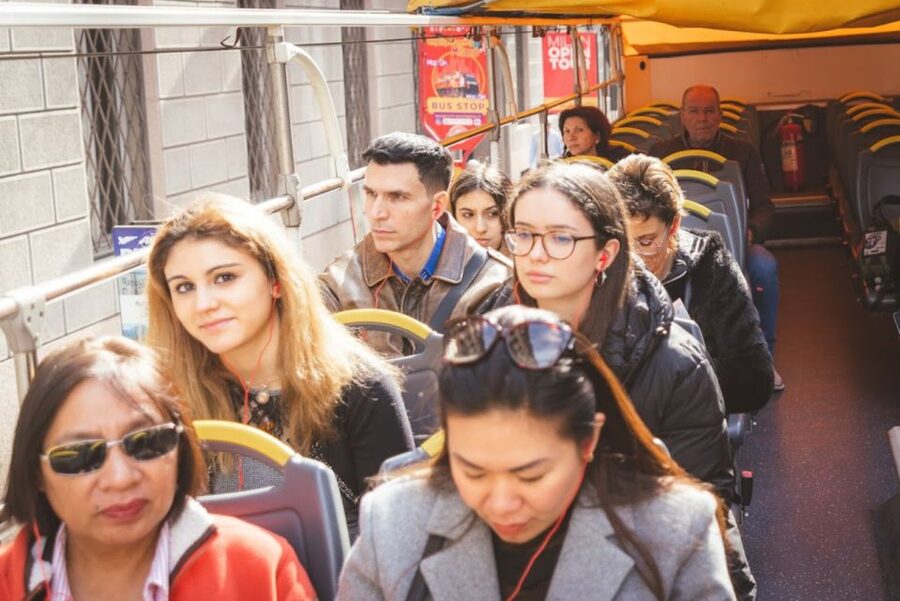
The bus stops at Sant’Ambrogio, the Science and Technology Museum, Navigli, Parco Basiliche, Università degli Studi, and San Babila. This is where the tour becomes more useful as transportation rather than just sightseeing.
Sant’Ambrogio gives you access to one of Milan’s major basilicas. The stop near the Science and Technology Museum suits families and anyone interested in Leonardo, engineering, and scientific displays. Admission to attractions is not part of the bus ticket, so check opening hours separately before you get off.
Navigli is an important stop because the canal district feels different from the Duomo area. You can leave the bus for restaurants, canal-side streets, and an evening walk, then use the route again if the schedule works. The bus makes this district easier to combine with central Milan, but do not assume you can step off and find another bus immediately.
One practical issue comes up repeatedly in the experience: after getting off, you may wait around 20 to 30 minutes for the next bus. That is not a problem if you are ready to sit at a café or explore nearby. It is frustrating if you have timed museum tickets or a tight train departure.
Riding Comfortably in Sun and Rain
The buses are described as suitable for rain or shine, and that is broadly true. You can still see Milan when rain makes walking unpleasant. Staff have helped passengers deal with wet conditions, and the buses include covered seating.
The upper deck gives you the best views and the pleasant novelty of an open-top ride. It also has the biggest comfort swings. On sunny days, it can get hot, even when the air temperature feels mild. On rainy days, the windows may fog badly, especially upstairs. Staff have handed out paper towels so passengers could clear the condensation, but visibility can still suffer.
A practical choice is to sit under the covered section. You lose a little of the open-air feeling, but you gain shade and better protection from rain. On a warm day, the lower deck may be more comfortable, though air conditioning has not always worked well.
For the best view, sit on the right side when possible. Many of the sights appear on that side of the bus. This is not a hard rule, but it can save you from craning across the aisle or watching the key building disappear behind you.
Audio Guide, Staff, and Onboard Extras
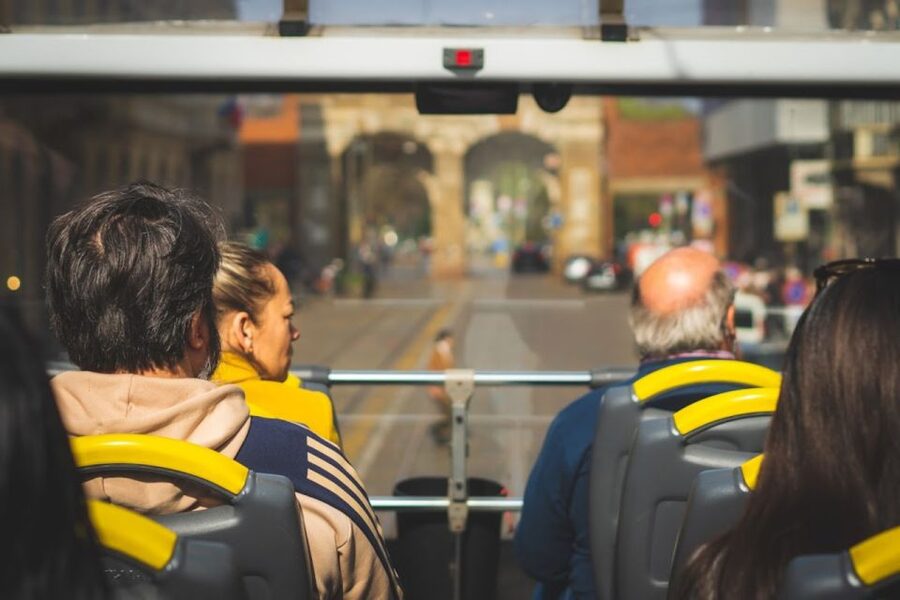
The audio guide is one of the strongest parts of the tour. It comes through disposable individual earphones and supports 11 languages: Spanish, Chinese, Dutch, English, French, German, Italian, Japanese, Arabic, Portuguese, and Russian.
There are also children’s commentaries in English, Italian, and Spanish. That can make the ride more useful for families, especially when children are tired of walking through churches and museums.
The narration gives history, context, and pointers to nearby places. It is not always perfectly timed. In heavy traffic, the bus may crawl while the commentary races ahead, or the explanation may start just after the attraction. A few passengers have also found that the sound cuts out now and then.
The onboard WiFi and USB sockets are small but welcome benefits. Milan sightseeing uses plenty of phone battery for maps, tickets, photographs, and restaurant searches. A dedicated hostess is also available during the tour, and staff have been praised for being friendly and helpful, including during wet weather.
The experience is pet friendly and wheelchair accessible. Tickets are delivered immediately, and a phone voucher is accepted on boarding, so you may be able to board directly rather than searching for a separate office. Since the meeting point can vary by option, check the stop information attached to your booking.
How Much Time Should You Allow?
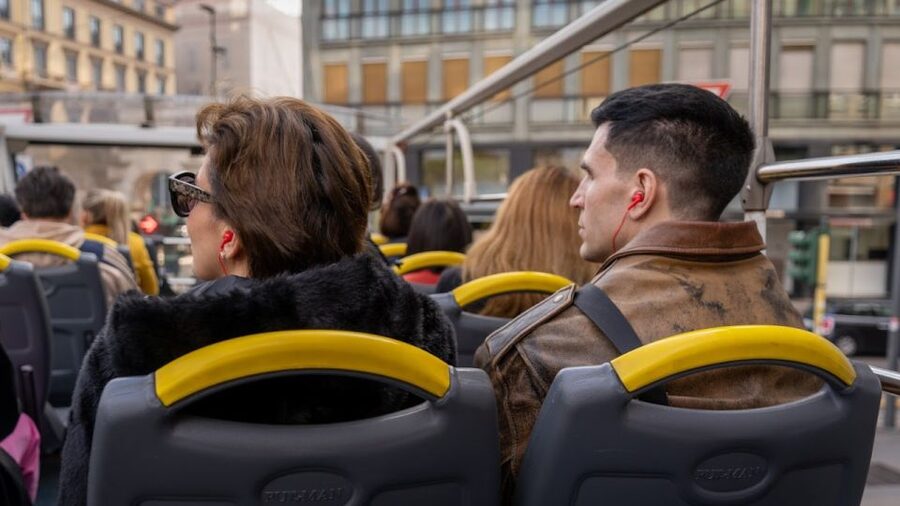
A one-day ticket can work well, but only if you avoid trying to visit every stop. The long circuit from the Duomo can take more than two hours, and traffic may slow the bus in the central streets.
For one day, I would ride early to get oriented, then choose two stops for proper visits. A sensible pattern is:
- Start near the Duomo.
- Ride through La Scala and Castello.
- Get off at Cenacolo only if you have an entry time.
- Continue toward Sant’Ambrogio or Navigli.
- Return to the center by bus or continue exploring on foot.
A two-day ticket gives you more breathing room. You can use the first day for the full sightseeing ride and the second for short connections between districts. A three-day ticket is best for a slower visit, families, or anyone who wants to combine major sights with long meals and museum stops.
The ticket is valid for one to three days according to the option selected. Check availability for the start time and confirm the exact duration before paying, since the price varies by the option booked.
Is $29 Good Value?
At $29, the ticket is fairly priced if you use it as transport plus an overview of Milan. It becomes good value when you ride both routes, get off several times, and use the bus to connect districts that would otherwise require repeated walks or separate public transport journeys.
It is weaker value if you plan to stay around the Duomo, Galleria, La Scala, and Brera. Those sights are close enough to link on foot, and a complete bus loop may take time away from actual visits.
The price does not include drinks, snacks, walking tours, or admission to the attractions. You can buy refreshments and walking tours on the bus, but treat those as optional extras. The main value is the combination of orientation, transport, commentary, and rest for your feet.
Compared with a taxi, the bus is inexpensive for covering many districts. Compared with ordinary public transport, it costs more, but you get the route commentary and a seat with a view. That trade-off makes sense during a first visit or a short stopover.
Who Will Like This Tour Most?
I would recommend it to first-time visitors, families, older visitors, and anyone who wants a broad look at Milan without navigating unfamiliar streets. It is also useful if you are staying near Central Station, arriving by train, or dealing with rain.
The tour suits photographers and architecture fans because it includes both historic sights and modern districts such as Gae Aulenti and CityLife. It also suits visitors who like to get their bearings before choosing where to spend serious time.
I would be more cautious if you have a tightly packed schedule. Waiting 20 to 30 minutes after a stop can disrupt a short itinerary, and the long circuit is not a quick shuttle. I would also skip it if you strongly prefer personal, live storytelling, since the audio commentary is automated and occasionally uneven.
The experience provider is Milanopentour. Host or greeter support is available in Spanish, English, Italian, and German, while the recorded guide offers a wider range of languages.
Should You Book the Milan Open Tour?
Book it if you want a relaxed first look at Milan, especially with one or two full days available. The two routes cover a useful mix of cathedral, opera, castle, art, canals, museums, fashion districts, and modern architecture. The ability to hop off at any listed stop gives you more control than a fixed sightseeing loop.
For a one-day visit, keep your plan simple. Ride one route, choose a few stops, and do not assume every bus will arrive immediately. Sit under cover if the weather is hot or wet, use the paper map, and consider the right side for better views.
You should pass if your Milan plan is already built around walking tours and timed museum visits. For everyone else, $29 buys a practical overview, a comfortable break from city streets, and a useful way to decide which parts of Milan deserve more of your time.
FAQ
How much does the Milan Gray Line Open Tour cost?
The listed price is $29 per person.
How long is the ticket valid?
You can choose a ticket valid for one, two, or three days. Check availability for the available starting times and duration options.
Can I board at any bus stop?
Yes. The ticket allows you to start at any of the listed stops and get on or off wherever you want along the routes.
What are the main stops on the tour?
Stops include the Duomo, La Scala, Brera, Sforza Castle, Cenacolo, Sant’Ambrogio, the Science and Technology Museum, Navigli, Gae Aulenti, Central Station, CityLife, Triennale, and Arco della Pace.
How many routes are included?
The experience provides the Fashion, Design & Leisure route and the Milan Highlights route.
Is an audio guide included?
Yes. The audio guide is available in Spanish, Chinese, Dutch, English, French, German, Italian, Japanese, Arabic, Portuguese, and Russian.
Are there commentaries for children?
Yes. Children’s commentaries are available in English, Italian, and Spanish.
Does the bus operate in bad weather?
Yes. The tour runs rain or shine. Covered seating is available, but upper-deck windows may fog during rain.
Is the tour wheelchair accessible and pet friendly?
Yes. The activity is wheelchair accessible and pet friendly.
Just added around Milan
- Milan Sights by Segway Small Group Tour★ 5.0 · 249 reviews
- Unveil the Masterpiece: Guided Tour of Da Vinci’s Last Supper★ 4.5 · 251 reviews
- Milan: Pasta & Tiramisu Cooking Class with Premium Products★ 5.0 · 255 reviews
- Milan Semi-Private Max 6 People Tour with Last Supper and Duomo★ 5.0 · 258 reviews
- Skip The Line: Best Of Milan Tour With Last Supper & Milan Duomo★ 4.5 · 260 reviews
- Milan: Duomo & Rooftop Tour with Optional Hop-On Hop-Off Bus★ 4.5 · 262 reviews
- Stresa: 1-Day 3 Borromean Islands Hop-On Hop-Off Boat Tour★ 4.0 · 262 reviews
- Milan Centre Food Tour of 7+ Italian Tastings with Risotto & Wine★ 5.0 · 264 reviews
Hop-On Hop-Off Bus Tours, compared.

City Sightseeing Hop-on Hop-off Bus with Audioguide
Read our review →
Hop-On Hop-Off Panoramic Open Bus Ticket 3 Circuits x 1
Read our review →
Hop-on Hop-off Bus Tour: 24, 48 or 72-Hour Ticket
Read our review →
City Sightseeing Hop-On Hop-Off Bus with Audio Guide
Read our review →
City Sightseeing Rome Hop-On Hop-Off Bus Tour
Read our review →
Hop-on Hop-off Sightseeing Bus Tour with Audioguide
Read our review →
Stresa: 3 Borromean Islands Hop-On Hop-Off Boat Tour
Read our review →Browse the lists this tour appears in