
Review · MUSEUMS
Milan: Science and Technology Leonardo da Vinci Museum Entry
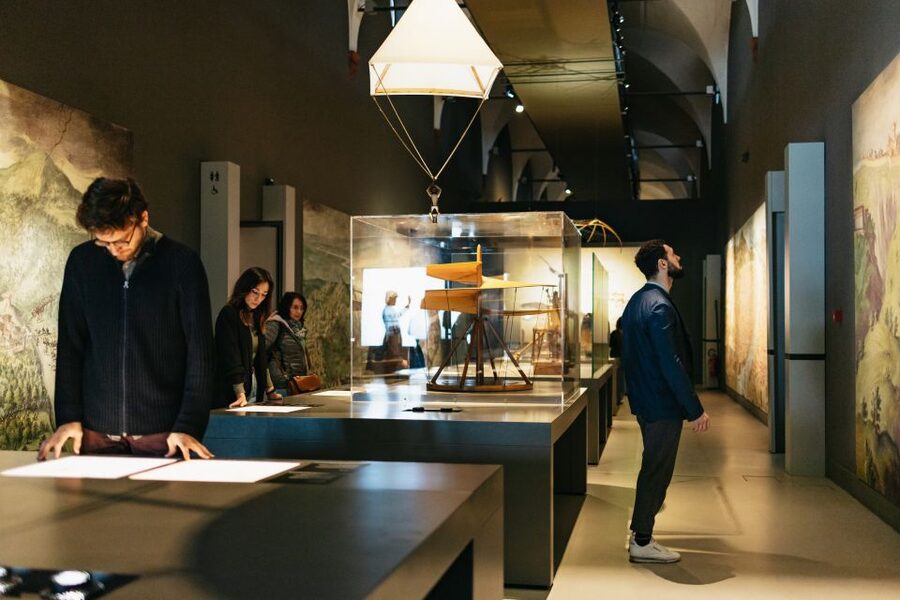
Come for Leonardo, stay for the trains. Milan’s Science and Technology Leonardo da Vinci Museum is far broader than its famous name suggests. You get Leonardo’s machines and drawings, but also steam locomotives, aircraft, ships, space hardware, communication displays, and hands-on science exhibits spread across a former Renaissance monastery.
I especially like the New Galleries, with 170 historical models, artworks, books, and installations devoted to Leonardo’s work as an engineer and humanist. I also like the sheer scale of the transport collection, where a museum visit suddenly becomes a walk beside a submarine, a transatlantic liner, a racing catamaran, and enormous railway engines.
The main thing to plan for is time. The museum is much larger than many first-time visitors expect, and the floor plan can feel confusing. If you arrive thinking this is a quick Leonardo stop, you may still be reading labels several hours later.
In This Review
- Key Points Before You Go
- Entering at Via San Vittore 21
- The Leonardo New Galleries
- Steam Trains and the Big Transport Halls
- The Enrico Toti Submarine and Outdoor Displays
- Space, Rockets, and the Moon Fragment
- Temporary Displays and Hands-On Learning
- How Long to Spend Inside
- Is $15 Good Value?
- Practical Tips for a Smoother Visit
- Who Will Enjoy This Museum Most?
- Should You Book the Milan Science and Technology Museum?
- FAQ
- Where is the museum located?
- How much does admission cost?
- How long is the ticket valid?
- Is a guided tour included?
- Do I need to exchange my voucher?
- Is the museum wheelchair accessible?
- Can I bring a pet?
- Can I visit the Enrico Toti submarine inside?
- Can I cancel my booking?
Key Points Before You Go
- Leonardo’s New Galleries: See the world’s largest permanent exhibition devoted to Leonardo da Vinci, including 170 models, artworks, books, and immersive displays.
- A full transport collection: Walk through halls featuring steam trains, aircraft, boats, the Luna Rossa AC72 catamaran, and the brigantine schooner Ebe.
- Space highlights: See the only moon fragment on public display in Italy, along with the Vega space launcher and other space material.
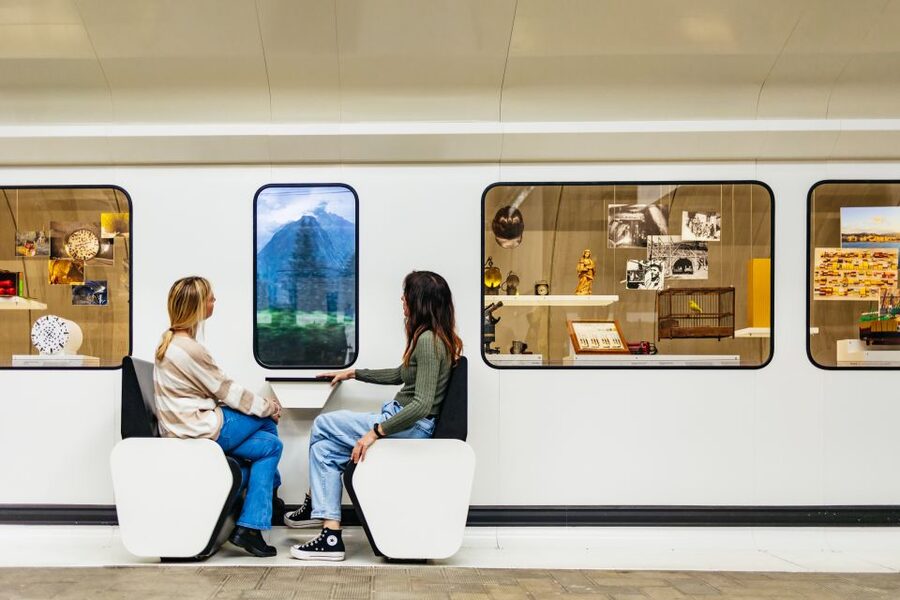
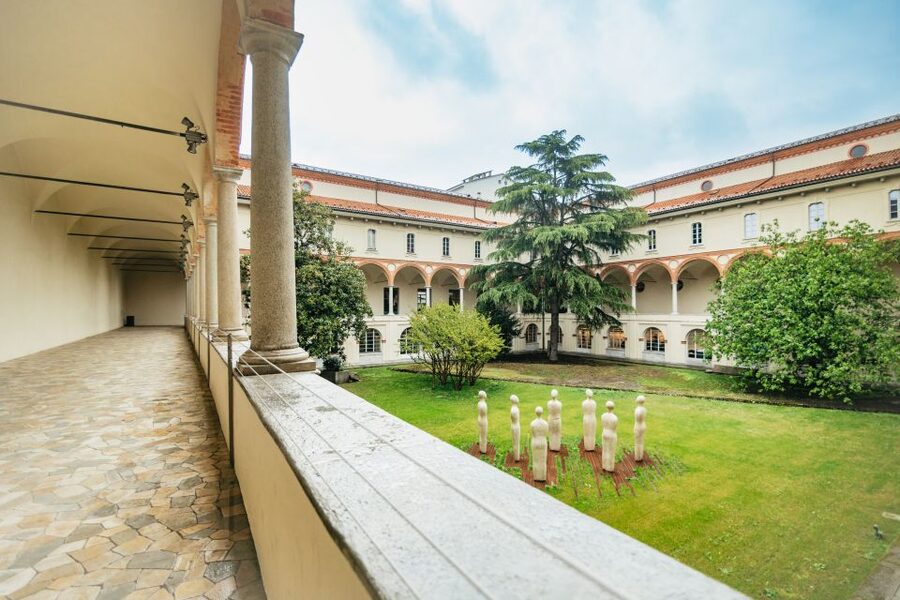
- A former Renaissance monastery: The building adds atmosphere, with exhibition rooms arranged through historic cloisters and large modern halls.
- Excellent value at $15: The ticket is modest for a museum that can occupy three hours, five hours, or an entire day.
- Plan for extra access: Entry to the museum is included, but guided tours are not. The Enrico Toti submarine may require a separate booking at the ticket office for interior access.
Entering at Via San Vittore 21
The museum entrance is at Via San Vittore 21, close to the metro and within easy reach of Milan’s major central sights. The entrance can be easy to miss because the sign sits back from the street, so keep the address in view rather than relying only on a quick glance for a large museum sign.
You need to exchange your voucher at the ticket office for the actual entry ticket. That step matters. A digital voucher alone is not necessarily the final admission ticket, so allow a little time for the exchange before heading into the galleries.
Your ticket is valid for one day and allows entry at any time within the specified time slot. That gives you some flexibility, but you should still check the time shown on your booking rather than assuming you can arrive whenever you like.
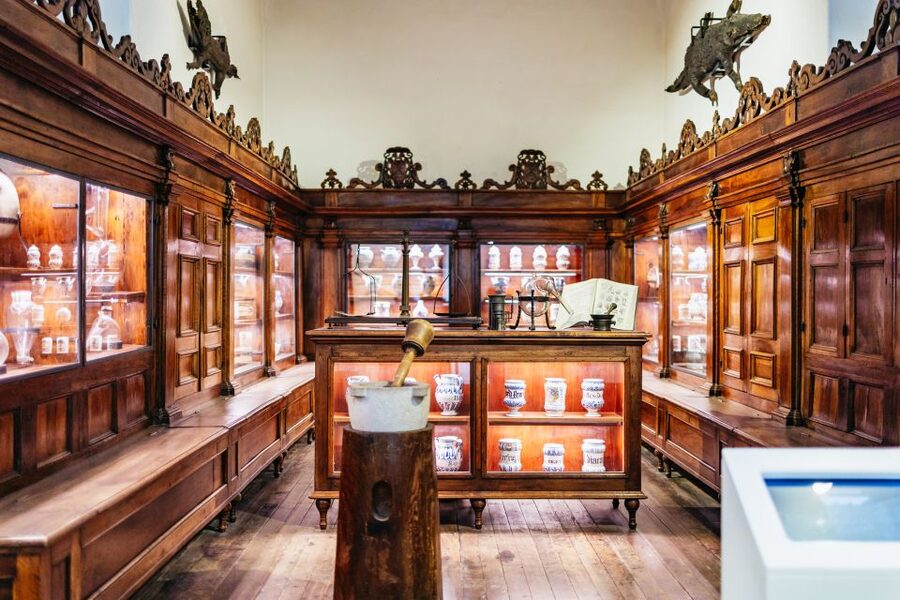
The building itself gives the first few minutes a special feel. You are not entering a modern box built only for displays. The museum occupies a historic religious complex, with cloisters and older architectural elements joined to broad exhibition spaces. That mix of old stone, polished machines, and modern science works well in Milan.
More Museum Tours in Milan
- Official San Siro Stadium and Museum Guided Tour
★ 4.4 · 3,573 reviews - Milan: Leonardo3 The World of Leonardo Museum Entry Ticket
★ 4.4 · 3,241 reviews - Milan: La Scala Theater & Museum Guided Experience
★ 4.1 · 2,931 reviews
The Leonardo New Galleries
The New Galleries are the museum’s main draw, and they deserve serious time. This is not simply a room with a few famous sketches and a plaque about Leonardo’s inventions. The display follows his work across engineering, mechanics, architecture, science, and art.
The collection includes 170 historical models, works of art, old volumes, and immersive installations. The models help you understand drawings that can otherwise feel abstract. A page of gears, bridges, flying machines, or military devices becomes easier to read when you can see a constructed version in front of you.
I find this especially useful if you know Leonardo mainly as the painter of the Mona Lisa and The Last Supper. The exhibition presents him as a tireless observer and problem solver. His notebooks connect the human body, water, flight, machines, and buildings, and the displays make those connections easier to follow.
You will need patience here. There is a lot to read, and the value of the galleries comes from the explanation as much as from the objects. If you rush through the cases, you will miss the point. Give yourself at least an hour for Leonardo alone if you want more than a quick look.
The presentation also works for families. Children can focus on the machines and moving parts, while adults can spend longer with the drawings and technical ideas. The museum does not reduce Leonardo to a children’s activity, but it gives younger visitors enough visual material to stay interested.
Steam Trains and the Big Transport Halls
The transport section is where the museum’s size becomes clear. After the more measured Leonardo galleries, you enter spaces containing machines large enough to make ordinary museum cases seem very small.
Steam trains are among the most memorable sights. Their size, metalwork, and mechanical detail give you a real sense of how industrial transport changed daily life. You do not just read about railways as an idea. You stand next to the equipment and see the scale of the machines.
The collection continues through ships, aircraft, and military vehicles, giving the museum a broad account of movement by land, sea, and air. The display of the Luna Rossa AC72 catamaran adds a modern sporting edge, while the brigantine schooner Ebe and Conte Biancamano transatlantic liner connect Italian maritime skill with travel, trade, and ocean crossings.
The transport halls are particularly good if your interests are mixed. You might enter for Leonardo, pause for a train, then spend most of your time looking at aircraft or ships. That variety also explains why the visit suits couples and families with different tastes. One person can enjoy engineering, another can focus on design, and both still have plenty to see.
The scale creates one drawback: it can be hard to judge how much remains. A large room may look like the end of a section, then lead to another series of galleries. The floor plan is not always straightforward, so I recommend checking your location regularly and deciding which areas matter most to you.
The Enrico Toti Submarine and Outdoor Displays
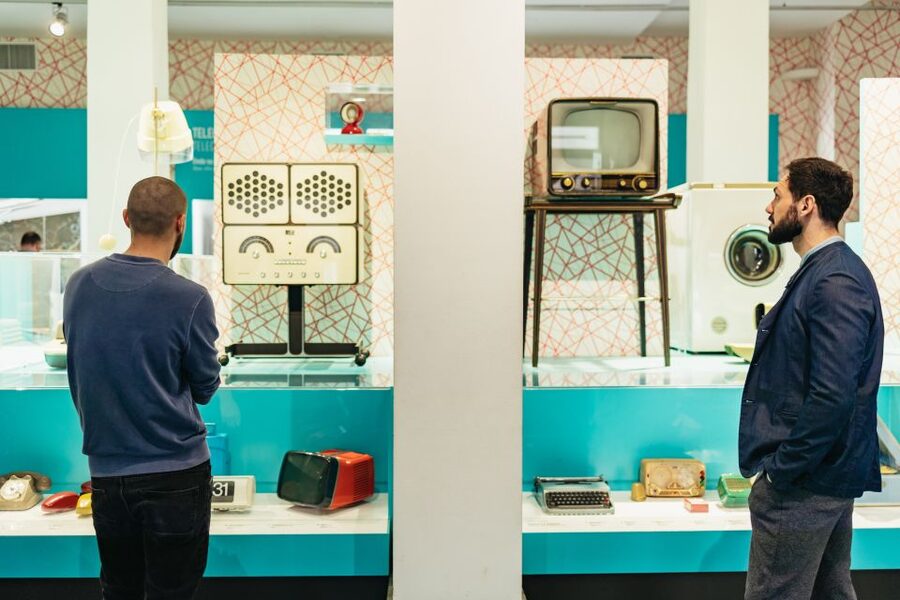
The Enrico Toti submarine is one of the museum’s most striking objects. Even when you only view it from outside, its presence makes the collection feel unusually substantial. It is not a small model or a cutaway diagram. It is a full-size submarine connected to Italy’s naval and technical story.
Interior access may require a separate reservation at the ticket office. This is an important detail to check as soon as you arrive. It is possible to miss the chance to go inside if you do not ask about availability early in the visit.
Some outdoor objects may occasionally be closed or hidden during renovation work. Past conditions have affected access to displays such as the submarine and aircraft, so do not build your entire plan around one exterior object without checking what is open on your date.
Still, the submarine is worth seeing even if interior entry is unavailable. It gives the museum a sense of physical adventure that display cases cannot provide, and it makes a strong stopping point in a visit already filled with machines.
More galleries and collections:
- Milan: Pinacoteca Ambrosiana & da Vinci Codex Exhibition
★ 4.6 · 1,816 reviews - Milan: La Scala Theater and Museum Tour with Entry Tickets
★ 4.7 · 1,722 reviews - Milan: Cathedral, Archeological Area and Museum Ticket
★ 4.5 · 1,093 reviews - Casa Milan: Museum Entry Ticket
★ 4.6 · 969 reviews
Space, Rockets, and the Moon Fragment
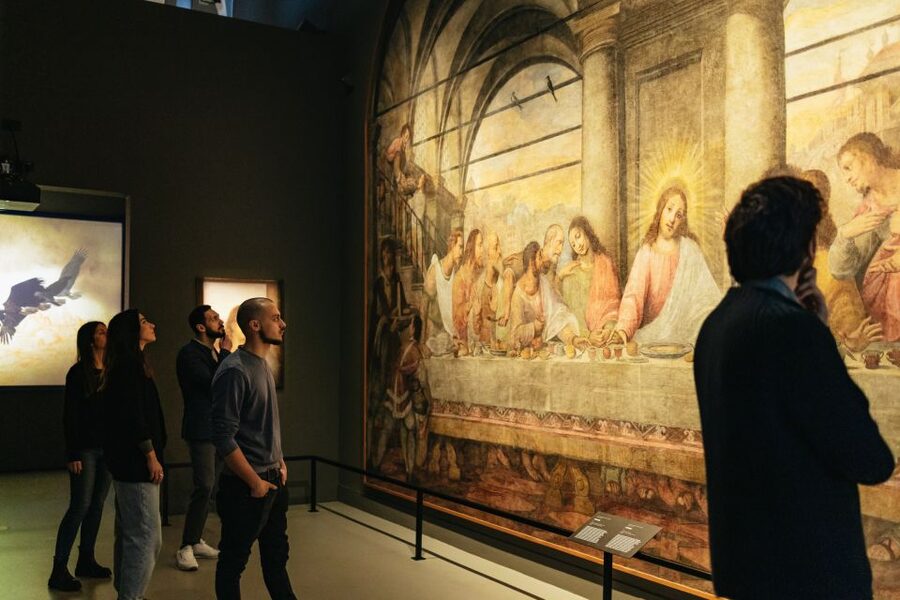
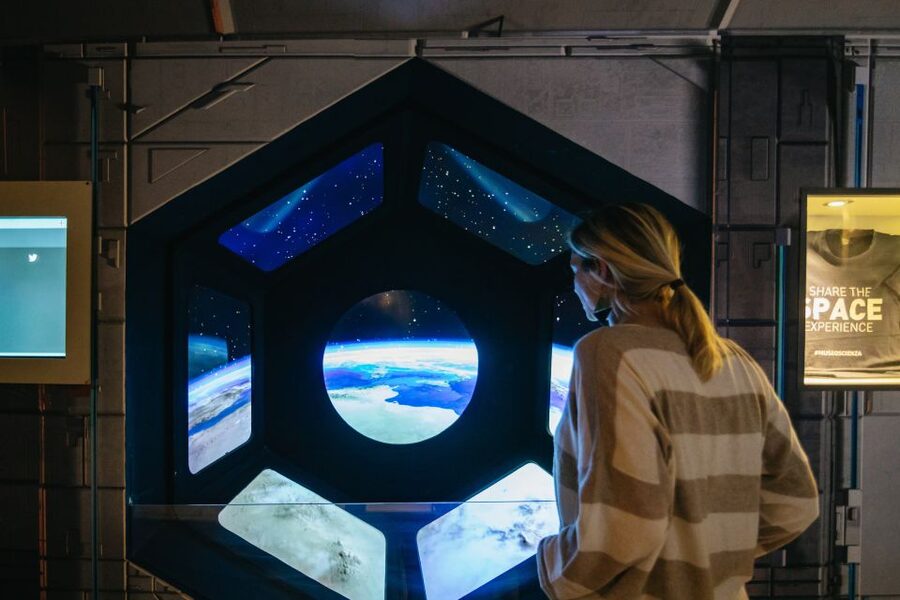
The space area offers a different mood from the transport halls. Here, the objects are tied to exploration beyond Earth, including the Vega space launcher and space memorabilia.
The most unusual item is the moon fragment described as the only moon fragment visible in Italy. That small piece carries more weight than its size suggests. It links the museum to the Apollo era and to the larger human effort to collect, study, and understand material from another world.
You may find the space section especially engaging with older children and teenagers. It gives you a chance to discuss lunar missions, rocketry, and the practical problems of leaving Earth. One family visit prompted extended conversation about science and the lunar landings, which is exactly the kind of response a good museum can encourage.
The section is not only for space enthusiasts. It also fits the museum’s larger theme: people observe a problem, build a tool, test an idea, and revise it. Leonardo’s sketches and a space launcher are separated by centuries, but the basic habit of solving problems connects them.
Temporary Displays and Hands-On Learning
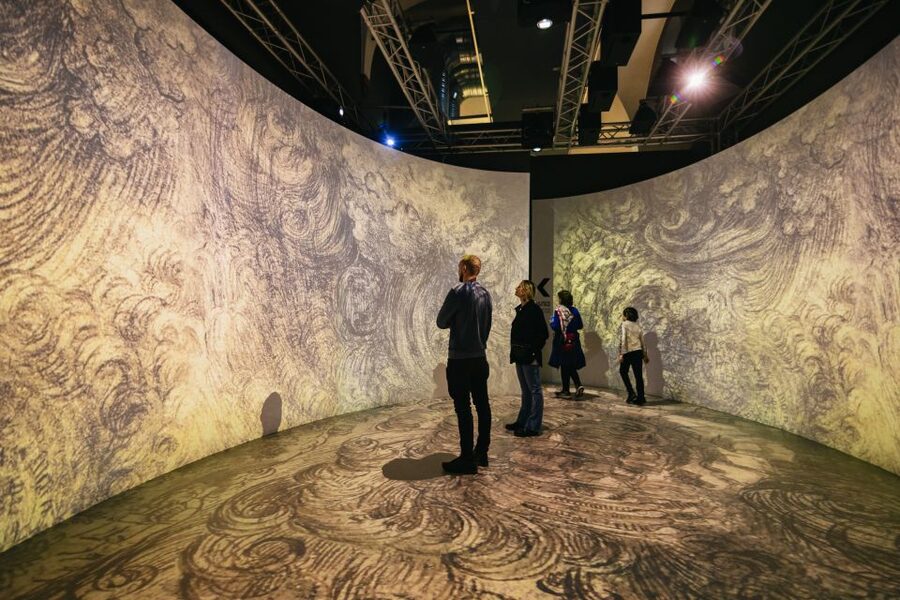
The permanent collection covers a lot, but the museum also presents temporary exhibitions and displays related to energy, materials, communication, transport, and particle physics. These can change, so it is worth checking what is scheduled before you go if one of those subjects interests you.
The museum has an interactive side that works well for children and remains enjoyable for adults. You may encounter activities and puzzles in the space area, along with displays that invite you to think about how a machine works rather than simply admire it from behind glass.
This balance is one of the museum’s strongest qualities. Some museums explain science in a way that feels like school. Here, the giant objects and practical displays keep the subject physical. You can read about technology, then look at the machine itself.
That said, not every section will hold your attention equally. The museum covers a wide range of subjects, so a visitor who wants only Leonardo may find the communications, materials, or industrial displays less compelling. The solution is not to rush everything. Choose your priorities before you arrive.
How Long to Spend Inside
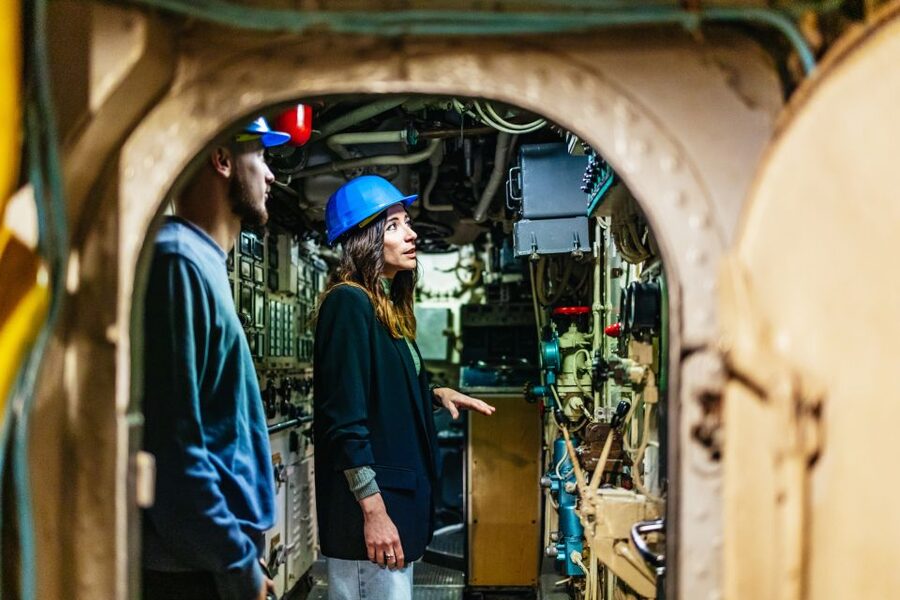
Plan for at least three hours if you want a proper visit. Many people find that three and a half hours passes quickly because the labels invite careful reading.
A five-hour visit is realistic if you enjoy science, history, transport, or technology. You can also spend a full day here, especially if you move slowly through Leonardo, stop at the large transport halls, and make time for the space exhibits and temporary displays.
I would divide the visit into three possible plans:
- Two-hour visit: Focus on the Leonardo galleries, space section, and one transport hall.
- Three to four hours: Add the major train, ship, aircraft, and submarine displays, with time for selected interactive exhibits.
- Full day: Read more labels, explore the temporary displays, revisit favorite objects, and avoid rushing the final rooms.
The museum can be tiring simply because of its size. Wear comfortable shoes and avoid scheduling another major museum immediately afterward. You can combine it with nearby sights, but give yourself a clear time limit if you have a later reservation.
Is $15 Good Value?
At $15 per person, this is one of the better-value cultural stops in Milan. The ticket covers a full day in a museum with an unusually large collection and several major objects that would be expensive to experience elsewhere.
The value is strongest for families and anyone interested in machines. A child can spend time with interactive exhibits, while an adult studies Leonardo’s models or the history of transport. Teenagers may find the space and aircraft displays more engaging than a traditional art museum.
The value is still good for adults traveling without children. The museum is not merely child-focused. Its Leonardo collection, historical equipment, and engineering displays offer plenty of substance, though you should expect more reading than you would get on a guided tour.
You also receive a 10 percent discount at the museum shop. That is a small extra, not a reason to buy the ticket, but it is useful if you want a book or souvenir connected to Leonardo or science.
Practical Tips for a Smoother Visit
Arrive with a short list of priorities. The museum is large enough that trying to see every label can turn a pleasant visit into a march.
Ask at the ticket office about submarine access immediately. If interior visits require a booking, this is the best time to arrange it.
Do not assume the Leonardo section represents the entire museum. It is a major highlight, but the collection also includes railways, ships, aircraft, military vehicles, space, energy, materials, communication, and particle physics.
Keep your voucher ready for the ticket exchange. This avoids confusion at the entrance and gets you into the galleries faster.
If you are visiting with children, use the large objects as anchors. Start with Leonardo, then move to trains, ships, or space depending on what catches their interest. The museum is broad enough to keep changing subjects before attention fades.
If you want a guide, arrange one separately because a guided tour is not included. The self-guided visit gives you freedom, but some visitors would prefer more explanation in the galleries. An audio guide is also not included in the admission described here.
The museum is wheelchair accessible, and assistance dogs are allowed. Other pets are not permitted.
Who Will Enjoy This Museum Most?
I would recommend it first to families, science fans, engineering enthusiasts, and adults who like museums with large physical objects. It is also a smart choice for a mixed group because the collection moves across so many subjects.
Leonardo fans should visit, but they should not expect a small, focused gallery devoted only to his inventions. The museum uses Leonardo as a major thread within a much larger story about Italian and international science and technology.
You should think twice if you dislike large museums, long reading sections, or a visit without a guide. The floor plan can be confusing, and the amount of material may feel excessive if you have only a short window in Milan.
It pairs well with a visit to The Last Supper because the two attractions are close to each other. Just leave enough time between bookings. The museum deserves more than a hurried visit before your next appointment.
Should You Book the Milan Science and Technology Museum?
Yes, if you want excellent value and a full, varied museum visit. For $15, you can see Leonardo models, steam trains, ships, aircraft, a submarine, a moon fragment, and space hardware in one historic setting.
Book it if you have at least three hours, and choose it with confidence if you are traveling with children or teenagers. Skip it only if your Milan schedule is extremely tight or you want a small, narrowly focused Leonardo exhibit.
The best approach is simple: arrive early enough to exchange your voucher, ask about submarine access, choose your must-see galleries, and let the museum surprise you with the sections you did not expect to enjoy.
FAQ
Where is the museum located?
The museum entrance is at Via San Vittore 21 in Milan, in the Lombardy region of Italy.
How much does admission cost?
The listed price is $15 per person.
How long is the ticket valid?
The ticket is valid for one day and allows access at any time within the specified time slot.
Is a guided tour included?
No. The entry ticket includes museum admission, but a guided tour is not included.
Do I need to exchange my voucher?
Yes. You need to exchange the voucher at the ticket office for the entrance ticket.
Is the museum wheelchair accessible?
Yes, the museum is wheelchair accessible.
Can I bring a pet?
Pets are not allowed. Assistance dogs are permitted.
Can I visit the Enrico Toti submarine inside?
Interior access may require a separate booking at the ticket office. Ask about availability when you arrive.
Can I cancel my booking?
You can cancel up to 24 hours in advance for a full refund. A reserve-now-and-pay-later option is also available.
Just added around Milan
- Milan Sights by Segway Small Group Tour★ 5.0 · 249 reviews
- Unveil the Masterpiece: Guided Tour of Da Vinci’s Last Supper★ 4.5 · 251 reviews
- Milan: Pasta & Tiramisu Cooking Class with Premium Products★ 5.0 · 255 reviews
- Milan Semi-Private Max 6 People Tour with Last Supper and Duomo★ 5.0 · 258 reviews
- Skip The Line: Best Of Milan Tour With Last Supper & Milan Duomo★ 4.5 · 260 reviews
- Milan: Duomo & Rooftop Tour with Optional Hop-On Hop-Off Bus★ 4.5 · 262 reviews
- Stresa: 1-Day 3 Borromean Islands Hop-On Hop-Off Boat Tour★ 4.0 · 262 reviews
- Milan Centre Food Tour of 7+ Italian Tastings with Risotto & Wine★ 5.0 · 264 reviews
Museums, compared.

Vatican: Museums & Sistine Chapel Entrance Ticket
Read our review →
Vatican Museums & Sistine Chapel Tour with Optional Basilica
Read our review →
Vatican Museums, Sistine Chapel & St Peter’s Basilica Guided Tour
Read our review →
Skip-The-Line Uffizi Gallery Timed Entry Ticket
Read our review →
Vatican Museums, Sistine Chapel & Basilica Tour
Read our review →
Vatican Museums & Sistine Chapel Skip-the-Line Entry Ticket
Read our review →Vatican Museums, Sistine Chapel & Basilica Tour
Read our review →
Vatican Museums & Sistine Chapel Guided Tour
Read our review →Browse the lists this tour appears in