
Review · POMPEII & HERCULANEUM TOURS
Herculaneum: Skip The Line Entrance ticket + Audioguide
Ancient homes, mosaics, and wooden details survive here. I like the freedom of a self-guided visit and the way the audio guide lets you choose which buildings deserve your time. At $35 per person, the package is useful if you value convenience and clear explanations, though you may find it expensive when the archaeological park offers free admission on Sundays.
Herculaneum is smaller than Pompeii but often easier to understand in a single visit. I also like that the audio guide works in five languages and lets you move at your own pace. The main drawbacks are practical: the pickup desk can be hard to spot, the supplied device is less comfortable than using your own phone, and there is no café or restaurant inside the site.
In This Review
- Key points to know before you go
- Why Herculaneum feels different from Pompeii
- Arriving at the entrance and collecting your device
- Following the map through the ancient streets
- The houses, villas, and mosaics that deserve time
- How the three-hour format works in practice
- Is $35 a fair price?
- Comfort, food, and weather
- Who will like this self-guided visit
- Booking details worth checking
- Should you book the Herculaneum audio guide?
- FAQ
- What does the Herculaneum package include?
- Is a live guide included?
- Which audio guide languages are available?
- Where do I collect the ticket and audio guide?
- What identification do I need?
- Are headphones included?
- How long does the visit take?
Key points to know before you go
- Herculaneum is compact but exceptionally well preserved: You can see houses, villas, mosaics, and other details of Roman daily life without covering Pompeii-sized distances.
- The audio guide gives you control: You can skip sections, linger at buildings that interest you, and avoid being tied to a guide’s pace.
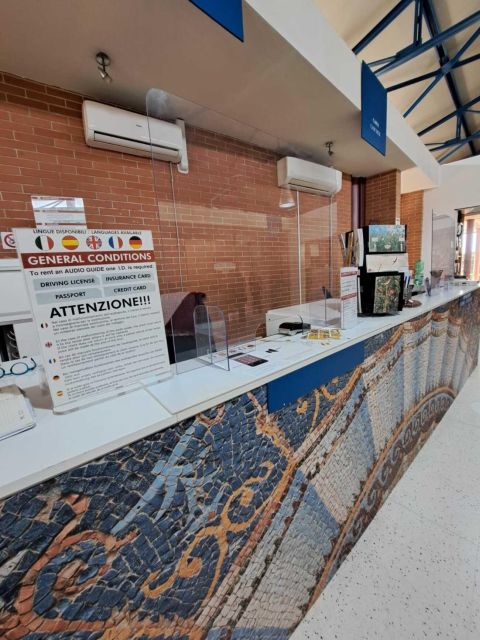
- The meeting point is inside the entrance area: Look for the Audioguide Desk rather than assuming the main ticket office will handle everything.
- Bring identification and headphones: A passport, identity card, or driving licence is needed to hire the audio device, and headphones are not included.
- Sunday pricing deserves attention: Admission to the archaeological park can be free on Sundays, so check the official site before paying for a package.
- Plan food before entering: There are vending machines, but no café or restaurant inside the park.
Why Herculaneum feels different from Pompeii
Herculaneum and Pompeii were both buried by the eruption of Mount Vesuvius in AD 79, but they offer different kinds of visits. Pompeii is vast and sprawling. Herculaneum is more compact, which makes it easier to cover in roughly two to three hours.
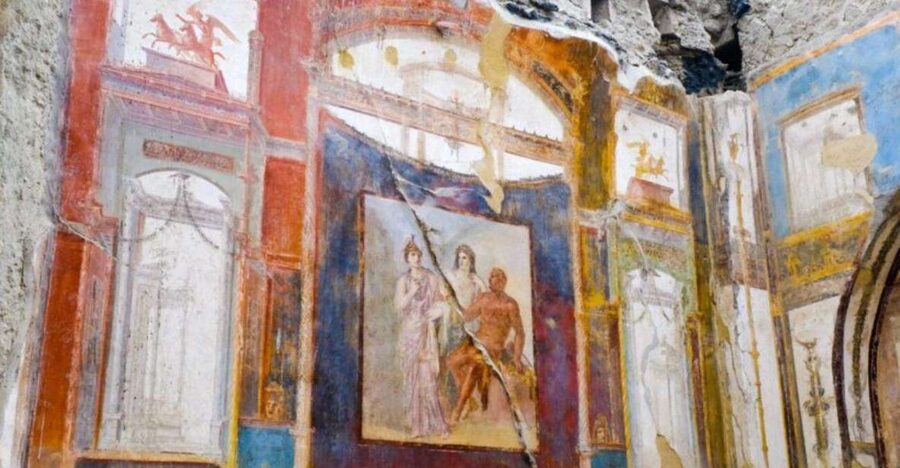
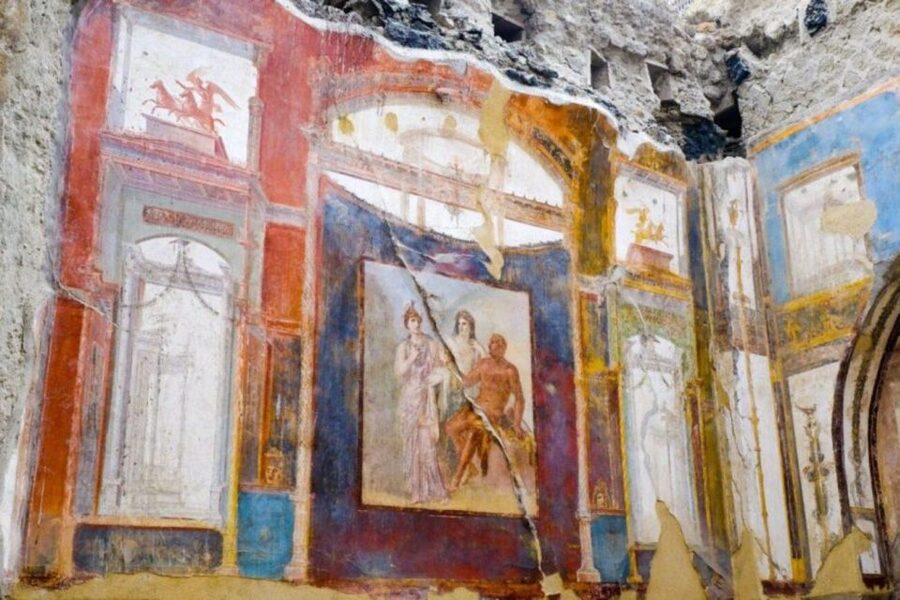
That smaller scale does not make Herculaneum less important. In many places, the preservation is astonishing. You might see mosaics still fixed to walls, painted decoration, household spaces, and building details that help turn an archaeological site into a former neighborhood.
I like Herculaneum for this reason: it can feel less like a long list of ruins and more like a town you can read street by street. The audio guide adds useful context, especially because the site itself offers limited written explanation at some points.
If you have already visited Pompeii, Herculaneum makes a fine second stop. One visitor who had been to Pompeii several times expected to be disappointed and instead found the smaller site a welcome surprise. That comparison is useful. Herculaneum is not simply a reduced version of Pompeii. Its compact layout and preserved details create a different experience.
More Skip-the-Line Tickets in Naples
- Herculaneum: Skip-the-Line Guided Tour with Archaeologist
★ 4.8 · 3,439 reviews - Mount Vesuvius: Skip-the-Line Ticket and Smart Digital Guide
★ 4.2 · 2,780 reviews - From Naples: Pompeii Skip-the-Line Entry Ticket and Tour
★ 4.4 · 2,753 reviews
Arriving at the entrance and collecting your device
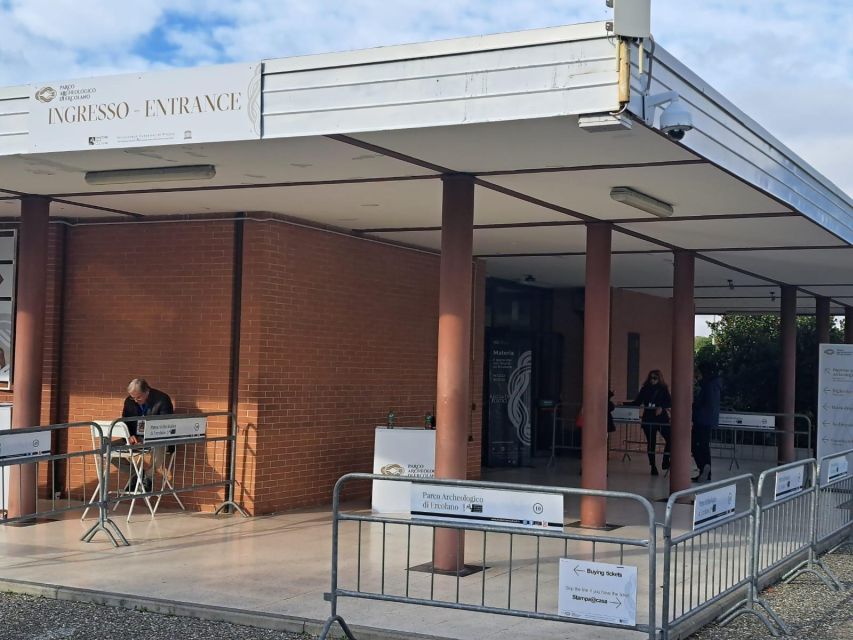
The practical part of this visit is simple once you know where to go. Head to the entrance of the archaeological park and look for the Audioguide Desk. You will need to present your booking information and valid identification before receiving the audio guide.
The entrance signs can be confusing. There are signs in more than one direction, and the Audioguide Desk is not always obvious at first glance. Allow a few extra minutes to find it, especially if you have a train to catch or a timed plan for Mount Vesuvius later in the day.
The package includes:
- Entry to Herculaneum Archaeological Park
- An audio guide
- A map of the site
It does not include a live guide or headphones. The device is designed to be held near your ear, and some people find that awkward at first. It can also stop playing if it touches your face in the wrong way. Once you get used to the controls and position, it becomes easier to use.
If you have wired headphones, bringing them may make listening more comfortable, but the supplied information specifically notes that headphones are not included. Do not count on pairing your Bluetooth headphones with the device. That option may not be available.
You must return the device before the office closes. Keep your passport, identity card, or driving licence with you because identification is required for the hire. You are responsible for repair or replacement costs if the device is damaged, lost, or stolen.
Following the map through the ancient streets
The map is more important than it may sound. Herculaneum has streets, lanes, buildings, and numbered points, and the audio guide connects its explanations to the numbers shown on the site.
I suggest starting by orienting yourself rather than immediately pressing play at the first stop. Look at the map, note the general route, and decide how much time you have. A visit of three hours gives you room to listen carefully, pause often, and return to buildings that catch your eye.
The audio guide is particularly helpful when you want to understand why a particular wall, room, or decoration matters. Without some explanation, a preserved Roman building can still look like a series of floors and fragments. The narration gives you a way to picture how these spaces functioned.
The recorded information is available in Italian, German, English, French, and Spanish. English speakers should find plenty to use, though the wording may feel formal in places. Some explanations use high-level historical language and may require a little patience.
The guide is not a substitute for every detail a live guide might offer. A person leading a group can answer questions, point out small features, and share extra stories that may not appear in the recording. The tradeoff is freedom. You can pause the audio, skip what does not interest you, and stay longer in a building without holding up anyone else.
The houses, villas, and mosaics that deserve time
The main pleasure of Herculaneum is the quality of what remains. The preserved homes and villas help you picture ordinary Roman life, rather than only monumental public buildings.
Take time to look up, not just down. Mosaics and floor patterns naturally attract attention, but walls and upper sections may reveal just as much about decoration and household design. The audio guide helps explain these features when you reach the numbered stops.
Some people complete the site in about two and a half hours. That is enough for a solid visit, but two hours may feel rushed if you want to listen to every explanation and examine the buildings closely. If you have only a short window between trains, use the map to mark your priorities before you enter.
This is where the self-guided format works best. You can select the houses, villas, or areas that matter most to you. You are not waiting for a group to gather, and you do not have to follow another person’s interests or walking speed.
The site can also be sobering. The destruction caused by the eruption is not an abstract event here. The remains connect the date AD 79 to real homes, real streets, and real people. The audio guide provides historical context, while the physical site gives that information emotional weight.
More Pompeii and Herculaneum visits:
- Pompeii: Entry Ticket and Guided Tour with an Archaeologist
★ 4.8 · 19,459 reviews - Pompeii: Entry Ticket with Optional Audio Guide
★ 4.2 · 12,360 reviews - Pompeii: Small Group Tour with an Archaeologist
★ 4.8 · 12,264 reviews - From Naples: Pompeii Ruins & Mount Vesuvius Day Tour
★ 4.3 · 11,459 reviews
How the three-hour format works in practice
The stated duration is three hours, but this is not a rigid guided itinerary. It means you have a suggested amount of time to explore during the park’s opening hours. Your actual visit can be shorter or longer, depending on the ticket conditions and the park’s closing time.
A careful three-hour plan might look like this:
- Spend the first 10 to 15 minutes finding the Audioguide Desk, collecting the device, and studying the map.
- Use the next two hours to follow the numbered stops, with time for photographs and pauses.
- Keep the final 30 to 40 minutes for buildings you skipped, sections you want to revisit, and the walk back toward the exit.
If your transport schedule is tight, be strict with your watch. Rail service between Sorrento and Herculaneum can offer only two direct trains each way on some schedules. That matters because a flexible archaeological visit becomes much less relaxing when you are watching the platform clock.
Herculaneum can work well alongside Mount Vesuvius on the same day, but the timing needs care. You should check transport and activity times before committing to both. The archaeological park itself takes around two to three hours for many visitors, and the walk from the station to the site adds time.
The station-to-site walk has been described as roughly half a mile downhill. That is manageable for many people, but it is worth remembering on the return journey. A downhill walk at the start becomes an uphill walk when you leave.
Is $35 a fair price?
At $35 per person, this is not the cheapest way to enter Herculaneum. Its value depends on what you want from the visit and when you are going.
The strongest part of the price is convenience. You receive admission, a map, and recorded explanations in one package. If the ticket line is busy, skip-the-line access can save time. If the ticket office is quiet, the practical advantage is smaller. One visit had no queue at all, so the package did not provide much time savings on that occasion.
The audio guide is the bigger value. Some parts of the site have little information on display, so walking around without interpretation can leave you guessing. The recordings connect building numbers to historical details and make the ruins easier to follow.
Sunday is the important exception. Admission to the site can be free on Sundays. If you are visiting then, check the park’s official ticket arrangements before booking this package. Paying $35 when you could receive free entry may not make financial sense, especially if you are comfortable exploring with your own guidebook or research.
There have also been cases where a Sunday booking was refunded only partially after the free-admission issue was raised. That makes checking the date and official rules before payment especially important.
For a weekday visit, I think the package is easier to justify, particularly if you want an audio guide and do not want to arrange a separate ticket. For a Sunday visit, compare the cost carefully.
Comfort, food, and weather
Wear comfortable shoes. The site involves walking through ancient streets and archaeological areas, and the route is not designed as a quick indoor museum visit.
The activity runs rain or shine. Bring protection suitable for the forecast and do not assume poor weather will cancel the visit. The ruins remain open under changing conditions, so practical clothing matters more than stylish clothing here.
Food is a weak point. There are vending machines, but no café, bar, or restaurant inside the park. Bring water and a snack, or eat before entering. This is particularly useful if you plan to spend the full three hours on site or combine Herculaneum with another attraction.
Do not treat the vending machines as a complete meal plan. A little preparation will make the visit more comfortable, especially in warm weather.
Who will like this self-guided visit
This package suits you if you want independence and a manageable archaeological site. It is a good match for people who prefer to stop when they wish, skip less interesting sections, and spend extra time on mosaics or houses that catch their attention.
It also works well for families or mixed-interest groups. One person can listen to a full explanation while another moves ahead, and you can regroup without waiting for a whole tour party.
It is useful for visitors with a fixed transport schedule. The audio guide allows you to focus on your chosen stops rather than following a complete route. If you only have two hours, you can select the most important areas from the map and avoid wasting time.
You may prefer a live guide if you want a stronger story, questions answered on the spot, or extra details about hidden features. The recording is informative, but it may feel formal and less engaging than a good person-led tour.
The supplied device may also frustrate you if you expect modern headphone connections. It is functional rather than elegant. Bring your own listening solution if possible, but do not assume Bluetooth pairing will work.
Booking details worth checking
The experience has a published rating of 4.3 from 266 ratings, which fits the overall picture: strong satisfaction with the site and the freedom of the format, mixed feelings about the device and the pickup process.
Free cancellation is available up to 24 hours in advance for a full refund. You can also reserve and pay later, which helps if your Campania plans are still changing.
Check the available start times before booking. The visit is described as three hours, but you still need to finish before the park and audio office close. Return the device on time, and keep your identification safe throughout the visit.
The experience provider is Tempio Travel Pompei Tickets. The meeting point remains the entrance area, specifically the Audioguide Desk.
Should you book the Herculaneum audio guide?
I would book this for a weekday visit if you want reliable historical context without joining a group. Herculaneum is compact, beautifully preserved, and easy to explore at your own pace. The audio guide fills an important gap because on-site information can be limited.
I would pause before booking it on a Sunday. Check the official free-admission rules first, then decide if the audio guide and convenience are worth the added price.
Bring identification, comfortable shoes, headphones if you have them, water, and a snack. Give yourself time to find the Audioguide Desk, and do not squeeze the visit too tightly against a train or Mount Vesuvius connection.
For independent visitors who like to set their own route, this is a practical way to see Herculaneum. For those who want lively storytelling and personal guidance, a live tour may offer more. The site itself is the reason to come, and this package gives you a flexible way to make sense of it.
FAQ
What does the Herculaneum package include?
It includes an entry ticket to Herculaneum Archaeological Park, an audio guide, and a map of the site.
Is a live guide included?
No. The visit is self-guided, so you explore independently with the audio guide and map.
Which audio guide languages are available?
The audio guide is available in Italian, German, English, French, and Spanish.
Where do I collect the ticket and audio guide?
Go to the entrance of Herculaneum Archaeological Park and look for the Audioguide Desk.
What identification do I need?
You need a valid passport, identity card, or driving licence to hire the audio guide device.
Are headphones included?
No. Headphones are not included. The device is normally held near your ear, and Bluetooth headphone pairing may not be available.
How long does the visit take?
The stated duration is three hours. Some people complete the site in about two and a half hours, while two hours may be too short if you want to see everything and listen to the explanations carefully.
More Fast-Track Entries
- Pompeii: Skip-the-Line Entrance Ticket with Audio Guide
★ 4.0 · 2,509 reviews - Pompeii: Skip-the-Line Entry Ticket with Audio Guide or Tour
★ 4.1 · 1,364 reviews - From Naples: Pompeii Guided Tour with Skip-the-Line Tickets
★ 4.8 · 1,171 reviews - Pompeii: Skip-the-line-Ticket and Guided Tour
★ 4.6 · 1,152 reviews
Just added around Naples
- From Naples/Salerno: Pompeii, Sorrento, and Positano Tour★ 4.5 · 250 reviews
- Pompeii: Day Tour of Pompeii and Vesuvius with Bus Transfer★ 4.2 · 250 reviews
- Ischia: Island Boat Tour with Neapolitan Lunch & Snorkeling★ 4.9 · 253 reviews
- Explore Naples & Pompeii in One Day – Guided Half-Day Tour★ 4.5 · 253 reviews
- Discover Pompeii: French Walking Tour of the Buried City★ 4.8 · 253 reviews
- Private Transfer from Naples to Sorrento or from Sorrento to Naples★ 5.0 · 254 reviews
- From Pompeii: Mount Vesuvius Guided Tour with Transfer★ 4.8 · 255 reviews
- Private Transfer from Naples to Positano or Amalfi or vice versa★ 5.0 · 265 reviews
Pompeii & Herculaneum Tours, compared.

Pompeii: Entry Ticket and Guided Tour with an Archaeologist
Read our review →
Pompeii: Entry Ticket with Optional Audio Guide
Read our review →
Pompeii: Small Group Tour with an Archaeologist
Read our review →


Pompeii Small Group Tour with an Archaeologist
Read our review →
Pompeii, Amalfi Coast and Positano Day Trip from Rome
Read our review →Browse the lists this tour appears in