Review · TICKETS
Florence: Timed Entry Ticket to Michelangelo’s David & eBook
David earns the crowd. This timed entry experience gives you a reserved visit to Florence’s Accademia Gallery, where Michelangelo’s David shares the spotlight with unfinished sculptures, Renaissance paintings, Medici instruments, and towering medieval altarpieces. I especially like the nearby ticket office and the useful PDF guide, but you should expect some waiting even with priority entry during busy periods.
I also like the flexibility. At $37 per person, this is not the cheapest way into the museum, yet it can be a sensible buy when the official website is sold out or when you need a particular time. The main drawback is the markup: several visitors noted that buying direct can cost about €15 less per ticket.
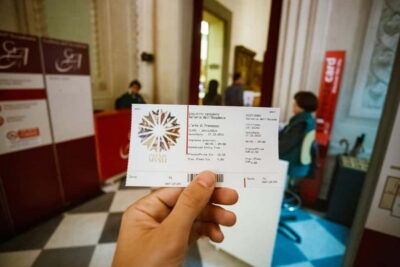
The process is simple if you follow the timing carefully. You collect a paper ticket at the Florence Specialist Office, download the ebook, and join the correct entrance line at your assigned time. Arrive late and the priority benefit can disappear, leaving you in the general admission queue.
In This Review
- Key points to know before booking
- What you are really paying for at $37
- Collecting the ticket near the Accademia
- Entering the Accademia at your reserved time
- Seeing David in the main hall
- Michelangelo’s unfinished sculptures and the marks of the chisel
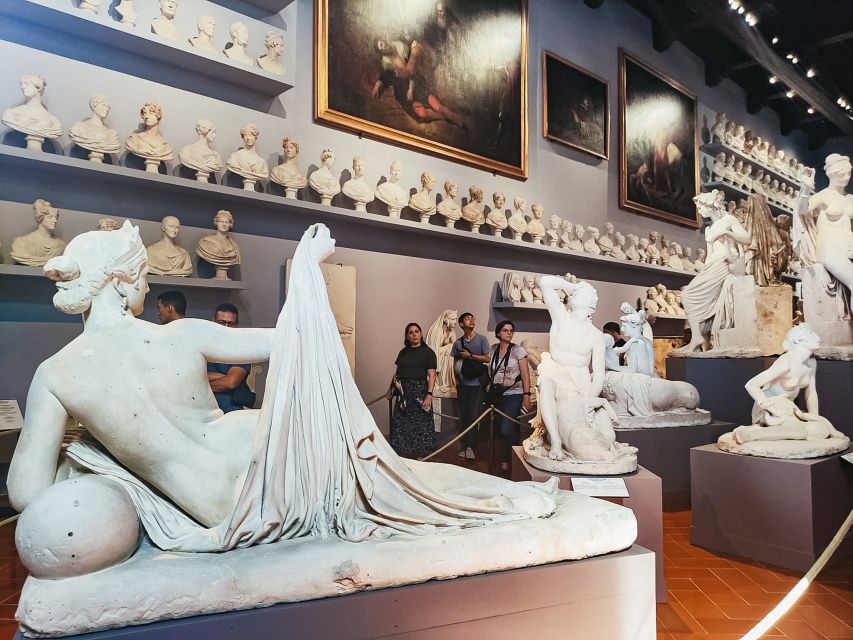
- The Gipsoteca and nineteenth-century sculpture
- Medici instruments, including three Stradivarius pieces
- Medieval and Renaissance paintings beyond the statue
- How long to allow for your visit
- Who should book this ticket
- Final verdict: Is the $37 Accademia ticket worth it?
- FAQ
- Where is the ticket collection point?
- Do I receive a paper ticket?
- Does the ticket include a guide?
- In which languages is the PDF guide available?
- Does priority entry mean I will walk straight inside?
- What happens if I arrive late?
- How long should I spend inside the Accademia?
- Do children need tickets?
- Is the Accademia accessible by wheelchair?
- Can I cancel the booking?
Key points to know before booking
- David is the main event: Michelangelo’s famous marble sculpture is displayed in the main hall, along with several unfinished works that still show traces of the sculptor’s process.
- The ticket office is very close: The Florence Specialist Office is described as being opposite or only a few steps from the Accademia entrance, making collection quick and practical.
- Priority does not always mean instant entry: You skip the ticket office line and use a separate entrance, but security controls and crowd limits can still cause a short wait.
- The museum takes about one to two hours: You can see the highlights in under an hour, but the paintings, plaster models, instruments, and altarpieces reward a slower visit.
- The PDF guide is concise: It gives useful context without turning your visit into a lecture. You can read it on your phone as you move through the rooms.
- Children need the right ID: Visitors aged 6 to 17 must show photo identification with their birth date to receive the reduced fare.
What you are really paying for at $37
The $37 price buys convenience more than exclusivity. You are paying for a reserved time, ticket handling, a separate priority entrance, and a downloadable museum guide. There is no live guide included in this option, so the value depends largely on how important your time in Florence is.
If you plan early and find a ticket on the Accademia’s official website, that will usually be cheaper. The extra cost here makes more sense when official time slots have disappeared, when you are visiting Florence on a tight schedule, or when standing in a long outdoor line would spoil part of your day.
That last point matters in summer. The Accademia is a small museum, and the line for unscheduled admission can stretch well beyond the building. A reserved time does not guarantee that you will walk straight inside, but it can save you from spending hours waiting to buy a ticket.
Several people were inside within 10 to 15 minutes of collecting their tickets. Others still waited because the entrance area was crowded. I would think of this as line reduction, not a magic pass through every person and security check.
The flexible cancellation terms also help. You can cancel up to 24 hours in advance for a full refund, and the reserve now, pay later option lets you hold a place without paying immediately. Availability and starting times depend on the date you select.
A few more reviews worth comparing before you book
- Florence: Skip-The-Line Uffizi Gallery Timed Entry Ticket
★ 4.5 · 27,832 reviews - Tuscany Day Trip from Florence: Siena, San Gimignano, Pisa and Lunch at a Winery
★ 5.0 · 21,634 reviews - Florence: Timed Entrance Ticket to Michelangelo’s David
★ 4.6 · 16,983 reviews
Collecting the ticket near the Accademia
Your meeting point can vary by booking option, so check the voucher rather than walking straight to the museum. The practical detail is that the Florence Specialist Office is very close to the Accademia, often described as directly opposite or about two minutes away.
At the office, you exchange your voucher for a paper admission ticket. Staff then direct you to the correct line, which is useful because the entrance setup can be confusing when several queues form outside the museum.
This handoff received especially strong praise for being fast and easy. Staff helped with directions, answered questions, and in some cases walked visitors to the entrance. The office also offered free Wi-Fi, luggage storage, and, according to one particularly pleased account, a clean restroom.
If you arrive early, ask what is possible. A few people were offered an earlier time slot when space allowed. That is not something you should count on, but it shows why arriving at the office with extra time is wise.
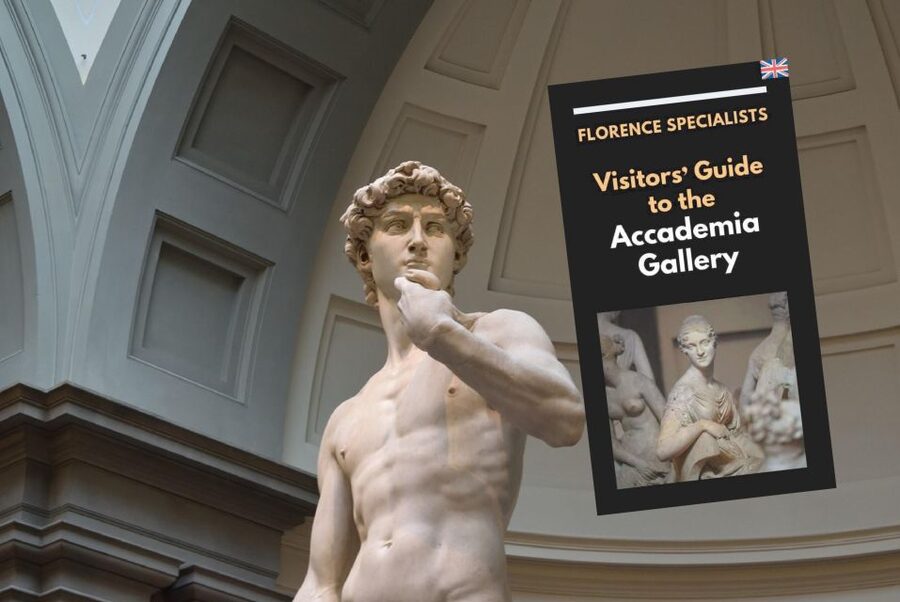
Keep your phone ready for the ebook download. The PDF is available in English, Italian, Spanish, French, Portuguese, German, and Russian. It is not a substitute for a trained art guide, but it gives you enough background to understand the main works instead of simply walking from room to room.
Entering the Accademia at your reserved time
The selected time matters. You need to reach the meeting point on time, collect the physical ticket, and then join the assigned entrance process. If you arrive late, you can lose priority and be sent to the general admission line.
That rule is important in Florence, where a delayed lunch, a wrong turn, or a slow morning can easily eat up half an hour. I would arrive at the office at least 15 to 20 minutes before the museum time, with the voucher and any required identification already available.
The priority entrance usually saves the most time when the regular ticket line is long. Still, museum staff control the number of people inside, so admission may be delayed during periods of heavy traffic. You may wait outside for a short time even with a reservation.
The experience is wheelchair accessible. Pets are not allowed. Children aged 5 and under do not need a ticket, while those from 6 to 17 need a valid photo ID showing their date of birth to receive the reduced ticket. A digital copy is accepted according to the provided instructions.
Seeing David in the main hall
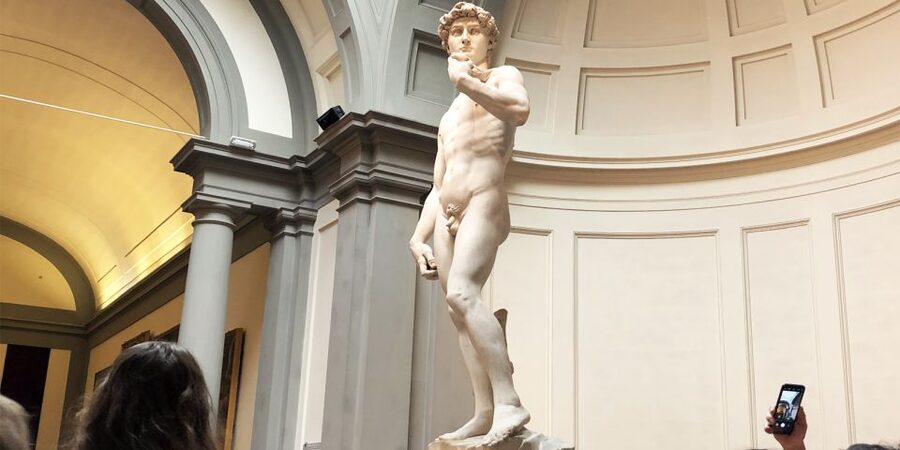
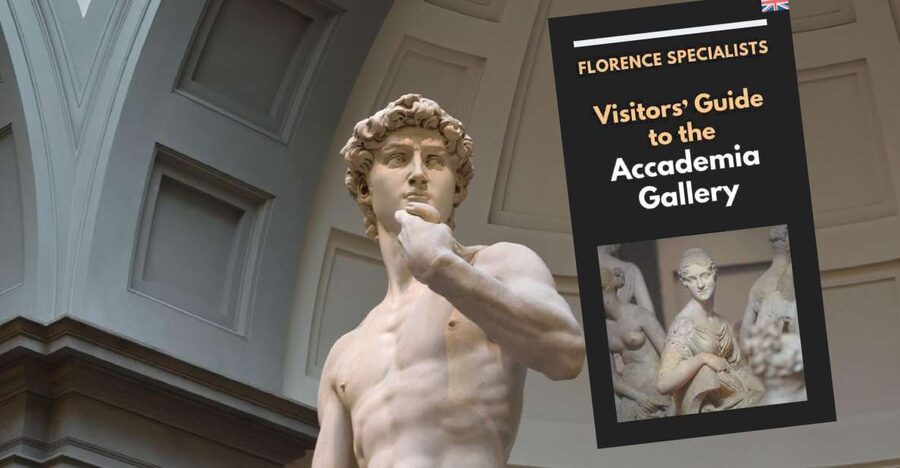
Once inside, head toward the main hall and Michelangelo’s David. The sculpture is familiar from countless photographs, but the real effect comes from its scale, surface, and position in the room. You can see the careful treatment of the hair, hands, face, and muscular body at close range.
David is the reason most people come, and the museum organizes the visit around that moment. Crowds gather in front of the statue, so patience helps. The sculpture is high enough that you can usually get a good view even when people are standing between you and the base.
Take time to look up and down rather than only taking a photograph. The scale becomes clearer when you compare the figure with the surrounding visitors. The work’s power is not just its size. It is the controlled tension in the pose, the alert expression, and the impression that the figure is thinking before acting.
The room can be crowded, especially in high season. One visitor spent only about 30 minutes in the museum because the crowd made lingering difficult, while another stayed for one to two hours. Your timing depends on how much space you find and how closely you want to study the art.
A different sort of day out around Florence:
- Florence: Michelangelo’s David Skip-the-Line Entry Ticket
★ 4.5 · 12,764 reviews - The Best tour in Florence: Renaissance & Medici Tales – guided by a STORYTELLER
★ 5.0 · 12,316 reviews - Florence: Leonardo Interactive Museum Entry Ticket
★ 4.5 · 11,763 reviews - The Best Tour in Florence: Renaissance and Medici Tales
★ 5.0 · 10,810 reviews
Michelangelo’s unfinished sculptures and the marks of the chisel
David is not the only Michelangelo work here. The main hall also contains unfinished sculptures, often called the Prisoners or Slaves, where figures appear to push their way out of the marble.
These works are valuable because you can see the stone and the human form at different stages of completion. The remaining chisel marks make the process visible. Instead of receiving a polished figure alone, you see the struggle between the sculptor’s idea and the block itself.
I find this pairing one of the museum’s strongest features. David presents finished control, while the unfinished works show effort, correction, and material. The contrast gives the visit more depth than a quick photograph in front of the famous statue.
The PDF guide can help you notice these details. It is written as a concise introduction to the museum’s main highlights, so it suits visitors who want context but do not want to read several pages about every object.
If you prefer a full explanation of Michelangelo’s life, Florentine politics, and artistic methods, this ticket will feel limited because there is no live guide. Some people have paired the visit with a separate audio guide, but that is outside this booking.
The Gipsoteca and nineteenth-century sculpture
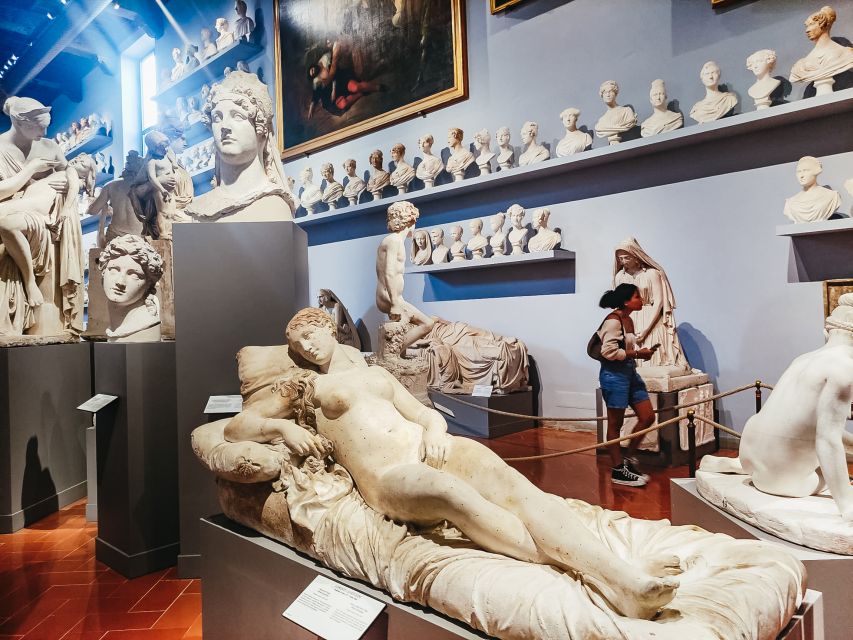
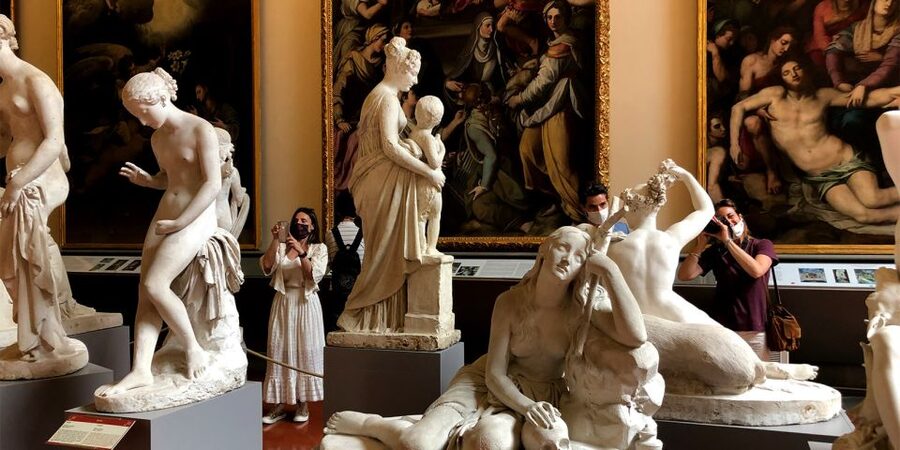
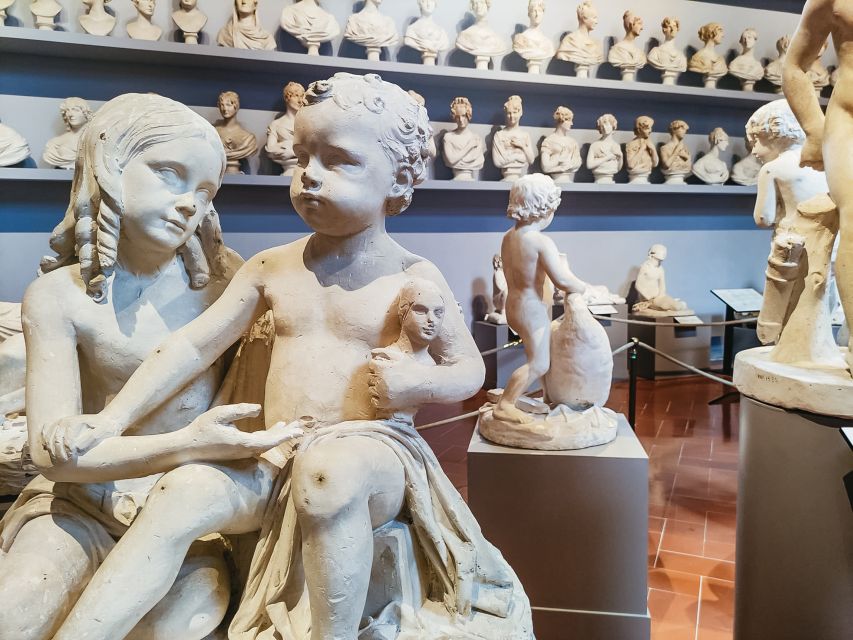
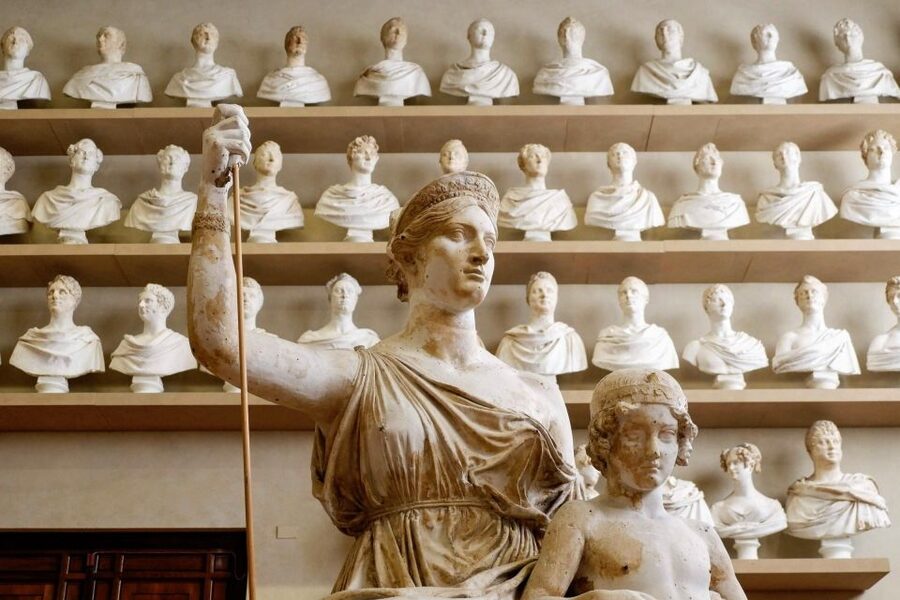
After the main hall, look for the Gipsoteca. This room contains original plaster models made by nineteenth-century Florentine sculptors.
The models show how artists planned larger finished works. Plaster has a different feel from marble or bronze, and these pieces give you a look at the stages between an initial idea and a public monument. They also shift the focus away from the single superstar sculpture at the center of the visit.
The Gipsoteca will not hold your attention as long as David if you are in a hurry. Still, it helps explain the Accademia’s wider role as a place connected to art education and sculpture in Florence.
Medici instruments, including three Stradivarius pieces
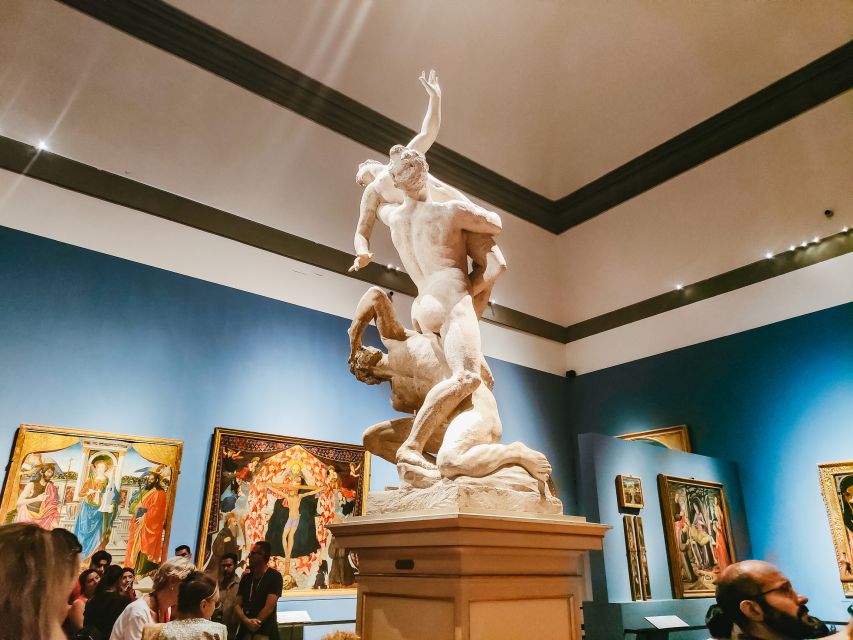
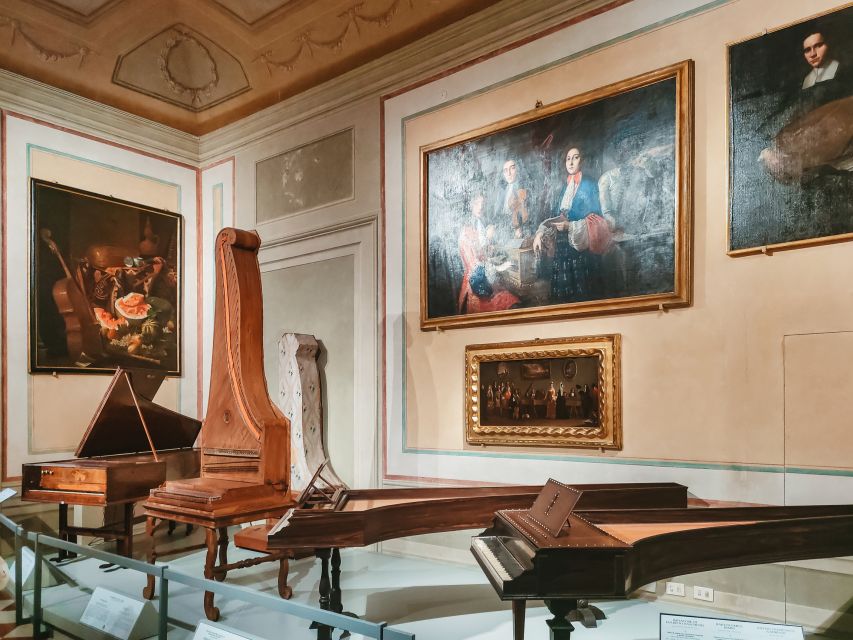
The collection also includes original musical instruments belonging to the Medici family. Three of these were made by Stradivarius.
This is an easy section to miss if you rush straight to the paintings. The instruments add a different side of Florentine court life and show that the museum is not only a sculpture gallery.
Do not expect a large music museum. The instruments are one part of a compact collection, but they give the visit variety after the concentration of the Michelangelo rooms. The ebook can point you toward these objects so you do not leave thinking the museum contains only David.
Medieval and Renaissance paintings beyond the statue
The painting galleries provide a useful second half to the visit. You can see works by medieval and Renaissance artists, including Giotto and Botticelli.
The Accademia is not as large as the Uffizi, and you should not plan to spend an entire day here. That is also its advantage. You can see the leading sculpture, several other works, and a selection of paintings without committing to a huge museum circuit.
Go upstairs for the large medieval altarpieces. Their size and gold backgrounds create a very different mood from Michelangelo’s white marble. The upper floor is particularly helpful if you want to understand how Florentine painting developed before and during the Renaissance.
The painting rooms may receive less attention from people focused on David, but I would not skip them. They turn the visit from a single-artwork stop into a compact introduction to several centuries of Florentine art.
How long to allow for your visit
Plan on one to two hours inside the Accademia. You can see David and the most important rooms in under an hour, especially if the museum is crowded and you are moving quickly.
For a calmer visit, allow closer to two hours. That gives you time for the unfinished Michelangelo sculptures, Gipsoteca, musical instruments, painting galleries, and upper-floor altarpieces.
The activity is described as lasting one day because the ticket is valid for the selected visit date, not because you spend a full day in the museum. Pair it with nearby Florence sights rather than treating it as an all-day attraction.
An early time slot is the safest choice if you have options. Early visits can make ticket collection and entry easier, and they leave the rest of your day open. Later periods may be busier, especially when Florence is full.
Who should book this ticket
I would recommend it to you if:
- You find the official Accademia tickets sold out.
- You need a specific entry time.
- You want to avoid the long ticket office queue.
- You prefer exploring at your own pace.
- You want a short PDF guide rather than a live tour.
- You are visiting Florence with children and need a simple, focused museum stop.
Families may appreciate the compact size. Children can see David without walking through a huge museum, and the visit can be adjusted to their attention span. Remember the photo ID rule for ages 6 to 17.
You may want another option if you are strongly focused on price and can plan well ahead. Buying direct is generally the better deal when official availability remains. You may also prefer a guided tour if you want detailed explanations and someone to answer questions throughout the visit.
The small group option may be available depending on the booking choice, but this specific ticket is fundamentally a self-guided visit. Do not book it expecting a guide to lead you from room to room.
Final verdict: Is the $37 Accademia ticket worth it?
For a planned visit with plenty of official availability, I would first check the museum’s own ticket system. The $37 price includes a convenience fee, and the difference can be significant for a family.
For a last-minute visit, the calculation changes. If the official site is sold out and you have only one day in Florence, this ticket can rescue your chance to see David without gambling on a long general admission line. The nearby office, helpful directions, quick voucher exchange, and concise ebook make the process manageable.
Book it if saving time matters more than getting the lowest possible price. Arrive early, bring the required ID for children, collect the paper ticket, and treat the priority entrance as a faster route rather than a guarantee of instant access. With those expectations, this is a practical way to see one of Florence’s essential works and a handful of excellent art in a compact museum.
FAQ
Where is the ticket collection point?
The voucher exchange takes place at the Florence Specialist Office meeting point. The exact meeting point can vary by booking option, but the office is described as very close to the Accademia entrance.
Do I receive a paper ticket?
Yes. You exchange your voucher for a paper admission ticket at the Florence Specialist Office before going to the museum entrance.
Does the ticket include a guide?
No live tour guide is included with this option. You receive a PDF museum booklet and ebook instead.
In which languages is the PDF guide available?
The PDF guide is available in English, Italian, Spanish, French, Portuguese, German, and Russian.
Does priority entry mean I will walk straight inside?
Not always. You skip the ticket office line and use a separate entrance, but security procedures and limits on the number of people inside can cause a short delay.
What happens if I arrive late?
The timed priority ticket is valid for the selected time. If you arrive late, you can lose priority and may need to wait in the general admission line.
How long should I spend inside the Accademia?
Most people can see the main highlights in under an hour, but allowing one to two hours gives you time for the paintings, unfinished sculptures, Gipsoteca, instruments, and medieval altarpieces.
Do children need tickets?
Children aged 5 and under do not require a ticket. Visitors aged 6 to 17 need valid photo identification showing their date of birth to receive the reduced ticket.
Is the Accademia accessible by wheelchair?
Yes, the activity information states that the museum visit is wheelchair accessible.
Can I cancel the booking?
You can cancel up to 24 hours in advance for a full refund. The reserve now, pay later option may also be available when you book.
Just added around Florence
- Palazzo Vecchio guided experience with entrance ticket★ 4.5 · 249 reviews
- Lucca Bikes and Bites with food tastings for Small Groups or Private★ 5.0 · 249 reviews
- Perfume Masterclass in Florence: Make your Own Personal Fragrance★ 4.5 · 253 reviews
- Florence Oltrarno Neighborhood Food & Wine Dine Around★ 5.0 · 253 reviews
- Florence: Cathedral, Dome and Terraces Guided Tour★ 4.5 · 253 reviews
- Florence: 1.5-hour Santa Croce Guided Experience★ 4.8 · 254 reviews
- Florence: Pitti Palace and Palatina Gallery Ticket and Tour★ 4.9 · 255 reviews
- Private Florence Tour by Golf Cart ETukTuk with Audio Guide★ 4.0 · 256 reviews
Tickets, compared.

Vatican: Museums & Sistine Chapel Entrance Ticket
Read our review →
Cathedral and Duomo’s Terraces Entrance Ticket
Read our review →

Skip-The-Line Uffizi Gallery Timed Entry Ticket
Read our review →
Naples Underground Entry Ticket and Guided Tour
Read our review →
Pantheon Fast-Track Ticket and Official Audio Guide
Read our review →
Pompeii: Entry Ticket and Guided Tour with an Archaeologist
Read our review →