Review · TICKETS
Florence: Santa Maria Novella Entry Ticket & Audioguide
Florence rewards the visitor who looks beyond David. Santa Maria Novella offers a calm, art-filled hour inside the city’s first great basilica, where Gothic structure meets Renaissance design. I like the skip-the-line entry and the tablet guide, which explains paintings and frescoes that are easy to miss when you simply walk through.
I also like the chance to see works linked to Giotto, Masaccio, Brunelleschi, Vasari, Botticelli, Ghirlandaio, and Filippino Lippi in one compact visit. The main drawback is value: at $18, you may pay more than the direct admission and self-guided option, while the audio tablet can be awkward to operate.
In This Review
- Key points to know before you go
- Why Santa Maria Novella deserves an hour
- Entering beside Florence’s main train station
- The basilica: Gothic space with Renaissance surprises
- Frescoes and paintings that reward patience
- The cloisters add a quieter side
- How useful is the multimedia tablet?
- Is the $18 price fair?
- A realistic one-hour plan
- Who will enjoy this visit most?
- Should you book Santa Maria Novella with the tablet?
- FAQ
- Where is Santa Maria Novella located?
- How long does the visit take?
- What does the ticket include?
- Is a live tour guide included?
- Which languages are available on the audio guide?
- Do I need to bring identification?
- Can I choose any arrival time?
- What happens if I arrive late?
- Where do I redeem the ticket?
- Is the multimedia guide different for children?
- Can I cancel the booking?
- Can I pay later?
Key points to know before you go
- The church and cloisters are the main event: Plan on about one hour for the basilica and surrounding cloister spaces.
- Michelangelo admired the building: He reportedly called Santa Maria Novella his bride, a fitting tribute to its graceful proportions.
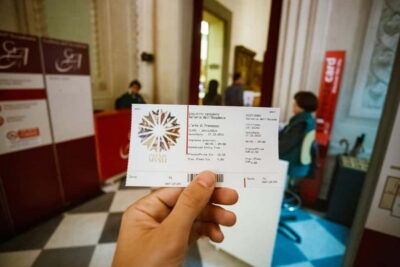
- The meeting point can be confusing: Pre-booked visitors collect tickets at the tourist office to the right or rear side of the church, near the station side.
- The tablet adds useful context: Audio, images, high-definition material, and 3D recreations help explain the artwork.
- Bring valid identification: You must leave a passport or ID card at the ticket office while using the multimedia guide.
- The entry time matters: Your booked date and time are fixed, and late arrival can mean refused entry.
Why Santa Maria Novella deserves an hour
Santa Maria Novella is not just another church stop in Florence. The complex began in the early 13th century after the first Dominican friars settled in the city, then grew over several centuries as its religious and artistic importance increased.
That long development explains the building’s unusual mix of styles. You see Gothic architecture shaped by medieval religious life, then Renaissance ideas brought in through art, geometry, and patronage. The result is less tidy than a building designed in one period, but far more revealing.
I find this kind of place especially rewarding in Florence because it shows how the city changed over time. A single room may carry medieval decoration beside later Renaissance work. You are not only looking at beautiful surfaces. You are seeing different generations of Florentine taste placed side by side.
The visit covers the basilica and cloisters, with the advertised visit taking about one hour. That makes it easy to fit between the train station, the Duomo, and other central sights. You may finish sooner if you move quickly, but the artwork rewards a slower pace.
A few more reviews worth comparing before you book
- Florence: Skip-The-Line Uffizi Gallery Timed Entry Ticket
★ 4.5 · 27,832 reviews - Tuscany Day Trip from Florence: Siena, San Gimignano, Pisa and Lunch at a Winery
★ 5.0 · 21,634 reviews - Florence: Timed Entrance Ticket to Michelangelo’s David
★ 4.6 · 16,983 reviews
Entering beside Florence’s main train station
The location is convenient, but the entrance instructions deserve careful attention. Santa Maria Novella sits directly beside Florence’s railway station, and the correct meeting point is not necessarily the grand front entrance that first catches your eye.
You are instructed to go to the right side of the church to redeem your ticket. Several booking details also describe this as a rear or north-side entrance, with the tourist office across from the station. In practice, allow extra minutes to find the ticket office and confirm that you are at the pre-booked entrance.
This matters because the selected time slot is binding. You cannot treat it like a flexible museum ticket. The starting time is mandatory, and you may be refused entry if you arrive outside your allotted slot.
Once the voucher is exchanged, you enter the basilica and collect the multimedia guide. Staff have generally been described as polite and helpful, but clear directions are not always the strong point here. I would arrive early rather than try to solve the entrance puzzle at the last minute.
The church sits in a busy part of Florence, so keep your belongings close while checking directions. One visitor reported a wallet being stolen from a bag in the piazza. That does not define the visit, but it is sensible advice for any crowded square near a major station.
The basilica: Gothic space with Renaissance surprises
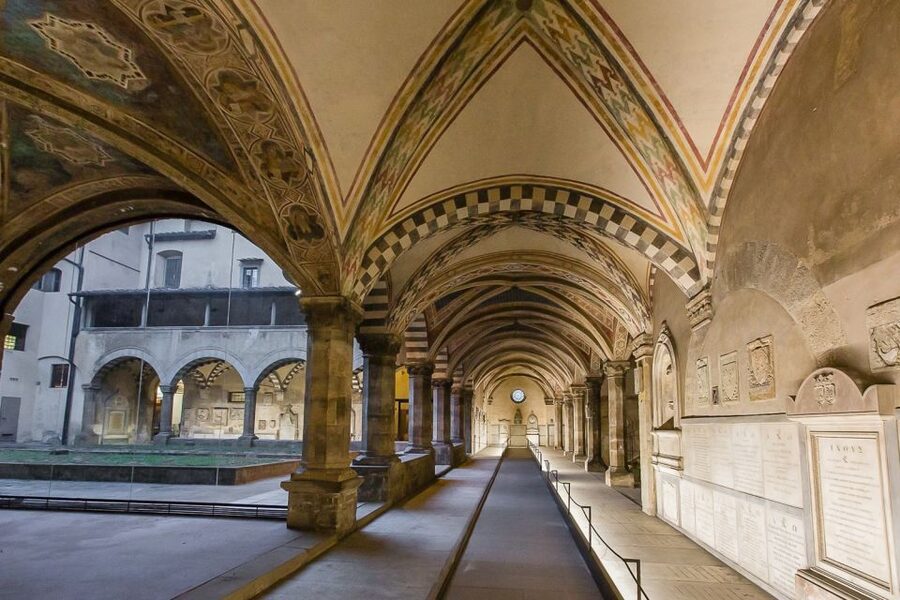
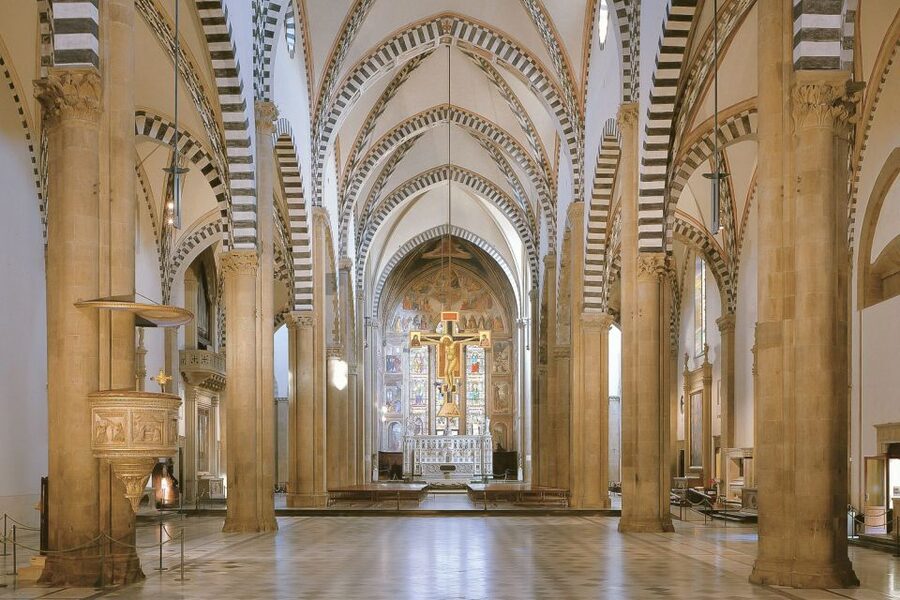
Inside, Santa Maria Novella gives you the scale and solemnity expected of a major Dominican church. Its Gothic character comes through in the height, structure, and sense of ordered space, while later artistic additions bring a more human and measured Renaissance feel.
The architecture is worth studying before you focus on the paintings. Look at how the interior directs your eye forward, then notice the smaller details around chapels, walls, and decorative surfaces. The building is large enough to feel important, but compact enough that you can understand its layout in one visit.
The site is often associated with Michelangelo’s description of it as his bride. That nickname works because the basilica combines strength with polish. It is not a plain medieval shell. It has a refined appearance that reflects centuries of care and artistic investment.
The audio guide helps here. Without explanation, you might admire a fresco but miss its subject, date, or place in the development of Florentine painting. With the tablet, you get narration supported by images and visual material, so the church becomes easier to read.
The visit includes art connected with major names such as Giotto, Masaccio, Filippo Brunelleschi, Paolo Uccello, Domenico Ghirlandaio, and Filippino Lippi. You should not expect a private viewing of every work associated with those artists, but the range gives the basilica real weight as an art stop.
Frescoes and paintings that reward patience
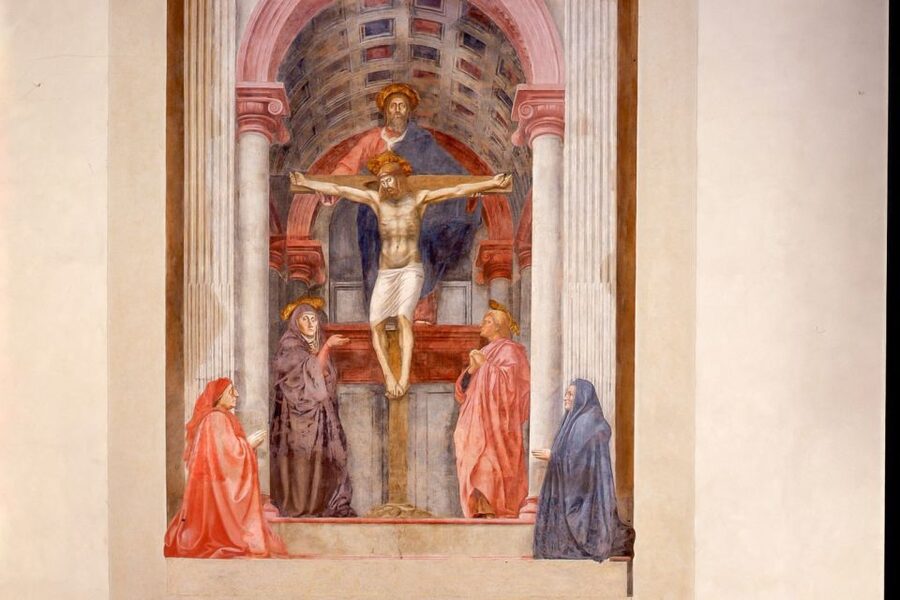
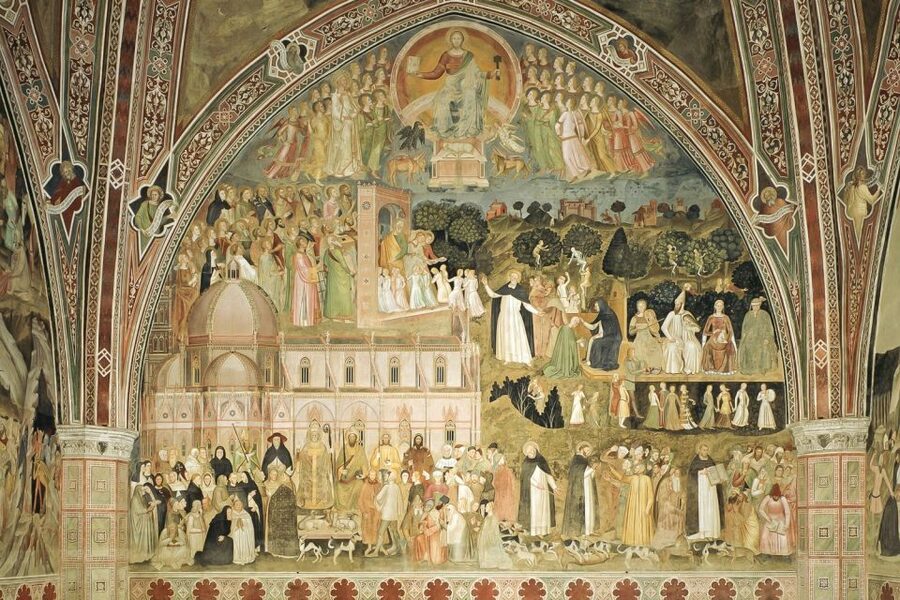
Santa Maria Novella is best approached as a place where architecture and art work together. Frescoes are not isolated pictures on a white gallery wall. They belong to chapels, walls, and religious spaces, and their placement helps explain how people encountered them in the past.
Masaccio is especially important in the story of Florentine Renaissance painting. His work is tied to the city’s shift toward more convincing space and human form. The multimedia guide provides the kind of background that can make these changes visible, even if you are not an art specialist.
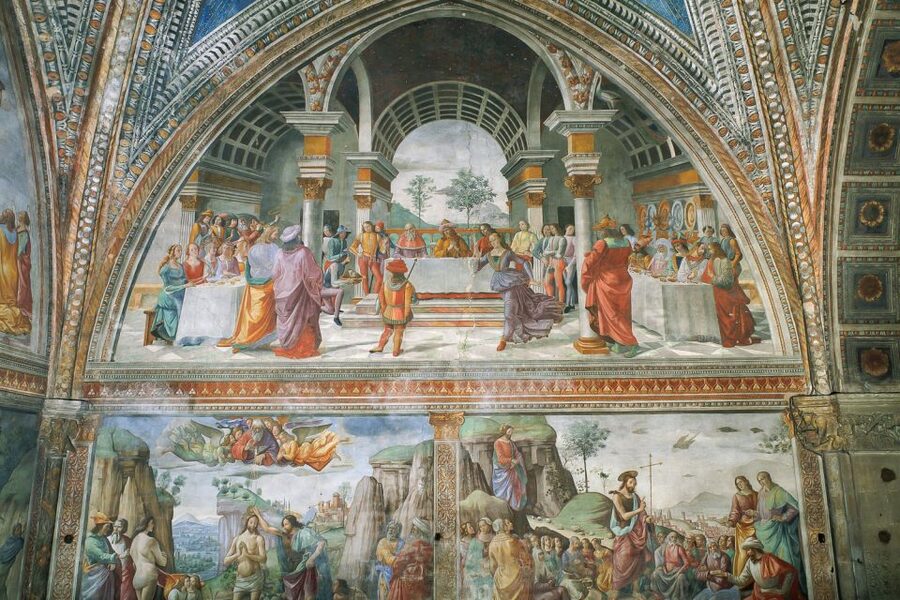
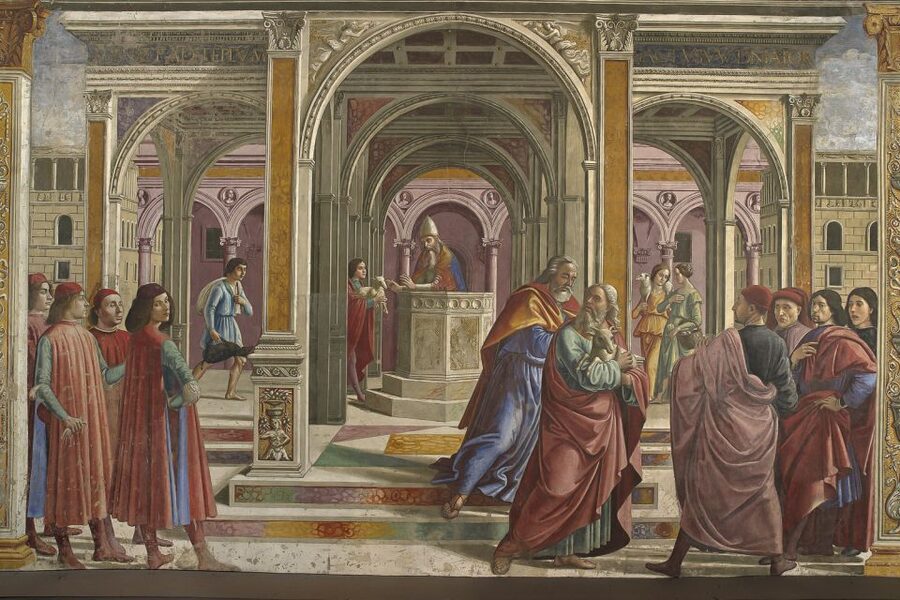
Giotto represents an earlier step in that story, while Ghirlandaio and Filippino Lippi belong to the later flowering of Florentine painting. Paolo Uccello brings another distinctive voice, and Brunelleschi connects the church to Florence’s landmark architectural tradition.
Vasari is also included among the artists discussed. His name links art, architecture, and the way Renaissance Florence later recorded its own achievements. Botticelli is another draw for visitors who want to connect Santa Maria Novella with the wider artistic world of the city.
Some of the pleasure comes from spotting details after the guide points them out. A tablet screen may show a high-definition image or a 3D recreation, then direct you back to the real work. That back-and-forth is useful, especially when a fresco is high, dimly lit, or crowded by surrounding decoration.
The guide is available in Spanish, English, French, German, and Italian. The main exhibitions themselves may have information in English and Italian, so choosing the English audio option can make the visit much easier for you.
A different sort of day out around Florence:
- Florence: Michelangelo’s David Skip-the-Line Entry Ticket
★ 4.5 · 12,764 reviews - The Best tour in Florence: Renaissance & Medici Tales – guided by a STORYTELLER
★ 5.0 · 12,316 reviews - Florence: Leonardo Interactive Museum Entry Ticket
★ 4.5 · 11,763 reviews - The Best Tour in Florence: Renaissance and Medici Tales
★ 5.0 · 10,810 reviews
The cloisters add a quieter side
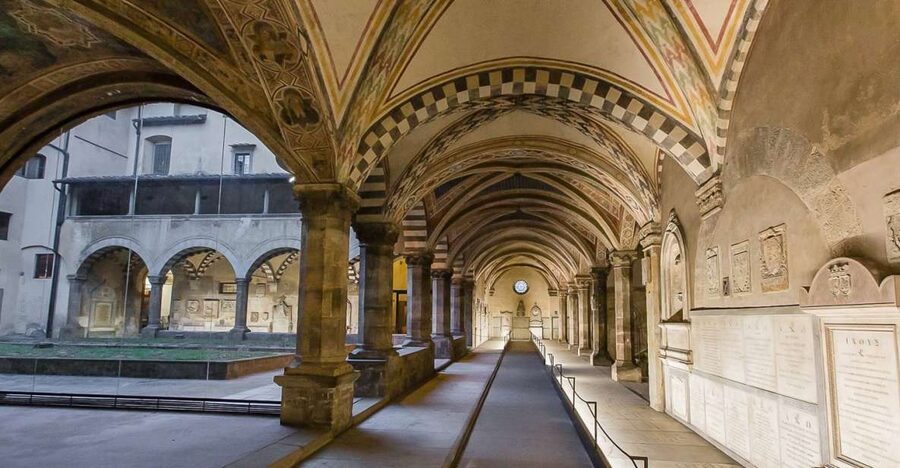
The cloisters change the mood. After the grand church interior, the covered walkways and open central spaces offer a slower, more reflective setting. One visitor particularly enjoyed the murals along the covered paths, and they are an important part of the visit rather than a minor extra.
The cloisters also help you understand that Santa Maria Novella was a working religious complex, not only a ceremonial church. The connection between enclosed walkways, decorated walls, and communal spaces gives the site a different character from Florence’s major civic museums.
You may find that the cloisters take less time than the basilica, but do not rush through them. Murals and architectural accents can be easy to pass without the same impact as a famous painting. The tablet can help explain what you are seeing and why these spaces belong to the larger story of the complex.
Access is not always complete. Parts of the church grounds or museum areas have been closed at times, and some scheduled visitors found sections unavailable. Since the experience can change according to restoration or site operations, keep your expectations flexible.
How useful is the multimedia tablet?
The guide is a 7-inch tablet with audio and visual narration. It includes high-definition images and 3D recreations, which is more helpful than a simple audio track when you need to identify a chapel, fresco, or architectural feature.
The content itself is generally a strength. It gives you an organized route through a complex site and explains the art in accessible terms. If you like knowing what you are looking at, the guide adds real value.
The hardware is less polished. Some visitors found the controls difficult to press, and others had trouble when the screen timed out or locked itself. That can be frustrating in a quiet church, particularly if you are trying to restart the correct section without disturbing the mood of the visit.
I would ask the staff to show you the basic controls before leaving the desk. Keep the tablet in hand rather than setting it aside for long stretches, and check that the volume and language are correct at the start.
There is no separate child version. Adults and children receive the same multimedia guide. Families can still use it, but younger children may find the format less engaging than a shorter spoken tour or a simple picture guide.
The lack of a standard English-language guidebook is another small limitation. If you prefer to read at your own pace, the tablet may feel less comfortable than a printed booklet. Its content is useful, but the format requires some patience.
Is the $18 price fair?
At $18 per person, this is not the cheapest way to see Santa Maria Novella. Direct admission with a self-guided option may cost less, and you should compare the current on-site price if saving money is your main goal.
The extra charge can make sense if your time is tight and avoiding the ticket line matters. Florence’s central sights can have long waits, and a pre-booked entry gives you a fixed plan. The multimedia content also saves you from arranging a separate guide.
Still, skip-the-line access does not mean a private entrance into an empty building. You must redeem the ticket at the correct office, arrive at the exact booked time, and collect the tablet before beginning. If the office is closing soon, the process can feel rushed.
The value is strongest for first-time visitors who want a guided introduction without joining a live group. It is weaker for confident art lovers who already know the basilica or who are happy to read a guidebook and pay direct admission.
There is also a practical deposit issue. You must leave a valid passport or ID card at the ticket office to borrow the tablet. That requirement makes some people uncomfortable. Bring an accepted form of identification, but understand that you will not keep it with you while using the device.
A realistic one-hour plan
Your visit works best with a little structure:
- Arrive early near the station and locate the tourist office on the church’s right or rear side.
- Redeem your voucher before the fixed entry time.
- Leave your passport or ID card as required and collect the tablet.
- Spend the first few minutes looking at the basilica’s layout before starting every audio track.
- Follow the guide through the major artworks, then pause where the visual material sends you back to the real fresco or painting.
- Allow time for the cloisters and their decorated covered walkways.
- Return the tablet and collect your identification before leaving.
The advertised duration is one hour, but you may need more time if you stop often for frescoes, paintings, or architectural details. One visitor expected a quick stop and stayed much longer because there was more to examine than anticipated.
At the same time, do not arrive near closing and assume you can take your time. One visitor arrived at 3 p.m. and felt rushed because the office closed at 4 p.m. The exact operating arrangements can vary, so an earlier slot is the safer choice.
Who will enjoy this visit most?
I would recommend this experience to you if you want context but do not need a live guide. The tablet gives you a planned route and enough background to turn a beautiful church into a more meaningful art visit.
It suits first-time Florence visitors, architecture fans, and anyone interested in the transition from medieval to Renaissance art. It also works well for a short schedule because the church is beside the main train station and the core visit takes about an hour.
You may prefer direct admission if you are watching every euro, already know the major artists, or dislike using an electronic guide. The on-site option can be cheaper, and the tablet’s controls are not perfectly intuitive.
Families should note that the same guide is used for children and adults. That does not rule out a family visit, but you should not expect a specially shortened or simplified program.
The experience is also not ideal if your day is uncertain. Since the entry time cannot be changed casually, you need to build your Florence schedule around the reservation.
Should you book Santa Maria Novella with the tablet?
Book it if you value a timed entry, want help identifying the art, and are willing to pay extra for convenience. The basilica and cloisters are beautiful, historically important, and easy to reach, while the guide adds useful explanations in five languages.
Skip it and buy directly if the $18 price feels high, the line is short, or you prefer to explore at your own pace. Either way, Santa Maria Novella deserves a place on your Florence list.
My practical choice would be an early time slot, a few extra minutes for the rear-side ticket office, and a willingness to handle the tablet carefully. That combination gives you the best chance of enjoying the building rather than fussing over the logistics.
FAQ
Where is Santa Maria Novella located?
Santa Maria Novella is in Florence, Tuscany, directly beside the Santa Maria Novella train station.
How long does the visit take?
The advertised visit to the basilica and cloisters takes about one hour. You may spend longer if you stop carefully at the frescoes, paintings, and architectural details.
What does the ticket include?
The ticket includes admission to Santa Maria Novella and a multimedia guide.
Is a live tour guide included?
No. A live tour guide is not included. The experience provides a multimedia tablet guide instead.
Which languages are available on the audio guide?
The guide is available in Spanish, English, French, German, and Italian.
Do I need to bring identification?
Yes. You must bring a passport or ID card and leave a valid ID at the ticket office while borrowing the multimedia guide.
Can I choose any arrival time?
No. The date and time slot selected during booking are binding, and the indicated starting time is mandatory.
What happens if I arrive late?
You may be refused entry if you do not respect the allotted entry time.
Where do I redeem the ticket?
Go to the right side of the church to redeem the ticket. The pre-booked entrance is also described as being at the rear or north side, near the tourist office across from the train station.
Is the multimedia guide different for children?
No. Children and adults use the same multimedia guide.
Can I cancel the booking?
Yes. You can cancel up to 24 hours in advance for a full refund.
Can I pay later?
Yes. The reservation option allows you to reserve your place and pay later.
Just added around Florence
- Palazzo Vecchio guided experience with entrance ticket★ 4.5 · 249 reviews
- Lucca Bikes and Bites with food tastings for Small Groups or Private★ 5.0 · 249 reviews
- Perfume Masterclass in Florence: Make your Own Personal Fragrance★ 4.5 · 253 reviews
- Florence Oltrarno Neighborhood Food & Wine Dine Around★ 5.0 · 253 reviews
- Florence: Cathedral, Dome and Terraces Guided Tour★ 4.5 · 253 reviews
- Florence: 1.5-hour Santa Croce Guided Experience★ 4.8 · 254 reviews
- Florence: Pitti Palace and Palatina Gallery Ticket and Tour★ 4.9 · 255 reviews
- Private Florence Tour by Golf Cart ETukTuk with Audio Guide★ 4.0 · 256 reviews
Tickets, compared.

Vatican: Museums & Sistine Chapel Entrance Ticket
Read our review →
Cathedral and Duomo’s Terraces Entrance Ticket
Read our review →

Skip-The-Line Uffizi Gallery Timed Entry Ticket
Read our review →
Naples Underground Entry Ticket and Guided Tour
Read our review →
Pantheon Fast-Track Ticket and Official Audio Guide
Read our review →
Pompeii: Entry Ticket and Guided Tour with an Archaeologist
Read our review →