
Review · WALKING TOURS
Florence: Renaissance and Medici Tales Guided Walking Tour
Florence makes its history walk beside you. This two-hour tour connects the city’s major sights with stories of the Medici family, Renaissance artists, Dante, architecture, and the symbols carved into Florence’s streets. I like the way it gives you a clear first look at the city without sending you indoors for long stretches, and I especially like the practical food, drink, and shopping advice at the end. The possible catch is the walking-tour format: most of the sightseeing is from outside, and the listed price is very low because this operates as a free-tour style experience, with tipping expected by many participants.
I also like the easy central meeting point, marked by a green umbrella near San Lorenzo Church. Guides such as Chiara, Michele, Glenda, Angela, Fabio, and Ricardo have been praised for making complicated history easy to follow, often with humor and strong storytelling. Bring comfortable shoes, water, and weather-ready clothing, since the tour runs rain or shine.
In This Review
- Key points to know before you book
- Why this makes a smart first walk in Florence
- Meeting the Medici at San Lorenzo
- Palazzo Medici Riccardi and the family behind the art
- Reading the Duomo, Bell Tower, and Dome
- Dante, Palazzo Vecchio, and Florence’s political center
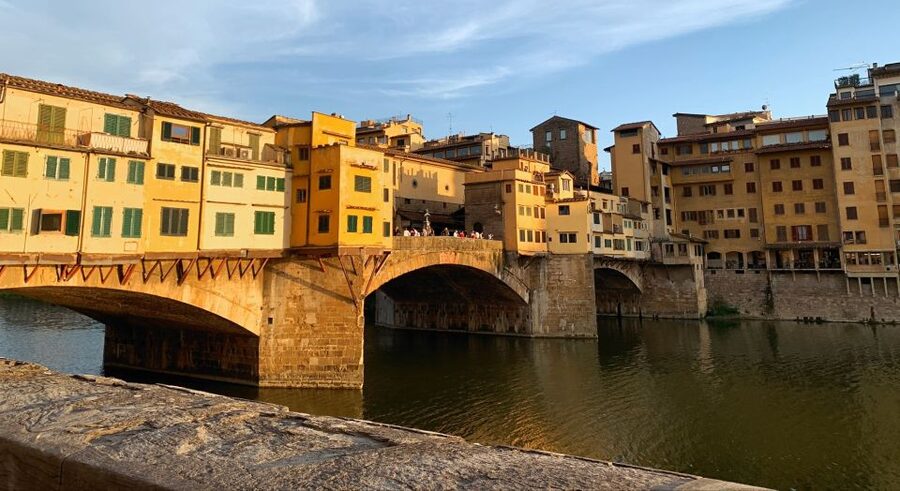
- Along the Arno to Ponte Vecchio
- Finishing outside the Uffizi with useful local advice
- The price, tipping, and what you actually receive
- Who should book this Florence walk?
- Should you book the Medici Tales tour?
- FAQ
- Where does the Florence Renaissance and Medici Tales tour meet?
- How long does the tour last?
- What languages are available?
- Does the tour enter the Duomo, Uffizi Gallery, or Palazzo Vecchio?
- Is the walking tour wheelchair accessible?
- What should I bring?
- What happens if it rains?
Key points to know before you book
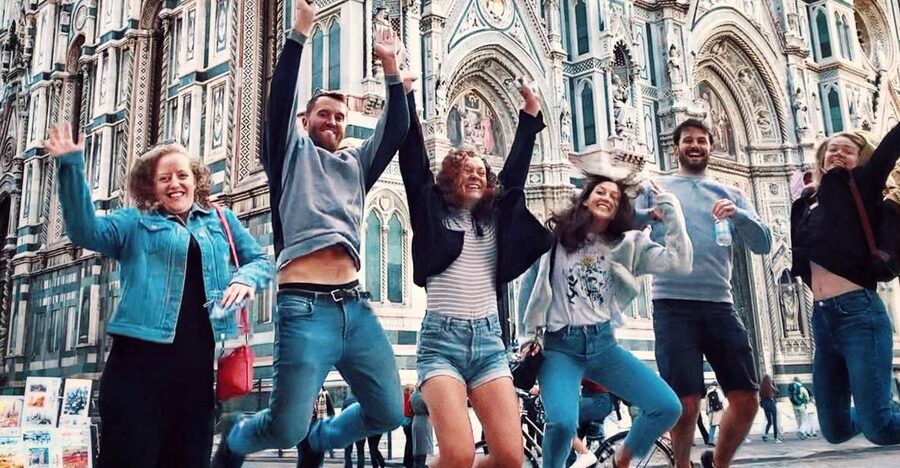
- A compact Florence orientation: San Lorenzo, the Medici Palace, the Duomo, Palazzo Vecchio, Piazza della Signoria, Ponte Vecchio, and the Uffizi area all fit into one central walk.
- Medici politics made personal: You learn how several generations of the family shaped art, buildings, power, and the city’s future.
- Strong storytelling is the main attraction: Chiara, Michele, Glenda, Angela, Fabio, and other guides are praised for humor, warmth, and memorable explanations.
- Mostly an outdoor tour: The route focuses on views and stories from public spaces rather than paid interior visits.
- Useful advice for the rest of your stay: Guides offer suggestions for eating, drinking, shopping, and planning other Florence sights.
- Very low upfront cost: The listed price is $2.36 per person, but plan for a tip if you enjoy the tour, as this is a free-tour style arrangement.
Why this makes a smart first walk in Florence
Florence can feel almost too full of famous names at first. Medici, Michelangelo, Brunelleschi, Dante, Giotto, the Duomo, the Uffizi, and the Ponte Vecchio all appear within a few blocks. Without a little structure, you may admire the buildings but miss the story connecting them.
This walk gives you that structure. It explains how Florence became a center of banking, politics, art, and learning, then places those ideas along streets you can still walk today. I find that especially useful on a first day, when you want to get your bearings before tackling museum reservations and long lines.
The tour lasts about two hours, although the detailed schedule describes roughly 2.25 hours. That is long enough to cover the central sights but short enough to fit around a museum visit or meal. The route is concentrated in the historic center, so you should expect regular walking on city streets rather than a bus ride or a long transfer between districts.
The strongest part is the human delivery. Guides are not simply listing dates. Michele is repeatedly praised for his warm, funny presentation and his ability to keep a group interested for the full two hours. Chiara is praised for making stories memorable and handling a rainy, crowded day with patience. Angela has been especially good at explaining how the final Medici woman helped preserve Florence’s art when political control changed.
That kind of explanation helps you see Florence as a living city shaped by people, ambition, family rivalry, and artistic competition.
More Walking Tours in Florence
- Florence: Guided Walking Tour
★ 4.5 · 3,334 reviews - Skip the line: Uffizi and Accademia Small Group Walking Tour
★ 4.5 · 3,135 reviews - Florence: Guided Walking Tour
★ 4.6 · 1,602 reviews
Meeting the Medici at San Lorenzo
The tour begins at Florence Free Tour-Tale, in Piazza di San Lorenzo. Look for the green umbrella in front of the stairs leading to the main entrance of the Basilica of San Lorenzo.
This is a fitting starting point. San Lorenzo combines Renaissance and Romanesque features, and the square places you near one of the clearest physical reminders of Medici influence. The opening setting helps your guide introduce the family before you encounter the rest of its architectural legacy.
Do not expect a full interior visit to the basilica based on the information provided. The value here is the setting and the explanation. Your guide can show how religious buildings, family power, and civic identity overlapped in Florence.
This first stop also gives the guide room to explain how the city helped produce the Renaissance. You will hear about the conditions that allowed artists, architects, bankers, and patrons to work together. The stories are intended to be accessible, not a lecture meant only for art specialists.
If you are traveling with teenagers, this part may work better than a long museum introduction. One family found the tour especially successful with teenagers because the guide turned the material into stories that were easy to follow. That is a useful clue for parents: the experience depends more on personality and storytelling than on formal academic detail.
Palazzo Medici Riccardi and the family behind the art
From San Lorenzo, the route continues to Palazzo Medici Riccardi. The palace gives the Medici story a physical address. You are no longer hearing about a distant dynasty in the abstract. You are looking at one of the buildings tied to several generations of the family.
The guide’s job here is to explain influence rather than simply point out a facade. The Medici were powerful because money, politics, patronage, and public image worked together. Their buildings helped present authority in a city where status was constantly being negotiated.
I appreciate that this tour places artists and architecture within that political setting. Brunelleschi’s Dome did not appear in isolation, and the Medici did not support culture for purely charitable reasons. Florence’s art tells a story about ambition as much as beauty.
The limitation is straightforward: a short outdoor walk cannot provide the full detail of a palace visit. If you want rooms, decorative programs, or close study of individual works, you will need a separate museum or palace ticket. This tour gives you the framework first, which can make those later visits easier to understand.
Reading the Duomo, Bell Tower, and Dome
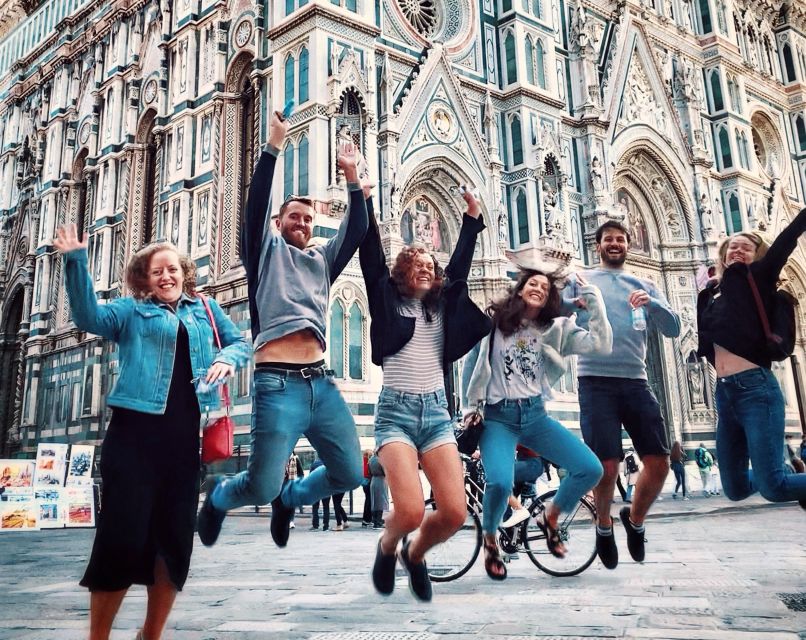
The Florence Duomo complex is the visual center of the walk. You will see the Cathedral of Santa Maria del Fiore, Giotto’s Bell Tower, and Brunelleschi’s Dome, with the guide explaining how these structures fit into Florence’s story.
This is one of the best uses of a walking guide. The Duomo is so large and ornate that it can be hard to know where to look. The tour encourages you to notice architectural details and symbols rather than treating the cathedral as one giant photograph.
Brunelleschi’s Dome receives special attention. The tour explains the story behind this famous structure and its place in the city’s artistic and technical achievements. You should come away with a better sense of why the Dome matters, not just the fact that it is Florence’s most recognizable roofline.
Several guides have been praised for using simple explanations and memorable stories to make difficult subjects clear. That matters here because the Duomo involves architecture, engineering, religion, civic pride, and competition between powerful figures. A good guide can tie those threads together without losing you in technical terms.
The tour does not include a climb or an interior ticket in the stated inclusions. You should treat this as an exterior explanation of the complex. If climbing the Dome or Bell Tower is on your must-do list, arrange that separately.
The square can be crowded, especially during busy periods. One guide used a microphone and earpieces to help the group hear, but this equipment is not specifically promised for every departure. Stay close to the guide and expect some background noise.
More guided walks:
- Florence: Uffizi & Accademia Small Group Walking Tour
★ 4.7 · 1,380 reviews - Lucca: 2-Hour City Center Walking Tour
★ 4.7 · 1,314 reviews - Skip-the-Line Florence Highlights and David Walking Tour
★ 5.0 · 1,127 reviews - Siena: Walking Tour and Skip-the-Line Duomo Tickets
★ 4.8 · 1,116 reviews
Dante, Palazzo Vecchio, and Florence’s political center
The route then moves toward the House of Dante. Dante gives the tour another way to explain Florence, this time through literature, language, exile, and civic conflict.
The stop is useful because it prevents the Medici story from taking over the entire walk. Florence was shaped by poets and political factions as well as bankers and artists. Stories about Dante help show that the city’s identity was already complicated before the Medici became its dominant family.
Next comes Palazzo Vecchio, the city’s great civic building. Here, the focus shifts from family power to public government and political display. The building and its surrounding spaces help you understand how Florence presented authority in stone, towers, sculpture, and ceremony.
Piazza della Signoria is one of the most rewarding outdoor stops on the route. It acts like an open-air history lesson, with major buildings and sculpture gathered in one place. Your guide can explain not only what you are seeing but why certain figures, poses, and symbols were placed there.
The nearby Loggia dei Lanzi adds another layer. Its sculptures are easy to photograph, but the guide’s discussion of their subjects and meanings gives you a reason to look twice. This is where the tour’s emphasis on symbols becomes especially helpful.
Again, the benefit is interpretation rather than entry. You will see these locations from public areas, but a ticket to Palazzo Vecchio is not included. If you want the interior rooms and frescoes, plan a separate visit.
Along the Arno to Ponte Vecchio
Ponte Vecchio brings the walk toward the river and offers a change of mood after the concentrated monuments around the Duomo and Signoria.
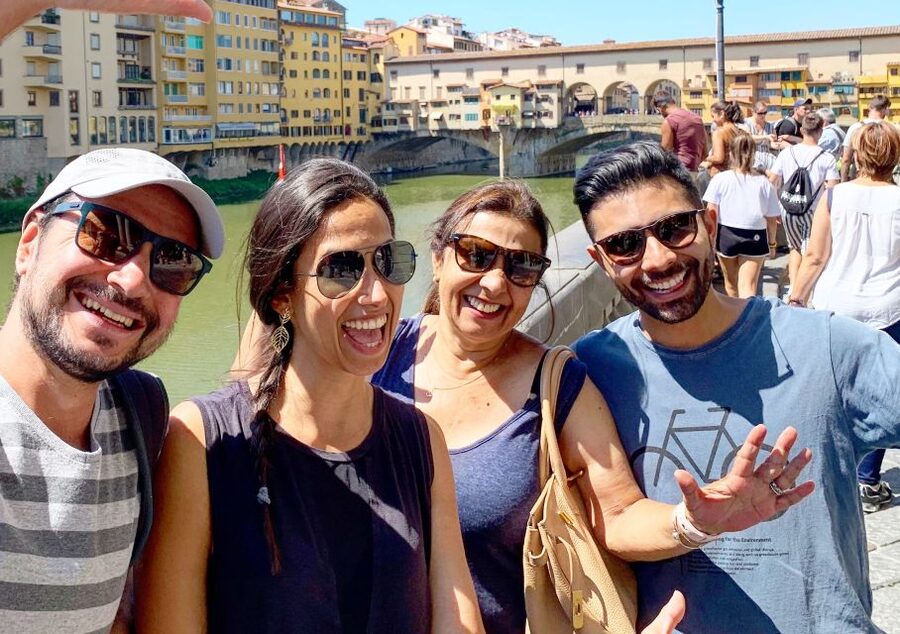
The bridge is famous, but the guide helps place it within Florence’s larger story. You will hear about its role in the city and see how it connects the historic center with the Arno. The bridge is also a practical orientation point, useful for understanding where you are in relation to the Uffizi and the riverfront.
This part of the walk is less about entering a monument and more about seeing Florence as an urban place. The city’s most important buildings are not isolated attractions. They form a walkable chain, with political squares, religious sites, commercial streets, and river crossings close together.
The route may feel compact rather than strenuous. One guide was specifically praised for slowing down and focusing on the main sites so the group could understand what happened in Florence. That is a strength if you prefer thoughtful stops over racing from one photo opportunity to the next.
Finishing outside the Uffizi with useful local advice
The tour ends outside the Uffizi Gallery. This is a practical finish because you can continue straight into a museum visit if you already have a reservation, or use the location to plan another part of your day.
The Uffizi is not included, and the tour does not provide admission. Think of the final stop as an orientation and handoff. You finish with a better idea of where the gallery sits in Florence and how it relates to the city’s artistic story.
The guide also offers suggestions for food, drinks, and shopping. This may be the most useful part for many people because advice given after a walk can be tied to your exact location and interests. You can ask about what to do next rather than relying only on a generic list.
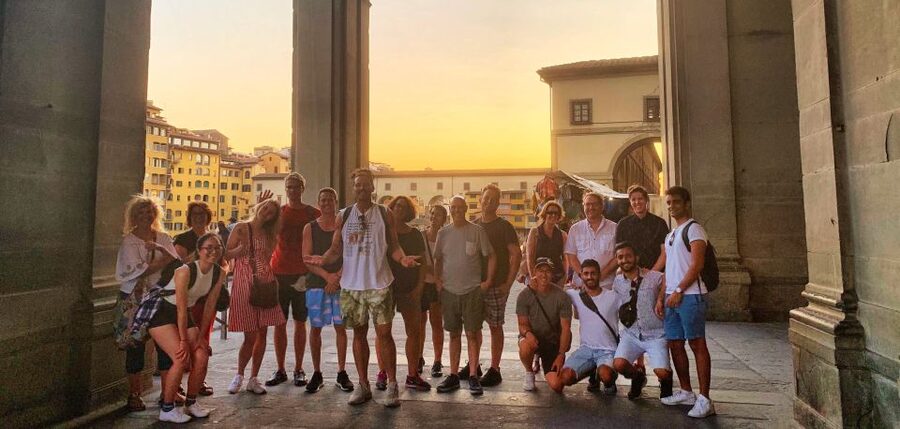
The tips are a recurring strength of this experience. Michele, Chiara, Glenda, and other guides are praised for offering practical recommendations alongside historical information. If you want this help, ask specific questions before the group disperses. Have a short list ready, such as where to eat near your hotel, where to find a particular type of shop, or which sight deserves your next morning.
The price, tipping, and what you actually receive
The listed cost is $2.36 per person, which is unusually low for a two-hour guided walk in central Florence. The structure is clearly a free-tour style model. One participant described paying a small booking amount and then tipping according to satisfaction, while another advised bringing cash because a substantial tip is customary.
So the real value is not simply $2.36. You should view that figure as the reservation price, then decide what the guide’s time and quality are worth to you. The provider allows cancellation up to 24 hours before the tour for a full refund and offers reserve-now, pay-later booking, which keeps your plans flexible.
For a first introduction to Florence, the value is strong. You get a live guide, a central route, historical context, and local suggestions without paying for several separate attraction tickets. The tradeoff is that you still need to pay for museum or monument entries later, and your final cost should include a tip.
Who should book this Florence walk?
I would choose this tour if you are visiting Florence for the first time, want a clear overview, or enjoy history presented through people and stories. It also suits families and teenagers better than a dry chronology, based on the way guides have handled mixed-age groups.
It is a good fit for you if you want:
- A short introduction before visiting the Uffizi or Duomo interior
- A walk focused on the central historic district
- Medici stories linked to actual buildings
- Help understanding symbols and public sculpture
- Recommendations for food, drinks, and shopping
- A guide who can answer questions in English or Spanish
You may want something else if you need extensive interior access, specialist art history, or a private pace. The tour visits many major sights, but it does not replace a full day at the Duomo complex, Palazzo Vecchio, or Uffizi Gallery.
The tour takes place rain or shine. Wear comfortable shoes, carry water, bring a camera, and dress for the forecast. Since it is a walking route through public streets, a wet or very crowded day may make listening harder, although guides have handled those conditions well.
Should you book the Medici Tales tour?
Yes, especially if you can take it near the beginning of your stay. It gives you a useful mental map and explains why Florence’s famous buildings matter. The strongest reason to book is the guide-led storytelling, with Michele, Chiara, Glenda, Angela, Fabio, Ricardo, and others praised for warmth, humor, clarity, and passion.
Book it with realistic expectations. You are paying for interpretation, orientation, and company on the streets, not a package of museum admissions. Budget for a tip, accept that the weather may be imperfect, and use the final local advice to shape the rest of your visit. If that sounds like your kind of introduction, this is an inexpensive and well-focused way to meet Florence.
FAQ
Where does the Florence Renaissance and Medici Tales tour meet?
Meet at Florence Free Tour-Tale, in front of the stairs leading to the main entrance of San Lorenzo Church. Look for the green umbrella.
How long does the tour last?
The activity is listed as lasting two hours. The detailed route describes approximately 2.25 hours, so allow a little extra time.
What languages are available?
The live tour guide is available in English and Spanish.
Does the tour enter the Duomo, Uffizi Gallery, or Palazzo Vecchio?
The provided information describes guided stops at these sights but does not include admission tickets. The tour ends outside the Uffizi Gallery.
Is the walking tour wheelchair accessible?
Yes, the activity is listed as wheelchair accessible.
What should I bring?
Bring comfortable shoes, water, a camera, and clothing suitable for the weather.
What happens if it rains?
The tour takes place rain or shine. You can cancel up to 24 hours in advance for a full refund, according to the stated cancellation terms.
Just added around Florence
- Palazzo Vecchio guided experience with entrance ticket★ 4.5 · 249 reviews
- Lucca Bikes and Bites with food tastings for Small Groups or Private★ 5.0 · 249 reviews
- Perfume Masterclass in Florence: Make your Own Personal Fragrance★ 4.5 · 253 reviews
- Florence Oltrarno Neighborhood Food & Wine Dine Around★ 5.0 · 253 reviews
- Florence: Cathedral, Dome and Terraces Guided Tour★ 4.5 · 253 reviews
- Florence: 1.5-hour Santa Croce Guided Experience★ 4.8 · 254 reviews
- Florence: Pitti Palace and Palatina Gallery Ticket and Tour★ 4.9 · 255 reviews
- Private Florence Tour by Golf Cart ETukTuk with Audio Guide★ 4.0 · 256 reviews
Walking Tours, compared.

Guided Walking Tour & Last Supper Visit with Ticket
Read our review →

Rialto Bridge & Offbeat Unusual Venice Walking Tour
Read our review →

Private 3 hrs Venice Tour: St Mark’s, Walking tour & Boat tour
Read our review →

Skip the line: Uffizi and Accademia Small Group Walking Tour
Read our review →Browse the lists this tour appears in