
Review · WALKING TOURS
Siena: Walking Tour and Skip-the-Line Duomo Tickets
Siena rewards curious walkers. This two-hour tour links Piazza del Campo, the Palio, and the Duomo with an English-speaking local guide, giving you a clear introduction to the city’s streets, art, and traditions. I especially like the focus on the Contrade, Siena’s neighborhood communities, and the fast entry to the cathedral. One thing to consider: two hours is enough for an overview, but not enough for a slow, detailed visit to every major sight.
I also like that the tour begins at Piazza San Domenico, near the Basilica di San Domenico, rather than dropping you straight into the busiest square. Guides such as Elio, Claudia, Giorgia, Julia, and Ambra have been praised for their humor, local pride, and storytelling. The main drawback is the walking itself: Siena’s steep cobblestone streets and church dress rules make this a poor fit for people with mobility limits or anyone arriving in beach clothes.
In This Review
- Key points at a glance
- Why this two-hour tour works in Siena
- Meeting St. Catherine at San Domenico
- Walking the medieval center and its Gothic buildings
- Piazza del Campo and the world of the Palio
- Food, fountains, and Siena’s daily character
- Entering Siena Cathedral without the long wait
- Guides, headsets, and group size
- Clothing, terrain, and who should book
- Cancellation, timing, and practical value
- Should you book this Siena walking tour?
- FAQ
- How long does the Siena walking tour last?
- What is included in the price?
- Is hotel pickup included?
- Where is the meeting point?
- What language is the tour offered in?
- Does the tour include entry to Siena Cathedral?
- Can I cancel the booking for a refund?
- Can I reserve now and pay later?
- What should I wear?
- Is the tour suitable for people with mobility impairments?
Key points at a glance
- Start with St. Catherine: Meet under the large tree in front of the Basilica di San Domenico and hear about Siena’s most famous religious figure.
- Understand the Contrade: The tour explains why Siena’s neighborhood groups still organize their lives around the Palio horse race.
- See the city’s financial past: Palazzo Salimbeni and Palazzo Tolomei show how trade and banking shaped medieval Siena.
- Finish inside the Duomo: The cathedral comes at the end, with skip-the-line entry and works by Donatello, Michelangelo, Bernini, and other artists.
- Expect local color: Guides often add restaurant and gelateria advice, along with stories that make the city easier to understand.
- Plan for walking: Wear good shoes and cover your shoulders and knees for church entry.
Why this two-hour tour works in Siena
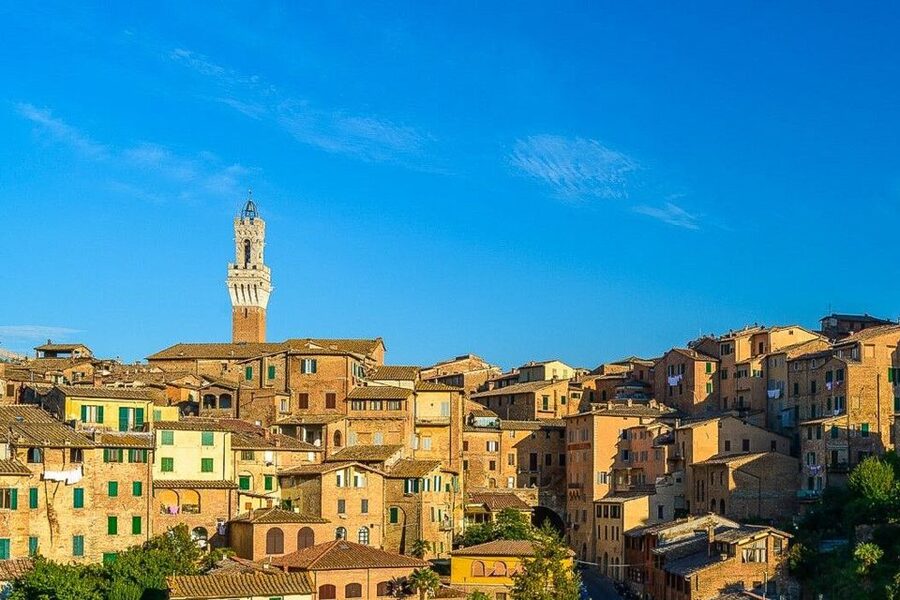
Siena is compact on a map, but its history can feel tangled when you explore it alone. Streets twist uphill, important buildings hide behind narrow lanes, and the meaning of the Contrade is not obvious from a quick look. This tour gives you a useful framework before you spend more time on your own.
The format is simple: meet at Piazza San Domenico, walk through the historic center, learn about Siena’s civic and religious life, and finish at the cathedral. You do not get hotel pickup, so you need to reach the meeting point yourself. That is not a major burden if you are already in central Siena, but it matters if you are staying outside town or arriving by transport.
At $47 per person, the price is fair if you value a guide and plan to visit the Duomo anyway. The included cathedral ticket saves you from arranging entry separately, and the line can be a serious nuisance at busy times. One person reported avoiding a very slow queue that appeared to be moving toward a wait of about two and a half hours. Still, if you prefer wandering alone and already understand Siena’s history, the cost may feel high for a two-hour introduction.
More Skip-the-Line Tickets in Florence
- Skip the Line: Siena Duomo and City Walking Tour
★ 5.0 · 689 reviews - Skip-the-Line Siena Cathedral Duomo Complex Entrance Ticket
★ 4.5 · 291 reviews - Florence: Skip-The-Line Uffizi Gallery Timed Entry Ticket
★ 4.5 · 27,832 reviews
Meeting St. Catherine at San Domenico
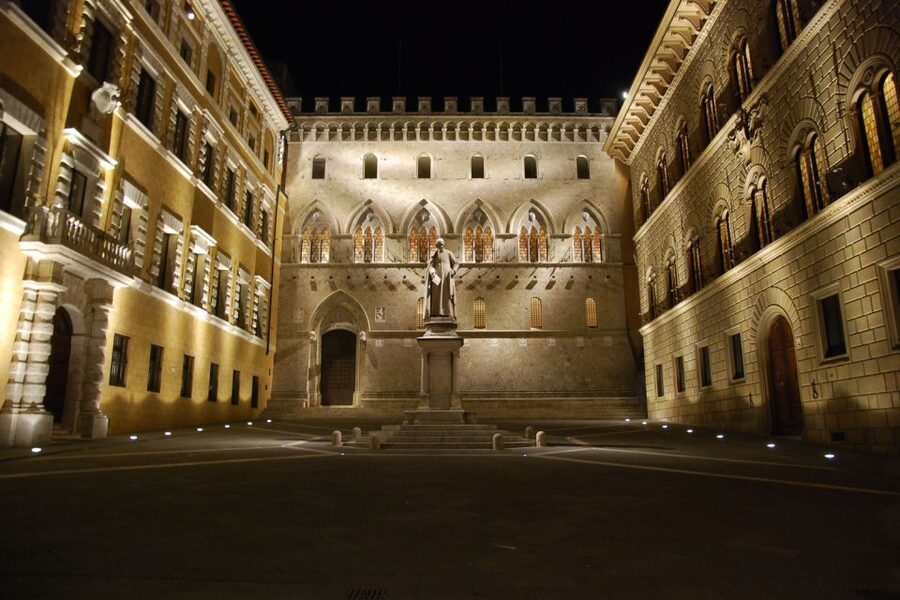
The tour begins at Piazza San Domenico, under the large tree in front of the church. This is a practical meeting point and a fitting place to begin, since the Basilica di San Domenico is closely linked to St. Catherine of Siena, the city’s best-known saint and the patron saint of Italy.
Your guide explains Catherine’s role in Siena’s religious and civic story, along with the importance of the basilica. The point is not simply to admire another old church. It helps you see how faith, local identity, and public life have long overlapped in Siena.
Guides bring different personalities to this opening section. Claudia is often praised for her affection for her home city, while Giorgia has been noted for adding personal stories and clear background. Ambra has focused especially well on the Palio and local customs. If your guide has a strong local connection, this early stop can feel less like a lecture and more like an introduction to the people who shaped Siena.
The basilica is also a useful reminder that Siena’s beauty is not limited to its postcard square. You begin among serious Gothic architecture and religious art, then move into the lanes where everyday city life still carries old divisions and loyalties.
Walking the medieval center and its Gothic buildings
From San Domenico, the route continues through Siena’s historic center, a UNESCO World Heritage Site. Expect narrow cobblestone streets, old facades, and frequent changes in slope. Good walking shoes are essential. The city’s surfaces are part of its charm, but they demand more care than a flat city-center stroll.
The route includes Palazzo Salimbeni, home of the world’s oldest bank. Its presence points to Siena’s former wealth and commercial power. This stop gives useful context: the medieval city was not built only around churches and noble families. Banking, trade, and political influence also shaped its streets.
Some people enjoy this pause because it explains how Siena grew prosperous. Others would rather spend more time inside the cathedral. That is the central tradeoff of the tour. You receive a broad picture of Siena instead of a single long art-history visit.
You also see Palazzo Tolomei, an imposing private Gothic building. It helps you read the city’s architecture as a record of competing families and civic prestige. The building is not treated as an isolated monument. It becomes part of the larger story of Siena’s proud republic and its powerful households.
Your guide then brings you toward the city’s main square, Piazza del Campo. The route gives you a chance to connect the buildings, fountains, and public spaces with Siena’s political past. This is one reason the tour works well early in a visit. Afterward, you can return to the square with a better sense of what you are looking at.
Piazza del Campo and the world of the Palio
Piazza del Campo is Siena’s great gathering place, and the Palio gives it a purpose beyond its graceful shape. The festival features a bareback horse race around the square, but the race itself is only the visible part of a much larger local tradition.
The tour explains the Contrade, Siena’s neighborhood communities. These groups are not just historic labels on street signs. They carry traditions, rivalries, symbols, and a strong sense of belonging. The Palio matters because it ties those communities to a public contest that the city waits for throughout the year.
This section is one of the most praised parts of the experience. Visitors who know little about the Palio often leave with a clearer understanding of why it remains so important. Claudia, Ambra, and Julia have all been singled out for making Siena’s social customs easy to follow, while Elio is known for mixing facts with humor.
I would pay close attention here. The Contrade story gives Siena a human scale. Instead of seeing only stone palaces and grand churches, you begin to understand how local identity still operates in daily life.
The square can be crowded, and a large group may gather around the guide. One person felt that a group of more than 30 was too large for Siena’s small spaces, though the headset helped. The organizer provides audio equipment, which is useful on noisy streets and inside busy buildings. The sound quality has not been perfect for everyone, so stand close to the guide and check your earpiece early.
More Walking Tours in Florence
- Siena: 3h Private City Walking Tour with Optional Cathedral
★ 4.7 · 392 reviews - Siena Walking Tour with Cathedral and Crypt & Museum Option
★ 4.9 · 380 reviews - Discover Siena: Guided Walking Tour and Cathedral Visit
★ 4.3 · 314 reviews - Florence: Guided Walking Tour
★ 4.5 · 3,334 reviews
Food, fountains, and Siena’s daily character
The walk also touches on local culinary traditions. The supplied details do not promise a tasting, meal, or food stop, so you should think of this as conversation and advice rather than a food tour.
That can still be useful. Elio has offered suggestions for good and bad gelaterias and restaurants away from tourist traps. Giorgia recommended Osteria Cice to one couple, who found the lunch excellent. These tips are a welcome extra, but they are not a formal part of the ticket, so do not book this experience expecting included food.
The guide may also point out fountains and monuments around the main square and explain how the city’s buildings fit together. This is the sort of information that helps you plan the rest of your time. One guest took the tour on arrival, then used the overview to decide which places deserved a longer visit the next day.
That is the best use of the experience: take it early, note the places you want to revisit, and let the guide help you avoid spending your limited time at random.
Entering Siena Cathedral without the long wait
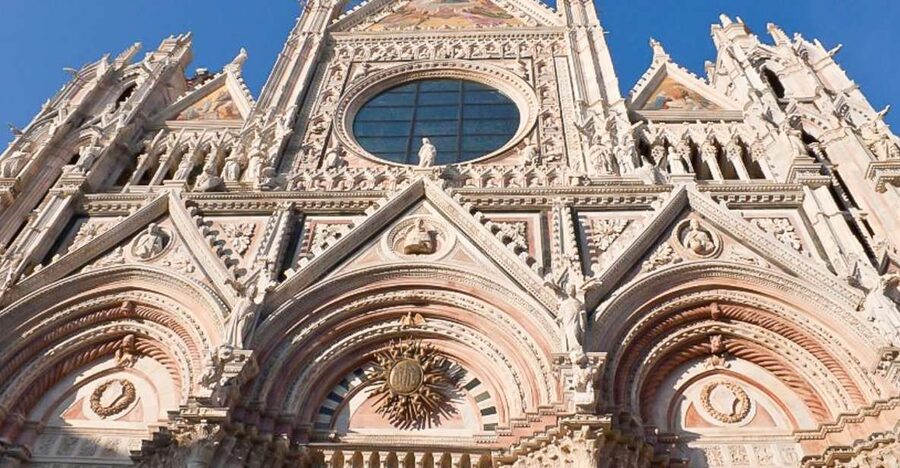
The Duomo is the final major stop, and that order is a smart choice. The cathedral is often the visual high point of the tour, so the experience builds toward something substantial rather than ending at an ordinary street corner.
Skip-the-line entry is the clearest practical benefit. It does not mean the building will be empty or that you can ignore normal visitor rules, but it lets you avoid the standard ticket queue. At busy times, that can make the $47 price easier to justify.
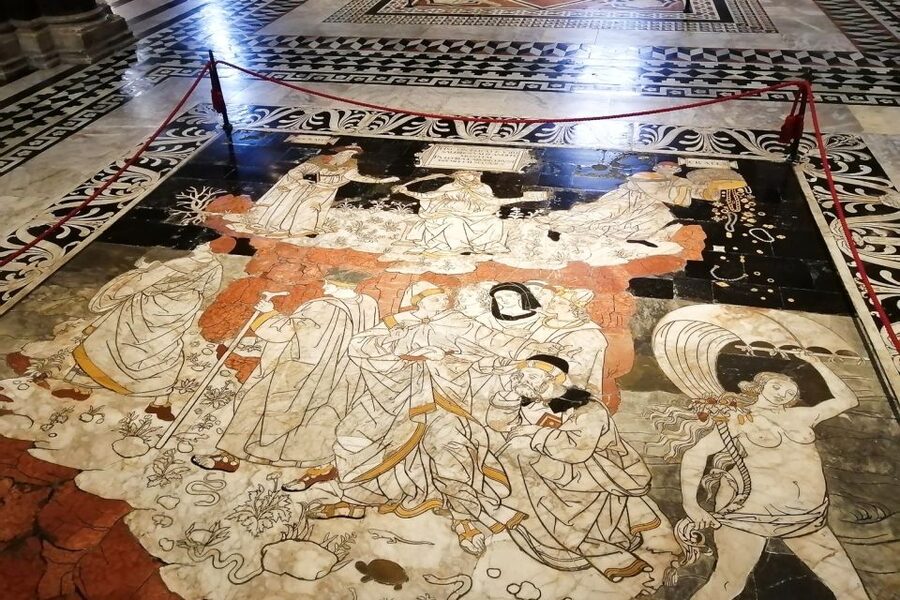
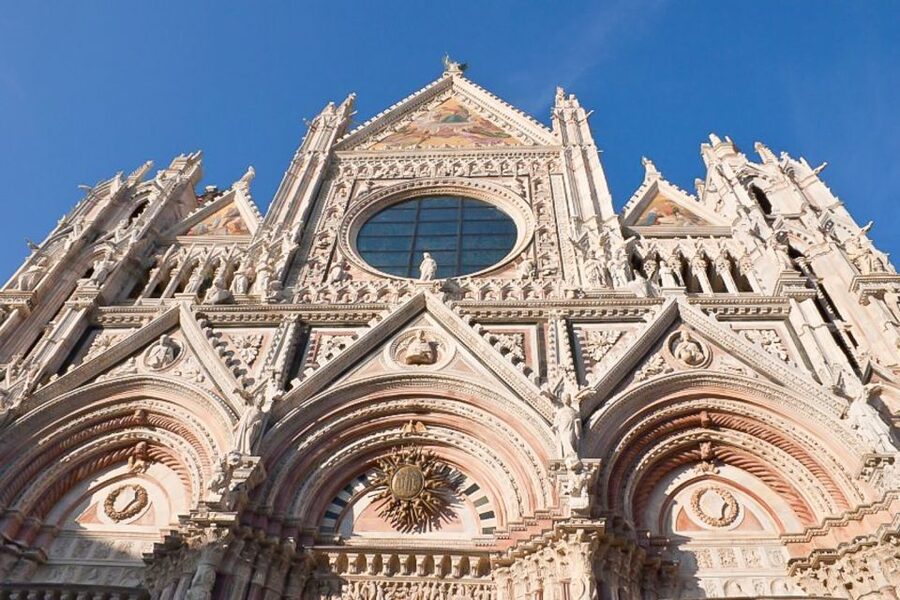
Inside, the guide introduces the cathedral’s chapels, decoration, and works by artists including Donatello, Michelangelo, and Bernini. The building is not a plain shell for famous objects. Its surfaces show centuries of art and devotion working together, so an informed explanation helps you notice details you might otherwise pass by.
The marble floor can be a highlight when more of it is uncovered. One person was especially pleased to see a large portion exposed. Coverage can vary, so do not assume every visit will offer the same view of the floor.
The guide’s role inside the Duomo matters. Claudia was praised for her command of the cathedral, while other guides have been valued for clear explanations and willingness to answer questions. At the same time, several people wished they had more time at the cathedral and less time at earlier stops such as the bank or the church.
Once the guided portion ends, you may be able to remain in the Duomo with your ticket. One person appreciated that the cathedral was the last stop and allowed extra time afterward. Confirm the exact current entry conditions when you arrive, but plan your schedule so you are not forced to rush away immediately.
Guides, headsets, and group size
The guide is the heart of this experience. The strongest names in the feedback include Elio, Claudia, Giorgia, Julia, Ambra, Elena, and Giulia. Their styles differ, but the repeated strengths are clear: local pride, strong command of Siena’s story, humor, and a willingness to answer questions.
Elio is often described as energetic, funny, and generous with practical advice. Claudia brings the perspective of someone from Siena and has been praised for linking history, art, and local customs. Julia is valued for clear speaking and detailed answers, while Giorgia has been noted for keeping a busy route on track without making it feel hurried.
The pace seems to suit most people. You cover a lot in two hours, but the guide generally allows time to look and listen. It is not a private tour, so you should expect the occasional pause while the group gathers.
Audio headsets are supplied and can help when the streets are noisy. However, some people found the earpieces difficult to hear, especially when English was not their first language. Do not bring your own headphones expecting them to connect automatically. Instead, check the supplied equipment at the start and tell the guide quickly if the sound is poor.
Clothing, terrain, and who should book
Dress for church entry. Shoulders must be covered, and shorts or skirts should reach the knees. Sleeveless shirts, short skirts, bare feet, and unsuitable clothing can prevent entry. A light scarf or shawl is a practical item to carry, especially in warm weather when you may otherwise dress for the street.
The route runs over cobblestones and includes Siena’s uneven, sloping streets. The activity is not suitable for people with mobility impairments. You should also be comfortable walking for two hours without hotel pickup, long seated breaks, or a vehicle between stops.
This tour suits you best if:
- You have only a short time in Siena.
- You want the main sights explained in plain English.
- You care about the Palio and Contrade, not only the architecture.
- You plan to visit the Duomo and want to avoid the ticket line.
- You prefer a lively local guide to a self-guided audio program.
- You want restaurant and gelateria suggestions after the walk.
It may not suit you if you want a slow cathedral study, a small private group, or a food tasting. A larger group can feel crowded in narrow streets, and two hours requires a deliberate route rather than a leisurely one.
Cancellation, timing, and practical value
The tour lasts two hours, with starting times dependent on availability. Free cancellation is allowed up to 24 hours before the experience for a full refund, and you can reserve now and pay later. Those terms help if your Tuscany plans are still shifting.
At $47 per person, I would judge the value by two questions. First, will you use the cathedral admission? Second, will a guide help you understand the Palio, Siena’s neighborhoods, and the buildings along the route?
If the answer to both is yes, the price is reasonable, especially during a busy period when the ticket queue may cost you valuable sightseeing time. If you mainly want to stroll through Piazza del Campo and glance inside the Duomo, you may find the two-hour format expensive.
Should you book this Siena walking tour?
I would book it for a first visit, a short stay, or the first morning in town. It gives you the city’s basic structure, explains the Contrade in a way a map cannot, and finishes with one of Italy’s most striking cathedrals.
Go in expecting a focused orientation, not an exhaustive art tour. Wear proper shoes, cover your shoulders and knees, check the headset, and allow extra time after the official two hours if you want to linger in the Duomo. If you want a friendly local guide, useful dining advice, and a fast route through Siena’s main stories, this is a strong choice. If you want depth over breadth, choose a longer cathedral visit or explore the city at your own pace instead.
FAQ
How long does the Siena walking tour last?
The guided experience lasts two hours.
What is included in the price?
The price includes a two-hour guided walking tour of Siena with an authorized English-speaking local guide and skip-the-line entrance to the Duomo or Cathedral.
Is hotel pickup included?
No. Hotel pickup is not included.
Where is the meeting point?
Meet at Piazza San Domenico, under the large tree in front of the church.
What language is the tour offered in?
The tour is offered in English with a live English-speaking guide.
Does the tour include entry to Siena Cathedral?
Yes. Skip-the-line entrance to the Duomo or Cathedral is included.
Can I cancel the booking for a refund?
Yes. You can cancel up to 24 hours in advance for a full refund.
Can I reserve now and pay later?
Yes. The activity offers a reserve-now, pay-later option.
What should I wear?
You need covered shoulders and knee-length pants or skirts to enter the churches. Wear shoes suitable for cobblestone streets.
Is the tour suitable for people with mobility impairments?
No. The activity is listed as unsuitable for people with mobility impairments.
More Fast-Track Entries
- Vatican Museums & Sistine Chapel Skip-the-Line Entry Ticket
★ 4.4 · 13,838 reviews - Skip-the-Line Group Tour of the Vatican, Sistine Chapel & St. Peter’s Basilica
★ 4.5 · 12,779 reviews - Florence: Michelangelo’s David Skip-the-Line Entry Ticket
★ 4.5 · 12,764 reviews - Rome: Vatican Museums & Sistine Chapel Skip-The-Line Ticket
★ 4.2 · 11,708 reviews
More Guided Walks
- Milan: Guided Walking Tour & Last Supper Visit with Ticket
★ 4.7 · 5,409 reviews - Naples: Street Food Walking Tour with Local Guide
★ 4.8 · 4,256 reviews - Venice Walking Tour and Gondola Ride
★ 3.5 · 3,630 reviews - Venice: Rialto Bridge & Offbeat Unusual Venice Walking Tour
★ 4.2 · 3,538 reviews
Just added around Siena
- Wine Class – Tuscan Classics★ 5.0 · 264 reviews
- Siena: Pasta and Tiramisu Cooking Class with Wine★ 4.8 · 274 reviews
- Small-Group Montepulciano and Pienza Day Trip from Siena★ 5.0 · 281 reviews
- Skip-the-Line Siena Cathedral Duomo Complex Entrance Ticket★ 4.5 · 291 reviews
- Discover Siena: Guided Walking Tour and Cathedral Visit★ 4.3 · 314 reviews
- From Siena: Tuscany Hills Wine Tour★ 4.1 · 323 reviews
- Tuscan Cooking Class in Central Siena★ 5.0 · 337 reviews
- Siena: A Wine Tour and Tasting Experience★ 5.0 · 352 reviews
Walking Tours, compared.

Guided Walking Tour & Last Supper Visit with Ticket
Read our review →

Rialto Bridge & Offbeat Unusual Venice Walking Tour
Read our review →

Private 3 hrs Venice Tour: St Mark’s, Walking tour & Boat tour
Read our review →

Skip the line: Uffizi and Accademia Small Group Walking Tour
Read our review →Browse the lists this tour appears in