
Review · WALKING TOURS
Verona Small Group Walking Tour with Cable Car and Arena Tickets
Verona rewards a good first walk. I like the small group capped at 12 people and the smart mix of famous sights, local food culture, and a hilltop view. Prebooked Arena admission is another strong point, but expect several miles of walking, stairs, and extended periods on your feet.
This is especially useful on a first day in Verona. Guides such as Monica, Mauro, Morris, Paola, and Carla have earned praise for clear storytelling, humor, and helpful local tips. The main drawback is the tour’s history-heavy style: if you prefer quick facts and short stops, some explanations may feel too long.
In This Review
- Key points to know before booking
- A strong first look at Verona in three hours
- Piazza Bra gives you your first bearings
- Entering the Arena with a reserved ticket
- Juliet’s House, balcony, and the limits of the stop
- Piazza dei Signori and the Della Scala tombs
- Piazza delle Erbe brings in food and daily life
- St. Peter’s Hill and the one-way cable car
- How the guiding style shapes the experience
- Walking demands, timing, and group size
- Who will get the most from this tour?
- Is Verona’s $71.38 price fair?
- Should you book the Verona walking tour?
- FAQ
- How long does the Verona walking tour last?
- What language is the tour offered in?
- What is the maximum group size?
- Is Arena di Verona admission included?
- Can I enter Juliet’s House?
- Is the cable car ticket one-way or round-trip?
- Are food tastings included at Piazza delle Erbe?
- Where does the tour begin and end?
- What happens if the Arena is closed during my visit?
Key points to know before booking
- The Arena ticket can save time: Pre-reserved entry lets you avoid the main ticket line when interior access is available.
- The group stays small: A maximum of 12 people makes it easier to hear the guide and ask questions.
- St. Peter’s Hill is the scenic payoff: The one-way cable car ride takes you uphill, followed by a walk down with views along the Adige River.
- Juliet’s House is an exterior visit: You see the courtyard area and balcony from outside, but indoor admission is not part of the tour.
- This is a serious walking tour: Plan for roughly 2.5 to 3 hours, with stairs, standing, and several miles on foot.
- Monday changes the Arena stop: The amphitheater is closed, so you see it from outside while the guide explains its story.
A strong first look at Verona in three hours
This tour covers a lot of Verona in a short period. You begin at Piazza Bra, walk through the old center, visit the Arena, pass Juliet’s House and the Della Scala tombs, explore Piazza dei Signori and Piazza delle Erbe, then reach St. Peter’s Hill by cable car before walking back down.
The route gives you both orientation and context. You will see the places most people want to find, but the guide also explains how Verona’s Roman, medieval, and Shakespearean associations fit together.
At $71.38 per person, this is not the cheapest way to stroll through the city. I think the price makes more sense if you use the included Arena ticket, value a small group, and want one organized route that combines central Verona with the hilltop view.
If the Arena is closed during your visit, the value changes. You still receive the walking tour and cable car ride, but you lose the interior visit that helps justify the cost.
The tour is offered in English. The meeting point is at Piazza Bra, 10, close to the Arena. Arrive 5 to 10 minutes early, since joining after the tour begins is not possible.
More Walking Tours in Verona
- Verona: History and Hidden Gems Guided Walking Tour
★ 5.0 · 1,379 reviews - Verona: Small Group Guided Walking Tour with Arena Tickets
★ 4.9 · 848 reviews - Verona Highlights Walking Tour in Small-group
★ 5.0 · 493 reviews
Piazza Bra gives you your first bearings
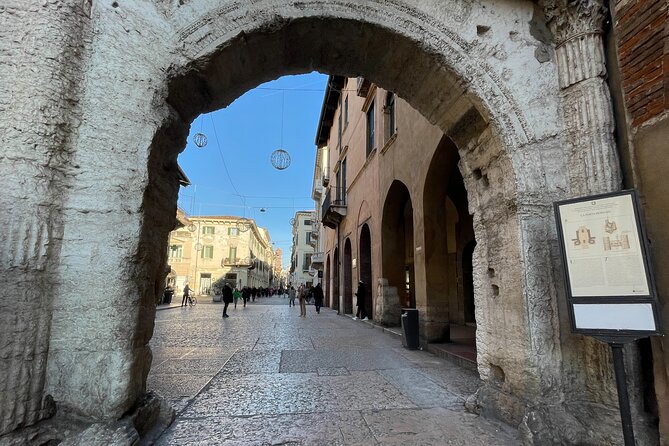
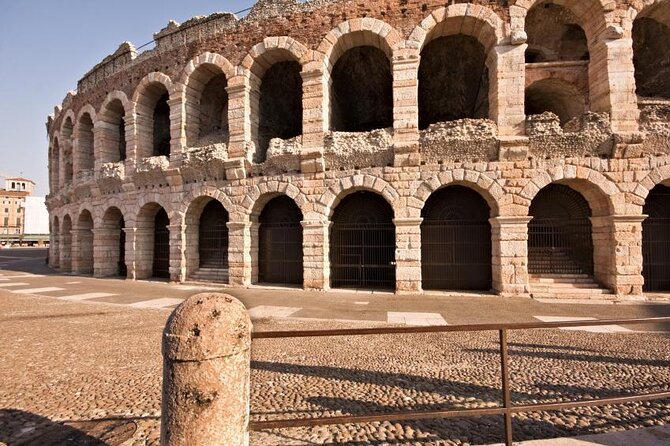
Piazza Bra is a practical starting point because it places you beside Verona’s most recognizable monument. The square is broad, lined with historic buildings, cafes, restaurants, and shops, and it quickly shows you how the modern city wraps around its Roman core.
Your guide uses the square to explain the city’s layout and point out important buildings. This first stop is not a formal attraction visit, so you are mainly listening, looking, and getting a sense of where you are.
I like beginning here rather than rushing straight inside the Arena. A little orientation makes the later stops easier to understand, especially when the route returns to Piazza Bra at the end.
Do not count on sitting during the tour. The route is designed as a continuous walk, and one detailed account specifically warned that there was little or no opportunity to rest.
Entering the Arena with a reserved ticket
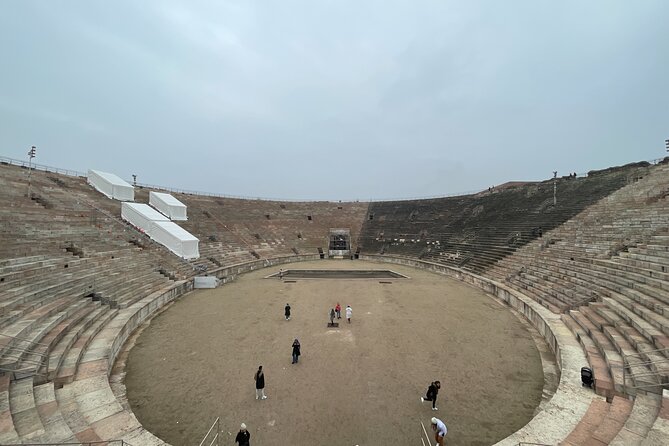
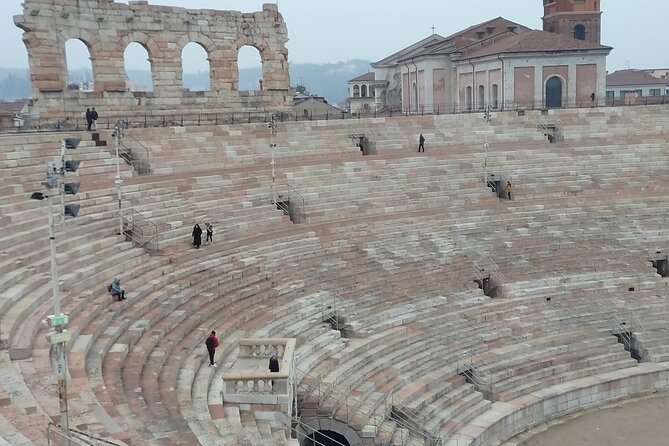
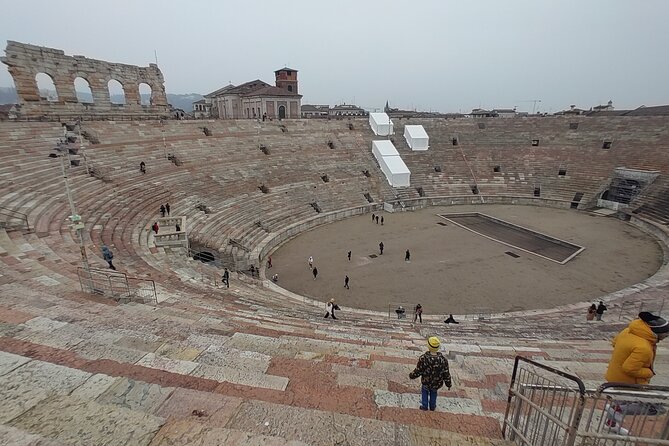
The Arena di Verona is the centerpiece of the tour. This nearly 2,000-year-old Roman amphitheater remains remarkably intact, and the interior reveals much more than the exterior view from Piazza Bra.
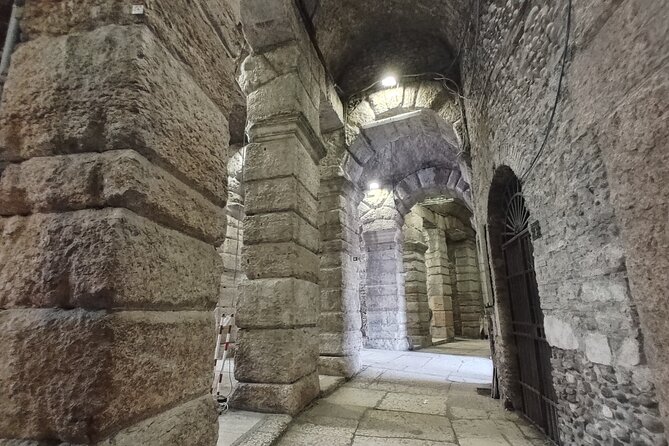
With the Arena option selected, your guide leads you inside using pre-reserved admission. You can expect to see the broad corridors, galleries, and stone structure where large public spectacles once took place.
The guide’s explanation is important here. Empty ancient walls can be hard to read on your own, while stories about gladiators, performances, and the building’s original purpose give the spaces a human scale.
The included time is about 40 minutes. That is enough for a focused visit, though not enough for every corner or a slow, independent exploration.
The Arena is closed on Mondays. On those days, the tour does not include indoor admission, and the guide explains the monument from outside instead. The Arena is also scheduled to be closed from January 7 through March 20 because of the Olympic Games, with an exterior explanation replacing the interior visit during that period.
Check the date carefully before paying for this experience. If seeing inside the amphitheater is your main goal, avoid a Monday and confirm that your visit falls outside the listed closure period.
Juliet’s House, balcony, and the limits of the stop
Casa di Giulietta is one of Verona’s busiest name-brand sights. The house is believed to have belonged to the Cappello family, a name often connected with the story that inspired Shakespeare’s Romeo and Juliet.
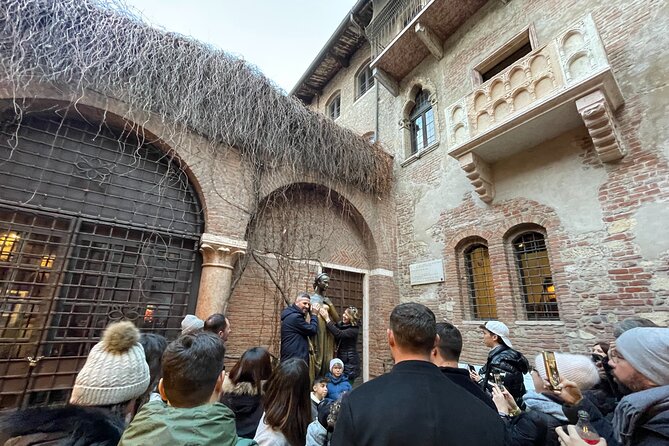
The guide brings you to the courtyard area, where you can see Juliet’s statue and the famous balcony associated with the tale. This is the spot for the familiar photograph, though the experience is more about the story and the atmosphere than historical proof.
The tour does not include entry into the house. You should not expect to explore the interior or spend much time inside the museum.
That detail matters because some people book a Romeo and Juliet tour expecting a full museum visit. Local authority decisions can also affect access around the site, sometimes with little warning, so the guide may adjust the stop.
The most useful part may be the explanation that Verona’s connection with Juliet is a blend of older Italian storytelling, local tradition, and Shakespeare’s adaptation. Shakespeare never visited Verona, but his version helped make the city famous around the world.
More guided walks:
- Verona walking tour:food, wine, legends, lunch/dinner & cable car
★ 5.0 · 386 reviews - Verona All in one: Food Walking Tour, Lunch & Wine
★ 5.0 · 342 reviews - The Highlights of Verona Small Group Walking Tour
★ 4.8 · 294 reviews - Verona: City Walking Tour with Cable Car & Wine Aperitif
★ 4.8 · 267 reviews
Piazza dei Signori and the Della Scala tombs
Piazza dei Signori feels more formal than Piazza Bra. This elegant square was once Verona’s political center, and the surrounding palaces show the power held by the city’s ruling families.
A statue of Dante Alighieri presides over the square. The guide explains Dante’s connection with Verona and places the poet within the city’s medieval story.
Nearby, you see the Della Scala medieval tombs from outside. These elaborate monuments honor Verona’s former rulers and offer a quick lesson in how power was displayed in stone.
This is one of the places where the guide’s style matters most. Some guides, including Mauro and Morris, are praised for adding anecdotes and family stories without losing the group’s pace. Other visitors may find the many names, dates, and political changes hard to absorb.
You do not need to remember every century or family line. I suggest listening for the broad pattern: Verona’s buildings reflect changing rulers, rival powers, and the city’s position between northern Italian states.
Piazza delle Erbe brings in food and daily life
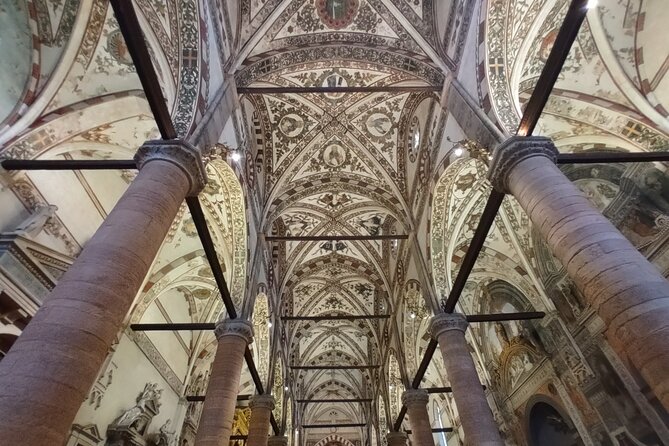
Piazza delle Erbe is the liveliest part of the route. The square occupies the site of the Roman forum and is surrounded by medieval buildings, market stalls, cafes, and places selling food and wine.
Here, the tour shifts from monuments to daily life. Your guide discusses Verona’s food culture and points out the market, giving you ideas for what to explore after the walk.
Tastings and shopping are not included. You can browse or buy something independently, but do not expect a guided food tour or included samples.
That arrangement is sensible for a short city walk. You get useful local direction without losing half an hour to a formal tasting. If you want to linger over a drink, inspect the stalls, or try local products, return later at your own pace.
The market can also be a good place to note what you want to eat after the tour. Guides have offered restaurant suggestions, which adds practical value if Verona is part of a larger Italian trip.
St. Peter’s Hill and the one-way cable car
The cable car is the tour’s best change of pace. After walking across the river, you take the funicular uphill to St. Peter’s Hill, where Verona opens out below you.
The ticket covers the uphill journey only. There is no cable car ride back down, because walking downhill is part of the route.
That return walk gives you views along the Adige River and a different perspective on the city’s rooftops, bridges, and historic center. The view is repeatedly singled out as one of the most memorable parts of the experience.
You should treat the hill section as a real walking component, not a short photo stop. Steps and downhill paths can be tiring, especially after two hours of streets and standing.
Wear firm, comfortable shoes. Bring water, and take extra care on wet days. One particularly positive account described the tour as enjoyable even in rain, but bad weather can make stone surfaces and stairs less comfortable.
The cable car also helps the route feel varied. Without it, the tour would be almost entirely a street-level history walk. With it, you get a scenic break and a clear view of how Verona sits around the river.
How the guiding style shapes the experience
The strongest part of this tour is the human guide. Morris, Mauro, Monica, Paola, Carla, and other guides are praised for humor, local knowledge, clear explanations, and the ability to answer questions.
Several guides are described as passionate about Verona’s history and art. That enthusiasm can make the Arena, medieval families, and local traditions easier to remember.
The tour is not built around silence or fast snapshots. Guides may spend 15 to 20 minutes explaining a square, a family, or an architectural detail. One dissatisfied participant found this too much and wanted shorter context before moving on.
You should book with the right expectation. If you enjoy stories and want to understand why Verona looks the way it does, the commentary is a major benefit. If you want to photograph each sight quickly and move on, the pace may feel slow.
Audio equipment can vary. Some groups have used headsets or earphones, which helped people hear while walking. One account reported that no earphones were provided and the guide’s voice was sometimes lost in street noise. In a group of up to 12, this may be manageable, but it is worth staying near the guide.
Walking demands, timing, and group size
The advertised duration is about 2 hours 30 minutes to 3 hours. In practice, the amount of walking can feel substantial. One detailed account estimated close to five miles, with stairs and very little sitting.
The route is best for anyone comfortable walking continuously through a historic center. Most people can participate, but the supplied information does not promise a step-free route or frequent rest stops.
The maximum group size of 12 is a real advantage. You are more likely to hear the guide, keep the group together, and ask a question without holding up a large crowd.
The experience is usually booked about 41 days ahead, which suggests that popular dates can fill early. Reserve ahead if you are visiting for a short stay, especially if Arena access is important.
The tour ends back at Piazza Bra. That makes the starting point easy to use as a reference for the rest of your day. Afterward, you can return to the Arena area, continue shopping, or walk back toward the market and river.
Who will get the most from this tour?
I would choose this tour if you have one day in Verona and want a clear first look at the city. It is also useful early in a longer stay, since the route helps you decide which squares, museums, food stops, and neighborhoods deserve a second visit.
It suits you if you like:
- Roman and medieval history explained on location
- A guide who tells stories rather than only naming buildings
- A small English-speaking group
- A planned route covering major sights
- A scenic overlook reached by cable car
- Practical food and restaurant suggestions
I would hesitate if you have limited mobility, dislike stairs, or need regular seating. I would also think twice if you want a full visit to Juliet’s House, since the interior is not included.
The tour may feel too academic if you prefer only brief facts. The history of Verona includes many ruling families, political shifts, and centuries of change. That is part of the appeal, but it can also become a lot to absorb in one morning.
Is Verona’s $71.38 price fair?
The price is reasonable when three things matter to you: a small group, a local guide, and interior Arena access. Buying the Arena ticket separately and walking the same route on your own could cost less, but you would give up the organized explanation and the cable car ticket.
The value is weaker on Monday or during the listed Arena closure. You still receive a guided city walk and the hilltop ride, but the tour no longer includes the monument’s interior.
I would compare the cost with your schedule, not just with the price of a free walk. If you have only a few hours, the route saves planning time and gives you a working map of the city. If you have several days and enjoy researching sites yourself, a self-guided plan may be better value.
Tips for the guide are appreciated but not included. Bring a little extra for that if the guide makes the walk useful and enjoyable.
Should you book the Verona walking tour?
Book it if you want a well-rounded first orientation with the Arena, Juliet’s House exterior, medieval squares, market life, and a hilltop view in one route. The strongest reasons are the small group, the prebooked Arena entry on eligible days, and the guides’ ability to make Verona’s past feel connected to the streets around you.
Skip it if you want a gentle stroll, a full Juliet’s House visit, or a short list of facts with minimal standing. Check the weekday and seasonal Arena closure before booking, arrive early at Piazza Bra, and wear shoes suited to stairs and downhill walking.
For many visitors, this is a good use of a first morning in Verona. It gives you the major landmarks, a bit of local flavor, and enough direction to spend the rest of your stay with purpose.
FAQ
How long does the Verona walking tour last?
The tour lasts approximately 2 hours 30 minutes to 3 hours.
What language is the tour offered in?
The tour is offered in English.
What is the maximum group size?
The group is limited to a maximum of 12 people.
Is Arena di Verona admission included?
Pre-reserved Arena admission is included if you select the tour option with Arena access. The Arena visit is not included on Mondays because the monument is closed.
Can I enter Juliet’s House?
No. The tour visits the exterior area of Juliet’s House, including the balcony and statue courtyard, but indoor admission is not included.
Is the cable car ticket one-way or round-trip?
The ticket covers the uphill journey only. You walk downhill afterward, with views along the Adige River.
Are food tastings included at Piazza delle Erbe?
No. Tasting and shopping at Piazza delle Erbe are optional and are not included in the guided tour.
Where does the tour begin and end?
The tour begins at P.za Bra, 10, 37121 Verona VR, Italy, and ends back at the meeting point.
What happens if the Arena is closed during my visit?
From January 7 through March 20, the Arena is scheduled to be closed because of the Olympic Games. During that period, the guide explains the amphitheater from outside instead of taking you inside.
Just added around Verona
- Verona: City Walking Tour with Cable Car & Wine Aperitif★ 4.8 · 267 reviews
- Verona: Italian Cooking Class with Pasta, Risotto and Tiramisù★ 5.0 · 268 reviews
- Verona e-bike tour: city center and panoramic views★ 5.0 · 270 reviews
- Amarone Wine-tasting Tour from Verona with Private Transportation★ 5.0 · 283 reviews
- The Highlights of Verona Small Group Walking Tour★ 4.8 · 294 reviews
- Verona: Hands-on Fresh Pasta and Tiramisù Cooking Class★ 4.9 · 295 reviews
- Lake Garda and Sirmione Tour from Verona★ 4.5 · 336 reviews
- Discover Valpolicella Vineyards and Wine Tasting Experience★ 4.5 · 341 reviews
Walking Tours, compared.

Guided Walking Tour & Last Supper Visit with Ticket
Read our review →
Rialto Bridge & Offbeat Unusual Venice Walking Tour
Read our review →

Private 3 hrs Venice Tour: St Mark’s, Walking tour & Boat tour
Read our review →

Skip the line: Uffizi and Accademia Small Group Walking Tour
Read our review →Browse the lists this tour appears in