
Review · WALKING TOURS
Verona Highlights Walking Tour in Small-group
Verona rewards a good first walk. This two-hour small-group tour gives you a clear route through the city’s Roman, medieval, and Shakespearean landmarks, with a local guide adding the stories that buildings alone cannot tell. You begin and end in Piazza Bra, so it is easy to fit into a busy day.
I like the small maximum of 16 people, which keeps the walk more personal than a large crowd tour. I also like the range of sights: you get Castelvecchio, the Roman arena, Piazza delle Erbe, the Scaliger tombs, and Juliet’s House in one compact outing. The main drawback is that two hours moves quickly, and several major sights are viewed from outside or from a courtyard rather than visited fully.
The tour costs $42.33 per person and operates in English. That is fair value if you want orientation, local context, and a useful list of places to return to. It is less suitable if your main goal is long interior visits or a slow, detailed study of Verona’s museums.
In This Review
- Key points to know before you book
- Why this is a smart first look at Verona
- Piazza Bra and the first view of the Arena
- Castelvecchio and the rebuilt Scaligero Bridge
- Roman streets, Porta Borsari, and the city’s older layers
- Juliet’s House and the limits of the Shakespeare connection
- Romeo’s House from the outside
- Piazza delle Erbe and Piazza dei Signori
- The Scaliger tombs and medieval power
- What the guides add to the walk
- Price, pace, and who gets the best value
- Should you book the Verona Highlights Walking Tour?
- FAQ
- How long is the Verona Highlights Walking Tour?
- What language is the tour offered in?
- Where does the tour begin?
- Where does the tour end?
- What is included in the tour?
- Are hotel pickup and drop-off included?
- Is admission to the Arena di Verona included?
- Is admission to Juliet’s House included?
- Does the tour include access to Juliet’s Balcony?
- What is the maximum group size?
- Does the tour operate in bad weather?
- Can minors join the tour?
- Is the tour accessible to people with reduced mobility?
- What is the cancellation policy?
Key points to know before you book
- The route covers Verona’s biggest sights in about two hours, including the Arena di Verona, Piazza Bra, Juliet’s House, Piazza delle Erbe, and Piazza dei Signori.
- The Roman arena is the visual star, but admission is not included in this walking tour.
- Guides such as Frank, Isabella, Priscilla, and Maria are praised for clear English, humor, local insight, and an easy manner.
- The tour begins and ends at Piazza Bra, making it practical before dinner, an opera performance, or a train connection.
- The group is capped at 16 people, though you should still expect a steady walking pace through crowded old-city streets.
- Juliet’s Balcony access is not normally included from December 6, 2025, through January 6, 2026, unless you buy a separate ticket.
Why this is a smart first look at Verona
Verona can feel confusing at first. Roman ruins appear beside medieval towers, elegant Venetian facades, busy market squares, and streets devoted to the Romeo and Juliet story. A guide helps you connect those layers instead of seeing them as a string of unrelated photo stops.
This tour is especially useful on your first day. You get a broad sense of the old center, learn which sights deserve more of your time, and can return later to the Arena, Castelvecchio Museum, or Juliet’s House at your own pace.
The mood is relaxed rather than formal. Guides are expected to explain the city while walking, answer questions, and keep the group involved. Frank is repeatedly praised for his humor and storytelling, while Isabella is noted for combining history and culture with warmth. Priscilla brings a strong local connection to Verona and Italy, and Maria has led the walk successfully even in wet weather.
That human touch matters. Verona is not difficult to explore on your own, but it is easy to miss the meaning of a ruined arch, a family tomb, or a palace tucked behind a modern shopfront. One particularly useful example is the Roman remains visible inside a Benetton store. A guide can point out such details before you walk past them.
More Walking Tours in Verona
- Verona: History and Hidden Gems Guided Walking Tour
★ 5.0 · 1,379 reviews - Verona: Small Group Guided Walking Tour with Arena Tickets
★ 4.9 · 848 reviews - Verona walking tour:food, wine, legends, lunch/dinner & cable car
★ 5.0 · 386 reviews
Piazza Bra and the first view of the Arena
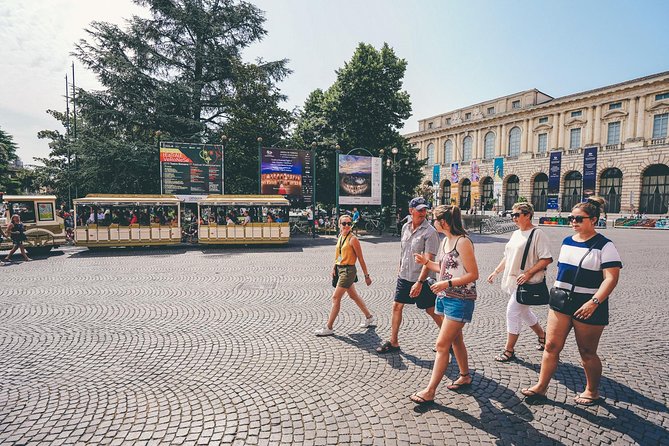
The meeting point is Piazza Bra, Verona’s largest square. This is a good place to begin because it gives you immediate scale and context. Cafés and restaurants line the piazza, while the ancient Arena dominates the scene.
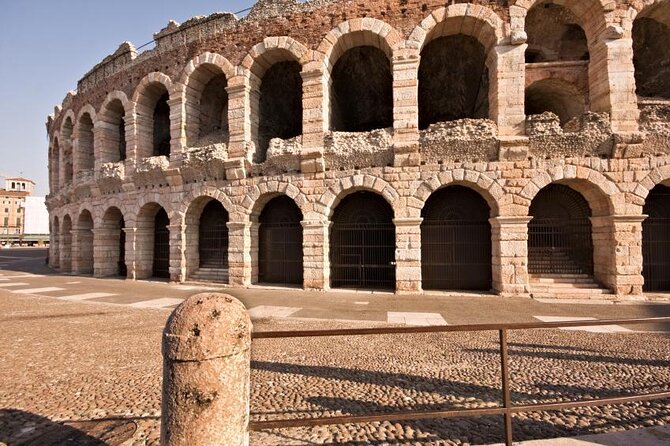
The Arena was built in the first century AD, during the Augustan period. It predates Rome’s Colosseum by about 30 years and remains remarkably well preserved after roughly 2,000 years. The outer ring has lost much of its original stone, but the surviving inner tiers still create an impressive curved wall.
The guide explains how the amphitheater once held as many as 30,000 people and how it continues to serve Verona. Its best-known modern use is the summer opera season, the Verona Arena Festival, which brings large productions and classical music audiences to the city.
You spend about 10 minutes at the Arena, and admission is not included. The exact approach to the monument gives you good photo opportunities, but this is not the same as entering the seating area. If you want to see the interior, check for a separate Arena visit or a combined option. One particularly practical tip from the tour experience is that a separate guided Arena visit can follow this walk, sometimes with the same guide.
Castelvecchio and the rebuilt Scaligero Bridge
The route also passes Castelvecchio, Verona’s late-medieval castle. It is a powerful sight even before you know its story, with thick walls and a defensive form that contrasts sharply with the city’s open piazzas.
Attached to the castle is the Scaligero Bridge, which crosses the Adige River. The bridge connects the castle to the river’s left bank and was almost destroyed during bombing in the Second World War. It was later rebuilt to match the original design.
This is one of the tour’s most valuable history lessons because the bridge is not simply old stonework. It also shows how Verona dealt with wartime destruction and restoration. You do not enter Castelvecchio during this walk, so keep the museum in mind for another visit if you want paintings, sculpture, and a closer look at the fortress.
The walk may also include the Arch of Gavi, a first-century AD monument linked to the Gavia family. It was designed by the Roman architect Vitruvius and originally stood outside the city on the Via Postumia. Napoleon demolished it in 1805, and the arch was moved and reconstructed at its current location in 1931.
That sequence gives you a compact lesson in Roman Verona, Napoleonic-era damage, and modern restoration. It is also a reminder that many ancient monuments in Italy have changed location or form over time.
Roman streets, Porta Borsari, and the city’s older layers
As you continue through the center, the guide points out Roman street patterns and the remains of the old city walls. One notable sight is Porta Borsari, the marble front of Verona’s original Roman city gate.
The decorative stone facade survives, while the brickwork behind it and the gate’s towers have suffered over time. This is the kind of stop that benefits from explanation. Without a guide, you may see an attractive wall. With context, you can picture the entrance as part of a Roman city boundary and understand why its placement mattered.
The walk does not focus only on grand monuments. It also draws attention to fragments built into later structures. That is useful in Verona, where ancient remains often sit beside shops, homes, and busy streets rather than in isolated archaeological parks.
You should expect some crowding in the old center. The streets are walkable, but the group may need to keep moving and stay together. One piece of practical feedback is that you need to walk somewhat quickly. The route is not described as strenuous, but it is a real city walk, not a short stroll between two monuments.
More guided walks:
- Verona All in one: Food Walking Tour, Lunch & Wine
★ 5.0 · 342 reviews - Verona Small Group Walking Tour with Cable Car and Arena Tickets
★ 5.0 · 311 reviews - The Highlights of Verona Small Group Walking Tour
★ 4.8 · 294 reviews - Verona: City Walking Tour with Cable Car & Wine Aperitif
★ 4.8 · 267 reviews
Juliet’s House and the limits of the Shakespeare connection
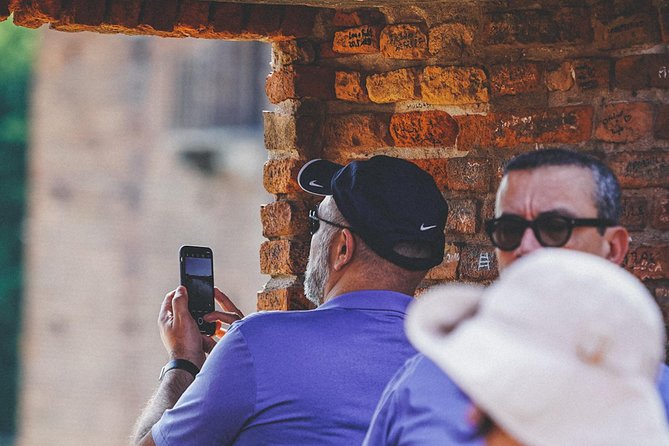
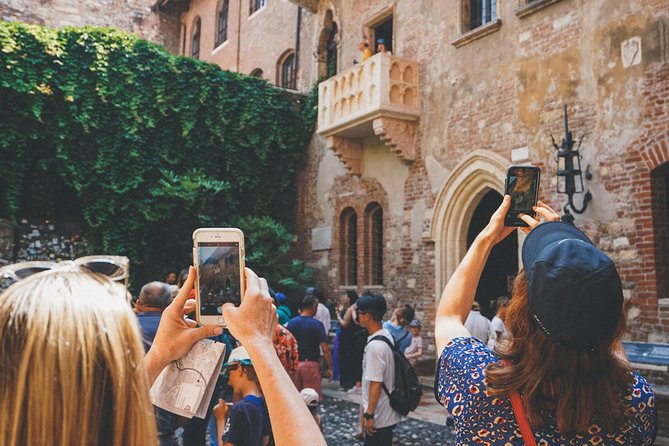
Casa di Giulietta is one of Verona’s most famous stops. The tour takes you into the courtyard associated with the Capuleti family and the Juliet story. You spend about five minutes here, and standard admission is not included.
The place is powerful as a piece of cultural history, but you should understand what you are seeing. The connection to Shakespeare’s characters is a blend of legend, literature, and later tourism. The courtyard and balcony have become part of Verona’s public identity, even though the story is not a straightforward historical record.
This is also where expectations matter. The tour normally visits the courtyard, but access to Juliet’s Balcony has special limits from December 6, 2025, through January 6, 2026. During that period, the city requires a separate ticket because of high visitor numbers. The tour provider can explain how to buy it, but does not buy it for you.
The brief stop works well if you want to see the setting and hear the background before moving on. It may feel too short if you want time for photographs, the museum, or a close look at the balcony. If Juliet’s House is your main reason for booking, confirm the current access arrangements before paying.
Romeo’s House from the outside
The walk also passes the medieval palace associated with Romeo. According to legend and literary tradition, it belonged to the Montecchi family, linked with Romeo.
The building is privately owned and inhabited, so you see it only from the outside. That limitation is important. This is a quick historical and literary reference, not an interior attraction.
Still, the stop helps balance the Juliet focus. You see how the Romeo and Juliet story is spread across the city rather than confined to one courtyard. It also keeps the tour grounded in Verona’s medieval families and political rivalries, which shaped the city long before modern visitors arrived.
Piazza delle Erbe and Piazza dei Signori
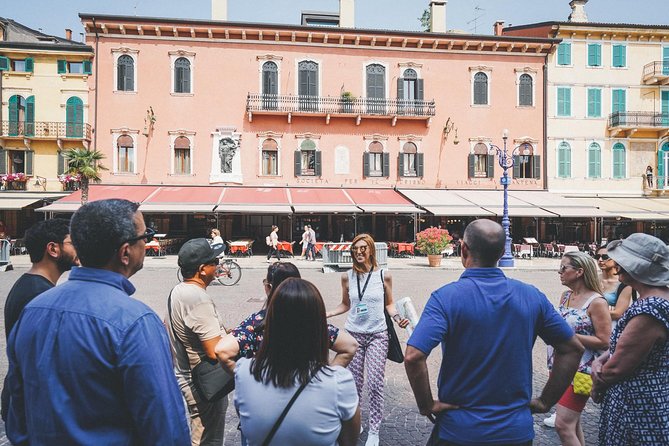
Piazza delle Erbe occupies the site of Verona’s Roman forum. It was the center of civic life in Roman times and later became one of the city’s most attractive public spaces.
The square contains monuments connected with different periods of Verona’s rule. Its fountain, built during the Scaliger period, is one of the central landmarks. Buildings around the piazza include historic facades and, in places, old frescoes. The tour spends about five minutes here, enough for an explanation and a quick look around.
I would use this stop as a marker for a later return. The square has cafés, market activity, and enough visual detail to reward a slower visit. During the tour, you are learning the basic story and layout. Later, you can sit down and watch the city move around you.
Nearby Piazza dei Signori was once Verona’s center of political power. A statue of Dante Alighieri has dominated the square since 1865, giving it the informal name Piazza Dante.
The square feels more controlled and formal than Piazza delle Erbe. Its palaces and arcades reflect the city’s ruling institutions, and the guide can help you see the difference between a commercial forum and a political center. This is also near the Torre dei Lamberti viewpoint, though entrance to that tower is not part of the tour.
The Scaliger tombs and medieval power
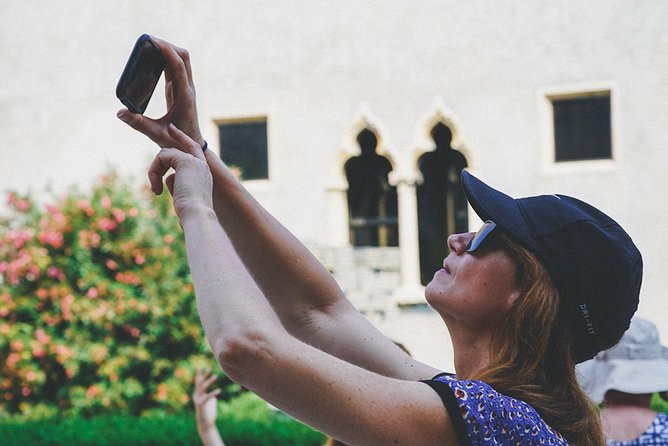
The Arche Scaligere are the outdoor tombs of Verona’s Scaligeri rulers. You spend about five minutes here, with admission not included.
The Gothic monuments were built for Cangrande I, Mastino II, and Cansignorio. Their elaborate arches and sarcophagi show how the ruling family used public art to display status, power, and memory.
This is one of the most distinctive stops on the route. Many first-time visitors focus on the Arena and Juliet’s House, but the Scaliger tombs reveal Verona’s medieval character more clearly. They also make the city’s political history easier to understand. The Scala family did not merely govern from a palace. Their tombs announced their importance in the middle of the city.
The visit is brief, so you will not get a long architectural study. If Gothic sculpture interests you, plan to return after the tour and spend more time examining the details.
What the guides add to the walk
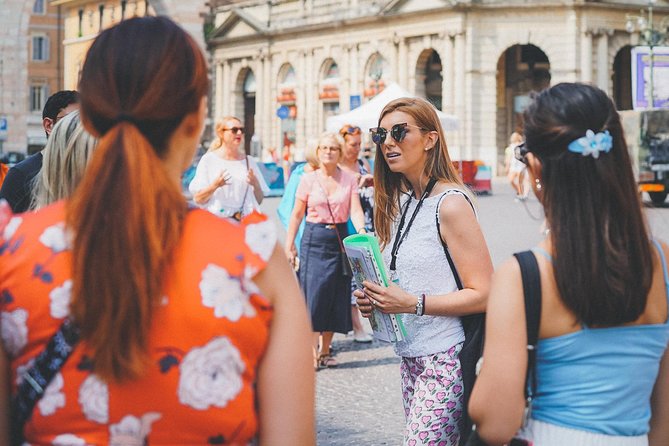
The guide is the main reason to book this experience rather than follow a map. The route itself is easy to reproduce, but the stories, questions, and small observations are harder to find on your own.
The strongest guide feedback centers on clear English, humor, and a personal style. Frank is often described as friendly, engaging, and full of useful facts, including food and place recommendations at the end. Isabella is praised for her passion and for making architecture and cultural background easy to remember. Priscilla has been especially helpful with older visitors, and one guide was credited with keeping track of a participant who fell behind in a crowded area.
You should feel free to ask questions as you walk. The tour is designed for interaction, not just a spoken script. That can be particularly useful if you want help deciding which sights to enter later, how Verona’s Roman and medieval periods connect, or where to focus your limited time.
One less positive impression is worth keeping in mind. The tour gives a strong Roman and medieval overview, but it may not cover much about modern Verona, such as the university, population, or present-day business life. It also does not necessarily encourage museum visits during the walk. If you want a social and contemporary portrait of the city, you may need to ask direct questions.
Price, pace, and who gets the best value
At $42.33 per person, the tour sits in a reasonable range for a two-hour guided city walk. You are paying for a local English-speaking guide and a planned route through several major sights. Hotel pickup, drop-off, and monument admission are not included.
The value is strongest if you are in Verona for a short stay or want help getting oriented. You can see a wide section of the historic center, then choose where to spend more time. It is also a useful option for families, couples, and first-time visitors who prefer a small group to a large flag-following crowd.
The pace may not suit everyone. Most participants can take part, but the route may not be easy for people with reduced mobility or other disabilities. The tour runs in rain or shine, and the minimum group size is two people. Minors must be accompanied by an adult, and service animals are allowed.
Wear comfortable shoes and allow room for pauses at busy crossings and crowded squares. Since the tour ends where it begins, Piazza Bra, you can easily continue to a café, return to the Arena, or make your own way onward.
Should you book the Verona Highlights Walking Tour?
Book it if you want a well-paced introduction to Verona, especially on your first day. The tour gives you the city’s major landmarks, useful historical structure, and the chance to ask a local guide what deserves a second look.
It is a particularly good match for people who enjoy stories, architecture, and broad context more than long indoor visits. The 4.8 rating from 494 ratings and a 97 percent recommendation rate fit the tour’s strongest qualities: friendly guides, clear explanations, humor, and a route that covers a lot without feeling like a forced march.
Skip it if you want extended access to the Arena, Juliet’s Balcony, or Castelvecchio Museum. Those sights require extra time and, in some cases, separate admission. For most first-time visitors with only a day or two in Verona, though, this is a sensible way to get your bearings and see why the city is much more than a Romeo and Juliet backdrop.
FAQ
How long is the Verona Highlights Walking Tour?
The tour lasts approximately two hours.
What language is the tour offered in?
The tour is offered in English.
Where does the tour begin?
It begins at Piazza Bra in Verona.
Where does the tour end?
The tour ends at Piazza Bra, the same location where it starts.
What is included in the tour?
A local tour guide is included.
Are hotel pickup and drop-off included?
No. Hotel pickup and drop-off are not included.
Is admission to the Arena di Verona included?
No. Admission to the Arena is not included in this walking tour.
Is admission to Juliet’s House included?
No. Admission to Casa di Giulietta is not included.
Does the tour include access to Juliet’s Balcony?
From December 6, 2025, through January 6, 2026, access to Juliet’s Balcony requires a separate ticket because of high visitor numbers. You can ask for information about buying the ticket, but the tour provider will not buy it for you.
What is the maximum group size?
The tour has a maximum of 16 travelers.
Does the tour operate in bad weather?
Yes. The tour runs rain or shine, although adverse weather or unforeseen circumstances can affect the full refund policy.
Can minors join the tour?
Yes, but minors must be accompanied by an adult.
Is the tour accessible to people with reduced mobility?
Some sections may not be easily accessible to people with reduced mobility or other disabilities. Contact the provider if you are unsure about your needs.
What is the cancellation policy?
You can cancel up to 24 hours before the start time for a full refund. Cancellations or changes made less than 24 hours before the start time are not refunded or accepted.
Just added around Verona
- Verona: City Walking Tour with Cable Car & Wine Aperitif★ 4.8 · 267 reviews
- Verona: Italian Cooking Class with Pasta, Risotto and Tiramisù★ 5.0 · 268 reviews
- Verona e-bike tour: city center and panoramic views★ 5.0 · 270 reviews
- Amarone Wine-tasting Tour from Verona with Private Transportation★ 5.0 · 283 reviews
- The Highlights of Verona Small Group Walking Tour★ 4.8 · 294 reviews
- Verona: Hands-on Fresh Pasta and Tiramisù Cooking Class★ 4.9 · 295 reviews
- Verona Small Group Walking Tour with Cable Car and Arena Tickets★ 5.0 · 311 reviews
- Lake Garda and Sirmione Tour from Verona★ 4.5 · 336 reviews
Walking Tours, compared.

Guided Walking Tour & Last Supper Visit with Ticket
Read our review →
Rialto Bridge & Offbeat Unusual Venice Walking Tour
Read our review →

Private 3 hrs Venice Tour: St Mark’s, Walking tour & Boat tour
Read our review →

Skip the line: Uffizi and Accademia Small Group Walking Tour
Read our review →Browse the lists this tour appears in