
Review · WALKING TOURS
Verona: History and Hidden Gems Guided Walking Tour
Verona reveals more when you slow down. This two-hour walk links the Arena and Piazza delle Erbe with small lanes, Roman gateways, medieval squares, and views toward the Adige River. I like the small groups of no more than 10 and the use of headsets, which make it much easier to hear Fabio Massimo Rapanà, a lifelong Veronese guide, even near busy streets. The main thing to consider is the pace: with many stops in two hours, most sights are viewed from outside, and entry tickets are not included.
Fabio’s strength is the way he connects Verona’s buildings to the city’s long story, from Ancient Rome through the medieval Scaliger period. I also like that this is not just a greatest-hits stroll. You still see Juliet’s balcony, but much of the route is aimed at details you would likely pass without noticing. If you want extended time inside the Arena or other monuments, choose a separate sightseeing plan.
In This Review
- What makes this Verona walk worth your time
- Starting beneath the Italian flag in Piazza Bra
- The Arena: Roman spectacle without an indoor visit
- From the old walls to Porta Borsari
- Riva San Lorenzo and the Adige River
- Side streets, San Giovanni in Foro, and the first overlooked details
- Piazza delle Erbe and Verona’s market square
- Piazza dei Signori and the Scaliger world
- Santa Anastasia and the Scaliger tombs
- Romeo, Juliet, and the line between history and legend
- The final streets and small religious landmarks
- Guide style, group size, and comfort
- Is $41 a fair price?
- Who should book this walking tour?
- Should you book the Verona History and Hidden Corners Tour?
- FAQ
- Where does the Verona walking tour meet?
- How long does the tour last?
- What languages are available?
- Is the tour wheelchair accessible?
- Are attraction entry tickets included?
- What should I bring?
What makes this Verona walk worth your time
- A native guide with a personal connection: Fabio was born and raised in Verona and brings local pride, humor, and careful historical explanation to the walk.
- A genuinely small group: With up to 10 participants, questions are easier and the guide can keep the group together without waving a flag.
- Headsets that actually help: The over-ear earpieces let you listen clearly while standing beside roads, squares, and other busy places.
- Roman and medieval Verona in one route: You move from the Arena and Porta Borsari to Scaliger tombs, old civic buildings, and the remains of early city walls.
- Useful orientation for the rest of your stay: The route introduces major squares and side streets early, helping you decide what deserves a second visit.
- A strong value at $41: For two hours of live commentary, local recommendations, and a small group, the price is fair, especially for a first visit.
Starting beneath the Italian flag in Piazza Bra
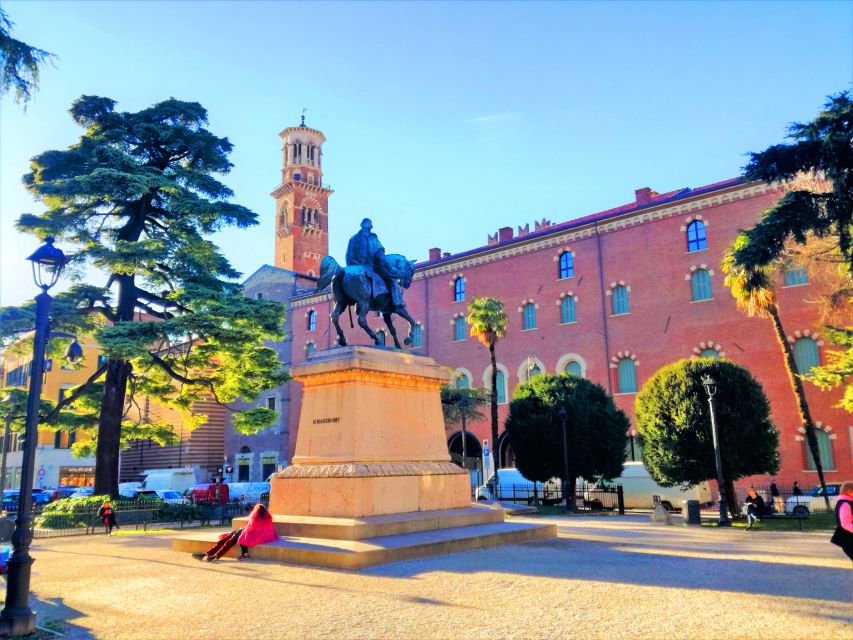
The meeting point is below the Italian flag at Verona’s Town Hall, Palazzo Barbieri, in Piazza Bra. This is a practical place to begin because the square is easy to recognize and puts you right beside the city’s most famous Roman monument.
Piazza Bra gives you your first sense of Verona’s scale. It is broad and open, with the Arena dominating one side. Your guide uses the square to set the scene before leading you toward the amphitheater. Bring water and wear comfortable shoes. Two hours on Verona’s stone streets is not a mountain trek, but your feet will notice poor footwear.
The five-minute stop in Piazza Bra is brief. That is useful if you want to cover a lot of ground, though you should not expect a long architectural lecture in the square itself. The tour is built around movement and storytelling rather than long pauses.
More Walking Tours in Verona
- Verona: Small Group Guided Walking Tour with Arena Tickets
★ 4.9 · 848 reviews - Verona Highlights Walking Tour in Small-group
★ 5.0 · 493 reviews - Verona walking tour:food, wine, legends, lunch/dinner & cable car
★ 5.0 · 386 reviews
The Arena: Roman spectacle without an indoor visit
The Verona Arena receives about 10 minutes as a photo stop. From outside, you can appreciate its huge elliptical form and the surviving stone arches, while Fabio explains the gladiatorial contests once held here.
The value of this part is context. Without a guide, you may see the Arena as a beautiful old amphitheater and move on. The explanation places it within Roman Verona and helps you understand why this building still controls the city center.
There is no Arena admission included, so you will not go inside as part of this walk. That is not a flaw if your aim is an overview. If you want to study the seating, interior passageways, or opera setup, plan a separate visit. The tour gives you a strong introduction and lets you decide later if you want more.
From the old walls to Porta Borsari
After leaving the Arena, the walk follows traces of Verona’s early medieval defenses toward the Corso, described as one of the oldest streets in the city. This is where the route begins to show its real character. You are not simply moving between postcard locations. You are learning to read the city’s layers.
Porta Borsari is one of the clearest examples. This Roman-era gateway once marked an important entrance to Verona. The stop is short, around five minutes, and is mainly for viewing and photographs. Still, it gives you a useful reminder that Roman Verona was not confined to the Arena.
The route’s many short stops can be both its strength and its limitation. You get a wide look at the center, but you will not spend ten minutes at every doorway or inscription. Fabio’s headsets help here because he can explain details while the group is positioned in a compact spot.
Riva San Lorenzo and the Adige River
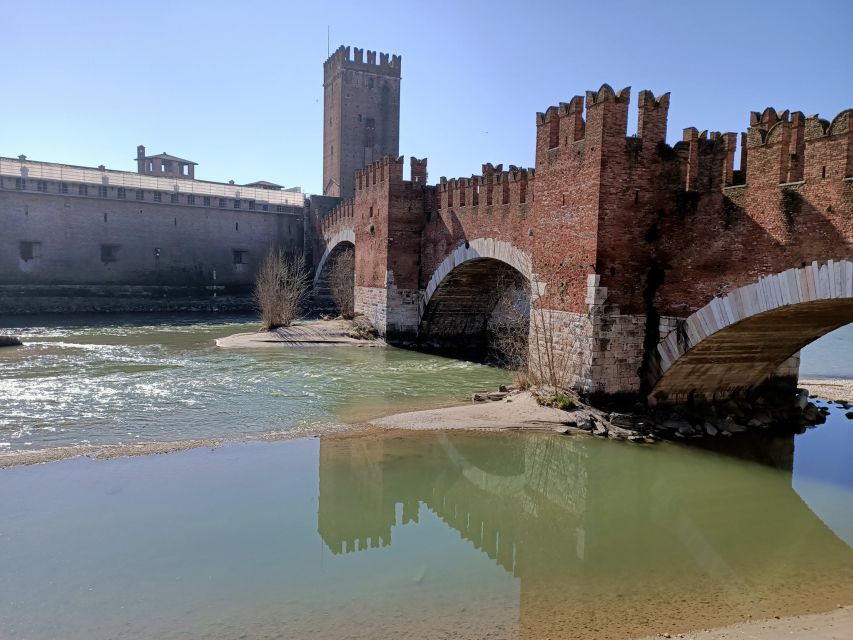
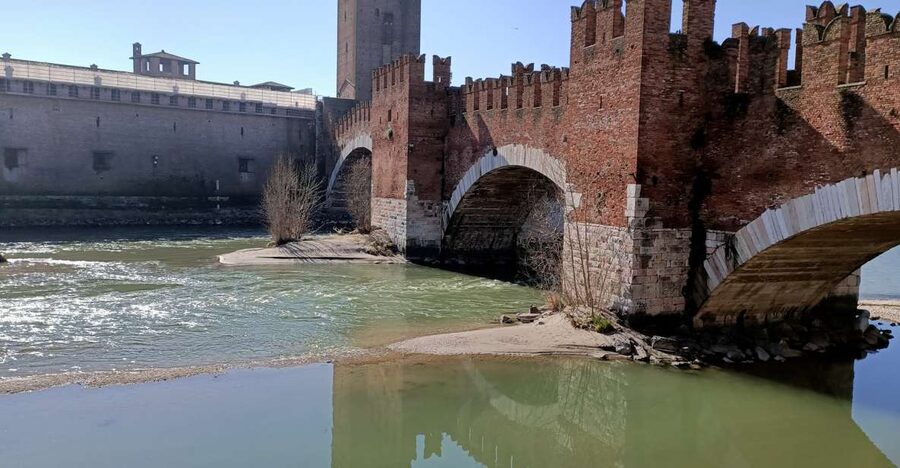
At Riva San Lorenzo, the walk opens toward the Adige River. This part offers scenic views on the way, including the area around Castelvecchio and the Ponte Scaligero.
The river is central to understanding Verona’s layout. It curves around the historic center, shaping views, defenses, bridges, and routes through the city. The Ponte Scaligero, linked to Castelvecchio, adds a strong medieval image to the walk. Its defensive character contrasts nicely with the Roman gateway and amphitheater seen earlier.
This section is primarily about atmosphere and connection rather than formal entry. You will pause for photographs and listen to the story, but you should not expect a visit inside Castelvecchio. If you have limited time in Verona, these river views are a good reason to keep the walk on your schedule. They show a side of the city that a quick route between the Arena and Juliet’s house can miss.
More ancient sites and ruins:
- Venice: St. Mark Basilica Ticket, Audioguide+History Gallery
★ 3.9 · 4,780 reviews - Venice’s Best: Basilica, Doge’s Palace, Gondola & History Gallery
★ 4.5 · 2,478 reviews - Historic Milan Tour with Skip-the-Line Last Supper Ticket
★ 4.5 · 1,976 reviews - Venice: City Center Historical Guided Walking Tour
★ 4.2 · 1,873 reviews
Side streets, San Giovanni in Foro, and the first overlooked details
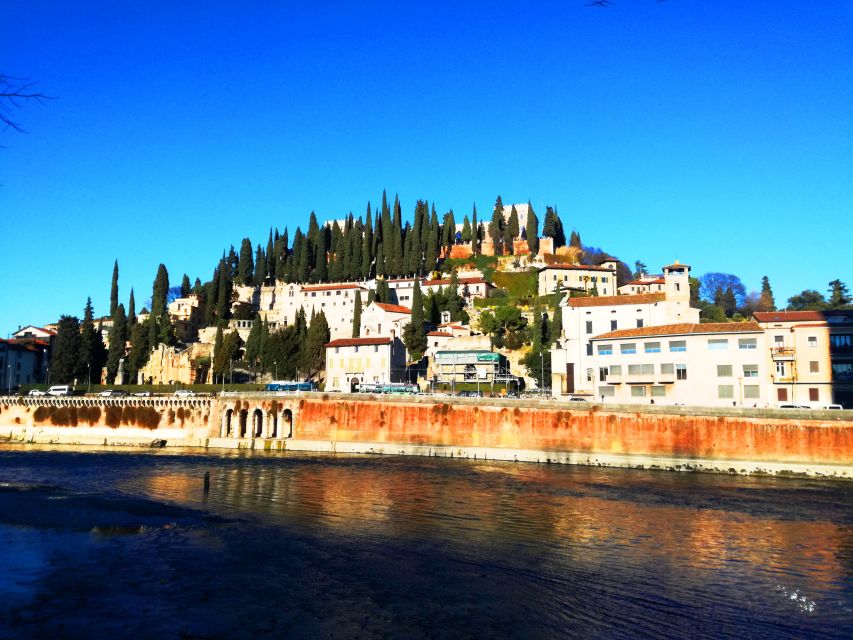
Several brief stops follow near Chiesa di San Giovanni in Foro, Piazzetta Monte, and smaller corners along the route. The itinerary lists these as photo stops or pass-by locations, so the details will be quick rather than full monument visits.
This is where Fabio’s local perspective matters most. You may be shown architectural marks, old street patterns, or small details that have little sign beside them. A self-guided walk can take you along the same streets, but it is easy to see only shop windows and façades. The guide’s job is to point your eyes upward, toward entrances, towers, stonework, and changes in the buildings.
Some people will love this approach. If you prefer a tour built around fewer places with long explanations, the frequent short pauses may feel busy. I see the route as a useful first pass, especially if you plan to wander again afterward.
Piazza delle Erbe and Verona’s market square
Piazza delle Erbe receives one of the longer stops, about 10 minutes. This is one of Verona’s key public spaces, surrounded by historic façades and shaped by centuries of trade and civic life.
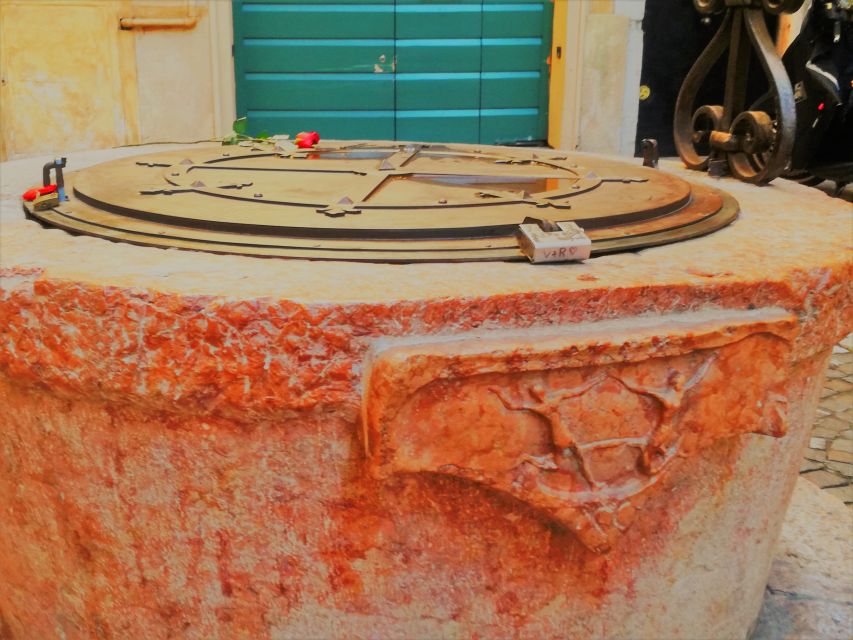
Fabio explains the local market and points out the city’s oldest fountain. The square rewards careful looking. Its buildings come from different periods, and the mix can seem confusing until someone explains how the space developed.
You will have time for photographs and views, but the tour does not include food or drinks. If the square tempts you toward a café, save that for after the walk unless you are prepared to leave the group. The tour’s purpose here is to make the square readable, not to turn it into a dining stop.
I especially like this point in the route because Piazza delle Erbe is often treated as a quick photo backdrop. With context, it becomes a record of Verona’s public life. You begin to see why this space has mattered for so long.
Piazza dei Signori and the Scaliger world
A short walk brings you to Piazza dei Signori, another major square with a quieter, more formal feel. Here you see public buildings including Palazzo della Ragione, Palazzo della Scala, and Palazzo del Capitano.
This is the medieval heart of the tour. Fabio discusses Verona during the rule of the Scaliger family and points out the city’s highest tower. The buildings around the square show how power was displayed through government offices, residences, towers, and controlled public space.
The stop lasts about five minutes, so the explanation is concentrated. You will not get a full visit to each palace. Instead, you get the framework needed to understand how Verona changed from Roman town to medieval city-state.
The square is also a good place to ask questions. The group limit makes conversation practical, and several people have found Fabio patient and thoughtful when answering. That matters on a history walk, since the best explanations often come from a question that occurs as you look at a building.
Santa Anastasia and the Scaliger tombs
The route continues past Basilica di Santa Anastasia, one of the important religious buildings in the historic center. The stop is about five minutes and is mainly for viewing from outside.
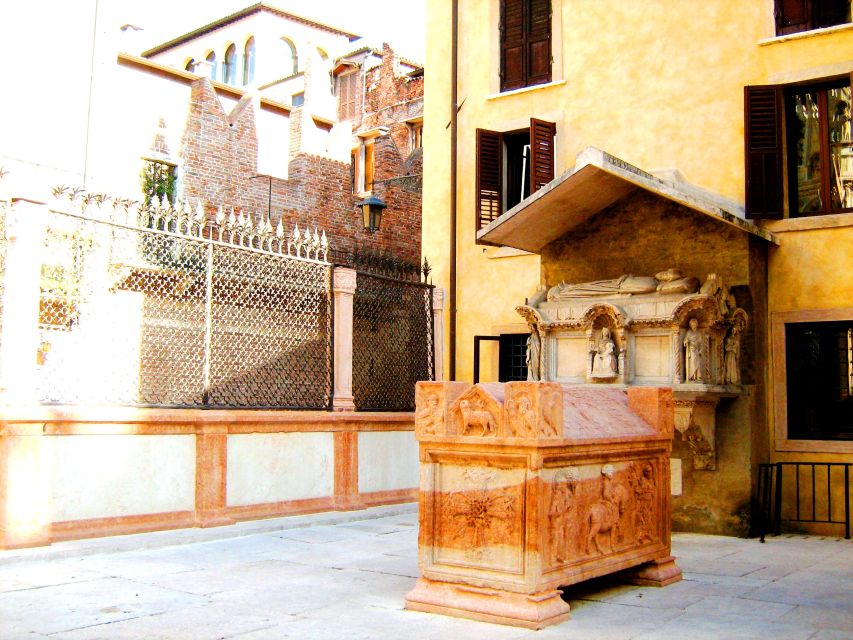
Soon after, the dramatic Arche Scaligere mausoleums come into view. These elaborate Gothic tombs honor members of the Scaliger dynasty. They are among Verona’s most striking medieval sights, with their sculptural detail and enclosed street-side setting.
The tombs make the earlier discussion of Piazza dei Signori more concrete. You are no longer hearing about medieval rulers only as names. You can see how their authority was presented after death, through scale, decoration, and public placement.
Again, this is an exterior-focused walk. Entry is not included, and the tour does not promise a long interior visit at Santa Anastasia. For many people, that is the right tradeoff on a short orientation tour. You get a clear sense of where the major buildings are, then you can return to the ones that interest you most.
Romeo, Juliet, and the line between history and legend
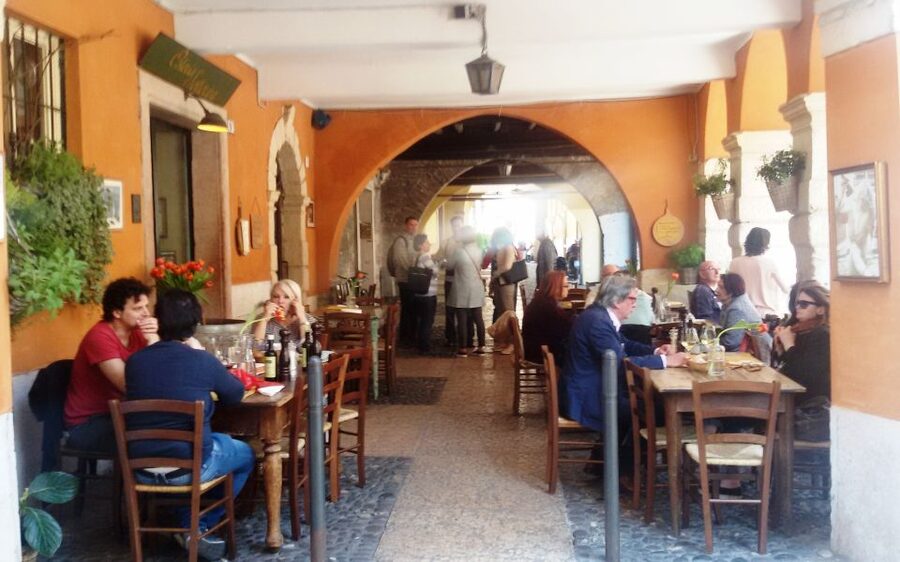
The route passes Casa di Romeo and the Arche Scaligere before reaching Piazza Indipendenza, the old market courtyard, and Juliet’s House. Juliet’s balcony is included as a photo stop, not as a private or extended indoor visit.
Fabio explains the historical inspiration behind Shakespeare’s tragedy. This is a useful way to handle Verona’s romance story. The city welcomes the legend, but the tour also places it beside the medieval families, buildings, and politics that helped shape the tale.
Casa di Romeo is another reminder that the city’s famous story is tied to real locations and old family names, even when the literary details cannot be treated as ordinary biography. The stop is short, so expect an explanation and a look rather than a theatrical performance.
Juliet’s House can be crowded, and the tour does not include admission. That makes the guide’s approach valuable. You can see the location, understand its place in the city, and return later if you want more time. I would not make this the main reason to book the walk. The historical and architectural material around it is stronger.
The final streets and small religious landmarks
Near the end, the route passes Verona’s synagogue, the former convent of Santa Maria della Scala of the Servants of Mary, Via Dietro Anfiteatro, and several brief stops identified as lesser-known corners.
These locations show how compact Verona’s center is. In a short distance, you move among Roman remains, medieval monuments, religious buildings, Jewish heritage, old commercial spaces, and modern city life. The tour does not give each place equal time, but it encourages you to notice the city as a whole rather than as a series of isolated attractions.
The walk returns to Palazzo Barbieri. That makes the start and finish easy to manage, especially if you have a train, lunch reservation, or another timed visit afterward. Still, allow a little flexibility. The stated duration is two hours, and questions or a slower group can affect the exact finish.
Guide style, group size, and comfort
Fabio is the named guide for this experience, and the most consistent praise centers on his enthusiasm, warmth, clear storytelling, and strong command of Verona’s past and present. He also makes an effort to remember names and where people are from, which helps a small group feel more personal.
The headsets are a real practical advantage. Fabio speaks into a microphone, and participants receive earpieces, so you can hear him without standing shoulder to shoulder or listening to a guide shout across a square. This is particularly helpful for anyone with some hearing difficulty.
The tour runs rain or shine. It is wheelchair accessible, and private or small-group options are available. On hot days, Fabio has been careful to use shaded areas and allow cooling pauses, but you should still bring water. In wet weather, cobbled streets and slick paving may make the walk less comfortable.
The listed languages are English, German, Italian, and Spanish. Transport, food, drinks, and attraction entries are not included. You meet the guide in the square, walk between stops, and arrange any later museum or monument visits yourself.
Is $41 a fair price?
At $41 per person, this is not the cheapest way to walk around Verona, but the price makes sense for a two-hour small-group experience with a local guide and headsets.
Large city tours can cost less, but they often involve 25 or 30 people and require you to stay close to a guide holding a flag. Here, the group limit of 10 gives you more room to ask questions and hear the explanation. The route also covers a lot: Piazza Bra, the Arena, Porta Borsari, the river, Piazza delle Erbe, Piazza dei Signori, the Scaliger tombs, Romeo’s house, and Juliet’s balcony.
The value is strongest if you are visiting Verona for the first time. You get orientation, historical background, local recommendations, and a list of places worth revisiting. It is less valuable if you only want indoor access to the Arena, churches, or museums, since those tickets are separate.
Free cancellation up to 24 hours before the start and a reserve-now, pay-later option also reduce the risk when your schedule is still changing.
Who should book this walking tour?
I would choose this tour if you:
- Have a first visit to Verona and want the city to make sense quickly.
- Like architecture, urban history, Roman remains, or medieval politics.
- Prefer a small group to a large flag-led crowd.
- Want local restaurant suggestions and practical orientation for later wandering.
- Enjoy stories and details more than rushing through indoor admissions.
- Can comfortably walk for two hours in changing weather.
Families can also do well here. Fabio has made an effort to keep younger participants involved, and the mix of stories, towers, tombs, bridges, and legends gives children several visual hooks. Still, the tour is history-focused, so very young children may find the steady commentary demanding.
Should you book the Verona History and Hidden Corners Tour?
Book it early in your Verona stay if you want to understand what you are seeing. The Arena, Piazza delle Erbe, and Juliet’s balcony are easy to locate, but the older walls, civic buildings, river views, tombs, and minor architectural details are much easier to appreciate with Fabio’s explanation.
Skip it only if you want a slow indoor museum visit or a food-centered walk. For $41, two hours with a lifelong Veronese guide, a maximum of 10 people, and reliable headsets is a solid deal. The tour does not replace visiting the Arena or major churches, but it gives you the background to choose those visits wisely. That is the real payoff: after the walk, Verona’s streets begin to speak before you even stop to read a sign.
FAQ
Where does the Verona walking tour meet?
Meet the guide below the Italian flag at Palazzo Barbieri, Verona’s Town Hall, in Piazza Bra.
How long does the tour last?
The guided walking tour lasts two hours.
What languages are available?
The live guide can conduct the tour in English, German, Italian, or Spanish.
Is the tour wheelchair accessible?
Yes, the activity is listed as wheelchair accessible.
Are attraction entry tickets included?
No. Entry tickets, transport, food, and drinks are not included.
What should I bring?
Wear comfortable shoes and bring water. The tour operates rain or shine.
More Guided Walks
- Verona All in one: Food Walking Tour, Lunch & Wine
★ 5.0 · 342 reviews - Verona Small Group Walking Tour with Cable Car and Arena Tickets
★ 5.0 · 311 reviews - The Highlights of Verona Small Group Walking Tour
★ 4.8 · 294 reviews - Verona: City Walking Tour with Cable Car & Wine Aperitif
★ 4.8 · 267 reviews
Just added around Verona
- Verona: City Walking Tour with Cable Car & Wine Aperitif★ 4.8 · 267 reviews
- Verona: Italian Cooking Class with Pasta, Risotto and Tiramisù★ 5.0 · 268 reviews
- Verona e-bike tour: city center and panoramic views★ 5.0 · 270 reviews
- Amarone Wine-tasting Tour from Verona with Private Transportation★ 5.0 · 283 reviews
- The Highlights of Verona Small Group Walking Tour★ 4.8 · 294 reviews
- Verona: Hands-on Fresh Pasta and Tiramisù Cooking Class★ 4.9 · 295 reviews
- Verona Small Group Walking Tour with Cable Car and Arena Tickets★ 5.0 · 311 reviews
- Lake Garda and Sirmione Tour from Verona★ 4.5 · 336 reviews
Walking Tours, compared.

Guided Walking Tour & Last Supper Visit with Ticket
Read our review →
Rialto Bridge & Offbeat Unusual Venice Walking Tour
Read our review →

Private 3 hrs Venice Tour: St Mark’s, Walking tour & Boat tour
Read our review →

Skip the line: Uffizi and Accademia Small Group Walking Tour
Read our review →Browse the lists this tour appears in