
Review · WALKING TOURS
The Highlights of Verona Small Group Walking Tour
Verona rewards a good first walk. This two-hour tour links the city’s Roman arena, medieval squares, Castelvecchio, and Juliet’s House with a local guide who can explain what you are seeing instead of leaving you to decode the stones alone. At $41 per person, it is a useful way to get your bearings before exploring Verona on your own.
I especially like the compact route, which covers many of the city center’s major sights without wasting time on transport. I also like the guides’ local touch. Francesco, Isabella, Priscilla, Andrea, and others have earned praise for clear explanations, humor, restaurant suggestions, and genuine affection for Verona. The main drawback is that this is an exterior sightseeing walk, so it does not include entry into the Arena or Juliet’s House.
I would choose this tour early in a Verona visit. You can use the route to understand the old center, then return to the places that deserve more time. Just bring comfortable shoes, leave large bags behind, and expect the tour to continue in rain or shine.
In This Review
- At a Glance: What This Verona Walk Covers
- Why Two Hours Works Well in Verona
- Castelvecchio Bridge: Verona’s First Strong View
- Arco dei Gavi and the Roman Footprint
- Piazza delle Erbe: Verona’s Everyday Center
- Piazza dei Signori and Verona’s Civic Story
- Juliet’s House: Famous, Crowded, and Worth Understanding
- Piazza Bra and the Road to the Arena
- Verona Arena: The Tour’s Grand Finish
- The Guides Make the Difference
- Price, Pace, and Practical Value at $41
- Who Will Get the Most From This Walk?
- Should You Book The Highlights of Verona Tour?
- FAQ
- How long does the Verona walking tour last?
- What language is the tour offered in?
- What sights are included on the walking route?
- Can I enter the Verona Arena during the tour?
- Can I go inside Juliet’s House?
- Where does the tour start?
- Where does the tour finish?
- Is hotel pickup included?
- Is the tour suitable for children?
- Can I cancel the booking for a refund?
At a Glance: What This Verona Walk Covers
- Roman Verona in one efficient route: See the Arena, Castelvecchio Bridge, and Arco dei Gavi within a two-hour walk.
- Juliet’s Balcony and House: Visit the famous narrow alley and pin a love letter to the wall.
- Medieval civic squares: Explore Piazza delle Erbe and Piazza dei Signori, two of Verona’s most atmospheric public spaces.
- A strong guide-led experience: Guides such as Francesco, Isabella, Priscilla, Andrea, and Frank are praised for humor, local advice, and clear storytelling.
- Good first-day value: The $41 price pays for orientation, context, and a route that is easy to follow afterward.
- Outside sights only: Plan separate visits if you want to enter the Arena or Casa di Giulietta.
Why Two Hours Works Well in Verona
Verona’s historic center is compact, but its layers can be confusing. Roman ruins, medieval towers, Renaissance façades, and modern city life all sit close together. A guide gives you the thread connecting them.
The tour lasts two hours, with roughly 10 minutes at several stops and about 45 minutes around the Arena. That timing gives you a broad introduction rather than a slow architectural study. You will see the big sights, learn how they fit together, and still have most of the day available.
I like this format for a first morning or afternoon. You do not spend half a day inside one monument, and you gain a practical sense of direction. Several guides also offer advice on places to eat and things to see afterward, which can be particularly helpful if Verona is one stop on a longer Italian trip.
The small-group format matters. You can usually hear the guide more easily than on a large city tour, and there is more room for questions. The exact group size is not stated, but the experience is guaranteed with at least two participants, and some departures may feel nearly private. One participant described a tour with only herself and the guide, while another small group received suggestions tailored to its interests.
More Walking Tours in Verona
- Verona: History and Hidden Gems Guided Walking Tour
★ 5.0 · 1,379 reviews - Verona: Small Group Guided Walking Tour with Arena Tickets
★ 4.9 · 848 reviews - Verona Highlights Walking Tour in Small-group
★ 5.0 · 493 reviews
Castelvecchio Bridge: Verona’s First Strong View
Depending on the option booked, you begin at Teatro Ristori or near the Arena. The route then reaches Castelvecchio Bridge, where you have about 10 minutes for guided sightseeing and photographs.
The bridge is an excellent opening stop because it shows Verona’s defensive side. Its brick structure and distinctive stone details make it more than a crossing point. From here, you begin to see how the city used the Adige River and its fortifications to protect itself.
You should take a moment to look beyond the guide’s main explanation. The river, old walls, and bridge create one of the better early photographs on the route. This is also where the walk starts to feel like a tour of a real city rather than a checklist of famous names.
The stop is brief, so do not expect a long examination of the surrounding complex. If Castelvecchio is high on your list, you may want to return later for more time.
Arco dei Gavi and the Roman Footprint
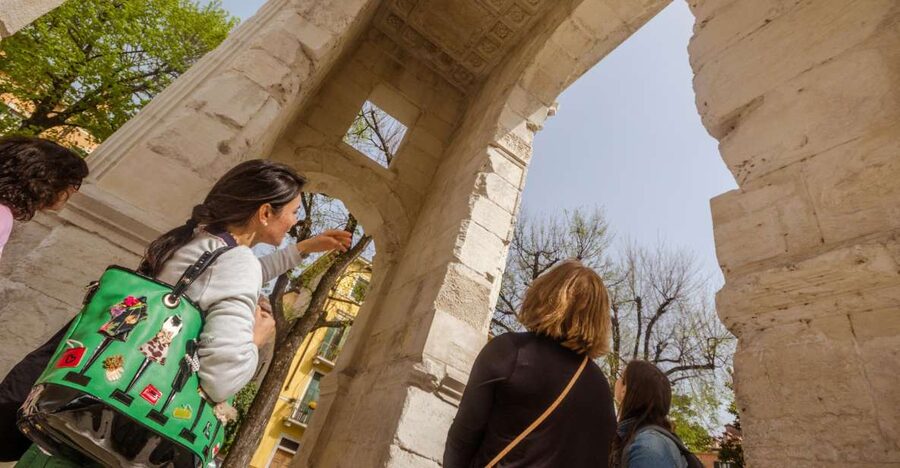
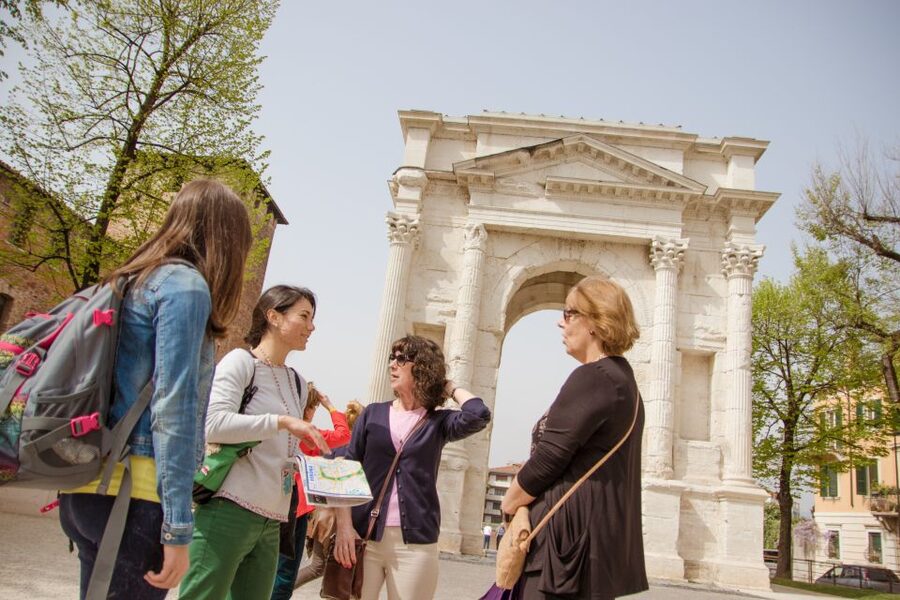
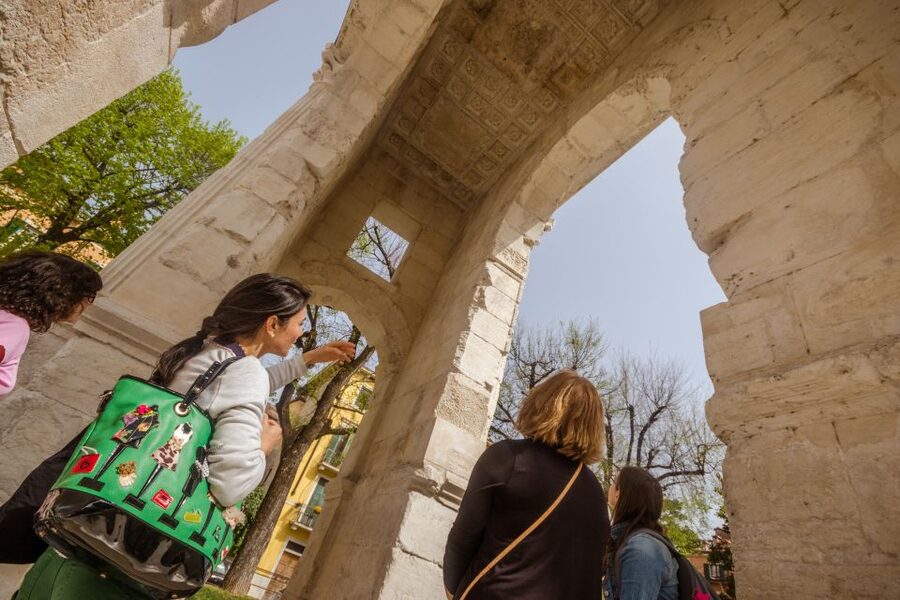
A short five-minute walk leads to Arco dei Gavi, followed by another 10-minute photo and explanation stop. This Roman arch helps place Verona within the wider Roman road network and gives you another look at the city’s ancient foundations.
The value here is the contrast. The Arena is huge and instantly dramatic. Arco dei Gavi is smaller and easier to miss, which is exactly why a guide helps. You can walk past a monument like this without realizing its age or purpose.
The tour does not linger for a museum-style lesson, but the guide can point out details you might otherwise overlook. If you enjoy seeing how ancient structures survive inside a modern center, this part adds useful depth to the Arena visit later.
Piazza delle Erbe: Verona’s Everyday Center
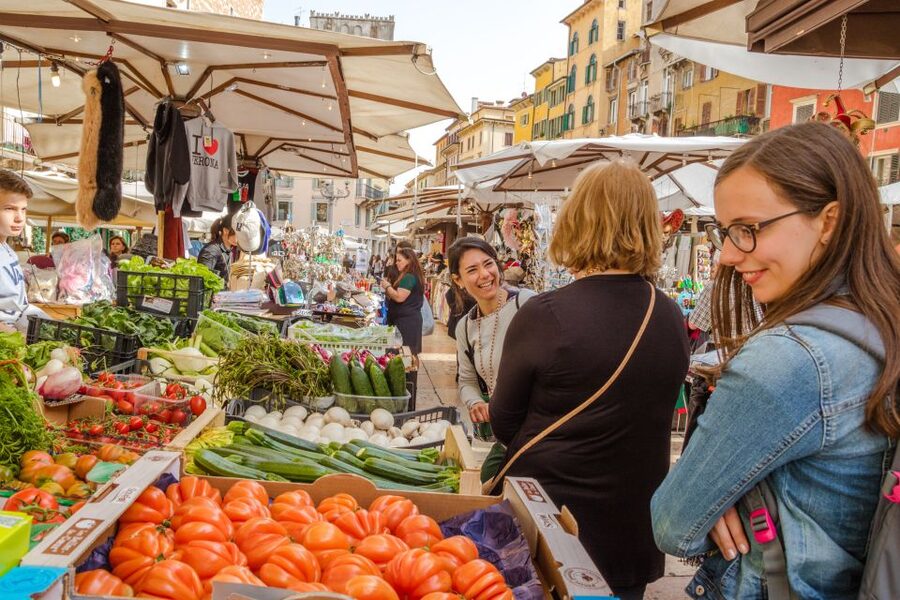
From Arco dei Gavi, you continue on foot to Piazza delle Erbe. The stop lasts about 10 minutes and includes guided sightseeing, photographs, and scenic views along the way.
Piazza delle Erbe is one of the best places to understand Verona as a living city. It is not only an impressive square surrounded by old façades. It has long been a place for public life, trade, movement, and conversation. Your guide can help you read the square rather than simply admire it.
Look upward as you walk. The surrounding buildings bring together several periods of Veronese architecture, and the square’s narrow approach opens suddenly into a broad urban space. The effect is one of the pleasures of walking Verona.
Ten minutes is enough for orientation and pictures, but not enough for a leisurely exploration. You will likely want to return for a slower look at the buildings, a drink, or time to watch the square’s daily rhythm. The tour gives you the map, not the whole afternoon.
More guided walks:
- Verona walking tour:food, wine, legends, lunch/dinner & cable car
★ 5.0 · 386 reviews - Verona All in one: Food Walking Tour, Lunch & Wine
★ 5.0 · 342 reviews - Verona Small Group Walking Tour with Cable Car and Arena Tickets
★ 5.0 · 311 reviews - Verona: City Walking Tour with Cable Car & Wine Aperitif
★ 4.8 · 267 reviews
Piazza dei Signori and Verona’s Civic Story
Next comes Piazza dei Signori, another 10-minute stop. This square has a more formal feel than Piazza delle Erbe, and the change between the two helps you understand the city’s political and civic life.
The guide’s storytelling is especially useful here. Verona can look like a collection of beautiful façades until someone explains which spaces served government, power, trade, or ceremony. Several guides have been praised for explaining how the city changed over time, including its geographic and political development.
I would pay attention to the relationship between the squares. Their closeness makes the old center easy to explore independently once the tour ends. You can move between them without needing a taxi or public transport, but a first explanation helps the layout stick.
Again, the stop is outside only. The tour is best for context and orientation, not for visitors seeking extended interior visits.
Juliet’s House: Famous, Crowded, and Worth Understanding
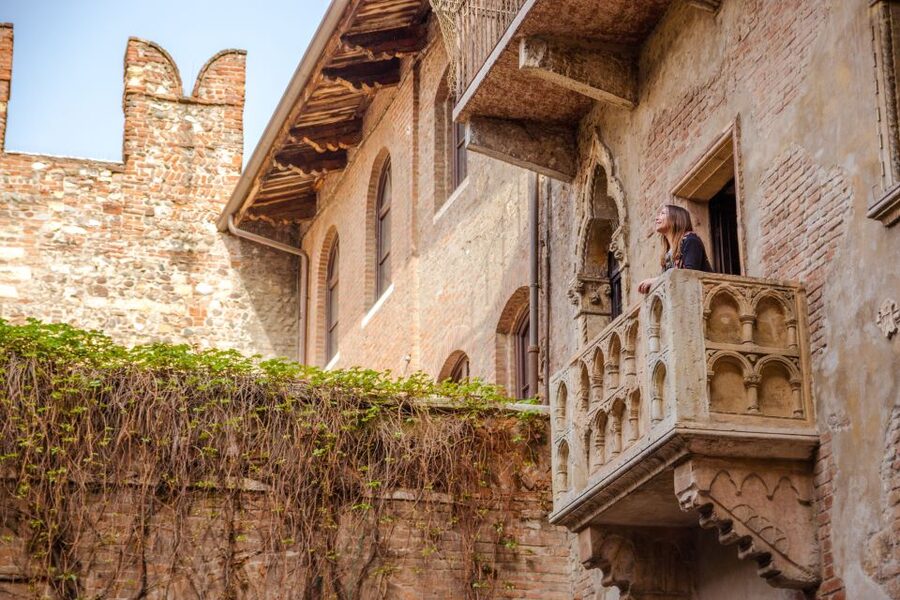
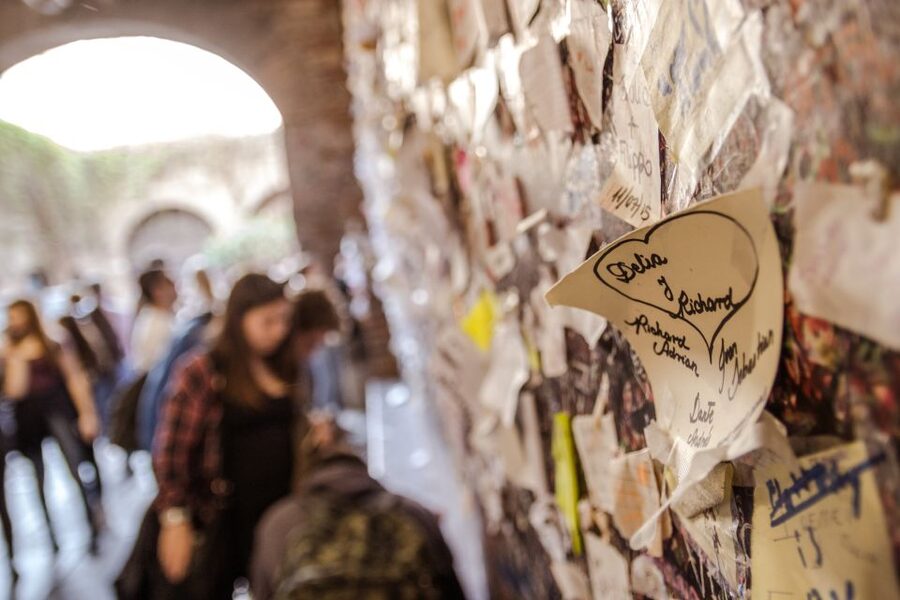
The walk then reaches Juliet’s House, or Casa di Giulietta, for about 10 minutes of guided sightseeing and photographs. The house sits along a tiny dead-end alley, an intimate setting that feels quite different from the broad civic squares.
This is the tour’s most openly romantic stop. You can pin a love letter to the wall beside Juliet’s Balcony, a small ritual that many couples and families enjoy. It adds a playful moment to an otherwise history-focused walk.
Still, keep your expectations sensible. The tour does not include entry into the house, and the stop is short. You will see the famous balcony from outside, hear the story attached to the site, and have time for photographs. If you want the interior or a longer look, you need to arrange that separately.
I appreciate having a guide here because Juliet’s House can easily become a photo stop without context. The guide can help separate Verona’s literary legend from the physical place, while still allowing you to enjoy the romance. You do not have to choose between taking the story seriously and having fun with it.
Piazza Bra and the Road to the Arena
After another short walk, the route reaches Piazza Bra. This stop lasts about 15 minutes and includes sightseeing, photographs, and scenic views on the way.
Piazza Bra gives the Arena room to make an entrance. The open space lets you appreciate the amphitheater’s scale, its place in the city, and the way modern Verona has grown around an ancient building.
This is a good point to slow down and look back toward the route you have taken. In a short distance, you have moved from medieval bridges and Roman remains to a broad urban square. The tour’s walking pattern makes those changes easier to grasp than a series of disconnected monument visits.
If you are visiting during a busy period, the square may feel active and crowded. That is not necessarily a problem, but it can make photographs and conversation more difficult. Stay close enough to hear the guide, particularly near traffic and open public spaces.
Verona Arena: The Tour’s Grand Finish
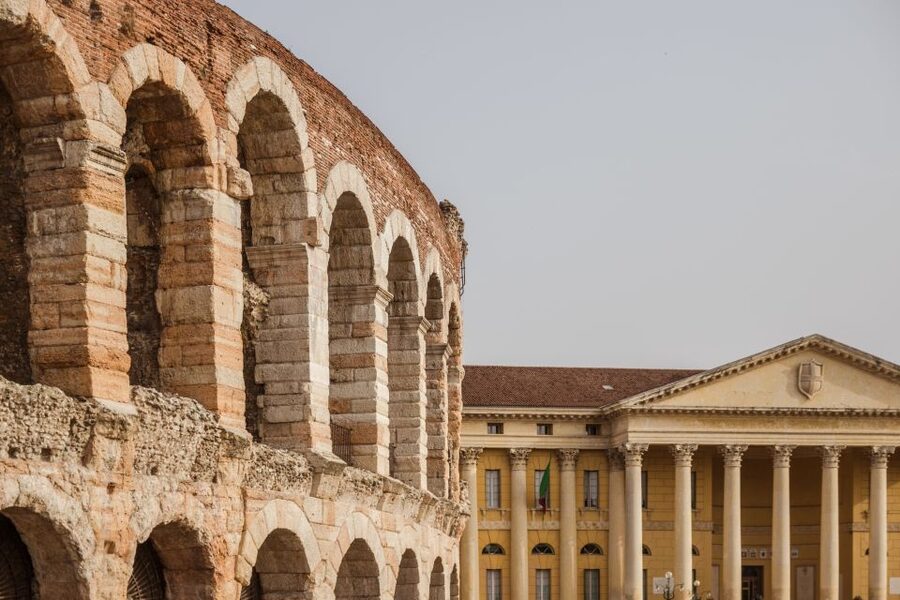
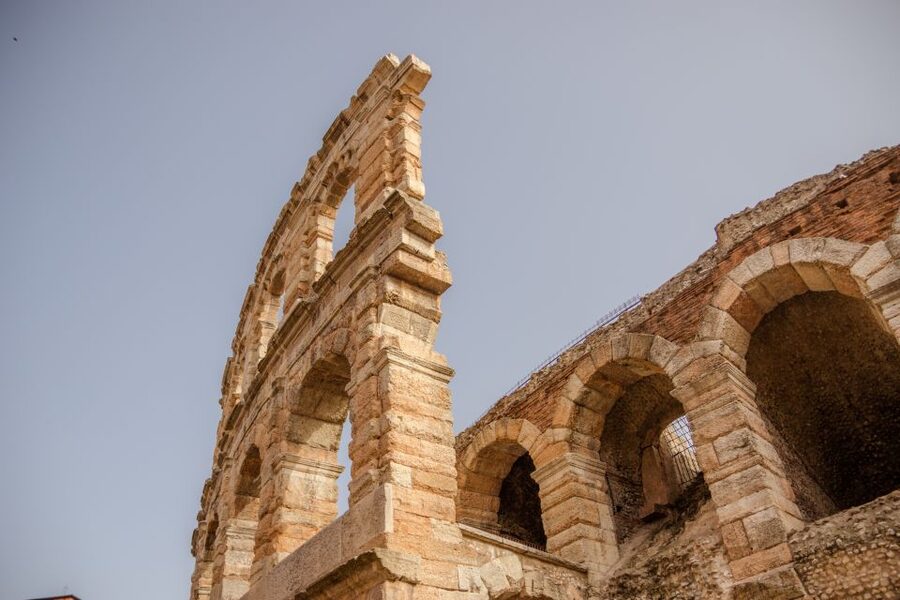
The final major stop is the Verona Arena, with about 45 minutes devoted to sightseeing and photographs. Built in AD 30, the pink marble Roman amphitheater is among the best-preserved structures of its kind.
The Arena is the tour’s visual payoff. Its curved exterior, pale pink stone, and enormous arches make its age easy to feel. Yet the most useful point is not simply that it is ancient. The building has survived for more than 2,000 years and still serves as the main venue for Verona’s summer opera festival.
That modern use changes the way you see it. This is not a dead ruin fenced off from daily life. It remains part of Verona’s public identity and cultural calendar. Your guide also explains where the main venues for the opera festival are, which helps if you are planning a return visit for a performance.
The 45-minute allocation is generous compared with the earlier stops, though entry is not included. You will view the Arena from outside. That is enough to understand its scale and role in the city, but not enough if your main goal is to inspect the interior seating, passageways, or performance space.
I would treat the Arena stop as a planning advantage. After the tour, you can decide if you want to buy a separate ticket or attend an opera performance. The guide provides the context first, so a later visit has more meaning.
The Guides Make the Difference
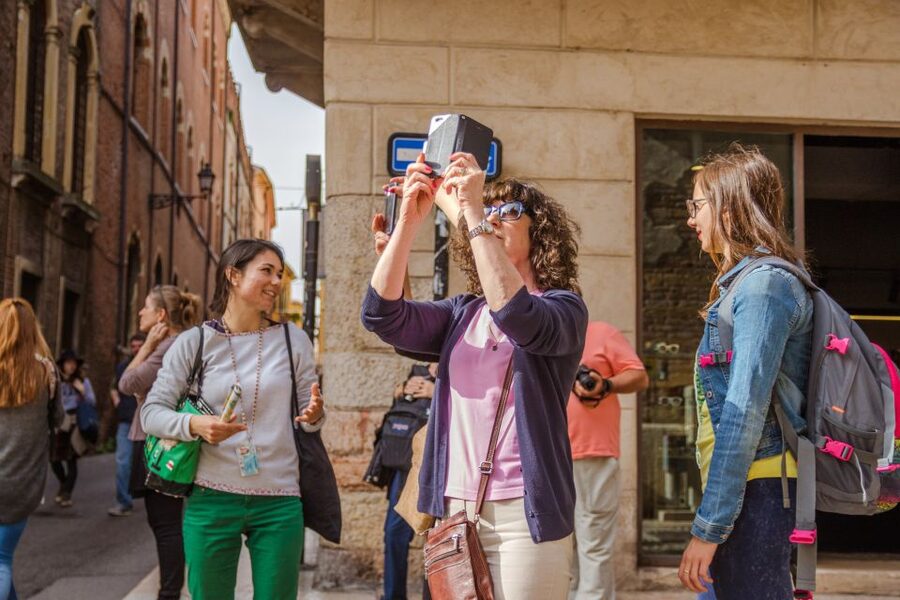
The strongest part of this experience is the guiding. Across many departures, the guides are described as friendly, energetic, clear, and proud of Verona. Francesco is repeatedly praised for his enthusiasm and sense of humor. Isabella is noted for local suggestions and an approachable style, while Priscilla receives credit for making the city’s past easy to follow.
Other named guides include Maria, Giuliana, Franc, Andrea, Frank, Fabio, Benedetta, Graziano, David, Irene, and Renee. Your guide will depend on the date and departure, so you should not book on the assumption that one particular person will lead your walk.
What you can reasonably expect is a guide who does more than recite dates. Past visitors have received restaurant advice, shopping ideas, suggestions for later sightseeing, and answers about local food and culture. One guide even taught basic Italian phrases. Those small additions can be as useful as the formal monument explanations.
The style may vary from one guide to another. Some people prefer a lively, humorous presentation. Others want a slower, more academic pace. The available feedback points strongly toward engaging delivery, but you should still expect a brisk overview rather than a specialist seminar.
Price, Pace, and Practical Value at $41
At $41 per person, this is not the cheapest way to walk around Verona. You can see the squares and exterior monuments without paying for a guide. The question is what you gain from the fee.
You gain a planned route, a licensed local guide, and explanations at the spots most likely to matter on a first visit. You also avoid spending time figuring out how Castelvecchio, Piazza delle Erbe, Juliet’s House, Piazza Bra, and the Arena fit together.
For me, the price is fair if Verona is new to you or you have only a short stay. It is less compelling if you already know the center well, have read extensively about the city, or mainly want interior access to the Arena and Juliet’s House.
The tour runs in English or Italian. It starts at either Teatro Ristori or the Arena, depending on the option you select, and finishes near the Arena. There is no hotel pickup or drop-off, so you must reach the meeting point yourself.
Wear comfortable shoes. The route includes regular walking between stops, and some sections may not be easy for people with reduced mobility or other disabilities. Pets, luggage, and large bags are not allowed. Children can join, but minors must be accompanied by an adult, and unaccompanied minors cannot take part.
The tour runs rain or shine. That is useful for fixed itineraries, but it also means you should check the forecast and bring suitable protection. Flexible booking helps: cancellation is free up to 24 hours in advance, and you can reserve now and pay later.
Who Will Get the Most From This Walk?
I would recommend it most strongly to:
- First-time visitors who want a clear introduction to Verona
- Couples interested in Juliet’s Balcony and the city’s romantic side
- Families who need a manageable two-hour activity
- Opera fans who want to understand the Arena before attending a performance
- Visitors arriving by train or spending only part of a day in Verona
- Anyone who prefers local explanations to guidebook reading
It also suits people who dislike large group tours. The minimum is two participants, and some departures may be very small.
You may want something else if you need extensive interior visits, have difficulty walking on city streets, or prefer to explore at your own pace. Since the monuments are viewed from outside, you should plan separate admission if the Arena or Casa di Giulietta is your main priority.
Should You Book The Highlights of Verona Tour?
Yes, if you want an efficient and friendly first look at Verona. The route covers the city’s essential sights, the guides bring useful local advice, and the Arena receives enough time to make the $41 fee feel reasonable.
Book it early in your stay, then use the rest of your time to revisit Piazza delle Erbe, explore the Arena inside, or follow a guide’s food recommendations. Skip it only if you already know Verona well or want a tour focused mainly on interior access.
FAQ
How long does the Verona walking tour last?
The tour lasts two hours.
What language is the tour offered in?
The live tour guide is available in English or Italian.
What sights are included on the walking route?
The route includes Castelvecchio Bridge, Arco dei Gavi, Piazza delle Erbe, Piazza dei Signori, Juliet’s House, Piazza Bra, and the Verona Arena.
Can I enter the Verona Arena during the tour?
No. The tour allows you to discover the main monuments from the outside. Arena admission is not included.
Can I go inside Juliet’s House?
No. The tour visits Casa di Giulietta from outside. You can see Juliet’s Balcony and pin a love letter to the wall.
Where does the tour start?
There are two possible starting locations: Teatro Ristori or the Arena di Verona. The meeting point depends on the option booked.
Where does the tour finish?
The tour has drop-off locations at the Arena di Verona.
Is hotel pickup included?
No. Hotel pickup and drop-off are not included.
Is the tour suitable for children?
Yes. Children and families can join, but minors must be accompanied by an adult.
Can I cancel the booking for a refund?
Yes. You can cancel up to 24 hours in advance for a full refund. You can also reserve now and pay later.
Just added around Verona
- Verona: City Walking Tour with Cable Car & Wine Aperitif★ 4.8 · 267 reviews
- Verona: Italian Cooking Class with Pasta, Risotto and Tiramisù★ 5.0 · 268 reviews
- Verona e-bike tour: city center and panoramic views★ 5.0 · 270 reviews
- Amarone Wine-tasting Tour from Verona with Private Transportation★ 5.0 · 283 reviews
- Verona: Hands-on Fresh Pasta and Tiramisù Cooking Class★ 4.9 · 295 reviews
- Verona Small Group Walking Tour with Cable Car and Arena Tickets★ 5.0 · 311 reviews
- Lake Garda and Sirmione Tour from Verona★ 4.5 · 336 reviews
- Discover Valpolicella Vineyards and Wine Tasting Experience★ 4.5 · 341 reviews
Walking Tours, compared.

Guided Walking Tour & Last Supper Visit with Ticket
Read our review →
Rialto Bridge & Offbeat Unusual Venice Walking Tour
Read our review →

Private 3 hrs Venice Tour: St Mark’s, Walking tour & Boat tour
Read our review →

Skip the line: Uffizi and Accademia Small Group Walking Tour
Read our review →Browse the lists this tour appears in