
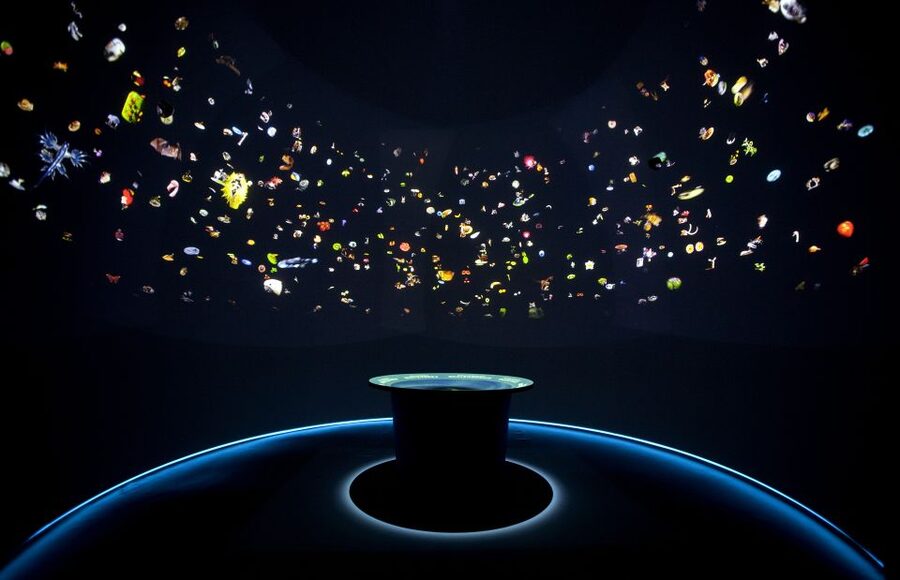
Review · MUSEUMS
Venice: Natural History Museum Entry Ticket
Venice has fossils on the Grand Canal. I like this museum for its beautiful 13th-century palazzo setting and its unusual mix of dinosaurs, animals, plants, fossils, and ethnographic objects. The 7-meter Ouranosaurus and enormous Sarchosuchus imperator skull give the visit real drama, while the calm courtyard offers a welcome break from Venice’s crowded lanes.
I also like the price: at about $11 per person, this is one of Venice’s more reasonable indoor attractions. It works especially well on a hot or rainy day, and children, teenagers, and adults can all find something to enjoy. The main drawback is that some exhibit information may not be available in English, so visitors without Italian may want to ask about the English voice guide or use a translation app.
In This Review
- Key points to know before you go
- A palazzo entrance beside the Grand Canal
- What you see in the main galleries
- The dinosaur room and prehistoric crocodile skull
- Taxidermy, cabinets, and the older side of the museum
- A quiet break from crowded Venice
- Is the $11 ticket good value?
- Language and display information
- Opening hours and planning your visit
- Practical comforts inside the museum
- Who should visit this museum?
- Should you book the Natural History Museum?
- FAQ
- Where is Venice’s Natural History Museum?
- How much does admission cost?
- How long is the ticket valid?
- Is the museum open every day?
- What are the opening hours until May 31?
- What are the opening hours from June 1?
- Is the museum wheelchair accessible?
- Who can enter free of charge?
Key points to know before you go
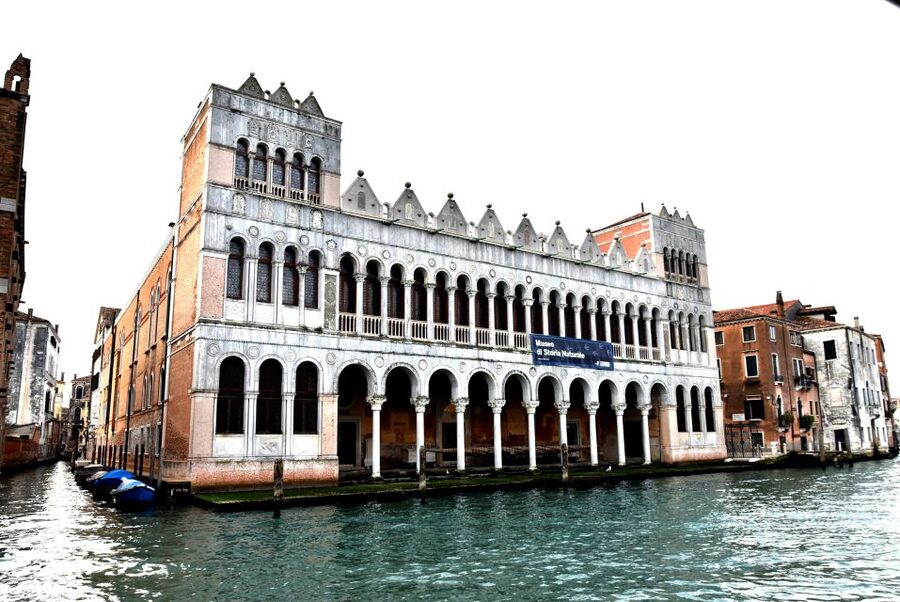
- A Grand Canal museum in a 13th-century palazzo: The building is part of the experience, with attractive architecture, an internal courtyard, and a garden or terrace area.
- Dinosaurs and prehistoric crocodiles are the main event: Look for the 7-meter Ouranosaurus nigeriensis and the skull of Sarchosuchus imperator, found in Africa.
- Around 2 million objects are held by the museum: The displays cover zoology, fossils, plants, ethnography, and the development of life on Earth.
- A useful family stop: The museum is calm, indoors, and manageable in roughly 40 to 60 minutes, though you can spend longer if you read the displays.
- The library contains more than 40,000 books: It adds a scholarly side to what might otherwise seem like a simple children’s attraction.
- Closed Mondays: Opening hours change by season, and last admission is one hour before closing.
A palazzo entrance beside the Grand Canal
You will find the Natural History Museum on the edge of Venice’s Grand Canal. The main entrance is the meeting point, and you show your ticket when you arrive. There is no hotel pickup, transport service, or guide included, so you make your own way there and explore independently.
The setting helps this museum rise above a standard collection of stuffed animals and fossils. You enter a historic Venetian building rather than a plain modern gallery. Before going inside, take a moment to look at the facade and its position along the canal. The architecture gives the visit a sense of place, and the courtyard and garden provide a pleasant pause after the indoor rooms.
The museum is wheelchair accessible, which is useful in a city where many historic buildings can be difficult to enter. It is also a good choice if your day needs an indoor stop. Venice can be hot, wet, and tiring, and this attraction gives you a quiet change of pace without taking you far from the city center.
More History Tours in Venice
- Venice: St. Mark Basilica Ticket, Audioguide+History Gallery
★ 3.9 · 4,780 reviews - Venice’s Best: Basilica, Doge’s Palace, Gondola & History Gallery
★ 4.5 · 2,478 reviews - Venice: City Center Historical Guided Walking Tour
★ 4.2 · 1,873 reviews
What you see in the main galleries
The museum holds about 2 million historical objects, though you will see only a selection during a normal visit. The displays include zoological specimens, fossils, plants, dinosaur remains, and ethnographic material. That range is both the attraction and the challenge: there is far more here than one short visit can cover.
I would not treat this as a quick room with a few dinosaur bones. The museum moves through different parts of the natural world, with rooms arranged around particular subjects and collections. Some areas feel modern and carefully presented. Others have the more traditional appearance of an older natural history museum, including taxidermy animals and display cases packed with specimens.
That traditional style will appeal to some people and not to others. If you enjoy old collections, cabinets, and the feeling of looking through decades of scientific study, you will find plenty to hold your attention. If you prefer bright, highly interactive museums with simple English explanations everywhere, the experience may feel less polished in places.
The displays also give you a chance to think about how people have tried to understand the world. Alongside fossils and skeletons, you may find examples connected to explorers, scientific collecting, and changing ideas about life. One area focuses on the challenge whales face, with a whale skeleton that makes the animal’s scale easier to grasp than any photograph can.
The dinosaur room and prehistoric crocodile skull
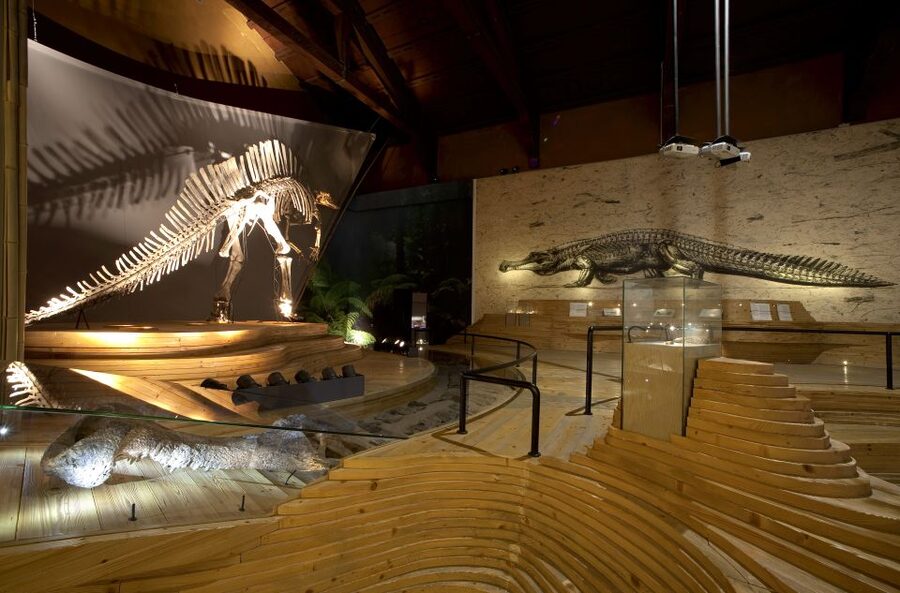
Head upstairs for the section most likely to excite children and fossil fans. The dinosaur displays include a 7-meter-long skeleton of Ouranosaurus nigeriensis, a striking animal from prehistoric Africa. Its size makes it the natural center of attention, and it gives younger visitors a clear reason to keep moving through the museum.
You will also see the skull of Sarchosuchus imperator, a prehistoric crocodile discovered in Africa. The skull is a powerful object because it communicates danger and scale without needing a full skeleton. Together, the Ouranosaurus and Sarchosuchus show two very different forms of ancient life and make the fossil section more than a row of small fragments.
The paleontology galleries are among the strongest parts of the museum. The presentation is described as modern, and the ancient specimens are given enough space to make them readable. If you have a child who is losing patience with animal cases, head here early. If you are visiting without children, do the same if dinosaurs are your main reason for coming.
The museum also presents the wider story of prehistoric life and the ages of humans and animals. Take time with the beginning of this sequence if you want context. It helps explain how the objects relate to one another instead of leaving you with isolated bones and labels.
Taxidermy, cabinets, and the older side of the museum
Once you move beyond the fossil galleries, the tone becomes more traditional. You will encounter taxidermy animals and rooms filled with natural specimens. Some children will find these displays fascinating, while younger children may be frightened by certain animals or by the trophy room.
That room is the clearest weak spot for visitors who dislike hunting displays. I would keep this in mind when planning a family visit. You can move at your own pace and skip rooms that do not suit your group, so the museum does not force you to spend time in every section.
One of the most appealing areas is the cabinet of curiosity room. It connects the museum to an older tradition of collecting unusual natural objects and presenting them for study and wonder. The result feels more personal than a simple modern science exhibit. You can see how earlier generations organized the natural world, even if some methods now look dated.
There are also objects that you can touch, adding a hands-on element to the visit. That small feature matters with children, especially in a museum where much of the collection must be viewed through glass. The mix of tactile items, fossils, skeletons, and animal displays keeps the visit from becoming too passive.
More Museum Tours in Venice
- Venice: Leonardo Da Vinci Museum Entrance Ticket
★ 4.5 · 3,560 reviews - Venice: Vivaldi’s Four Seasons Concert & Music Museum Visit
★ 4.8 · 2,065 reviews - Charming Gondola Ride on the Grand Canal & Gondola Gallery™
★ 4.0 · 1,313 reviews - Venice: Bell Tower & St Mark’s Square History Gallery Ticket
★ 4.3 · 910 reviews
A quiet break from crowded Venice
The museum’s location makes it useful even if natural history is not your top interest. Venice is full of famous sights, but many of them involve crowds, queues, and a lot of standing. This museum offers a calmer stop, with views of the Grand Canal and peaceful indoor and outdoor spaces.
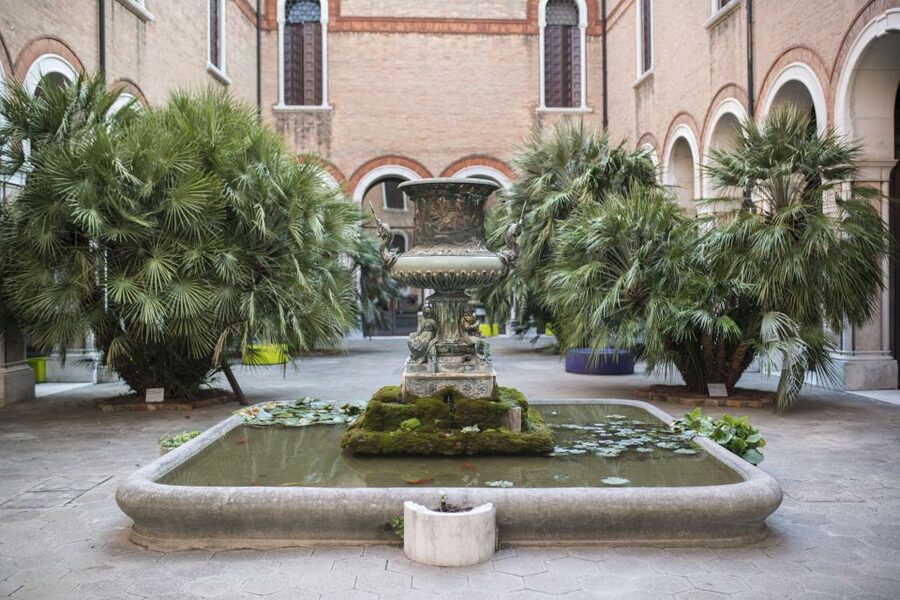
I especially like the internal courtyard and garden as part of the visit. They give you room to slow down, and they make the museum feel like more than a set of galleries. The terrace is another pleasant feature, though the exact areas open to visitors can vary.
Plan on about 40 to 60 minutes for a focused visit. That is enough time for the main fossil displays, the dinosaur skeleton, the crocodile skull, and a selection of the animal collections. If you read carefully, browse every room, or visit with older children who ask many questions, you may need more time.
The museum does not impose a guided route, so you can skip sections that hold little interest. That freedom is valuable in a mixed collection. You can spend longer with prehistoric life, move quickly through taxidermy, or pause in the garden without feeling that you have missed part of a fixed tour.
Is the $11 ticket good value?
At approximately $11 per person, admission is fairly priced for Venice. A historic building, a substantial natural history collection, dinosaur fossils, indoor comfort, and a quiet courtyard make this a useful attraction for the money.
The value is strongest for families. You do not need to build an entire day around the museum, and children can see large, memorable objects rather than only read about them. Teenagers may also enjoy the dinosaur and fossil sections, while adults can spend more time with the collections, architecture, and scientific themes.
The ticket is less compelling if you want only a large dinosaur exhibition. The museum has plenty of other material, and parts of it feel old-fashioned. In that case, your enjoyment depends on being open to zoology, taxidermy, ethnography, and the history of collecting.
The admission ticket covers entry only. There is no guide included, so you decide how much explanation you want. An English voice guide is available for an additional $10 according to visitor information, and it can be a worthwhile extra if you want more background while exploring independently. Check the details at the museum before assuming it is included in your ticket.
Language and display information
English language support may be uneven. Some visitors have found that labels were not available in English, which can make a self-guided visit harder if you want detailed scientific explanations. A translation app can help with individual signs, though it adds time and can interrupt the flow of the visit.
If you want more context, ask about the English voice guide. It offers a self-paced way to understand the exhibits without joining a group. Since the standard admission does not include a guide, budget for this only if extra interpretation matters to you.
The lack of consistent English does not ruin the visit. The largest objects are easy to appreciate without much text, and the layout makes it possible to enjoy the fossils, skeletons, rooms, and architecture visually. Still, language is the most important practical limitation to consider before booking.
Opening hours and planning your visit
The museum is closed on Monday. Until May 31, it is open from 9:00 a.m. to 5:00 p.m., with last admission at 4:00 p.m. From June 1, it is open from 10:00 a.m. to 6:00 p.m., with last admission at 5:00 p.m.
These hours are subject to change, so check the official Civic Museums of Venice website before you set out. This matters because the museum is a timed part of a sightseeing day, and arriving near closing leaves little room for the fossil and dinosaur galleries.
The ticket is valid for one day, but the activity is non-refundable. Check your date carefully before purchasing. Children under five, Venetian citizens and residents, and disabled people receive free admission according to the stated conditions.
There is also a Venice Access Fee issue for certain dates between April 18, 2025, and July 27, 2025. On applicable days, visitors may need to pay the fee directly to the City of Venice, unless they qualify for an exemption. This charge is separate from the museum ticket, so check the official cda.ve.it website for dates, payment methods, and exemptions.
Practical comforts inside the museum
You can store a backpack in a locker, which makes the visit easier if you have been carrying luggage or shopping bags. Toilets are available, and there is a small shop with items that appeal particularly to children.
Staff are described as friendly and helpful, which matters in a museum where you may need to ask about the voice guide, language support, lockers, or the route through the galleries. The independent format also means you can keep the visit short if your child is tired or extend it if everyone is still interested.
There is no stated hotel transfer, so plan your route through Venice before you arrive. The museum is on the Grand Canal, making it easy to pair with other sightseeing in the city, but the experience itself does not include transport or a guide.
Who should visit this museum?
I would recommend it most strongly to families with school-age children and teenagers, especially on a hot or rainy day. The dinosaur skeleton, prehistoric crocodile skull, whale skeleton, and touchable objects offer clear visual highlights, while the varied rooms give adults something to explore too.
It also suits anyone who wants a break from Venice’s busiest sights. The calm atmosphere, garden, courtyard, and canal views make it a useful reset during a packed sightseeing schedule.
Fossil enthusiasts will find the paleontology section particularly rewarding. Adults interested in museums, collecting, and natural science should also allow more than the basic 40 to 60 minutes, since the older galleries reward slow looking.
I would be more cautious if you have very young children who are sensitive to taxidermy. The museum is family-friendly overall, but the animal displays and trophy room may not suit every child. Also consider the language issue if your group needs detailed English interpretation.
Should you book the Natural History Museum?
Book it if you want an affordable, flexible indoor attraction with real fossils, large prehistoric specimens, and an atmospheric Venetian setting. The $11 price is sensible, and the museum offers more variety than its short visit time might suggest.
I would make the dinosaur and fossil rooms your priority, then choose the animal displays, cabinet of curiosity, whale section, courtyard, and garden according to your interests. Check the opening hours, avoid Monday, and confirm any Venice Access Fee requirement for your date.
Skip it if your schedule is already packed with major art and history museums or if you want a fully guided English experience. For everyone else, this is a calm and worthwhile stop, especially when the weather turns poor or the crowds begin to wear you down.
FAQ
Where is Venice’s Natural History Museum?
The museum is located on the edge of the Grand Canal in Venice. Enter through the main entrance and show your ticket on arrival.
How much does admission cost?
The listed price is about $11 per person. Admission to the Natural History Museum is included, but hotel pickup, drop-off, and a guide are not.
How long is the ticket valid?
The ticket is valid for one day. Check availability for the available starting times.
Is the museum open every day?
No. The museum is closed on Monday. Opening hours also change by season, so check the official Civic Museums of Venice website before visiting.
What are the opening hours until May 31?
Until May 31, the museum is open from 9:00 a.m. to 5:00 p.m. The last admission is at 4:00 p.m.
What are the opening hours from June 1?
From June 1, the museum is open from 10:00 a.m. to 6:00 p.m. The last admission is at 5:00 p.m.
Is the museum wheelchair accessible?
Yes. The activity information states that the museum is wheelchair accessible.
Who can enter free of charge?
Venetian citizens and residents, children under five years old, and disabled people receive free admission under the stated conditions.
More Ancient Sites and Ruins
- Historic Milan Tour with Skip-the-Line Last Supper Ticket
★ 4.5 · 1,976 reviews - Verona: History and Hidden Gems Guided Walking Tour
★ 5.0 · 1,379 reviews - Palermo: Street Food and History Walking Tour
★ 4.9 · 1,294 reviews - Rome in a Day Tour with Vatican, Colosseum and Historic Center
★ 4.5 · 1,042 reviews
More Galleries and Collections
- Venice Museum Pass & Doge’s Palace Entrance Ticket
★ 3.9 · 769 reviews - Basilica, Doge’s Palace, History Gallery & Bell Tower Option
★ 5.0 · 586 reviews - Vatican: Museums & Sistine Chapel Entrance Ticket
★ 4.5 · 144,003 reviews - Vatican Museums & Sistine Chapel Tour with Optional Basilica
★ 4.3 · 67,413 reviews
Just added around Venice
- Hard Rock Cafe Venice with Set Lunch or Dinner★ 4.0 · 251 reviews
- Venice Food Tour with 6+ Tastings with Cicchetti, Spritz & More★ 5.0 · 251 reviews
- Venice: Rooftop Terraces Tour with Prosecco★ 4.8 · 257 reviews
- Skip the Line Venice Doge’s Palace and St. Mark’s Basilica Tour★ 4.0 · 263 reviews
- Venice 3,5 hrs tour: Doge’s Palace, St Mark’s and Hidden Gems★ 4.5 · 264 reviews
- Venice: The Ultimate Food Tour with Wine & Spritz★ 4.9 · 264 reviews
- Venice Walking Tour and Gondola Ride Combo★ 4.4 · 266 reviews
- Venice: Sunset Cruise by Typical Venetian Boat★ 4.7 · 268 reviews
Museums, compared.

Vatican: Museums & Sistine Chapel Entrance Ticket
Read our review →
Vatican Museums & Sistine Chapel Tour with Optional Basilica
Read our review →
Vatican Museums, Sistine Chapel & St Peter’s Basilica Guided Tour
Read our review →
Skip-The-Line Uffizi Gallery Timed Entry Ticket
Read our review →
Vatican Museums, Sistine Chapel & Basilica Tour
Read our review →
Vatican Museums & Sistine Chapel Skip-the-Line Entry Ticket
Read our review →Vatican Museums, Sistine Chapel & Basilica Tour
Read our review →
Vatican Museums & Sistine Chapel Guided Tour
Read our review →Browse the lists this tour appears in