
Review · MUSEUMS
Venice: Leonardo Da Vinci Museum Entrance Ticket
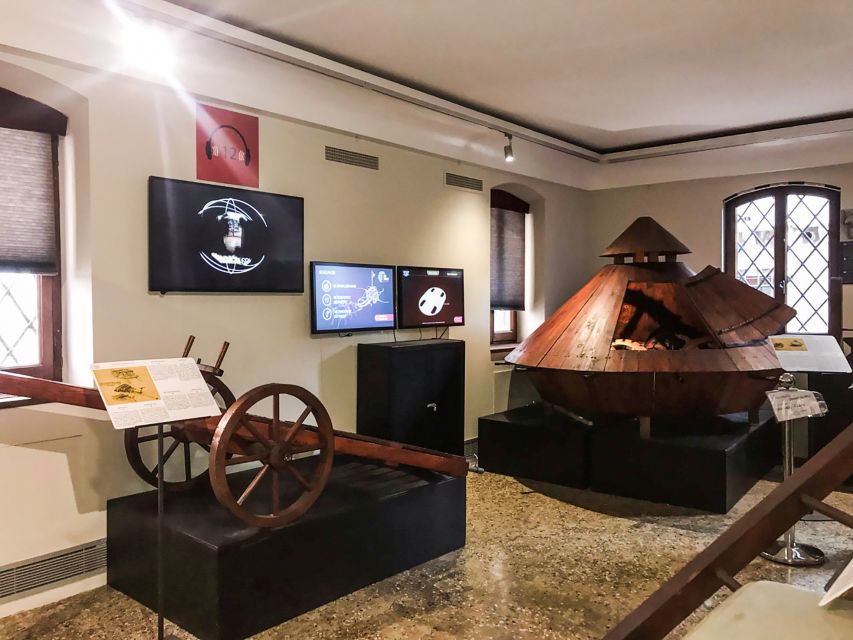
Leonardo’s ideas still move. At this small, hands-on museum in Venice, you can turn wheels, test wooden structures, study anatomy displays, and see working reproductions based on his designs. It offers a welcome change from churches and canals, especially for families and anyone who likes to learn by touching and trying.
I especially like the working invention models, which make Da Vinci’s engineering easier to understand than a page of text ever could. I also like the clear organization into Earth, Water, Fire, and Air, plus the reasonable $10 price. The main drawback is size: you can see the entire museum in about 30 to 60 minutes if you move quickly, though taking your time with the puzzles and machines can stretch the visit to around 90 minutes.
This is an independent museum visit, not a guided tour. You simply go to the Leonardo da Vinci Interactive Museum at Campo San Rocco, show your ticket at reception, and explore at your own pace. Allow extra time to find the entrance, since it is in the Scolette di San Rocco building, opposite the Scuola Grande di San Rocco and behind the Church of the Frari.
In This Review
- Five things to know before you go
- Finding the museum near San Rocco
- Four elements, one very busy mind
- Earth: wooden structures and practical puzzles
- Water: motion, flow, and machines
- Fire: invention, industry, and the limits of the display
- Air: flight studies and the dream of flying
- Anatomy and art beyond the machines
- Interactive features that make the visit work
- How long to stay and when it fits your day
- Is the $10 ticket good value?
- Useful planning advice for families and curious adults
- Who should book this experience?
- FAQ
- Where is the Leonardo da Vinci Museum in Venice?
- Is this a guided tour?
- How long does a visit take?
- Which languages are available?
- Can I take photos inside?
- Are children allowed to enter alone?
- What happens if I need to cancel?
Five things to know before you go
- Four themed sections: Earth, Water, Fire, and Air group the inventions by the forces they examine and use.
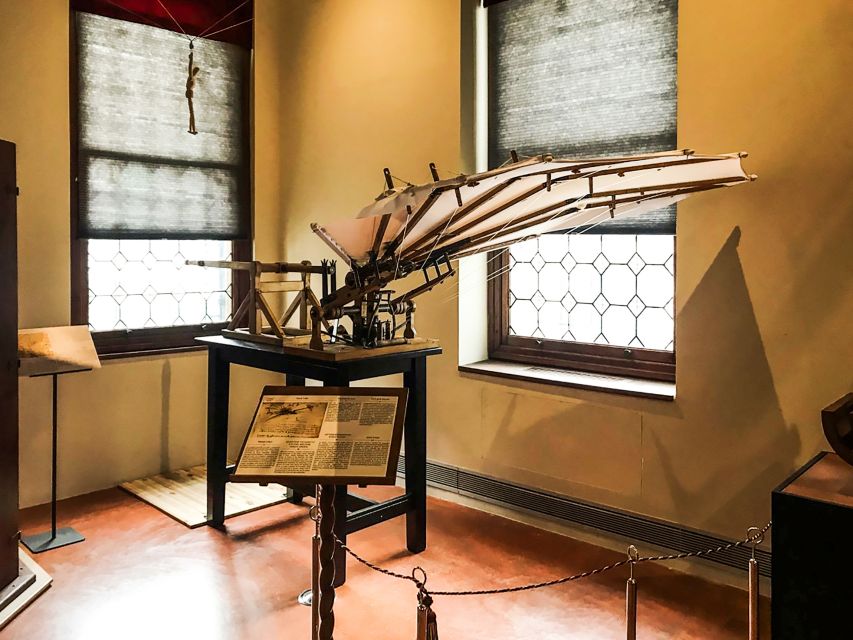
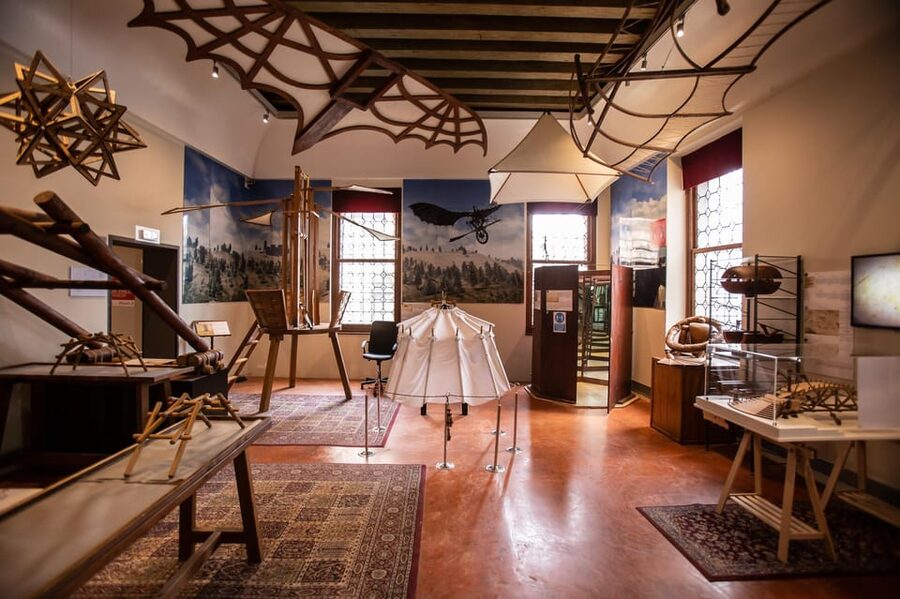
- Hands-on machines: Many wooden reproductions can be operated, giving you a practical sense of how Da Vinci’s ideas worked.
- Good for mixed ages: Children, teenagers, and adults can all find something to do, from building puzzles to studying art and anatomy.
- A short, useful stop: Plan on 30 to 60 minutes for a quick visit, or about 90 minutes if you try most activities and watch the film.
- Clear multilingual displays: Information is provided in Italian, English, French, German, Spanish, and Russian, with multimedia material about Da Vinci’s life and work.
Finding the museum near San Rocco
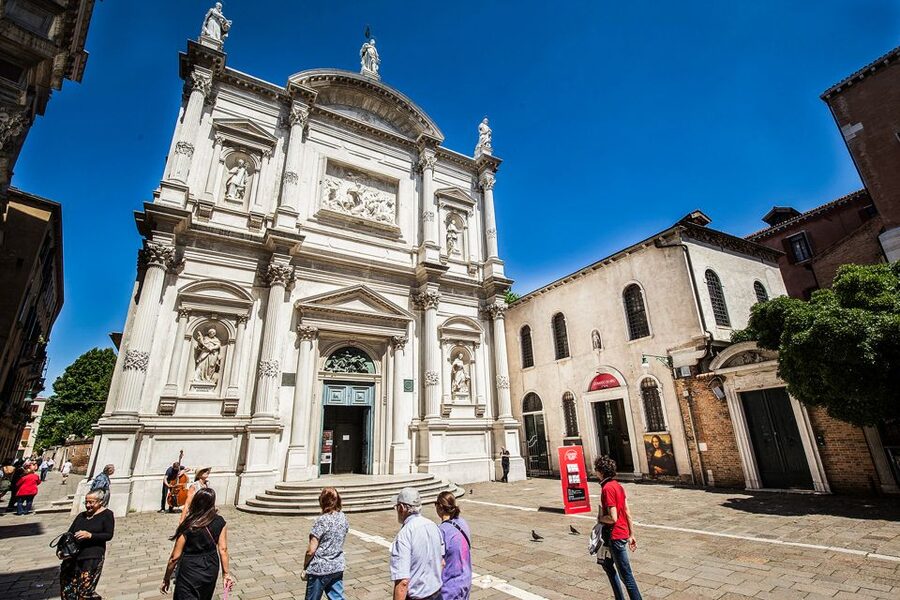
The museum is at Campo San Rocco, 3052, Venice, in the Scolette di San Rocco building. It sits opposite the Scuola Grande di San Rocco and behind the Church of the Frari, in an area that is easy to combine with other central Venice sights.
The entrance can be less obvious than you might expect. This is not a meeting point for a guide or a group departure. You go directly to the museum, present your ticket to the reception staff, and enter.
That distinction matters because the booking information describes an entry ticket only. You will not receive a scheduled lecture or a personal tour leader. Instead, the museum uses written explanations, multimedia displays, models, and videos to guide you through the material.
I like this arrangement for a short sightseeing day. You are not tied to a group, and you can spend five minutes on a machine that catches your attention or move past a display that interests you less.
More Museum Tours in Venice
- Venice: St. Mark Basilica Ticket, Audioguide+History Gallery
★ 3.9 · 4,780 reviews - Venice’s Best: Basilica, Doge’s Palace, Gondola & History Gallery
★ 4.5 · 2,478 reviews - Venice: Vivaldi’s Four Seasons Concert & Music Museum Visit
★ 4.8 · 2,065 reviews
Four elements, one very busy mind
The exhibition is arranged around Earth, Water, Fire, and Air, a simple structure that helps organize the wide range of Da Vinci’s interests. He was not only a painter. The museum presents him as an artist, engineer, inventor, and anatomist, which gives you a fuller picture of his work.
The machines are faithful reproductions built from his drawings and designs. Some changes were necessary because the original proportions would not work in a modern display, but the aim is to show the intended principles behind each invention.
This is where the museum earns its entrance fee. A sketch of a flying machine can be difficult to understand on paper. A model that you can turn, pull, or set in motion gives the idea a physical logic.
The displays also help connect Da Vinci’s work to familiar engineering principles. You may begin by thinking of the machines as clever Renaissance curiosities, then notice how gears, bridges, pulleys, flight studies, and mechanical systems still resemble ideas used today.
Earth: wooden structures and practical puzzles
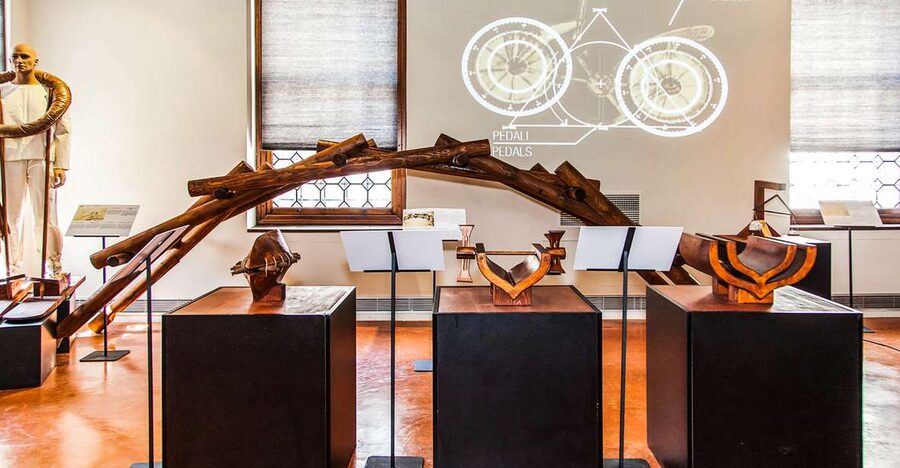
The Earth section is a strong place to start if you enjoy making things work. Wooden models and construction activities turn the exhibition into a small workshop rather than a room of untouchable objects.
One popular challenge is the wooden bridge puzzle on the second floor. It is easier with a second person, so do not be shy about asking your companion to help. The museum also includes wooden structures and geometric building tasks, though some visitors have found that a particular hexagon activity can be difficult if all the pieces are not available at the time.
These activities are useful because they show how Da Vinci studied balance, weight, shape, and support. You do not need an engineering background. The point is to test an idea with your hands and see what happens.
For families, this section can prevent the familiar museum problem of children tiring out while adults read every panel. For adults, the puzzles are not merely children’s games. They offer a quick, concrete way to understand principles that can seem abstract in a drawing.
Water: motion, flow, and machines
The Water displays explore Da Vinci’s interest in movement and the natural world. Reproductions show how he considered water as both a force and a tool.
As you operate the models, look for the relationship between motion and control. Turning a handle or shifting a mechanism makes the design easier to grasp than a static replica would. The experience is especially good for curious teenagers, who may respond more to testing a machine than reading a long biography.
The museum does not try to recreate a full-scale Renaissance workshop. Space is limited, and the Water section is part of a compact exhibition. Still, the practical models help you see why Da Vinci’s notebooks mattered: he was constantly observing how materials and forces behaved.
The best approach is to take your time with the mechanisms. If you rush through every room, the museum can feel small. If you stop to test each model, ask what problem it solves, and read the explanation beside it, the visit feels much more substantial.
More galleries and collections:
- Charming Gondola Ride on the Grand Canal & Gondola Gallery™
★ 4.0 · 1,313 reviews - Venice: Bell Tower & St Mark’s Square History Gallery Ticket
★ 4.3 · 910 reviews - Venice Museum Pass & Doge’s Palace Entrance Ticket
★ 3.9 · 769 reviews - Basilica, Doge’s Palace, History Gallery & Bell Tower Option
★ 5.0 · 586 reviews
Fire: invention, industry, and the limits of the display
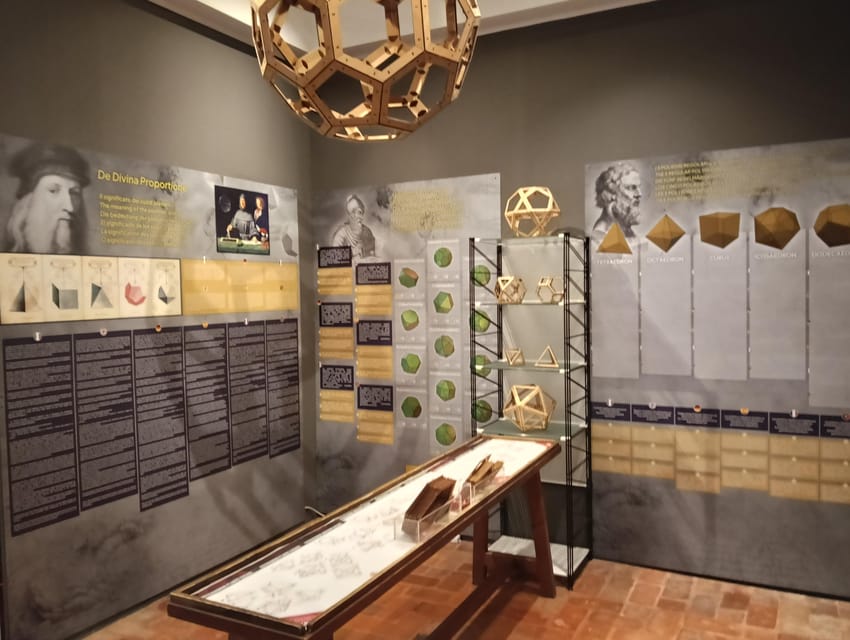
The Fire section presents Da Vinci’s interest in energy, machines, and force. As with the other areas, the displays focus on models and explanations rather than original Da Vinci objects.
That distinction is important. You are seeing reproductions, not authentic Renaissance machines or original manuscripts. Their value lies in making his drawings understandable, not in being historic artifacts themselves.
The museum works best when you treat it as an educational exhibition. It is not a major fine arts museum, and it will not replace seeing an original Da Vinci painting. It does, however, help explain the inventive thinking behind the images and sketches.
Some displays may appeal more to adults, particularly those interested in engineering and design. Children can still take part in the interactive activities, but younger visitors may need an adult to explain why a mechanism matters beyond the fun of moving it.
Air: flight studies and the dream of flying
Da Vinci’s studies of air and flight are among the most naturally engaging parts of the exhibition. His flying machines show how far his questions reached, even when the technology of his time could not provide the materials or power needed to make the dream practical.
The models let you consider the shape of wings, the movement of air, and the challenge of lifting a human body. You can see the difference between a beautiful idea and a workable machine, which is one of the most interesting lessons in the museum.
This section also captures Da Vinci’s habit of crossing boundaries. Art helped him observe form. Anatomy helped him understand movement. Engineering helped him imagine how a body might travel through the air.
That combination is one reason the exhibition appeals to people who are not already Da Vinci specialists. You do not need to arrive with a long list of facts. The models give you enough to start asking your own questions.
Anatomy and art beyond the machines
The museum gives space to Da Vinci’s human anatomy studies, reminding you that his curiosity extended from machines to the human body. These displays help explain how closely his scientific observations and artistic work were linked.
High-resolution, backlit reproductions of major paintings add another layer to the visit. They are not original paintings, but they let you examine the compositions in a clear, accessible setting.
I find this balance useful. A museum focused only on inventions could make Da Vinci seem like an engineer who happened to paint. A display focused only on his paintings could miss the restless scientific mind behind them. Here, the art and anatomy sections broaden the picture.
The information is available in Italian, English, French, German, Spanish, and Russian. Multimedia material also presents his life and achievements in a compact format. One well-made film gives a concise account of his life, which can be helpful if you know Da Vinci mainly as the painter of the Mona Lisa.
Interactive features that make the visit work
The museum’s strongest feature is its invitation to participate. You can operate models, attempt construction puzzles, and explore optical activities rather than simply walk past labels.
A 360-degree mirror room is one of the most memorable features. It lets you see reflections from different angles and gives the museum a playful break from its historical information. The mirror box on the ground floor is particularly easy to enjoy with children, though adults tend to stop for a look too.
There are also iPads where children can draw in a Da Vinci-inspired way. This gives younger visitors something creative to do while adults read the panels.
The hands-on approach is not perfect for every type of museum lover. If you want original masterpieces, quiet galleries, or a large scholarly collection, this place may feel modest. If you like puzzles, machines, and practical demonstrations, the small size works in its favor.
Please treat the models as museum exhibits, not toys. The interactive design invites use, but the machines still need to be handled with care, especially when the museum is busy.
How long to stay and when it fits your day
A fast visit takes about 30 to 60 minutes. That is enough time to walk through the main sections, see the art and anatomy displays, and try a few machines.
Plan on roughly 90 minutes if you want to test many of the inventions, watch the film, attempt the puzzles, and give the information panels proper attention. The compact layout makes this a useful stop during a packed Venice schedule.
The ticket is valid for one day, and you can check available starting times when booking. Last entrance is one hour before closing, so do not arrive near the advertised closing time and expect a full visit.
This museum can also provide a break from walking Venice. It is indoors, educational, and manageable in length. Several families have found that the mix of activities works across a wide age range, from young children to teenagers and adults.
Is the $10 ticket good value?
At $10 per person, the ticket is fairly priced for a central Venice attraction, especially if you use the interactive displays rather than simply glance at them. A short visit costs little in both money and time, while a slower family visit can fill an hour or more.
Children under three enter free. Anyone under 15 must be accompanied by an adult, so this is not a drop-off activity for older children.
The ticket also includes permission to take photos inside, which is useful because the working models and mirror activity are naturally tempting to photograph. The bookshop offers Leonardo-themed gifts and souvenirs, with a 10 percent discount on purchases.
The value depends on what you want. For original art, this is not the right ticket. For a practical introduction to Da Vinci’s inventions and a break from Venice’s outdoor sightseeing, it is a good buy.
Useful planning advice for families and curious adults
If you are visiting with children, begin by explaining that the machines can be touched only in the intended way. The interactive format is a major strength, but it can become frustrating if exhibits are treated like play equipment.
If you are visiting as an adult, do not skip the puzzles. The bridge, wooden structures, and mirror activity are some of the best ways to make the visit memorable. You can also use the displays as a prompt to compare Da Vinci’s drawings with the working models.
Look for the QR code at the front of the shop if an audio guide is available for your visit. One practical point is easy to miss: the code may not be repeated throughout the museum, so scan it before moving too far into the exhibition.
The museum is also a sensible choice on a very hot day, since it gives you an indoor activity in a quieter part of central Venice. Combine it with the Frari area rather than crossing the city just for this one small museum.
Who should book this experience?
I would recommend it most strongly to families, teenagers, adults who enjoy making things, and anyone curious about the connection between art and engineering. It is also a smart choice if you have only a few days in Venice and want an attraction that can fit between larger sights.
You may want to skip it if you are focused strictly on original paintings, historic artifacts, or long guided explanations. The museum is small, uses reproductions, and has no guided tour included.
For most people, the decision comes down to expectations. Think of it as a compact, interactive introduction to Da Vinci’s mind, not a grand art museum. At $10, with flexible timing, multilingual information, hands-on machines, and activities for several age groups, it earns a place on a Venice itinerary.
FAQ
Where is the Leonardo da Vinci Museum in Venice?
It is at Campo San Rocco, 3052, Venice, in the Scolette di San Rocco building. The entrance is opposite the Scuola Grande di San Rocco and behind the Church of the Frari.
Is this a guided tour?
No. The ticket provides museum entry only. You go to the museum, show your ticket at reception, and explore independently.
How long does a visit take?
A quick visit can take 30 to 60 minutes. If you try many of the interactive machines, watch the film, and spend time with the puzzles, plan for about 90 minutes.
Which languages are available?
Descriptions are provided in Italian, English, French, German, Spanish, and Russian. Multimedia displays also explain Da Vinci’s life and work.
Can I take photos inside?
Yes. Photography inside the museum is included with the entry ticket.
Are children allowed to enter alone?
Children under 15 must be accompanied by an adult. Children under three can enter free.
What happens if I need to cancel?
You can cancel up to 24 hours in advance for a full refund. The reserve now and pay later option lets you book without paying immediately.
Just added around Venice
- Hard Rock Cafe Venice with Set Lunch or Dinner★ 4.0 · 251 reviews
- Venice Food Tour with 6+ Tastings with Cicchetti, Spritz & More★ 5.0 · 251 reviews
- Venice: Rooftop Terraces Tour with Prosecco★ 4.8 · 257 reviews
- Skip the Line Venice Doge’s Palace and St. Mark’s Basilica Tour★ 4.0 · 263 reviews
- Venice 3,5 hrs tour: Doge’s Palace, St Mark’s and Hidden Gems★ 4.5 · 264 reviews
- Venice: The Ultimate Food Tour with Wine & Spritz★ 4.9 · 264 reviews
- Venice Walking Tour and Gondola Ride Combo★ 4.4 · 266 reviews
- Venice: Sunset Cruise by Typical Venetian Boat★ 4.7 · 268 reviews
Museums, compared.

Vatican: Museums & Sistine Chapel Entrance Ticket
Read our review →
Vatican Museums & Sistine Chapel Tour with Optional Basilica
Read our review →
Vatican Museums, Sistine Chapel & St Peter’s Basilica Guided Tour
Read our review →
Skip-The-Line Uffizi Gallery Timed Entry Ticket
Read our review →
Vatican Museums, Sistine Chapel & Basilica Tour
Read our review →
Vatican Museums & Sistine Chapel Skip-the-Line Entry Ticket
Read our review →Vatican Museums, Sistine Chapel & Basilica Tour
Read our review →
Vatican Museums & Sistine Chapel Guided Tour
Read our review →Browse the lists this tour appears in