
Review · COLOSSEUM & ROMAN FORUM TOURS
Rome in a Day Tour with Vatican, Colosseum and Historic Center
Rome rewards patience. This tour is for seeing the essentials fast, pairing the Pantheon, Trevi Fountain, Colosseum, Roman Forum and Vatican Museums in one long day. I like the expert storytelling, which turns stones and statues into scenes from Roman life. I also like the small-group limit of 18 people and the included Vatican transfer, both useful when Rome is crowded.
The catch is simple: this is a serious walking day. You may cover five to ten miles over cobbled streets, with stairs and little time to wander off. If you want a relaxed Rome visit, choose separate half-day tours. If you have only one or two days, this plan gives you an impressive first look for $192.28 per person.
In This Review
- Key points at a glance
- Who this Rome tour is really for
- Starting in Piazza Navona
- The Pantheon and its remarkable dome
- Trevi Fountain and Rome’s film-set streets
- Piazza Venezia and lunch near Largo Corrado Ricci
- Entering the Colosseum with a reserved ticket
- Seeing the Roman Forum from an overlook
- The transfer to Vatican City
- Raphael Rooms, sculpture galleries and the Sistine Chapel
- The guides are the heart of the experience
- Walking, stairs and the real physical demand
- Is $192.28 a fair price?
- Practical details before you book
- Should you book Rome in a Day?
- FAQ
- How long does the Rome in a Day tour last?
- Where does the tour begin?
- Where does the tour end?
- Is transportation included?
- Is lunch included?
- What attractions are included?
- How large is the group?
- Do I need to bring identification?
- What should I wear to the Vatican?
Key points at a glance
- One ambitious day: Cover central Rome, the Colosseum and Vatican City in roughly seven and a half hours.
- The walking is substantial: Good shoes are essential, and some people report about 21,000 steps.
- Small group format: The maximum group size is 18, with headsets used when needed.
- The Forum is viewed from above: You see key ruins without waiting to enter the main archaeological area.
- The guides make the difference: Guides such as Sev, Claudia, Marco, Vita, Kylie, Ambra and Paola have earned particular praise for clear explanations, pacing and storytelling.
- Vatican clothing rules matter: Your shoulders and knees must be covered, including inside the Sistine Chapel.
Who this Rome tour is really for
I would choose this experience if Rome is one stop on a larger Italy trip and your schedule is tight. It is also a strong first-day orientation for someone who wants the main sights explained before returning later to explore favorites at a slower pace.
The route connects three different versions of Rome. The morning focuses on public squares, fountains and ancient buildings in the historic center. The afternoon moves into the Colosseum and Roman Forum, then finishes with Greek and Roman art, Renaissance rooms and Michelangelo inside the Vatican Museums.
That range is the tour’s main appeal. You do not spend a whole day on one site. Instead, you get a broad introduction to Rome’s religious, political, artistic and imperial past.
You should not book it simply because the title sounds efficient. Rome’s old center is made for wandering, and this schedule leaves little room for that. You will meet, walk, listen, regroup, eat lunch on your own, and keep moving.
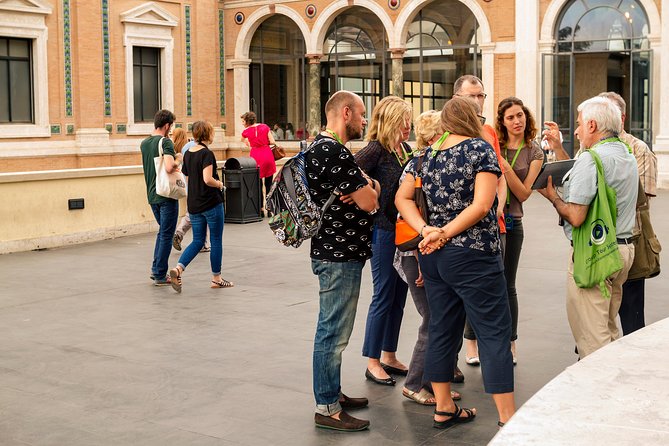
The tour is offered in English. The maximum group size is 18, which is small enough to make questions practical but not so small that you can expect a private experience. A headset may be provided when needed, especially useful beside traffic, fountains and large crowds.
More History Tours in Rome
- Rome Food Tour in the Historic Centre with 8+ Food Tastings
★ 5.0 · 1,000 reviews - Rome: Ancient History and Colosseum Underground Tour
★ 4.5 · 996 reviews - Rome: Forbidden History Walking Tour & Pub Crawl with Drinks
★ 4.9 · 688 reviews
Starting in Piazza Navona
The morning begins at Piazza Navona, one of Rome’s grandest public spaces. You spend about 30 minutes here, hearing the story behind Bernini’s fountain and the square’s monumental design.
This is a good place to begin because it introduces Rome through urban life rather than a museum entrance. The broad piazza, surrounded by historic buildings and cafés, gives you an immediate sense of how Rome layers ancient foundations, papal ambition and daily city life.
Your guide’s role matters here. A strong guide can explain what you are looking at without turning the first stop into a lecture. Guides praised by name, including Kylie, Ambra and Paola, were especially good at mixing facts with stories and keeping the group moving.
The square is also a practical meeting point. Arrive ready to walk, not ready for a leisurely coffee. The tour begins on foot and continues through the historic center.
The Pantheon and its remarkable dome
The next major stop is the Pantheon, where you spend about 30 minutes. The building is nearly 2,000 years old and has the world’s largest unreinforced concrete dome.
That engineering achievement gives the visit real weight. You hear how the dome was built and why its design influenced later landmarks, including St. Peter’s Basilica and the U.S. Capitol Building. A guide adds useful scale and context that is easy to miss if you simply step inside, look up and leave.
Admission to the Pantheon is not included in the stated tour inclusions, so check the current arrangement before booking. The itinerary allows time for the stop, but this is not presented as an extended Pantheon visit.
The short visit is a fair trade for the number of sights covered. If the Pantheon is your top priority, you may want to return independently after the tour and give it more time.
Trevi Fountain and Rome’s film-set streets
You then walk to the Trevi Fountain, with about 30 minutes allotted. The route passes through streets associated with films such as Roman Holiday, adding a little cinema to the city’s older stories.
The fountain is one of those places where expectation and reality can collide. It is famous, photogenic and often crowded. Your guide helps you understand the setting and the symbolism instead of leaving you to fight for a view and toss a coin.
This is a short stop, so do not expect quiet contemplation. You will likely have time for photographs and an explanation, but not much unstructured time. Stay close to the group. One consistent lesson from this kind of schedule is that a person who wanders off can hold up everyone else and cut into time at the next site.
More ways into the Colosseum and Forum:
- Colosseum, Roman Forum & Palatine Guided Tour
★ 4.7 · 63,148 reviews - Rome: Colosseum, Palatine Hill and Roman Forum Guided Tour
★ 4.8 · 32,814 reviews - Rome: Guided Tour of Colosseum, Roman Forum & Palatine Hill
★ 4.7 · 27,897 reviews - Rome: Colosseum & Forum with Audio Guide App -Optional Arena
★ 4.2 · 24,770 reviews
Piazza Venezia and lunch near Largo Corrado Ricci
The walking tour continues through Piazza Venezia and toward Largo Corrado Ricci. These stops are part of the broad city overview rather than long visits with a separate admission.
After the morning walk, you get a one-hour lunch break. Lunch is not included, but the guide can offer recommendations. That flexibility is helpful because you can choose how much to spend and how quickly to eat.
Still, one hour disappears quickly in Rome. You need to reach a restaurant, order, eat and return to the meeting point on time. I would avoid a slow, elaborate meal and keep some water handy. The second half includes the Colosseum, an uphill Forum overlook and the Vatican Museums, so lunch should support the walking rather than become another major event.
This is also your main chance to rest. Use it. The tour gets more demanding after lunch.
Entering the Colosseum with a reserved ticket
The Colosseum receives about one hour and 45 minutes, including the guided visit. Entrance and the reservation fee are included, with the ticket listed at €18 per person and the reservation fee at €2.
That advance arrangement is valuable. The Colosseum is one of Rome’s busiest attractions, and arranging entry yourself can mean dealing with timed tickets, security and confusing access points. A reserved group entry removes some of that work.
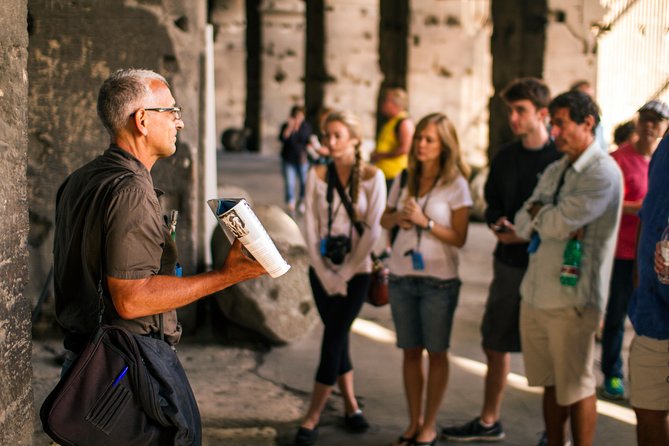
Inside, the guide explains the arena’s contests and the lives of gladiators and emperors. The best guides use the building as a prompt for questions about Roman society, not just a backdrop for dramatic stories. Mauro, Marco and Seth were praised for making ancient Rome lively and easy to follow, while other guides earned credit for keeping the group on schedule.
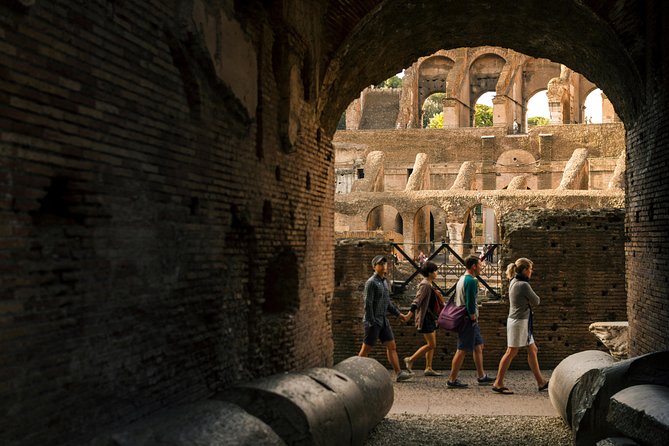
The time is enough for a focused introduction, not a forensic study of every level and corridor. You will learn what you are seeing and hear about the brutal public spectacles held here, but you may leave wanting more.
That is one of the tour’s useful features. You get the context first. If the Colosseum captures your attention, you can return on another visit for a longer archaeological tour.
Seeing the Roman Forum from an overlook
After the Colosseum, you walk toward the Roman Forum. Instead of joining the crowds waiting to enter the main Forum area, the guide takes you to a nearby overlook.
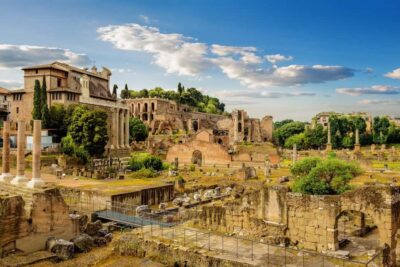
From there, you can see the Temple of the Vestal Virgins and the Senate House. The guide explains how the Forum served as the center of Roman public life and helps you picture it as more than scattered columns and broken walls.
This choice saves time and energy. It also avoids spending part of the day in a crowded entrance line. The drawback is clear: you do not receive the same close-up experience as someone walking among the ruins.
If you select the Best of Rome option when booking, the tour ends after the Forum viewpoint. The version that continues to Vatican City includes a private transfer from central Rome, which is an important reason to choose the full program.
The transfer to Vatican City
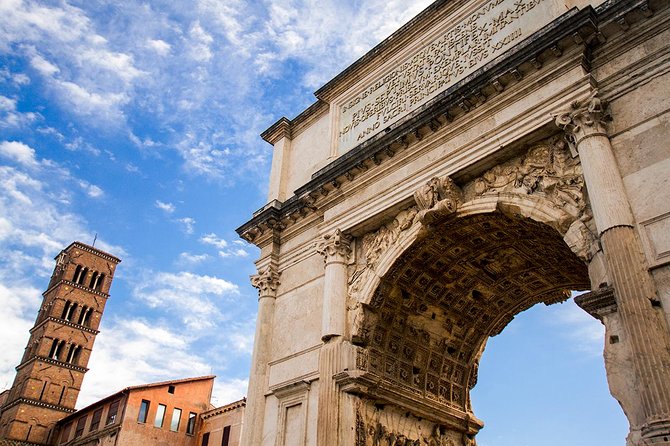
The vehicle transfer from central Rome to the Vatican is short compared with the walking portions, but it is a welcome break. You do not have to navigate public transport between two major sightseeing areas, and the group stays together.
The transportation is specifically described as a quick bus transfer or private transfer to the Vatican Museums. Hotel pickup and drop-off are not included, so you must make your own way to Piazza Navona at the start and arrange your return from Vatican City at the end.
The final stop is the Vatican Museums. The skip-the-line ticket is included, a major practical benefit at a museum known for long queues and heavy crowds. Skip-the-line access does not mean the galleries will be empty. Expect people, slow movement and a packed route through some rooms.
Raphael Rooms, sculpture galleries and the Sistine Chapel
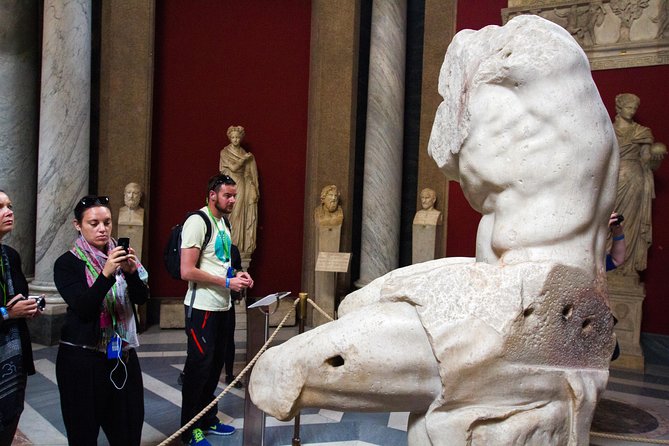
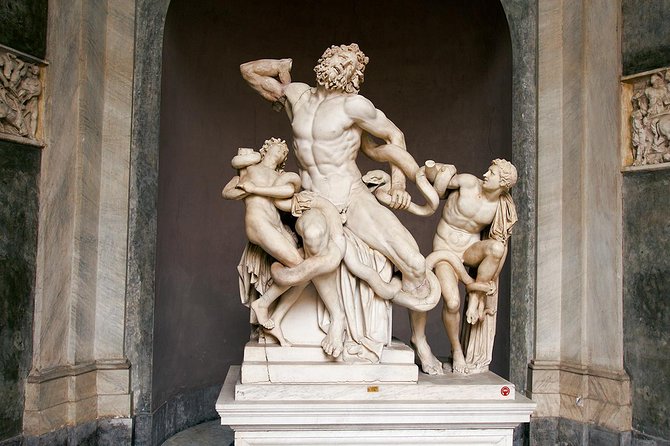
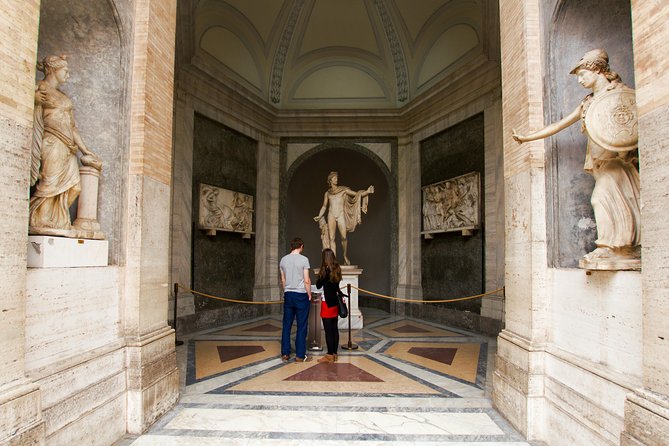
The Vatican portion lasts about two hours, followed by about 45 minutes in the Sistine Chapel. The route includes ancient Greek and Roman sculptures, the Laocoön Group, sculpture galleries, the Raphael Rooms and the Gallery of the Maps.
This is where the guide’s pacing and presentation become especially important. The Vatican Museums are enormous. A first-time visitor can easily lose the thread among rooms, courtyards and corridors. The tour gives you a selected path through major works rather than trying to cover everything.
The Pinecone Courtyard is another stop along the way. You pass a large bronze globe by Italian artist Arnaldo Pomodoro, a work also copied in cities including Dublin, Tel Aviv and New York City.
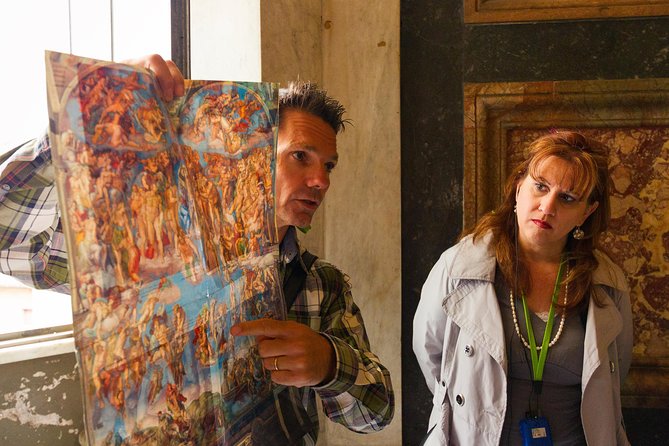
The day ends in the Sistine Chapel, where Michelangelo’s frescoes command your attention. You are expected to remain quiet and follow the chapel’s religious rules. Shoulders and knees must be covered for everyone, so bring a scarf or other covering if your clothing does not meet the requirement.
The chapel may be the emotional high point, but it can also be the most difficult part of the day. Crowds can slow the route, and you might need to leave sooner than expected if the schedule is affected by congestion or delays. One useful piece of advice is to allow extra time after the planned tour if you hope to see more of the Vatican Museums. The itinerary ends at the Vatican Museums, but the exact amount of time available inside can vary with crowd conditions.
From January 12 through March 31, 2026, the Last Judgment fresco will be covered by scaffolding during a preservation project. The Sistine Chapel remains open, but that specific work will not be visible during the restoration.
The guides are the heart of the experience
The strongest part of this tour is the guide. Names that received especially warm praise include Sev, Claudia, Marco, Vita, Kylie, Ambra, Paola, Mauro, Seth and Anna.
The qualities to hope for are clear. You want someone who can explain history and architecture in plain English, answer questions, tell memorable stories and keep a large route on time. Kylie was praised for making ancient Rome feel alive while keeping the day relaxed. Vita received credit for pacing the route well despite the crowds. Marco, described as an archaeologist, made the Forum and Colosseum especially vivid.
The guide can also rescue a demanding itinerary. A good leader tells you where to look, when to regroup and why a fragment matters. Without that help, the day would be a string of famous names and photographs.
There is one important caution. One person found a guide’s heavy Italian accent difficult to understand through the headset. That is not a common complaint in the material provided, but it is a fair reminder that audio clarity can affect the value of a history-heavy tour.
Walking, stairs and the real physical demand
The tour description calls for moderate physical fitness, but the direct experience can feel more strenuous than that phrase suggests. People have reported walking about five miles, nearly ten miles, or roughly 21,000 steps, depending on the route and personal movement.
The streets are often cobbled, and the day includes stairs and long stretches between stops. The walking is described as mostly flat in parts, but the overall route remains rigorous. I would not recommend it for anyone using a cane or wheelchair based on the stated conditions and direct feedback about stairs and distance.
Wear your best walking shoes. Carry water, keep your bag light and do not assume that the lunch break will fully restore your energy. The tour is more enjoyable when you accept its physical nature before you arrive.
The group also needs discipline. The schedule depends on everyone returning from breaks promptly. If you tend to stop often for photographs or browse shops along the way, a slower private tour would suit you better.
Is $192.28 a fair price?
At $192.28 per person, this is not a budget sightseeing day. The price includes an English-speaking guide, a small group of no more than 18, Colosseum admission, the Colosseum reservation fee, Vatican Museums skip-the-line access, the Vatican transfer and headsets when needed.
The value lies in the coordination. You are paying to connect several difficult-to-arrange sights in one day, with someone explaining what you see and handling timed access at the Colosseum and Vatican. For a short stay, that can be worth more than saving money with separate tickets and self-guided visits.
The price is less attractive if you have four or five days in Rome. You could spread the sights out, pause for meals and spend longer inside the Forum, Pantheon and Vatican Museums. You would also avoid paying for a rushed route through places you might prefer to experience slowly.
I see this as a time-saving purchase, not a bargain. Its value rises sharply when every day in Rome matters.
Practical details before you book
You must provide the full names of all participants at booking. Those names must match government-issued identification, and name changes are not permitted.
Every person, including children, must carry a passport or government-issued ID. Security may deny entry to a monument without it.
The meeting point is Piazza Navona, 2, in central Rome. The tour ends at the Vatican Museums in Vatican City. There is no hotel pickup or drop-off.
Cancellation is generous only at a distance. You can receive a full refund if you cancel at least seven full days before the start time. Inside that seven-day window, the cost is non-refundable and changes are not accepted.
Sites can occasionally close, and last-minute changes may be explained at the start of the tour. That is another reason not to schedule an important train, flight or dinner immediately afterward.
Should you book Rome in a Day?
Book it if you have one or two days, want the main sights explained, and can handle a long day on foot. The Colosseum ticket, Vatican access and transfer remove several planning headaches, while the guides can supply the stories you would miss on your own.
Skip it if you need an easy pace, use mobility equipment, dislike group schedules or want long, quiet visits inside individual monuments. You should also skip it if the Sistine Chapel’s Last Judgment is essential during the January to March 2026 restoration period.
For the right person, this is an efficient first pass through Rome, not a substitute for lingering. Bring good shoes, cover your knees and shoulders, keep up with the group and arrive ready to make the most of every minute.
FAQ
How long does the Rome in a Day tour last?
The tour lasts approximately 7 hours and 30 minutes.
Where does the tour begin?
It begins at Piazza Navona, 2, 00186 Rome, Italy.
Where does the tour end?
The tour ends at the Vatican Museums in Vatican City.
Is transportation included?
Transportation to the Vatican Museums is included. The tour uses a quick bus or private vehicle transfer from central Rome. Hotel pickup and drop-off are not included.
Is lunch included?
No. You receive a one-hour lunch break near Largo Corrado Ricci, but lunch is at your own expense.
What attractions are included?
The route includes Piazza Navona, the Pantheon area, Trevi Fountain, Piazza Venezia, the Colosseum, a Roman Forum overlook, Vatican Museums and the Sistine Chapel. Colosseum admission and the Vatican skip-the-line ticket are included.
How large is the group?
The group can include a maximum of 18 people.
Do I need to bring identification?
Yes. Every participant, including children, must bring a government-issued ID or passport. The name must match the information provided at booking.
What should I wear to the Vatican?
Your shoulders and knees must be covered. You can bring a scarf or other covering to use before entering the Vatican Museums.
More Ancient Sites and Ruins
- Twilight Treasures: An Evening Tour Through Rome’s Rich History
★ 4.5 · 263 reviews - Food Tasty and History Tour in Civitavecchia
★ 5.0 · 256 reviews - Venice: St. Mark Basilica Ticket, Audioguide+History Gallery
★ 3.9 · 4,780 reviews - Venice’s Best: Basilica, Doge’s Palace, Gondola & History Gallery
★ 4.5 · 2,478 reviews
Just added around Rome
- Rome City, Pantheon, and Trevi Fountain Walking Tour★ 5.0 · 249 reviews
- Rome: Tivoli Day Trip with Villa d’Este and Villa Adriana★ 4.5 · 251 reviews
- Rome: Skip the line Vatican Museums & Sistine Chapel Tour★ 4.2 · 251 reviews
- Transfer Rome center – Ciampino Airport★ 4.5 · 251 reviews
- Rome: Cannondale E-Bike Evening Tour with Optional Dinner★ 4.9 · 251 reviews
- VIP Colosseum, Roman Forum & Palatine Hill & Special Access Sites★ 4.5 · 252 reviews
- Private Vatican Museums Hidden Gems Tour with Optional Pick-Up★ 5.0 · 253 reviews
- Vatican Museums & Sistine Chapel Skip-the-Line Guided Tour★ 4.6 · 254 reviews
Colosseum & Roman Forum Tours, compared.
Colosseum, Roman Forum & Palatine Guided Tour
Read our review →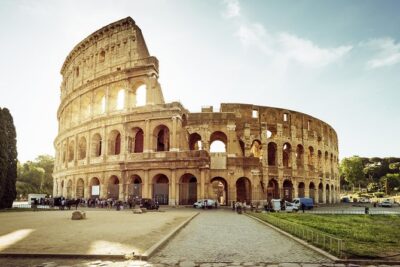
Colosseum, Palatine Hill and Roman Forum Guided Tour
Read our review →
Guided Tour of Colosseum, Roman Forum & Palatine Hill
Read our review →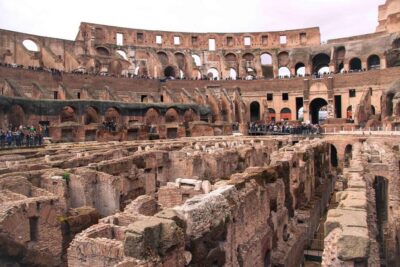
Colosseum & Forum with Audio Guide App -Optional Arena
Read our review →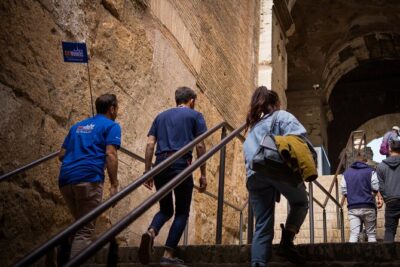
Colosseum, Roman Forum and Palatine Hill Guided Tour
Read our review →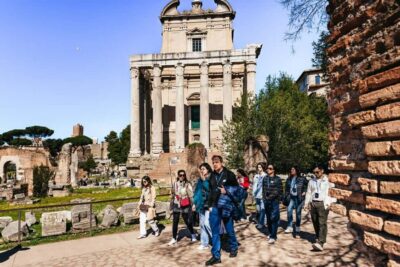
Colosseum, Forum & Palatine Hill Tour & Optional Arena
Read our review →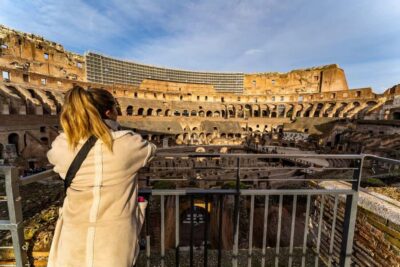
Colosseum, Roman Forum, Palatine with Multimedia Video
Read our review →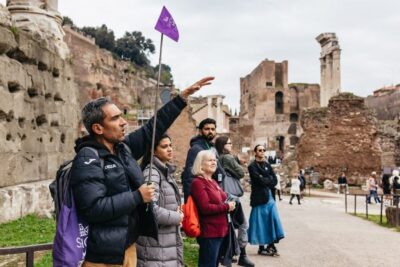
Colosseum, Palatine Hill & Roman Forum Guided Tour
Read our review →Browse the lists this tour appears in