
Review · WALKING TOURS
Trastevere and Rome’s Jewish Ghetto Half-Day Walking Tour
Rome keeps its best stories below eye level. This three-hour walk links Largo di Torre Argentina, the Jewish Ghetto, Tiber Island, and Trastevere, showing you ancient ruins, medieval lanes, churches, bridges, and daily Roman life without chasing the city’s biggest sights. I especially like the route’s mix of Jewish and Roman history, plus the interior visit to Santa Maria in Trastevere when church hours allow.
I also like the small group limit of 15 and the strong record of guides such as Irene, Paolo, Claudio, and Jeanette, who are praised for humor, clear explanations, and good local suggestions. The main caution is timing: the tour begins at 6:00 pm, and a few people found that it ended early or finished somewhere other than Campo de’ Fiori.
In This Review
- Key points to know before booking
- A three-hour walk through Rome’s quieter center
- Largo di Torre Argentina and the first hour
- The Synagogue of Rome and the crossing to Tiber Island
- Santa Maria in Trastevere and the character of the neighborhood
- Ponte Sisto, Piazza Farnese, and the finish at Campo de’ Fiori
- Why the small group and guide style matter
- The 6:00 pm timing and what to bring
- Who will get the most from this Rome walk
- Should you book the Trastevere and Jewish Ghetto walk?
- FAQ
- How long is the Trastevere and Jewish Ghetto walking tour?
- Where does the tour begin?
- Where does the tour end?
- Does the tour enter the Synagogue of Rome?
- Is Santa Maria in Trastevere included inside?
- What does the tour price include?
Key points to know before booking
- Start at the ruins of Largo di Torre Argentina: See the ancient temple complex linked with Julius Caesar’s assassination before the walking begins.
- The Jewish Ghetto gets serious attention: Learn about the quarter’s Jewish community, wartime suffering, architecture, and connection to wider Roman life.
- Santa Maria in Trastevere may be an interior stop: Church access depends on the schedule, so it should not be treated as guaranteed.
- The synagogue is viewed from outside: The tour does not include entry to the Synagogue of Rome.
- Tiber Island adds a scenic break: Bridges, river views, and the crossing into Trastevere give the route a pleasant change of pace.
- The 6:00 pm start shapes the experience: It can bring cooler air and evening atmosphere, but shorter daylight in late autumn.
A three-hour walk through Rome’s quieter center
This is a useful tour for seeing two neighborhoods that can feel confusing on a first visit. The route covers a compact section of central Rome, but the subjects change often: ancient Roman politics, Jewish life, religious buildings, street design, local cafés, and the way modern Romans use old spaces.
The pace is intended to be leisurely rather than athletic. You walk for roughly three hours, with time for explanations and questions. Still, this is a walking tour over old streets and hard paving, so you should be comfortable on your feet and wear sensible shoes. One poor experience came from a guide who complained about footwear and appeared to hurry the group, but that seems to be an exception rather than the usual pattern.
Headsets are included, which matters when the group reaches the maximum of 15 people. You can keep up with the guide’s explanation without needing to crowd around one person in a narrow lane.
The advertised price is $66.38 per person. That is not the cheapest way to wander these districts, since you can walk through them freely on your own. The value comes from the historical connections. A good guide helps you notice details that would otherwise look like ordinary walls, fountains, churches, and street corners. If you enjoy context and questions, the cost is easier to justify. If you mainly want a restaurant walk or a fast photo stop, it may feel high.
More Walking Tours in Rome
- Rome: Trastevere & Campo de Fiori Street Food Walking Tour
★ 4.9 · 2,768 reviews - Rome: Paranormal Night Walking Tour & Secret Backstreets
★ 4.9 · 1,921 reviews - Rome by Night Walking Tour – Legends & Criminal Stories
★ 4.5 · 1,003 reviews
Largo di Torre Argentina and the first hour
Meet at Largo di Torre Argentina at 6:00 pm. This square is one of Rome’s most striking examples of the city’s layers. Ancient ruins sit below the modern pavement, and the area is linked to the assassination of Julius Caesar.
The guide begins here before leading the group onward. That opening works well because it gives you a clear way to read Rome: the city was not built once and preserved under glass. Older structures remain beneath later streets, churches, homes, and commercial spaces.
You should expect an explanation of the archaeological remains and their place in Roman history, rather than an interior archaeological visit. Admission to the ruins is not included. The point is the setting and the story, viewed as part of the street-level walk.
From Largo Argentina, the group heads toward the Jewish Ghetto through Piazza Mattei. This approach is one of the pleasant parts of the route. Piazza Mattei is home to the Fontana delle Tartarughe, or Turtle Fountain, whose colored marble and small sculptural details reward a slower look.
The fountain also gives the guide a chance to connect art, romance, and neighborhood history. This is the sort of stop that can disappear into a busy sightseeing day if you are walking alone. You may notice the fountain, take a photo, and move on. With a guide, it becomes part of the story of the quarter and its residents.
The first hour focuses on the Jewish Ghetto and the way Jewish and Roman lives developed side by side. The subject is not treated as a decorative stop. You hear about the people who lived here, the restrictions placed on the community, and the painful events connected to the area, including the period of World War II.
Jeanette, also spelled Janette in some tour details, receives repeated praise for explaining the difficult history with care and clarity. That matters here. A short visit can easily reduce the Ghetto to a few attractive streets and the synagogue facade. The better experience helps you understand the human cost behind the buildings.
The Synagogue of Rome and the crossing to Tiber Island
The tour passes the Synagogue of Rome, described as one of the largest in Europe. You see the building from outside only. Entry to the synagogue is not included, so plan your expectations accordingly.
The exterior stop is still useful because the synagogue is a major marker of the neighborhood and its Jewish identity. The guide can place it within the story of the quarter and explain what you are seeing. If visiting the interior is important to you, you will need to make separate arrangements.
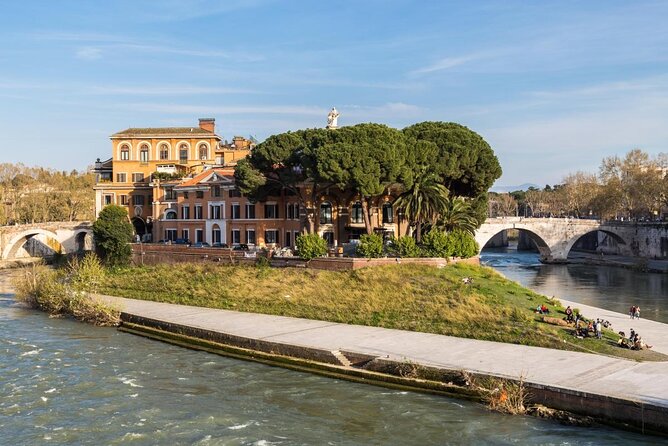
From the synagogue area, the route continues toward the Tiber and crosses Isola Tiberina, the island in the river. This is a welcome shift after the dense urban history of the Ghetto. You get open views along the water and a chance to see Rome from its bridges rather than from another crowded square.
The island crossing is also a practical link between the two neighborhoods. Trastevere means across the Tiber, and the route lets you understand that name in a simple, physical way. The river is not just a line on a map. It helps explain how the districts relate to one another.
You can expect commentary on bridges, the river, and the surrounding buildings. The tour does not turn this into a long scenic pause, but the crossing breaks up the walking and adds some of the best views of the afternoon or evening.
Santa Maria in Trastevere and the character of the neighborhood
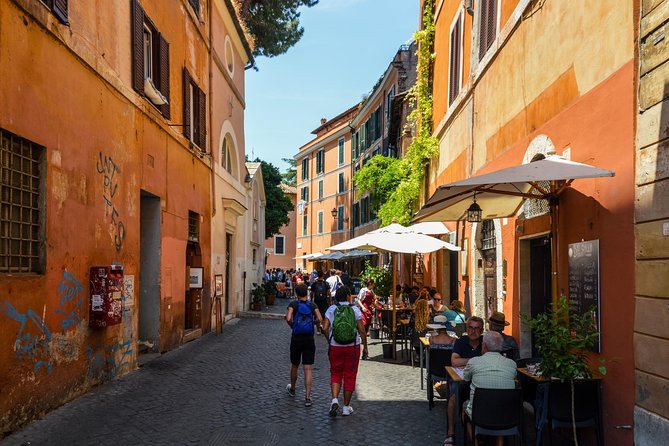
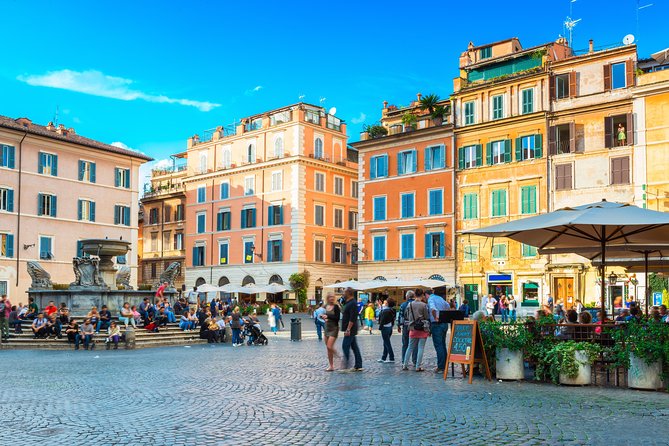
After Tiber Island, the group reaches Trastevere, one of central Rome’s best-known quarters for nightlife, cafés, artists, and narrow streets. The tour aims to show more than the restaurant scene. You learn how the neighborhood developed and how old religious and residential spaces sit alongside modern Roman life.
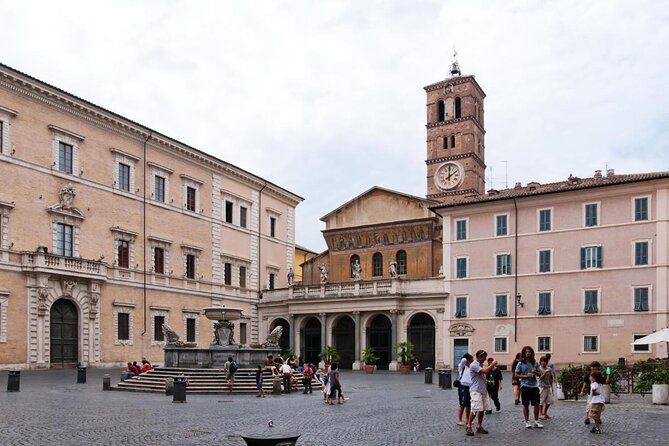
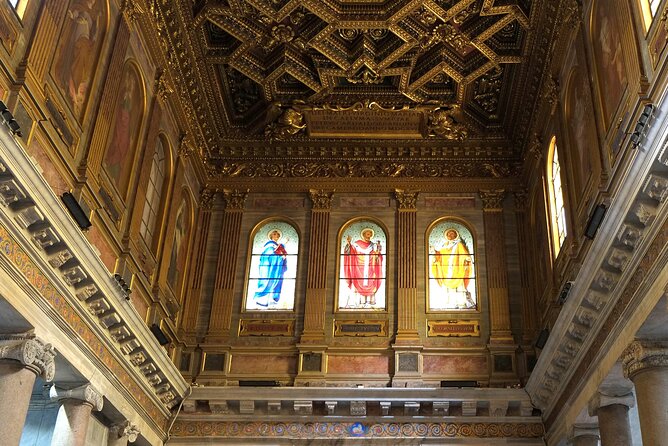
The centerpiece is Santa Maria in Trastevere, one of Rome’s oldest churches, with origins dating to the 340s AD. When the church schedule permits, the tour includes an interior visit. That qualification is important. Churches in Rome can close for services, religious observances, or other schedule changes, so access is not guaranteed.
Inside, the value is not simply seeing another beautiful church. Santa Maria in Trastevere gives you a direct sense of how long Christian worship has shaped this part of Rome. The building’s age connects the ancient city to the medieval and later periods covered throughout the walk.
I would treat the church as a possible bonus rather than the sole reason to book. If entry is available, it adds depth and a quiet pause. If it is closed, the tour still includes the neighborhood streets and outside explanation, but the experience will be slightly less complete.
This part of the walk is also where guide quality makes a big difference. Irene is praised for mixing jokes with serious detail and for keeping a relaxed pace. Paolo is singled out for his passion and ability to make Roman history feel personal. Claudio is praised for bringing Trastevere’s past to life, while James is described as both witty and deeply engaged with the city.
Those descriptions point to the tour’s biggest strength: the human delivery. You are not simply given dates and names. The best guides connect buildings to people, habits, and local life. They also answer questions, which is useful if you are trying to understand where to eat or which streets deserve a return visit.
More guided walks:
- Rome: Guided City Center Evening Sightseeing Walking Tour
★ 4.4 · 953 reviews - Best of Rome Walking Tour including Trevi Fountain
★ 4.5 · 923 reviews - Rome: Under the Moonlight Evening Walking Tour
★ 4.8 · 852 reviews - Rome: Forbidden History Walking Tour & Pub Crawl with Drinks
★ 4.9 · 688 reviews
Ponte Sisto, Piazza Farnese, and the finish at Campo de’ Fiori
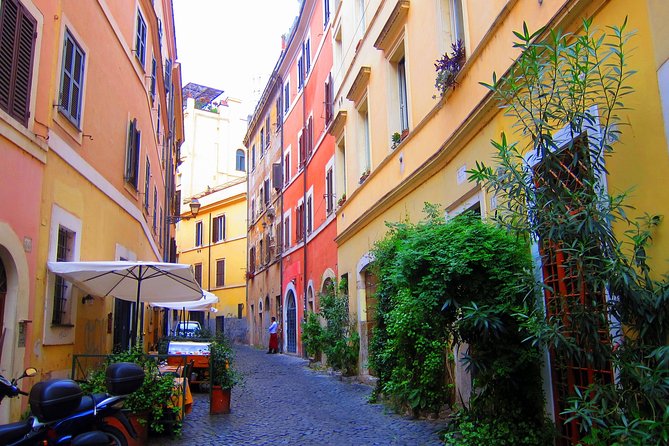
The final section wanders through Trastevere before crossing back over the Tiber on Ponte Sisto. This bridge is a natural place to pause and take in Rome’s evening feel. By this point, you have moved from ruins and community history to cafés, foot traffic, and the social side of the city.
The route then passes Piazza Farnese and the Palazzo Farnese. The exterior area is part of the walk, but entry to Palazzo Farnese is not included. You should see this as an architectural point along the route, not a palace tour.
The official ending is Campo de’ Fiori. This square is known for cafés, street artists, live music, and a steady stream of people. It is a useful finish because you can continue your evening from there without needing to return to the starting point.
The end location also makes the tour practical for dinner. Several people found the guide’s restaurant suggestions useful, and one especially praised the Jewish artichokes available in the area. Food and drinks are not included, so you can choose your own meal after the walk rather than being tied to a group menu.
One thing to watch is the actual finish time and location. The stated duration is about three hours, but one account describes a walk of only two hours and 15 minutes that ended in Trastevere instead of Campo de’ Fiori. I would confirm the end point with the guide at the start, especially if you have dinner reservations or a late transfer planned.
Why the small group and guide style matter
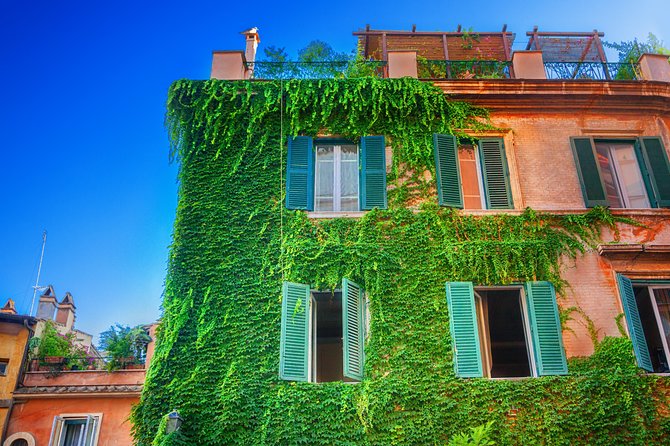
A group of up to 15 people is modest for a city walking tour. It is not a private tour, but it gives you a better chance to hear the guide, ask questions, and keep a steady pace through narrow streets.
The strongest guide feedback centers on clear storytelling, humor, and pride in Rome. Jeanette is praised for explaining the Jewish Ghetto, including its painful wartime history, while Irene is praised for making the walk entertaining without rushing. Other named guides include Paolo, Claudio, and James.
The guide may be American or another English-speaking professional based in Rome. One person preferred an Italian guide speaking English, while others appreciated guides who had lived in Rome for years and could explain both history and daily life. If an Italian-born guide is essential to your experience, confirm that before booking. The tour is offered in English, but a specific guide is not guaranteed.
There are also a few small-group cautions. One person found a guide’s political comments distracting. That is not part of the advertised content, and it is worth remembering that guide style can vary. Most of the feedback praises the guides, but no walking tour has perfectly uniform delivery.
The 6:00 pm timing and what to bring
The afternoon-to-evening schedule is a good match for Rome in warm weather. The air may feel cooler as the walk progresses, and Trastevere and Campo de’ Fiori become more social later in the day.
The same start time can be less helpful in late autumn or winter. One person taking the walk in early November wished it had begun earlier or lasted longer because darkness arrived before the group could make more stops in Trastevere. If you want strong daylight for photos, keep the season in mind.
Wear comfortable shoes and bring water, since food and drinks are not included. Carry only what you need because luggage storage is not available. The meeting point is near public transportation, but you should allow time to find Largo di Torre Argentina. One person had trouble identifying the meeting spot and another waited for an hour after apparently standing on the wrong side of the street.
The confirmation is provided at booking, and the tour has a minimum number of participants. If that minimum is not reached and the experience is canceled, you are offered another date or experience, or a full refund. Free cancellation is available until 24 hours before the start time. Changes or cancellations inside that window are not accepted.
Who will get the most from this Rome walk
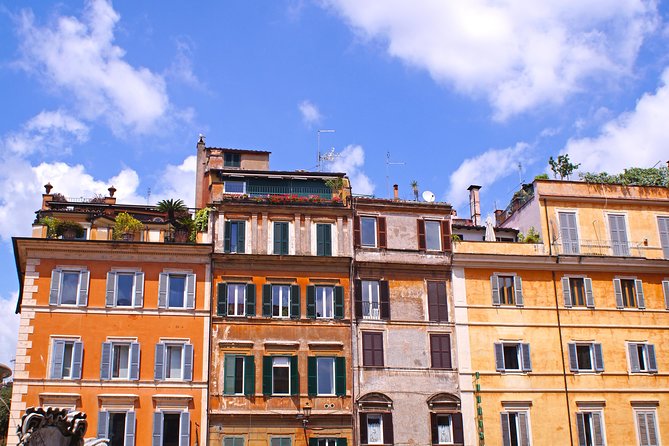
I would recommend this tour to you if you have already seen the Colosseum, Roman Forum, and other major sights, and now want a more local-feeling route with serious historical context. It also works well early in a Rome visit because the walk can help you get your bearings around the center and Trastevere.
Families can enjoy it too. A small group and a guide who tells stories well can keep older children and teenagers interested, though three hours on foot may be too much for a very young child.
This is less suitable if you want a food tour, an inside visit to the synagogue, or a fixed-length private experience. It also may not suit you if you dislike evening schedules, walking on old streets, or commentary that occasionally reflects the guide’s personal style.
The route is a good choice for repeat visitors. One person who had already visited Rome four times still found new details and a fresh way to understand the city. That is the real appeal here: not a checklist of famous monuments, but the connections between places you might otherwise pass without a second thought.
Should you book the Trastevere and Jewish Ghetto walk?
Book it if you want a thoughtful introduction to the Jewish Ghetto and Trastevere, with a guide who can explain how ancient, medieval, religious, and modern Rome fit together. The best parts are the Jewish Ghetto stories, Santa Maria in Trastevere when open, the Tiber Island crossing, and the advice for continuing into the evening.
At $66.38, the tour earns its price through the guide rather than admission tickets. You are paying for interpretation, organization, headsets, and a small group, not for access to major interiors. Confirm the meeting point, expect the synagogue to be an exterior stop, and allow some flexibility around the exact finish time.
For most people who value history and local context, this is a worthwhile three-hour orientation. If your priority is food, shopping, or guaranteed church access, spend the money elsewhere.
FAQ
How long is the Trastevere and Jewish Ghetto walking tour?
The tour is advertised as approximately three hours. One account reported a shorter duration of two hours and 15 minutes, so the actual timing may vary.
Where does the tour begin?
The meeting point is Largo di Torre Argentina in Rome, near the ancient ruins associated with Julius Caesar’s assassination. The scheduled start time is 6:00 pm.
Where does the tour end?
The stated ending point is Campo de’ Fiori. One experience ended in Trastevere instead, so confirm the final location with your guide if you have plans afterward.
Does the tour enter the Synagogue of Rome?
No. The synagogue is visited from the exterior, and internal entry is not included.
Is Santa Maria in Trastevere included inside?
An interior visit is offered when the church schedule allows. Entry is subject to church availability and is not guaranteed.
What does the tour price include?
The price is $66.38 per person and includes a professional guide and headsets. Food, drinks, hotel pickup and drop-off, synagogue entry, and Palazzo Farnese entry are not included.
Just added around Rome
- Rome City, Pantheon, and Trevi Fountain Walking Tour★ 5.0 · 249 reviews
- Rome: Tivoli Day Trip with Villa d’Este and Villa Adriana★ 4.5 · 251 reviews
- Rome: Skip the line Vatican Museums & Sistine Chapel Tour★ 4.2 · 251 reviews
- Transfer Rome center – Ciampino Airport★ 4.5 · 251 reviews
- Rome: Cannondale E-Bike Evening Tour with Optional Dinner★ 4.9 · 251 reviews
- VIP Colosseum, Roman Forum & Palatine Hill & Special Access Sites★ 4.5 · 252 reviews
- Private Vatican Museums Hidden Gems Tour with Optional Pick-Up★ 5.0 · 253 reviews
- Vatican Museums & Sistine Chapel Skip-the-Line Guided Tour★ 4.6 · 254 reviews
Walking Tours, compared.

Guided Walking Tour & Last Supper Visit with Ticket
Read our review →

Rialto Bridge & Offbeat Unusual Venice Walking Tour
Read our review →

Private 3 hrs Venice Tour: St Mark’s, Walking tour & Boat tour
Read our review →

Skip the line: Uffizi and Accademia Small Group Walking Tour
Read our review →Browse the lists this tour appears in