
Review · NAPLES TOURS
The Skull with the Ears: the Cult of the Dead in the Church of S. Luciella
Some Naples stories are told underground. I like this short visit because it brings you into a small church with an unusual local tradition, then down to a cemetery filled with skulls and devotional history. The famous skull with ears is the centerpiece, but the church’s restoration story is just as appealing. I also like that your ticket supports the Breathe Art Association and its work creating jobs for young people.
The visit lasts about 15 minutes, so it fits neatly between Naples’ major sights. The main drawback is the promised English guiding may not always be consistent. One visitor found the tour was given only in Italian, though the guide stayed afterward to answer questions in English. You should also check the price before booking, since buying locally has been reported as cheaper.
In This Review
- Key points to know before you go
- Why Santa Luciella is worth your time
- Entering the small Church Museum of Santa Luciella ai Librai
- Going below to the underground cemetery
- The skull with ears and the belief behind it
- What the restoration tells you about Naples
- How the 15-minute format affects the visit
- Is the English guiding dependable?
- Location and nearby plans in the Decumanus neighborhood
- Price, value, and the direct-booking question
- Who should book Santa Luciella?
- Should you book the skull with ears tour?
- FAQ
- Where does the Skull with the Ears tour take place?
- How long does the visit last?
- What does the admission include?
- Is the tour offered in English?
- When is this experience available?
- How much does the experience cost?
- Can I cancel for a full refund?
Key points to know before you go
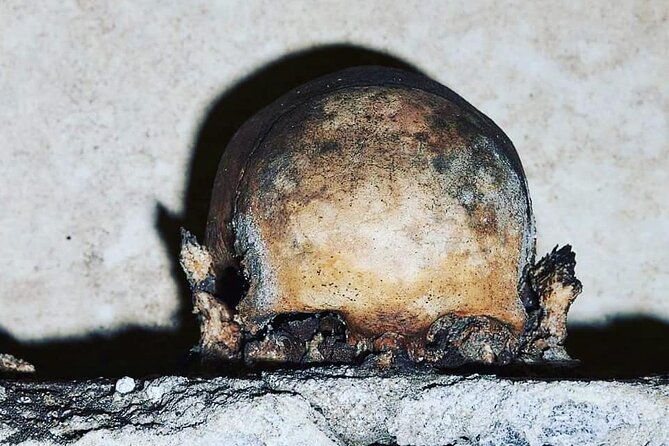
- The skull with ears is a local spiritual symbol: Neapolitans traditionally came to pray to it, believing its ears helped the soul hear prayers and intercede for favors.
- The church visit includes an underground cemetery: You see the small church and the lower area where many skulls are kept.
- Restoration is still underway: Preserving plaster is being removed in places to reveal frescoes beneath it.
- The stop takes about 15 minutes: It is easy to pair with other sights in Naples’ Decumanus neighborhood.
- English is offered, but confirm on arrival: One account describes an Italian-only tour followed by English questions with the guide.
- Sunday adds a useful nearby stop: A street close by may have local crafts on display and for sale on Sundays.
Why Santa Luciella is worth your time
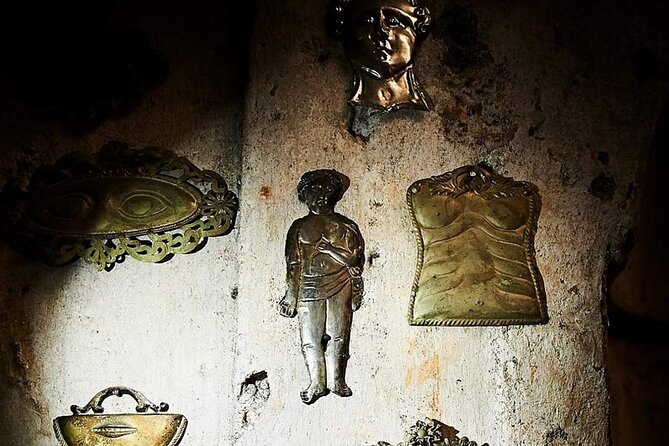
Naples has no shortage of grand churches, crowded lanes, and famous art. Santa Luciella offers something different. It is small, intimate, and tied to a very specific Neapolitan custom: the veneration of human skulls as intermediaries between the living and the dead.
That idea can sound strange if you meet it without context. In Naples, however, devotion to anonymous souls and human remains formed part of popular religious life. People prayed for the dead and hoped the dead might help them in return. The skull with ears became especially important because its unusual feature suggested that it could hear.
I like the way this makes the visit less about a macabre display and more about the relationship between prayer, memory, and local belief. You are not simply looking at old bones. You are seeing how ordinary people attached hope to a particular object and kept that tradition alive.
The site also gives you a look at a church that nearly disappeared from public life. Santa Luciella was neglected for about 30 years before the Breathe Art Association reopened it. Its work is not limited to putting a door back on the church. The association is using conservation to create employment for young people, which gives your admission a practical purpose as well as a cultural one.
A few more reviews worth comparing before you book
- Naples: Naples Underground Entry Ticket and Guided Tour
★ 4.4 · 21,781 reviews - Pompeii: Entry Ticket and Guided Tour with an Archaeologist
★ 4.8 · 19,459 reviews - Pompeii: Entry Ticket with Optional Audio Guide
★ 4.2 · 12,360 reviews
Entering the small Church Museum of Santa Luciella ai Librai
The official name is Chiesa Museo di Santa Luciella ai Librai. The name links the church to the nearby booksellers’ area, part of Naples’ old Decumanus neighborhood.
Do not expect a huge building with a long sequence of chapels. This is a compact church, and the visit moves quickly. That small scale is part of the appeal. A guide can point out details without sending you across a vast complex, and you can focus on the site’s oddest and most human stories.
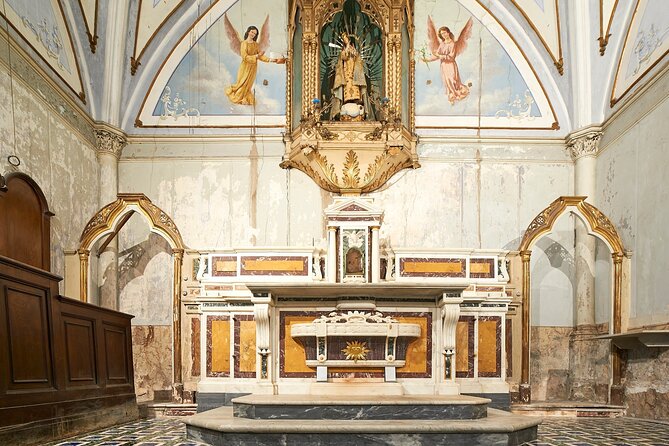
The church is still being repaired. Preserving plaster covers some areas, while restoration work reveals frescoes underneath. That means the building may not look finished, but the unfinished parts help you understand that you are seeing an active conservation project rather than a polished attraction prepared only for sightseeing.
I find that especially useful in Naples, where churches often carry layers of repair, neglect, and renewed care. At Santa Luciella, the work is visible. You get a sense of what it takes to bring a forgotten monument back into use.
The guide is an important part of the visit. The young guides connected with the association are praised for their enthusiasm, punctuality, and clear explanations. The quality of the storytelling matters here because the church is small. Without context, you would see a few rooms and skulls. With a good explanation, the site becomes a window into local belief.
Going below to the underground cemetery
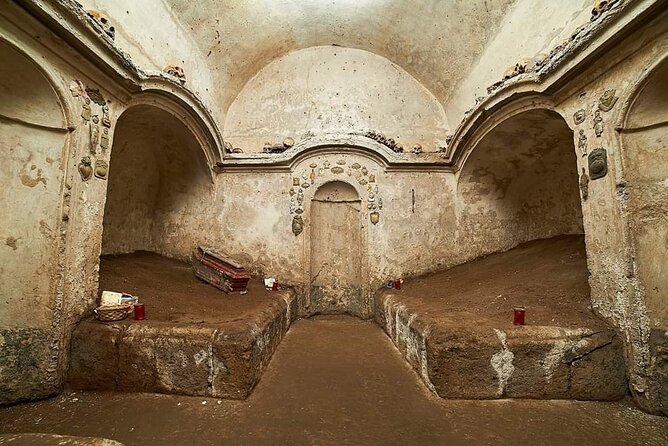
The visit continues into the underground cemetery. This is where the atmosphere changes. The church above gives you a religious setting, while the lower area brings you closer to the physical remains at the heart of the tradition.
Many skulls are kept here, but the point is not simply to count them. The guide explains the stories connected with the remains and the way people approached the dead through prayer. The cemetery is a place where religious practice and popular custom meet.
You should expect a short visit rather than a long archaeological tour. The advertised duration is approximately 15 minutes, and that is enough time for an introduction to the church, the cemetery, and the skull with ears. It is not enough time for a broad study of Naples’ entire relationship with death or for a detailed examination of every restoration feature.
That brevity is helpful if your day is full. Santa Luciella can be added to a walk through the Decumanus area without taking a large part of your schedule. It also means you may want to read a little about the tradition beforehand if you enjoy getting more from a brief guided stop.
The underground setting may not suit every visitor. If skulls and cemeteries make you uncomfortable, the appeal will be limited. The visit is cultural and religious in focus, but the remains are real, and the subject is direct.
The skull with ears and the belief behind it
The special skull is known for its ears, a feature that made it different from the others. Local people came to it to have their prayers heard. The belief was that the soul connected with this skull could act as an intermediary and help bring miracles or favors.
That is the detail that gives Santa Luciella its strong sense of place. You can find churches with relics and underground burial areas in many parts of Europe. The skull with ears is much more specific to this corner of Naples and to the way Neapolitans shaped religious practice around the dead.
I like the story because it is easy to understand even during a 15-minute stop. The skull’s unusual feature led to a practical idea: if it has ears, perhaps it can listen. If the soul can listen, perhaps it can carry a request. That simple chain of thought explains why this object became a point of reference.
The guide’s role is to present the belief without making it seem like a carnival trick. The best part of the visit is the balance between the physical object and the people who once prayed to it. You are learning about devotion, not just looking for something spooky.
A different sort of day out around Naples:
- Pompeii: Small Group Tour with an Archaeologist
★ 4.8 · 12,264 reviews - From Naples: Pompeii Ruins & Mount Vesuvius Day Tour
★ 4.3 · 11,459 reviews - From Naples: Sorrento, Positano and Amalfi Full-Day Tour
★ 4.6 · 10,988 reviews - From Naples: Sorrento, Positano & Amalfi Coast – Small Group Tour
★ 5.0 · 8,643 reviews
What the restoration tells you about Naples
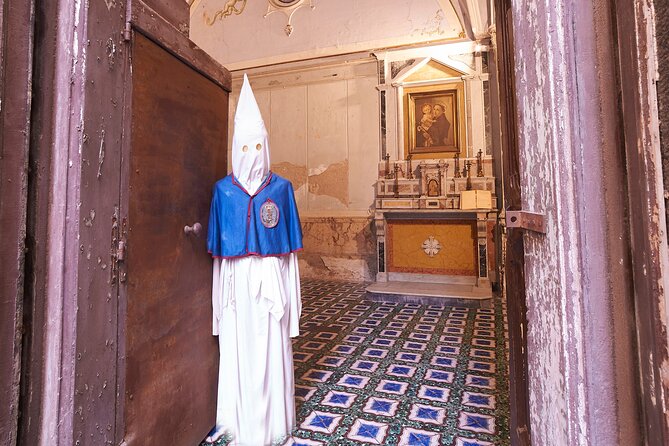
Santa Luciella is also a story about neglect and renewal. The church sat unused for three decades before the Breathe Art Association brought it back to the public.
The association’s approach matters. It aims to save monuments while creating jobs for young people. Your ticket therefore helps keep the church open and supports the people working to preserve it. For me, that gives this modest admission a better value than a quick photo stop with no wider purpose.
Restoration remains incomplete. Preserving plaster is still present in parts of the undercroft, and frescoes are being uncovered beneath it. You should not arrive expecting every surface to be restored or every room to look finished.
That said, unfinished work is not necessarily a weakness here. The church’s condition helps you see the process. You can appreciate that conservation involves patience, careful removal, and decisions about what to reveal and what to protect.
The most praised part of the visit is the combination of committed guides and a worthwhile cause. If you prefer large, fully restored monuments, Santa Luciella may feel too small. If you like places where the people running them are actively trying to save something, it has real appeal.
How the 15-minute format affects the visit
Fifteen minutes is a very short tour. You should treat Santa Luciella as a focused stop, not a major half-day activity.
That works well in three situations:
- You are already exploring the Decumanus neighborhood.
- You want an unusual cultural stop between larger sights.
- You have limited time but still want something beyond Naples’ headline attractions.
The short format keeps the visit easy to fit into a busy itinerary. It also lowers the risk of spending an hour on a subject that may not interest everyone in your group.
The trade-off is depth. You may leave wanting more detail about the cemetery, the church’s construction, the restoration, or the wider cult of the dead. A strong guide can make the 15 minutes feel full, but the schedule leaves little room for a slow examination of the site.
The available Friday entry windows are tightly arranged, with visits offered from 11:00 a.m. through 6:00 p.m. at set half-hour intervals. Since the opening schedule provided is for Fridays, check the exact time when you reserve. A timed visit is useful because it avoids uncertainty, but you should arrive with enough time to find the church.
Is the English guiding dependable?
English is listed as an offered language, which makes this visit easier for international visitors. Still, you should keep your expectations practical.
One visitor reported that the tour was conducted in Italian because most of the group spoke Italian. The guide then remained after the formal visit and answered questions from the English-speaking participants. That is a good recovery, but it is not the same as receiving the full presentation in English.
If the stories and explanations are the main reason you are booking, confirm the language when you arrive. You can also ask the guide to clarify the main points about the cemetery and the skull with ears. Since the tour is short, even a few missed explanations can make a difference.
Italian speakers should have an easier time. The site also suits visitors who are comfortable with a brief visual visit and a few key explanations rather than a long lecture.
Location and nearby plans in the Decumanus neighborhood
Santa Luciella is near public transportation and sits close to several worthwhile stops. The area around Naples’ Decumanus neighborhood is one of the best places to build a walking day because many sights are close together.
A nearby chapel with the famous veiled Jesus sculpture makes a natural pairing. The church is also close to a street where local crafts may be displayed and sold on Sundays. If you are planning a Sunday visit, this can add a more everyday, local feel to the outing.
The craft stalls are not part of the Santa Luciella ticket or formal tour, so treat them as a separate nearby activity. Still, the timing tip is useful. A weekday visit gives you the church and its cemetery, while Sunday may let you add a casual browse through local work afterward.
Because the church is small and the tour brief, avoid crossing Naples solely for this stop unless the subject truly interests you. It makes the most sense as part of a neighborhood route.
Price, value, and the direct-booking question
The listed price is $9.67 per person, with admission included. For a 15-minute visit, that may seem high at first glance. The value depends on what you want from Naples.
If you only measure minutes, the cost is not a bargain. If you value a guide, access to the underground cemetery, and support for an active restoration project, the price is easier to justify. You are paying for access to a small site that might otherwise remain closed, plus the explanation that makes the skull’s meaning clear.
One visitor reported paying 5 euros directly at the church instead of 6.50 euros through another booking method. The listed online price is different again, so prices may vary by booking channel or change over time. If saving money matters, check the official on-site price before deciding. The benefit of booking ahead is confirmation and a reserved time, which may matter when your Naples schedule is tight.
The experience is booked an average of 44 days ahead, suggesting that timed places can fill well before a visit date. That does not prove every time slot sells out, but I would not leave it until the last minute if Santa Luciella is important to you.
Free cancellation is available if you cancel at least 24 hours before the start time. Changes or cancellations inside that window are not refunded, and the tour requires a minimum number of participants. If the minimum is not reached, you are offered another date or experience, or a full refund.
Who should book Santa Luciella?
I would recommend this for you if you enjoy:
- Local religious customs rather than only famous monuments
- Small museums and churches with an unusual story
- Underground cemeteries and the history of death rituals
- Restoration projects that are still in progress
- Short stops that fit into a packed walking itinerary
- Supporting a nonprofit connected to youth employment
I would be more cautious if you want a long, polished museum visit or a guaranteed full tour in English. The church is small, the tour is brief, and the English arrangement may need checking.
Families and most sightseers can participate according to the available information, and service animals are allowed. Still, think about how each person in your group feels about skulls and underground burial spaces before booking.
Should you book the skull with ears tour?
Yes, if you are already near the Decumanus neighborhood and want a short, unusual look at Naples’ relationship with the dead. The skull with ears is memorable, the underground cemetery gives the visit a real sense of place, and the restoration work adds a worthwhile reason to spend your money here.
I would not build an entire day around it. Give Santa Luciella 15 minutes, then pair it with the nearby chapel with the veiled Jesus sculpture and, if your timing allows, the Sunday craft displays.
Book ahead if you need a set Friday time or want the reassurance of confirmation. Check the language and current direct price if those details matter most. For the right visitor, this is a small stop with an outsized story.
FAQ
Where does the Skull with the Ears tour take place?
It takes place at Chiesa Museo di Santa Luciella ai Librai in Naples, Italy.
How long does the visit last?
The guided visit lasts approximately 15 minutes.
What does the admission include?
Admission includes the guided visit to the church and the underground cemetery, including the skull with ears.
Is the tour offered in English?
English is listed as an available language. However, one account describes a visit conducted in Italian, with the guide answering questions from English-speaking participants afterward. Confirm the language when you arrive.
When is this experience available?
The provided schedule lists Friday entry times from 11:00 a.m. to 6:00 p.m. in set half-hour slots. Check your selected time when booking.
How much does the experience cost?
The listed price is $9.67 per person. A separate account reported lower prices when buying directly at the church, so check the current on-site price if you are comparing options.
Can I cancel for a full refund?
Yes. You can cancel for a full refund up to 24 hours before the experience begins. Cancellations or changes made less than 24 hours in advance are not refunded.
Just added around Naples
- From Naples/Salerno: Pompeii, Sorrento, and Positano Tour★ 4.5 · 250 reviews
- Pompeii: Day Tour of Pompeii and Vesuvius with Bus Transfer★ 4.2 · 250 reviews
- Ischia: Island Boat Tour with Neapolitan Lunch & Snorkeling★ 4.9 · 253 reviews
- Explore Naples & Pompeii in One Day – Guided Half-Day Tour★ 4.5 · 253 reviews
- Discover Pompeii: French Walking Tour of the Buried City★ 4.8 · 253 reviews
- Private Transfer from Naples to Sorrento or from Sorrento to Naples★ 5.0 · 254 reviews
- From Pompeii: Mount Vesuvius Guided Tour with Transfer★ 4.8 · 255 reviews
- Private Transfer from Naples to Positano or Amalfi or vice versa★ 5.0 · 265 reviews
Naples Tours, compared.
Naples Underground Entry Ticket and Guided Tour
Read our review →
Pompeii: Entry Ticket and Guided Tour with an Archaeologist
Read our review →
Pompeii: Entry Ticket with Optional Audio Guide
Read our review →
Pompeii: Small Group Tour with an Archaeologist
Read our review →
Sorrento, Positano and Amalfi Full-Day Tour
Read our review →
Sorrento, Positano & Amalfi Coast – Small Group Tour
Read our review →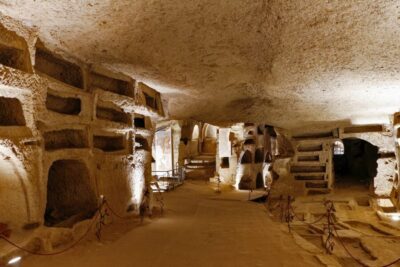
Catacombs of San Gennaro Entry Ticket & Guided Tour
Read our review →Browse the lists this tour appears in