
Review · ACCADEMIA GALLERY TOURS
Skip-the-Line Accademia Tour – See Michelangelo’s David!
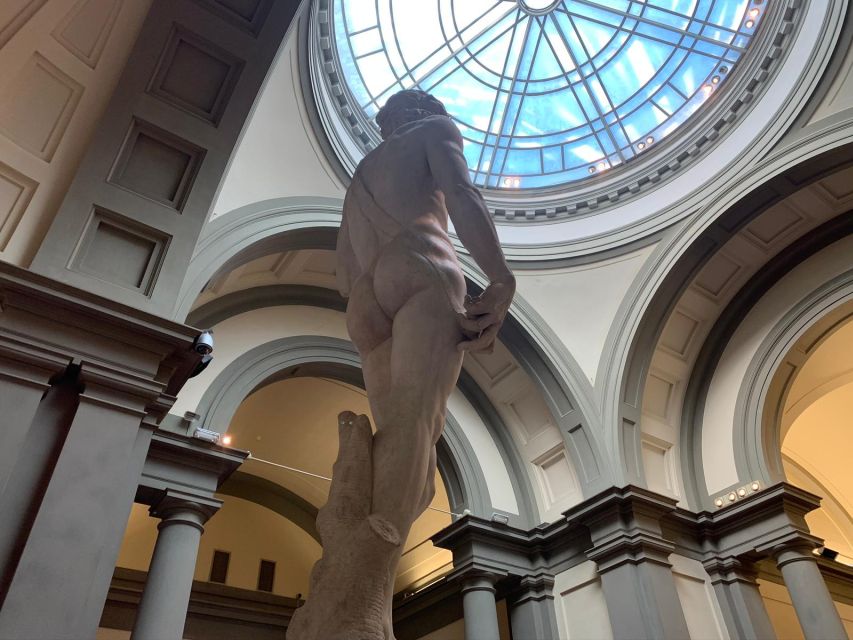
David rewards a closer look. This one-hour Accademia Gallery tour combines fast-track entry with a guide who explains the art, politics, and working methods behind Michelangelo’s most famous sculpture. I especially like the small groups, limited to nine people, and the way the tour goes beyond David to include the unfinished Prisoners, Medici instruments, and religious paintings. The main drawback is time: one hour passes quickly, and entry can still involve a short wait if the museum is crowded or ticket arrangements change.
I also like the helpful audio equipment, which lets you hear the guide over the museum noise, and the chance to remain inside after the guided visit. Guides such as Julia, Elizabeth, Francesca, Elia, and Irina have earned especially warm praise for clear storytelling and strong art knowledge. Still, headset interference has occasionally made listening harder, and a few scheduled tours have started later than planned.
In This Review
- Key points at a glance
- Why the Accademia matters in Florence
- Meeting at Via Cavour 21 Red
- Entering Accademia without the ordinary queue
- The Hall of Prisoners and Michelangelo’s working method
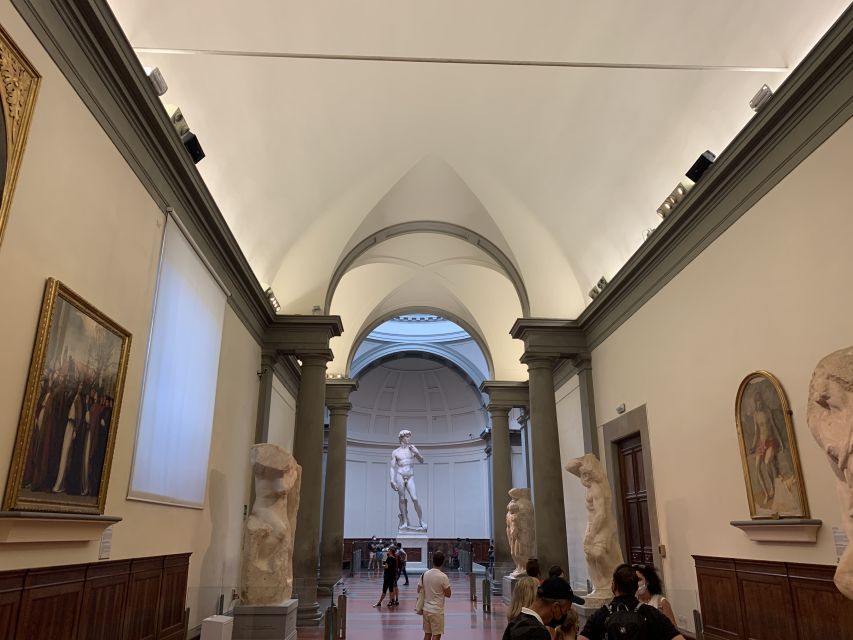
- Meeting David face to face
- Musical instruments from the Medici collection
- Paintings, altarpieces, and Florence’s changing art
- What the guide adds to the experience
- Is $70 a fair price?
- Who should book this one-hour visit?
- Booking details worth knowing
- Should you book the Accademia tour?
- FAQ
- How long does the Accademia tour last?
- Where is the meeting point?
- Is entry really skip-the-line?
- Is the tour conducted in English?
- What is included in the $70 price?
- Can I cancel or pay later?
Key points at a glance

- David is the star: See Michelangelo’s 5-meter marble hero at close range and learn why Florence adopted him as a civic symbol.
- The Hall of Prisoners adds real insight: Michelangelo’s unfinished figures show marble bodies emerging from the stone.
- Small groups help: With no more than nine participants, the guide can answer questions and keep the visit focused.
- The entry shortcut matters: Accademia queues can be long, especially in high season, so the separate tour entrance may save useful time.
- This is a focused visit: The guided portion lasts about 55 minutes, making it a good fit before another Florence plan.
- The price pays for more than admission: At $70 per person, you are paying for the ticket, queue access, guide, and interpretation, not just museum entry.
Why the Accademia matters in Florence
The Accademia Gallery is best known for David, but the museum gives you a compact lesson in Florence’s artistic development. You move from medieval and Byzantine-inspired religious works toward the more lifelike sculpture and painting of the Renaissance.
That setting matters because David is not simply a beautiful statue placed in a quiet room. Michelangelo created it for Florence at a time when the city was proud, politically tense, and eager to present itself as independent and strong. Your guide can connect the sculpture’s pose and expression to that civic meaning.
The museum is smaller than Florence’s Uffizi Gallery. That is good news if you have only a morning or afternoon, but it also means the collection can feel concentrated. After the major Michelangelo room, you will find many religious paintings and altarpieces. If you are mainly interested in David, the unfinished Prisoners, and musical instruments, the one-hour format keeps the visit from becoming tiring.
More Skip-the-Line Tickets in Florence
- Florence: Skip-The-Line Uffizi Gallery Timed Entry Ticket
★ 4.5 · 27,832 reviews - Florence: Michelangelo’s David Skip-the-Line Entry Ticket
★ 4.5 · 12,764 reviews - Florence: Skip-the-Line Uffizi Small Group Tour
★ 4.6 · 5,926 reviews
Meeting at Via Cavour 21 Red
The tour begins at Via Cavour 21 red, near the operator’s Florence office. Florence uses a confusing numbering system, with red numbers for businesses and black numbers for ordinary addresses. The meeting point is specifically the red number 21, located between black numbers 11 and 13.
That detail is worth taking seriously. Enter the address exactly as provided rather than searching only for an ordinary number 21. The group walks for about five minutes from the meeting point to the Accademia Gallery.
Arrive early. The meeting point can be easy to miss if you are watching only for black street numbers, and the group needs to move together for the timed entry. One past booking also involved a significant schedule change when tickets were not available at the original time. The company later arranged a different time, but that kind of change can disrupt lunch, luggage storage, or another museum booking.
Entering Accademia without the ordinary queue
The practical reason to book this tour is the separate entrance for prearranged groups. Accademia is one of Florence’s busiest small museums because David draws a steady stream of people all day. The regular line can stretch along the narrow street outside.
Skip-the-line does not always mean walking straight through without any pause. A short wait may still occur while staff check tickets or manage the flow of groups. One booking involved a 10 to 15 minute wait before entry, but that is very different from spending a large part of your Florence day in the ordinary queue.
The guide carries the admission arrangements and organizes the group before you enter. This is particularly useful if you are visiting Florence at the last minute and standard museum tickets are sold out. You still need to arrive at the correct time, though. Fast-track access does not protect you from missing the meeting point.
The Hall of Prisoners and Michelangelo’s working method
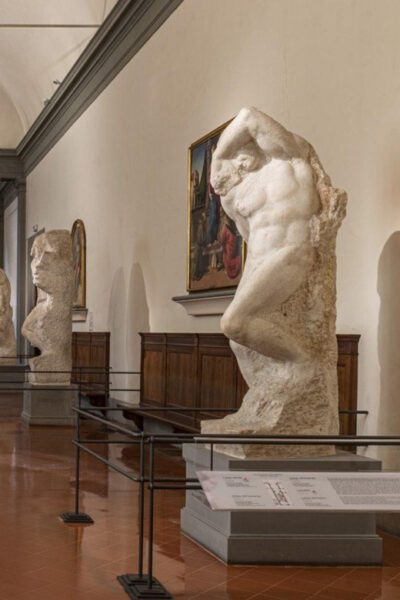
The route usually begins with the Hall of Prisoners, home to Michelangelo’s unfinished sculptures. These figures are often called the Prisoners or Slaves, and they look as if they are struggling to emerge from their blocks of marble.
This is one of the most valuable stops because it changes the way you look at David. Instead of seeing Michelangelo only as a master who produced perfect surfaces, you see the stages of his work and the tension between stone and human form. A good guide will point out the rough areas, the partial limbs, and the different levels of completion.
Guides including Julia, Elia, and Rosa have been praised for explaining the four Prisoners with unusual care. Rosa, in particular, has years of experience discussing David and Michelangelo, while Elia has been singled out for explaining the surrounding sculptures and their details.
The room can be crowded, so your guide may need to position the group carefully. This is where the small-group limit helps. A group of nine is easier to gather around a sculpture than a large tour party, and you have a better chance of hearing the explanation without constantly looking over someone’s shoulder.
More Accademia and David visits:
- Florence Accademia Gallery Tour with Entrance Ticket Included
★ 4.5 · 6,148 reviews - Florence: Accademia Gallery Guided Tour
★ 4.6 · 4,156 reviews - Skip the line: Uffizi and Accademia Small Group Walking Tour
★ 4.5 · 3,135 reviews - Florence: Skip-the-Line Accademia Guided Tour
★ 4.5 · 2,327 reviews
Meeting David face to face
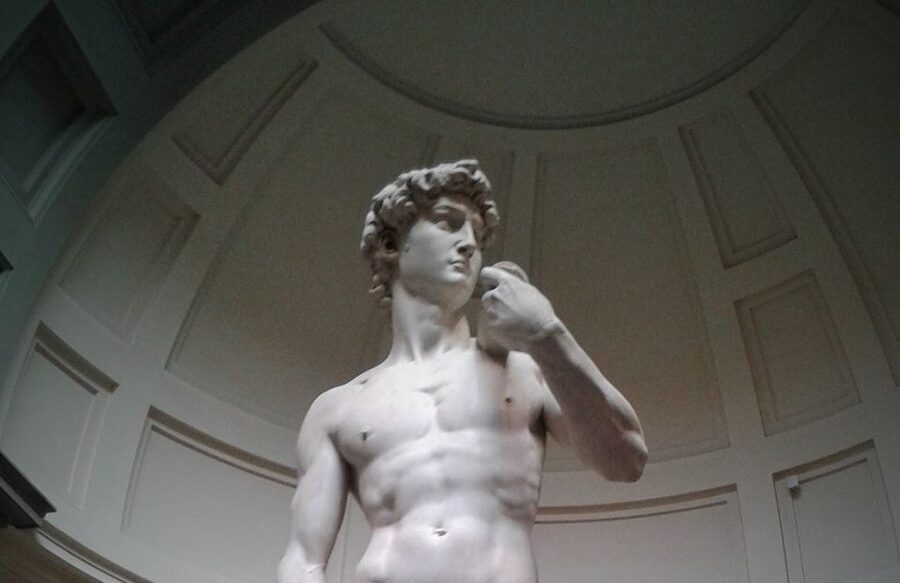
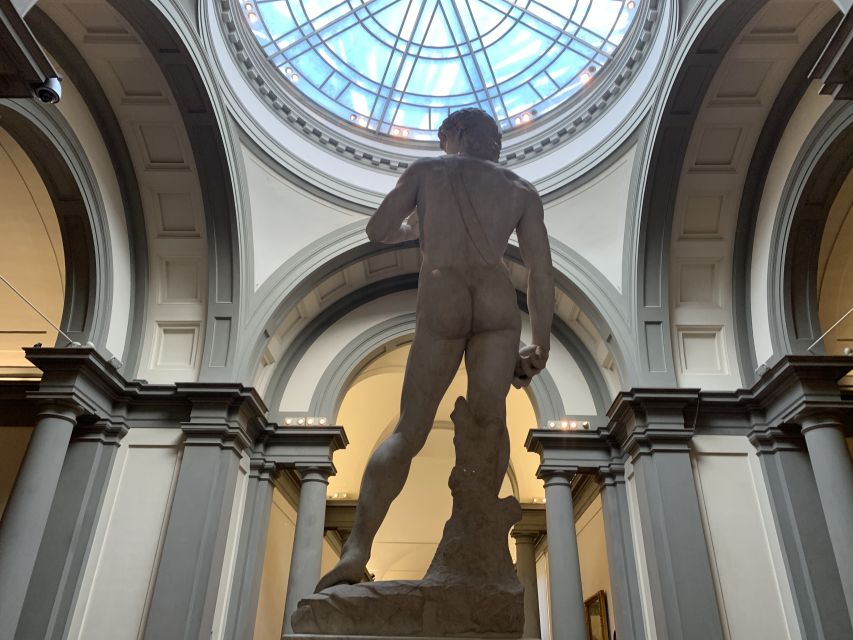
Then comes the reason most people book the tour: Michelangelo’s David. The statue is more than 5 meters tall, and its scale can surprise you even if you have seen countless photographs.
Your guide explains the biblical story of David and Goliath, but the stronger interpretation concerns David’s moment of decision. Michelangelo did not show the hero after victory. He showed him alert, tense, and ready, with the expression and posture of someone judging danger.
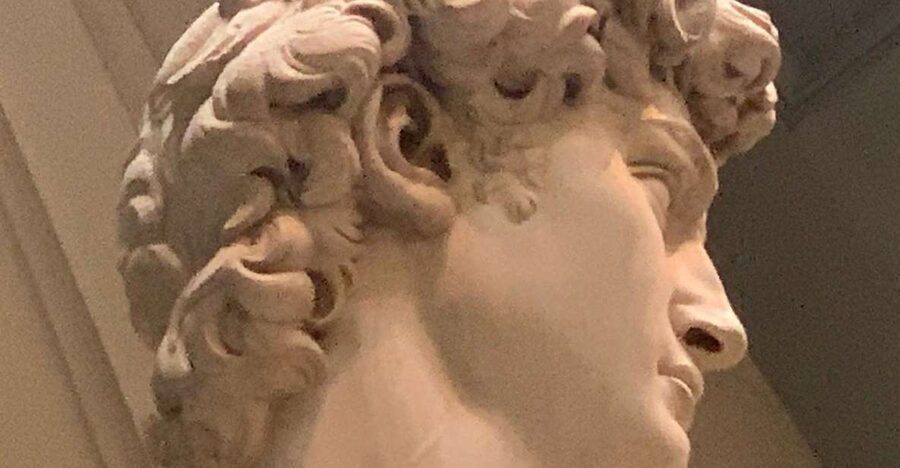
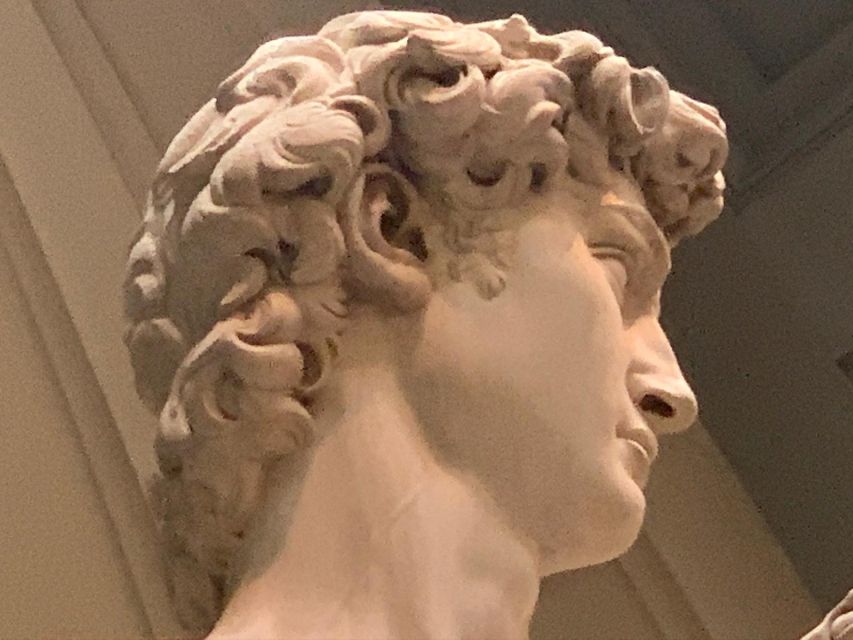
Look up at the head and hands. Their size helps the statue read correctly from below, and the large hands reinforce David’s readiness and physical power. The marble also reveals Michelangelo’s skill with anatomy, weight, balance, and the fall of the body.
This is where the guide adds real value. On your own, you can admire the polish and size of the statue. With someone like Elizabeth, Francesca, Thomas, or Irina explaining the symbolism and the political setting, you have more ways to understand why David became so important to Florence.
The tour allows time for photographs after the main explanation. Be considerate of the people around you, since the room remains busy, but do not feel rushed into leaving the museum as soon as the guided portion ends. You can stay and look around on your own after the tour.
Musical instruments from the Medici collection
The visit continues to the Musical Instruments Museum. This section is easy to overlook if you are focused only on David, but it gives the tour a welcome change of pace.
You may see rare pieces connected with the Medici collection, including Stradivari violins and early pianos. The instruments show how art, court life, craftsmanship, and music overlapped in Florence. The Medici were not simply collectors of paintings and sculpture. Music was part of the culture they supported and displayed.
Elizabeth has received particular praise for bringing this section to life and explaining the background of different instruments. If you enjoy design, woodworking, or the history of performance, this may be the part of the tour that surprises you most.
The museum’s musical collection is not enormous, so do not expect a full afternoon devoted to instruments. Within a short visit, however, it adds range and prevents the tour from becoming only a single-statue experience.
Paintings, altarpieces, and Florence’s changing art
The final portion touches on Byzantine-inspired paintings and religious altarpieces. These works may feel less immediately exciting than David, especially if you are not familiar with medieval art.
Give them a chance. Their rigid poses, gold backgrounds, and formal arrangements help show how Florentine art changed over time. Later Renaissance artists paid closer attention to natural movement, three-dimensional space, and individual expression. Seeing the earlier works first makes Michelangelo’s sculpture feel even more radical.
This section is also where the one-hour limit becomes noticeable. The guide can point out useful details, but there is not enough time for a full survey of every room. If you want to study the paintings carefully, plan to remain inside after the guided visit.
One visitor felt that the gallery became repetitive thematically once the Michelangelo rooms and instruments were covered. That is a fair warning. The Accademia is ideal for a focused Florence visit, but it is not the place to spend an entire day if your main interest is varied European painting.
What the guide adds to the experience
The strongest part of this tour is the live explanation. The guides are not simply escorting you to David and reading a few dates. The best ones connect Michelangelo’s art to Florence’s politics, artistic training, materials, patrons, and religious culture.
Elizabeth has been praised for storytelling that kept both adults and children engaged. One family found that her moderate speaking pace and clear explanations held the attention of children aged six and nine. Francesca has been described as warm, expressive, and able to make the group feel involved in the story.
Other guides, including Julia, Elia, Laura, Anna, and Francesco, have earned praise for pointing out small details you might miss alone. Francesco’s explanations of the sculptures and Florence’s past have been especially well received, while Laura has been noted for handling crowds patiently and drawing attention to easily missed features.
The audio equipment is useful in a crowded gallery. You receive a headset so you can stay a short distance from the guide while still hearing the commentary. One practical weakness is that interference has occasionally affected the sound. If you cannot hear clearly, tell the guide at once instead of quietly missing half the tour.
Is $70 a fair price?
At $70 per person, this is not the cheapest way to enter Accademia. If you can find a standard museum ticket at a convenient time and are happy to read about David yourself, the tour costs more than admission alone.
The better question is what your time is worth. You are paying for skip-the-line arrangements, a professional English-speaking guide, audio equipment, and a compact art lesson. During busy periods, avoiding a long queue can protect several valuable hours in Florence. The guide also helps you understand works that might otherwise look like a series of marble statues and religious panels.
The value is strongest for first-time visitors, people with only a short stay, and anyone who tried to book directly but found the museum sold out. It is weaker on days when the museum offers free admission. One person reasonably questioned paying the usual tour price when the entry ticket itself was free. You should check the museum calendar and compare the total cost with your other options before booking.
The small group also improves the value. A nine-person maximum is not a private tour, but it is much easier to follow than a large party. In some cases, very small attendance has resulted in a nearly private experience.
Who should book this one-hour visit?
I would choose this tour if you want to see David but do not want to build your Florence day around a museum queue. It suits first-time visitors who want context without committing to a long art lecture.
Families can benefit from the short length and the visual focus on David and the Prisoners. The guide’s stories can make the sculptures easier for children to understand, though very young children may still find the painting rooms slow.
It is also a good fit for travelers with limited mobility because the activity is listed as wheelchair accessible. You should still confirm any personal access needs before booking, since the provided information does not detail every route or facility inside the gallery.
Art lovers who want detailed time with every painting may prefer a longer museum visit. This tour gives you a guided introduction, not a complete study of the collection. The ability to stay inside afterward helps, but your own exploration time depends on your schedule and the museum’s conditions.
Booking details worth knowing
The tour lasts one hour, including roughly five minutes on foot to the museum and about 55 minutes inside with the guide. It is conducted in English and is limited to nine participants.
Hotel pickup, drop-off, food, and drinks are not included. You need to make your own way to Via Cavour 21 red, and you should allow extra time to find the correct red street number.
Free cancellation is available up to 24 hours before the tour for a full refund. You can also reserve now and pay later, which is useful when your Florence schedule is still changing.
Should you book the Accademia tour?
Book it if David is a priority and your time is tight. The separate entrance, small group, headset, and strong guide commentary make the extra cost easier to justify, especially when standard tickets are gone or queues are long.
Skip it if you already have a confirmed museum ticket, prefer exploring alone, or want to spend several hours studying paintings. For most first-time Florence visits, though, this is a sensible one-hour investment. You get David, the Prisoners, Medici instruments, and a clearer sense of why Florence’s art changed so dramatically, without losing half your day in line.
FAQ
How long does the Accademia tour last?
The activity lasts one hour. About five minutes are spent walking from the meeting point to the Accademia Gallery, followed by approximately 55 minutes for the visit and guided tour.
Where is the meeting point?
Meet at Via Cavour 21 red. The red number is between black numbers 11 and 13, so make sure you are looking for the red business number rather than an ordinary black street number.
Is entry really skip-the-line?
The tour uses a separate entrance for groups with prearranged tickets. A short wait may still occur while tickets are checked or visitor flow is managed, but you avoid the regular public queue.
Is the tour conducted in English?
Yes. The tour has a live English-speaking guide, and audio equipment is provided so you can hear the commentary inside the gallery.
What is included in the $70 price?
The price includes Accademia Gallery admission, skip-the-line access, a professional guide, the guided visit to Michelangelo’s David and other works, and audio equipment. Food, drinks, and hotel transportation are not included.
Can I cancel or pay later?
You can cancel up to 24 hours in advance for a full refund. Reserve now and pay later is also available, allowing you to keep your plans flexible.
More Fast-Track Entries
- Florence: Accademia Gallery & David Skip-the-Line Ticket
★ 4.6 · 1,905 reviews - Florence: Skip-the-Line Duomo, Baptistery, Giotto Bell Tower
★ 4.7 · 1,721 reviews - Skip the Line: Florence’s Accademia Gallery Priority Entrance Ticket
★ 4.0 · 1,693 reviews - Florence: Accademia Gallery Tour with Skip-the-Line Tickets
★ 4.7 · 1,484 reviews
Just added around Florence
- Palazzo Vecchio guided experience with entrance ticket★ 4.5 · 249 reviews
- Lucca Bikes and Bites with food tastings for Small Groups or Private★ 5.0 · 249 reviews
- Perfume Masterclass in Florence: Make your Own Personal Fragrance★ 4.5 · 253 reviews
- Florence Oltrarno Neighborhood Food & Wine Dine Around★ 5.0 · 253 reviews
- Florence: Cathedral, Dome and Terraces Guided Tour★ 4.5 · 253 reviews
- Florence: 1.5-hour Santa Croce Guided Experience★ 4.8 · 254 reviews
- Florence: Pitti Palace and Palatina Gallery Ticket and Tour★ 4.9 · 255 reviews
- Private Florence Tour by Golf Cart ETukTuk with Audio Guide★ 4.0 · 256 reviews
Accademia Gallery Tours, compared.
Florence Accademia Gallery Tour with Entrance Ticket Included
Read our review →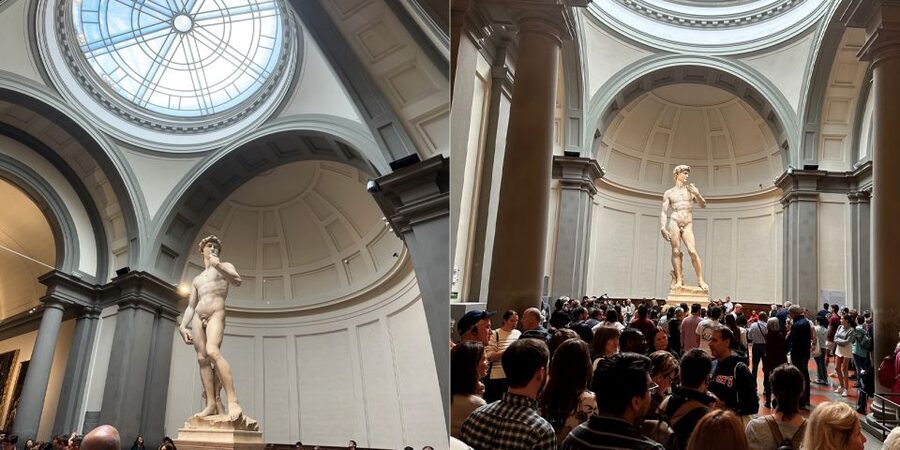

Skip the line: Uffizi and Accademia Small Group Walking Tour
Read our review →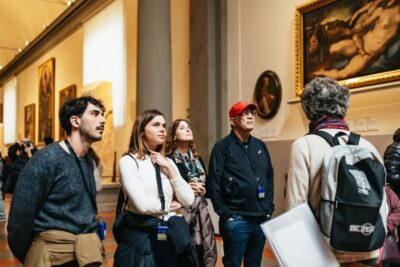
Accademia Gallery Guided Tour with Entry Ticket
Read our review →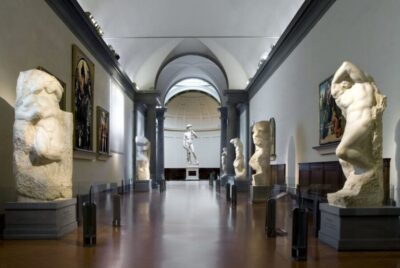
Uffizi Gallery and Accademia Gallery Guided Tour
Read our review →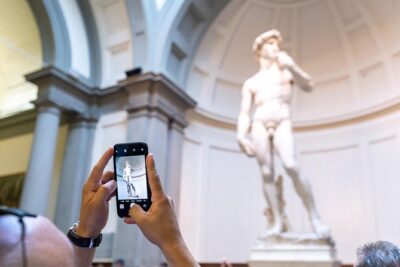
Michelangelo’s David, Accademia & Uffizi Small Group Tour
Read our review →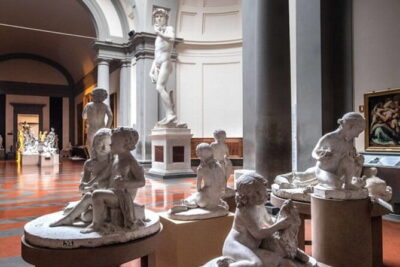
Accademia & Uffizi Museums: Small Group Tour with Optional Lunch
Read our review →Browse the lists this tour appears in