
Review · E-BIKES
Rome: Top Highlights & Hidden Gems Tour by Cannondale E-Bike
Rome rewards two speeds. This four-hour Cannondale e-bike tour links the city’s headline sights with quiet lanes, small squares, and overlooked corners that are easy to miss on foot. You cover 14 kilometres without giving your legs a full Roman workout.
I like the mix of major monuments and local-feeling streets, and I like the small group size, capped at 10 people. Guides such as Oscar, Fabio, Bita, Chris, and Meghan are repeatedly praised for clear stories, good humor, and careful riding. The main consideration is traffic: Rome is still Rome, and some busy crossings and crowded streets can feel lively on two wheels.
I would use this tour early in a Rome stay. It gives you a useful city overview, lets you mark places for a longer return visit, and takes you to viewpoints and back lanes that buses cannot reach. At $85 per person, it is not the cheapest way to see Rome, but the quality bicycle, guide, route planning, and amount of ground covered make it a strong value for many first-time visitors.
In This Review
- At a glance: what makes this Rome bike tour useful
- Why an electric bike works so well in Rome
- Starting near the Colosseum on Via Labicana
- Colosseum, Roman Forum, and the Imperial Fora
- Piazza Venezia and the Vittoriano monument
- Trevi Fountain and the Spanish Steps
- The Pincio terrace and Villa Borghese
- Piazza del Popolo and the central piazzas
- Piazza Navona and the Pantheon
- The Jewish Ghetto, Portico di Ottavia, and Theatre of Marcellus
- Safety, group size, and the pace of the ride
- Families, fitness, and practical limits
- Is $85 a fair price?
- Who should book this ride?
- FAQ
- How long is the Rome e-bike tour?
- How far does the tour travel?
- Where does the tour start and finish?
- What language can the guide speak?
- How many people are in the group?
- Is a helmet included?
- Can young children join the tour?
- Can I cancel the booking?
- Should you book it?
At a glance: what makes this Rome bike tour useful
- 14 kilometres in four hours: You see a large slice of central Rome without spending the day on foot.
- Cannondale electric bicycles: The motor helps with Rome’s hills, including the climb toward Villa Borghese.
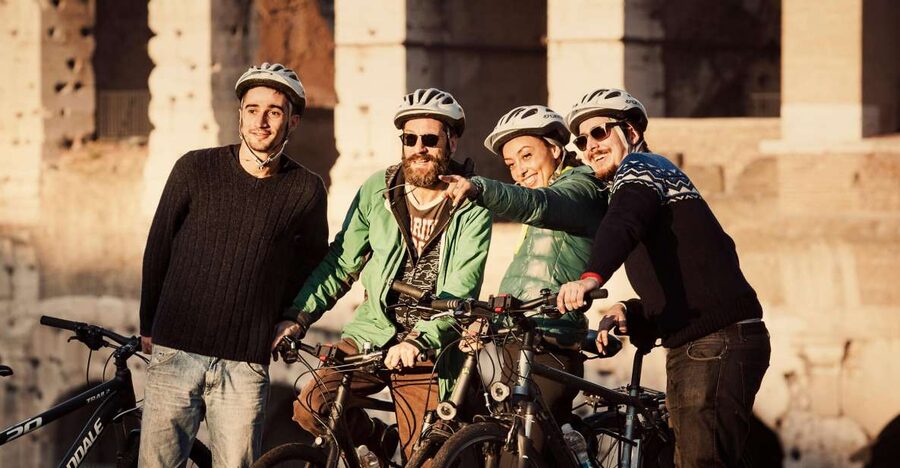
- Small group of up to 10: A guide can keep an eye on the group and answer questions without turning the ride into a parade.
- Big sights plus quiet routes: The tour includes the Colosseum, Trevi Fountain, Pantheon, and Roman Forum, but uses smaller streets where possible.
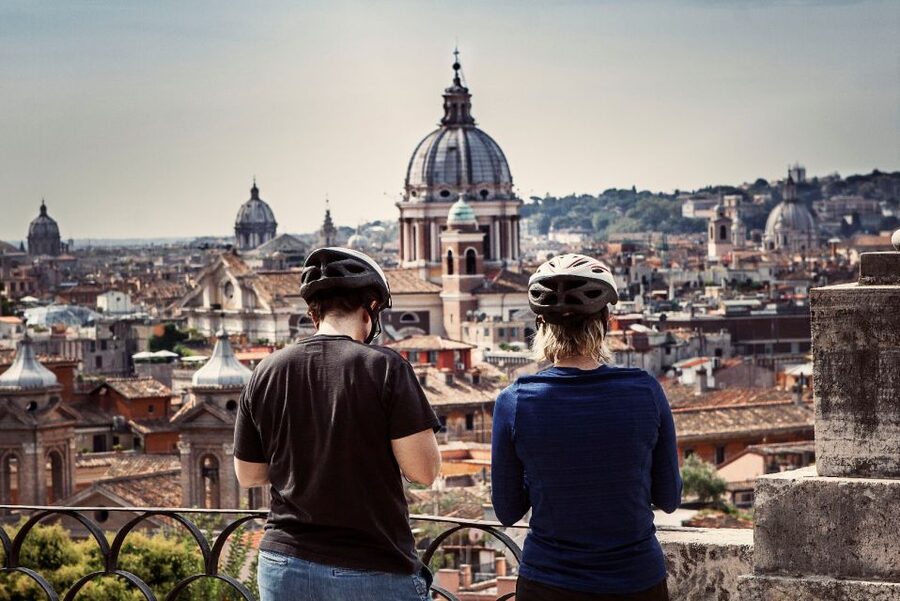
- A scenic Pincio stop: The view over Rome from the Pincio terrace gives the ride a welcome pause and a different view of the city.
- Useful for families: Child seats are available for ages 1 to 4, tag-along extensions for ages 5 to 8, and appropriately sized e-bikes for children aged 9 and older.
Why an electric bike works so well in Rome
Rome is spread across a wide central area, and its famous sights do not line up in one neat walking route. You can walk from the Colosseum to the Trevi Fountain, but add the Spanish Steps, Piazza del Popolo, Villa Borghese, the Jewish Ghetto, and the Imperial Fora, and your feet begin sending strongly worded messages.
An e-bike changes the equation. You still pedal, but the motor takes the sting out of hills and longer stretches. One rider described the bikes as effortless, while another specifically appreciated the extra power on Rome’s inclines. That matters most near the Pincio and Villa Borghese, where a standard city bike can turn a pleasant outing into a sweaty one.
The bikes are Cannondales with anti-puncture tires, and the equipment is described as clean and well maintained. A helmet is required, and each rider gets a handlebar bag plus a biodegradable bottle of water. The tour uses a leisure pace, though it is classed as intermediate when a child seat or child extension is fitted.
You should still be comfortable balancing, braking, and following a group. Rome’s roads can be crowded, and even a carefully planned route includes traffic and pedestrians. The guide leads from the front and watches the group, but you are riding in a real city, not a closed cycling park.
More Bike Tours in Rome
- Rome EBike Tour: Appian Way, Catacombs & Roman Aqueducts
★ 5.0 · 1,766 reviews - Rome: Appian Way, Catacombs, & Roman Aqueducts E-bike Tour
★ 4.9 · 1,421 reviews - Rome City Small Group Bike Tour with quality Cannondale EBike
★ 5.0 · 1,380 reviews
Starting near the Colosseum on Via Labicana
The tour begins at Via Labicana 49, a few minutes on foot from the Colosseum. This is a sensible starting point because the ancient amphitheater becomes your first major landmark, and the surrounding streets quickly put you in the middle of Rome’s old and modern mix.
Expect time at the shop to get fitted to the right bike and receive a safety briefing. A patient fitting matters, especially for children and shorter riders. One rider noted that the guide took care while the group found the right bike sizes, and the equipment team has also been praised for being helpful at the start.
The tour does not include entry into the Colosseum or other monuments. The stops are sightseeing visits from outside, with the guide explaining what you are seeing and leaving you with a clear sense of which sites deserve a separate indoor visit.
Colosseum, Roman Forum, and the Imperial Fora
The Colosseum is an excellent opening stop because it gives you Rome’s most recognizable face right away. Your guide can set the ancient amphitheater in context before the group moves toward the Roman Forum and Imperial Fora.
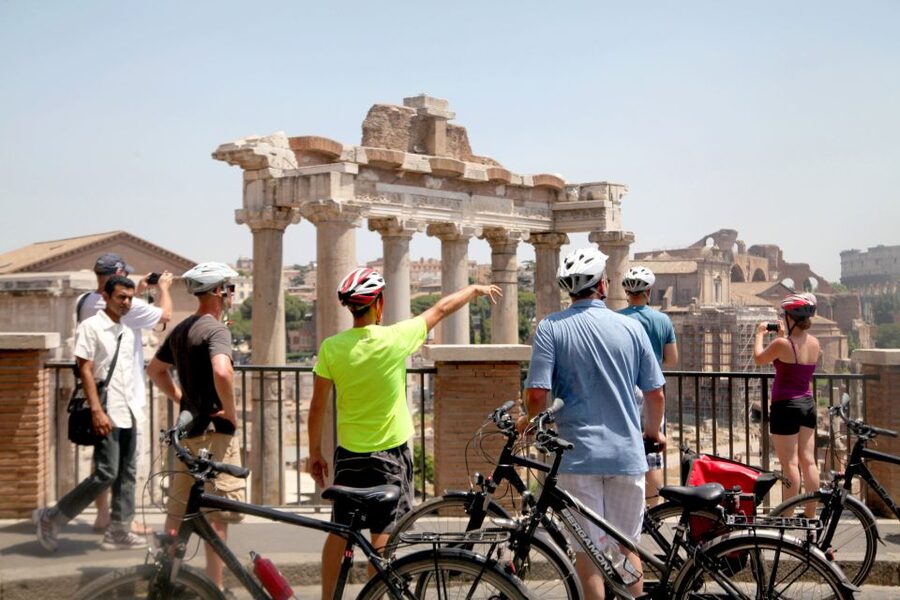
The Forum area is best understood from a viewpoint rather than rushed through on a bicycle. The route includes a panoramic view of the Roman Forum, allowing you to look across the ruins and picture how this valley once functioned as the center of Roman public life.
The Imperial Fora add another layer. These were built by successive emperors as monumental public spaces, and the remains stretch along the broad corridor beside today’s traffic. Seeing the ruins from several angles helps you understand their scale better than a single quick stop.
This portion is especially useful if you plan to return for a full archaeological visit. The bike tour gives you the basic map and story, but it cannot replace the time needed to walk through the Colosseum or Forum grounds. Think of it as a smart introduction, not an admission ticket.
Piazza Venezia and the Vittoriano monument
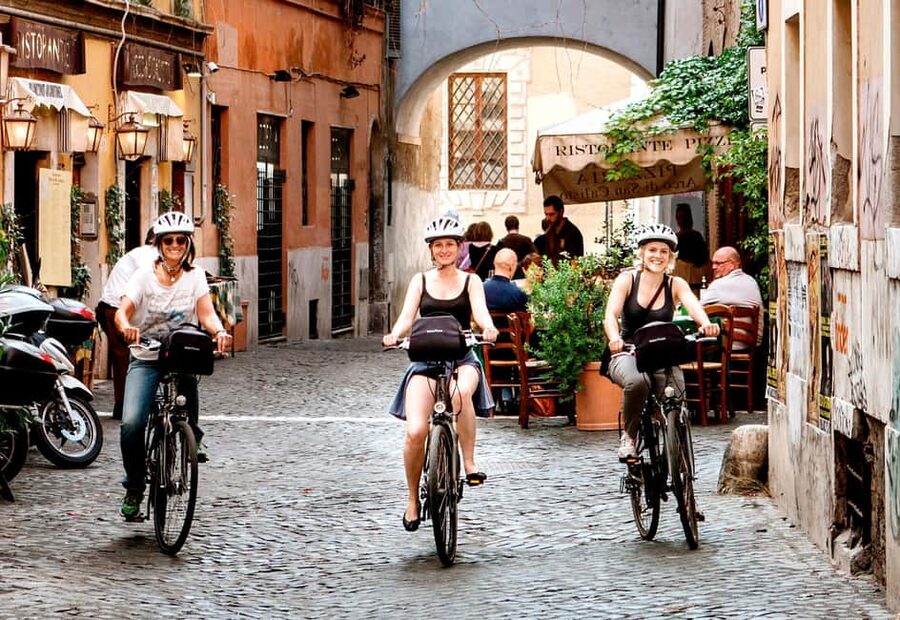
From the ancient center, the route reaches Piazza Venezia and the huge white Vittoriano monument. The square is one of Rome’s major traffic hubs, so this is likely one of the points where you need to pay close attention to the guide and stay with the group.
The Vittoriano can look almost startlingly bright against Rome’s older stone. It honors Victor Emmanuel II and the unification of Italy, giving the tour a useful shift from imperial Rome to the modern Italian state.
This is not a quiet stop, but it helps connect the city’s periods. You move from ancient political power to the creation of modern Italy in a short stretch. The guide’s explanation is what makes the stop worthwhile, since the monument’s scale alone does not tell you why it matters.
More E-Bike Tours in Rome
- Rome by Night – Ebike Small Group Tour – Food and Wine (Option)
★ 5.0 · 1,275 reviews - Rome:Appian Way E-bike Tour with Catacombs, Aqueducts & Food
★ 4.9 · 1,210 reviews - Rome: E-Bike Night Tour with Food and Wine Tasting
★ 4.9 · 1,131 reviews - Appian Way, Catacombs and Aqueducts Park Tour with Top E-Bike
★ 5.0 · 735 reviews
Trevi Fountain and the Spanish Steps
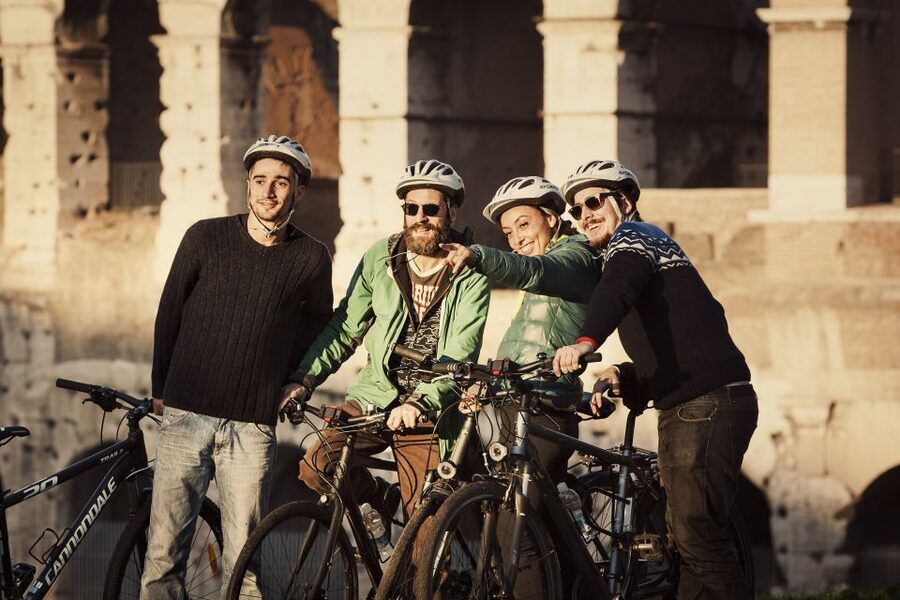
The Trevi Fountain is one of the tour’s most familiar stops. Arriving by bicycle means you can get close to the center of Rome’s sightseeing district without spending the whole day walking between major attractions.
Do not expect a private moment here. The fountain is usually one of the city’s most crowded places, and bicycles will be parked while you look, listen, and take photographs. The advantage is not solitude. It is efficiency, plus the chance to hear the story behind the fountain before moving on.
The Spanish Steps bring another famous Roman setting. The staircase links Piazza di Spagna with the upper streets, and the surrounding area has some of the city’s best-known shopping and people-watching. You will not ride up the steps, of course, but the stop fits naturally into the route between the Trevi area and Piazza del Popolo.
These two sights are a good example of the tour’s purpose. You see them, learn why they matter, and then decide if you want to return later for a slower visit. If your main goal is long photo sessions at each landmark, four hours will feel tight. If your goal is a broad first look, the timing works well.
The Pincio terrace and Villa Borghese
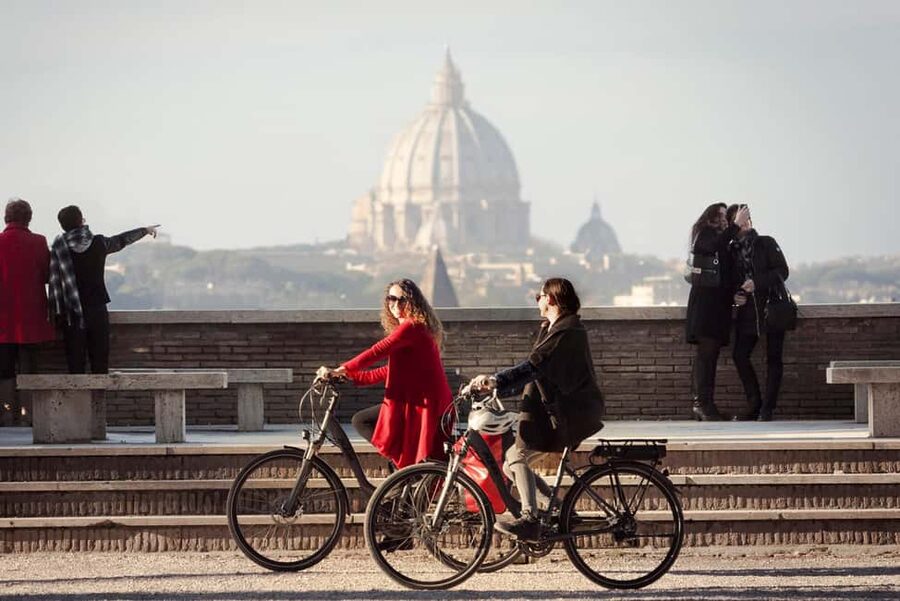
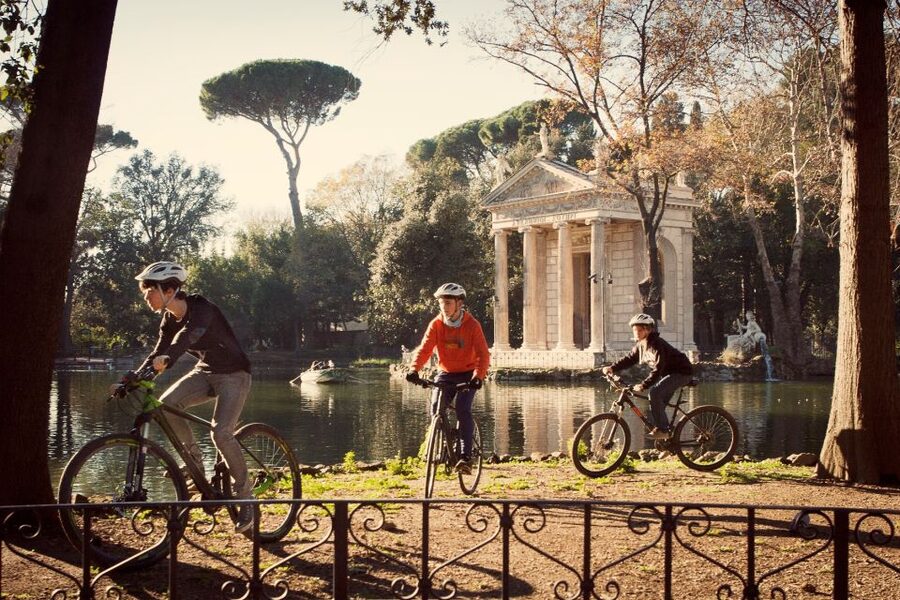
The climb toward Villa Borghese is where the electric motor earns its keep. The park offers a break from the hard stone and traffic of the central streets, while the Pincio terrace provides one of the tour’s best views over Rome.
The view is valuable because it changes your sense of the city. From street level, Rome can feel like a series of separate piazzas and ruins. From the terrace, you see the domes, rooftops, and broad sweep of the historic center in one frame.
Several riders singled out the park and view as places they would not have found alone. That is a real strength of a route designed by local guides. A map can show you the Colosseum and Trevi Fountain easily enough, but it may not lead you to a useful overlook at the right point in the day.
The park also offers a little breathing room. In hot weather, guides have been praised for stopping in the shade and adjusting the ride to the conditions. A late afternoon departure can be a smart choice during summer. One rider especially liked the 4 p.m. start because the city was cooler.
Piazza del Popolo and the central piazzas
Piazza del Popolo is a broad, elegant square at the northern edge of the historic center. It is less cramped than Trevi and gives the group more room to pause and take in the layout.
The square is also a good transition point after Villa Borghese. You get the open park and high view first, then return to the city’s monumental streets. The route’s value comes from these changes of mood, not simply from checking off names.
From here, the ride threads through smaller streets and alleys. The exact turns can change because Rome sometimes closes streets for public celebrations or city events. The operator may substitute one or more sights on those days, so the published list should be treated as the planned route rather than an absolute guarantee.
Piazza Navona and the Pantheon
Piazza Navona is one of Rome’s most enjoyable public spaces, built over the former Stadium of Domitian. Its long oval shape still reflects that earlier athletic ground, while fountains and Baroque façades give it the look of a grand outdoor room.
The guide’s explanation is useful here because the square’s shape is easy to miss when you are focused on fountains and cafés. You get both the ancient footprint and the later Roman design in one stop.
The Pantheon follows naturally. Its ancient structure and enormous dome make it one of the most rewarding sights on any first Rome visit. The tour provides outside sightseeing rather than an interior visit, but a guide can point out the building’s place in the city’s long architectural story.
I would make a note to return to both Piazza Navona and the Pantheon on foot. The bike tour gives you the orientation, while a later visit lets you linger, look upward, and explore nearby streets without worrying about holding up a group.
The Jewish Ghetto, Portico di Ottavia, and Theatre of Marcellus
The route becomes less predictable in the Jewish Ghetto. This part of Rome has a quieter, more intimate feel than the big landmark squares, and the Portico di Ottavia offers a striking example of ancient remains folded into the modern city.
The Theatre of Marcellus continues that theme. It is an ancient Roman theater, but the surrounding buildings show how Rome has reused and lived beside its old structures for centuries. This is the kind of stop that benefits from a guide because the remains are not always obvious at first glance.
The Ghetto section also helps balance the tour. You are not moving only between postcard sights. You are seeing how Rome’s history appears in ordinary streets, corners, and building lines. The route’s smaller lanes are chosen not just to avoid traffic, but to give you a closer look at how the city feels between the monuments.
Safety, group size, and the pace of the ride
Safety is one of the strongest reasons to book this rather than rent a bicycle on your own. Guides have been repeatedly praised for keeping everyone together, choosing calmer back streets, and watching carefully at busy points.
That does not mean every moment is calm. One rider found the traffic and crowds a little crazy, while still feeling safe because the guide stayed attentive. Another described the group as little ducklings being carefully shepherded through Rome. That is a fair picture: you need to follow instructions and stay alert, but you are not left to solve Rome’s traffic alone.
A maximum of 10 participants is a useful limit. It keeps the group small enough for the guide to monitor and makes stops more manageable. A minimum of four participants applies. If that number is not reached, you are offered an alternative tour or a full refund.
The pace is designed to cover ground without leaving you drained. Guides have been praised for explaining sites in detail while keeping the ride moving. The best guides, including Fabio, Oscar, Chris, Bita, and Meghan, are described as warm, funny, attentive, and good at answering questions. Your guide will vary, but the repeated praise suggests that the human side of the tour is a major part of its value.
Families, fitness, and practical limits
Families can use this tour, but you should choose the bike arrangement carefully. Babies under 1 year are not allowed. Children aged 1 to 4 can ride free in a child seat rated up to 22 kilograms, or 49 pounds.
For ages 5 to 8, a child extension, or tag-along, is provided. Children aged 9 and older can ride independently on a properly sized e-bike. With a child seat or extension, the ride is classed as intermediate, so parents should be comfortable managing a longer outing and city riding.
The equipment has a total weight limit of 136 kilograms, or 300 pounds. Helmets are mandatory for everyone. The handlebar bag is handy for small essentials, but you should keep your larger luggage elsewhere.
Bring comfortable clothing and shoes suitable for four hours of riding. Water is supplied, and guides have provided rain ponchos when wet weather was expected, though you should not rely on that for every departure. In hot weather, an afternoon start may be more pleasant than riding at midday.
Is $85 a fair price?
At $85, this is a mid-range guided activity rather than a bargain rental. You are paying for four hours, a local guide, a maintained Cannondale e-bike, helmet, water, route planning, and the ability to see far more than you could comfortably cover on foot.
The comparison that matters is not only bike rental cost. A rental bike gives you freedom, but you must plan the route, navigate traffic, find safe places to stop, and work out what you are looking at. Here, the guide handles those tasks and adds stories, historical context, safety support, and restaurant suggestions, which one rider found useful.
The tour is particularly good value for a first day or two in Rome. You see the major areas, identify places that deserve a longer visit, and gain a working map of the center. It is less valuable if you have already spent several days exploring every listed sight or if you want extended indoor visits.
Free cancellation up to 24 hours ahead and the option to reserve now and pay later make the booking less rigid. Starting times vary, so check the available departure before you commit your schedule.
Who should book this ride?
I would recommend it to first-time Rome visitors, active couples, families with older children, and anyone who wants a broad orientation without a long walking day. It also suits people who enjoy history but prefer short explanations at many places instead of one long lecture inside a single monument.
It is a good match for travelers who are nervous about cycling in Rome but still want to try it with a guide. The route uses small streets and lanes where possible, and the group structure adds support.
I would hesitate if you dislike traffic, have no comfort on a bicycle, or want to spend most of your time inside the Colosseum, Forum, or Pantheon. You should also think twice if you want a slow photographic tour. This is a sightseeing ride with frequent stops, not a private custom itinerary.
FAQ
How long is the Rome e-bike tour?
The tour lasts four hours.
How far does the tour travel?
The route covers approximately 14 kilometres, or 8.5 miles.
Where does the tour start and finish?
It starts and ends at the operator’s shop at Via Labicana 49, a few minutes’ walk from the Colosseum.
What language can the guide speak?
Guides may lead the tour in English, Italian, Spanish, French, German, or Dutch.
How many people are in the group?
The group is limited to 10 participants. A minimum of four participants is required.
Is a helmet included?
Yes. A helmet is included and wearing one is mandatory.
Can young children join the tour?
Infants under 1 year cannot join. Children aged 1 to 4 can use a child seat, children aged 5 to 8 can use a tag-along extension, and children aged 9 and older can ride an appropriately sized e-bike.
Can I cancel the booking?
Yes. You can cancel up to 24 hours before the tour for a full refund. You can also reserve now and pay later.
Should you book it?
Book this tour if you want to see Rome’s major sights, get a scenic overlook, and reach quieter corners in one well-organized half-day. The e-bike makes the hills manageable, the small group keeps the ride personal, and the guides bring the history to life without making the route feel like a classroom.
The tradeoff is simple: you gain range and orientation, but you give up long visits inside the monuments and must accept some city traffic. For $85, I think it is a worthwhile introduction to Rome, especially near the start of your stay. Use it to learn the city’s shape, then return on foot to the places that catch your imagination.
More Electric-Bike Routes
- Appian Way & Aqueducts small group e-bike tour(catacombs & food)
★ 5.0 · 531 reviews - Rome:Appian Way E-bike Tour, Catacombs, Aqueducts & Transfer
★ 4.9 · 404 reviews - Rome: E-Bike Sunset Tour with Pizza Option
★ 4.8 · 400 reviews - Rome by Night E-Bike Tour with Pizza Option
★ 5.0 · 350 reviews
More Rides on Two Wheels
- Appian Way Aqueducts Bike Tour (Catacombs & Lunch Option)
★ 5.0 · 975 reviews - Rome: Appian Way E-Bike Tour Catacombs, Aqueducts & Picnic
★ 4.6 · 727 reviews - Rome: Appian Way Aqueducts Bike Tour (UPG Catacombs & Lunch)
★ 4.9 · 692 reviews - Rome: Appian Way & Catacomb Sunset E-bike Tour with Aperitif
★ 4.5 · 682 reviews
Just added around Rome
- Rome City, Pantheon, and Trevi Fountain Walking Tour★ 5.0 · 249 reviews
- Rome: Tivoli Day Trip with Villa d’Este and Villa Adriana★ 4.5 · 251 reviews
- Rome: Skip the line Vatican Museums & Sistine Chapel Tour★ 4.2 · 251 reviews
- Transfer Rome center – Ciampino Airport★ 4.5 · 251 reviews
- Rome: Cannondale E-Bike Evening Tour with Optional Dinner★ 4.9 · 251 reviews
- VIP Colosseum, Roman Forum & Palatine Hill & Special Access Sites★ 4.5 · 252 reviews
- Private Vatican Museums Hidden Gems Tour with Optional Pick-Up★ 5.0 · 253 reviews
- Vatican Museums & Sistine Chapel Skip-the-Line Guided Tour★ 4.6 · 254 reviews
E-Bikes, compared.

Rome EBike Tour: Appian Way, Catacombs & Roman Aqueducts
Read our review →
Appian Way, Catacombs, & Roman Aqueducts E-bike Tour
Read our review →
Rome City Small Group Bike Tour with quality Cannondale EBike
Read our review →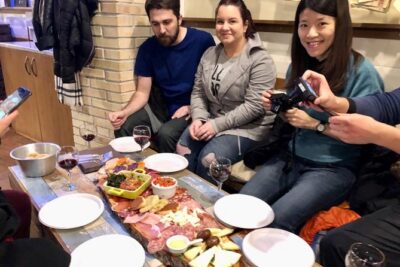
Rome by Night – Ebike Small Group Tour – Food and Wine (Option)
Read our review →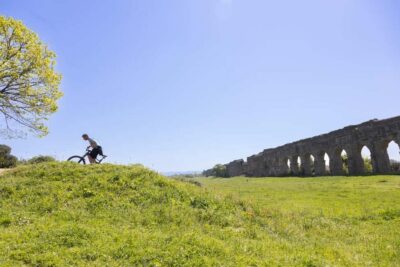
Appian Way E-bike Tour with Catacombs, Aqueducts & Food
Read our review →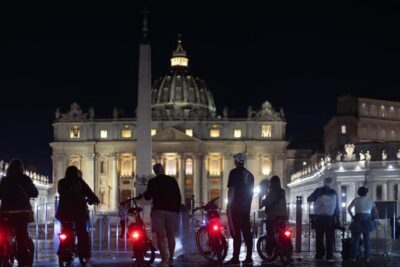
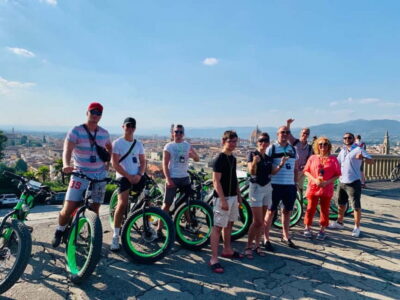
Private Self-Guided E-Bike Ride in Tuscany with Vineyard Visit
Read our review →Browse the lists this tour appears in