
Review · FOOD & DRINK
Rome Food Tour in the Historic Centre with 8+ Food Tastings
Come hungry, leave happily stuffed. This three-hour walk links eight or more Roman tastings with some of the city’s most memorable squares and ancient sites. You’ll try pizza, pasta, supplì, cured meats, cheeses, cannoli, gelato, and a secret dish while moving through central Rome.
I like the strong mix of food and place, especially the route from Piazza Navona toward the old Jewish Ghetto. I also like the small maximum group of 12, which gives guides such as Massimiliano, Rocio, Luda, Federico, and Eduardo room to explain dishes and answer questions. The main drawback is the pace: there is a lot of food and plenty of walking, so this is not the best pick if you want a light snack or a slow architectural tour.
The price is $118.51 per person, which is fair if you treat it as lunch, dessert, and a guided introduction to central Rome in one package. The menu and stops can change with weather or local availability, and you should leave room in your day rather than planning another large meal right afterward.
In This Review
- Key Points to Know Before You Book
- Starting at Piazza Navona
- Pizza, Supplì, and the Roman Snack Table
- Palaces, Fountains, and Food Stories
- Cold Cuts, Cheeses, and Roman Pace
- The Ancient Jewish Ghetto
- Two Roman Pastas
- Campo de’ Fiori and Everyday Rome
- Largo di Torre Argentina and the Final Sweets
- What the $118.51 Price Really Buys
- Who Will Enjoy This Tour Most
- Practical Tips for a Better Food Walk
- Should You Book the Rome Food Tour?
- FAQ
- How long does the Rome Food Tour last?
- Where does the tour begin?
- Where does the tour end?
- What food is included?
- How many people can join the tour?
- Can I cancel for a full refund?
Key Points to Know Before You Book
- Eight or more tastings: Expect two kinds of homemade pizza, supplì, cold cuts, cheeses, two Roman pastas, cannoli, artisanal gelato, and a secret dish.
- A historic center route: The walk connects Piazza Navona, Campo de’ Fiori, the Jewish Ghetto, Largo di Torre Argentina, and several Roman landmarks.
- Small groups: The maximum is 12 people, a useful size for conversation and personal attention.
- A very filling outing: The food is served in enough quantity to function as a substantial meal, not a few token samples.
- Strong guide-led storytelling: The best part is the connection between Roman dishes, buildings, neighborhoods, and local customs.
- Family and vegetarian appeal: Children have been kept engaged, and vegetarian substitutions have been provided when requested.
Starting at Piazza Navona
The meeting point is Sant’Agnese in Agone at Piazza Navona. This is a sensible place to begin because the square gives you Rome in one grand sweep: baroque churches, fountains, cafés, and layers of ancient city planning beneath your feet.
Piazza Navona occupies the site of an ancient stadium. Its long, open shape still hints at that earlier purpose, even though today it feels more like a public room framed by architecture and outdoor tables.
Your guide may begin with a short explanation of the square before leading you to the first food stops. This is where the tour’s method becomes clear. You are not simply eating pizza and walking past monuments. You are learning how food fits into the daily life of Rome.
The square is also a practical meeting point, close to public transportation and surrounded by landmarks you may already want to see. Arrive with a little time to spare so you can locate the meeting point without rushing.
More Food Tours in Rome
- Rome: Tuscany & Montepulciano Day Trip with Lunch & Wine Tasting
★ 4.5 · 5,232 reviews - Winner 2025 Rome Twilight Trastevere Food Tour by Eating Europe
★ 5.0 · 5,157 reviews - Rome: Trastevere or Jewish Quarter Street Food Tour
★ 4.8 · 3,839 reviews
Pizza, Supplì, and the Roman Snack Table
The first tastings usually help you understand the difference between everyday Roman food and the grand dishes found on restaurant menus. Two kinds of homemade pizza are included, giving you a chance to compare textures and toppings rather than treating pizza as one single category.
Roman pizza can be crisp, thin, or served in a more casual bakery style. The point is not only the flavor. Your guide can explain how Romans use pizza as a quick meal, an afternoon bite, or part of a shared food stop.
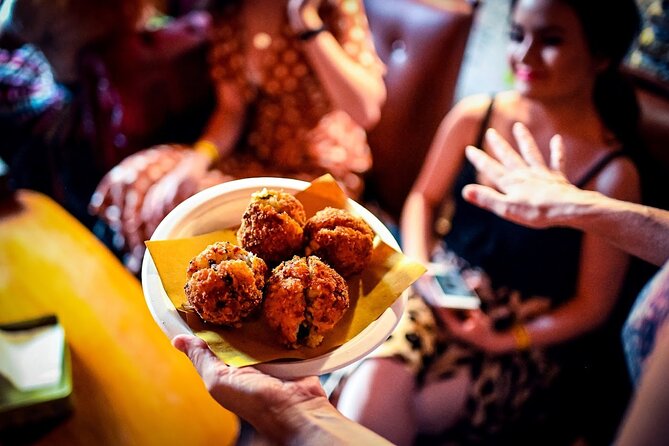
Supplì brings a different texture. This fried rice croquette is commonly associated with Rome and is usually prized for its crisp outside and soft center. It is exactly the sort of food that can be easy to miss if you only follow a standard sightseeing route.
These early bites are useful for orientation. You get familiar flavors, such as bread and cheese, alongside something more specifically Roman. If you have children with you, pizza and supplì also provide approachable options before the meal moves into stronger flavors and more specialized dishes.
Palaces, Fountains, and Food Stories
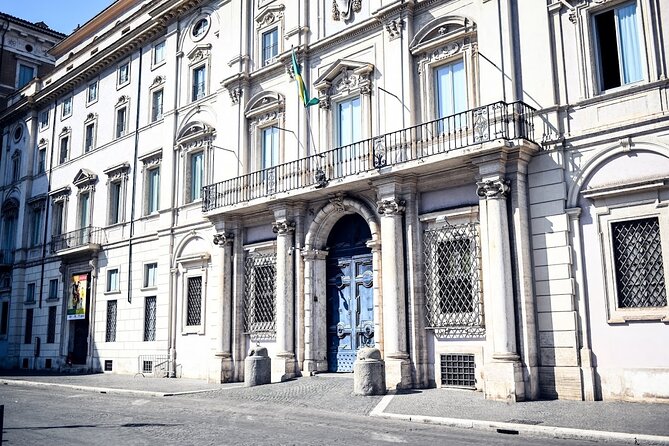
The walk includes a major High Renaissance palace that now serves as the French embassy in Italy. You may not enter, but seeing it from the street adds an architectural pause between tastings.
Another stop is the famous 17th-century fountain dedicated to four rivers, with a Roman obelisk topped by a dove. This is the Fountain of the Four Rivers in Piazza Navona, one of Rome’s most theatrical public works.
A good guide uses these sights as more than photo stops. Massimiliano has been especially praised for combining Roman history with explanations of the food, while Rocio has been noted for her humor and small historical details. Other named guides, including Manuel, Luda, Robbie, Eduardo, and Federico, have also been praised for making the walk easy to follow and enjoyable.
That guide quality matters here. The food is important, but the tour earns its price by adding context you would not get from a menu alone. You can always buy gelato on your own. It is more useful to understand why a dish belongs to Rome and how it fits into the city’s customs.
Cold Cuts, Cheeses, and Roman Pace
The tasting of Italian cold cuts and cheeses gives the tour a slower middle section. Instead of grabbing one bite and moving on, you get time to compare flavors and ask questions.
This part may appeal most to adults who enjoy regional products, but it can also give a group a chance to settle into conversation. One advantage of a maximum group size of 12 is that the tasting does not need to feel like a crowd gathered around a guide.
The pace can vary by group and by stop. Some portions are eaten standing or during a short pause, while other stops may provide more time to sit. The exact arrangement is subject to change, so it is wise to think of the outing as a moving meal rather than a restaurant lunch with a fixed table.
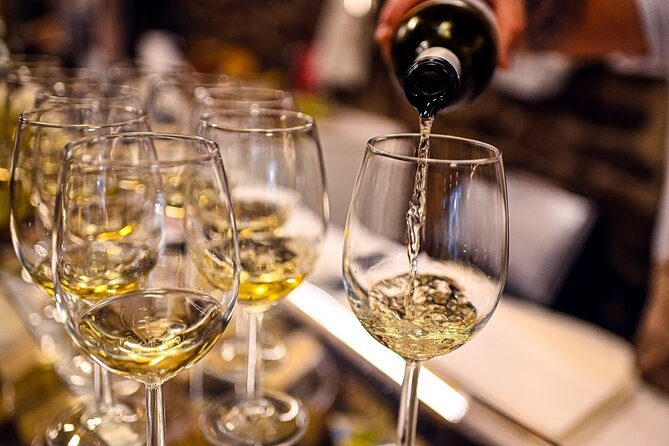
Some participants have had wine or other drinks during the experience, but the official inclusions specifically list the food rather than promising a set number of beverages. If drinks matter to your budget, ask when booking or be prepared to pay separately.
More History Tours in Rome
- Rome in a Day Tour with Vatican, Colosseum and Historic Center
★ 4.5 · 1,042 reviews - Rome: Ancient History and Colosseum Underground Tour
★ 4.5 · 996 reviews - Rome: Forbidden History Walking Tour & Pub Crawl with Drinks
★ 4.9 · 688 reviews - Twilight Treasures: An Evening Tour Through Rome’s Rich History
★ 4.5 · 263 reviews
The Ancient Jewish Ghetto
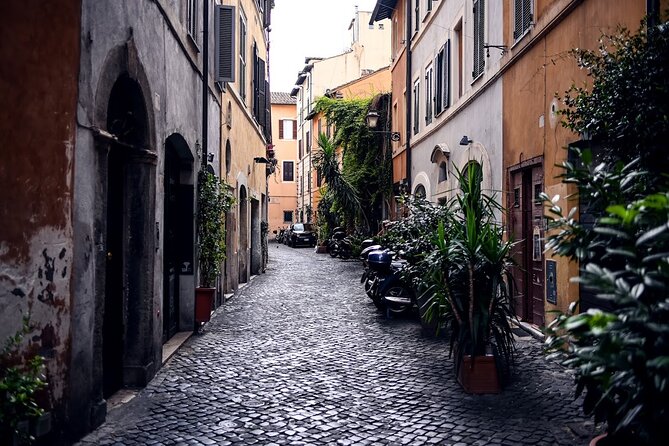
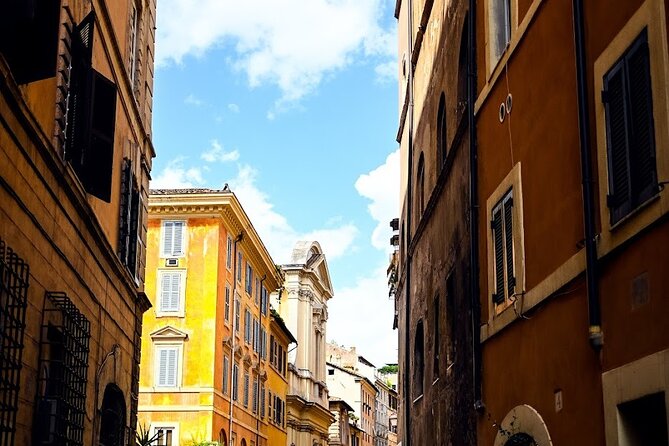
The route continues into Rome’s Jewish Ghetto in Rione Sant’Angelo. Established in 1555, this neighborhood carries a difficult and important past, as well as a strong culinary identity.
This is one of the most valuable sections of the walk because the setting changes. Piazza Navona is monumental and open. The Ghetto feels more closely tied to neighborhood life, local traditions, and long-running food customs.
Your guide can connect the area’s story to the dishes being served. That connection gives the meal more meaning than a simple list of Italian specialties. You begin to see Rome as a collection of neighborhoods, each with its own food habits and memories.
Be ready for uneven pavement and regular walking. The tour is suitable for most people, and a participant who was six months pregnant described the walking as manageable, but the outing still demands steady movement. On hot days, the route can feel more tiring, especially because you are eating at several stops.
Two Roman Pastas
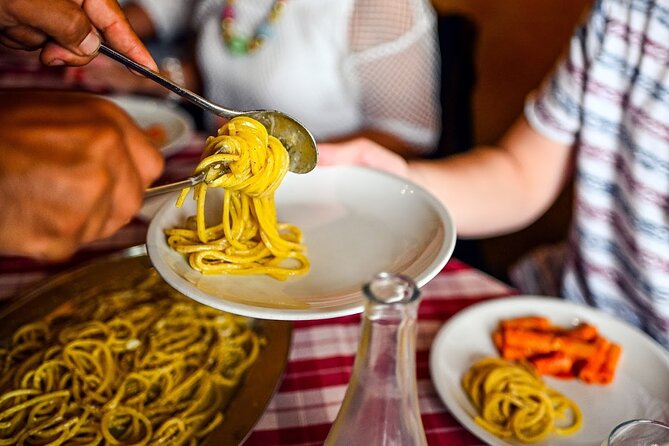
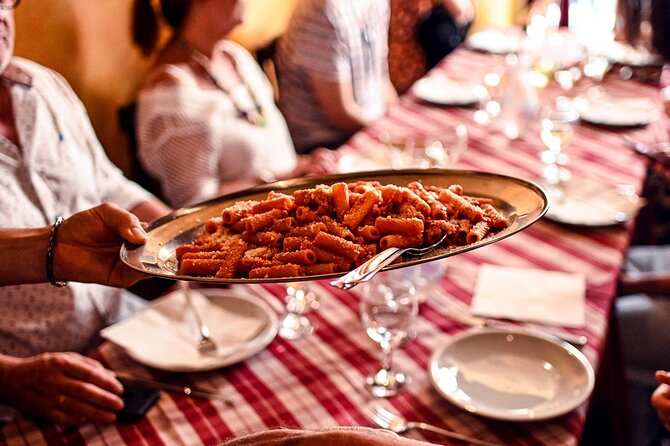
The pasta course is the heart of the tour. You receive two Roman pastas, allowing you to compare the city’s most famous styles.
The supplied details do not specify exactly which two recipes appear on every departure. That is intentional, since the menu can change according to availability. You might find familiar Roman favorites, but you should not book this expecting one guaranteed pasta pairing.
What you can count on is the chance to taste pasta in the city where these dishes belong. The guide’s explanation adds value here, particularly when discussing ingredients, preparation, and how Roman cooking differs from the broad idea of Italian food.
Portions are substantial across the full tour. Several people finished feeling completely full, and one parent described the food as plentiful enough that the nine-year-old needed special drink arrangements while adults had coffee and wine. You should eat a modest breakfast, not skip food for an entire day.
Vegetarians are not left out. A vegetarian participant received a vegetarian pasta and other alternatives at different stops. Still, dietary needs should be stated clearly before the tour, since the menu changes and the group moves between several food providers.
Campo de’ Fiori and Everyday Rome
Campo de’ Fiori is a rectangular square south of Piazza Navona. Its name means field of flowers, a reminder that Rome’s public spaces often carry traces of older uses beneath their current identity.
The square makes a natural part of a food walk because it is tied to shopping, produce, and casual eating. Depending on the day and the businesses available, your guide may use the area to explain ingredients or point out places worth returning to later.
The schedule is not built around long museum visits. Instead, the landmarks give structure to a walking route between food stops. If you want to spend time reading every plaque or entering every church, you may need to return separately.
That is not a flaw, but it is important to set the right expectation. This is a culinary walk with sightseeing woven through it, not a monuments tour with occasional snacks.
Largo di Torre Argentina and the Final Sweets
The tour ends at Largo di Torre Argentina, a square in the ancient Campus Martius with four Roman Republican temples and remains connected to Pompey’s Theatre. It also includes the remains of an ancient walkway built in the second century BC to link two Roman temples.
The setting gives the final part of the tour a strong Roman backdrop. You finish among ruins rather than at a generic restaurant, and the location is useful for continuing your own exploration of central Rome afterward.
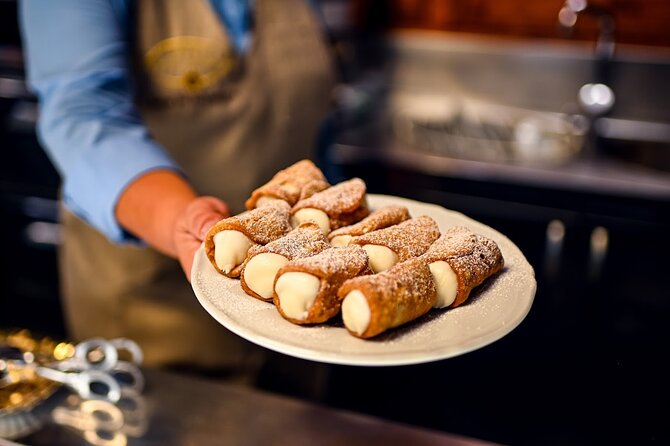
Dessert includes cannoli and artisanal gelato. Cannoli can be a surprise favorite even for people who normally skip it. One participant who did not usually care for cannoli called this version the best thing eaten in Rome.
Gelato is a smart final course because it is lighter in feel than another pastry, though you may not feel light after the full menu. The gelato stop has been praised for its quality, including by someone who had already tried many gelaterias in Rome.
The included secret dish adds a small element of surprise. Since it is not identified in advance, I would not plan your expectations around it. Think of it as an extra chance to taste something outside the fixed list.
What the $118.51 Price Really Buys
At $118.51, this is not a bargain if you compare it with buying one slice of pizza and a cone of gelato on your own. It becomes better value when you count the volume of food, the guide, the route, and the time saved choosing reliable stops.
The meal includes two pizzas, supplì, cold cuts, cheeses, two pastas, cannoli, gelato, and a secret dish. That is enough for many people to treat the tour as lunch or an early dinner.
You are also paying for access to a food plan that links several neighborhoods. Without a guide, you might visit one bakery, one pasta restaurant, and one gelateria, but you would need to research the choices, navigate between them, and learn the cultural background separately.
Group discounts may be available, which can improve the value for families or parties. Gratuity is not included, and hotel pickup or drop-off is not included either. Since the start and finish are in central Rome, you will need to make your own way to Piazza Navona and continue from Largo di Torre Argentina.
Who Will Enjoy This Tour Most
I would recommend this experience to first-time visitors who want a quick introduction to Roman food and central neighborhoods. It is also useful near the beginning of a Rome stay because the guide may offer suggestions for places to eat later.
Families can make it work. Children have been kept interested, and the food includes familiar choices. Just remember that the tour is three hours long and food comes steadily, so younger children may need patience between tastings.
Couples and small groups will appreciate the social side. The group size is limited to 12, and shared tastings create an easy way to meet people without committing to a full-day group excursion.
Vegetarians can participate with advance notice, though anyone with serious allergies should confirm arrangements directly. The changing menu and multiple venues mean you should not assume every dietary request can be handled without prior discussion.
This is less suitable for anyone seeking a quiet, slow meal. You will walk, stop, taste, listen, and move again. Rome’s pavement, summer heat, and full menu can add up.
Practical Tips for a Better Food Walk
- Do not eat a large meal beforehand. The portions add up quickly.
- Wear comfortable shoes. The route links several central sites on foot.
- Bring water, especially in hot weather. A past departure took place above 90 degrees Fahrenheit, yet the group continued comfortably with an accommodating guide.
- Tell the operator about vegetarian needs before the start. Alternatives have been provided, but advance notice helps.
- Allow extra time after the tour. The official duration is about three hours, and you may want to linger around Largo di Torre Argentina.
- Expect changes. The menu and route can shift because of weather, availability, or other local conditions.
- Plan for gratuity. It is not included in the ticket price.
- Check drink arrangements. Wine has been part of some experiences, but it is not listed among the guaranteed inclusions.
Should You Book the Rome Food Tour?
Book it if you want a filling, social introduction to Roman food with history built into the walk. The strongest reasons are the wide range of tastings, the central route, the small group limit, and the consistently warm guide style associated with Massimiliano, Rocio, Luda, Federico, Eduardo, and the other hosts.
Skip it if you want a fixed restaurant menu, a very slow pace, or a light afternoon snack. At $118.51, the tour makes the most sense when you count it as a guided meal plus sightseeing, not simply as a tasting sampler.
For most first-time visitors, I think it is a good use of three hours. Arrive hungry, wear sensible shoes, and keep the rest of the day flexible. Free cancellation is available up to 24 hours before the start time, but changes or cancellations inside that window are not refunded.
FAQ
How long does the Rome Food Tour last?
The tour lasts approximately three hours.
Where does the tour begin?
It begins at Sant’Agnese in Agone, Piazza Navona, 14, Rome.
Where does the tour end?
The tour ends at Largo di Torre Argentina in central Rome.
What food is included?
The included food consists of two types of homemade pizza, supplì, Italian cold cuts and cheeses, two Roman pastas, cannoli, artisanal gelato, and a secret dish.
How many people can join the tour?
The maximum group size is 12 people.
Can I cancel for a full refund?
Yes. You can cancel at least 24 hours before the experience start time for a full refund. Cancellations or changes made less than 24 hours before the start time are not refunded or accepted.
More Ancient Sites and Ruins
- Food Tasty and History Tour in Civitavecchia
★ 5.0 · 256 reviews - Venice: St. Mark Basilica Ticket, Audioguide+History Gallery
★ 3.9 · 4,780 reviews - Venice’s Best: Basilica, Doge’s Palace, Gondola & History Gallery
★ 4.5 · 2,478 reviews - Historic Milan Tour with Skip-the-Line Last Supper Ticket
★ 4.5 · 1,976 reviews
More Italian Food and Wine Outings
- Rome Food Tour: Unlimited Tastings with Fine Wine & Barolo
★ 5.0 · 3,365 reviews - Rome: Trastevere Food tour with Free-Flowing Fine Wine
★ 5.0 · 2,853 reviews - Rome: Trastevere & Campo de Fiori Street Food Walking Tour
★ 4.9 · 2,768 reviews - Rome Street Food Tour with Local Guide
★ 5.0 · 2,361 reviews
Just added around Rome
- Rome City, Pantheon, and Trevi Fountain Walking Tour★ 5.0 · 249 reviews
- Rome: Skip the line Vatican Museums & Sistine Chapel Tour★ 4.2 · 251 reviews
- Rome: Tivoli Day Trip with Villa d’Este and Villa Adriana★ 4.5 · 251 reviews
- Transfer Rome center – Ciampino Airport★ 4.5 · 251 reviews
- Rome: Cannondale E-Bike Evening Tour with Optional Dinner★ 4.9 · 251 reviews
- VIP Colosseum, Roman Forum & Palatine Hill & Special Access Sites★ 4.5 · 252 reviews
- Private Vatican Museums Hidden Gems Tour with Optional Pick-Up★ 5.0 · 253 reviews
- Vatican Museums & Sistine Chapel Skip-the-Line Guided Tour★ 4.6 · 254 reviews
Food & Drink, compared.
Small-Group Wine Tasting Experience in the Tuscan Countryside
Read our review →
Tuscany & Montepulciano Day Trip with Lunch & Wine Tasting
Read our review →
Rome Twilight Trastevere Food Tour by Eating Europe
Read our review →
SMALL-GROUP Wine Safaris: Tuscan Wine Tasting Tours from Florence
Read our review →
Florence Sunset Food & Wine Tour by Eating Europe
Read our review →
San Gimignano, Siena, Monteriggioni, Chianti Day Trip with Lunch & Wine Tasting
Read our review →
Browse the lists this tour appears in