
Review · COLOSSEUM & ROMAN FORUM TOURS
Rome: Colosseum, Palatine Hill and Roman Forum Guided Tour
Rome rewards curiosity. This 2.5-hour guided tour connects the Colosseum, Palatine Hill, and Roman Forum in one well-planned walk, giving you the stories that signs alone cannot provide. I especially like the mix of famous sights and smaller details, from the Arch of Constantine to the bronze door of the Temple of Romulus.
I also like the use of headsets, which helps you hear the guide in a crowded ancient site. Guides such as Henry, Leo, Aphrodite, Alessandra, and Alice have been praised for lively storytelling, clear explanations, and attention to families. The main drawback is the pace and terrain: this is not suitable for wheelchair users or people with mobility problems, and security lines can still cause delays despite skip-the-ticket-line access.
In This Review
- Key points at a glance
- What the $52 price really gets you
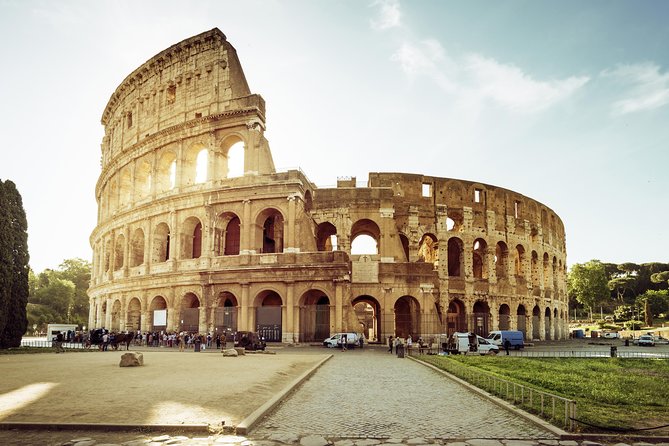
- Beginning with the Colosseum exterior
- Inside the amphitheater and first-floor visit
- The Arch of Constantine and the walk along Via Sacra
- Palatine Hill: imperial homes above the Forum
- The Arch of Titus and the Forum approach
- Walking the Roman Forum’s sacred and public buildings
- The central Forum and the political heart of Rome
- The guides are the main reason to choose this tour
- Practical advice before you reserve
- Should you book this Colosseum tour?
- FAQ
- How long does the tour last?
- What sites are included?
- Is arena access included?
- Is underground access included?
- Which languages are available?
- Can I cancel for a full refund?
- What should I bring?
Key points at a glance
- Three essential ancient sites in one visit: The tour covers the Colosseum, Palatine Hill, and Roman Forum without requiring separate bookings.
- A guide turns ruins into a story: Expect explanations of politics, religion, imperial life, public entertainment, and daily Roman life.
- The Arch of Constantine and Arch of Titus add context: These major monuments help connect Rome’s military victories with its public image.
- The panoramic terrace offers a useful viewpoint: You can look down toward the Colosseum arena and basement floor, though arena or underground entry depends on the option selected.
- Headsets make a real difference: You can keep walking while still hearing the guide clearly.
- Security is unavoidable: Your tour may start late on crowded days, and the route can change because of weather or site conditions.
What the $52 price really gets you
At $52 per person, this tour sits in the reasonable middle range for a major Rome sightseeing experience. Your ticket covers entry to all three sites, and the guide gives you a connected explanation rather than leaving you to piece together the ruins yourself.
You are paying for more than admission. The Colosseum is easy to recognize but harder to understand. Without context, you see tiers of stone, arches, and missing walls. With a guide, the building becomes a working arena with carefully planned entrances, seating, crowd movement, and dramatic public shows.
The Roman Forum presents a different problem. It is wide, uneven, and packed with fragments from different centuries. A guide helps you understand what each structure did and why the area mattered. That makes the fee worthwhile if you want more than photographs.
The value is strongest for a first visit to Rome, especially if you have limited time. You see the city’s headline monument and its ancient civic center in one session. If you prefer stopping alone for long periods or reading every plaque at your own speed, a self-guided visit may suit you better.
A private group option is available, but the standard tour gives you the benefit of a live guide without the cost of arranging a fully private visit. The overall rating is 4.8 from more than 32,000 ratings, and the repeated praise focuses on guide quality, organization, and the amount learned in a short period.
More ways into the Colosseum and Forum:
- Colosseum, Roman Forum & Palatine Guided Tour
★ 4.7 · 63,148 reviews - Rome: Guided Tour of Colosseum, Roman Forum & Palatine Hill
★ 4.7 · 27,897 reviews - Rome: Colosseum & Forum with Audio Guide App -Optional Arena
★ 4.2 · 24,770 reviews
Beginning with the Colosseum exterior
The tour may begin outside the Colosseum, although the route can sometimes run in the opposite direction and finish there. Starting outside is useful because the guide can explain the amphitheater before you enter its busy interior.
The exterior tells part of the story. Your guide discusses the building’s place in Roman public life and its changes over the centuries. This opening also gives you time to look at the structure as a whole rather than rushing straight to the security entrance.
The Colosseum was the largest amphitheater in the Roman world. Its size is impressive, but the clever design is just as interesting. The building was made to handle a huge crowd, with entrances and circulation routes that helped people reach their seats quickly. Your guide can point out details that are easy to miss when you are focused on getting inside.
Security comes before the main visit. All visitors must pass through a security check, and busy days can bring a line. Skip-the-ticket-line access helps with ticket collection, but it does not remove security screening, so do not plan a tight connection immediately after the tour.
Inside the amphitheater and first-floor visit
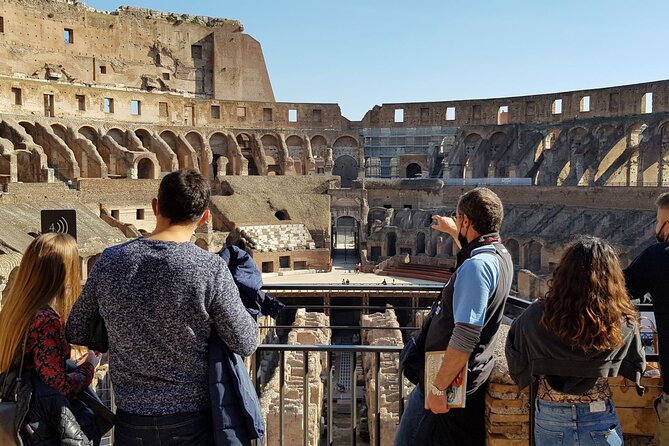
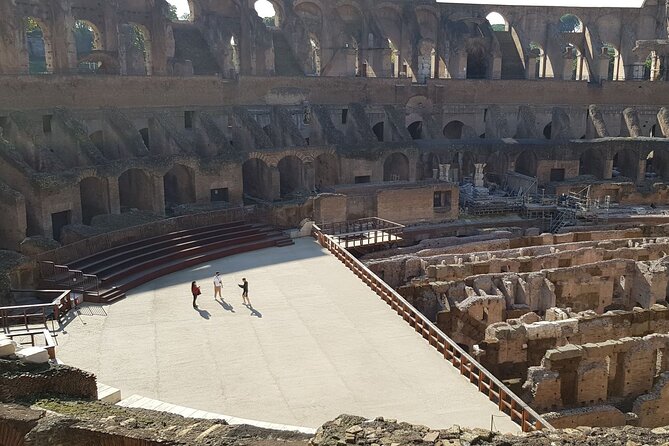
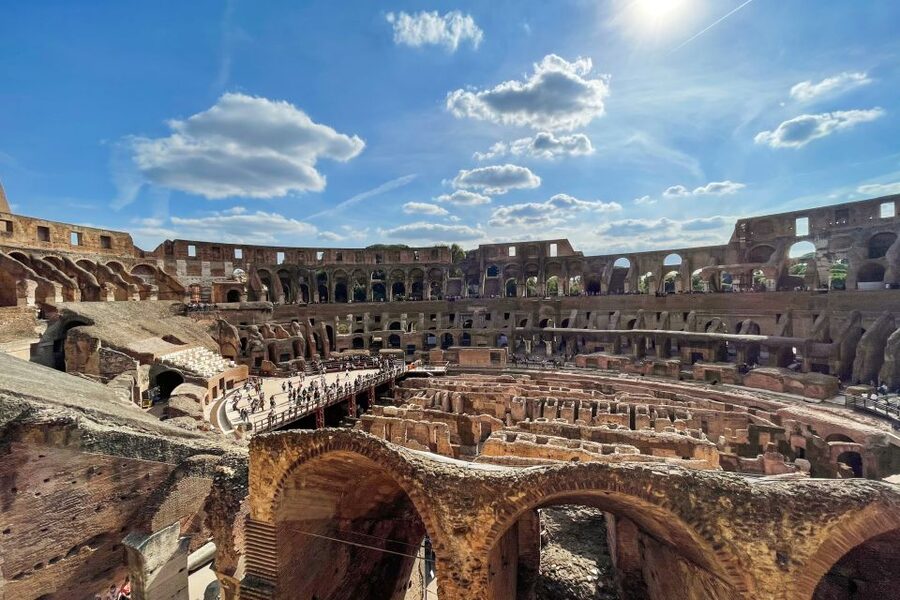
Once inside, the tour explores the Colosseum interior, including the first floor. This is where the scale of the arena becomes clearer. You can look across the seating levels, study the open arena area, and imagine how the building controlled the movement and attention of its audience.
Your guide explains the activities held inside, including the public spectacles that made the amphitheater a major part of Roman society. The useful point is not just what happened there, but why these events mattered to emperors and the public.
The standard experience includes views of the arena and basement floor from a panoramic terrace. Check the exact booking option carefully. Arena access and underground access are included only when specifically stated in the tour title. Do not assume that every version of the tour enters those areas.
The headsets are especially helpful here. The Colosseum can be noisy, and a guide speaking to a group without audio equipment is easy to lose. With headsets, you can look around while keeping up with the explanation.
The tour does not appear designed for lingering alone in every corner. You move as a group, and the guide controls the rhythm. That is a fair trade for a coherent explanation, but photographers and detail hunters may want extra time afterward if the ticket conditions permit.
The Arch of Constantine and the walk along Via Sacra
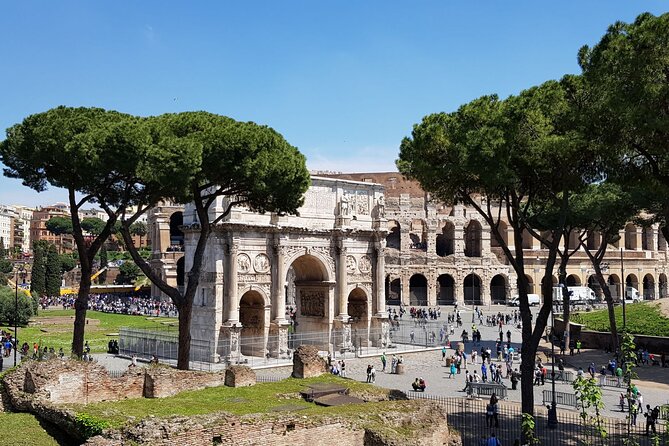
The Arch of Constantine is one of the tour’s useful transition points. Rather than treating it as a quick photo stop, the guide explains its history and important features. This helps you see how Roman rulers used monuments to present power and connect themselves with earlier emperors.
From here, the route follows the ancient Via Sacra toward Palatine Hill and the Forum. Walking this road gives the tour a sense of place. You are not simply jumping between isolated ruins. You are following one of the central routes through the ancient city.
The walk also changes the mood. The Colosseum is a single, towering structure with a clear purpose. The Forum and Palatine Hill are more open and scattered. Your guide becomes increasingly important as the site stops looking like a single monument and starts looking like an old city.
A few more reviews worth comparing before you book
- Vatican: Museums & Sistine Chapel Entrance Ticket
★ 4.5 · 144,003 reviews - Vatican Museums & Sistine Chapel Tour with Optional Basilica
★ 4.3 · 67,413 reviews - Vatican Museums, Sistine Chapel & St Peter’s Basilica Guided Tour
★ 4.5 · 39,149 reviews - Rome: Colosseum, Roman Forum and Palatine Hill Guided Tour
★ 4.5 · 23,903 reviews
Palatine Hill: imperial homes above the Forum
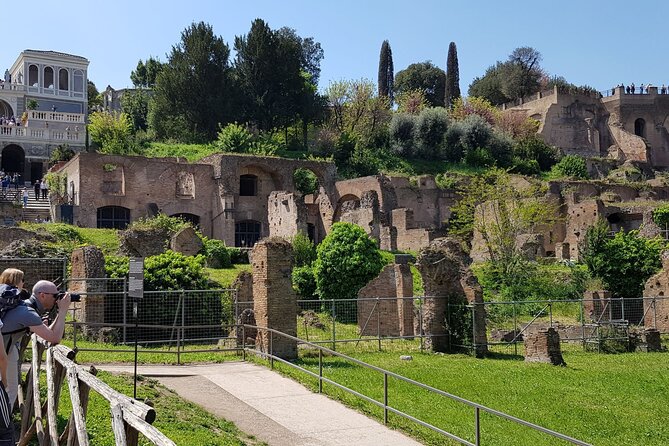
Palatine Hill is presented as the oldest part of Rome, with remains linked to the earliest settlement. It also became the preferred location for major imperial residences. The word palace is connected to Palatine, a reminder of how strongly this hill became tied to royal and imperial living.
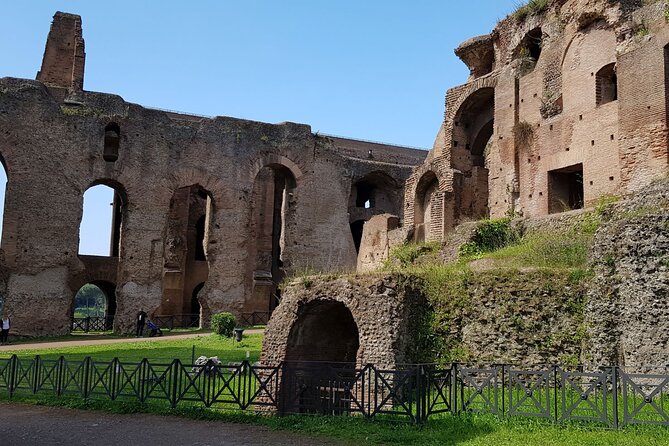
The route includes the Palatine Stadium, Domus Augustana, and Domus Flavia. These remains show a side of Rome that differs from the public arena and political square. Here, the focus is on imperial residence, ceremony, private power, and the way rulers shaped the city from above.
The Palatine Stadium is an especially helpful stop because its form gives you a clearer idea of how the palace complex was organized. The Domus Augustana and Domus Flavia add layers to the picture, showing the scale and formal character of imperial life.
You should expect uneven ground and walking outdoors. The experience takes place rain or shine, but bad weather can make parts of Palatine Hill and the Forum inaccessible. Comfortable clothing is required in practical terms, and good walking shoes are a sensible choice even though the formal information only specifies comfortable clothes.
The hill can also be tiring for anyone with limited balance or stamina. One recent visitor with vertigo described receiving regular attention from a guide, which shows the human side of the service, but the official restrictions still matter. This tour is not suitable for people with mobility impairments, wheelchair users, or people with altitude sickness.
The Arch of Titus and the Forum approach
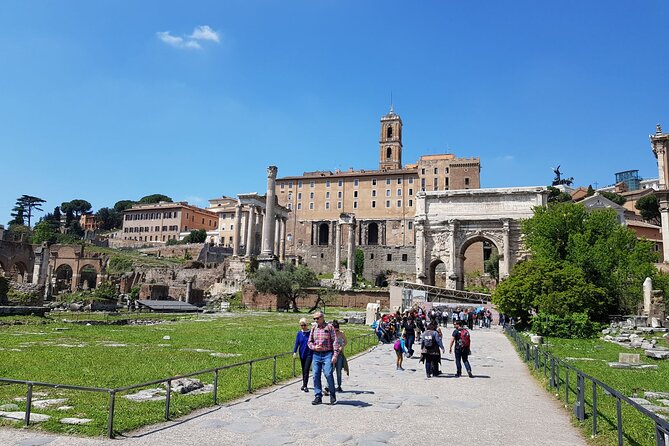
After the security check for the Palatine Hill and Forum area, the route reaches the Arch of Titus. Seeing it up close gives the guide another chance to explain how triumphal monuments celebrated military victories and shaped public memory.
The Arch also serves as a clear gateway into the Forum area. From here, the ancient Via Sacra leads through some of the site’s most important remains. The guide identifies the buildings instead of leaving you with a field of stones and half-seen walls.
This is where strong storytelling matters most. Several guides have been praised for using pictures and other visual aids to make damaged or incomplete structures easier to understand. A good guide does not just name a temple. The guide explains how it functioned and how it fitted into Roman public life.
Walking the Roman Forum’s sacred and public buildings
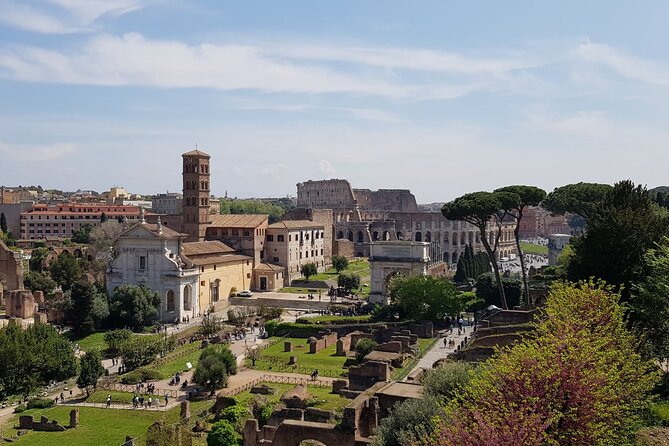
The route continues past the Basilica of Maxentius, a huge public building that helps you understand the scale of Roman construction. The remains are impressive even in damaged form, and the guide can explain how a basilica served public and legal purposes.
The bronze door of the Temple of Romulus is a smaller detail, but it is exactly the sort of feature you might miss alone. The suspended door of the Temple of Antoninus and Faustina is another unusual element that gives the walk variety.
The tour also visits the Temple of Vesta and the House of the Vestals. These sites introduce the religious heart of Rome and the role of the Vestal Virgins. Their home was not simply a residence. It formed part of a sacred complex tied to one of Rome’s most important religious duties.
The Forum rewards patience, but two and a half hours is not enough for every ruin. The guide has to keep the group moving. That can feel brisk if you want to study each column base, inscription, or architectural fragment. Still, the route covers the main monuments and gives you a useful framework for returning on your own.
The central Forum and the political heart of Rome
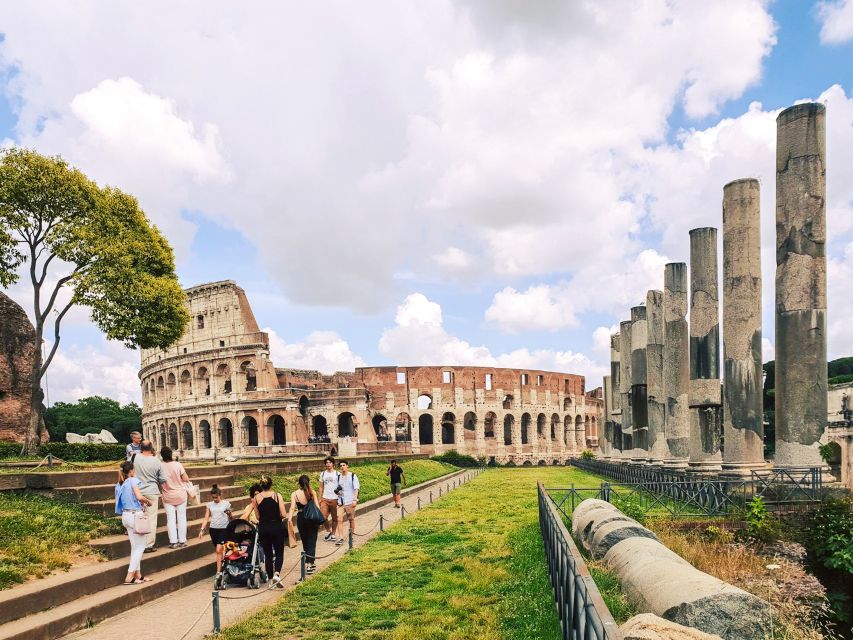
The final section reaches the central area of the Roman Forum. This was the political, religious, economic, legal, and social center of ancient Rome. It is the part of the visit that best explains how the city operated.
The Curia was linked to the Roman Senate, while the Arch of Septimius Severus commemorated imperial military victories. The Tabularium formed part of the government district, and the Temple of Saturn belonged to the sacred and public character of the Forum.
The value of this section lies in the connections. Rome’s government, religion, law, finance, and ceremony were concentrated in one shared public space. Your guide helps you see the Forum not as a collection of ruins, but as the working center of a city that shaped much of European political language and public architecture.
The itinerary may finish here, or the tour may run in the reverse order and end inside the Colosseum. That flexibility is practical for the operator but means you should not build a strict plan around the exact finish point until you receive the meeting information for your selected option.
The guides are the main reason to choose this tour
The strongest feature is the human one. Guides named Henry and Leo receive repeated praise for energy, humor, and clear explanations. Aphrodite is also frequently praised for making Roman history interesting while answering questions and looking after the whole group.
Alessandra, Alice, Vincenzo, Paulo, Marielle, Barbara, Ledion, Olesea, and others are also singled out for enthusiasm and care. One guide helped with a travel stroller, while another checked regularly on a visitor who felt anxious because of vertigo. These details suggest a service that is not limited to reciting prepared facts.
Families may find this format particularly useful. A guide named Henry was praised for including children aged 10 and 6, while other guides used interactive explanations and visual aids to keep younger members involved. Children still need to manage the walking and uneven surfaces, but the storytelling can make the ancient sites easier to follow.
Tours are available in German, English, Spanish, Portuguese, Italian, and French. If language matters to you, select the correct option during booking. The use of headsets is a practical bonus, especially for anyone who worries about missing explanations in a large group.
Practical advice before you reserve
Bring your passport or ID card. The name on the ticket must match the identification document, and tickets are non-transferable.
Leave large bags and luggage behind. Pets, weapons, sharp objects, drones, alcohol, drugs, sprays, aerosols, and glass objects are not allowed. Security rules are strict, and bringing prohibited items can slow you down or prevent entry.
Check the meeting point for your exact booking option because it may vary. Also allow extra time for security, particularly on busy days. The operator cannot control the security queue, and the actual start may be delayed.
The tour runs in rain or shine. Bad weather may close sections of Palatine Hill or the Roman Forum, and the route may change. Free cancellation is available up to seven days before the tour for a full refund, which is helpful when your Rome plans are still moving.
Should you book this Colosseum tour?
I would book this tour if you want the three major ancient sites explained in one visit, prefer a live guide, and value structure over wandering alone. The price is fair for admission, headsets, and a guide who can connect the Colosseum with the political and religious world of the Forum.
I would skip it if you need a wheelchair-accessible route, dislike group pacing, or want extensive time for photography and quiet exploration. Also check the title carefully if arena or underground access is important, since those features apply only to selected options.
For most first-time visitors, the tour offers a strong introduction to ancient Rome. Choose a language you follow comfortably, wear practical clothing, bring identification, and leave space in your schedule for a possible security delay.
FAQ
How long does the tour last?
The tour lasts 2.5 hours.
What sites are included?
The tour includes entry to the Colosseum, Palatine Hill, and Roman Forum.
Is arena access included?
Arena access is included only if you select an option that specifically states it in the tour title.
Is underground access included?
Underground access is included only with an option that specifically states it in the tour title.
Which languages are available?
Live guided tours are available in German, English, Spanish, Portuguese, Italian, and French.
Can I cancel for a full refund?
You can cancel up to seven days in advance for a full refund.
What should I bring?
Bring your passport or ID card and wear comfortable clothes. The name on your ticket must match your identification document.
Just added around Rome
- Rome City, Pantheon, and Trevi Fountain Walking Tour★ 5.0 · 249 reviews
- Rome: Tivoli Day Trip with Villa d’Este and Villa Adriana★ 4.5 · 251 reviews
- Rome: Skip the line Vatican Museums & Sistine Chapel Tour★ 4.2 · 251 reviews
- Transfer Rome center – Ciampino Airport★ 4.5 · 251 reviews
- Rome: Cannondale E-Bike Evening Tour with Optional Dinner★ 4.9 · 251 reviews
- VIP Colosseum, Roman Forum & Palatine Hill & Special Access Sites★ 4.5 · 252 reviews
- Private Vatican Museums Hidden Gems Tour with Optional Pick-Up★ 5.0 · 253 reviews
- Vatican Museums & Sistine Chapel Skip-the-Line Guided Tour★ 4.6 · 254 reviews
Colosseum & Roman Forum Tours, compared.
Colosseum, Roman Forum & Palatine Guided Tour
Read our review →
Guided Tour of Colosseum, Roman Forum & Palatine Hill
Read our review →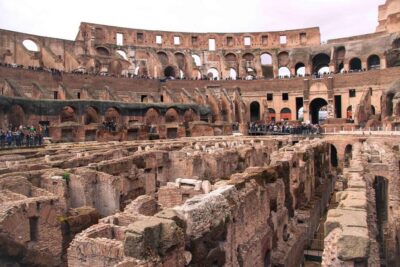
Colosseum & Forum with Audio Guide App -Optional Arena
Read our review →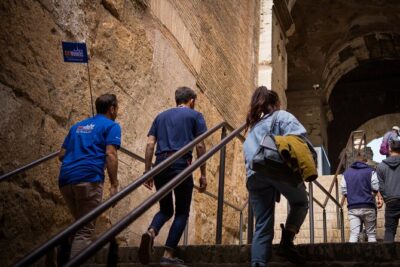
Colosseum, Roman Forum and Palatine Hill Guided Tour
Read our review →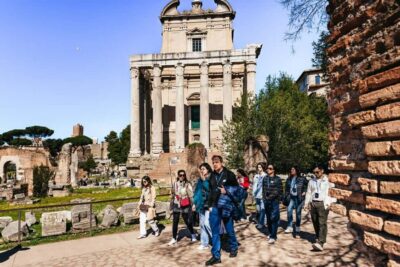
Colosseum, Forum & Palatine Hill Tour & Optional Arena
Read our review →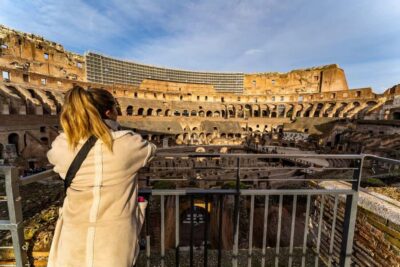
Colosseum, Roman Forum, Palatine with Multimedia Video
Read our review →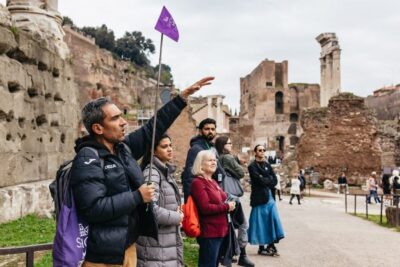
Colosseum, Palatine Hill & Roman Forum Guided Tour
Read our review →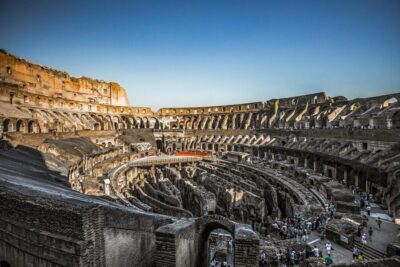
Colosseum: Underground and Ancient Rome Tour
Read our review →Browse the lists this tour appears in