Review · TICKETS
Perugia: Entry Ticket and Guided Tour of Perugia Underground
Ancient Perugia is hiding under your feet. This 50-minute tour leads you beneath Saint Lawrence Cathedral, where Etruscan, Roman, and medieval remains trace more than 2,500 years of city life. I like the clear historical route and the strong virtual reality finale, which helps you picture buildings that are now gone. The main drawback is that the live tour is in Italian, with a tablet and headphones provided for other languages.
I also like the price. At $14, you get entry, a guided visit, translation support when needed, and the VR presentation. The route includes stairs and can feel brisk, especially when you are reading the English translation while the guide continues speaking.
In This Review
- Key points to know before you go
- Entering the Saint Lawrence Cathedral cloister
- Descending 15 meters beneath the cathedral
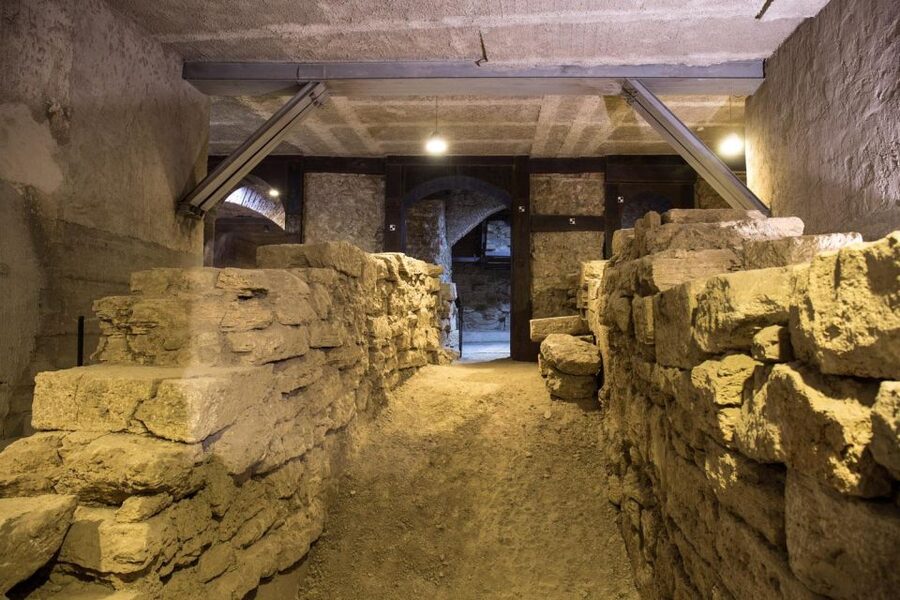
- Etruscan foundations and impressive construction
- Roman roads, houses, and the siege of Perugia
- Medieval layers beneath Saint Lawrence
- How the Italian presentation works
- The VR finale brings old Perugia back
- Is $14 good value for 50 minutes?
- Who will enjoy this Perugia underground tour?
- Small details that improve the visit
- Should you book Perugia Underground?
- FAQ
- Where does the Perugia Underground tour begin?
- How long does the tour last?
- What language is the guided tour in?
- Is the virtual reality experience included?
- Can I bring a wheelchair or stroller?
- Should I bring anything special?
Key points to know before you go
- 15 meters below the cathedral: The route reaches far beneath the present level of Saint Lawrence Cathedral.
- Three major periods in one walk: You see physical remains from Etruscan, Roman, and medieval Perugia.
- Italian guide with translation help: The live presentation is in Italian, while a tablet offers translated content for those who need it.
- The VR ending is a real highlight: The final headset experience shows how parts of Perugia may have looked in earlier periods.
- A short but useful visit: The tour lasts about 50 minutes, making it easy to fit into a day in central Perugia.
- Stairs are part of the route: The archaeological area is not suitable for wheelchair users, strollers, or people with major mobility difficulties.
Entering the Saint Lawrence Cathedral cloister
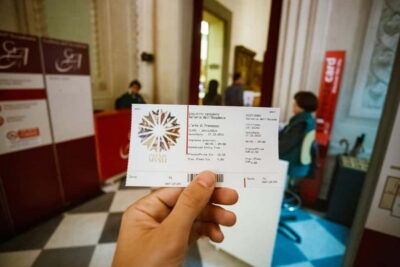
Your visit begins in the cloister of Saint Lawrence Cathedral, in the heart of Perugia. Look for the large portal in Piazza IV Novembre beside Libreria delle Volte. The ticket office and meeting point are inside the cloister, not simply somewhere in the open square.
That detail matters. The directions can feel vague if you arrive in Piazza IV Novembre and expect to see a guide waiting outside. Go through the portal into the cathedral cloister and look for the ticket office there. Allow a little time to find it, especially if you are fitting the tour between other visits.
The cloister gives you a fitting starting point. You are not entering an isolated museum built for a single period. You are beginning at a major religious complex that sits over layers of the city itself. From here, the route moves down through the hill and backward through time.
The tour is guided rather than a free visit. That is important because the remains can be difficult to read on your own. Stone walls, foundations, streets, and fragments do not always explain themselves. A guide connects them to the people and periods that shaped Perugia.
A few more reviews worth comparing before you book
- Vatican: Museums & Sistine Chapel Entrance Ticket
★ 4.5 · 144,003 reviews - Milan: Cathedral and Duomo’s Terraces Entrance Ticket
★ 4.6 · 61,054 reviews - Venice: Doge’s Palace Reserved Entry Ticket
★ 4.6 · 42,716 reviews
Descending 15 meters beneath the cathedral
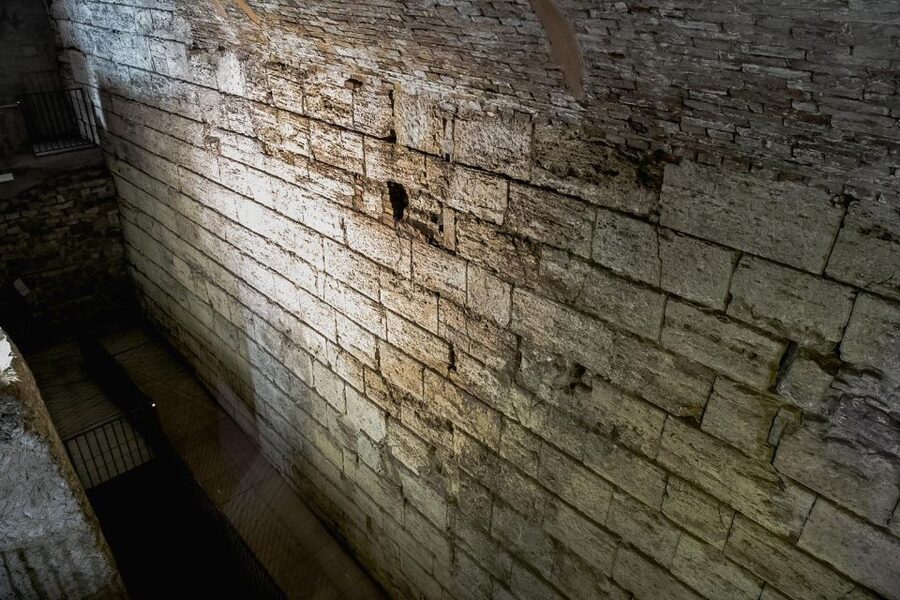
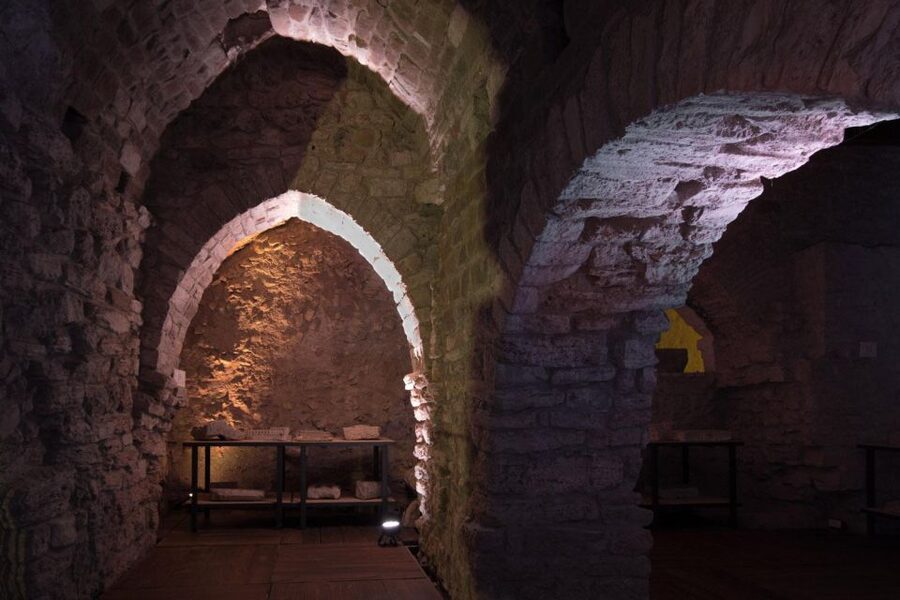
The route drops about 15 meters below the current level of Saint Lawrence Cathedral. This change in height is one of the most effective parts of the experience. You are not just looking at old stones behind glass. You are moving into the layers beneath the modern city.
There are several flights of stairs, so wear comfortable shoes and take your time. The route is not suitable for wheelchairs, strollers, or people with significant mobility problems. Pets, food, and drinks are also not allowed.
The underground area has a slightly cooler temperature than the streets above. A light extra layer is a smart idea, even in warm weather. You do not need heavy outdoor clothing, but a thin cardigan or overshirt will make the visit more comfortable.
As you move down, the idea of Perugia as a layered hill town becomes easier to understand. The present city did not replace the old city in one clean sweep. New streets and buildings were built over earlier ones, leaving pieces of older Perugia below.
Etruscan foundations and impressive construction
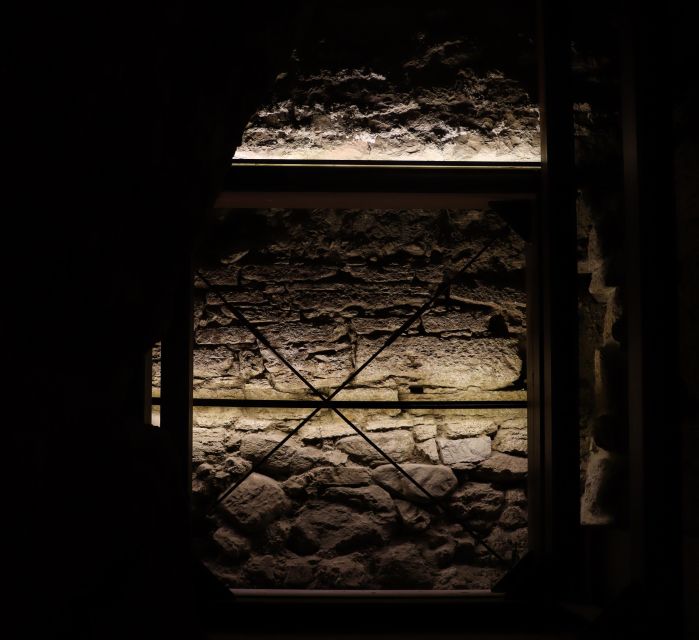
The Etruscan remains are among the most rewarding parts of the route. Perugia began as an important Etruscan settlement, and the underground area gives you a direct look at the engineering behind that early city.
You can see why the Etruscans continue to surprise people who know more about Roman Italy than pre-Roman Italy. Their building skills were highly advanced, particularly in the way they worked with heavy stone and planned urban spaces.
The guide’s explanations add value here. Without context, a wall may look like little more than a wall. With the dates and purpose explained, it becomes evidence of a city that was already organized and technically capable long before the Roman period.
The archaeological route does not present a huge collection of objects. Instead, it focuses on the structures themselves. If you prefer excavated rooms, roads, and walls to display cases, you will get more from this visit. If you want a large collection of pottery, sculpture, or small finds, the experience may feel limited.
That distinction helps set expectations. This is a compact underground walk through the remains of Perugia. It is not a large archaeology museum.
Roman roads, houses, and the siege of Perugia
The Roman layer adds another useful chapter. The route reveals evidence of Roman roads and houses, allowing you to see how Roman Perugia occupied and adapted earlier Etruscan ground.
The physical remains help explain the city’s development better than a simple timeline would. You see how streets and structures were laid out, then hear how later building changed the area. This is a practical way to understand urban history because the evidence is directly under the cathedral rather than separated from the modern city.
The story also reaches the siege of Perugia, a major event connected with the city’s Roman past. The route brings in figures such as Julius Caesar and Gaius Octavius Caesar Augustus, linking the local site to the wider struggles that reshaped Roman power.
The nearby Gate of Augustus also fits into this story. The tour does not treat Perugia as a distant backwater. It shows how the city was caught up in events involving some of the most important figures of ancient Rome.
I would pay close attention during this section. The tour is short, and the information comes quickly. The combination of dates, names, and building phases can be a lot to absorb, particularly if you are using the translation tablet instead of listening directly to the guide.
A different sort of day out around Italy:
- Vatican Museums & Sistine Chapel Tour with Optional Basilica
★ 4.3 · 67,413 reviews - Colosseum, Roman Forum & Palatine Guided Tour
★ 4.7 · 63,148 reviews - Vatican Museums, Sistine Chapel & St Peter’s Basilica Guided Tour
★ 4.5 · 39,149 reviews - Rome: Colosseum, Palatine Hill and Roman Forum Guided Tour
★ 4.8 · 32,814 reviews
Medieval layers beneath Saint Lawrence
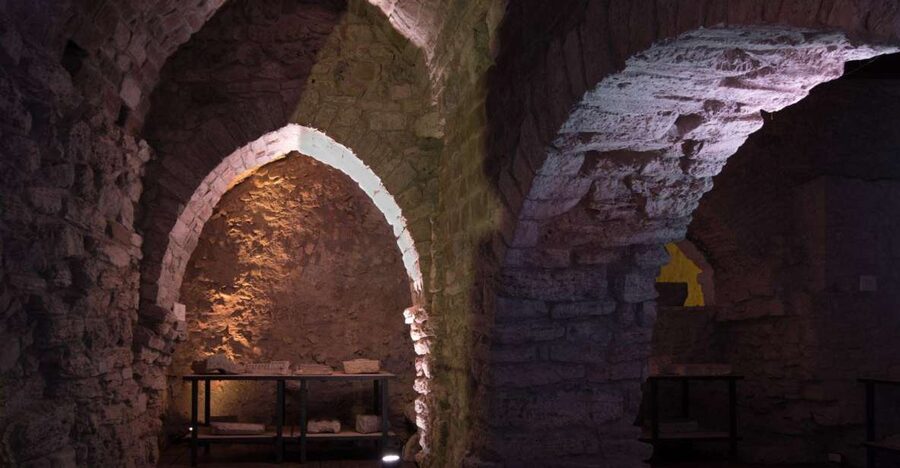
The route continues beyond the ancient periods and reaches medieval Perugia. This is where the visit becomes especially useful for understanding the city you see above ground.
The cathedral complex grew and changed over centuries. The underground remains show that Perugia was repeatedly rebuilt, adapted, and reorganized. Medieval structures did not simply sit beside Etruscan and Roman ones. They used, covered, and transformed earlier spaces.
You may find the medieval section less immediately dramatic than the ancient stonework, but it completes the story. Without it, the visit would suggest that Perugia’s past ended with Rome. Instead, you see a continuous sequence reaching toward the present.
The guide’s role is central here. The route is not only about what survives. It is also about how archaeologists interpret different building phases and place them in order. The best moments come when an apparently plain section of masonry is tied to a specific period or use.
At the same time, some people may want more objects from the excavations. The route concentrates on remains in place, and there may not be as many displayed finds as you expect. If your interest is in architecture and city planning, that is a strength. If you want artifacts, you may wish to allow time for another museum visit nearby.
How the Italian presentation works
The live guide speaks Italian. If you do not understand Italian, you can use the supplied tablet and headphones for translation. This arrangement lets you follow the content, but it is not quite as effortless as hearing an English-speaking guide address the group.
You will need to divide your attention between the guide, the archaeological remains, and the tablet. One useful tip is to stay close enough to see where the group has stopped before reading every line. The translated recording or text can move at a different pace from the live commentary.
An English-speaking participant found that the tablet translation lagged behind the guide, which made the route feel rushed. Another found the experience worthwhile despite the Italian presentation. That is a fair assessment: the translation makes the visit accessible, but language-specific groups would probably have a more relaxed experience.
The quality of the guiding is a strong point. Guides such as Beatrice and Lorenzo have been praised for warm, engaging explanations, and the guide’s enthusiasm helps prevent the underground remains from feeling dry. If you understand Italian, you will get the most from the live commentary. If not, the tablet still gives you a useful way to follow the main points.
The VR finale brings old Perugia back
The final virtual reality presentation is one of the best reasons to book this particular format rather than simply look at archaeological remains alone. After seeing foundations and fragments, you put on a headset and view a reconstruction of the city in an earlier period.
This solves a common problem with archaeology. You can understand that a wall is old, but it is hard to picture the complete street, building, or neighborhood that once surrounded it. The VR segment supplies that missing visual frame.
Several people especially praised the headset experience, calling it entertaining, impressive, and a strong way to tie the tour together. I can see why. The underground walk gives you evidence, while the VR presentation helps you imagine the finished setting.
There is a small question of timing. Some people would prefer to see the broad visual reconstruction at the beginning, before walking through the remains. That approach could make the explanations easier to follow. Others will prefer the current order, since the VR experience works as a final reward after you have seen the actual structures.
If you are sensitive to headsets or prefer a strictly traditional archaeological visit, the VR section may feel like an add-on. For most people, though, it adds real value rather than distracting from the site.
Is $14 good value for 50 minutes?
At $14 per person, this is a good-value introduction to Perugia’s past. The price includes admission, the live guided tour, translation support when necessary, and the VR experience. You are also getting access to an area that is visited with a guide rather than simply entered at your own pace.
The short duration works in its favor. Fifty minutes is long enough to give you a clear framework without taking half a day from Perugia’s other sights. You can pair it with the cathedral complex, nearby Piazza IV Novembre, or a visit to the Rocca Paolina.
The value depends on what you want from archaeology. You should book it if you like seeing original structures in place and learning how a city developed over centuries. You may feel less satisfied if you want a long, leisurely museum visit with many artifacts and extensive written material.
The tour can also prepare you for other underground and layered sites in Perugia. One useful connection is Rocca Paolina, where you can continue seeing how later construction absorbed or buried earlier parts of the city. The underground cathedral route offers a smaller, more guided introduction to that idea.
Who will enjoy this Perugia underground tour?
I would recommend this experience to first-time visitors who want a quick historical orientation. It gives you a clearer sense of Perugia’s age and structure before you spend more time exploring the streets above.
It also suits anyone interested in Etruscan history. The Etruscan remains are not just a brief mention. They form an important part of the route and show how early the city’s urban story began.
Families with older children may appreciate the change of setting and the VR finale, though the stairs and quiet archaeological focus may not suit very young children. Since strollers are not permitted, plan accordingly.
The tour is also a sensible choice for visitors with limited time. The central location, 50-minute duration, and clear historical sequence make it easy to add to a day of sightseeing. You should allow extra time before the start to locate the cloister entrance.
People with mobility impairments should skip this activity because of the stairs and underground route. It is not suitable for wheelchair users or strollers.
Small details that improve the visit
Bring a light garment for the cooler underground air. Wear shoes that feel steady on stairs, and avoid carrying food or drinks since they are not allowed along the route.
If you need translation, expect to read or listen while the group moves. Try to follow the guide’s position first, then use the tablet once you are in the right place. This can reduce the sense of being hurried.
Do not expect a completely open-ended visit. The route is guided and lasts about 50 minutes, so you will not have much time to stop for photographs or linger over every section. The same pace that keeps the tour efficient can feel quick if you want detailed study.
Free cancellation up to 24 hours before the visit and the option to reserve now and pay later make it easier to fit into a changing itinerary. Starting times vary, so check availability for the day you plan to visit.
Should you book Perugia Underground?
Yes, if you want a compact, well-priced introduction to Perugia’s Etruscan, Roman, and medieval layers. The physical remains are interesting, the guides bring useful energy to the explanations, and the VR ending gives you a better sense of what the ancient city may have looked like.
Book with realistic expectations. The route is short, the live commentary is in Italian, the tablet translation may require concentration, and the stairs rule it out for some visitors. If those limits work for you, $14 buys a smart and memorable way to understand the city beneath Saint Lawrence Cathedral.
FAQ
Where does the Perugia Underground tour begin?
The ticket office and starting point are in the cloister of Saint Lawrence Cathedral. Enter through the large portal in Piazza IV Novembre, next to Libreria delle Volte.
How long does the tour last?
The tour lasts about 50 minutes. Starting times vary, so you need to check availability for your chosen date.
What language is the guided tour in?
The live guide speaks Italian. A tablet with translation support is provided if needed.
Is the virtual reality experience included?
Yes. The VR experience is included with the entrance ticket and guided tour.
Can I bring a wheelchair or stroller?
No. The route includes flights of stairs and is not suitable for wheelchair users, strollers, or people with significant mobility difficulties.
Should I bring anything special?
Bring a light garment because the underground area may feel slightly cooler than the surface. Food, drinks, and pets are not allowed.
Just added around Italy
- Catania: Opera Concert – Tribute to Vincenzo Bellini★ 4.8 · 249 reviews
- Palazzo Vecchio guided experience with entrance ticket★ 4.5 · 249 reviews
- Milan Sights by Segway Small Group Tour★ 5.0 · 249 reviews
- Lucca Bikes and Bites with food tastings for Small Groups or Private★ 5.0 · 249 reviews
- Puglia Cooking class “Le orecchiette, che pasta!”★ 5.0 · 249 reviews
- Guided tour and tasting at La Cantina Frrud – Wine Museum★ 5.0 · 249 reviews
- Rome City, Pantheon, and Trevi Fountain Walking Tour★ 5.0 · 249 reviews
- From Naples/Salerno: Pompeii, Sorrento, and Positano Tour★ 4.5 · 250 reviews
Tickets, compared.

Vatican: Museums & Sistine Chapel Entrance Ticket
Read our review →
Cathedral and Duomo’s Terraces Entrance Ticket
Read our review →

Skip-The-Line Uffizi Gallery Timed Entry Ticket
Read our review →
Naples Underground Entry Ticket and Guided Tour
Read our review →
Pantheon Fast-Track Ticket and Official Audio Guide
Read our review →
Pompeii: Entry Ticket and Guided Tour with an Archaeologist
Read our review →