
Review · NAPLES TOURS
Paestum: Small-Group Tour with an Archaeologist and Tickets
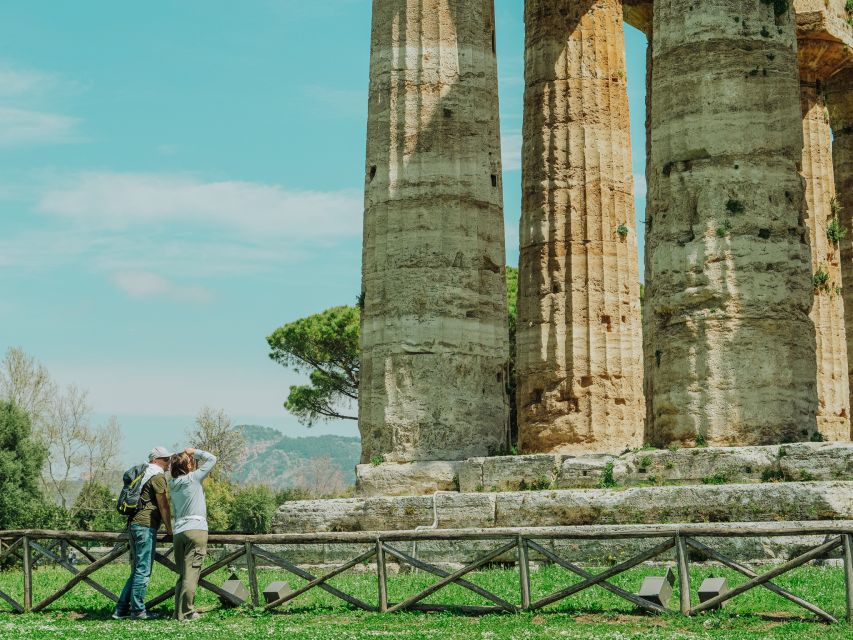
Three Greek temples, still remarkably intact.
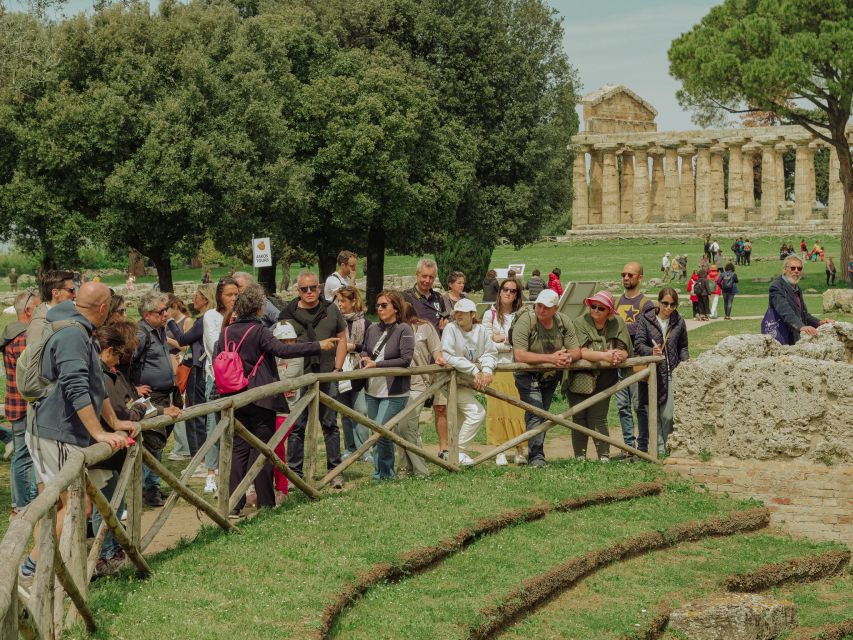
Paestum rewards a guide who can explain what you are seeing, and this two-hour tour does just that with a certified archaeologist. I especially like the small-group format, which makes it easier to hear the guide and ask questions, and the chance to visit both the archaeological park and museum under one ticket. The main drawback is time: two hours passes quickly, especially in hot weather or if you want to linger inside the museum afterward.
The tour is priced at $47 per person, including admission and guiding but not transportation or refreshments. That is a fair price for a site where a bare walk around the ruins can leave you admiring beautiful stones without understanding the Greek, Lucanian, and Roman layers beneath your feet.
The guides are the heart of the experience. Mario, Maria, Ivan, Francesca, Angelo, Silvia, and others have earned repeated praise for clear explanations, good English, patience, and enthusiasm. Ivan is especially interesting for visitors who want behind-the-scenes archaeological insight, since he has taken part in excavations at Paestum.
In This Review
- Key points to know before booking
- Why Paestum deserves more than a quick stop
- Meeting at the Basilica Paleocristiana dell’Annunziata
- The archaeological park: 90 minutes among Greek and Roman ruins
- Seeing Paestum as a living city
- The National Archaeological Museum and the Tomb of the Diver
- What the archaeologist adds
- Group size, languages, and listening conditions
- Is $47 good value?
- Who will enjoy this tour most?
- Practical details before you go
- Should you book the Paestum archaeologist tour?
- FAQ
- How long does the Paestum tour last?
- What does the tour price include?
- Which languages are available?
- Is the tour suitable for wheelchair users?
- What should I bring?
- Can I cancel the booking?
Key points to know before booking
- The three Greek temples are the stars: The Temple of Neptune, Temple of Ceres, and Basilica are unusually tall, elegant, and well preserved.
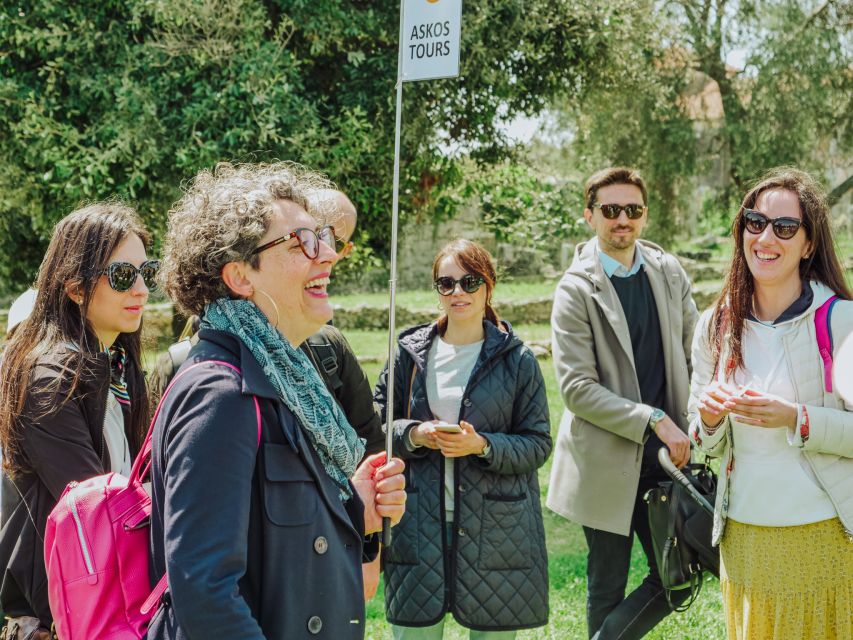
- An archaeologist leads the walk: Guides explain construction, mythology, political life, and the changes from Greek to Lucanian to Roman rule.
- The museum completes the story: The Tomb of the Diver and local Greek artworks make much more sense after you have seen the city itself.
- Small groups improve the tour: Groups may be small enough for easy questions and clear hearing, while larger groups receive disposable earphones.
- The schedule is tight: About 90 minutes is spent in the park and 30 minutes in the museum, so you will need comfortable shoes and a sensible pace.
- You arrange your own transport: The meeting point is near the Basilica Paleocristiana dell’Annunziata on Via Magna Graecia, and transportation is not included.
Why Paestum deserves more than a quick stop
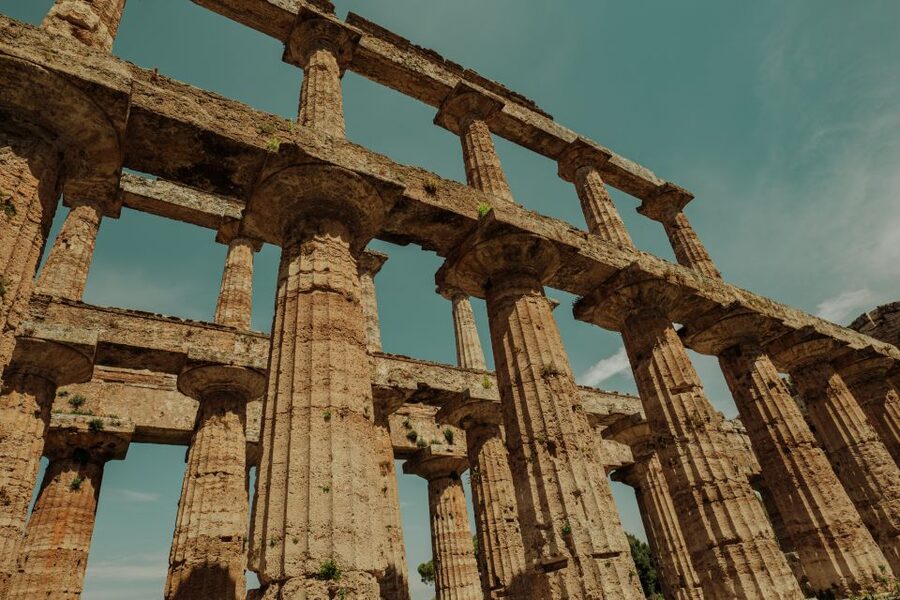
Paestum is one of those places that can surprise you. It is not as famous as Pompeii, yet the Greek temples are among the most impressive ancient buildings in Italy. Their survival gives you a rare chance to see Greek architecture at full scale, not just as scattered columns or partial walls.
The site also tells more than one story. The city began as a Greek settlement, later came under Lucanian control, and then became Roman. The ruins include temples, roads, political spaces, commercial buildings, an amphitheater, and city walls. A guide helps you connect those pieces instead of treating each stone as an isolated object.
I would not choose this tour simply to take photographs of the temples, although you will have plenty of chances to do that. I would choose it because the guide explains how the city worked, how the buildings changed, and what archaeologists can learn from the remains.
A few more reviews worth comparing before you book
- Naples: Naples Underground Entry Ticket and Guided Tour
★ 4.4 · 21,781 reviews - Pompeii: Entry Ticket and Guided Tour with an Archaeologist
★ 4.8 · 19,459 reviews - Pompeii: Entry Ticket with Optional Audio Guide
★ 4.2 · 12,360 reviews
Meeting at the Basilica Paleocristiana dell’Annunziata
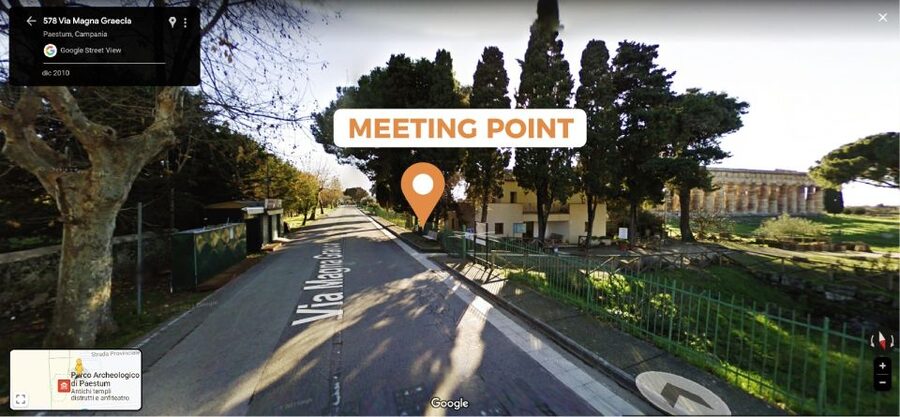
The tour has two possible starting options, with the listed meeting point at the Basilica Paleocristiana dell’Annunziata, Via Magna Graecia, 919. Check your booked option carefully, since the exact meeting point can vary.
This is a walking tour, not a transfer service. You must make your own way to Paestum, and the experience finishes at the listed drop-off point near the basilica. Food and drinks are also not included, so carry water, especially in summer.
The area around Paestum is relatively easy to walk, but the archaeological park is open and exposed. Wear shoes that can handle uneven ground, and choose light, comfortable clothing. The supplied advice to bring water is not a throwaway suggestion. One family noted that two and a half hours on foot in temperatures above 30 degrees felt draining, even with an excellent guide.
The archaeological park: 90 minutes among Greek and Roman ruins
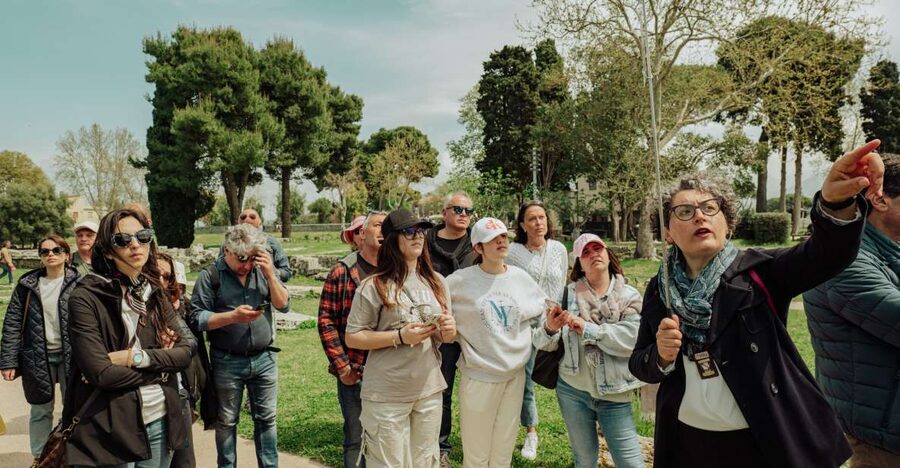
The main guided walk lasts about an hour and a half. That gives you enough time to see the major buildings and hear the story of the city, but not enough time for a slow, independent examination of every corner.
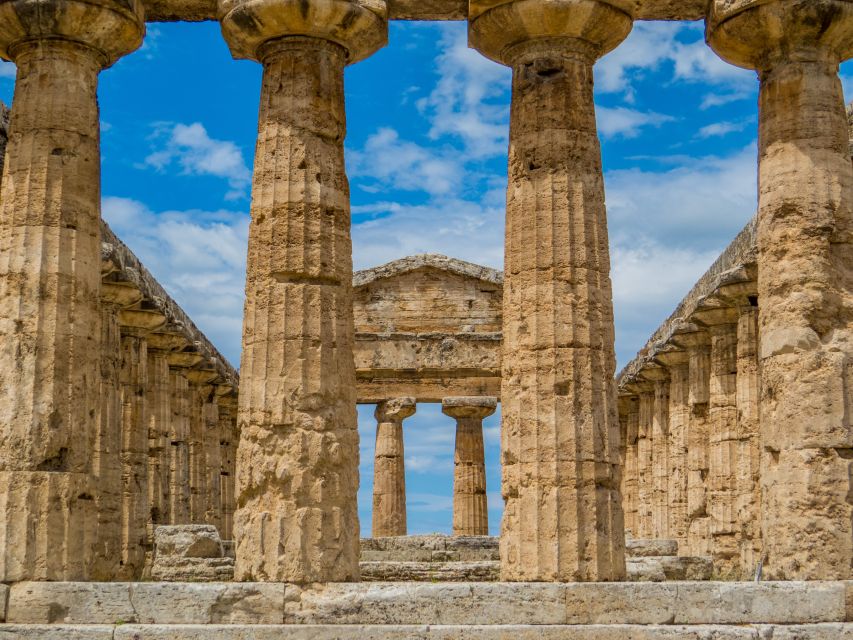
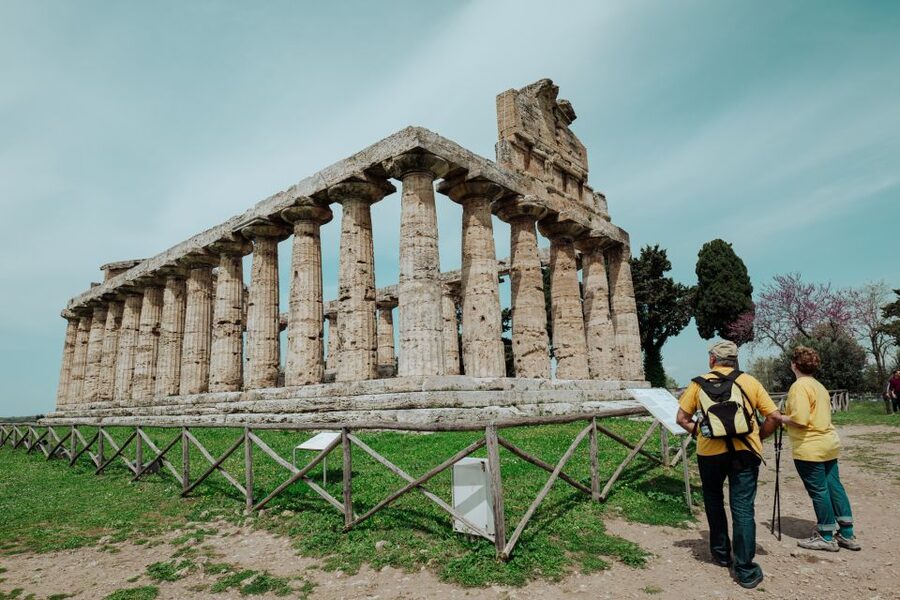
The three temples receive the attention they deserve. The Temple of Neptune, the Temple of Ceres, and the building often called the Basilica date from the sixth century B.C. Their height and condition are the unusual part. The columns, proportions, and broad stone forms make the temples feel much closer to complete buildings than the broken remains you often see at ancient sites.
The Basilica is not a Christian church in the usual sense of the word. Its name reflects a later interpretation of the building, while its original purpose was connected to the Greek city. This is exactly the kind of detail that is easy to miss without an archaeologist at your side.
The Temple of Neptune is often the visual high point. The surviving columns and upper structure show the order and weight of Greek design in a way that photographs cannot quite capture. The Temple of Ceres, with its later Christian association, adds another layer to the site’s long use and changing meaning.
Your guide also points out the remains of the city walls, which help establish the scale of Paestum as a functioning urban center rather than a temple complex set in isolation. The walls frame the settlement and make it easier to imagine a protected city with streets, public buildings, and daily movement.
Seeing Paestum as a living city
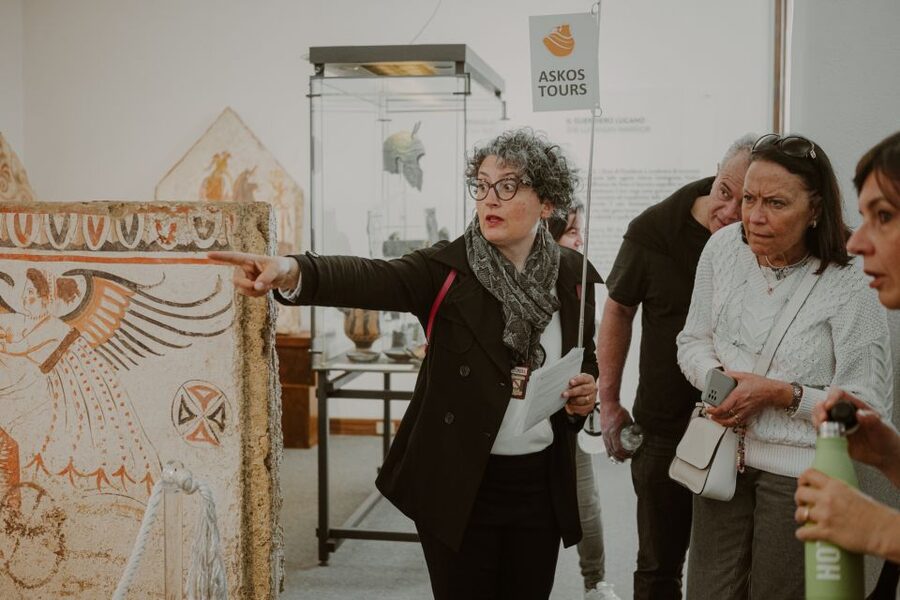
The Roman remains are just as important as the temples, even if they are less immediately dramatic. The comitium, or political assembly hall, shows how public life changed under Roman influence. The amphitheater, forum, markets, roads, and other structures add the practical side of the story.
This is where the quality of the guide matters most. A column needs little explanation to look beautiful. A low wall or worn pavement needs context. Guides such as Mario have been praised for pointing out features people might otherwise walk past, including the marketplace, prison, forum, roads, and building techniques.
A strong explanation also helps separate the different periods. The site is not simply Greek, and it is not simply Roman. You will hear about Greek origins, Lucanian culture, Roman planning, architectural changes, and the way later communities reused or reinterpreted older buildings.
Several guides are also good at adjusting their explanations to the group. Families with children have found the storytelling engaging, while adults interested in architecture or excavation could ask more detailed questions. That flexibility is valuable in a small group, where the guide can respond instead of delivering a fixed speech.
A different sort of day out around Naples:
- Pompeii: Small Group Tour with an Archaeologist
★ 4.8 · 12,264 reviews - From Naples: Pompeii Ruins & Mount Vesuvius Day Tour
★ 4.3 · 11,459 reviews - From Naples: Sorrento, Positano and Amalfi Full-Day Tour
★ 4.6 · 10,988 reviews - From Naples: Sorrento, Positano & Amalfi Coast – Small Group Tour
★ 5.0 · 8,643 reviews
The National Archaeological Museum and the Tomb of the Diver
The final 30 minutes take place at the National Archaeological Museum of Paestum. This short museum visit is not an extra decoration added at the end. It gives you the objects and painted scenes that help explain the city you have just walked through.
The museum holds local Greek works dating from the seventh century B.C. Its most famous object is the Tomb of the Diver, a painted burial chamber with a remarkable image of a figure diving into water. The tomb is especially memorable because it offers a rare glimpse into Greek funerary art and ideas about death, transition, and the unknown.
I like the order of this tour: ruins first, museum second. After seeing the temples and streets, the objects in the museum have a physical setting in your mind. One guide, Mario, was praised for connecting the museum displays directly to the archaeological discoveries in the park, which is exactly how the two parts should work together.
The museum portion is also where the schedule feels most restrictive. You receive a guided half hour, but you may want extra time to look at individual exhibits. One important practical point is that reentry into the museum after the tour may not be possible. If you need a break, refreshments, or more time with the collection, ask about your options before leaving the museum area.
What the archaeologist adds
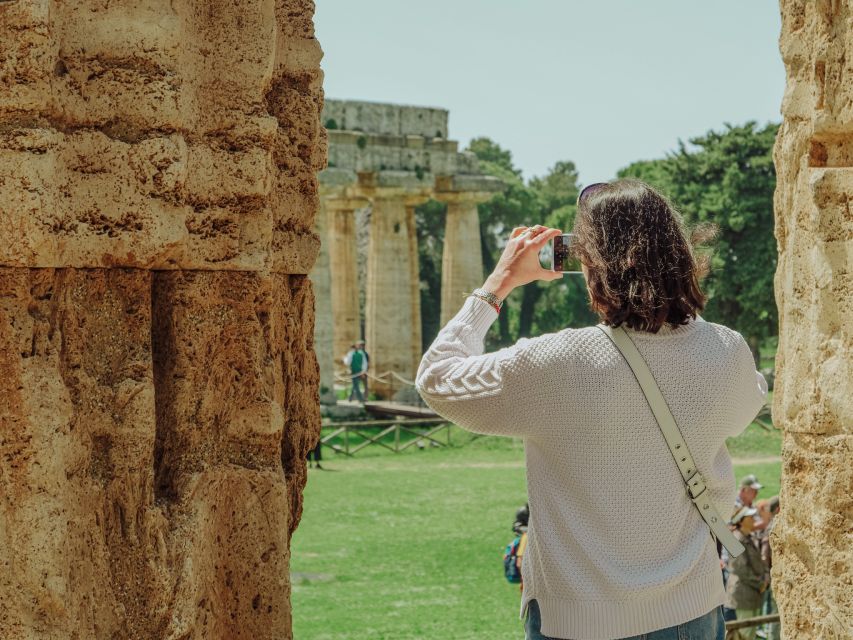
The strongest reason to book this experience is the guide’s training. A general city guide can tell you the broad story, but an archaeologist can explain how evidence is read and why certain conclusions are accepted.
That difference comes through in the accounts of Ivan and Nan. Ivan has worked at the site and has taken part in excavations, giving him personal knowledge of the archaeology rather than only textbook information. One especially appealing detail is that he could point out a roof in the museum that he had helped excavate.
Nan was praised for explaining technical subjects in terms that made sense to non-specialists while still offering useful detail. That is the balance you want at Paestum. Too little information leaves the ruins flat; too much specialist language can turn a beautiful morning into a lecture.
The guides are also repeatedly praised for warmth and patience. Mario is described as engaging, humorous, and enthusiastic. Francesca is noted for keeping the information interesting and looking after the group. Maria is praised for answering questions and bringing together the different cultures and timelines. These personal qualities matter because you will be standing for much of the tour, listening outdoors, and moving from one area to another.
Group size, languages, and listening conditions
The experience is designed as a small-group tour, and that format appears to be one of its best features. One group had only six people, making it easy to hear the guide and ask questions. Another group became a private tour because no other participants joined that departure, although you should not count on that happening.
Private groups are available as an option. This may suit families, couples with specific interests, or anyone who wants more control over the pace. A standard small group should still provide a personal experience, provided the group is not unusually large.
Tours are offered in English, Italian, French, Spanish, and German. For larger groups, disposable earphones are provided so the guide can be heard more clearly. If you have any hearing concerns, a smaller departure may be preferable.
Is $47 good value?
At $47, the tour is reasonably priced for a two-hour visit that includes the archaeological park ticket, museum admission, and an archaeologist guide. Buying entry alone would give you access to the monuments, but it would not provide the explanations that turn the comitium, amphitheater, markets, and temple remains into a connected story.
The value is strongest if you are visiting Paestum for the first time. The site is compact enough to walk through, but its layers are not always obvious. The tour saves you from trying to identify buildings from a map or piecing together the timeline later.
The price is less attractive if you prefer to wander slowly, take long photographs, or spend a full afternoon in the museum. The guided schedule is fixed at roughly 90 minutes in the park and 30 minutes in the museum, and you must arrange transport and refreshments yourself.
Still, the repeated praise for the guides suggests that the fee is buying more than entry. It is buying interpretation, orientation, and access to professional archaeological insight. For most first-time visitors, that is money well spent.
Who will enjoy this tour most?
I would recommend it to anyone with an interest in Ancient Greek history, architecture, archaeology, or the way cities change over time. It is also a good choice if you have limited time and want the essential monuments explained efficiently.
Families can enjoy it, particularly with a guide who adapts the storytelling to younger listeners. Keep in mind that the tour involves extended standing and walking, and one parent noted that two hours can feel long for children who are tired or impatient.
It suits adults who want substance without a university lecture. The best guides explain temple design, mythology, politics, and excavation in clear language, then leave room for questions.
I would be cautious about booking it if you use a wheelchair or have major mobility limitations. The experience is not suitable for wheelchair users or people with mobility impairments. You should also think twice about the hottest part of summer unless you are comfortable walking outdoors in strong heat.
For a more relaxed visit, choose a cooler time of day if the available start times allow it. Bring water, wear comfortable shoes, and avoid planning a demanding activity immediately afterward.
Practical details before you go
The tour lasts two hours, but the full outing may take longer if you need time to reach the meeting point or arrange onward transport. There is no transportation included, so plan that part before arrival.
The listed meeting and drop-off point is the Basilica Paleocristiana dell’Annunziata on Via Magna Graecia, 919, though the exact starting option can vary. Confirm the selected option when booking.
You can cancel up to 24 hours before the start for a full refund, and the reserve-now, pay-later option gives you some flexibility while your plans are still changing. Live guiding is available in five languages, and private groups can be booked.
The practical checklist is short:
- Comfortable walking shoes
- Water
- Comfortable clothes
- Extra time if you want to study the museum independently
If you are visiting in a larger party, expect earphones to help with listening. If you are hoping to reenter the museum after the guided portion, ask before exiting, since that may not be allowed.
Should you book the Paestum archaeologist tour?
Yes, I would book it if you want to understand Paestum rather than simply see it. The temples are extraordinary on their own, but the guide explains the less obvious remains and connects the Greek, Lucanian, and Roman periods into one readable story.
The best reason to choose this tour is the consistent quality of its archaeologist guides. Mario, Maria, Ivan, Francesca, Angelo, and others are praised for clear speech, enthusiasm, patience, and personal insight. Ivan’s excavation experience is a rare bonus if he leads your departure.
Skip it only if you need a slow, self-guided day or cannot manage sustained walking. For everyone else, the included tickets, small group, museum visit, and professional guidance make $47 a sensible investment in one of Campania’s most rewarding ancient sites.
FAQ
How long does the Paestum tour last?
The tour lasts two hours. About 90 minutes are spent in the Archaeological Park of Paestum, followed by about 30 minutes in the National Archaeological Museum.
What does the tour price include?
The $47 price includes a guided tour with an archaeologist and a skip-the-line entry ticket for Paestum. Transportation, food, and drinks are not included.
Which languages are available?
Live guiding is available in English, Italian, French, Spanish, and German.
Is the tour suitable for wheelchair users?
No. The activity is not suitable for wheelchair users or people with mobility impairments.
What should I bring?
Bring comfortable shoes, water, and comfortable clothing. The visit includes walking and extended time outdoors.
Can I cancel the booking?
You can cancel up to 24 hours in advance for a full refund. A reserve-now, pay-later option is also available.
Just added around Naples
- From Naples/Salerno: Pompeii, Sorrento, and Positano Tour★ 4.5 · 250 reviews
- Pompeii: Day Tour of Pompeii and Vesuvius with Bus Transfer★ 4.2 · 250 reviews
- Ischia: Island Boat Tour with Neapolitan Lunch & Snorkeling★ 4.9 · 253 reviews
- Explore Naples & Pompeii in One Day – Guided Half-Day Tour★ 4.5 · 253 reviews
- Discover Pompeii: French Walking Tour of the Buried City★ 4.8 · 253 reviews
- Private Transfer from Naples to Sorrento or from Sorrento to Naples★ 5.0 · 254 reviews
- From Pompeii: Mount Vesuvius Guided Tour with Transfer★ 4.8 · 255 reviews
- Private Transfer from Naples to Positano or Amalfi or vice versa★ 5.0 · 265 reviews
Naples Tours, compared.
Naples Underground Entry Ticket and Guided Tour
Read our review →
Pompeii: Entry Ticket and Guided Tour with an Archaeologist
Read our review →
Pompeii: Entry Ticket with Optional Audio Guide
Read our review →
Pompeii: Small Group Tour with an Archaeologist
Read our review →
Sorrento, Positano and Amalfi Full-Day Tour
Read our review →
Sorrento, Positano & Amalfi Coast – Small Group Tour
Read our review →
Catacombs of San Gennaro Entry Ticket & Guided Tour
Read our review →Browse the lists this tour appears in