
Review · MUSEUMS
Milan: La Scala Theater and Museum Tour with Entry Tickets
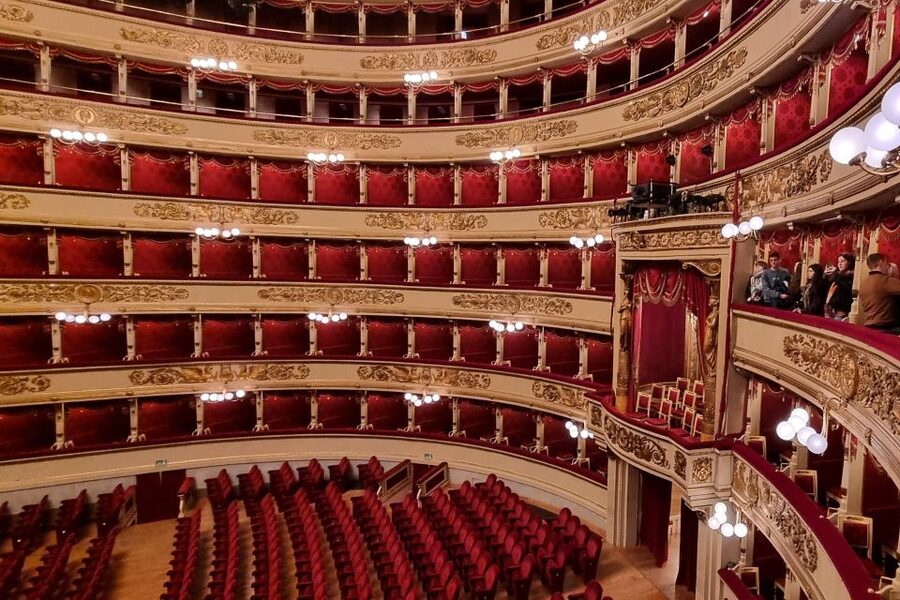
Opera has a backstage story. This one-hour tour of Teatro alla Scala combines the famous auditorium with a museum filled with costumes, instruments, portraits, and personal stories. I especially like the lively guides, including Eddie, Silvia, Simone, and Daniele, and the chance to sit in one of the theater boxes for a view toward the stage.
I also like that your ticket lets you continue through the museum after the guided portion. The main drawback is important: rehearsals and performances can limit access to the auditorium, so you may see the theater only from a box or be restricted to the museum.
In This Review
- La Scala at a glance
- Why La Scala matters beyond its famous name
- Starting in the museum galleries
- Hearing the stories behind the stage
- Seeing Teatro alla Scala from a box
- The rehearsal possibility
- How the one-hour schedule works
- Is $34 a fair price?
- Who will enjoy this La Scala visit?
- How to get the most from the hour
- Final verdict: book it for stories, not guaranteed access
- FAQ
- How long does the La Scala Theater and Museum tour last?
- What does the ticket include?
- Can I enter the main auditorium?
- Can I watch a rehearsal?
- Is the tour offered in English?
- Is the tour wheelchair accessible?
- Can I cancel the booking?
La Scala at a glance
- A 240-year-old theater: The tour explains La Scala’s long connection with opera, ballet, composers, singers, and conductors.
- A box-seat view: When conditions allow, you can look into the auditorium from one of the theater boxes and sit for a few minutes.
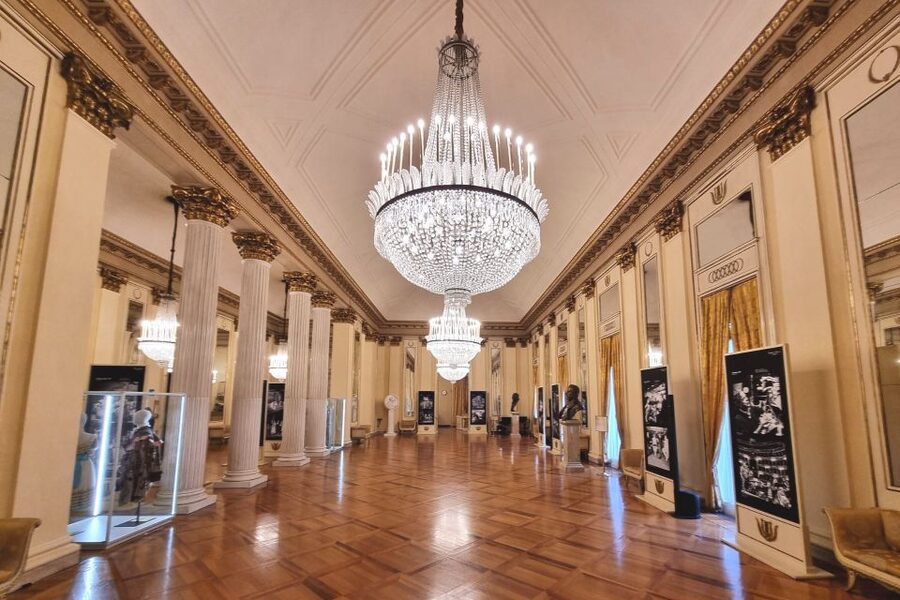
- A museum of working theater history: Costumes, musical instruments, portraits, and busts give the visit something to see beyond the building itself.
- Story-led guiding: Guides bring up Verdi, Toscanini, Maria Callas, Luciano Pavarotti, Carla Fracci, and other major figures.
- A compact one-hour visit: The pace suits a busy Milan day, though you should leave extra time to explore the museum afterward.
- Possible rehearsal bonus: If access is permitted, you may return after the tour and watch part of an opera or orchestra rehearsal.
Why La Scala matters beyond its famous name
La Scala is not simply a pretty opera house near Milan’s center. It is a place where opera and ballet became part of the city’s public life, and the tour uses the theater’s people and performances to explain that role.
You hear about composers, singers, conductors, and dancers who helped shape the venue. Verdi, Toscanini, Maria Callas, Luciano Pavarotti, and Carla Fracci are among the names tied to the story. That makes the visit useful even if you cannot tell Mozart from Puccini.
I like this approach because opera houses can feel distant when you only see gilded balconies and red seats. Personal stories give the rooms a human scale. The guide may explain an artist’s working life, a famous performance, or an unusual detail about the theater, then connect it to something in the museum.
Several guides receive especially warm praise for their energy and humor. Eddie is repeatedly singled out for his storytelling, while Silvia, Simone, and Daniele are also described as passionate and clear. Guide quality can vary from one departure to another, but the tour is built around live explanation rather than a silent walk through display cases.
More Museum Tours in Milan
- Milan: Science and Technology Leonardo da Vinci Museum Entry
★ 4.5 · 7,169 reviews - Official San Siro Stadium and Museum Guided Tour
★ 4.4 · 3,573 reviews - Milan: Leonardo3 The World of Leonardo Museum Entry Ticket
★ 4.4 · 3,241 reviews
Starting in the museum galleries
The visit centers first on the La Scala Museum. This is not a huge museum that requires half a day. Instead, it is a focused collection that helps you understand the theater’s performers and productions.
You can expect displays of stage costumes, musical instruments, portraits, and busts of important musicians. The objects are valuable because they show opera as a practical art made by people, not just a grand tradition floating above everyday life.
The costumes are likely to catch your eye first. They hint at the scale and visual drama of opera and ballet, where fabric, movement, color, and character all matter. The instruments add another layer, showing how music was produced and preserved within the theater’s world.
The portrait gallery gives the museum its sense of continuity. Instead of treating La Scala as one fixed moment in time, it links different generations of singers, composers, and performers. Your guide helps sort out who mattered and why, which is much easier than trying to read every label on your own.
One useful tip is to stay after the guided hour. The ticket allows you to wander through the museum independently, and that extra time matters. The tour gives you the story and orientation. A slower second look lets you inspect costumes, portraits, and instruments without needing to keep pace with the group.
Hearing the stories behind the stage
The strongest part of this experience is the guide’s narration. A basic museum entry would show you objects, but it would not necessarily explain the connections between the artists who performed at La Scala.
Guides talk about the theater’s long past and the lives of famous performers. The best commentary includes small human details, funny episodes, and links between composers and singers. One guide even used music excerpts on a phone to help the group hear the difference between composers and understand how the instruments fit into performances.
That kind of explanation helps if you have little background in opera or ballet. You do not need to prepare by listening to a stack of recordings or learning a list of Italian names. The guide supplies enough context to make the displays more approachable.
I would still keep your expectations sensible. This is a one-hour guided visit, not a full course in opera. You will hear selected stories and broad context rather than a detailed account of every season, production, or musical director.
The headsets are a practical plus for groups of 10 or more. They let you hear the guide without forcing him or her to shout, and you can remain at the edge of the group without missing every sentence. One visitor did note that a guide became harder to hear when turning away from the microphone, so the equipment helps but does not solve every sound problem.
Seeing Teatro alla Scala from a box
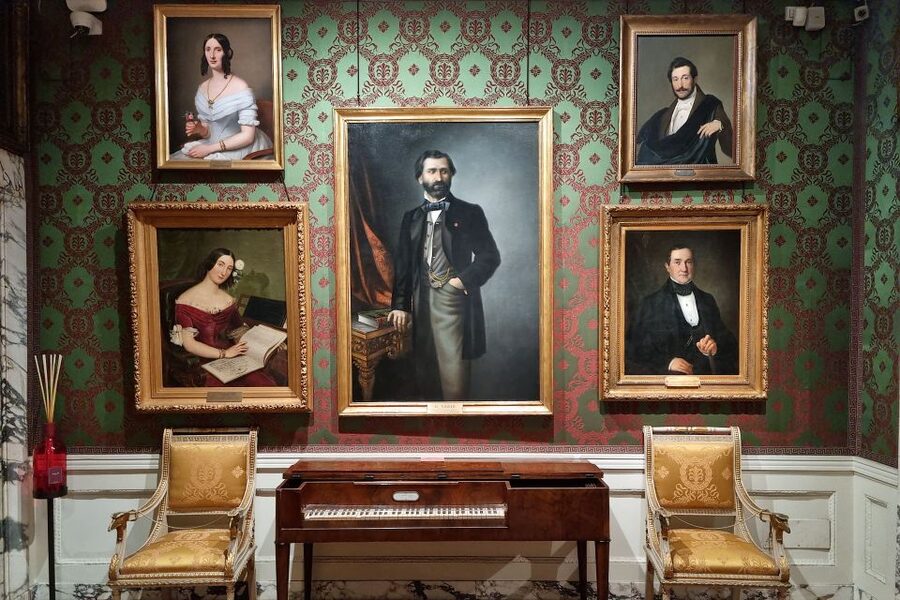
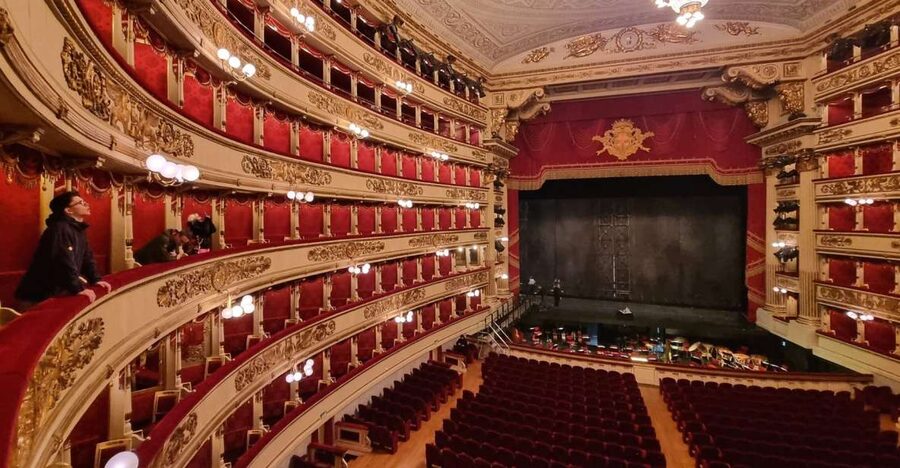
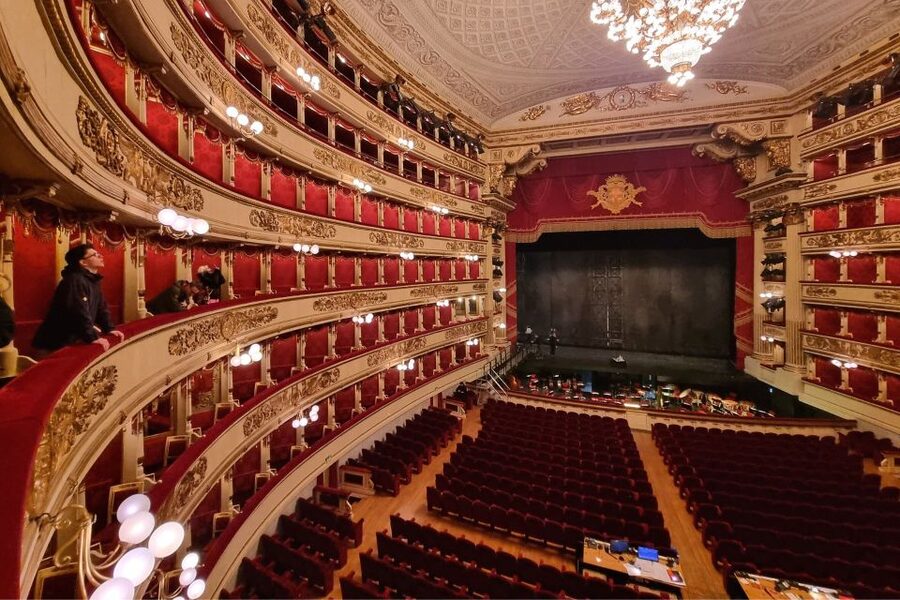
For many people, the highlight is the view into the auditorium. When the theater is open for this part of the visit, the group can enter a box and look toward the stage and seating.
This is a memorable angle because you are not just standing in a public entrance hall. You can sit for a few minutes and imagine what it felt like to attend a performance from that position. Several people valued the chance to take photographs from the box and return for another look after the tour.
The view is also a good reminder that theater design is about sightlines. From a box, you see the stage framed by the auditorium and get a sense of how the room works as a performance space. A model of the building may also be used to explain its different areas.
There is a limitation here. The experience does not promise unrestricted access to the main floor, backstage rooms, dressing areas, or stage. Some people wished they could step onto the auditorium floor or see spaces used by performers before a show.
That is not a flaw in the guide’s route. La Scala is an active theater, not a preserved shell. Rehearsals, events, and production work can close parts of the building. If you need full access to the auditorium, this tour cannot guarantee it.
More galleries and collections:
- Milan: La Scala Theater & Museum Guided Experience
★ 4.1 · 2,931 reviews - Milan: Pinacoteca Ambrosiana & da Vinci Codex Exhibition
★ 4.6 · 1,816 reviews - Milan: Cathedral, Archeological Area and Museum Ticket
★ 4.5 · 1,093 reviews - Casa Milan: Museum Entry Ticket
★ 4.6 · 969 reviews
The rehearsal possibility
The most exciting reports come from people who were allowed to return after the tour and watch a rehearsal. Some saw singers and an orchestra preparing for an upcoming opera. Others watched an orchestra rehearsal or a live stage practice.
This is not included as a guaranteed part of the experience, so do not book the tour solely for that possibility. Still, it can turn a good museum visit into something far more vivid. You see La Scala functioning as a theater rather than only as an exhibit.
If the guide or staff says you may return, take advantage of it. You might find that a quiet rehearsal gives you a better sense of the building than a formal performance would. You can watch the working process, hear fragments of music, and see how the stage changes during preparation.
The key phrase is if access is permitted. Rehearsals and events may also mean the opposite: the auditorium is closed and the visit takes place only in the museum. That uncertainty is the main tradeoff of choosing a working theater over a museum dedicated solely to display.
How the one-hour schedule works
The listed duration is one hour, with starting times depending on availability. That makes the tour easy to fit between Milan’s major sights, especially if you are already visiting the Duomo and central Milan.
Do not treat the one-hour length as the total time needed at La Scala. The guided portion is compact, but you should allow additional time for the museum afterward. If you are fortunate enough to watch a rehearsal, your visit will naturally last longer.
The group moves at a steady pace through the museum and theater areas. That is helpful if you want a clear introduction without spending half a day indoors. It can feel short if you enjoy reading every label or want a detailed look at each costume and instrument.
The meeting point may change depending on the option booked, so check your confirmation carefully. You should also avoid bringing luggage or large bags. Pets are not allowed.
The tour runs rain or shine, and the site is wheelchair and stroller accessible. The tour is offered in English and French, with headsets provided for groups of 10 or more.
Is $34 a fair price?
At $34 per person, the value depends on what you want from La Scala. If you only want a quick look at the building, the price may feel high for a one-hour visit, especially if rehearsal activity restricts you to the museum.
I think the price makes better sense if you value interpretation. You are paying for entry to both the theater and museum, plus a guide who can explain the artists, objects, and performances. The stories help transform a short visit into a useful introduction to Milan’s opera tradition.
The ticket also has more value when you use the museum time well. Stay after the tour, look again at the displays, and take another permitted view of the auditorium. That extra independent time costs nothing more.
The best value comes when three things line up: you receive an engaging guide, you can see the auditorium from a box, and you get permission to watch a rehearsal. None of those elements should be treated as guaranteed, but the tour is priced reasonably for access, guiding, and the possibility of a working theater experience.
Who will enjoy this La Scala visit?
You do not need to be an opera fan. The stories about performers and the building can hold your attention even if you know very little about the subject. Several people who began with limited opera or ballet knowledge found the history easier to appreciate because the guide explained it with humor and music.
The tour is especially suited to:
- First-time visitors to Milan who want a cultural stop with a clear time limit.
- Opera and ballet fans who want to connect famous names with the theater.
- People attending an opera later and wanting useful background first.
- Visitors who prefer a guide to a museum audio guide or printed labels.
- Families and mixed-age groups, thanks to the short duration and accessible route.
- Anyone interested in architecture, costumes, stagecraft, or performance history.
It may be less suitable if you want a long backstage tour or guaranteed access to the main auditorium floor. It is also not the right choice if you dislike uncertainty around active rehearsals and theater closures.
How to get the most from the hour
Read your meeting instructions before leaving for the theater, since the meeting point can vary by booking option. Arrive ready to enter without a large bag, and keep your schedule flexible after the tour in case you can return to the auditorium.
During the guided portion, stay close enough to see what the guide is discussing. If your group has 10 or more people, use the headset. It should make the commentary easier to follow without crowding around the guide.
Listen for the connections between artists rather than trying to memorize every name. The most useful insight is often how a composer, singer, conductor, or dancer fits into La Scala’s larger story.
Afterward, revisit the museum at your own pace. Look again at the costumes and instruments, then spend a few quiet minutes with the portraits and busts. If access to a rehearsal is offered, accept it, but remember that the timing and length are outside the tour’s control.
Final verdict: book it for stories, not guaranteed access
I would book this tour if you want a lively introduction to La Scala and appreciate the value of a strong guide. The museum collection gives you plenty to see, the box view can be special, and the stories about Verdi, Callas, Pavarotti, Toscanini, and Carla Fracci make the theater feel connected to real people.
I would skip it only if your main goal is guaranteed entry onto the auditorium floor or backstage. Rehearsals and events can limit the route, and the tour may become museum-only.
For most first-time visitors, $34 is fair value, especially if you stay afterward and make use of the museum and any permitted rehearsal viewing. Book with realistic expectations, then hope for the theatrical bonus.
FAQ
How long does the La Scala Theater and Museum tour last?
The guided tour lasts one hour. You can also remain afterward to explore the museum independently when permitted.
What does the ticket include?
The ticket includes entry to Teatro alla Scala and the La Scala Museum. Headsets are included for groups of 10 or more.
Can I enter the main auditorium?
You may receive a view of the auditorium from one of the theater boxes. Access can be limited by rehearsals and events, and the visit may take place only in the museum.
Can I watch a rehearsal?
You might be allowed to return after the tour and watch part of a rehearsal, but rehearsal access is not guaranteed.
Is the tour offered in English?
Yes. Live guiding is available in English and French.
Is the tour wheelchair accessible?
Yes. The activity is wheelchair accessible, and strollers are also allowed.
Can I cancel the booking?
You can cancel up to 24 hours in advance for a full refund. A reserve-now-and-pay-later option is also available.
Just added around Milan
- Milan Sights by Segway Small Group Tour★ 5.0 · 249 reviews
- Unveil the Masterpiece: Guided Tour of Da Vinci’s Last Supper★ 4.5 · 251 reviews
- Milan: Pasta & Tiramisu Cooking Class with Premium Products★ 5.0 · 255 reviews
- Milan Semi-Private Max 6 People Tour with Last Supper and Duomo★ 5.0 · 258 reviews
- Skip The Line: Best Of Milan Tour With Last Supper & Milan Duomo★ 4.5 · 260 reviews
- Milan: Duomo & Rooftop Tour with Optional Hop-On Hop-Off Bus★ 4.5 · 262 reviews
- Stresa: 1-Day 3 Borromean Islands Hop-On Hop-Off Boat Tour★ 4.0 · 262 reviews
- Milan Centre Food Tour of 7+ Italian Tastings with Risotto & Wine★ 5.0 · 264 reviews
Museums, compared.

Vatican: Museums & Sistine Chapel Entrance Ticket
Read our review →
Vatican Museums & Sistine Chapel Tour with Optional Basilica
Read our review →
Vatican Museums, Sistine Chapel & St Peter’s Basilica Guided Tour
Read our review →
Skip-The-Line Uffizi Gallery Timed Entry Ticket
Read our review →
Vatican Museums, Sistine Chapel & Basilica Tour
Read our review →
Vatican Museums & Sistine Chapel Skip-the-Line Entry Ticket
Read our review →Vatican Museums, Sistine Chapel & Basilica Tour
Read our review →
Vatican Museums & Sistine Chapel Guided Tour
Read our review →Browse the lists this tour appears in