
Review · MUSEUMS
Milan: Leonardo3 The World of Leonardo Museum Entry Ticket
Leonardo’s notebooks come alive here. At Leonardo3, you can examine more than 200 reconstructed machines, turn digital pages of his codices, and see how researchers transformed rough Renaissance sketches into working models. I especially like the hands-on machines, including the mechanical dragonfly, and the detailed digital work that makes Leonardo’s ideas easier to understand. The optional audioguide is another strong point, since it adds useful explanations in several languages without tying you to a group.
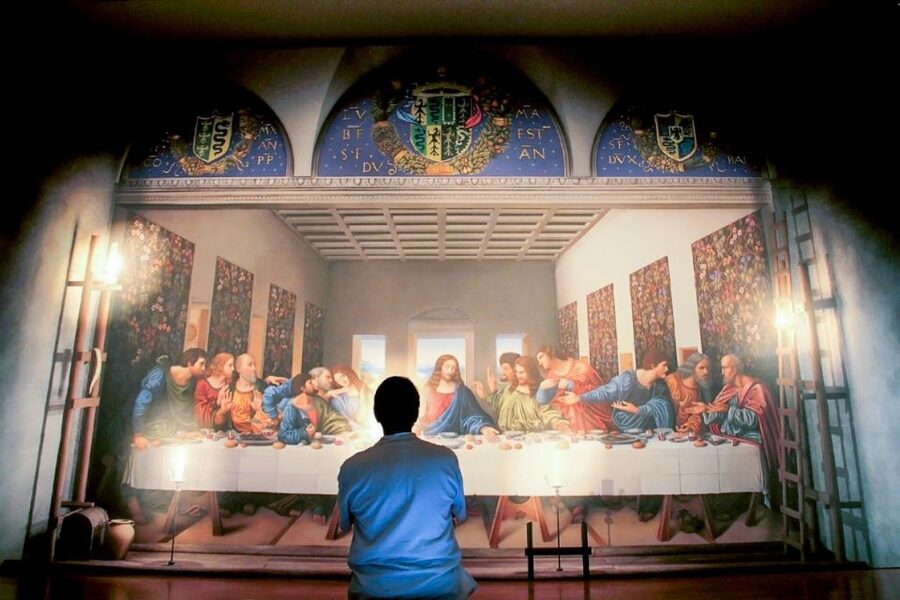
The museum also offers a digital restoration of The Last Supper, which gives you a fresh way to study Leonardo’s famous painting. The main drawback is space: some rooms feel tight, and popular interactive stations can be difficult to reach when several people gather around them. If you prefer quiet, spacious galleries, this may feel crowded at busy times.
In This Review
- Key points to know before you go
- What Leonardo3 actually offers
- Starting at the Galleria Vittorio Emanuele II
- The machines: from dragonflies to war devices
- Digital codices and the logic behind Leonardo’s ideas
- A different way to see The Last Supper
- Leonardo the artist, designer, and city planner
- Hands-on activities for children and curious adults
- Should you pay extra for the audioguide?
- How much time should you allow?
- Price, practical details, and overall value
- Who will enjoy Leonardo3 most?
- Should you book Leonardo3?
- FAQ
- Where is Leonardo3 located?
- How much does admission cost?
- How long is the ticket valid?
- Is an audioguide included?
- What languages are used in the interactive displays?
- Is the museum wheelchair accessible?
- Can I bring food, drinks, or a camera?
- Is transportation included?
Key points to know before you go
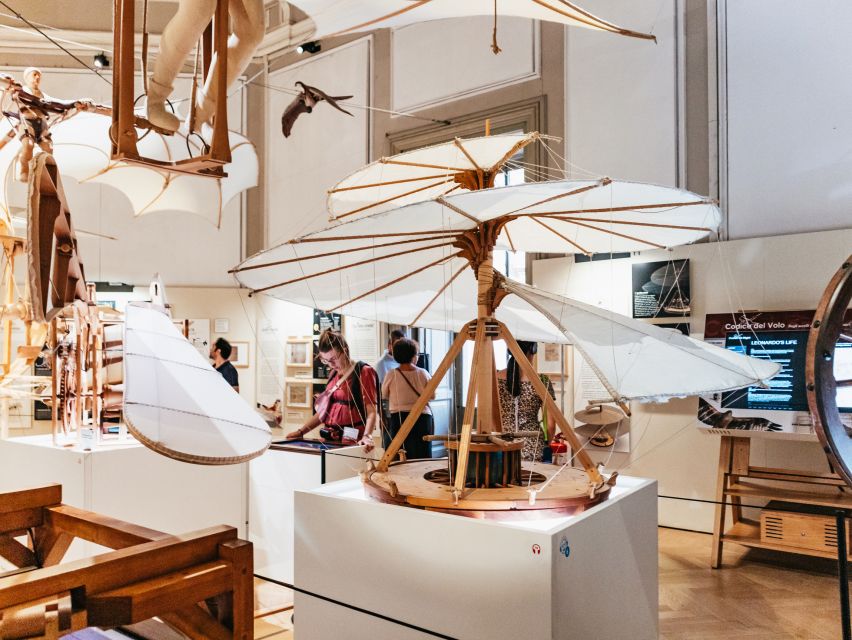
- More than 200 reconstructed machines: See working models based on Leonardo’s manuscripts, from military devices to flying machines and theatrical inventions.
- The codices are made usable: Digital versions let you inspect Leonardo’s notes and ideas in a clearer, more accessible format.
- The Last Supper gets a digital treatment: Study the painting through a digital restoration and an optional three-dimensional reconstruction of its setting.
- Children have real things to do: A workshop includes wooden bridge building and an inventor’s certificate activity.
- The audioguide is worth considering: Explanations are available in Italian, English, Russian, German, French, Spanish, Portuguese, and Chinese.
- The location is wonderfully central: Enter through the Galleria Vittorio Emanuele II at Piazza della Scala, right in the heart of Milan.
What Leonardo3 actually offers
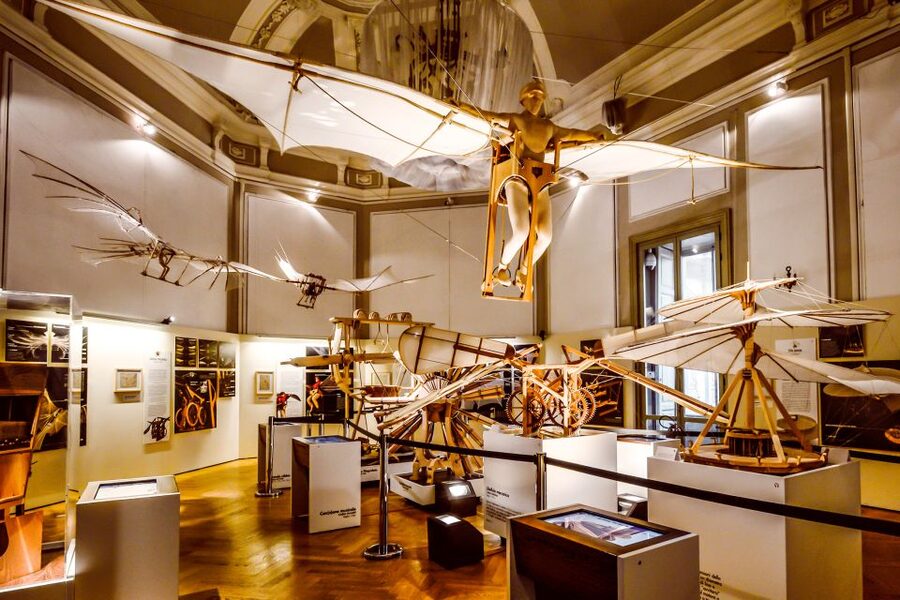
Leonardo3 is not a traditional museum filled mainly with original paintings or handwritten pages. It is an exhibition about interpretation. The team has studied Leonardo’s manuscripts and turned many of his drawings into three-dimensional models, animations, and interactive displays.
That distinction matters. You are not looking at a complete original machine from the fifteenth century. You are seeing carefully researched reconstructions of ideas Leonardo recorded, often as quick sketches or complicated notes. The result lets you understand how an invention might work, even when the original drawing is difficult to read.
I find this approach especially useful for anyone who has looked at Leonardo’s notebooks and thought, What am I supposed to be seeing? Here, gears move, parts open, and diagrams become easier to follow. The displays connect Leonardo’s written ideas with the physical result.
The museum covers Leonardo as an engineer, inventor, artist, and designer. You will encounter military equipment, canal engineering, flight, mechanical systems, stage devices, and painting. The range helps explain why Leonardo remains so fascinating. He did not stay in one field for long.
More Museum Tours in Milan
- Milan: Science and Technology Leonardo da Vinci Museum Entry
★ 4.5 · 7,169 reviews - Official San Siro Stadium and Museum Guided Tour
★ 4.4 · 3,573 reviews - Milan: La Scala Theater & Museum Guided Experience
★ 4.1 · 2,931 reviews
Starting at the Galleria Vittorio Emanuele II
The entrance is through the Galleria Vittorio Emanuele II in Piazza della Scala. That gives you an excellent setting before you even reach the exhibition. The grand arcade and Piazza della Scala are among central Milan’s most memorable urban spaces, so this visit fits neatly into a day of sightseeing.
Show your ticket at the museum ticket office. Transportation is not included, but the central location makes this an easy stop to combine with other Milan sights. You do not need to treat it as a full-day outing. The ticket is valid for one day, and the exhibition works well as a one to two-hour addition to a city itinerary.
There is no fixed guided route described for the experience. You move through the exhibition at your own pace, spending more time at the machines that catch your attention. That freedom is useful because Leonardo’s interests are so varied. One person may want to study military engineering, while another may prefer painting, flight, or the canal projects.
The machines: from dragonflies to war devices
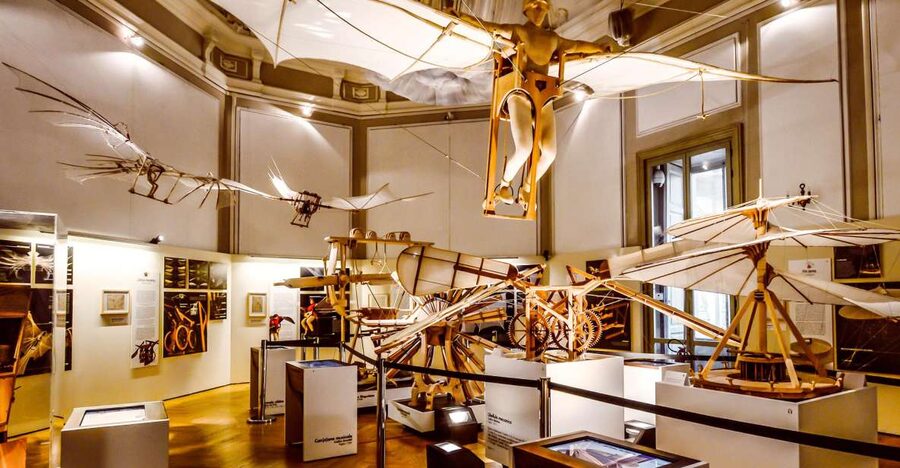
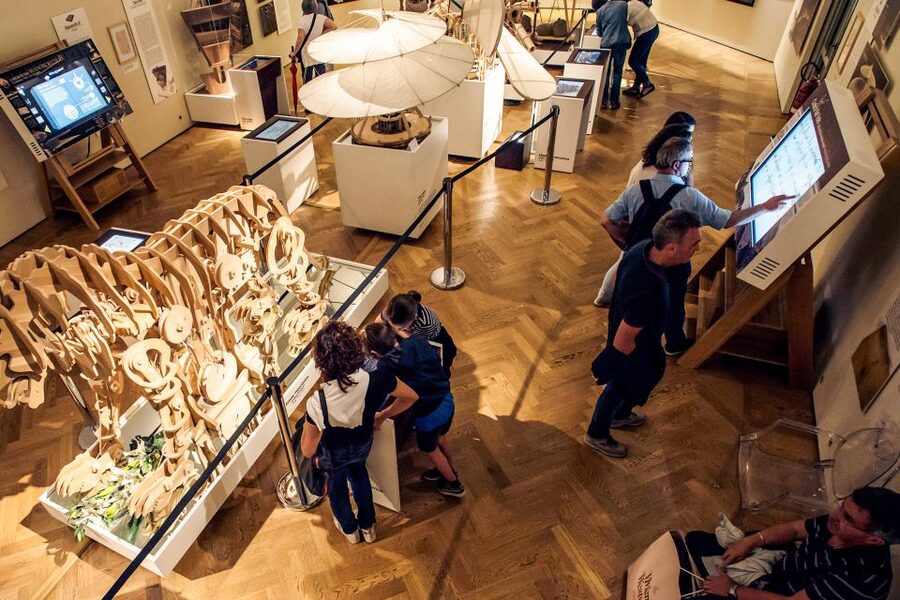
The reconstructed machines are the main reason to come. More than 200 interactive and three-dimensional models present Leonardo’s designs in a form you can inspect rather than simply admire from behind glass.
The mechanical dragonfly is one of the playful examples. It shows how Leonardo studied movement and flight, even though his ideas did not produce modern aviation. The value is not just the novelty of seeing a dragonfly-inspired device. You begin to notice how often Leonardo examined nature for mechanical clues.
Other models focus on military technology. You may see reconstructions involving crossbows, submarines, and machine guns. These displays can feel surprising because they challenge the soft-focus image of Leonardo as only a painter and gentle thinker. Renaissance Italy was divided among competing powers, and engineering for defense was a practical concern.
The exhibition also touches on theatrical inventions. Leonardo designed mechanisms for court entertainment, where movement, illusion, and mechanical surprise mattered. These displays help show that his imagination was not limited to machines built for war or industry.
The models are most valuable when you take time to read the explanation beside them. A quick walk through the room can make the exhibition feel like a collection of clever gadgets. With the notes and animations, you see the connection between the original manuscript and the modern reconstruction.
The crowded layout is the chief weakness here. Some visitors found that exhibits were close together, making it hard to reach the more popular interactive parts. I would visit early in your day, or choose a quieter time if you have flexibility. Patience helps, especially when children are working at a display.
Digital codices and the logic behind Leonardo’s ideas
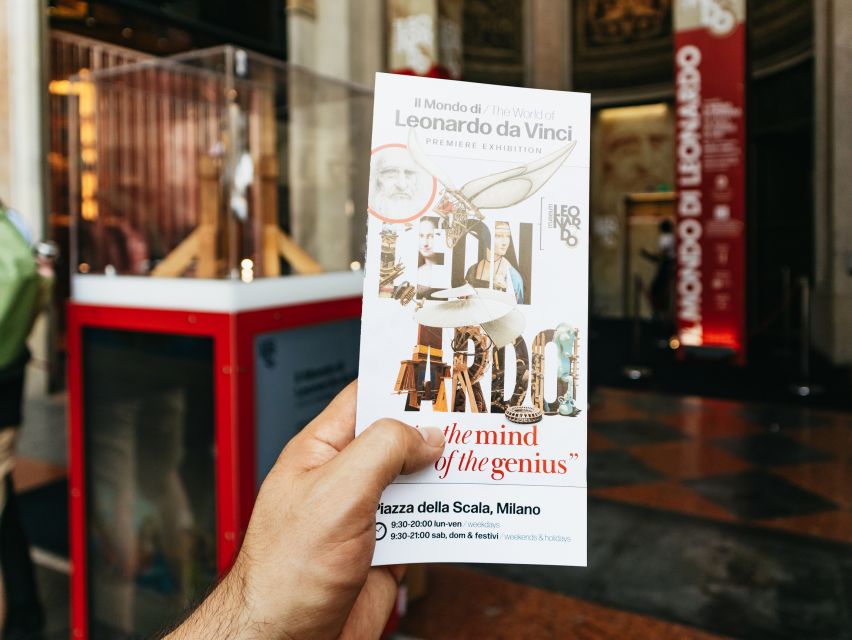
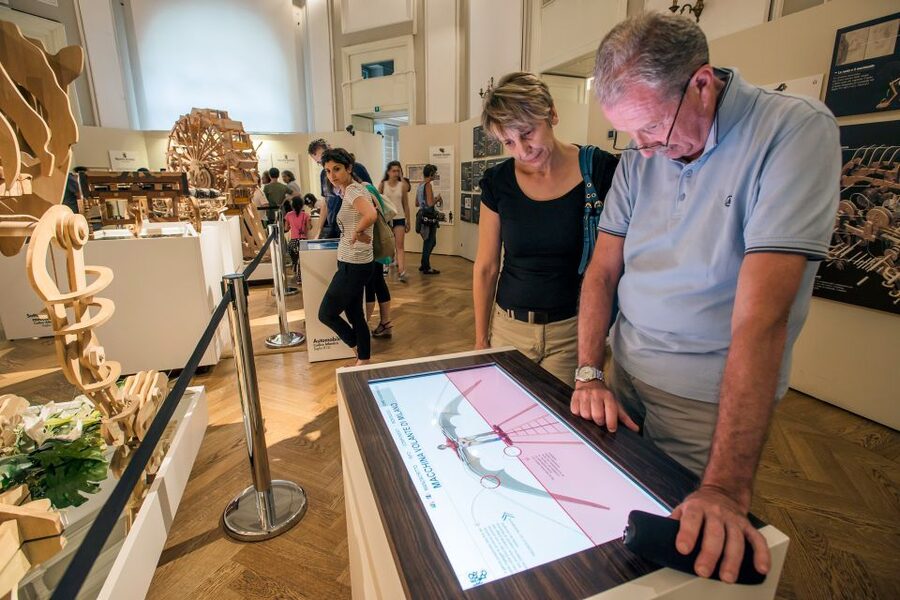
Leonardo’s codices are central to the experience. His notebooks contain drawings, observations, calculations, and unfinished ideas, but the original material can be intimidating. The digital presentation lets you examine pages in a more approachable way.
The three-dimensional treatment is particularly effective. Instead of seeing a flat drawing and guessing how the parts relate, you can follow the proposed structure and motion. This turns the codex from a historical object into a working problem.
I like that this process also shows the limits of interpretation. The reconstructed machines are based on Leonardo’s notes, but they remain modern interpretations of incomplete designs. That does not make them less interesting. It gives you a better sense of the research involved in figuring out what Leonardo may have intended.
Some people will want more historical context around the sources of his ideas. The exhibition focuses strongly on what Leonardo designed and how the models work. It gives less attention to the wider exchange of knowledge, including connections with earlier Chinese designs that some visitors hoped to explore further.
For a first introduction to Leonardo’s engineering, though, the digital codices are a strong feature. You can see the breadth of his thought, from motion and gravity to city planning and machines.
More galleries and collections:
- Milan: Pinacoteca Ambrosiana & da Vinci Codex Exhibition
★ 4.6 · 1,816 reviews - Milan: La Scala Theater and Museum Tour with Entry Tickets
★ 4.7 · 1,722 reviews - Milan: Cathedral, Archeological Area and Museum Ticket
★ 4.5 · 1,093 reviews - Casa Milan: Museum Entry Ticket
★ 4.6 · 969 reviews
A different way to see The Last Supper
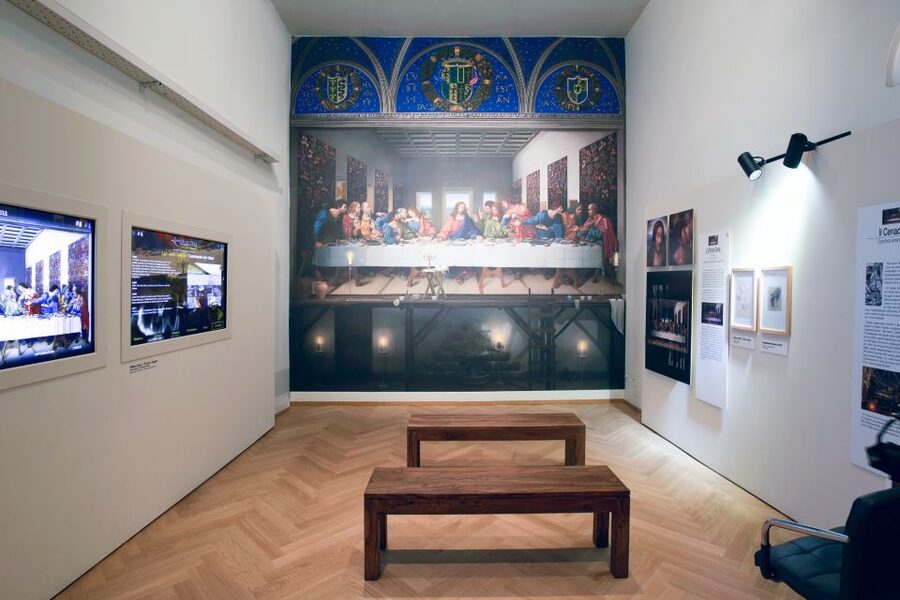
Milan’s original Last Supper is painted on the wall of the refectory at Santa Maria delle Grazie. Access to that painting is limited and requires its own reservation. Leonardo3 does not replace the original, but its digital version gives you a useful alternative if you cannot secure a visit there.
The digital restoration allows you to study details of the wall painting more closely. An optional three-dimensional reconstruction also helps you understand the setting in which the scene was created.
This section is valuable because it shifts attention from simply recognizing the famous image to examining its condition, composition, and setting. It also gives you more time than a strictly controlled visit to the original might allow.
The digital work should be treated as an aid, not as the painting itself. A screen-based restoration cannot reproduce the experience of standing in the historic room at Santa Maria delle Grazie. Still, it can make the painting more legible and provide context that is easy to miss during a short original viewing.
If you already have a confirmed appointment for the actual Last Supper, visit both if your schedule allows. If you do not, the Leonardo3 version is a worthwhile substitute for studying the work, even if it cannot match the original site.
Leonardo the artist, designer, and city planner
The museum is not only about machines. Rooms also refer to Leonardo’s better-known artistic work, including the Vitruvian Man, the Mona Lisa, and the Lady with an Ermine.
These displays may feel less distinctive than the working models, especially if you have already seen many reproductions of Leonardo’s paintings. Their role is to balance the exhibition. They remind you that the same mind responsible for mechanical studies also paid close attention to anatomy, proportion, expression, and composition.
The engineering sections often feel more original because they reveal sides of Leonardo that many art museums cannot show. His plans for canals and urban systems point toward efficient city life and practical infrastructure. These projects also show his interest in solving public problems, not merely creating spectacular machines.
I would give the art sections enough time to understand their purpose, but I would not rush past the inventions to reach them. The strongest part of Leonardo3 is the link between the artist’s eye and the engineer’s method. He observed, measured, tested, and imagined across several fields.
Hands-on activities for children and curious adults
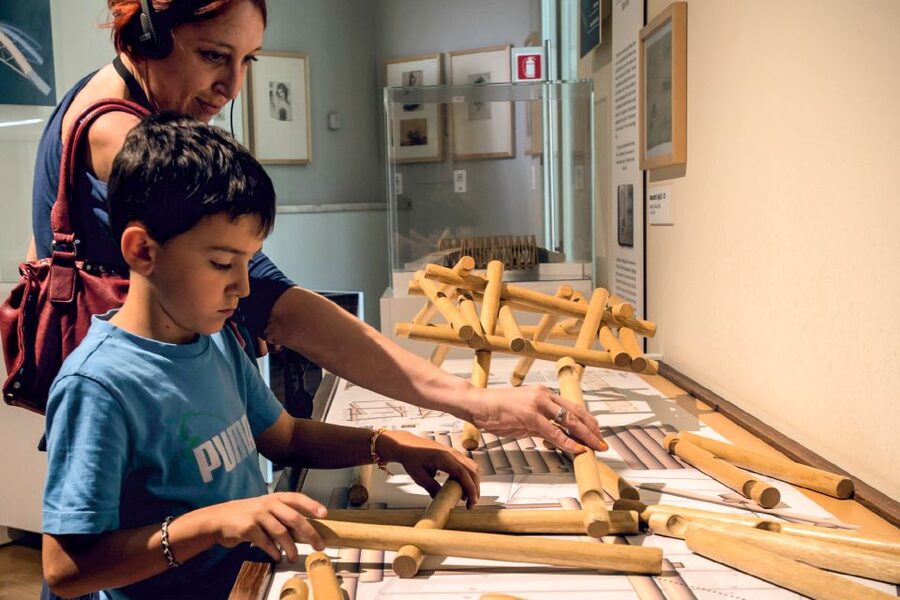
Families should pay attention to the workshop area. Children can print an inventor’s certificate and build a self-supporting bridge from wooden pieces. These activities give younger visitors something physical to do while adults read the longer explanations.
The bridge is especially useful because it turns a Renaissance engineering principle into a small puzzle. It is not just a children’s distraction. Adults who enjoy practical challenges may find themselves competing for the pieces.
The interactive stations also make the museum suitable for children over about eight, based on the type of material and the level of reading involved. Younger children may enjoy the moving models, but the explanations are aimed more at school-age children and adults.
Families should plan for the possibility that some activities will be occupied. The exhibition is not a large play center, and the available space can feel limited. Even so, the workshop adds real value for a family visit because it gives children a way to connect with the ideas rather than only look at them.
Should you pay extra for the audioguide?
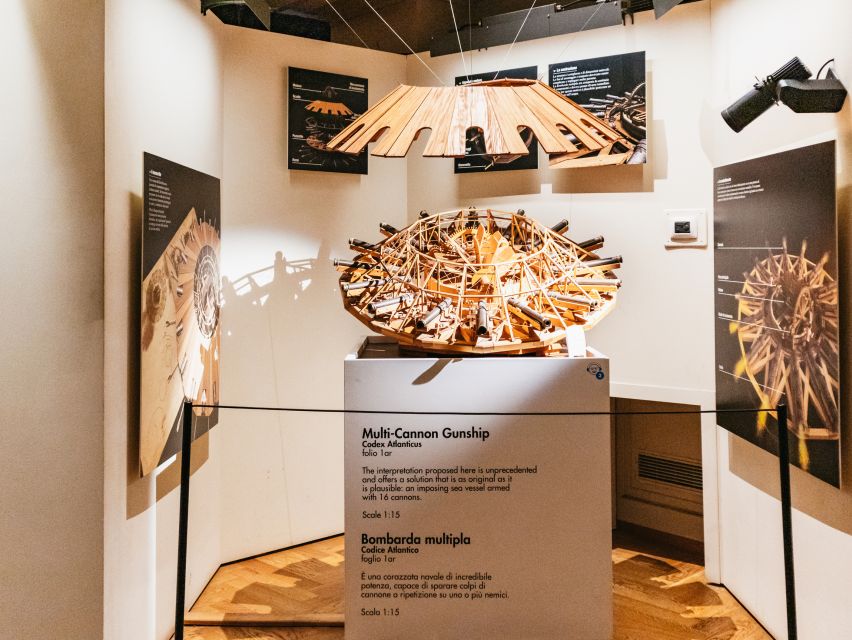
I recommend the audioguide if you want to understand how the models were made. The visual displays are interesting on their own, but the explanations provide the bridge between Leonardo’s manuscript and the reconstructed machine.
The guide is available in Italian, English, Russian, German, French, Spanish, Portuguese, and Chinese. The interactive displays themselves operate in English and Italian. If you do not speak either language comfortably, the audioguide becomes especially useful.
Booking details identify the audioguide as included only when that option is selected. A charge of about €5 per person is noted for some arrangements, so check the exact ticket choice before paying. The extra cost is reasonable if you expect to spend at least an hour studying the exhibition.
Without the guide, you can still explore the machines and digital displays. I would choose the guide for a first visit, particularly if Leonardo’s engineering notebooks are new to you. It helps keep the exhibition from becoming a series of disconnected inventions.
How much time should you allow?
The official ticket is valid for one day rather than for a short, fixed time slot. In practice, your visit could last about an hour if you move quickly, or two hours if you read the panels, use the audioguide, and spend time at the workshop and Last Supper section.
Some visitors have stayed around two and a half hours, especially when studying the codices and digital reconstructions closely. Others have found an hour sufficient. Your ideal length depends on your interest in technical detail.
I would allow about 90 minutes as a sensible middle ground. Add time if you are traveling with children, using the audioguide, or particularly interested in Leonardo’s engineering. The exhibition can be a compact stop between major Milan sights, but it rewards a slower pace.
The interior has been described as warm at times. Since the rooms can also feel tight, a shorter visit may be more comfortable during a crowded period. You cannot bring food or drinks inside, so plan a refreshment stop before or after the museum.
Price, practical details, and overall value
At about $18 per person, the ticket is fairly priced for a central Milan museum with this number of interactive displays. You are paying for a specialized exhibition rather than a vast national collection, so the value depends on your interest in Leonardo and hands-on interpretation.
I think the ticket earns its price if you use the models, read the explanations, and spend time with the digital codices. A quick twenty-minute visit would give you less value. The bookshop also offers a 10 percent discount on books when you show your GetYourGuide voucher at the counter, which may appeal to anyone who wants to continue reading about Leonardo.
The museum is wheelchair accessible. Cameras are not allowed, and food and drinks must stay outside. Bring your ticket to the office at the entrance through the Galleria Vittorio Emanuele II.
Free cancellation is available up to 24 hours before the visit, and the reserve-now, pay-later option can help if your Milan schedule is still changing. These policies are useful, but the main planning issue is choosing the right amount of time and deciding if you want the audioguide.
Who will enjoy Leonardo3 most?
I would recommend this experience to:
- Anyone fascinated by Leonardo’s inventions and notebooks
- Families with children who enjoy building and interactive displays
- Adults who want more than another gallery of famous reproductions
- Visitors who cannot obtain a reservation for the original Last Supper
- Science, design, engineering, and art enthusiasts
- People seeking a central Milan activity that takes one to two hours
You may enjoy it less if you want original Renaissance paintings, a quiet gallery, or a large collection of historic objects. Much of the exhibition depends on reconstructions and digital interpretation. That is its purpose, but it is worth knowing before you go.
Should you book Leonardo3?
Yes, if you want to see Leonardo’s ideas explained through working models rather than only read about them. The machines, digital codices, workshop activities, and Last Supper restoration give you several ways to connect with his work.
I would book the audioguide option if the price fits your plans, and I would allow at least 90 minutes. Visit with an open mind: this is not a museum of original Leonardo artifacts, but a carefully presented look at how his drawings can be understood in three dimensions.
For a central, reasonably priced Milan stop, Leonardo3 offers plenty to think about, especially for families and anyone curious about the practical side of Renaissance genius.
FAQ
Where is Leonardo3 located?
Leonardo3 is entered through the Galleria Vittorio Emanuele II in Piazza della Scala in central Milan.
How much does admission cost?
The listed price is $18 per person. Check availability and the selected ticket option for the current price.
How long is the ticket valid?
The ticket is valid for one day. Starting times depend on availability.
Is an audioguide included?
An audioguide is included only if you select the option that includes it. Available languages are Italian, English, Russian, German, French, Spanish, Portuguese, and Chinese.
What languages are used in the interactive displays?
The interactive experiences are available in English and Italian.
Is the museum wheelchair accessible?
Yes, the experience is wheelchair accessible.
Can I bring food, drinks, or a camera?
No. Food, drinks, and cameras are not allowed inside.
Is transportation included?
No. Transportation to and from the museum is not included, so you must make your own way to the entrance in the Galleria Vittorio Emanuele II.
Just added around Milan
- Milan Sights by Segway Small Group Tour★ 5.0 · 249 reviews
- Unveil the Masterpiece: Guided Tour of Da Vinci’s Last Supper★ 4.5 · 251 reviews
- Milan: Pasta & Tiramisu Cooking Class with Premium Products★ 5.0 · 255 reviews
- Milan Semi-Private Max 6 People Tour with Last Supper and Duomo★ 5.0 · 258 reviews
- Skip The Line: Best Of Milan Tour With Last Supper & Milan Duomo★ 4.5 · 260 reviews
- Milan: Duomo & Rooftop Tour with Optional Hop-On Hop-Off Bus★ 4.5 · 262 reviews
- Stresa: 1-Day 3 Borromean Islands Hop-On Hop-Off Boat Tour★ 4.0 · 262 reviews
- Milan Centre Food Tour of 7+ Italian Tastings with Risotto & Wine★ 5.0 · 264 reviews
Museums, compared.

Vatican: Museums & Sistine Chapel Entrance Ticket
Read our review →
Vatican Museums & Sistine Chapel Tour with Optional Basilica
Read our review →
Vatican Museums, Sistine Chapel & St Peter’s Basilica Guided Tour
Read our review →
Skip-The-Line Uffizi Gallery Timed Entry Ticket
Read our review →
Vatican Museums, Sistine Chapel & Basilica Tour
Read our review →
Vatican Museums & Sistine Chapel Skip-the-Line Entry Ticket
Read our review →Vatican Museums, Sistine Chapel & Basilica Tour
Read our review →
Vatican Museums & Sistine Chapel Guided Tour
Read our review →Browse the lists this tour appears in