
Review · WALKING TOURS
Haunted Rome Ghost Night Walking Tour
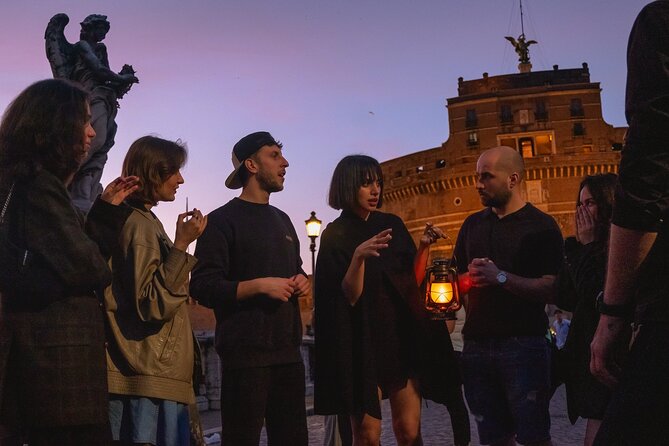
Rome gets stranger after sunset. This two-hour walk turns famous squares, quiet lanes, and grand bridges into a stage for the city’s darker past. I like the way it mixes real history with eerie legends, and I especially like that it takes you beyond the usual Roman highlights to notice small details such as the street-corner Madonnas.
I also like the timing. A night walk helps you avoid the worst heat and daytime crowds, while the route from Campo de’ Fiori to Castel Sant’Angelo gives your evening a clear shape. The main drawback is that this is more a dark-history walk than a theatrical ghost show, and one group reported difficulty hearing the guide amid street noise.
In This Review
- Key points to know before booking
- Why Rome’s dark side works best at night
- Campo de’ Fiori and Piazza Farnese: executions and papal scandal
- Via del Mascherone: finding Rome’s little Madonnas
- Ponte Sisto and Fontana del Mascherone: accidents, theft, and warnings
- The church of Santa Maria dell’Orazione e Morte
- Via di Monserrato and the Spanish church
- Via Giulia and the danger of cosmetics
- Mastro Titta and the road to Castel Sant’Angelo
- Guides, storytelling, and the group experience
- Is $35.07 good value in Rome?
- Who will enjoy this night walk?
- Should you book Haunted Rome Ghost Night Walking Tour?
- FAQ
- How long is the Haunted Rome Ghost Night Walking Tour?
- Where does the tour begin?
- Where does the tour finish?
- What language is the tour offered in?
- How many people can join the group?
- Is this a traditional ghost tour with actors and jump scares?
- Can I cancel for a full refund?
Key points to know before booking
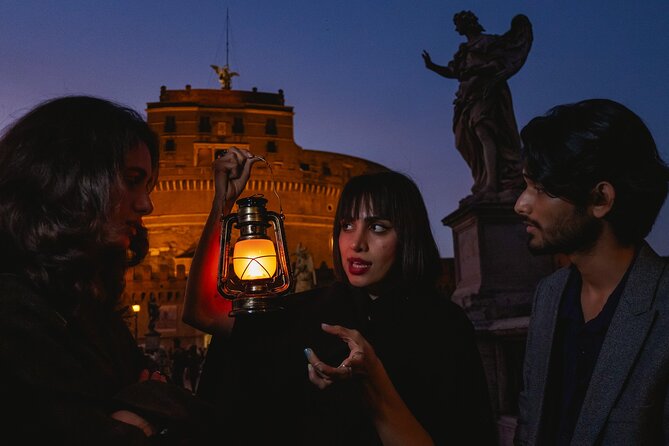
- The route covers 11 historic stops: You walk from Campo de’ Fiori through Via Giulia and across Ponte Sant’Angelo to Castel Sant’Angelo.
- The stories are darker than they are supernatural: Expect executions, prisons, scandals, suspicious deaths, crime, and tragic family stories.
- Guides make a major difference: Ana, Youssef, Antonio, Domenica, Dinara, Anna, and others have been praised for lively storytelling and helpful Rome advice.
- It suits families and teens: Children aged 11 and 13 were reported to have enjoyed it, and the level of fright can suit different tastes.
- The group can reach 20 people: That keeps the price low, but street noise may make it hard to hear at times.
- The $35.07 price is fair for Rome: You get two hours of guiding and a carefully planned evening route, with no admission fees listed for the stops.
Why Rome’s dark side works best at night

This is not a haunted-house production with actors leaping from alleys. It is a guided walk through central Rome, using the city itself as the setting. That approach works well here because the streets already carry layers of violence, religion, politics, punishment, and family drama.
You will hear about real places tied to executions, prisons, suspicious deaths, and religious warnings. The ghostly mood comes from the stories and the hour, not from special effects. That makes the experience a good fit if you like history with a chill, but less ideal if you want a highly theatrical performance.
The evening setting adds real value. Campo de’ Fiori feels different once its daytime market crowds are gone. Bridges and narrow lanes become quieter, and the stone buildings catch the softer light. You also get a useful break from Rome’s hot afternoon sun.
The route is short enough to fit after dinner, though two hours on city streets still calls for comfortable shoes. The tour ends near Castel Sant’Angelo, so you can continue your evening beside the Tiber rather than being returned to the starting point.
More Evening Tours in Rome
- Rome: City Highlights Open-Top Bus Night Tour
★ 4.1 · 2,038 reviews - Rome: Paranormal Night Walking Tour & Secret Backstreets
★ 4.9 · 1,921 reviews - Vespa Sidecar Tour By Night with Pickup
★ 5.0 · 1,803 reviews
Campo de’ Fiori and Piazza Farnese: executions and papal scandal
The tour begins at Campo de’ Fiori, one of Rome’s best-known squares. In daylight, it is associated with restaurants, bars, and the market atmosphere. The darker connection is its past as an execution site, making it a strong opening for a walk about Rome’s grim traditions.
The guide uses the square to shift your attention from modern Rome to the punishments once carried out in public. Since admission is free and the stop lasts about 10 minutes, you are not entering a museum or spending extra time indoors. The value comes from hearing how the place functioned and what its past adds to the view in front of you.
From there, you continue to Piazza Farnese. This elegant square was once a party center, and its story involves a secret passage and two popes. It is a useful reminder that Rome’s most polished spaces often have complicated backstories.
I like this opening because it gives you two different kinds of darkness: public punishment at Campo de’ Fiori and private power games at Piazza Farnese. The stories also help you see the city as more than ancient ruins and church interiors.
Via del Mascherone: finding Rome’s little Madonnas
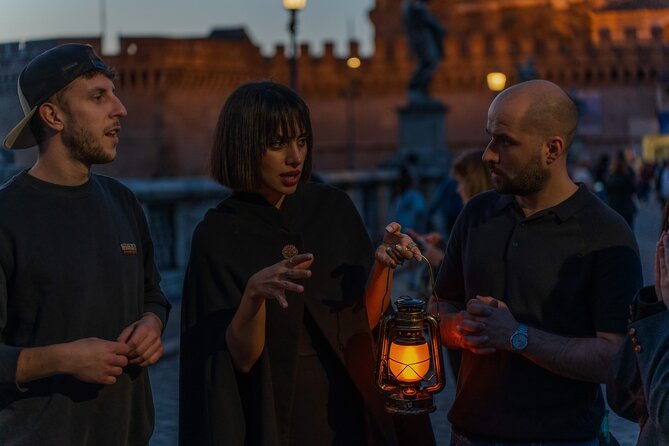
On Via del Mascherone and Vicolo dei Venti, the focus changes from major squares to small street details. Along the way, you learn about the madonelles, or little Madonnas, placed around Rome.
These images were connected to efforts to stop crime. That detail gives the walk a more personal feel. Instead of simply pointing out a famous monument, the guide draws your eye to devotional images that you could easily pass without noticing.
This is one of the most useful parts of the tour for the rest of your stay. Once you know what to look for, you can spot similar images during your own walks. One guide, Dominica, was praised for making these details memorable, and the idea of searching for the Madonnas can turn ordinary streets into a small treasure hunt.
The stop lasts around 10 minutes, but its effect can last longer. I like experiences that teach you how to look at a city, not just where to stand for a photograph.
Ponte Sisto and Fontana del Mascherone: accidents, theft, and warnings
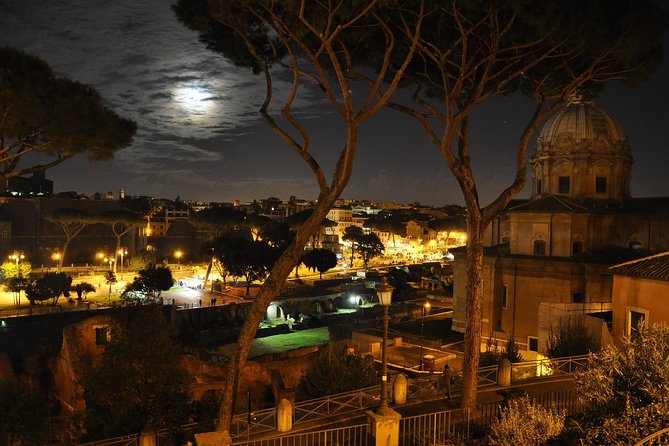
At Ponte Sisto, the stories become more openly gruesome. The bridge is described as the oldest in Rome, with a past involving tragic accidents, political struggles, theft, and suspicious deaths.
Bridges are natural places for legends because they connect districts while concentrating movement, danger, and power. Here, the guide uses the crossing to explain how a practical part of Rome could also become tied to fear and misfortune.
The next stop, Fontana del Mascherone, offers a smaller but memorable story. Unlike many of Rome’s decorative fountains, this one carries a warning to anyone tempted to drink from it. That detail gives the fountain a sharp personality, and it shows how public objects once communicated rules and threats.
These stops are good examples of the tour’s style. You are not simply told that a fountain is old or a bridge is pretty. You learn why people associated each place with danger, bad behavior, or grim consequences.
More Walking Tours in Rome
- Rome: Trastevere & Campo de Fiori Street Food Walking Tour
★ 4.9 · 2,768 reviews - Rome by Night Walking Tour – Legends & Criminal Stories
★ 4.5 · 1,003 reviews - Rome: Guided City Center Evening Sightseeing Walking Tour
★ 4.4 · 953 reviews - Best of Rome Walking Tour including Trevi Fountain
★ 4.5 · 923 reviews
The church of Santa Maria dell’Orazione e Morte
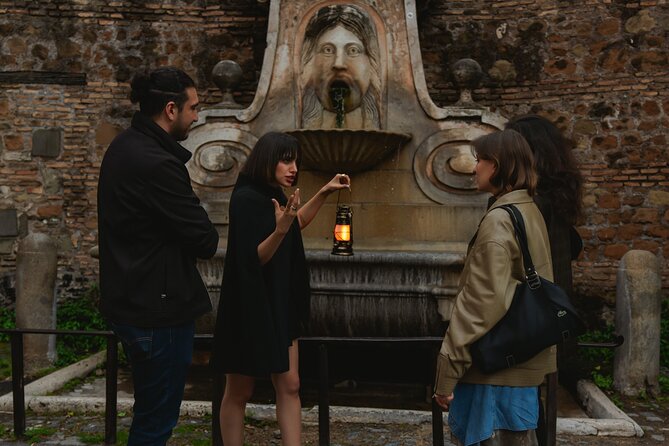
The Church of Santa Maria dell’Orazione e Morte brings the theme of death into a religious setting. This 17th-century church is decorated with human remains from long ago, creating the most direct visual reminder on the route that death was always close at hand.
The stop may appeal most to adults and older children who are comfortable with macabre religious imagery. The supplied details do not say that the group enters the church, so you should think of it as a story stop rather than assume an interior visit.
Rome has plenty of grand churches filled with art and ceremony. This one offers a different message. It reflects the city’s long relationship with mortality, prayer, burial, and remembrance. The location gives the guide a chance to explain how religious spaces could also confront people with the physical reality of death.
If you prefer light folklore, this may be one of the heavier moments. If you like the serious side of Roman history, it should be one of the more memorable stops.
Via di Monserrato and the Spanish church
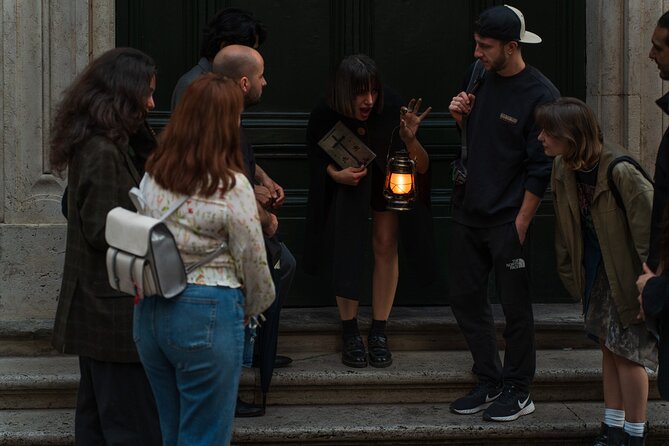
Via di Monserrato now contains an apartment block, but its earlier role was far less ordinary. It was the site of one of Rome’s worst prisons. That contrast between a normal residential building and a place of confinement is central to the tour’s appeal.
You may walk past such a building during a regular sightseeing day without any clue about what happened there. A guide gives the street a second layer, showing you how Rome’s past remains mixed into daily life.
Nearby, Chiesa di Santa Maria in Monserrato degli Spagnoli adds a scandalous tale involving the Spanish church. The description promises a story with the drama of a television serial, so this part gives the evening a lighter, more playful tone after the prison material.
The stop also shows the range of the walk. Not every tale is a ghost sighting. Some concern romance, scandal, power, and public reputation. That variety helps keep the two hours from feeling like a string of similar horror stories.
Via Giulia and the danger of cosmetics
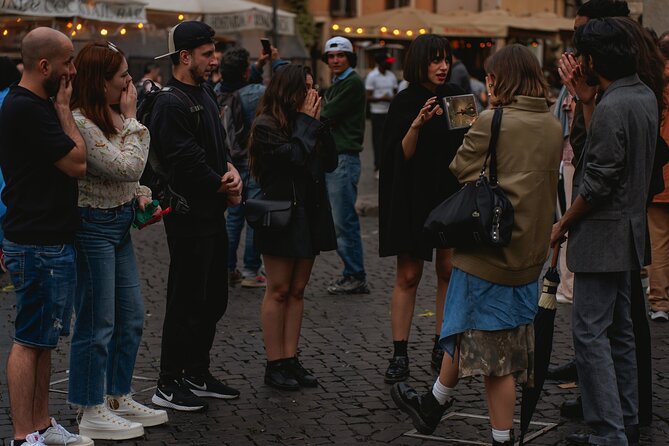
Via Giulia is one of the most attractive streets on the route, but its story is not merely architectural. A former bar on the street had an earlier life as a beauty shop, leading into a tale about cosmetics that could kill.
This is the sort of small, unsettling story that makes a walking tour worthwhile. It connects everyday habits with the dangers of another age, when beauty products could be poorly made or dangerously used. The exact details depend on the guide, but the theme is clear: Rome’s darker history is often found in ordinary businesses and domestic life.
You also get a change of pace here. After stories about prisons, executions, and religious remains, the beauty-shop tale feels more intimate. It reminds you that danger was not limited to rulers and criminals. It could enter daily life through commerce and fashion.
The setting on Via Giulia also helps you appreciate one of Rome’s historic streets while listening to a story you would be unlikely to hear on a standard highlights tour.
Mastro Titta and the road to Castel Sant’Angelo
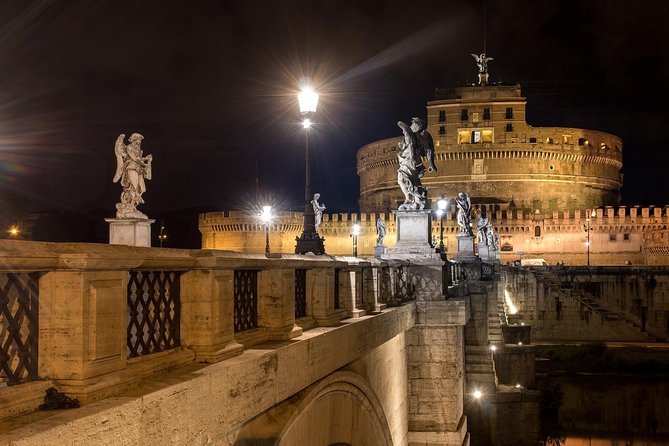
On Via dell’Arco dei Banchi, a seemingly quiet house is linked to Mastro Titta, Rome’s most famous executioner. This stop brings the earlier discussion of public punishment back into focus through one person’s name and home.
An executioner is a powerful figure for a dark-history tour because the role sits between official justice and public fear. The story can help you think about who carried out punishment, where that work happened, and how a person connected with death became part of Rome’s memory.
The final section leads toward Castel Sant’Angelo and Ponte Sant’Angelo. The bridge was once used to display the bodies of executed people as a warning to sinners. Today, statues of angels frame the approach, creating a striking contrast between beauty and violence.
The guide also tells the story of the Cenci family and its fatal end. This gives the finish a strong narrative shape, with a family tragedy unfolding against one of Rome’s most recognizable settings.
Ending at Castel Sant’Angelo is practical as well as atmospheric. You are near the river, and the evening remains open after the tour. You can continue walking, find a place for a drink, or simply enjoy the monument and bridge at night.
Guides, storytelling, and the group experience
The guide is the most important part of this tour. Strong guides have included Youssef, Ana, Antonio, Domenica, Dinara, Anna, Sarah, Maham, Simon, and others. Their styles vary, but the praise is consistent for clear historical detail, humor, energy, and a willingness to answer questions.
Youssef was singled out for being kind and even trying to share an umbrella during rain. Ana has been praised for her enthusiasm, humor, and passion. Domenica was noted for keeping families engaged, while Dinara and Anna received praise for storytelling that made unfamiliar corners of Rome easier to remember.
You should not expect every guide to perform the stories in exactly the same way. One person described the walk as mellow, with a guide in plain clothes simply telling stories of wrongdoing and injustice. That is a fair description of the format.
The advertised maximum is 20 people. That is small enough to feel manageable, but not so small that everyone gets a private conversation. One important practical weakness is sound. A group reported that road noise and nearby voices made the guide hard to hear, so stay close and pay attention when the group gathers.
A private upgrade is available if you want a more personal experience. That may be worthwhile for couples, families, or anyone who wants to ask many questions without worrying about the size of the group.
Is $35.07 good value in Rome?
At $35.07 per person, the tour sits in a reasonable range for a two-hour guided walk in central Rome. There are no admission fees listed for the stops, but that does not mean the experience is empty. You are paying for the route design, local context, pacing, and storytelling.
The strongest value comes from the number of places covered. In two hours, you reach Campo de’ Fiori, Piazza Farnese, Ponte Sisto, Via Giulia, Ponte Sant’Angelo, and several lesser-known streets and churches. A self-guided walk could cover the same ground, but you would miss the connected stories and many of the small details.
The price is also easier to justify if you use the tour as an introduction to the city. One guide can point out places you may want to revisit during daylight or enter later. One useful tip from the experience is to take the walk early in your stay, since you may then have time to return to sites that catch your interest.
Group discounts may lower the cost for larger parties. A private version costs more, but it gives you a more tailored evening. Free cancellation is available if you cancel at least 24 hours before the start time. Changes or cancellations inside that window are not accepted for a refund.
Who will enjoy this night walk?
I would recommend it most strongly to:
- History fans who enjoy stories about crime, punishment, religion, and political scandal
- Families with older children and teenagers
- First-time visitors who want an unusual introduction to central Rome
- Repeat visitors who have already seen the Colosseum, Vatican, and major piazzas
- Couples looking for an evening activity after dinner
- People who like ghost stories but do not need actors or jump scares
The tour is less suited to anyone seeking a fully theatrical supernatural show. It is also not the best choice if you have trouble walking for two hours or hearing speech in a city setting. The supplied details say most people can participate, but they do not provide a precise distance or accessibility breakdown.
Wear comfortable shoes. In colder months, bundle up. In wet weather, bring rain protection, since the tour continues outdoors and the group may need to keep moving between stops.
Should you book Haunted Rome Ghost Night Walking Tour?
I would book it if you want Rome with the polish removed. The walk shows you execution sites, prison ground, scandalous churches, dangerous beauty products, little Madonnas, and a bridge once used to display bodies. That is a much darker portrait than the standard postcard version of Rome.
The best reason to go is the mix of genuine historical subjects and strong guides. The 4.9 rating from 495 reviews and recommendation rate of 98 percent support the tour’s appeal, but your enjoyment will still depend on hearing the guide and liking a low-key storytelling format.
Book it early in your stay if possible. You will learn where to look for the street Madonnas and may find places worth revisiting. At $35.07, it is a solid evening buy for anyone who wants two hours of unusual stories, central Rome scenery, and a few pleasant shivers without a cheesy haunted-house routine.
FAQ
How long is the Haunted Rome Ghost Night Walking Tour?
The tour lasts approximately two hours.
Where does the tour begin?
It begins at Piazza Campo de’ Fiori in central Rome.
Where does the tour finish?
The tour ends near Castel Sant’Angelo at Lungotevere Castello, 50.
What language is the tour offered in?
The tour is offered in English.
How many people can join the group?
The maximum group size is 20 people.
Is this a traditional ghost tour with actors and jump scares?
The experience focuses mainly on Rome’s darker history, including executions, prisons, scandals, suspicious deaths, and tragic families. It is less theatrical than some ghost tours.
Can I cancel for a full refund?
Yes. You can cancel at least 24 hours before the local start time for a full refund. Cancellations or changes made less than 24 hours before the start time are not accepted for a refund.
More After-Dark Outings
- Rome by Night – Ebike Small Group Tour – Food and Wine (Option)
★ 5.0 · 1,275 reviews - Colosseum Sunset Tour with Entry
★ 4.5 · 1,230 reviews - Rome: E-Bike Night Tour with Food and Wine Tasting
★ 4.9 · 1,131 reviews - Colosseum by Evening Guided Tour with Optional Arena Floor Access
★ 4.0 · 867 reviews
More Guided Walks
- Rome: Under the Moonlight Evening Walking Tour
★ 4.8 · 852 reviews - Rome: Forbidden History Walking Tour & Pub Crawl with Drinks
★ 4.9 · 688 reviews - Rome: Guided Small Group Walking Tour of City Highlights
★ 5.0 · 682 reviews - Rome Walking Tour with Piazza Navona, Trevi Fountain and Pantheon
★ 4.5 · 676 reviews
Just added around Rome
- Rome City, Pantheon, and Trevi Fountain Walking Tour★ 5.0 · 249 reviews
- Rome: Skip the line Vatican Museums & Sistine Chapel Tour★ 4.2 · 251 reviews
- Rome: Tivoli Day Trip with Villa d’Este and Villa Adriana★ 4.5 · 251 reviews
- Transfer Rome center – Ciampino Airport★ 4.5 · 251 reviews
- Rome: Cannondale E-Bike Evening Tour with Optional Dinner★ 4.9 · 251 reviews
- VIP Colosseum, Roman Forum & Palatine Hill & Special Access Sites★ 4.5 · 252 reviews
- Private Vatican Museums Hidden Gems Tour with Optional Pick-Up★ 5.0 · 253 reviews
- Vatican Museums & Sistine Chapel Skip-the-Line Guided Tour★ 4.6 · 254 reviews
Walking Tours, compared.

Guided Walking Tour & Last Supper Visit with Ticket
Read our review →

Rialto Bridge & Offbeat Unusual Venice Walking Tour
Read our review →

Private 3 hrs Venice Tour: St Mark’s, Walking tour & Boat tour
Read our review →

Skip the line: Uffizi and Accademia Small Group Walking Tour
Read our review →Browse the lists this tour appears in