
Review · WALKING TOURS
Ghosts, Legends & Mysteries of Rome Tip-Based Walking Tour
Rome has a darker side. This 1.5-hour night walk links Castel Sant’Angelo, old execution sites, secret corners, and Campo de’ Fiori with stories of poisoners, corrupt popes, witches, assassins, and ghosts. I like the tour’s face-to-face storytelling and its unusual look at Roman history, far from the standard ancient monuments. I also like the mix of real crimes, local legends, and dark humor. The main drawback is time: ninety minutes can feel short, especially when a story has just reached its best part.
The tour begins outside Castel Sant’Angelo and ends in Campo de’ Fiori, making it easy to pair with dinner or a drink afterward. Guides such as Ivan, Leonardo, Simone, Simon, and Max have earned praise for lively delivery, clear explanations, and good audience contact. Just remember that the advertised $3.77 price is not the full expected cost. It is a tip-based experience, and the suggested contribution commonly falls somewhere between €10 and $50 per person.
In This Review
- Key points to know before you go
- Starting beside Castel Sant’Angelo after dark
- The short stops between the major landmarks
- Secret stops and Rome’s uncomfortable past
- The Fountain of the Mask and Rome’s street-level stories
- Farnese Palace and the power behind the stories
- Campo de’ Fiori and the final ten minutes
- How the guides shape the experience
- Is the tip-based price good value?
- Who should book this Rome night walk?
- My verdict: book it for the stories
- FAQ
- Where does the Ghosts, Legends & Mysteries of Rome tour begin?
- Where does the tour finish?
- How long does the tour last?
- What does the tour cost?
- Is the tip mandatory?
- Which languages are available?
- What subjects does the tour cover?
- Can I cancel the booking?
Key points to know before you go
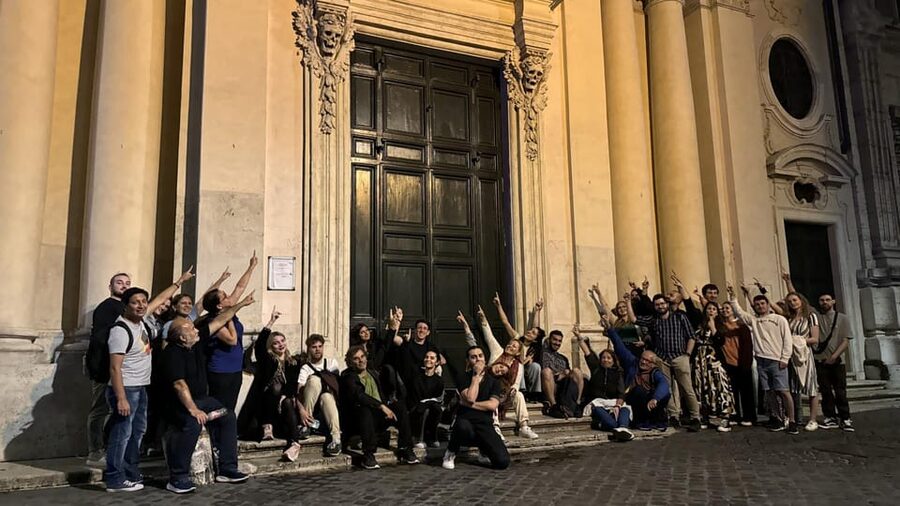
- Castel Sant’Angelo sets the mood: The tour begins beside one of Rome’s most atmospheric landmarks, with tales connected to its grim past.
- The stories mix fact and legend: You hear about executions, the Inquisition, poisoners, assassins, witches, and alleged hauntings.
- The guides carry the experience: Ivan and Leonardo receive especially strong praise for humor, warmth, and storytelling skill.
- It is not a conventional sightseeing tour: The focus is on Rome’s crimes, scandals, strange characters, and unsettling folklore.
- The group usually moves at a comfortable pace: One account praised the manageable group size, while another found the group too large for easy participation.
- You finish near Campo de’ Fiori: The final stop puts you close to restaurants, bars, and the square’s famous evening atmosphere.
Starting beside Castel Sant’Angelo after dark
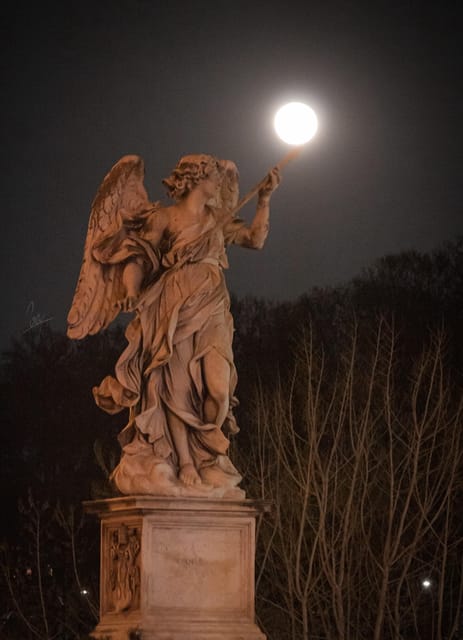
Meet directly in front of Castel Sant’Angelo, by the entrance and the Sant’Angelo bridge. This is a useful meeting point because the castle is hard to miss, though you should still arrive a few minutes early. The walk begins with a photo stop and about fifteen minutes of guided storytelling around the castle.
Castel Sant’Angelo is an excellent opening setting for this subject. Its heavy walls and former prison associations give the guide a natural stage for stories about punishment, power, and death. The point is not to enter the castle for a full museum visit. Instead, you use the exterior and surrounding streets as a backdrop while the guide explains the darker episodes tied to the area.
I like this approach because Rome’s monuments can look very different at night. During the day, Castel Sant’Angelo is often treated as a grand imperial and papal landmark. In this tour, it becomes a place connected with fear, confinement, executions, and political violence. That change in focus helps you see a familiar sight with fresh eyes.
The first section also gives you time to settle into the guide’s style. This is not a solemn ghost séance. The advertised tone includes politically incorrect jokes and black humor, and the guides often use comedy to keep gruesome material from becoming relentlessly bleak. If you prefer polite, polished historical commentary, this may not be your ideal Rome walk.
More Walking Tours in Rome
- Rome: Trastevere & Campo de Fiori Street Food Walking Tour
★ 4.9 · 2,768 reviews - Rome: Paranormal Night Walking Tour & Secret Backstreets
★ 4.9 · 1,921 reviews - Rome by Night Walking Tour – Legends & Criminal Stories
★ 4.5 · 1,003 reviews
The short stops between the major landmarks
After Castel Sant’Angelo, the route moves through several brief stops. Some are scheduled for about five minutes, while others allow ten minutes of explanation and walking. The exact names of several points are kept secret, which is part of the appeal. You are not simply checking famous monuments off a list. You are following a story through streets and places that might otherwise pass unnoticed.
These shorter pauses matter because the tour is built around atmosphere and narrative rather than long visits inside buildings. You may stop outside a church, palace, alley, or old urban corner while the guide connects the place to a crime, a death, or a local tale. The supplied details do not identify every stop, so I would not expect a conventional sequence of named attractions.
That uncertainty is worth understanding before booking. If you want a carefully structured architectural tour with extensive facts about every building, choose a different walk. Here, the guide’s presentation is the main event. The locations provide the setting, and the stories provide the reason to keep moving.
Several accounts praised the guides for making the history easy to follow and for answering questions during the walk. One particularly useful detail is that the tour does not use headphones. You can speak directly with the guide, hear other questions, and feel more connected to the group. That also means you should stay close enough to hear clearly, especially if the group is larger than expected.
Secret stops and Rome’s uncomfortable past
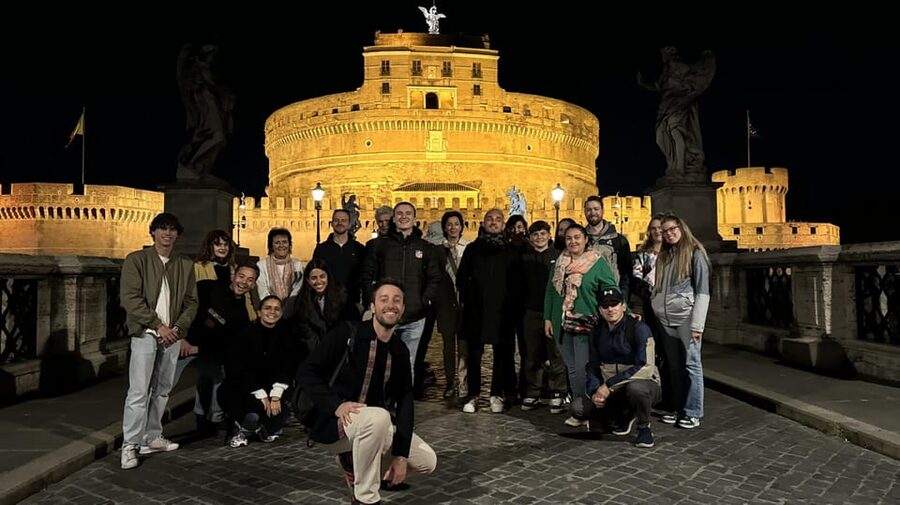
The itinerary includes two secret stops, one lasting about ten minutes and another about five. Keeping these places undisclosed helps protect the surprise, but it also means you should expect a few pauses whose importance becomes clear only once the guide begins speaking.
This part of the route deals with the material that gives the tour its name: violence, executions, heresy, the Inquisition, witches, and criminal plots. The emphasis is on people and events often left out of a standard first visit to Rome. You may hear stories about individuals who used power, religion, money, or poison in disturbing ways.
Giulia Tofana is one of the featured figures. Her deadly legacy as an infamous poisoner offers a particularly sharp example of how the tour connects a person to the social world around her. The story is not just about a crime. It opens questions about marriage, control, desperation, and the methods people used to survive or retaliate in earlier Rome.
The treatment is described as history with no filters. That means the guide may discuss brutality plainly rather than softening every detail. The jokes can also be irreverent. I see this as a strength for the right audience, but a clear warning for families with young children or anyone who dislikes humor around death and violence.
The strongest guides make these stories feel like more than a list of gruesome facts. Ivan is repeatedly praised for combining humor with clear explanations, while Leonardo is often singled out for charisma and dramatic delivery. Simone is also described as passionate and effective at bringing lesser-known crimes to life. Since guides may vary, the precise tone can change from one departure to another.
The Fountain of the Mask and Rome’s street-level stories
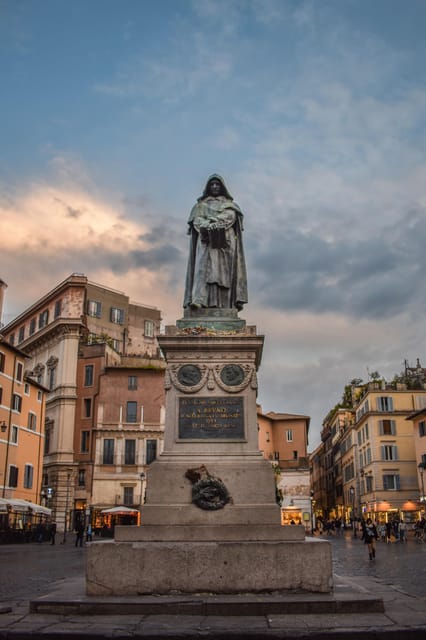
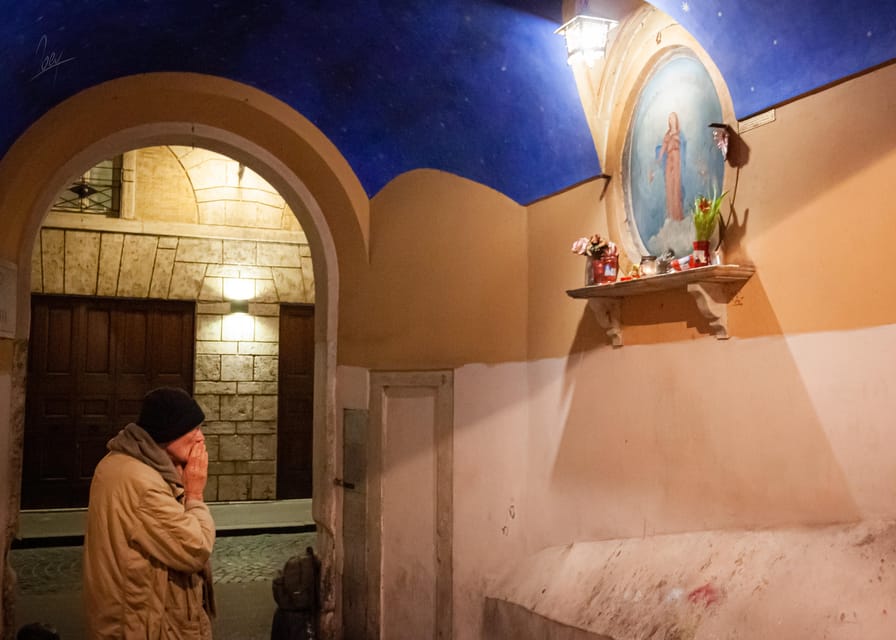
The Fountain of the Mask receives about five minutes of guided attention. It is a small stop, but that is typical of this route. The tour is less about standing in one place for a long lecture and more about using several urban details to build a picture of Rome’s shadowy past.
A fountain can seem like a simple decoration when you are rushing between major sights. On a night walk, it becomes a meeting point for stories, rumors, and local memory. You may find that the guide spends as much time explaining the people associated with an area as the object itself.
This is one reason the tour works well for someone who has already seen Rome’s headline sights. You are not being asked to admire the Colosseum again from another angle. Instead, you are encouraged to pay attention to the small features of the city, including fountains, façades, narrow streets, and corners that carry a less comfortable past.
The route is also a pleasant way to see central Rome on foot. The descriptions repeatedly point to beautiful streets and alleys, and the nighttime setting gives the walk a different mood from a daytime sightseeing circuit. Still, remember that the experience is about storytelling, not photography. Stops are brief, and you should not expect long periods for posed pictures.
More guided walks:
- Rome: Guided City Center Evening Sightseeing Walking Tour
★ 4.4 · 953 reviews - Best of Rome Walking Tour including Trevi Fountain
★ 4.5 · 923 reviews - Rome: Under the Moonlight Evening Walking Tour
★ 4.8 · 852 reviews - Rome: Forbidden History Walking Tour & Pub Crawl with Drinks
★ 4.9 · 688 reviews
Farnese Palace and the power behind the stories
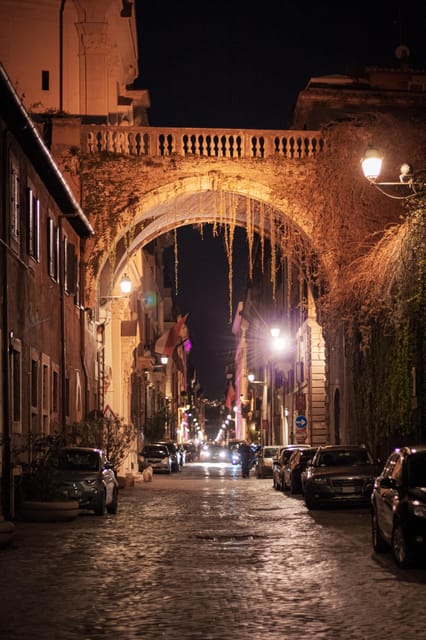
The walk continues to Farnese Palace for roughly five minutes. This is another place where the guide uses a famous Roman façade as an entry point into the behavior of powerful people.
The tour’s subjects include corrupt popes, political intrigue, assassins, and religious persecution. Farnese Palace fits that wider theme because it represents the world of elite power and grand public display. The guide’s job is to move beyond the polished exterior and explain the human conduct that official history can overlook.
I appreciate this contrast. Rome often presents its past in marble, frescoes, and triumphal language. This walk asks you to consider the fear, ambition, cruelty, and scandal operating behind those surfaces. It does not replace a standard history tour, but it adds a useful second layer.
One limitation is that the short stop leaves little room for extended discussion. If a subject catches your interest, make a note and research it later. The walk gives you memorable leads rather than a full academic treatment of each case.
Campo de’ Fiori and the final ten minutes
The final major stop is Campo de’ Fiori, where the tour ends after about ten minutes of guided commentary. The square is one of the best possible places to finish because it is central, social, and full of food and drink options.
The square also carries a strong connection to Rome’s harsher past. Here, the tour’s themes of executions, religious conflict, and public punishment reach their natural end. The contrast is striking: by evening, Campo de’ Fiori is surrounded by restaurants and bars, yet the guide directs your attention to the square’s darker associations.
This final section gives the walk a sense of place. You are not simply dropped at an anonymous corner. You end in an area where you can continue the evening with a meal, gelato, or drink. Guides have also offered recommendations for local eateries and gelaterias, which is a practical extra if you want help choosing dinner afterward.
The ending may feel abrupt if you enjoy long-form storytelling. One participant found the route short, and another felt some facts did not build toward a strong climax. That criticism is fair. The tour has many compact episodes, and not every story will connect into one grand finale.
Still, Campo de’ Fiori works as a satisfying stopping point. You leave with a changed view of a familiar square, then have plenty of nearby options for the rest of the night.
How the guides shape the experience
The guide matters more here than on a tour that depends heavily on tickets, exhibits, or transport. The route is simple. The value comes from voice, timing, humor, historical context, and the ability to keep a group listening outdoors at night.
Ivan receives especially consistent praise for being funny, sincere, engaging, and well prepared. Leonardo is also repeatedly described as an excellent storyteller who keeps the pace moving and explains the material with confidence. Simone and Simon are praised for passion, humor, and an ability to handle questions.
The best moments seem to come when the guide involves the group instead of delivering a memorized speech. Direct conversation is easier because headphones are not used. You can ask questions, respond to a point, and hear how the guide adjusts the explanation.
Group size can vary. One person found the group comfortable and easy to follow, while another thought a larger group made it harder for everyone to speak. I would stay near the guide and avoid drifting toward the back, especially in busy streets or at small stopping points.
The guides also appear to be helpful with practical problems. Ivan was praised for helping late arrivals find the group, though you should not treat that as permission to arrive late. Starting on time gives you the full ninety minutes and avoids disrupting the story.
Is the tip-based price good value?
The displayed booking price of $3.77 looks almost too cheap for a guided Roman walk. It is only a small reservation charge, not the amount you should budget as the guide’s full payment.
This is a pay-what-you-want tour. The guides work mainly for tips, and the stated usual contribution ranges from €10 to $50 per person. One useful piece of advice is to plan on at least €10 in cash per person, even though the payment is technically optional.
That makes the value depend on your expectations. At €10 per person, the tour is a good deal if you enjoy storytelling and want something different from Rome’s standard monuments. At the upper end of the suggested range, you should expect a guide whose delivery genuinely adds to your evening.
I like the model because it lets you judge the experience for yourself. I also think you should budget honestly rather than treating the low booking price as a free tour. The guide’s time, preparation, and performance are the product.
Who should book this Rome night walk?
I would choose this tour if you:
- Want crime, folklore, and unsettling history instead of another standard monument tour
- Enjoy dark humor and can handle stories about executions, poison, murder, and persecution
- Have already seen some of Rome’s major sights
- Prefer a walking tour with direct conversation rather than headphones
- Want to finish near restaurants and evening bars
- Like learning about unusual people and lesser-known episodes
I would skip it if you want a quiet, family-focused activity or a formal lecture with carefully separated fact and folklore. The tour blends true stories, legends, hauntings, and jokes. That blend is the point, but it will not suit every mood.
Wear comfortable shoes and stay near the guide. The route lasts only ninety minutes, but it includes repeated walking between stops. Since it takes place at night, the atmosphere is part of the experience, and the walk is best suited to people who enjoy being outdoors after dark.
My verdict: book it for the stories
I recommend Ghosts, Legends & Mysteries of Rome for curious visitors who want to meet a less polished Rome. The strongest reasons to book are the excellent guides, the direct storytelling, the unusual subjects, and the chance to connect famous places with crimes and legends usually left out of standard tours.
I would not book it for the landmarks alone. You spend only a few minutes at most stops, and several locations remain unnamed until the guide reveals their meaning. Book it for Ivan, Leonardo, Simone, or another strong storyteller, and budget at least €10 per person for the tip.
If you like your history unsettling, funny, and tied to the streets beneath your feet, this is a smart addition to a Rome itinerary. Just accept its short length, informal structure, and occasionally offensive humor before you reserve.
FAQ
Where does the Ghosts, Legends & Mysteries of Rome tour begin?
The meeting point is directly in front of the entrance to Castel Sant’Angelo, by the Sant’Angelo bridge.
Where does the tour finish?
The walk ends at Campo de’ Fiori.
How long does the tour last?
The experience lasts about 1.5 hours, or ninety minutes.
What does the tour cost?
The displayed price is $3.77 per person, but the experience is tip-based. The usual suggested tip is stated as between €10 and $50 per person.
Is the tip mandatory?
No. You decide what to give the guide at the end, based on what you think the tour was worth. The tip is optional but appreciated.
Which languages are available?
Live tours are offered in English and Spanish.
What subjects does the tour cover?
The tour covers haunted places, executions, urban legends, witches, heretics, the Inquisition, corrupt popes, assassins, and true crime stories, including the story of Giulia Tofana.
Can I cancel the booking?
Yes. You can cancel up to 24 hours in advance for a full refund. You can also reserve now and pay later.
Just added around Rome
- Rome City, Pantheon, and Trevi Fountain Walking Tour★ 5.0 · 249 reviews
- Rome: Skip the line Vatican Museums & Sistine Chapel Tour★ 4.2 · 251 reviews
- Rome: Tivoli Day Trip with Villa d’Este and Villa Adriana★ 4.5 · 251 reviews
- Transfer Rome center – Ciampino Airport★ 4.5 · 251 reviews
- Rome: Cannondale E-Bike Evening Tour with Optional Dinner★ 4.9 · 251 reviews
- VIP Colosseum, Roman Forum & Palatine Hill & Special Access Sites★ 4.5 · 252 reviews
- Private Vatican Museums Hidden Gems Tour with Optional Pick-Up★ 5.0 · 253 reviews
- Vatican Museums & Sistine Chapel Skip-the-Line Guided Tour★ 4.6 · 254 reviews
Walking Tours, compared.

Guided Walking Tour & Last Supper Visit with Ticket
Read our review →

Rialto Bridge & Offbeat Unusual Venice Walking Tour
Read our review →

Private 3 hrs Venice Tour: St Mark’s, Walking tour & Boat tour
Read our review →

Skip the line: Uffizi and Accademia Small Group Walking Tour
Read our review →Browse the lists this tour appears in