
Review · CITY TOURS
Discover Matera, the ancient city – English tour
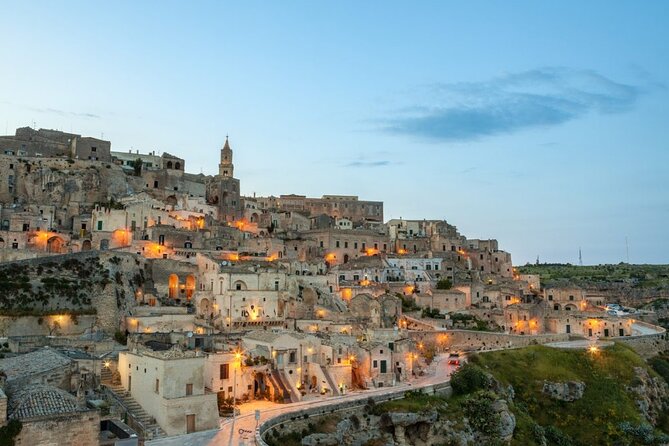
Matera keeps its secrets in stone. This English walking tour makes sense of the city’s winding Sassi districts, where homes, churches, water systems, and family stories are packed into the rock. I especially like the focus on ordinary life in the Sassi and the chance to explore parts of Sasso Caveoso and Sasso Barisano without wandering in circles. I also like the small-group format, which gives you room to ask questions and keep a relaxed pace.
The main consideration is simple: this is not a church-by-church sightseeing tour. It is a historical and architectural walk through Matera’s alleys and former cave homes, with much of the value coming from explanation rather than formal monument visits. One past participant found the amount of information repetitive, so travelers who prefer a quick photo walk may want something lighter.
In This Review
- Key points at a glance
- Why Matera makes more sense with a guide
- Walking through Sasso Caveoso
- Crossing into part of Sasso Barisano
- The story behind the Shame of Italy
- Cave homes, bakeries, and water collection
- Churches are not the main event
- Local guides and the personality of the walk
- Film locations and the modern Matera
- Price, group size, and practical value
- Who will enjoy this walk most
- Should you book the Discover Matera tour?
- FAQ
- How long does the Discover Matera tour last?
- What areas of Matera does the tour visit?
- Is the tour offered in English?
- Does the tour visit churches and cathedrals?
- How many people can join the tour?
- What is the price?
- Who might lead the tour?
- Is the tour suitable for most people?
- What happens if the weather is poor?
Key points at a glance
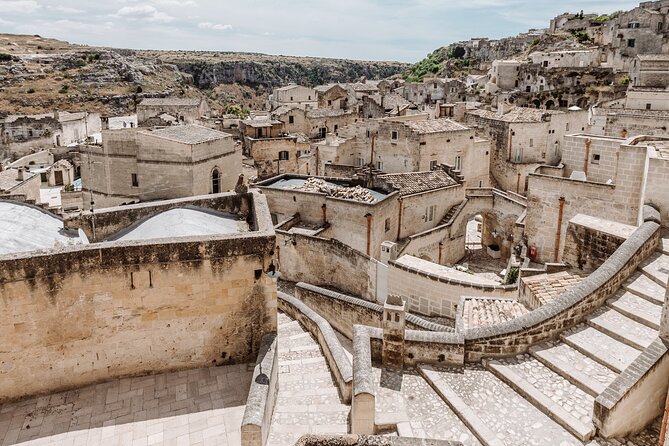
- Sasso Caveoso and Sasso Barisano: Walk through two of Matera’s most evocative cave districts, including less obvious corners.
- A people-first story: Learn how families lived in the Sassi, why residents were moved, and how Matera changed from the Shame of Italy to a UNESCO World Heritage city.
- Guides with local ties: Renato, Gaetano, Sara, or Domenico may lead the walk, with personal stories adding warmth to the city’s past.
- Cave homes and water systems: See how traditional homes, bakeries, and public and private water collection shaped daily life.
- A small group of up to 20: The format allows questions, though the upper limit is not especially intimate.
- Useful orientation: Finish with ideas for further exploring Matera, including restaurant suggestions and filming locations.
Why Matera makes more sense with a guide
At first glance, Matera can seem easy to understand. You see a city carved into pale rock, a maze of steps and lanes, and dramatic views across the valley. Then you start walking. One passage leads to another, the Sassi districts twist around slopes, and it becomes hard to tell which spaces were homes, churches, storage rooms, or water facilities.
That is where this tour earns its keep. Instead of handing you a list of buildings, the guide explains how the city worked. You learn why people lived in caves, how households used limited water, and why Matera’s old quarters became a national embarrassment before receiving international recognition.
I like this approach because it gives you a way to read the city. A dark opening in the rock is no longer just a photogenic doorway. It becomes part of a much larger story about family life, poverty, relocation, preservation, and renewal.
The tour lasts about two to three hours. That is enough time to build a solid understanding without taking up your entire day. It also works well near the beginning of a Matera visit, since the guide can point out places to return to later.
A few more reviews worth comparing before you book
- Matera: Sassi Tour with Cave House and Rupestrian Church
★ 4.7 · 6,618 reviews - Guided Tour of Matera Sassi
★ 4.5 · 1,312 reviews - Matera: Sassi Tour with Entry to Rock Houses and Churches
★ 4.6 · 622 reviews
Walking through Sasso Caveoso
The route develops through the most suggestive parts of ancient Matera, beginning with Sasso Caveoso and continuing into part of Sasso Barisano. These districts are the heart of the Sassi, where stone dwellings and lanes follow the shape of the ravine.
Sasso Caveoso is especially useful for understanding Matera’s older cave settlement. As you move through its alleys, the guide connects the physical setting to the lives of the people who lived there. The emphasis is not only on what you see, but on how families organized daily life in rooms cut into the rock.
You should expect a walking tour with uneven surfaces, slopes, and steps. Sensible shoes are a must. The route is described as not too strenuous, but Matera is not a flat city, and the stone streets can demand attention.
The best part of this section is the context. Without a guide, you might admire the stone façades and valley views, then move on. With Renato, Gaetano, Sara, or Domenico, you get explanations about the people behind those façades and the forces that shaped the district.
Crossing into part of Sasso Barisano
The walk also includes part of Sasso Barisano, giving you a second view of Matera’s cave neighborhoods. The two Sassi districts are close together, but their lanes and outlooks offer different ways to understand the city.
The guide helps you avoid wasting time on random turns. That matters in Matera, where the most interesting view may be around a corner, above a flight of steps, or tucked behind a plain stone wall. You can concentrate on the setting instead of constantly checking a map.
This is also where the tour’s off-the-beaten-path character becomes useful. The stated aim is to visit places that are not simply the standard tourist stops. You might pass through quieter alleys and less obvious viewpoints, while still seeing major elements of the old city.
Do not expect every stop to be a grand monument. Some places are valuable because they reveal how the city functioned. A bakery, a water collection point, or an ordinary cave dwelling can tell you as much about Matera as a celebrated church.
The story behind the Shame of Italy
One of the tour’s strongest themes is Matera’s dramatic change in reputation. For much of the 20th century, the Sassi were associated with poor housing and difficult living conditions. The phrase Shame of Italy captured the national discomfort surrounding the old quarters.
The guide explains why the city was not widely known outside Italy until relatively recently. You learn about the conditions that led to the displacement of residents and how Matera later moved toward preservation and cultural recognition.
This part gives the famous UNESCO designation some meaning. Matera is not protected simply because its caves look unusual. The city records a long relationship between people, stone, water, agriculture, family life, and changing ideas about housing.
I appreciate that the explanation includes anthropology, architecture, and personal experience rather than treating Matera as a pretty film set. The story is not tidy. It includes hardship, loss, political decisions, and later pride. That balance makes the city more moving and more understandable.
A different sort of day out around Matera:
- Sassi of Matera: Eco-Bus Open Top Tour
★ 4.6 · 592 reviews - Matera’s Sassi Walking Tour – History & Culture
★ 5.0 · 476 reviews - Guided Tour, Historic Center Sassi Rock Churches and Cave House
★ 5.0 · 461 reviews - Full Private 3h Excursion to the Sassi di Matera
★ 5.0 · 451 reviews
Cave homes, bakeries, and water collection
The tour is particularly valuable when it explains practical details. Traditional cave homes were shaped by the need to use available space and resources. The guide discusses how people lived inside these rooms and how domestic arrangements reflected local conditions.
One guide, Renato, may include the cave house where his family lived. That kind of personal connection changes the tone of the walk. You are not only hearing an abstract account of an old neighborhood. You are hearing how Matera’s past remained part of local families’ memories.
The tour also covers traditional bakeries and the public and private systems used to collect water. These stops help you see the Sassi as a working community rather than a collection of scenic hollows.
This is an important distinction. A short visit to Matera can easily become a sequence of photographs. The water systems and household stories slow things down and show how much skill was required to make life possible in the caves.
Churches are not the main event
The experience specifically avoids being a standard church tour. You may pass religious sites or discuss the role of rupestrian churches in the city, but the main purpose is to understand Matera through its lanes, homes, and social history.
That focus will suit you if you want to know how people lived. It may disappoint you if your main goal is to enter as many churches and cathedrals as possible. The tour is better seen as a city orientation with historical depth than as a formal art tour.
The emphasis on rupestrian spaces still gives you a sense of the religious and cultural world carved into the rock. But the guide’s attention remains broad, covering architecture, anthropology, local memory, and the city’s long change in fortune.
I see this as a strength, provided you choose it for the right reason. If you want a fuller church itinerary, you may need to visit those sites separately.
Local guides and the personality of the walk
The experience is led by Renato Favilli or one of his fellow guides, Sara, Domenico, or Gaetano. Gaetano receives especially strong praise for combining humor with detailed explanations, while Renato is valued for his family connection to Matera and personal stories.
That personality matters on a two- to three-hour walking tour. The subject is serious, but the delivery appears lively rather than academic. Gaetano is described as easy to understand in English, entertaining, and willing to answer questions at length.
Renato is also noted for taking people into places they might not find alone. His family background adds a personal layer to the story, especially when discussing the cave home where relatives lived.
The guide can also suggest restaurants, from casual to more formal, and recommend areas to explore after the walk. One useful pattern is to schedule the tour early in your stay, then use those suggestions for a later meal or afternoon outing.
Guide assignments can vary, so you should not assume a particular person will lead your tour unless that is confirmed at booking. Still, the consistent strength of the experience appears to be the guides’ affection for Matera and their ability to explain it in clear English.
Film locations and the modern Matera
Matera’s unusual setting has made it attractive to filmmakers. The walk includes a well-known location connected with the James Bond film No Time to Die, along with an unusual story about solving a production problem.
That detail adds a modern layer to the tour without taking over. Matera is not presented only as an ancient settlement or a UNESCO site. You also see how its dramatic streets and stone buildings function in present-day popular culture.
The film connection is best treated as a bonus. The central story remains the city and its residents. Still, it gives you another reason to notice how the Sassi look from different angles and why directors choose these streets.
Price, group size, and practical value
At $36.28 per person, the tour sits in a reasonable range for a guided walking experience lasting two to three hours. Its value depends on what you want from Matera.
If you only want a route through the main viewpoints, you might manage with a map. But if you want the reasons behind the city’s unusual layout, the lives of the families who occupied the caves, and the story of Matera’s rehabilitation, the fee is easier to justify.
The maximum group size is 20 people. That is small enough to feel more personal than a large coach excursion, but it is not a private tour. You should be able to ask questions, though the experience may feel less intimate when the group reaches its full capacity.
The walk is offered in English and uses a mobile ticket. Confirmation arrives when you book. Service animals are allowed, public transportation is nearby, and most people can participate, subject to the uneven walking conditions and the stated need for good weather.
The tour is booked, on average, 33 days in advance. That suggests planning ahead is sensible, especially if your Matera dates are fixed.
Free cancellation is available up to 24 hours before the start time for a full refund. Changes or cancellations inside that window are not accepted for a refund. Since the experience requires good weather, a cancellation caused by poor conditions brings the choice of another date or a full refund.
Who will enjoy this walk most
I would choose this tour if you want Matera explained through its people. It is a good match for first-time visitors, history fans, architecture enthusiasts, and anyone who wants an orientation before exploring the Sassi alone.
It also suits you if you enjoy asking questions and listening to local stories. The guides’ humor and personal memories help keep the walk lively, and the route leaves time for photographs and conversation.
You may want a different experience if you dislike long explanations or prefer to move quickly between named monuments. One participant found the information repetitive and wished for more sightseeing. That is a fair warning: this tour gives a lot of interpretation, and the value is strongest when you enjoy the story as much as the view.
Wear shoes with a secure sole, allow extra attention on steps and sloped lanes, and avoid treating the walk as a quick photo stop. You will get more from it if you listen for the connections between buildings, water, family life, and the city’s changing reputation.
Should you book the Discover Matera tour?
I would book this tour if you want to understand why Matera matters, not just photograph its caves. The combination of Sasso Caveoso, part of Sasso Barisano, local stories, water systems, family memories, and modern film locations gives you a well-rounded introduction in about two hours.
Choose it early in your stay if possible. It can help you find your way through the Sassi and decide what deserves a longer visit later.
Skip it only if your priority is a fast monument checklist or a dedicated church tour. For most people who want an engaging English explanation of Matera’s unusual past, $36.28 is a fair price for a thoughtful introduction led by guides who clearly care about the city.
FAQ
How long does the Discover Matera tour last?
The tour lasts approximately two to three hours. Several descriptions of the experience refer to a tour of about two hours, so you should allow the full three-hour window when planning your day.
What areas of Matera does the tour visit?
The route passes through Sasso Caveoso and part of Sasso Barisano. It also includes suggestive alleys, viewpoints, cave spaces, and less typical places in ancient Matera.
Is the tour offered in English?
Yes. The experience is offered in English, and the guide is expected to explain Matera’s history, architecture, anthropology, and local stories in English.
Does the tour visit churches and cathedrals?
No. This is not a classic church-focused tour. The main emphasis is on discovering the city through its lanes, cave homes, water systems, architecture, and the lives of people who lived in the Sassi.
How many people can join the tour?
The maximum group size is 20 people. It is presented as a small-group experience, but the group can reach that maximum.
What is the price?
The listed price is $36.28 per person. The value comes from the guided explanation of Matera’s districts, local history, cave homes, water systems, and social change.
Who might lead the tour?
The tour may be led by Renato Favilli, Sara, Domenico, or Gaetano. Renato and Gaetano are both specifically associated with the experience.
Is the tour suitable for most people?
Most people can participate, and the walk is described as not too strenuous. Matera has alleys, slopes, and steps, so sensible shoes are recommended.
What happens if the weather is poor?
The experience requires good weather. If it is canceled because of poor conditions, you will be offered a different date or a full refund. You can also cancel up to 24 hours before the start time for a full refund.
Just added around Matera
- The Sassi of Matera★ 5.0 · 252 reviews
- Matera: Sassi History and Culture Walking Tour★ 4.8 · 267 reviews
- Matera: Open Top Bus Tour with Entrance to Casa Grotta★ 4.2 · 278 reviews
- Matera: 3-hour Private Full Sassi di Matera Guided Tour★ 4.8 · 316 reviews
- Matera: Guided Walking Tour★ 4.8 · 333 reviews
- Discover Matera: Overnight Stay, Meal, and Sassi Tour★ 5.0 · 335 reviews
- Sassi di Matera: Guided Walking Tour with Cave House/Church★ 4.7 · 343 reviews
- Full Private 3h Excursion to the Sassi di Matera★ 5.0 · 451 reviews
City Tours, compared.

City Sightseeing Hop-on Hop-off Bus with Audioguide
Read our review →
City Sightseeing Hop-On Hop-Off Bus with Audio Guide
Read our review →
City Sightseeing Rome Hop-On Hop-Off Bus Tour
Read our review →

Fettuccine Pasta Cooking Class in Rome’s City Center
Read our review →
Vatican City: Vatican Museums & Sistine Chapel Entry Ticket
Read our review →

City Sightseeing Florence Hop-On Hop-Off Bus Tour
Read our review →Browse the lists this tour appears in