Review · ROME TOURS
Rome: The Original Fiat 500 Self-Drive Tour
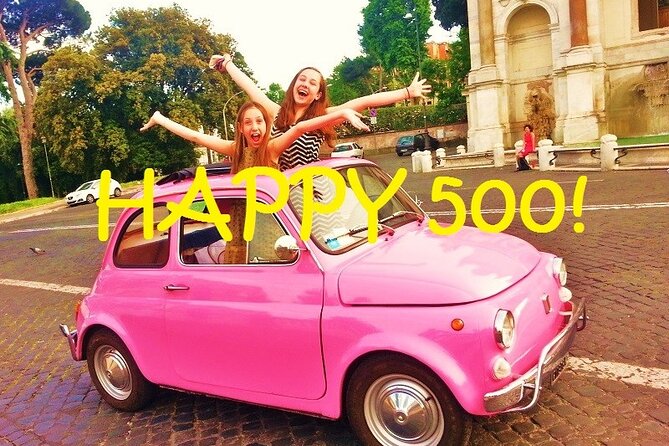
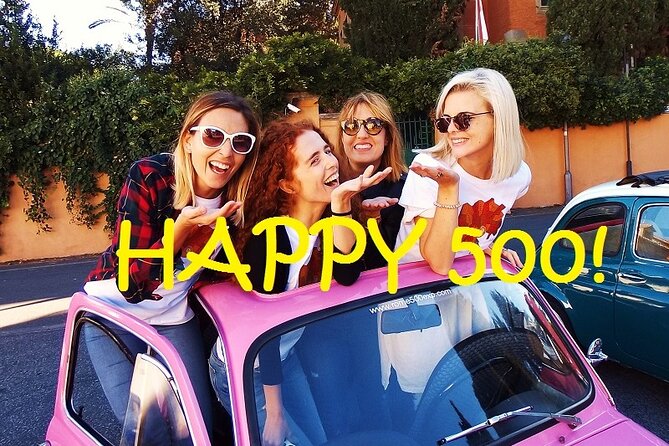
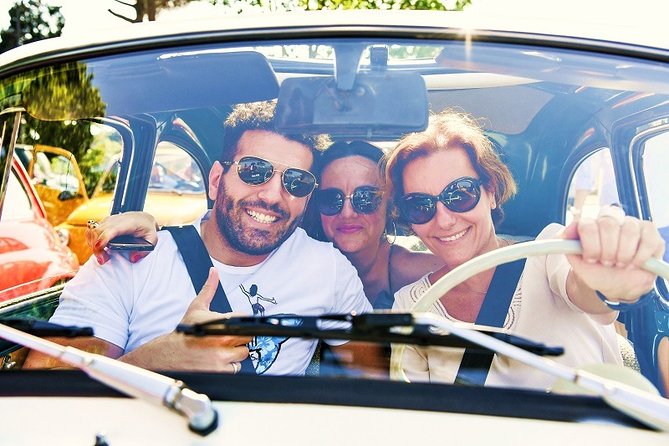
Rome is better at Fiat speed. This three-hour tour puts you behind the wheel of a candy-colored vintage Cinquecento, following a guide through major sights, quiet lanes, and neighborhoods many visitors miss. I like the small-car access and the chance to see Rome from street level, not through a bus window. I also like the carefully timed photo stops, which include the Aventine Keyhole, Janiculum Hill, and Circus Maximus. The main catch is simple: you must be comfortable driving an older manual car in Rome.
The tour costs about $211.72 per person, so this is not a cheap way to get from sight to sight. Still, the price includes the car, guide, coffee, and a very unusual three hours in one of Europe’s most memorable cities. Guides such as Alex, Alexis, Francesco, Mike, and Marco have been praised for their patience, humor, and ability to keep the little convoy together.
In This Review
- Key points to know before booking
- Why a Fiat 500 makes Rome feel different
- Starting at Palazzo Manfredi
- Caracalla and the first taste of ancient Rome
- The Aventine Hill: keyhole views and orange trees
- Circus Maximus and the Colosseum area
- Janiculum Hill and Rome from above
- The Pyramid and Testaccio’s broken-pot hill
- Trastevere in a car built for narrow streets
- Porta San Sebastiano and the final stretch
- Coffee, photos, and the value of the price
- Who will enjoy this most
- Practical details that can make or break the day
- Should you book the Fiat 500 tour?
- FAQ
- How long does the Rome Fiat 500 tour last?
- Where does the tour start?
- Where does the tour end?
- Do I drive the Fiat 500 myself?
- Is the Fiat automatic or manual?
- What license does the driver need?
- How old must the driver be?
- How old must children be?
- How many people fit in one Fiat 500?
- Is coffee included?
- Can I cancel for a refund?
Key points to know before booking
- You drive the Fiat yourself: This is an active tour, not a ride in which you sit back while someone else handles the traffic.
- Manual transmission is required: The cars use a clutch and stick shift, and drivers need real experience with older manual vehicles.
- The route mixes icons and quieter sights: Expect views of the Colosseum area, Circus Maximus, Trastevere, Testaccio, the Aventine, and Janiculum Hill.
- The Fiat is genuinely small: Each car can carry up to three adults, or two adults and two children, with limits for taller or heavier passengers.
- The guide leads by car: Walkie-talkie communication helps the group stay together when Roman traffic separates the cars.
- Coffee and photos are included: You receive one espresso or cappuccino per participant, plus free photo help using your own phone or camera.
Why a Fiat 500 makes Rome feel different
Rome can be tiring on foot. Its famous sights are spread across hills, broad avenues, ancient ruins, and small lanes that do not always connect in an obvious way. A vintage Fiat gives you a bridge between a walking tour and a standard sightseeing vehicle.
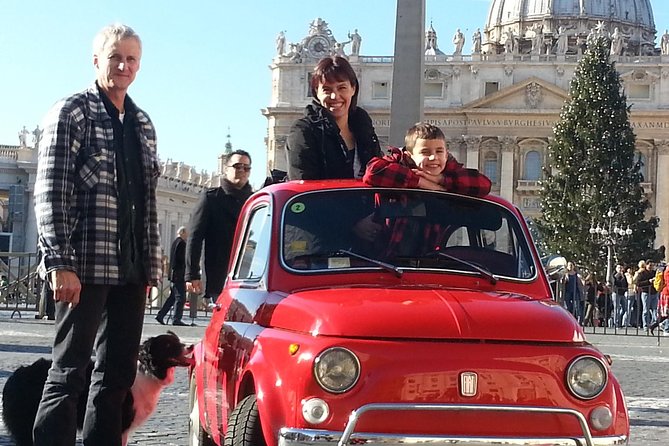
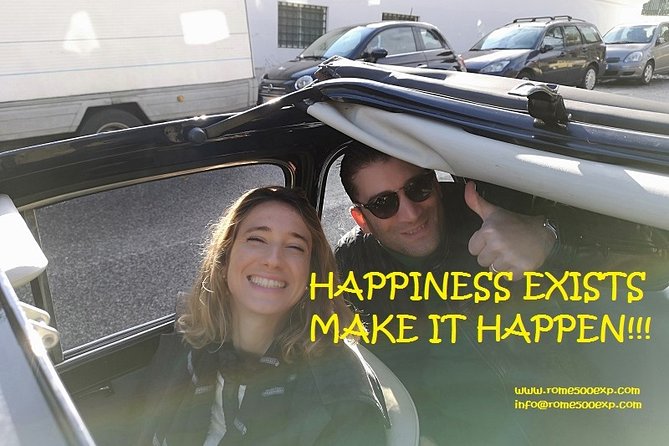
You are close to the pavement, close to the buildings, and visible to everyone around you. The soft-top roof can be opened for sun and fresh air, and the bright little cars attract smiles and phone cameras as they pass. That attention is part of the fun, though anyone hoping to move unnoticed through Rome should choose a different outing.
The Fiat 500 was introduced in the 1950s as an affordable and fashionable Italian car. Its small body was made for streets where a modern sedan can feel clumsy. That matters here. Some of the route uses narrow cobbled roads, and the car can reach corners that would be awkward for a larger vehicle.
The tradeoff is comfort. This is a tiny car by modern standards, with limited room for luggage and legs. The operator advises against the tour for anyone over 220 pounds, or taller than 6 feet 2 inches. Closed-toe shoes are required, so leave the sandals in your hotel room.
A few more reviews worth comparing before you book
- Vatican: Museums & Sistine Chapel Entrance Ticket
★ 4.5 · 144,003 reviews - Vatican Museums & Sistine Chapel Tour with Optional Basilica
★ 4.3 · 67,413 reviews - Colosseum, Roman Forum & Palatine Guided Tour
★ 4.7 · 63,148 reviews
Starting at Palazzo Manfredi
The meeting point is Palazzo Manfredi on Via Labicana, 125, in central Rome. The activity returns to this same point after about three hours. Hotel pickup and drop-off are not included, so plan your route to the start before tour time.
After meeting your guide, you are paired with a Fiat and given a briefing. This is an important part of the experience, especially if you learned on a modern manual car. Older controls can feel less forgiving, and the guide needs to see that you can handle the clutch and gear changes before the group sets off.
The minimum driver age is 18. You need a valid European Union driving license or an International Driving Permit. The operator can refuse a driver who lacks enough manual-transmission experience, and there is no refund in that situation. Take that rule seriously. Knowing how to drive stick in a quiet country lane is not the same as managing a vintage car in Roman traffic.
The cars travel in a colorful convoy behind the guide. Walkie-talkies help with directions and keep the group in touch if traffic slips between vehicles. Several guides, including Alex and Nando, have been praised for waiting when cars become separated and for helping nervous drivers find a manageable pace.
Caracalla and the first taste of ancient Rome
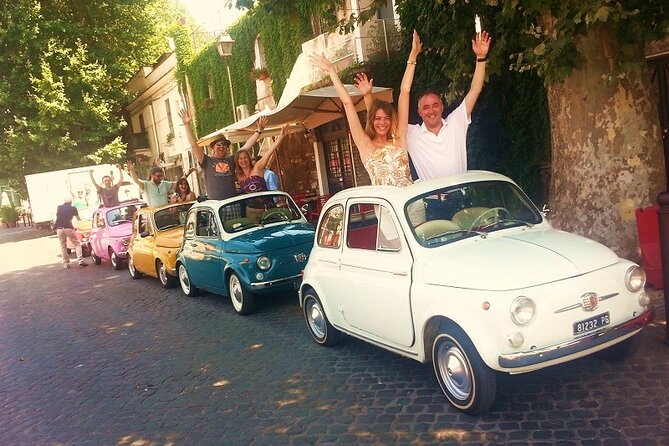
One of the early stops is the Baths of Caracalla, a huge ancient bathing complex. You get roughly 10 minutes here, enough for an introduction and photographs rather than a full archaeological visit.
The scale is the point. The baths covered an area compared with about 15 football pitches and included hot and cold baths, libraries, exercise areas, theaters, gardens, and fountains. Ancient Roman public bathing was not just a quick wash. It was a major social and recreational activity.
You will not tour the interior in depth on this outing, and admission is not charged for the stop. Think of it as a visual history lesson from the road, with time to understand why the ruins are so imposing.
The Aventine Hill: keyhole views and orange trees
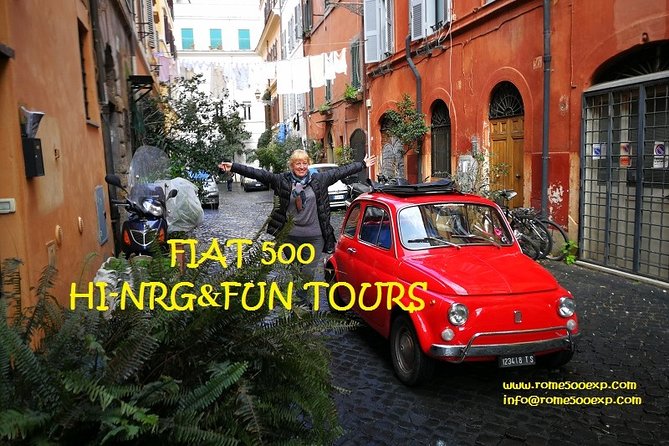
The Aventine section is one of the most distinctive parts of the route. At the Buco della Serratura, or keyhole, you look through a door set into Piazza dei Cavalieri di Malta and see St. Peter’s Basilica framed at the far end. The view lines up three countries: Italy, the Vatican, and the territory connected with the Knights of Malta.
It is a small sight, but it gives you a satisfying photo and a quick lesson in Rome’s unusual geography. The tour allows about 20 minutes, which is generous for taking pictures and listening to the guide.
Nearby Parco Savello, often called the Garden of Oranges, provides a broader view across Rome. The itinerary repeats part of the keyhole description for this stop, but the appeal of the park is different: it is a pleasant hilltop pause with city views and room to step away from the car.
The Aventine is also where the Fiat feels especially useful. You can reach the hill in a small vehicle, stop for pictures, and continue without the long walk that would otherwise connect these viewpoints to the lower parts of the city.
A different sort of day out around Rome:
- Vatican Museums, Sistine Chapel & St Peter’s Basilica Guided Tour
★ 4.5 · 39,149 reviews - Rome: Colosseum, Palatine Hill and Roman Forum Guided Tour
★ 4.8 · 32,814 reviews - Rome: Guided Tour of Colosseum, Roman Forum & Palatine Hill
★ 4.7 · 27,897 reviews - Rome: Colosseum & Forum with Audio Guide App -Optional Arena
★ 4.2 · 24,770 reviews
Circus Maximus and the Colosseum area
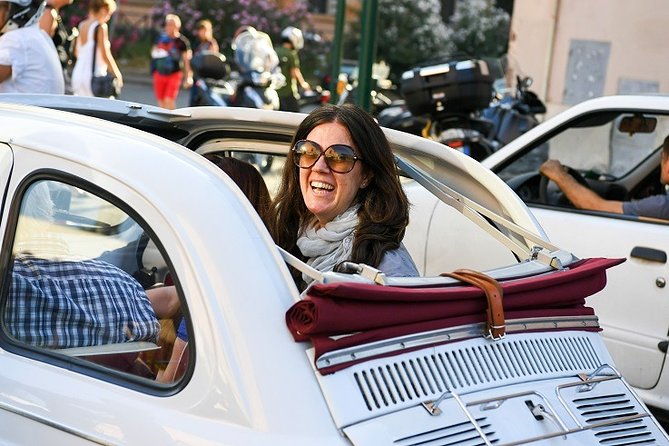
The route passes the Colosseum and includes the Arch of Constantine, giving you a quick look at Rome’s most famous ancient setting. This is not a ticketed Colosseum visit, so you should schedule a separate entry if you want to see the amphitheater inside.
At Circus Maximus, you stop for about 20 minutes. The long open space was once Rome’s great chariot-racing arena, built centuries before the Colosseum. The guide brings the site to life with the roar of enormous crowds and the speed of the races.
Today, much of the Circus Maximus is open ground. That can make it harder to picture the original structure, but the size of the site helps. It has also hosted major concerts, connecting an ancient entertainment venue with modern Roman life.
This stop works well for first-time visitors because it places two major Roman landmarks in the same part of the tour. You see the Colosseum from outside, then have time to consider the much older Circus Maximus without rushing through an indoor admission line.
Janiculum Hill and Rome from above
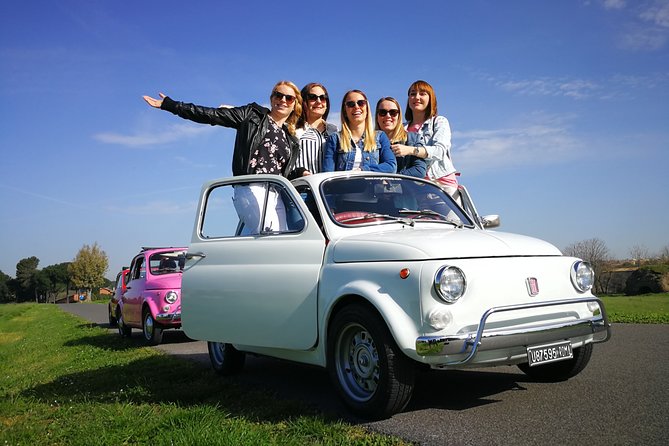
At Piazzale Giuseppe Garibaldi on Janiculum Hill, the reward is a wide panorama. From the terrace, you can look across Rome toward the Colosseum, the Pantheon, the Altare della Patria, and the many church domes that shape the city skyline.
The stop lasts about 20 minutes. Bring your camera, but also take a moment to identify the landmarks with the guide. Rome’s skyline can look like a jumble of domes and rooftops until someone points out what you are seeing.
This is one of the strongest reasons to take the tour early in your Rome stay. You gain a visual map of the city. Later, when you walk near the Pantheon or see the Monument to Victor Emmanuel II, you have a better sense of where each sight sits in relation to the others.
The hill also adds variety. After ancient ruins and narrow streets, you get open air and a broad view. The climb is handled by car, which saves your legs for the rest of your visit.
The Pyramid and Testaccio’s broken-pot hill
At Porta San Paolo, the tour stops near the Pyramid of Cestius. Built in 18 BCE as the tomb of the wealthy Roman Gaius Cestius, this Egyptian-style monument is one of Rome’s more surprising ancient remains.
The stop lasts about 20 minutes and is free. The pyramid is close to the city’s old walls and transport routes, yet it feels unlike the better-known Roman monuments. It is a good reminder that ancient Rome absorbed outside styles and ideas.
The route then reaches Via Galvani and Monte Testaccio, the hill made from broken transport vessels. Romans built this artificial mound from discarded pottery, much of it connected with olive oil, fish sauce, and wine. It eventually reached about 40 meters high and 700 meters around, with an estimated 50 million vessels contributing to its shape.
This is exactly the sort of stop that gives the drive its character. You may not have placed a pottery dump on your Rome wish list, but it explains daily trade and food supply in a direct, memorable way. The guide’s explanation turns what could look like an ordinary hill into an unusual archaeological site.
Trastevere in a car built for narrow streets
Trastevere is the tour’s most playful driving section. The neighborhood is known for winding lanes and tight streets, and the Fiat 500 suits them far better than a large modern vehicle.
You drive through the area behind the guide, with time to notice facades, corners, and local street life. People may photograph the bright little cars as they pass. That makes the Fiat feel less like rented transport and more like part of the show.
The tour does not promise a long walking visit through Trastevere, so do not treat this as a substitute for returning later on foot. Instead, use the drive as an introduction. If you like what you see, come back for a slower look at the neighborhood’s squares and restaurants.
The compact car also reduces some of the stress of navigating narrow streets, but it does not remove Roman traffic. You still need confidence, patience, and attention. The guide’s pace and radio contact help, yet you remain responsible for your own car.
Porta San Sebastiano and the final stretch
The itinerary includes a stop at Porta San Sebastiano, part of Rome’s ancient defensive walls. The published details for this stop are brief, so expect a short visit and an explanation from the guide rather than a lengthy museum-style presentation.
Its place on the route adds another view of Rome’s layers: imperial roads, defensive walls, residential districts, and modern traffic all occupy the same city. The experience is strongest when you appreciate those contrasts rather than expect every stop to be a major monument.
Depending on the day and guide, the route can also include the Mouth of Truth and other photo points. The stated highlights include the Colosseum, Arch of Constantine, Circus Maximus, the Aventine Keyhole, the Garden of Oranges, and Trastevere. The exact order may shift with traffic and local conditions.
Coffee, photos, and the value of the price
One espresso or cappuccino per participant is included. Food and other drinks are not, and gelato or extra coffee may be purchased at your own cost during the outing.
Free photo assistance using your phone or camera is another useful touch. Since you are busy driving, you cannot easily take pictures of yourself in the car. The guide can help capture the group and the Fiat at the stops.
At around $211.72 per person, the experience costs far more than a standard walking tour. The comparison is not quite fair, though. You are paying for the vintage vehicle, fuel and operating costs, a guide, a small convoy, coffee, and the chance to drive through Rome yourself.
The value depends on what you want. If you mainly need facts about ancient monuments, a walking tour or museum visit will give you more detail for less money. If you want a memorable activity that combines sightseeing, driving, photos, and unusual corners of Rome, the price is easier to justify.
The booking pattern also matters. This experience is often reserved about 54 days ahead, suggesting that popular dates can fill early. A maximum of 10 people can book together and be split among separate Fiats, while the overall activity listing allows up to 30 participants. Confirm the group arrangement when booking if having a very small convoy matters to you.
Who will enjoy this most
I would choose this tour for couples, families with older children, and anyone who likes classic cars. It is also a strong pick for a honeymoon or birthday because the car itself gives the day a sense of occasion. One couple described it as a favorite part of a honeymoon, and that makes sense: it is social, photogenic, and different from standard sightseeing.
Children must be at least 5 years old, and the driver must be at least 18. A booking requires at least two people. Most people can participate, but the size restrictions are real.
I would not choose it if you dislike manual driving, feel tense in city traffic, or need a quiet sightseeing experience. It is also a poor fit for anyone who wants long interior visits at the Colosseum or Baths of Caracalla. This is a moving overview with selected stops, not a replacement for Rome’s major museums and archaeological sites.
The strongest guides make a big difference. Alex and Alexis receive repeated praise for clear instruction, humor, patience, and a steady pace. Francesco, Mike, and Marco are also singled out for warmth and local insight. Individual guide assignments can change, so book for the format and route rather than a guaranteed person.
Practical details that can make or break the day
Wear closed-toe shoes. You will operate a manual car, and flip-flops or sandals are not allowed.
Arrive ready to drive, not dressed as if you are only going for a sightseeing ride. The briefing covers safety and the car’s controls, but it cannot replace basic clutch experience.
Check your license requirements before leaving home. The driver needs a valid EU license or an International Driving Permit. Also consider the car’s tight interior if anyone in your party is close to the stated height or weight limits.
One important cost detail deserves attention. A participant reported being offered full insurance for an additional €25 because the car was not fully insured under the basic arrangement. Ask the operator exactly what insurance is included and what extra coverage costs before you start. That is a small question that can prevent an unpleasant surprise.
Free cancellation is available up to 24 hours before the start time for a full refund. Changes or cancellations inside that 24-hour window are not accepted for a refund.
Should you book the Fiat 500 tour?
Book it if you want Rome to feel like an adventure rather than a checklist. You will see major landmarks, but the real pleasure comes from steering a tiny historic car through streets where a tour bus cannot go. The Aventine views, Monte Testaccio, Trastevere, and Janiculum Hill give the route more character than a simple monument circuit.
Skip it if you are not a confident manual driver or if the cost feels high for a three-hour outing. For the right person, though, the Fiat is the attraction, the transport, and the photo opportunity all at once. Ask about insurance, check the size limits, and reserve ahead for your preferred date. If those details work for you, this is one of Rome’s most distinctive ways to get oriented.
FAQ
How long does the Rome Fiat 500 tour last?
The tour lasts approximately three hours, including driving, guided stops, photographs, and a coffee break.
Where does the tour start?
It starts at Palazzo Manfredi, Via Labicana 125, 00184 Rome.
Where does the tour end?
The activity ends back at the starting point.
Do I drive the Fiat 500 myself?
Yes. You are paired with a vintage Fiat 500 and drive behind the guide’s car.
Is the Fiat automatic or manual?
The cars have manual stick and clutch controls. Drivers need sufficient experience with manual transmission vehicles.
What license does the driver need?
The driver must have a valid European Union driving license or an International Driving Permit.
How old must the driver be?
Drivers must be at least 18 years old.
How old must children be?
Children must be at least 5 years old to participate.
How many people fit in one Fiat 500?
Bookings allow a maximum of three adults per car, or two adults and two children, for comfort.
Is coffee included?
Yes. Each participant receives one espresso or cappuccino. Other food and drinks are not included.
Can I cancel for a refund?
You can cancel at least 24 hours before the local start time for a full refund. Cancellations or changes made less than 24 hours before the start are not accepted for a refund.
Just added around Rome
- Rome City, Pantheon, and Trevi Fountain Walking Tour★ 5.0 · 249 reviews
- Rome: Tivoli Day Trip with Villa d’Este and Villa Adriana★ 4.5 · 251 reviews
- Rome: Skip the line Vatican Museums & Sistine Chapel Tour★ 4.2 · 251 reviews
- Transfer Rome center – Ciampino Airport★ 4.5 · 251 reviews
- Rome: Cannondale E-Bike Evening Tour with Optional Dinner★ 4.9 · 251 reviews
- VIP Colosseum, Roman Forum & Palatine Hill & Special Access Sites★ 4.5 · 252 reviews
- Private Vatican Museums Hidden Gems Tour with Optional Pick-Up★ 5.0 · 253 reviews
- Vatican Museums & Sistine Chapel Skip-the-Line Guided Tour★ 4.6 · 254 reviews
Rome Tours, compared.

Vatican: Museums & Sistine Chapel Entrance Ticket
Read our review →
Vatican Museums & Sistine Chapel Tour with Optional Basilica
Read our review →
Colosseum, Roman Forum & Palatine Guided Tour
Read our review →
Vatican Museums, Sistine Chapel & St Peter’s Basilica Guided Tour
Read our review →
Colosseum, Palatine Hill and Roman Forum Guided Tour
Read our review →
Guided Tour of Colosseum, Roman Forum & Palatine Hill
Read our review →
Colosseum & Forum with Audio Guide App -Optional Arena
Read our review →