Review · ROME TOURS
Rome: Small Group Rome’s Dark Side – Ghosts & Legends Tour
Rome gets stranger after sunset. This two-hour walk turns beautiful piazzas and quiet lanes into a stage for murder, betrayal, executions, poison, and old ghost stories. I like the sharp storytelling and the way the tour uses real places rather than costumes or fake scares. I also like the small group, capped at 15 people, which makes it easier to hear guides such as Ben, Arielle, Ivanna, and Ariel. The main consideration is that this is macabre history with humor, not a haunted-house attraction.
The tour costs $23 per person, a fair price for two hours with a live guide in English or Italian. I especially appreciate the scheduled stop at a local bar, useful for a drink and a bathroom break. You should still arrive ready to walk on cobblestones in all weather, and remember that no crypts or underground sites are included.
In This Review
- What makes this Rome night walk different
- Starting with Giordano Bruno in Campo de’ Fiori
- Campo de’ Fiori and the prettier side of punishment
- Farnese Palace and the power behind the stone
- Ponte Sisto and the city after dark
- Via Giulia and Rome’s scandalous characters
- The short stop in a less obvious corner
- Castel Sant’Angelo and the final legends
- How the guides shape the experience
- Price, pace, and what $23 buys you
- Who will enjoy this most
- Practical advice before you go
- Should you book Rome’s Dark Side?
- FAQ
- Where does the Rome Dark Side tour meet?
- How long does the tour last?
- How much does the tour cost?
- What languages are available?
- How large is the group?
- Does the tour enter crypts or underground sites?
- Is food or a drink included?
- Does the tour operate in bad weather?
- Can I cancel or pay later?
What makes this Rome night walk different
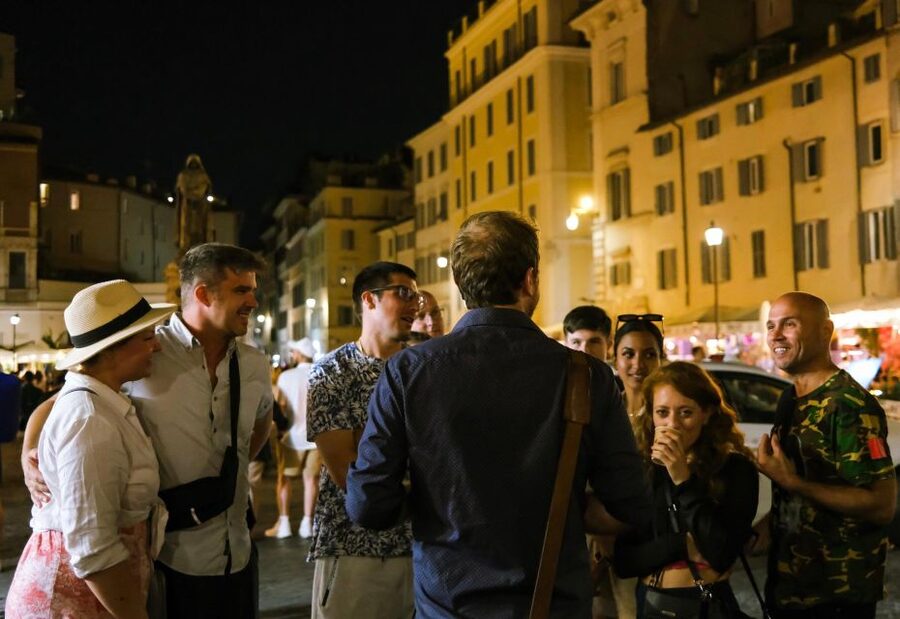
- The meeting point is Giordano Bruno’s statue in Campo de’ Fiori, one of Rome’s most memorable reminders that public punishment was once part of daily life.
- The stories focus on scandalous people, including a clever philosopher, a powerful noblewoman, an alleged poisoner, and a magician whose luck eventually ran out.
- The route links Campo de’ Fiori with Castel Sant’Angelo, passing Farnese Palace, Ponte Sisto, Via Giulia, and St. Angelo Bridge.
- The tone is funny as well as spooky, with guides using wit to keep grim material from becoming too heavy.
- A maximum of 15 people gives the walk a personal feel without the cost of a private tour.
- The tour runs rain or shine, so comfortable shoes and a weatherproof layer matter more than a dramatic costume.
Starting with Giordano Bruno in Campo de’ Fiori
The guide meets you in front of the tall statue at the center of Campo de’ Fiori. It is hard to miss: a hooded figure looking across the square with a stern, almost accusing expression. Look for a sign reading Rome’s Dark Side, Ghosts & Legends, and arrive about 10 minutes early.
This is an excellent starting point because Campo de’ Fiori is cheerful by day and much darker in its past. The square is filled with market activity in daylight, restaurants in the evening, and people enjoying one of Rome’s most familiar public spaces. The statue shifts your attention to what happened here before the square became a social stop.
The guide uses the site to establish the tour’s main idea: Rome’s beauty and cruelty often occupy the same few feet of pavement. You are not simply hearing a string of ghost tales. You are learning how public power, religion, crime, and reputation shaped the city.
The small group size helps right away. With no more than 15 people, you can stay close to the guide and hear the details without fighting through a large crowd. That matters on a nighttime walk, especially when the group moves into narrower streets.
A few more reviews worth comparing before you book
- Vatican: Museums & Sistine Chapel Entrance Ticket
★ 4.5 · 144,003 reviews - Vatican Museums & Sistine Chapel Tour with Optional Basilica
★ 4.3 · 67,413 reviews - Colosseum, Roman Forum & Palatine Guided Tour
★ 4.7 · 63,148 reviews
Campo de’ Fiori and the prettier side of punishment
The first guided section remains around Campo de’ Fiori and sets the mood with executions, punishment, and the uncomfortable relationship between spectacle and public life. The stories are grim, but the guides do not treat them as solemn museum lectures.
The strongest part of this experience is the storytelling. Ben has been praised for making obscure episodes easy to follow, while Arielle and Ivanna are especially good at adding humor and energy. Ariel has also received warm praise for keeping the route moving and bringing attention to places you might otherwise pass without noticing.
You will hear about people who challenged authority, crossed powerful figures, or built reputations on deception. The tour does not pretend that famous historical figures were always admirable. That gives the evening a useful edge. Rome’s past is not only emperors, artists, architects, and popes. It also includes opportunists, criminals, eccentrics, and people who made terrible choices in very public places.
Do not expect graphic reenactments. The experience has no actors in capes, no theatrical costumes, and no ghost-hunting apps. The atmosphere comes from the setting, the darkness, and the plain fact that the stories happened in the streets around you.
Farnese Palace and the power behind the stone
From Campo de’ Fiori, the walk continues to Farnese Palace. The building is impressive even when you are only seeing it from the outside, but the point here is less architectural admiration and more the people connected with power.
This stop adds political weight to the evening. The tour asks you to look beyond grand façades and consider the ambition, rivalry, and questionable behavior that surrounded Rome’s elite. The palace becomes a backdrop for stories of people who understood influence, used it boldly, and sometimes paid a price for overreaching.
I like this part because it keeps the tour from becoming a collection of isolated ghost legends. The stories connect to the city’s institutions. Churches, palaces, bridges, and squares were not neutral scenery. They were places where decisions were made, punishments were carried out, and reputations were built or destroyed.
The guide’s delivery makes a difference here. The best moments come when a guide pauses to explain the setting, then turns toward the human story. Several guides, especially Ben and Ivanna, have a reputation for knowing when to give historical detail and when to move on before the explanation grows heavy.
Ponte Sisto and the city after dark
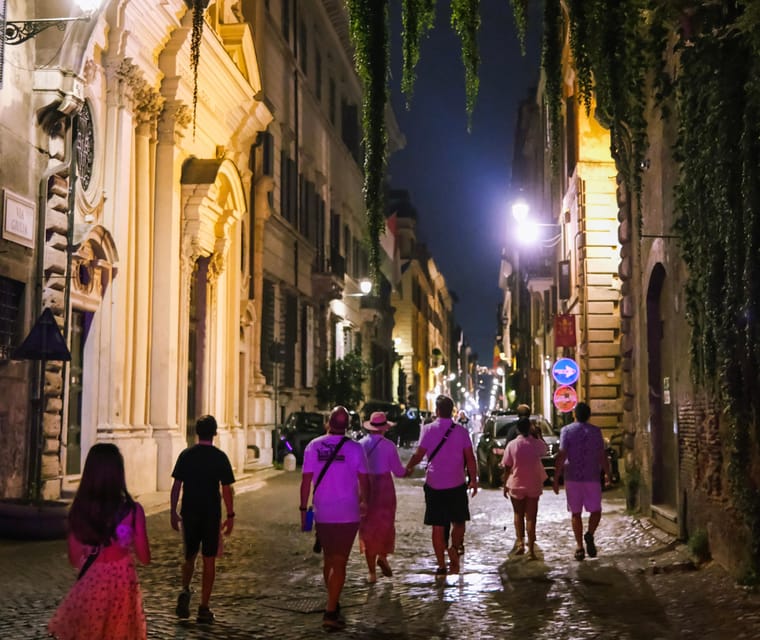
At Ponte Sisto, the route takes on a more atmospheric feel. Bridges are natural places for legends because they connect neighborhoods while also creating a sense of passage. At night, the river and surrounding streets give the stop a quieter mood than Campo de’ Fiori.
This is one of the places where you feel the value of taking the tour after sunset. Rome’s monuments do not disappear, but they become less obvious. A bridge that might seem like a simple crossing during the day can feel like part of a story once the guide explains who used it, what happened nearby, and why certain tales survived.
The walking is described as leisurely rather than strenuous, but you should not confuse that with a flat, effortless stroll. Cobblestones are part of the experience, and you will be on your feet for about two hours. Wear shoes that can handle uneven paving.
A useful feature is the break at a local bar. Food and drinks are not included, but you can buy something during the stop. The pause also gives you a chance to use the bathroom, rest your feet, and chat with the group before the second part of the walk.
A different sort of day out around Rome:
- Vatican Museums, Sistine Chapel & St Peter’s Basilica Guided Tour
★ 4.5 · 39,149 reviews - Rome: Colosseum, Palatine Hill and Roman Forum Guided Tour
★ 4.8 · 32,814 reviews - Rome: Guided Tour of Colosseum, Roman Forum & Palatine Hill
★ 4.7 · 27,897 reviews - Rome: Colosseum & Forum with Audio Guide App -Optional Arena
★ 4.2 · 24,770 reviews
Via Giulia and Rome’s scandalous characters
After the break, the route moves along Via Giulia. This section brings the focus back to people rather than places. You will hear about characters whose lives were shaped by ambition, fraud, cleverness, seduction, or simple bad judgment.
The stories include a philosopher who became too clever for the church, a noblewoman who survived political changes and outmaneuvered almost everyone around her, a poisoner whose alleged customers may have included unhappy wives, and a magician who charmed his way across Europe until his luck failed.
These figures are memorable because they are not presented as flat villains. The best accounts show how each person gained influence, why people believed them, and how Rome’s systems allowed certain personalities to prosper. You get the humor, but you also get a sense of how fear and rumor worked in earlier centuries.
This is where the tour will suit people who enjoy history more than pure horror. The ghosts add atmosphere, but the real subject is human behavior. Several guides have been praised for making the city come alive through stories that are rarely part of the standard introduction to Rome.
The humor can be a little inappropriate at times. That is part of the stated style, and it helps soften the darker material. If you prefer a quiet, academic presentation, this may feel too playful. If you enjoy a guide who can make you laugh after describing something grim, the tone should work well.
The short stop in a less obvious corner
The route includes a 20-minute guided stop at a less familiar site. The precise place is not identified in the tour details, which preserves some surprise, but it forms an important bridge between Via Giulia and Castel Sant’Angelo.
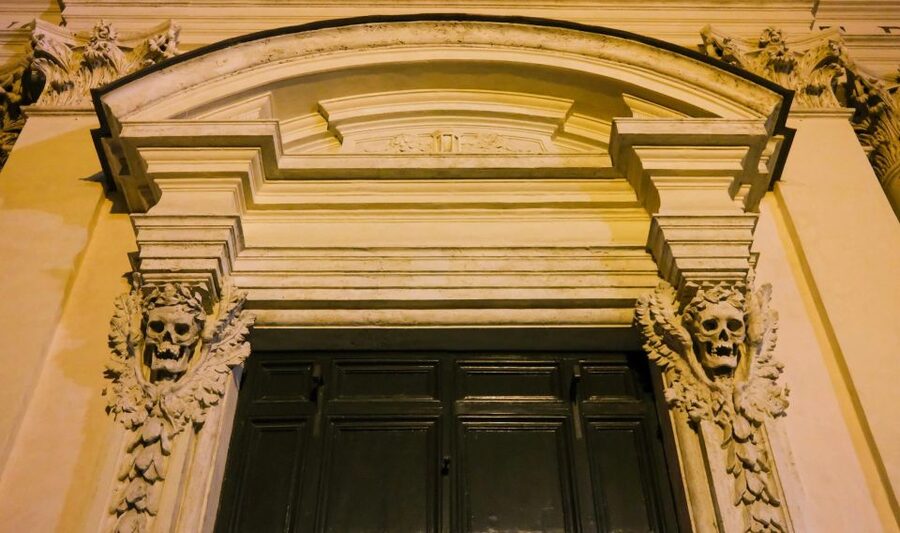
This pause gives the guide room to tell a longer story without rushing through it. It also gives you a chance to notice the smaller details of central Rome: a dark alley, an unsettling church feature, or a corner that looks ordinary until its past is explained.
The tour’s appeal depends on these shifts in perspective. You may already know Rome’s famous monuments, but you may not know why a particular lane gained a reputation or how a religious setting became linked with scandal. This experience encourages you to pay attention to the spaces between major sights.
Castel Sant’Angelo and the final legends
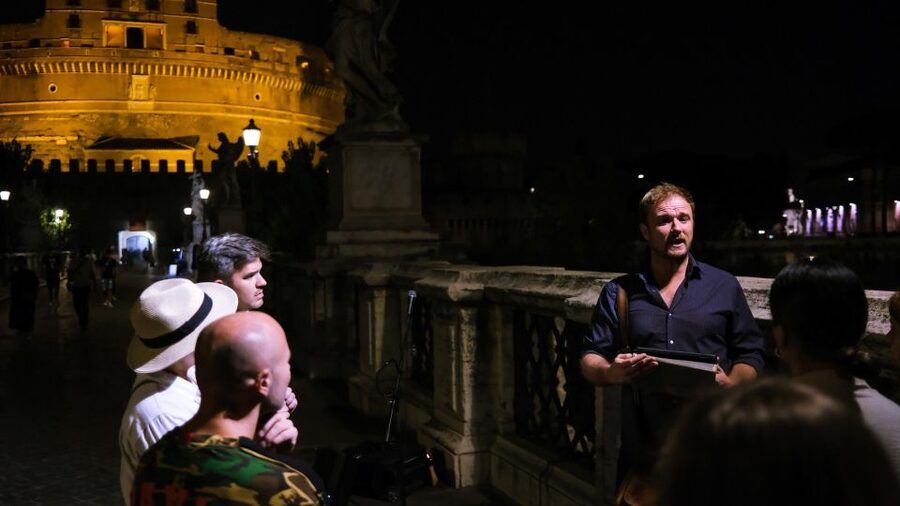
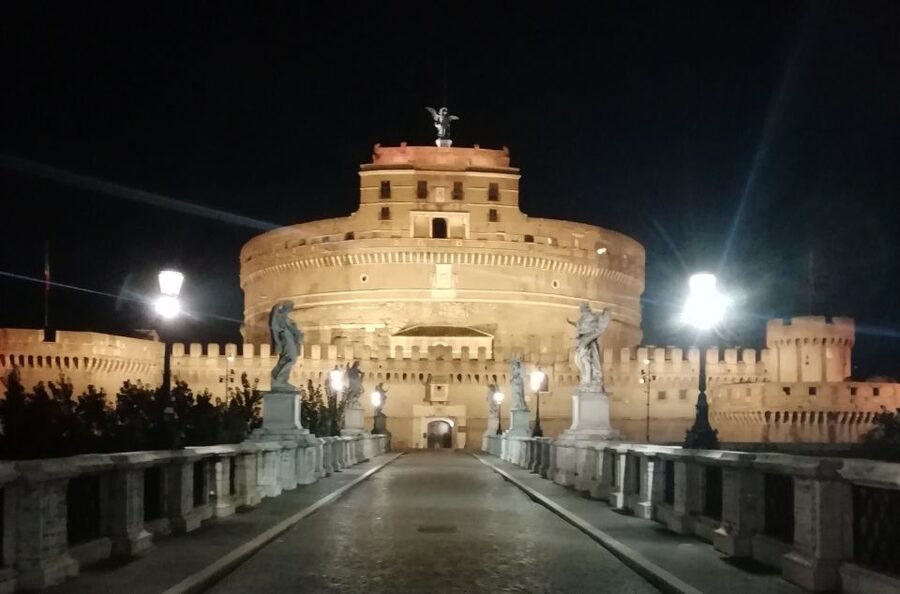
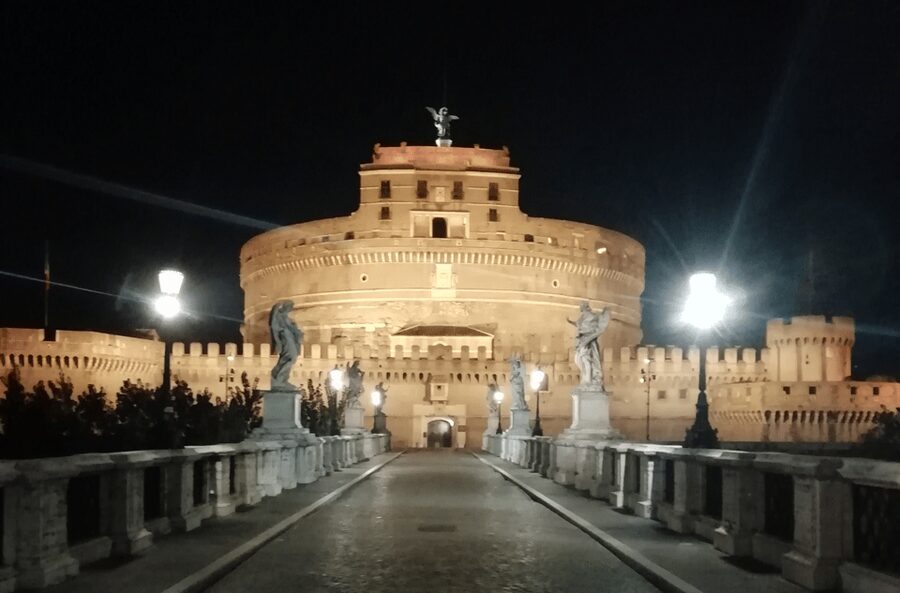
The walk finishes near Castel Sant’Angelo, with the final drop-off at either St. Angelo Bridge or Castel Sant’Angelo. This is a strong ending because the area already carries a dramatic mood. The fortress, bridge, river, and evening light give the guide plenty of atmosphere without needing special effects.
The final stories bring together the themes introduced earlier: power, death, religion, crime, and the way legends attach themselves to old buildings. You finish close to one of Rome’s most recognizable sights, but you have approached it through its darker associations rather than its usual postcard image.
The end point is practical too. You are not left in an obscure neighborhood. You can continue your evening around the bridge and castle area, though transportation from the final stop is not included. Plan your route back before the tour begins if you do not want to make decisions late at night.
How the guides shape the experience
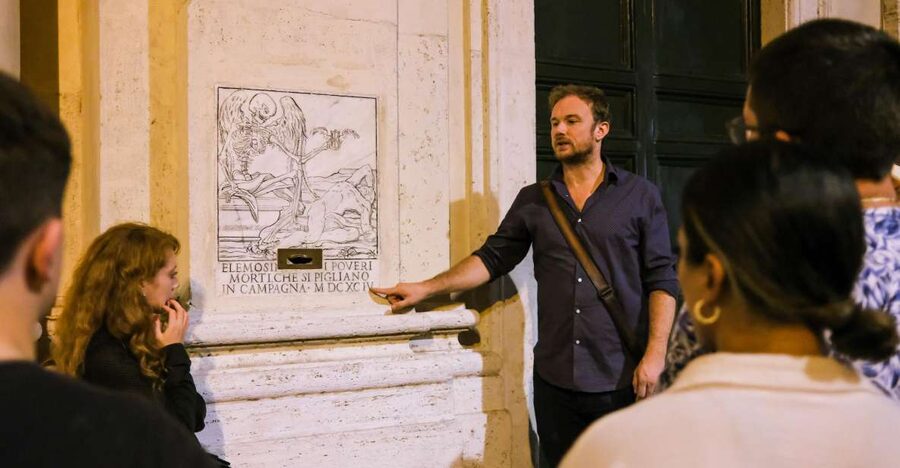
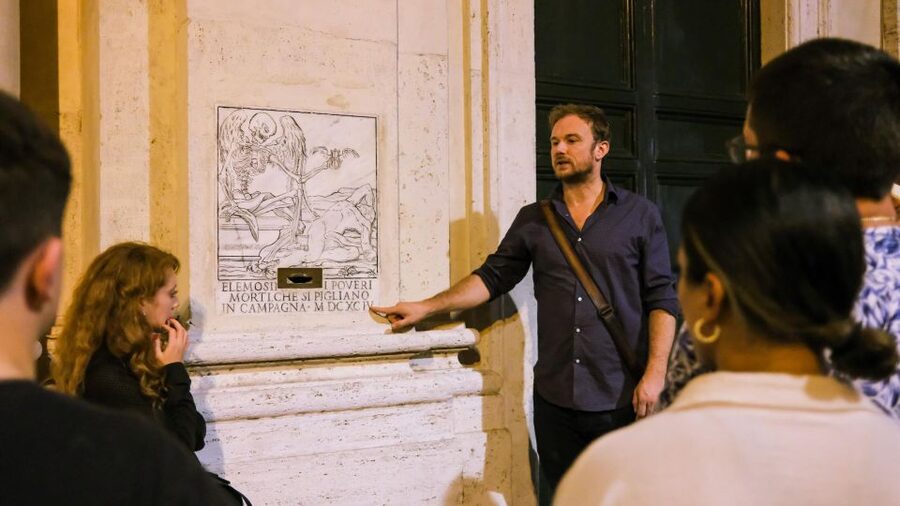
The guide is the main reason to book this walk. Names that appear repeatedly in the strongest praise include Ben, Arielle, Ivanna, Ariel, Alethea, Mari, Elitha, and Ivanna. The wording varies from guide to guide, but the shared strengths are clear: strong delivery, clear explanations, humor, and an ability to keep the group involved.
Ben is especially good at mixing accurate historical information with a light touch. Arielle has been praised for making everyone feel included and for showing clear enthusiasm for the subject. Ivanna is noted for animated storytelling, while Ariel has a reputation for friendly, personal delivery and a steady pace.
That variety is worth keeping in mind. The tour is built around live storytelling, so the guide’s personality affects the evening. The company’s approach appears consistent, but each guide will tell the stories in a slightly different way.
The tour is offered in English and Italian. One useful detail is that a group with parents who did not speak English very well still found Ben easy to understand. That does not guarantee the same experience for every listener, but it suggests the guides aim for clear speech rather than dense academic language.
Price, pace, and what $23 buys you
At $23 per person, this is a good-value evening activity. You receive two hours of live guiding, a small group limited to 15 people, several central Rome stops, a planned refreshment break, and a route that combines familiar sights with less obvious stories.
The price is especially fair if you have already spent the day visiting major monuments and want a different way to understand the city. You are not paying for admission to a museum or underground site, so the value rests on the guide and the quality of the route.
That also explains the main limitation. If you want entry into Castel Sant’Angelo, crypts, catacombs, or other interiors, this is not the right product. The tour stays above ground and focuses on spoken history.
The two-hour length works well. Some people may wish for more stories or a longer route, but the compact schedule prevents the evening from becoming tiring. The walk starts and finishes on time, according to the available tour details, and the break helps keep the pace comfortable.
Who will enjoy this most
I would choose this tour for:
- First-time visitors who want an unusual introduction to Rome.
- People who enjoy historical crime, folklore, and scandal.
- Couples or friends looking for an evening activity beyond dinner.
- Families with older children or teenagers who prefer stories with a dark edge.
- Repeat visitors who have already seen the major monuments.
- Anyone who likes humor mixed with serious historical detail.
I would think twice if you want jump scares, actors, special effects, ghost-hunting equipment, or access to underground spaces. This is a walking history tour with a spooky mood, not a theatrical attraction.
It can also work well near the start of a Rome trip. The route gives you useful orientation around Campo de’ Fiori, Via Giulia, Ponte Sisto, and Castel Sant’Angelo. One guide also offers restaurant, drink, and taxi suggestions at the end, which can help you avoid poor choices after the walk.
Practical advice before you go
Arrive 10 minutes early at the statue of Giordano Bruno in Campo de’ Fiori. The guide may try to wait for late arrivals, but this is not guaranteed, so message the company if you are delayed.
Wear comfortable shoes. The distance is manageable, but cobblestones can make two hours feel longer than expected. Bring a rain layer because the tour runs in wet weather as well as dry weather.
There is no need to bring special equipment. You will not use ghost-detection devices, and the experience does not depend on props. The best preparation is simply to arrive rested enough to listen and ready for a few uncomfortable stories.
The tour is wheelchair accessible, and a private group can be arranged. Free cancellation is available up to 24 hours before the start, and you can reserve now and pay later, which helps if your Rome schedule is still shifting.
Should you book Rome’s Dark Side?
Book it if you want Rome presented through murder, scandal, punishment, folklore, and the odd person who was far too clever for their own good. The $23 price is reasonable, the two-hour route is easy to fit into an evening, and the small group gives the storytelling room to work.
Skip it if you are hoping for haunted interiors or theatrical scares. But if you like real places, lively guides, and the uncomfortable side of history, this is one of the more memorable ways to walk central Rome after dark.
FAQ
Where does the Rome Dark Side tour meet?
The meeting point is in front of the statue of Giordano Bruno in the center of Campo de’ Fiori. Look for a sign reading Rome’s Dark Side, Ghosts & Legends.
How long does the tour last?
The guided walk lasts two hours.
How much does the tour cost?
The listed price is $23 per person.
What languages are available?
The tour is offered in English and Italian.
How large is the group?
The small group has a maximum of 15 people. A private group is also available.
Does the tour enter crypts or underground sites?
No. The tour remains above ground and does not include crypts or underground locations.
Is food or a drink included?
No. The tour includes a stop at a local bar where you can buy food or drinks.
Does the tour operate in bad weather?
Yes. It runs rain or shine, so bring suitable clothing and wear comfortable shoes.
Can I cancel or pay later?
You can cancel up to 24 hours in advance for a full refund. Reserve now and pay later is also available.
Just added around Rome
- Rome City, Pantheon, and Trevi Fountain Walking Tour★ 5.0 · 249 reviews
- Rome: Tivoli Day Trip with Villa d’Este and Villa Adriana★ 4.5 · 251 reviews
- Rome: Skip the line Vatican Museums & Sistine Chapel Tour★ 4.2 · 251 reviews
- Transfer Rome center – Ciampino Airport★ 4.5 · 251 reviews
- Rome: Cannondale E-Bike Evening Tour with Optional Dinner★ 4.9 · 251 reviews
- VIP Colosseum, Roman Forum & Palatine Hill & Special Access Sites★ 4.5 · 252 reviews
- Private Vatican Museums Hidden Gems Tour with Optional Pick-Up★ 5.0 · 253 reviews
- Vatican Museums & Sistine Chapel Skip-the-Line Guided Tour★ 4.6 · 254 reviews
Rome Tours, compared.

Vatican: Museums & Sistine Chapel Entrance Ticket
Read our review →
Vatican Museums & Sistine Chapel Tour with Optional Basilica
Read our review →
Colosseum, Roman Forum & Palatine Guided Tour
Read our review →
Vatican Museums, Sistine Chapel & St Peter’s Basilica Guided Tour
Read our review →
Colosseum, Palatine Hill and Roman Forum Guided Tour
Read our review →
Guided Tour of Colosseum, Roman Forum & Palatine Hill
Read our review →
Colosseum & Forum with Audio Guide App -Optional Arena
Read our review →