
Review · AUDIO TOURS
Rome: Navona Square Underground Ticket with Audio Guide
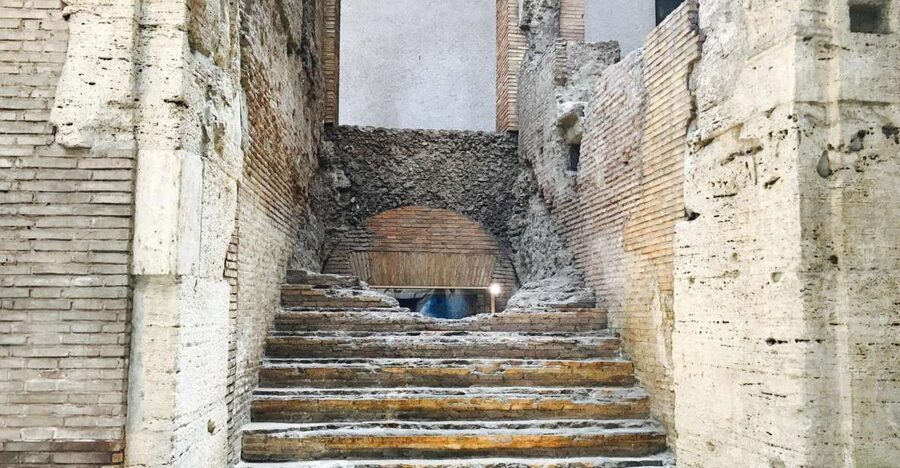
Ancient Rome hides beneath the fountains. This short, self-guided visit takes you five meters below Piazza Navona to the remains of the Stadium of Domitian, the first and only masonry stadium built in Ancient Rome. You will see old travertine blocks, brickwork, marble columns, exhibition panels, video displays, and 3D views that show how the original arena looked.
I like the way the audio guide explains both the stadium and the later development of Piazza Navona. I also like the price: at about $18 per person, it gives you a focused history stop without the cost or time commitment of a major Rome tour. The main drawback is size. The underground area is much smaller than many people expect, and the numbered audio stations can be confusing.
In This Review
- Key details before you book
- What lies beneath Piazza Navona
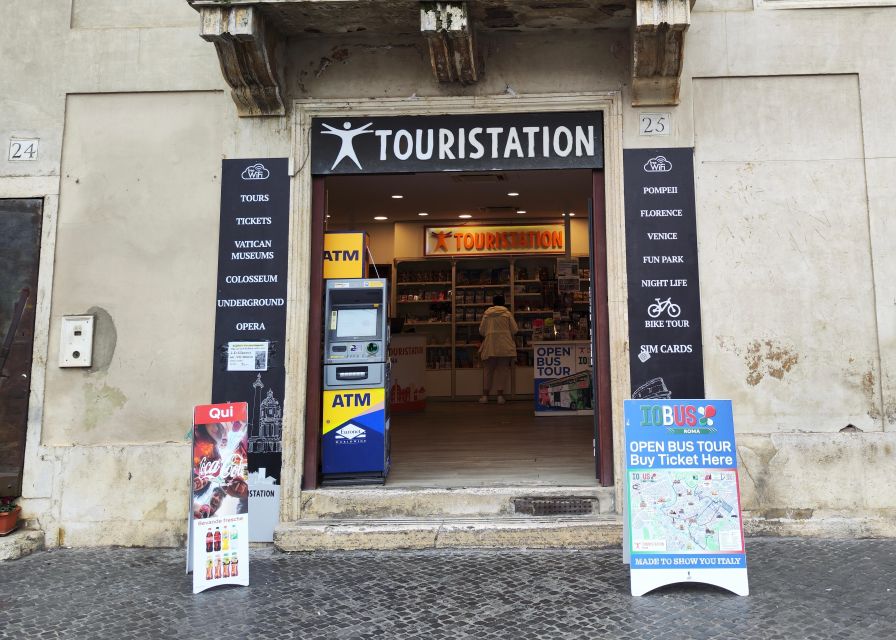
- Finding the meeting point at Piazza Navona 25
- The underground remains and ancient building work
- Audio guide, video, and 3D reconstructions
- How long the visit takes
- Atmosphere, sound, and practical comfort
- Optional cocktails and wine tasting
- Is the $18 ticket good value?
- Who will enjoy this experience most?
- Final verdict: book it if the underground story interests you
- FAQ
- Where is the Stadium of Domitian entrance?
- How far underground is the archaeological site?
- How long does the visit take?
- Is a guided tour included?
- Which audio guide languages are available?
- What does the audio guide explain?
- Is the attraction wheelchair accessible?
- Is the site suitable for prams?
- Is an aperitif included with every ticket?
- What does the wine-tasting option include?
- Can I cancel the booking?
- Do I have to pay when I book?
Key details before you book

- The ruins sit five meters below Piazza Navona, offering a different view of one of Rome’s best-known public squares.
- The stadium held up to 30,000 spectators, with displays explaining how people were arranged around the arena.
- The visit usually takes about 45 minutes to one hour, depending on how closely you follow the audio stops and displays.
- Audio guides are available in seven languages: English, Spanish, French, German, Italian, Russian, and Portuguese.
- Aperitif and wine-tasting options are available, but only if you select them when booking.
- The site is wheelchair accessible, though one parent noted that it was not suitable for a pram.
What lies beneath Piazza Navona
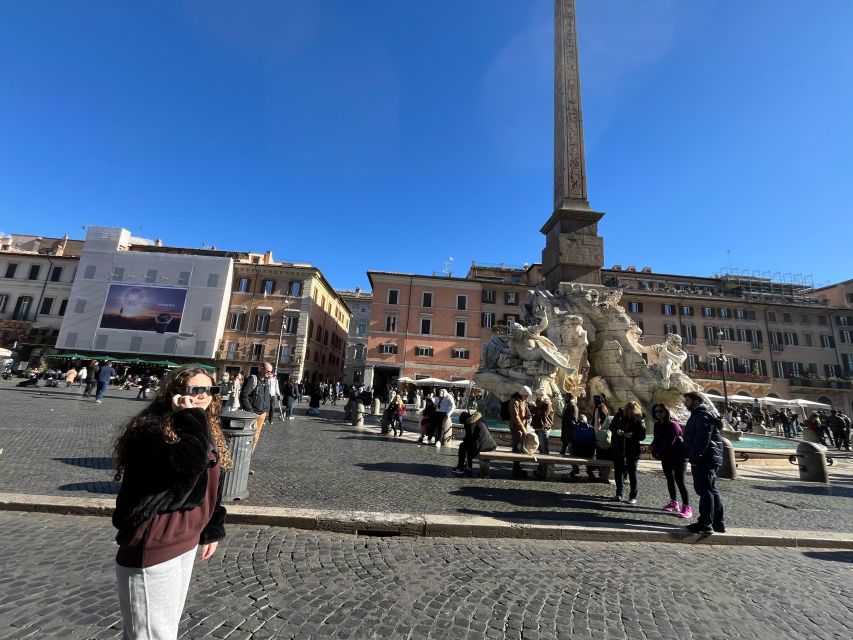
Piazza Navona is one of Rome’s most theatrical squares. Above ground, you have Bernini’s Fountain of the Four Rivers, the long oval shape of the piazza, cafés, artists, and the steady movement of central Rome.
Below it, the shape begins to make sense.
The square follows the outline of an ancient stadium. The Stadium of Domitian was built for athletic contests and public spectacles, not chariot racing in the same way as the Circus Maximus. Its long, narrow form helped shape the piazza you see today.
The archaeological site is located under the northern part of Piazza Navona. You descend about five meters below street level, then walk through the preserved remains and exhibition areas. This change in height is the key pleasure of the visit. You are not simply looking at a monument from outside. You are seeing fragments of the structure that gave the square its basic form.
The remains are not a complete stadium. That is important to understand before you pay. You will not walk through a vast open arena with every wall intact. Instead, you see sections of the ancient construction, supported by displays and reconstructions that fill in the missing pieces.
For me, that combination is what makes the stop worthwhile. The stones alone can seem modest, but the digital images and explanations show how these pieces once worked together.
More Audio Tours in Rome
- Rome: Colosseum & Forum with Audio Guide App -Optional Arena
★ 4.2 · 24,770 reviews - Rome: Pantheon Fast-Track Ticket and Official Audio Guide
★ 4.3 · 21,008 reviews - Rome: St. Peter’s Basilica & Dome Entry Ticket & Audio Tour
★ 4.2 · 7,537 reviews
Finding the meeting point at Piazza Navona 25
Your voucher is redeemed at the tourist point in front of the main fountain at Piazza Navona, number 25. The location is central and easy to reach once you are in the piazza, but the ticket process may take a little patience.
One visitor found the entrance process confusing because the voucher had to be exchanged at a ticket office a couple of streets away before returning to the attraction. The extra step took about five to ten minutes. Staff were helpful, but the arrangement was not immediately clear.
I would allow extra time rather than arriving at the last minute. Look for the tourist point in front of the main fountain, and keep your phone voucher ready. If staff direct you elsewhere for the ticket, follow their instructions and return to the marked entrance with the printed ticket.
The attraction is a good stop between other central Rome sights. You can combine it with a walk to the Pantheon, Campo de’ Fiori, the Trevi Fountain, or the Spanish Steps. No transportation is included, and none is needed once you are sightseeing in central Rome.
The underground remains and ancient building work
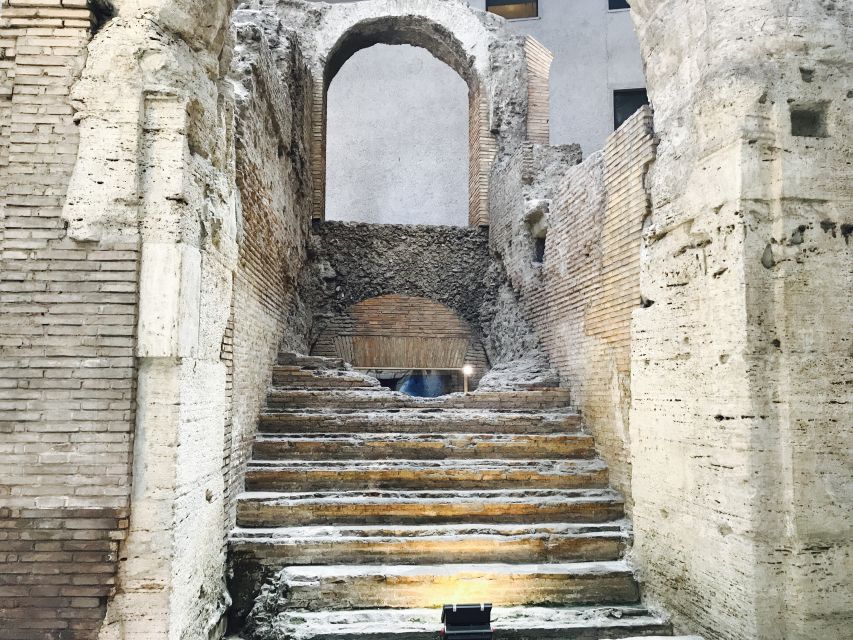
The first part of the visit introduces the stadium’s surviving structure. You will see examples of travertine blocks, brickwork, and marble columns connected with the main entrances.
These details matter because Roman building methods can otherwise blur together into a wall of old stone. The panels help you notice the difference between the materials and understand how the structure was assembled.
The travertine gives the stadium its heavy, durable foundation. Brickwork helped form the internal construction, while marble added a more finished appearance around important entrances and public areas. You can look closely at the surviving fragments and then use the illustrations to picture the full building.
The site also explains how spectators were organized. Up to 30,000 people could attend the stadium, and the displays describe how the crowd was divided around the arena. That is one of the most useful parts of the visit because it turns the stadium from an empty shell into a functioning public venue.
The ancient sports material adds another layer. You learn about Roman athletic events and the role of rulers in presenting public spectacles. This is not just a story about architecture. It is also about entertainment, status, crowd control, and the way leaders used grand public events.
Audio guide, video, and 3D reconstructions
The audio guide is included with admission and is available in English, Spanish, French, German, Italian, Russian, and Portuguese. It is essential here because the ruins are compact and not always self-explanatory.
The commentary explains the stadium’s construction, its sports, its entrances, and the later changes that produced modern Piazza Navona. The information is easy to follow overall, and several visitors found the audio especially clear and useful.
The site also uses unpublished photographs, information panels, a video presentation, and 3D renderings. These displays do much of the work that a full guided tour would normally provide. You can see the remains in front of you, then compare them with a reconstruction of the ancient stadium.
This visual material is particularly helpful if you are visiting Rome with children or with someone who does not enjoy reading archaeological labels. A special children’s audio guide is available. One parent found the child-friendly version easy for a five-year-old to use, with an audio guide pen and map. The small size of the site also made it easier for the child to explore with some independence.
There are limits. The audio numbering does not always match the physical route clearly. At some points, you may need to stop and work out which station or image the commentary is describing. Another visitor found that the audio did not line up perfectly with the pictures, and the sound was occasionally unclear.
I would treat the guide as a helpful companion rather than a perfectly directed tour. Pay attention to the station numbers, but do not worry if the order feels slightly loose. The displays still make sense when viewed at your own pace.
More Self-Guided Tours in Rome
- Rome: Colosseum, Forum, Palatine Hill Entry & Audioguide App
★ 4.4 · 10,957 reviews - Vatican & Sistine Chapel Ticket with Optional Audio Guide
★ 4.1 · 5,405 reviews - Rome: Colosseum, Forum, & Palatine Hill with Audio Guide
★ 4.3 · 4,591 reviews - Pantheon Reserved Entry Ticket with Audio Guide
★ 4.0 · 4,486 reviews
How long the visit takes

Plan for 45 minutes to one hour inside the archaeological site. That estimate comes from the actual pace people describe when listening to the available audio material and viewing the displays.
You can move faster if you only want a quick look at the ruins. If you listen to every audio section, watch the video, study the panels, and examine the reconstructions, an hour is more realistic.
The short length is both an advantage and a weakness. It fits neatly into a busy day of sightseeing. You can visit in the late morning, walk through the piazza, and continue to another monument without giving up half a day.
At the same time, anyone expecting a large underground complex may feel disappointed. The area is smaller than many first-time visitors imagine. Several people still found it fascinating, but they also noted that the visit could take less than an hour.
I would not book this as your main Roman archaeological experience. Think of it as a focused stop that adds meaning to Piazza Navona. If you have already visited Rome’s major monuments, it becomes a particularly good choice because it reveals a part of the city that is easy to walk over without noticing.
Atmosphere, sound, and practical comfort
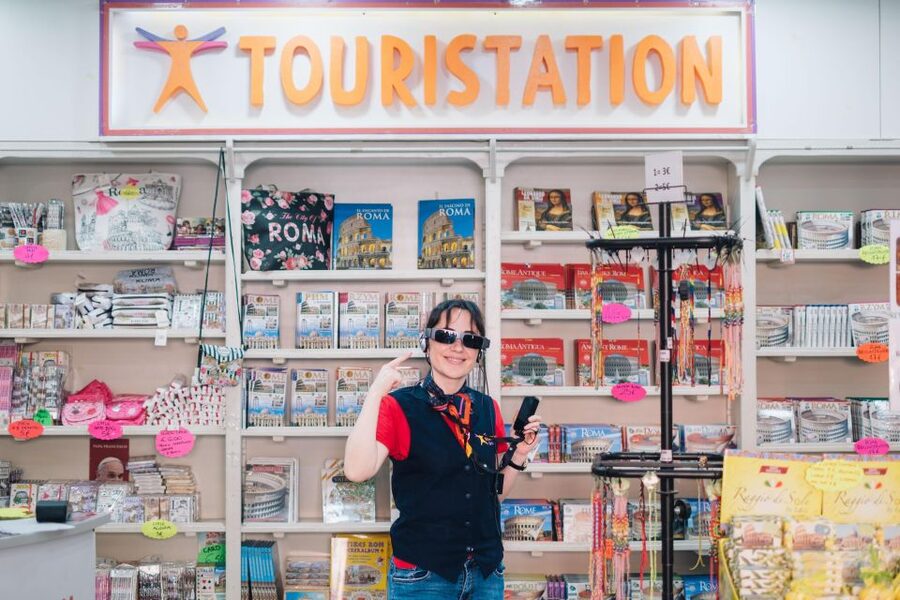
The site is clean and has toilets and a gift shop. Those simple comforts matter during a long day of walking around Rome.
Do not expect complete silence underground. Because the archaeological area is close to street level, outside sounds can still filter down. One visitor found that the traffic and street noise made it harder to focus on the ancient setting.
That sound is a reminder that you are in the middle of modern Rome, not in an isolated ruin. Some people will find it distracting. Others may enjoy the odd contrast between the ancient arena below and the busy piazza above.
The site is wheelchair accessible. A pram may be less practical, so families with very young children should consider using a carrier if possible. The underground space is small enough that it is easier to keep track of children than in a large museum, and the special children’s audio guide adds useful structure.
Photography is part of the appeal. You can take pictures of the surviving masonry and the displays, then return to the piazza for photographs of Rome’s fountains and architecture. The attraction does not replace the famous views above ground, but it gives your pictures a more unusual story.
Optional cocktails and wine tasting
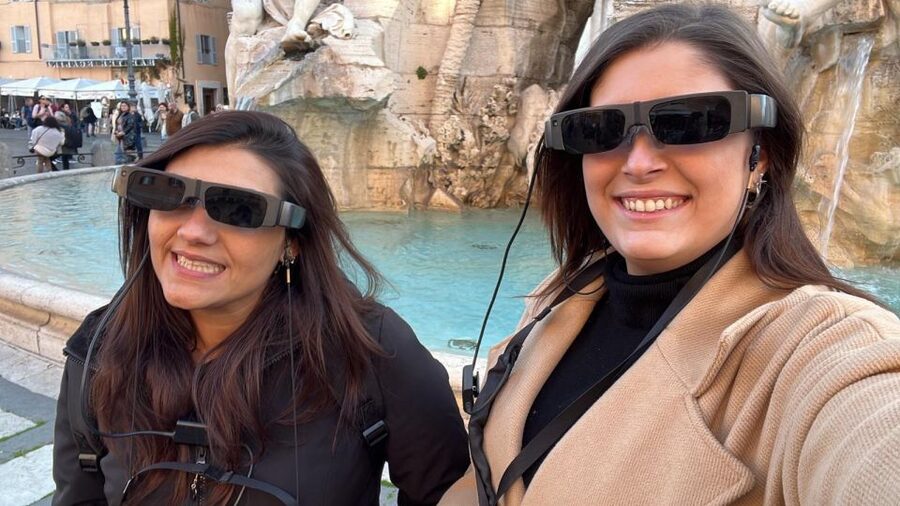
You can add an aperitif to the booking. This includes one cocktail and snacks at a viewpoint in the heart of Rome, with staff reserving your table at the meeting point.
You can also select a wine-tasting option. It includes two wines paired with a traditional appetizer board. This is a pleasant way to extend a short archaeological visit, especially if you want a sit-down break in central Rome.
The extra options are not part of the basic ticket, so check what you have selected before paying. If your goal is simply to see the ruins, the standard admission is enough. If you like pairing sightseeing with a drink and small bites, the add-on may improve the overall value.
I would judge the aperitif by your schedule. It makes sense when you already plan to spend time around Piazza Navona. It makes less sense if you are racing across the city to reach another timed attraction.
Is the $18 ticket good value?
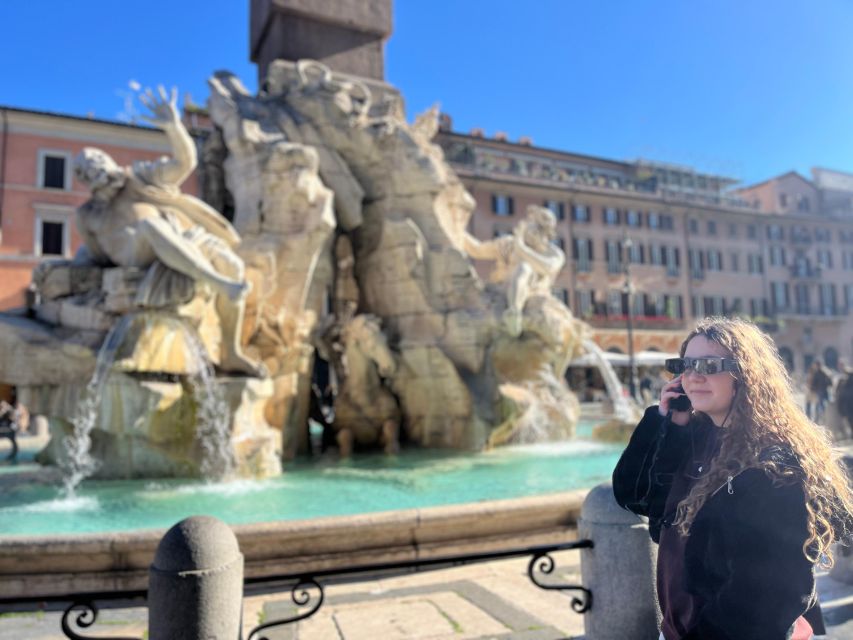
At $18, this is a reasonably priced experience by central Rome standards. You get admission to an archaeological site, an audio guide, visual displays, a video, and 3D reconstructions. The visit is also flexible because the ticket is valid for one day, with availability shown for the available starting times.
The value depends on your expectations. If you expect a large monument comparable to the Colosseum, the price may feel less attractive because the underground section is compact. If you see it as a one-hour historical stop beneath one of Rome’s best-known squares, the cost is easier to justify.
I especially recommend it for a repeat visit to Rome. Once you have seen the Colosseum, Roman Forum, Pantheon, and other major sights, this gives you a less obvious piece of the city’s past.
For a first visit on a tight budget, I would put the major monuments first. The Stadium of Domitian is interesting, but it is not as essential as Rome’s largest and most complete ancient sites. If your schedule allows an extra hour and you are already in Piazza Navona, the ticket becomes much better value.
Who will enjoy this experience most?

This visit suits you if you like archaeology, ancient sports, Roman engineering, or the way modern cities grow over old foundations.
It is also a good match for families because the children’s audio guide gives younger visitors something active to follow. The compact layout helps, although the pram issue is worth keeping in mind.
You may want to skip it if you dislike audio guides or prefer a live guide who can answer questions. The included guide provides plenty of information, but the station numbering and occasional sound problems can make the route less smooth.
It may also disappoint you if you need a large, dramatic ruin. The site has atmosphere and useful explanations, but its scale is limited. I would choose it for the story and the setting, not for the sheer size of the remains.
Final verdict: book it if the underground story interests you
Book this experience if you want to understand why Piazza Navona has its long oval shape and you enjoy seeing Rome from an unexpected angle. The audio guide, visual reconstructions, and ancient building fragments work well together, and the $18 price is fair for a visit lasting roughly an hour.
Skip it if this is your first day in Rome, your budget is tight, and you have not yet seen the Colosseum, Roman Forum, or Pantheon. Also skip it if you expect a vast underground ruin.
My practical advice is simple: add the Stadium of Domitian to a walking day around Piazza Navona, allow extra time to exchange the voucher if needed, and select the aperitif or wine tasting only if you genuinely want the social break afterward. For curious repeat visitors, history fans, and families who enjoy a clear story with visual help, it is a smart small stop.
FAQ
Where is the Stadium of Domitian entrance?
The meeting point is at the tourist point in front of the main fountain at Piazza Navona, 25.
How far underground is the archaeological site?
The ruins are located about five meters below street level.
How long does the visit take?
Most visitors should allow about 45 minutes to one hour, depending on how much of the audio guide and exhibition material they use.
Is a guided tour included?
No. Admission includes an audio guide, but not a live guided tour.
Which audio guide languages are available?
The audio guide is available in Spanish, English, French, German, Italian, Russian, and Portuguese.
What does the audio guide explain?
It covers the Stadium of Domitian, the development of Piazza Navona, ancient Roman sports, the stadium’s construction materials, and the way up to 30,000 spectators were arranged.
Is the attraction wheelchair accessible?
Yes, the activity information states that the site is wheelchair accessible.
Is the site suitable for prams?
One visitor found it was not pram friendly. Families with babies may want to consider another way to carry a young child.
Is an aperitif included with every ticket?
No. The aperitif is included only when you select that booking option. It provides one cocktail and snacks.
What does the wine-tasting option include?
The wine-tasting option includes two wines paired with a traditional appetizer board.
Can I cancel the booking?
Yes. You can cancel up to 24 hours in advance for a full refund.
Do I have to pay when I book?
A reserve-now, pay-later option is available, allowing you to hold your place without paying immediately.
More Audio-Guided Visits
- Rome: Colosseum Experience with Audio Guide and Arena Option
★ 4.2 · 2,200 reviews - Rome: Colosseum, Roman Forum & Palatine Hill Visit + Audio Guide
★ 3.5 · 1,522 reviews - Rome: Colosseum Express Entry with Audio Guide App
★ 4.0 · 1,507 reviews - Rome’s Iconic Temple: Pantheon Audio Guided Tour with Fast Access
★ 4.0 · 1,188 reviews
More Self-Led Routes
- Rome: Castel Sant’Angelo Skip-the-Line Ticket & Audio Guide
★ 4.4 · 3,500 reviews - Skip the Line: Vatican & Sistine Chapel Ticket with Audio Guide
★ 4.0 · 3,271 reviews - Rome: Pantheon Priority Entry Ticket & Audio Guide App
★ 4.1 · 3,234 reviews - Rome: Colosseum Access with Official AI App & Arena Option
★ 3.5 · 2,964 reviews
Just added around Rome
- Rome City, Pantheon, and Trevi Fountain Walking Tour★ 5.0 · 249 reviews
- Rome: Skip the line Vatican Museums & Sistine Chapel Tour★ 4.2 · 251 reviews
- Rome: Tivoli Day Trip with Villa d’Este and Villa Adriana★ 4.5 · 251 reviews
- Transfer Rome center – Ciampino Airport★ 4.5 · 251 reviews
- Rome: Cannondale E-Bike Evening Tour with Optional Dinner★ 4.9 · 251 reviews
- VIP Colosseum, Roman Forum & Palatine Hill & Special Access Sites★ 4.5 · 252 reviews
- Private Vatican Museums Hidden Gems Tour with Optional Pick-Up★ 5.0 · 253 reviews
- Vatican Museums & Sistine Chapel Skip-the-Line Guided Tour★ 4.6 · 254 reviews
Audio Tours, compared.
Colosseum & Forum with Audio Guide App -Optional Arena
Read our review →
Pantheon Fast-Track Ticket and Official Audio Guide
Read our review →
Pompeii: Entry Ticket with Optional Audio Guide
Read our review →
La Fenice Opera House Entry Ticket with Audio Guide
Read our review →
St. Peter’s Basilica & Dome Entry Ticket & Audio Tour
Read our review →
Cathedral & Brunelleschi’s Dome Ticket & Audio App
Read our review →
Michelangelo’s David Priority Ticket & Audio App
Read our review →
Uffizi Priority Ticket & Masterpieces Audio App
Read our review →Browse the lists this tour appears in