

Review · AUDIO TOURS
Rome: Mamertime Prison Entrance Ticket with Audio guide
Ancient Rome keeps its darkest secrets underground. The Mamertine Prison, also called Carcer Tullianum, is a small but powerful stop beside the Roman Forum, where Rome once held condemned enemies. I like the strong contrast here: one room recalls ruthless Roman punishment, while Christian tradition connects the site with the final days of Saints Peter and Paul. I also like the low price, about $11, and the freedom to move at your own pace with a multilingual audio guide.
This is not a long attraction, and that matters. You may spend an hour or less inside, with only a limited section of the original prison open to the public. The main drawback is the audio setup, which requires your smartphone, an app, and a download that can be awkward in the building. Bring headphones and allow time to get oriented.
In This Review
- Key points to know before you go
- Why this tiny prison matters in Rome
- Entering Carcer Tullianum beside the Roman Forum
- The upper museum and the story of Roman prisoners
- Going down into the lower cell
- How useful is the audio guide?
- How long should you allow?
- The $11 price and what you receive
- Who will appreciate this visit most?
- Practical ways to make the visit better
- Is Mamertine Prison worth booking?
- FAQ
- Where is Mamertine Prison located?
- How much does the entrance ticket cost?
- How long does the visit take?
- Is a live tour guide included?
- Which languages are available for the audio guide?
- Do I need my own smartphone?
- Are large bags and strollers allowed?
Key points to know before you go
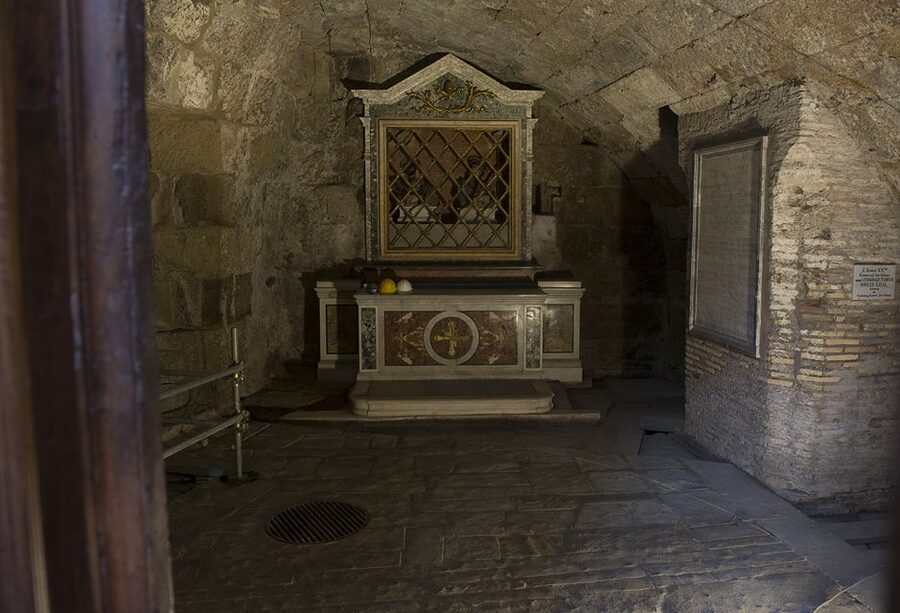
- This is Rome’s oldest prison: Carcer Tullianum once held Rome’s most dangerous political enemies before execution.
- The visit is short but memorable: Most people need about an hour, and the prison itself is much smaller than many expect.
- The Christian connection is central: Tradition holds that Peter and Paul were imprisoned here, though the site presents both Roman and Christian chapters.
- The audio guide is on your phone: You must download the Vatican&Rome App from the App Store or Play Store.
- Finding the entrance can be confusing: The ticket office and entry point are near the Roman Forum, but clear directions are important.
- The site is not suitable for people with mobility impairments: Baby strollers and large bags are also not allowed.
Why this tiny prison matters in Rome
Rome offers enormous monuments, crowded piazzas, and museums that can consume half a day. The Mamertine Prison is different. It is compact, enclosed, and personal. You are not looking at a grand arena from outside. You are standing in a place designed to remove people from Roman society before their execution.
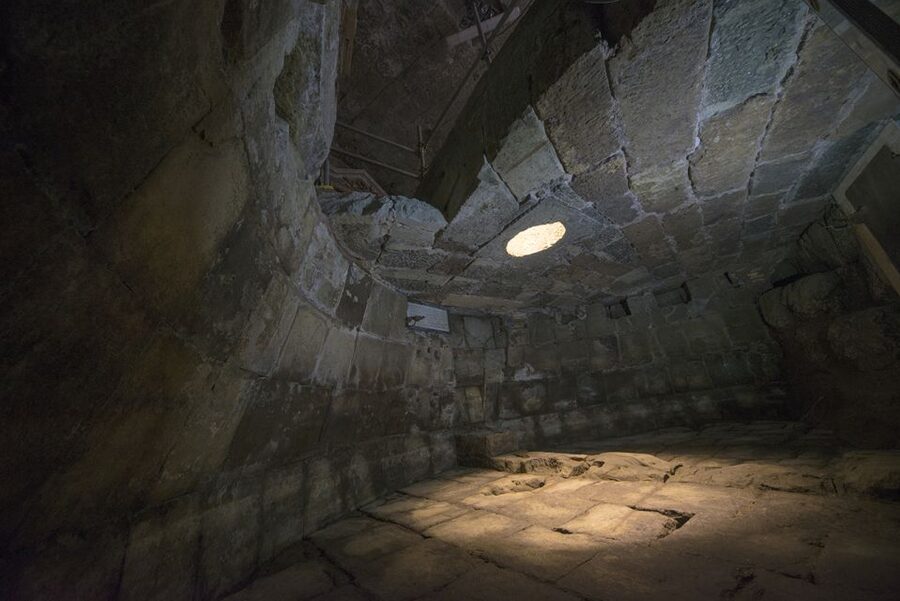
The official ancient name, Carcer Tullianum, refers to the prison’s two levels. The lower chamber is the oldest part. It is dark, low, and severe, with none of the scale that makes the Colosseum so famous. That small size is part of the impact. The room helps you picture confinement as something cramped and immediate, not simply a label in a history book.
The prison held enemies of Rome, including Jugurtha, king of Numidia, and Vercingetorix, the Gallic leader defeated by Julius Caesar. The followers of Catiline also met their end here. These stories give the Roman side of the visit real weight, especially if you are interested in politics, conquest, and the machinery of the ancient state.
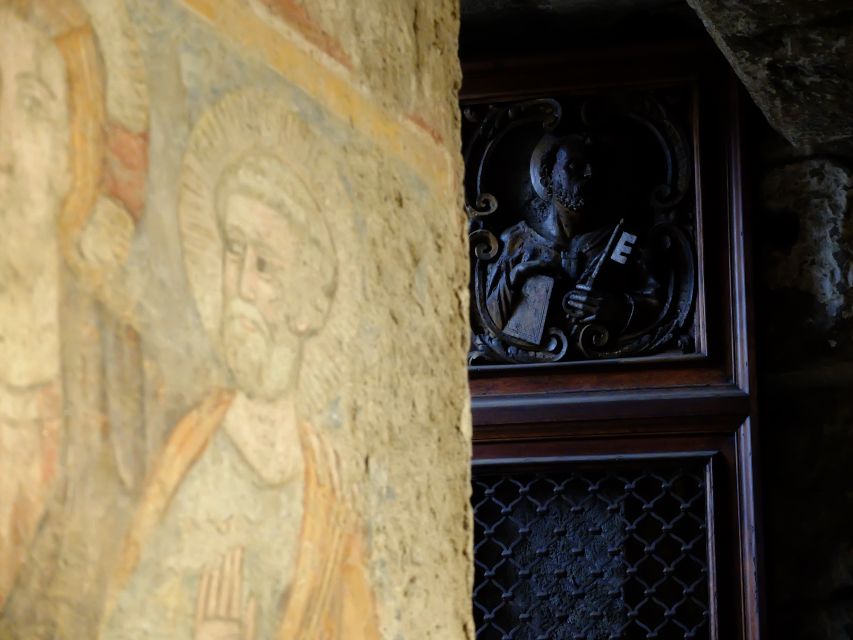
The Christian tradition adds another layer. It is believed that Peter and Paul were held here, along with other Christian martyrs. For people interested in the New Testament or early Christianity, this may be the main reason to visit. Even if you are not religious, the meeting of Roman punishment and Christian memory makes the site unusual.
More Audio Tours in Rome
- Rome: Colosseum & Forum with Audio Guide App -Optional Arena
★ 4.2 · 24,770 reviews - Rome: Pantheon Fast-Track Ticket and Official Audio Guide
★ 4.3 · 21,008 reviews - Rome: St. Peter’s Basilica & Dome Entry Ticket & Audio Tour
★ 4.2 · 7,537 reviews
Entering Carcer Tullianum beside the Roman Forum
The prison sits in one of Rome’s most rewarding walking areas, close to the Roman Forum and other major ancient sights. It is easy to combine with a day focused on ancient Rome, but do not expect the entrance to announce itself like the Colosseum.
Several people have found the location and ticket handoff confusing. Plan to arrive about 15 minutes early, then look for the office connected with Mamertine Prison rather than assuming you can walk directly into the historic chamber. The reservation should be on file, and ticket collection has often been quick once the correct desk is found.
The attraction is operated by Opera Romana Pellegrinaggi. Staff and hosts may speak Italian, English, Spanish, French, German, or Portuguese, but the experience is not a conventional guided tour. There is no guide walking you through every room. You receive entry and access to the recorded material.
This distinction matters. If you expect a lively historian waiting inside, you may be disappointed. If you want a self-guided visit that fits around the Roman Forum, the format gives you useful flexibility.
The upper museum and the story of Roman prisoners
The visit begins with displays and interpretive material before you reach the oldest prison chamber. This section provides the basic setting: Rome’s enemies were confined here while awaiting execution, and the building later took on a strong Christian role.
The audio guide can add information that is not obvious from the displays. It is available in Italian, English, French, German, Spanish, and Portuguese. When it works properly, it helps put the architecture in order and explains the political and religious associations of the place.
The content is not equally satisfying for everyone. Some people find it useful and fairly extensive. Others find it too brief, especially on the lives of Peter and Paul. You may learn that the apostles are traditionally linked with the prison without getting the fuller context you hoped for.
If the Christian connection is your main interest, do a little reading before arriving. That preparation can make the visit more meaningful, since the on-site presentation gives only limited detail about questions such as how prisoners lived, how many people occupied the cell, and how writing materials or letters might have been handled.
The upper area also helps explain how later religious structures changed the site. The prison is now below a series of churches built over the original structure. That layering is typical of Rome, where one period often rests directly on top of another.
Going down into the lower cell
The lower prison chamber is the emotional center of the visit. You descend toward the space where condemned enemies were held. Access is limited, and you should not expect a large network of cells or a long underground route.
The room is small. That surprises some people, but it also keeps the experience focused. You can stand in the same compact space and think about the difference between the power of Rome above ground and the helplessness of a prisoner below it.
The site presents the chamber as the place where Peter and Paul may have spent their final days. The wording is important: this is a long-standing tradition, not something that can be proven in the same way as the surviving stonework. The spiritual value depends partly on your own interest in that tradition.
The atmosphere is quiet and restrained. The prison does not offer a large collection of objects or a full reconstruction of daily life. Instead, the bare chamber does much of the work. I find that the lack of spectacle suits the subject. This was a place of disappearance, not public entertainment.
At the same time, the limited access can feel frustrating. You see only one main room of the prison, and some of the original altar and well area has been altered or sectioned off. The silver staircase and other changes have also affected how the space feels compared with earlier visits. If you last saw the prison many years ago, expect a more managed presentation today.
More Self-Guided Tours in Rome
- Rome: Colosseum, Forum, Palatine Hill Entry & Audioguide App
★ 4.4 · 10,957 reviews - Vatican & Sistine Chapel Ticket with Optional Audio Guide
★ 4.1 · 5,405 reviews - Rome: Colosseum, Forum, & Palatine Hill with Audio Guide
★ 4.3 · 4,591 reviews - Pantheon Reserved Entry Ticket with Audio Guide
★ 4.0 · 4,486 reviews
How useful is the audio guide?
The audio guide is the most important practical feature, and also the most common source of trouble. It is not simply a device handed to you at the door in every case. You need to download the Vatican&Rome App from the App Store or Play Store and use your phone to access the content.
Bring your own headphones. One person specifically found the guide useful but noted that the audio played through a personal phone. Headphones make it easier to listen in a quiet, confined space and avoid disturbing other people.
The site may provide Wi-Fi to help you download the app. That is helpful, but the connection can be slow or unreliable. A smart approach is to install the app before you arrive, then ask at the office for the Wi-Fi details and any access code you need.
The audio may also stop working below ground, where phone or Wi-Fi service can be weak. If the app loads, listen to the relevant sections before descending, or make sure the content is downloaded rather than streamed. This simple step can save you from climbing back upstairs to reconnect.
The app instructions have not always been clear. Some people have been unsure which app to use, where the tour starts, or how to move between sections. Staff assistance can vary, so ask directly for three things at the ticket office: the Wi-Fi password, the exact app, and the starting point for the audio.
Do not let the technology decide the whole visit. The displays can still be read without the audio, and the chamber itself remains worth seeing. Still, at $11, you are paying partly for interpretation. If the guide fails, the value drops, particularly if you came for historical explanation rather than simply the atmosphere.
How long should you allow?
The ticket is valid for one day, with starting times subject to availability. The actual visit is much shorter than the one-day validity might suggest. Most people spend around an hour inside, sometimes less.
That makes the prison easy to add to a larger Rome plan. You could visit before or after the Roman Forum, then continue toward other ancient sites nearby. The short duration is especially useful if you have a busy schedule or want a quieter stop between larger monuments.
Do not book it expecting a half-day attraction. There is no long route through multiple prison wings, no transportation, and no extended live commentary. The experience is self-guided and compact.
The short length can feel like excellent value if you care about ancient Rome, church history, or unusual places connected with major figures. It can feel less worthwhile if you prefer large museums with many objects and hours of material.
The $11 price and what you receive
At about $11 per person, the ticket is inexpensive by Rome standards. You receive entry to Carcer Tullianum and a multilingual audio guide, with no transportation or personal guide included.
I see the price as fair, provided your expectations match the size of the site. You are paying for access to a rare historic location in a central part of Rome, not for a long, fully guided tour. The attraction’s value comes from the place itself and the meaning attached to it.
The ticket also offers practical flexibility. You can reserve now and pay later, and cancellation is available up to 24 hours before the activity for a full refund. That can help if your Rome schedule is still changing.
You may also be able to buy a ticket in person, but booking ahead can reduce uncertainty during a busy sightseeing day. The main advantage of advance booking is not a long line-free admission promise. It is knowing that your place and payment terms are settled before you arrive.
Who will appreciate this visit most?
I would recommend Mamertine Prison to several types of visitors:
- People interested in early Christian history and the traditions connected with Peter and Paul
- History fans curious about Roman political prisoners and condemned enemies
- Visitors who enjoy small, serious sites rather than large attractions
- Anyone already planning to explore the Roman Forum
- People who prefer self-guided pacing over a fixed group tour
It is less suitable for anyone with mobility impairments, since the lower prison involves a confined historic setting and access restrictions. Baby strollers and large bags are not allowed, so plan accordingly.
Families should also consider the subject matter. The prison is connected with execution, imprisonment, and martyrdom. Older children interested in Roman history may appreciate it, but it is not a light or playful stop.
If you want a polished, story-heavy audio experience, prepare yourself for some frustration. The app can be cumbersome, and the recording may not fully answer the questions you have about prison conditions or the Christian tradition.
Practical ways to make the visit better

Install the app before leaving your hotel. This is the single best way to avoid wasting time with downloads at the site.
Bring charged headphones and a charged phone. The audio guide depends on your own device, and weak reception in the lower chamber can interrupt playback.
Arrive 15 minutes early. The entrance can be hard to spot, and the ticket office may be the first place you need to find. Keep your reservation details ready.
Ask staff to show you exactly where the exhibit begins. Some visitors have been unsure what to do after ticket collection, especially because this is not a standard guided tour.
Read the displays even if the audio works. The recorded material can add useful structure, but the visual information helps fill gaps.
Give yourself time to pause in the lower chamber. You do not need to rush through a room this small. Its effect comes from considering the setting, the prisoners associated with it, and the centuries of religious memory attached to the space.
Is Mamertine Prison worth booking?
Yes, if you care about the people and events tied to the place. The prison is small, but its setting is unusually direct. You see the confined chamber where Rome’s enemies awaited death, then encounter the Christian tradition linking the same space with Peter and Paul.
I would book it as a focused one-hour addition to a Roman Forum day, not as a major attraction in its own right. The $11 price is sensible, especially for visitors with a strong interest in Roman power or Christian history.
Book with realistic expectations. You may face a confusing entrance, an awkward app, and a shorter visit than expected. Download the audio guide in advance, bring headphones, and remember that the prison itself, rather than the technology, is the reason to go.
FAQ
Where is Mamertine Prison located?
Mamertine Prison, or Carcer Tullianum, is in Rome’s Lazio region near the Roman Forum.
How much does the entrance ticket cost?
The listed price is about $11 per person.
How long does the visit take?
The prison is small, and you can expect to spend about an hour or less inside.
Is a live tour guide included?
No. The ticket includes entry and a multilingual audio guide, but not a personal tour guide.
Which languages are available for the audio guide?
The audio guide is available in Italian, English, French, German, Spanish, and Portuguese.
Do I need my own smartphone?
Yes. You need to download the Vatican&Rome App from the App Store or Play Store to listen to the audio guide. Bringing your own headphones is also recommended.
Are large bags and strollers allowed?
No. Baby strollers and luggage or large bags are not allowed. The experience is also not suitable for people with mobility impairments.
More Audio-Guided Visits
- Rome: Colosseum Experience with Audio Guide and Arena Option
★ 4.2 · 2,200 reviews - Rome: Colosseum, Roman Forum & Palatine Hill Visit + Audio Guide
★ 3.5 · 1,522 reviews - Rome: Colosseum Express Entry with Audio Guide App
★ 4.0 · 1,507 reviews - Rome’s Iconic Temple: Pantheon Audio Guided Tour with Fast Access
★ 4.0 · 1,188 reviews
More Self-Led Routes
- Rome: Castel Sant’Angelo Skip-the-Line Ticket & Audio Guide
★ 4.4 · 3,500 reviews - Skip the Line: Vatican & Sistine Chapel Ticket with Audio Guide
★ 4.0 · 3,271 reviews - Rome: Pantheon Priority Entry Ticket & Audio Guide App
★ 4.1 · 3,234 reviews - Rome: Colosseum Access with Official AI App & Arena Option
★ 3.5 · 2,964 reviews
Just added around Rome
- Rome City, Pantheon, and Trevi Fountain Walking Tour★ 5.0 · 249 reviews
- Rome: Skip the line Vatican Museums & Sistine Chapel Tour★ 4.2 · 251 reviews
- Rome: Tivoli Day Trip with Villa d’Este and Villa Adriana★ 4.5 · 251 reviews
- Transfer Rome center – Ciampino Airport★ 4.5 · 251 reviews
- Rome: Cannondale E-Bike Evening Tour with Optional Dinner★ 4.9 · 251 reviews
- VIP Colosseum, Roman Forum & Palatine Hill & Special Access Sites★ 4.5 · 252 reviews
- Private Vatican Museums Hidden Gems Tour with Optional Pick-Up★ 5.0 · 253 reviews
- Vatican Museums & Sistine Chapel Skip-the-Line Guided Tour★ 4.6 · 254 reviews
Audio Tours, compared.

Colosseum & Forum with Audio Guide App -Optional Arena
Read our review →
Pantheon Fast-Track Ticket and Official Audio Guide
Read our review →
Pompeii: Entry Ticket with Optional Audio Guide
Read our review →
La Fenice Opera House Entry Ticket with Audio Guide
Read our review →
St. Peter’s Basilica & Dome Entry Ticket & Audio Tour
Read our review →
Cathedral & Brunelleschi’s Dome Ticket & Audio App
Read our review →
Michelangelo’s David Priority Ticket & Audio App
Read our review →
Uffizi Priority Ticket & Masterpieces Audio App
Read our review →Browse the lists this tour appears in